 English
 Español
 Deutsch
-
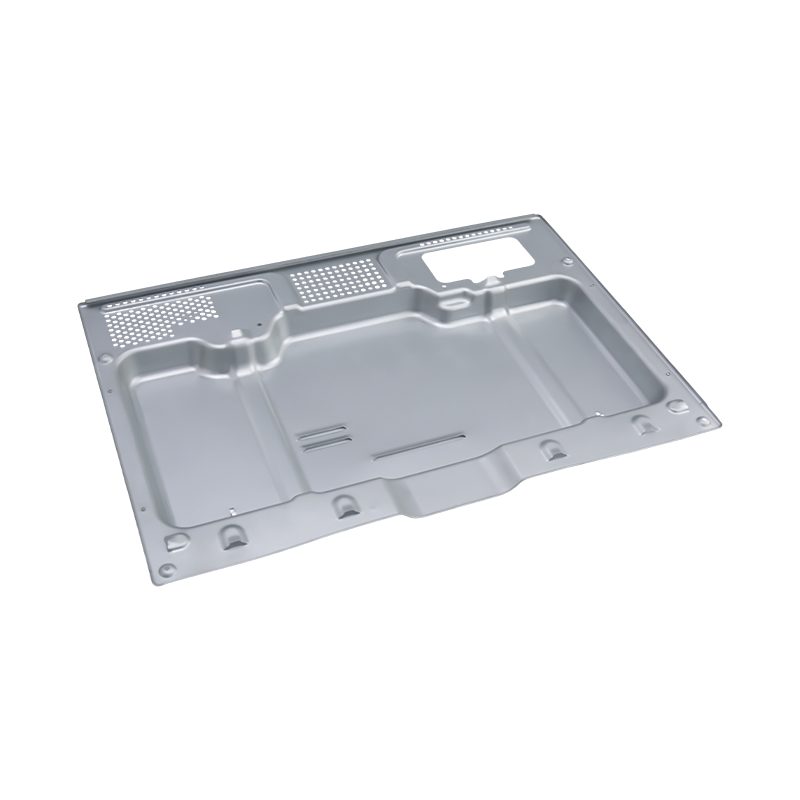
High-end oven stamping parts
Our High-end oven stamping parts are precision-man...
-
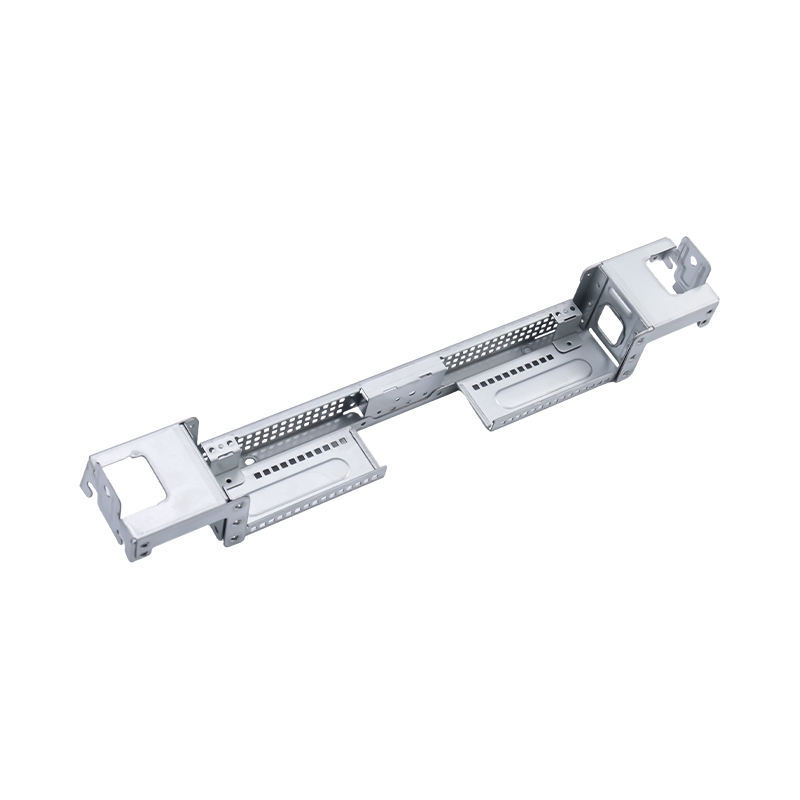
High-end large computer stamping parts
Our High-end large computer stamping parts are pre...
-
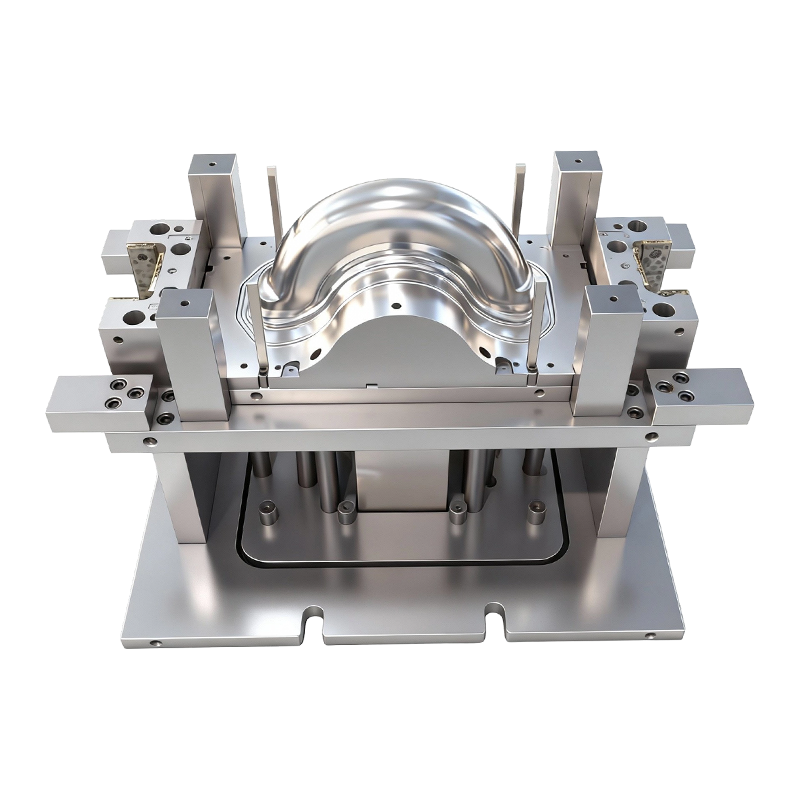
Deep drawing mold for front and rear wheels of two-wheeled electric vehicles
This Deep drawing mold for front and rear wheels o...
-
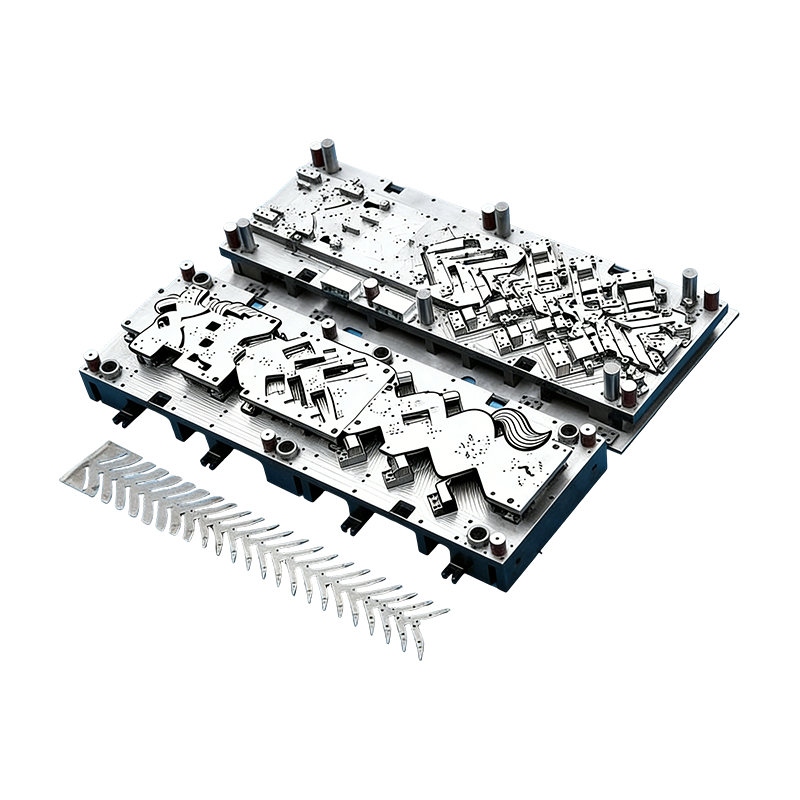
Progressive molds for automotive parts
This Continuous mold for automotive motor housing ...
-
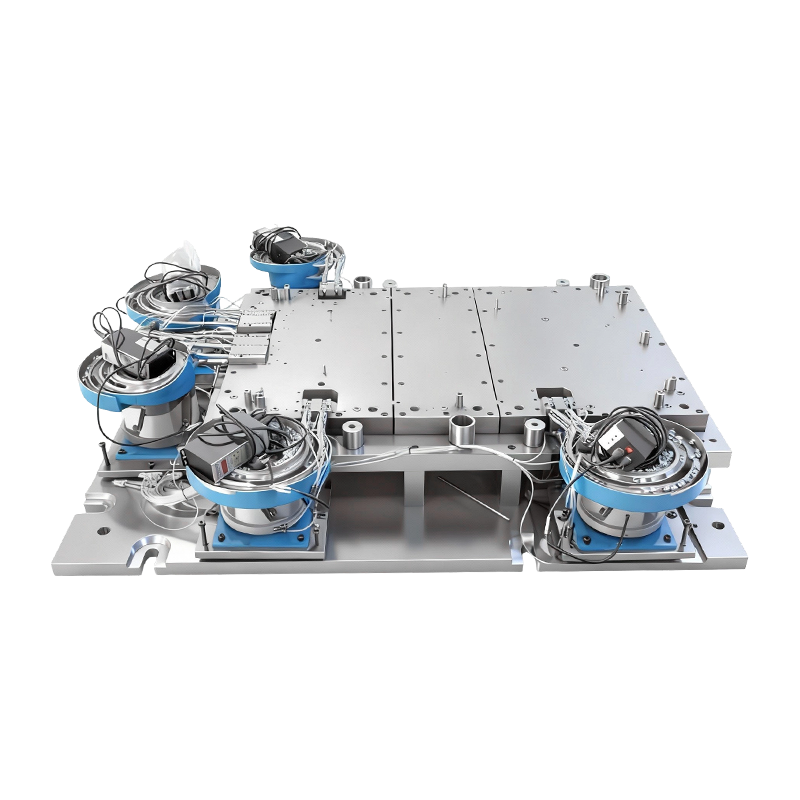
Automatic riveting mold for large computer machine base
This Automatic Riveting Mold for Large Computer Ma...
- E-mail us: [email protected]
- Call us: +86-139 1308 8972

Zhou Mengjie – Technical Sales Specialist
Home / Author / Zhou Mengjie – Technical Sales Specialist / High-End Large Computer Stamping Parts for Reliable Industrial Computing Hardware
High-End Large Computer Stamping Parts for Reliable Industrial Computing Hardware
2026-07-18
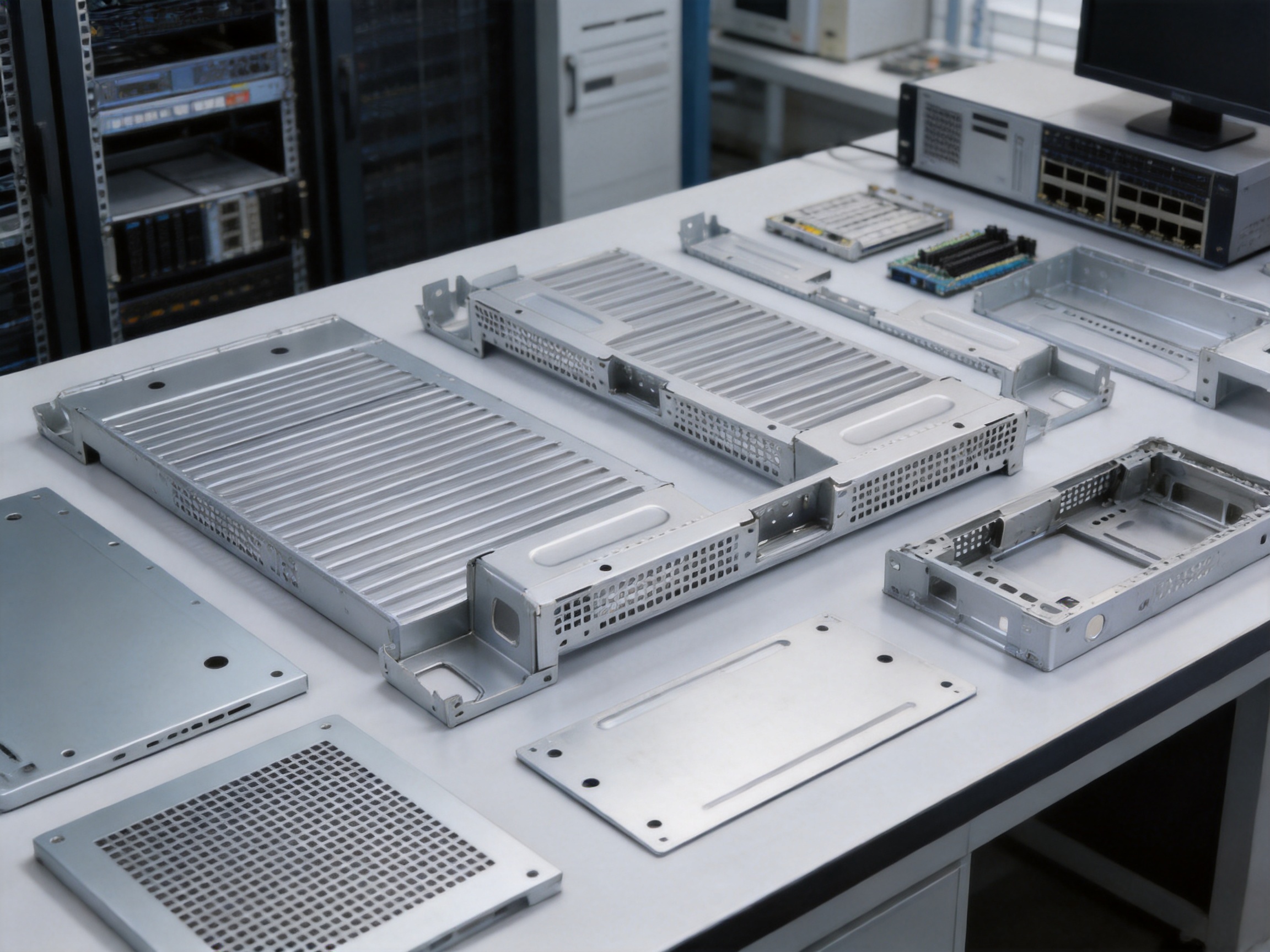
High-end large computer stamping parts are critical structural components used in advanced computing equipment, including server chassis, mainframe frames, industrial computer housings, control cabinet panels, mounting brackets, internal supports, and protective enclosures. In modern computing systems, the visible performance of processors, memory, storage, and network modules depends heavily on the hidden stability of the metal structure that holds them together. A server chassis or industrial computer housing must maintain dimensional accuracy, resist vibration, protect sensitive electronic assemblies, support airflow design, and remain durable throughout years of continuous operation. For this reason, large computer stamping parts must be manufactured with precision, repeatability, and disciplined process control.
The product discussed here is designed for demanding computer hardware applications where strength, flatness, clean edges, corrosion resistance, and assembly reliability are essential. Produced from high-strength cold-rolled steel or aluminum alloy, these stamping parts go through carefully controlled stamping, deburring, inspection, and surface treatment processes. Their purpose is not only to form the outer or inner structure of a computer system, but also to support stable equipment operation in industrial environments, data centers, automation facilities, and electronic manufacturing lines.
Compared with ordinary metal parts, high-end large computer stamping parts must satisfy stricter requirements. They must match the installation dimensions of electronic modules, tolerate repeated assembly and maintenance, prevent unwanted gaps, and maintain a professional appearance after surface treatment. In large computer systems, even a small dimensional deviation can affect board alignment, fan module positioning, drive cage installation, thermal flow paths, or cable management. Therefore, high-quality stamping parts are an important foundation for reliable computer equipment manufacturing.
Suzhou Shuangqisi Mold Equipment Co., Ltd. provides a strong manufacturing foundation for these parts through its integrated capabilities in stamping die design, die manufacturing, precision machining, stamping production, and stamping automation. Located in Suzhou, China, the company combines experienced technical staff, advanced precision equipment, and practical production knowledge accumulated over many years in the mold and stamping industry. Its ability to offer both tooling and production solutions gives customers a clear advantage: stable quality, cost control, faster technical communication, and reliable support for long-term manufacturing projects.
High-end large computer stamping parts
Content
- 1 Understanding the Role of Large Computer Stamping Parts
- 2 Material Selection for Strength, Accuracy, and Durability
- 3 Precision Stamping as the Core Manufacturing Process
- 4 Deburring and Edge Quality for Safe Assembly
- 5 Surface Anti-Corrosion Treatment and Long-Term Protection
- 6 Dimensional Accuracy and Flatness in Computer Hardware Assembly
- 7 Structural Rigidity for Vibration and Pressure Resistance
- 8 Seamless Compatibility with Computer Production Lines
- 9 Manufacturing Strengths Behind the Product
- 10 Integrated Die Design and Stamping Production
- 11 Stamping Automation and Turnkey Solution Capability
- 12 Comparison with Ordinary Competitor Solutions
- 13 Applications in Server Chassis
- 14 Applications in Mainframe Frames and Large Computing Systems
- 15 Applications in Industrial Computer Housings
- 16 Quality Control Across the Manufacturing Process
- 17 Design Considerations for Custom Computer Stamping Parts
- 18 Why Manufacturing Experience Matters
- 19 Cost-Effectiveness Without Sacrificing Performance
- 20 Support for OEM and Custom Manufacturing
- 21 Sustainability and Efficient Material Use
- 22 Q&A Section
- 22.1 What are high-end large computer stamping parts?
- 22.2 Why are these stamping parts important for computer equipment?
- 22.3 What materials are commonly used?
- 22.4 How do these parts compare with ordinary sheet metal parts?
- 22.5 Can the parts be customized for specific computer hardware designs?
- 22.6 Why is deburring necessary?
- 22.7 What surface treatments are available?
- 22.8 How does integrated die making and stamping production benefit customers?
- 22.9 What industries can use these computer stamping parts?
- 22.10 How can customers start a project?
- 23 Conclusion
- 24 References
- 25 Product: High-end large computer stamping parts
Understanding the Role of Large Computer Stamping Parts
Large computer stamping parts serve as the mechanical backbone of many computing products. In a server chassis, they may form side panels, top covers, bottom bases, rear I/O panels, drive supports, rack-mount ears, internal partitions, reinforcement ribs, and power supply brackets. In an industrial computer, they may form rugged housings, mounting plates, ventilation covers, equipment supports, and protective shells. In mainframe and high-performance computing equipment, stamping parts help create strong frames capable of carrying multiple modules while remaining accurate enough for precision electronic assembly.
The main role of these parts is structural stability. Electronic components are sensitive to mechanical stress, vibration, dust, heat, and electromagnetic interference. A well-designed stamped metal structure contributes to protection and stability by holding components in fixed positions, preventing deformation, and supporting proper airflow. When the metal structure is inaccurate or weak, the final system may suffer from assembly misalignment, unstable fan installation, loose module connection, resonance, excessive noise, or reduced service life.
Another important role is manufacturing efficiency. Computer manufacturers often operate assembly lines where many parts must be installed quickly and repeatedly. If a stamped panel has burrs, uneven edges, incorrect hole positions, warped surfaces, or unstable thickness, workers may need additional adjustment time. This increases labor costs and slows production. High-quality stamping parts reduce these problems by offering accurate geometry, smooth edges, and predictable fit, allowing fast integration into computer production lines.
Large computer stamping parts also contribute to product appearance. Although many structural components are internal, external covers and housings must look clean, professional, and consistent. Flat surfaces, accurate bends, uniform coating, and clean corners help improve the perceived quality of the finished computer equipment. For high-end industrial computers and server products, appearance is not only aesthetic; it reflects engineering discipline and manufacturing reliability.
Material Selection for Strength, Accuracy, and Durability
The performance of large computer stamping parts begins with material selection. High-strength cold-rolled steel is widely used because it provides excellent dimensional stability, mechanical strength, surface quality, and processability. Cold-rolled steel is especially suitable for frames, bases, brackets, and structural panels that must resist deformation under load. Its relatively smooth surface also supports later finishing processes such as powder coating, electrophoresis, plating, or anti-corrosion treatment.
Aluminum alloy is another important material choice. It is valued for its lighter weight, good corrosion resistance, attractive appearance, and useful thermal characteristics. In applications where weight reduction is important, aluminum alloy stamping parts can reduce the total mass of computer equipment while maintaining structural performance. Aluminum is also suitable for certain external housings and panels where a premium surface finish is desired.
The choice between cold-rolled steel and aluminum alloy depends on the final application. Server chassis and industrial frames may prioritize strength, stiffness, cost-effectiveness, and grounding performance, making cold-rolled steel a common option. Portable or compact industrial computer housings may favor aluminum alloy because of weight and corrosion benefits. In many advanced computer systems, both materials can be used together: steel for load-bearing frames and aluminum for covers or selected heat-related components.
Material thickness is another critical factor. Large stamped parts require careful thickness control because thickness affects strength, bend radius, hole quality, weight, forming force, and die design. If the material is too thin, the part may deform or vibrate. If it is too thick, it may increase cost, weight, and forming difficulty. The manufacturing process must ensure thickness uniformity across each batch so that the finished parts remain consistent during assembly.
For customers, proper material selection offers direct advantages. It reduces the risk of field failure, improves assembly repeatability, supports longer service life, and helps optimize cost. A manufacturer with die design and stamping production experience can recommend suitable materials based on the customer’s product structure, load conditions, surface treatment needs, and production volume.
Precision Stamping as the Core Manufacturing Process
Stamping is a high-efficiency metal forming process that uses dies and presses to cut, bend, pierce, draw, form, and shape sheet metal. For large computer stamping parts, precision stamping is especially valuable because it can produce complex shapes at scale with consistent accuracy. Once the stamping die is developed and debugged correctly, the process can deliver repeatable parts with stable dimensions and controlled quality.
The production of high-end computer stamping parts usually begins with technical evaluation. Engineers review drawings, material requirements, tolerances, bend features, hole positions, surface requirements, and assembly relationships. They analyze whether the part can be formed efficiently, whether additional ribs or reliefs are necessary, and whether the design may create deformation or springback. This early review helps prevent later quality issues and reduces unnecessary tooling modification.
After technical evaluation, die design becomes the key stage. The stamping die must be designed to control material flow, forming sequence, cutting clearance, bend angles, and part release. For large computer components, die design must also consider part flatness and deformation control. Reinforcing ribs, flanges, mounting holes, slots, louvers, and complex bends may all need careful sequencing to ensure the finished part meets dimensional requirements.
Manufacturing the die requires precision machining and skilled workmanship. Wire cutting machines, CNC machining centers, grinding equipment, and precision fitting operations are used to create die plates, punches, inserts, guide components, and forming surfaces. Accuracy at this stage directly affects the quality of mass production. A small error in die machining can cause burrs, dimensional drift, uneven bending, or unstable forming behavior. Therefore, advanced tooling equipment and experienced technicians are essential.
Once the die is assembled, trial stamping and debugging are performed. Operators check the first samples against drawings, inspect hole positions, flatness, edge condition, bend angles, and assembly performance. If needed, the die is adjusted until the process becomes stable. This debugging stage is particularly important for large computer stamping parts because they often have broad surfaces that can warp if forming stress is not controlled properly.
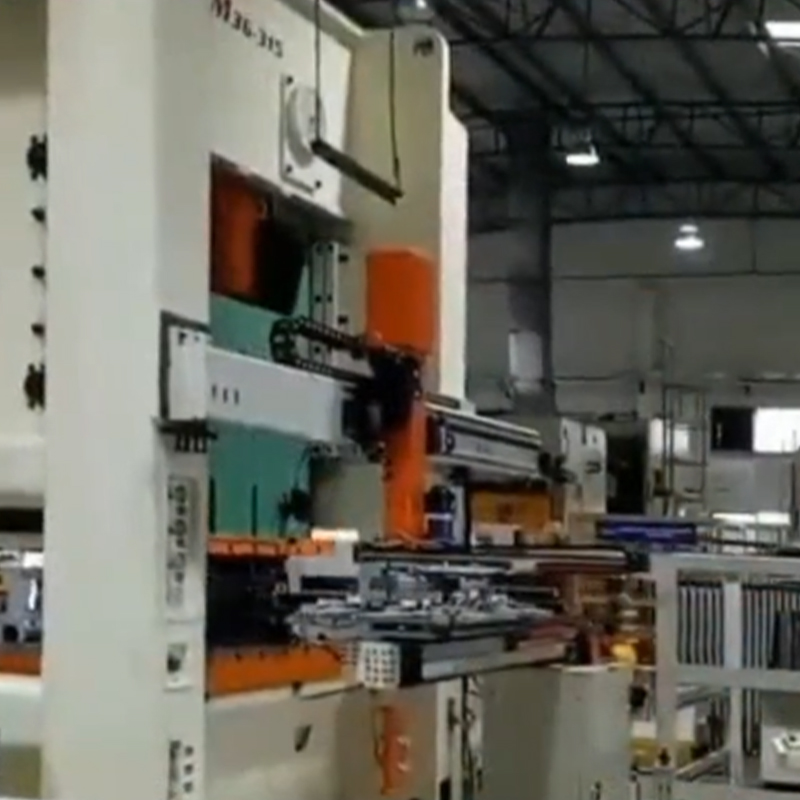
During mass production, punch presses provide the forming force needed to produce the parts. Suzhou Shuangqisi Mold Equipment Co., Ltd. is equipped with multiple punch presses ranging from 80T to 400T, allowing it to process different part sizes and material thicknesses. This press capacity is suitable for a wide range of stamping applications, from small brackets to larger computer chassis components. With stable equipment and skilled operators, the company can support consistent batch production.
Deburring and Edge Quality for Safe Assembly
Deburring is a necessary process for high-quality computer stamping parts. During cutting, piercing, and blanking, small burrs may appear along the edges of the metal. If burrs are not removed or controlled, they can create several problems. They may scratch workers during assembly, damage cables, interfere with electronic modules, prevent tight fitting, or cause poor coating adhesion. In high-end computer manufacturing, edge smoothness is therefore both a safety requirement and a performance requirement.
For large computer stamping parts, edge quality must be consistent across straight edges, holes, slots, ventilation openings, tabs, and bent flanges. Many server and industrial computer parts include numerous holes for screws, rivets, airflow, cable routing, and module positioning. Each opening must be clean enough to support accurate fastening and safe operation. Smooth hole edges also reduce stress concentration and help extend service life.
Deburring may involve mechanical finishing, brushing, grinding, tumbling, or manual inspection depending on the part structure and production requirements. The correct method is selected based on material type, burr size, surface finish requirements, and edge accessibility. After deburring, parts are inspected to ensure that burrs do not exceed acceptable limits and that critical edges remain smooth.
Superior deburring gives the product a practical advantage over lower-grade alternatives. Parts with rough edges often require rework at the customer’s assembly site, increasing cost and delaying production. Smooth-edged parts can move directly into assembly or surface treatment with fewer interruptions. This improves the customer’s production rhythm and reduces hidden quality risks.
Surface Anti-Corrosion Treatment and Long-Term Protection
Computer equipment may operate in data centers, factories, control rooms, laboratories, transportation systems, and other environments where temperature, humidity, dust, and vibration can vary. Metal stamping parts need reliable surface treatment to resist corrosion and preserve appearance. Anti-corrosion treatment also improves product reliability by protecting structural integrity over time.
For cold-rolled steel parts, common surface treatments may include powder coating, electrophoretic coating, galvanizing, plating, phosphating, painting, or other protective processes. The selected treatment depends on the final environment, appearance needs, electrical grounding requirements, and customer specifications. For aluminum alloy parts, anodizing, conversion coating, painting, or powder coating may be considered. Each process must be compatible with the part’s dimensional requirements and assembly function.
Surface treatment quality depends strongly on earlier processes. If the part has oil, burrs, sharp edges, uneven surfaces, or hidden contamination, coating performance may be reduced. Therefore, stamping, cleaning, deburring, and surface preparation must be coordinated. A well-controlled process ensures that the final part has uniform coating thickness, strong adhesion, and effective corrosion resistance.
For high-end computer parts, surface treatment must also preserve precision. Excessive coating thickness around holes, slots, or assembly surfaces can interfere with fastening or module positioning. Good manufacturing control balances protection and dimensional accuracy. This is especially important for rack-mount hardware, internal frame parts, and precision brackets that must fit into standardized computer equipment.
Dimensional Accuracy and Flatness in Computer Hardware Assembly
Dimensional accuracy is one of the most important quality indicators for large computer stamping parts. Modern computer systems are built from many components that must fit together in a defined space. A panel may need to match screw holes on a motherboard tray, support a fan module, align with a power supply, or connect to a rack mounting structure. If the stamping part is inaccurate, assembly problems can spread across the entire product.
Flatness is equally important. Large panels and bases are prone to warping during stamping if stress is not managed correctly. Poor flatness may cause visible gaps, unstable assembly, vibration, or difficulty installing electronic modules. In server chassis production, flatness affects not only appearance but also mechanical reliability. A warped base or cover may create unwanted pressure on internal components or interfere with airflow channels.
High-end stamping production controls dimensional accuracy through careful die design, proper press selection, stable material feeding, controlled forming sequence, and systematic inspection. The company inspects each batch for thickness uniformity and edge smoothness, helping prevent assembly gaps and quality variation. For customers who require consistent mass production, this inspection discipline reduces the chance of defective parts entering assembly lines.
Dimensional quality also supports interchangeability. When parts are consistent from batch to batch, customers can assemble products without frequently adjusting fixtures, tools, or procedures. This is especially valuable for computer manufacturers producing standardized models in large quantities. Stable parts support lean manufacturing, reduce inventory problems, and simplify quality management.
Structural Rigidity for Vibration and Pressure Resistance
Computer equipment often operates continuously for long periods. Servers may run twenty-four hours a day in data centers. Industrial computers may be installed near production lines, motors, compressors, automated equipment, or transportation systems. In these situations, vibration and external pressure can gradually affect mechanical structures. Large computer stamping parts must therefore offer sufficient rigidity.
Rigid structures are created through a combination of material strength, thickness, geometry, forming features, and assembly design. Bends, flanges, ribs, embossed areas, and reinforced corners can greatly improve stiffness without excessively increasing weight. A flat metal sheet may be flexible, but once it is properly formed into a structured panel with flanges and ribs, its resistance to deformation improves significantly.
High rigidity helps prevent several problems. It reduces resonance and noise, protects circuit boards and connectors, keeps fans and drives aligned, supports transportation safety, and maintains the overall shape of the equipment. It also improves user confidence because a solid chassis feels more reliable and professional.
Compared with competitors that only provide basic sheet metal processing, a manufacturer with stamping die expertise can optimize rigidity from the tooling and forming stage. The part can be designed for repeatable strength rather than simply cut and bent after the fact. This leads to better structural consistency, especially in high-volume production.
Seamless Compatibility with Computer Production Lines
A major advantage of high-quality computer stamping parts is their seamless compatibility with assembly lines. Computer manufacturers need parts that can be installed quickly, positioned accurately, and fastened securely. When stamped components are designed and produced correctly, they reduce assembly time and help maintain production flow.
Compatibility begins with accurate hole positions, proper bend angles, smooth insertion features, and stable dimensions. It also depends on packaging and batch consistency. If parts arrive with deformation, scratches, mixed dimensions, or burrs, assembly workers must slow down to inspect and adjust them. In contrast, reliable parts can be fed into production with confidence.
Large computer stamping parts may be integrated with screws, rivets, welding, clinching, hinges, rails, handles, covers, and plastic or electronic components. Their dimensions must support all these joining methods. For example, a drive cage support must align with both the chassis base and storage module. A fan bracket must align with airflow openings and fastening points. A server panel must fit flush against adjacent parts without gaps.
By following standardized manufacturing processes and inspection routines, the manufacturer helps customers reduce assembly risk. This is particularly valuable when customers develop new computer models, upgrade existing equipment, or scale production volume. Stable stamped parts allow engineers to focus on system performance rather than repeatedly solving mechanical fit problems.
Manufacturing Strengths Behind the Product
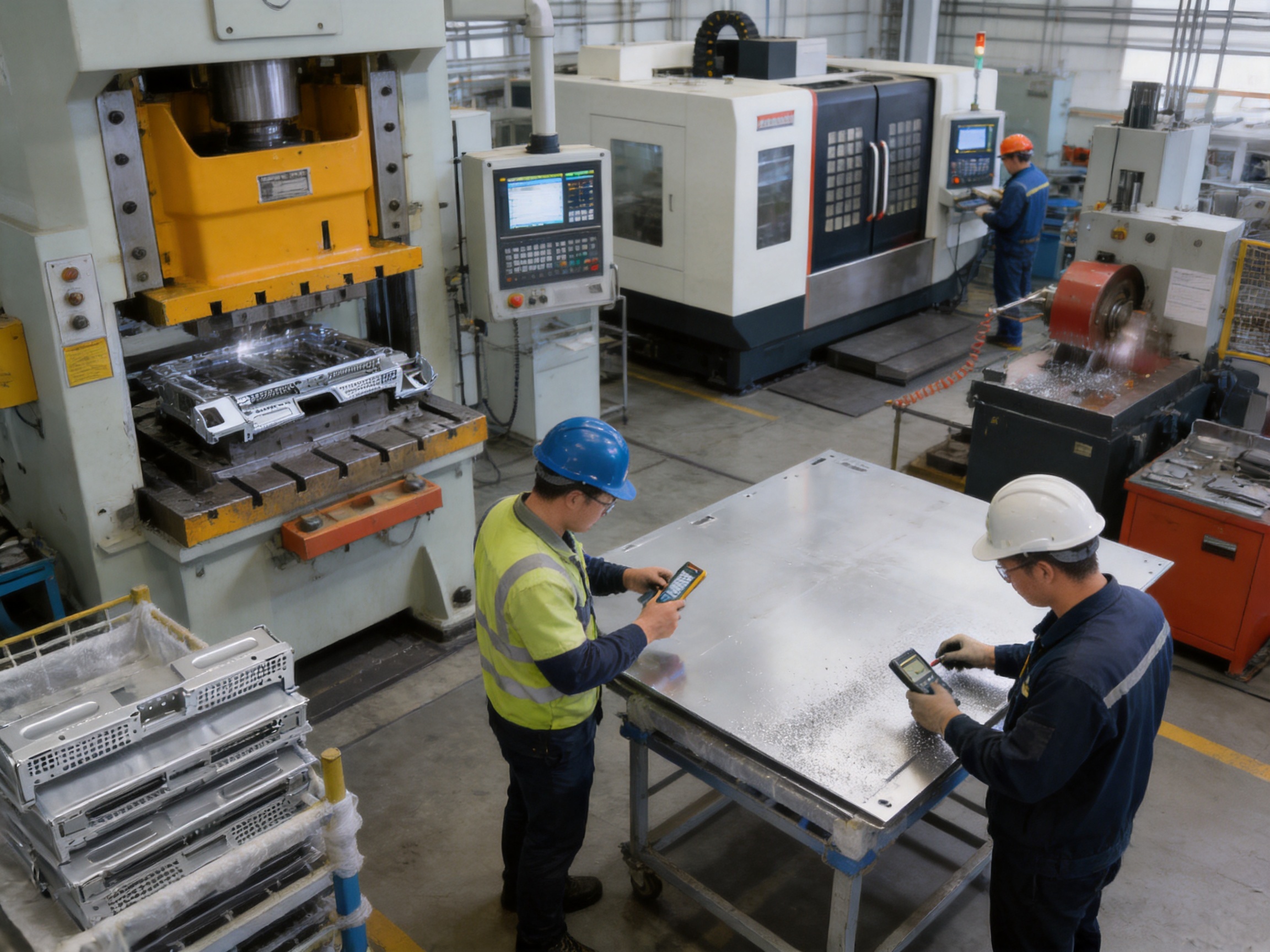
The quality of high-end large computer stamping parts depends not only on product design but also on the capabilities of the manufacturer. Suzhou Shuangqisi Mold Equipment Co., Ltd. is a professional manufacturer of stamping dies and hardware parts integrating design, manufacturing, and service. Its strengths include technical experience, advanced equipment, integrated tooling and stamping capabilities, cost control, and the ability to provide turnkey solutions involving stamping molds and stamping automation.
The company has around 60 technical staff, which provides a strong foundation for engineering support, production management, tooling design, machining, stamping operation, debugging, and inspection. Technical staff are essential because stamping production requires practical judgment. Drawings and machines alone are not enough; experienced engineers and operators understand how materials behave, how dies wear, how springback affects dimensions, and how process changes influence quality.
The company is equipped with imported wire cutting machines, CNC machining centers, more than 10 grinding machines of various sizes, and 25 punch presses ranging from 80T to 400T. This equipment combination supports both precision die manufacturing and stamping production. Wire cutting enables accurate die inserts and complex contours. CNC machining centers support mold plates, forming surfaces, and structural components. Grinding machines improve flatness and precision fitting. Punch presses provide production capacity for different sizes and thicknesses of stamped parts.
Experienced debugging personnel further strengthen manufacturing reliability. Die debugging is one of the most important stages in stamping production. During debugging, technicians identify forming issues, adjust clearances, correct springback, reduce burrs, improve feeding stability, and confirm that the part meets specifications. A company with experienced debugging personnel can shorten development cycles and improve final quality.
The company’s experience serving customers in fields such as servo drives, compressors, and new energy vehicles demonstrates its ability to meet industrial requirements. These fields demand accurate metal parts, stable quality, and reliable tooling. This background is useful for computer stamping parts because computer hardware also requires precision, durability, and consistency.
Integrated Die Design and Stamping Production
One of the strongest advantages over competitors is integrated die design and stamping production. Some suppliers only manufacture parts after receiving tooling from outside sources. Others only build dies but do not manage long-term production. An integrated supplier can evaluate the entire process from part design to die manufacturing, trial production, mass stamping, inspection, and improvement.
This integration reduces communication gaps. If a dimensional issue appears during trial stamping, the die team and production team can work together quickly. If a customer wants to improve part strength, reduce burrs, change material, or adjust a mounting feature, the manufacturer can evaluate tooling and production impacts directly. This makes engineering communication faster and more practical.
Integrated capability also improves cost control. Tooling design decisions influence production speed, scrap rate, maintenance frequency, and part stability. A manufacturer that understands both die making and production can design dies for long-term efficiency rather than only initial appearance. This can lower total cost for customers, especially in medium and high-volume production.
For high-end large computer stamping parts, integrated manufacturing helps ensure that the final part is not only theoretically correct but also production-ready. A part may look acceptable in a prototype, but mass production may reveal deformation, burrs, or assembly variation. Integrated die and stamping expertise helps address these risks before they become costly.
Stamping Automation and Turnkey Solution Capability
Modern manufacturing increasingly depends on automation. Stamping automation improves efficiency, reduces labor intensity, improves feeding accuracy, supports stable cycle times, and enhances safety. The company’s investment in Suzhou Keshuang Intelligent Technology Co., Ltd., which mainly produces stamping automation equipment, expands its ability to provide complete solutions for customers.
For computer stamping parts, automation can be used in feeding, transfer, unloading, stacking, inspection assistance, or integrated production lines. Automated systems help reduce variation caused by manual handling. They also protect large panels from scratches, bending, or inconsistent placement. For customers with high production volume, automation can significantly improve productivity and reduce unit cost.
Turnkey solution capability means the supplier can support stamping molds, stamping production, and automation planning. This is valuable for customers who need to launch new computer hardware products quickly. Instead of coordinating multiple suppliers for tooling, stamping, and automation, customers can work with a partner that understands the complete manufacturing chain.
Another advantage is flexibility. According to customer needs, the company can invest in related production equipment to deliver cost-effective products and services. This willingness to align resources with customer demand supports long-term cooperation and customized manufacturing strategies.
Comparison with Ordinary Competitor Solutions
Not all stamping parts are equal. At first glance, many metal panels and brackets may look similar, but differences become clear during assembly, testing, transportation, and long-term operation. High-end large computer stamping parts offer advantages in material control, tooling precision, edge quality, flatness, coating compatibility, structural rigidity, and batch consistency.
| Evaluation Area | High-End Large Computer Stamping Parts | Ordinary Competitor Parts |
|---|---|---|
| Material Selection | High-strength cold-rolled steel or aluminum alloy selected for strength, accuracy, and durability. | May use general materials without optimized thickness or performance matching. |
| Tooling Quality | Precision die design and manufacturing supported by wire cutting, CNC machining, and grinding. | Tooling may be outsourced or less stable, causing dimensional variation. |
| Edge Treatment | Deburring and edge inspection reduce scratches, assembly issues, and cable damage. | Burrs may remain, creating safety and quality risks. |
| Flatness Control | Forming process and inspection focus on reducing warpage and assembly gaps. | Large panels may warp or require rework before assembly. |
| Structural Rigidity | Ribs, flanges, bends, and material choices support vibration and pressure resistance. | Basic forming may not provide sufficient stiffness for demanding use. |
| Production Integration | Die design, die manufacturing, stamping, debugging, and automation can be coordinated. | Separate suppliers may increase communication delays and responsibility gaps. |
| Batch Consistency | Standardized manufacturing and inspection support repeatable mass production. | Quality may fluctuate between batches. |
| Customer Value | Supports faster assembly, lower rework, durable equipment, and long-term cost control. | Lower initial price may be offset by rework, delays, and reliability problems. |
This comparison shows that the value of a high-end stamping part is not limited to the metal itself. The real value lies in the complete manufacturing system behind the part. Precision tooling, controlled stamping, skilled inspection, and reliable surface treatment all contribute to better customer outcomes.
Applications in Server Chassis
Server chassis production is one of the most important applications for large computer stamping parts. A server chassis must support motherboards, processors, memory modules, storage devices, cooling fans, power supplies, network cards, and cable systems. It must also fit standard racks and allow efficient maintenance. Stamped metal parts are used throughout the chassis structure.
In a rack server, the bottom base and side structure must remain strong enough to carry internal components while sliding in and out of racks. The rear panel must accurately position I/O openings, expansion slots, and power supply areas. Fan brackets must hold cooling modules securely and align with airflow paths. Drive supports must allow fast installation and replacement of storage units.
High-end stamping parts improve server reliability by maintaining accurate alignment and resisting deformation during transportation and operation. They also help improve thermal performance because accurate panels and vents support designed airflow. If stamping parts are distorted, air leakage or blocked channels may reduce cooling efficiency. In high-density server environments, cooling performance is directly related to system stability.
Applications in Mainframe Frames and Large Computing Systems
Mainframe frames and large computing systems require robust metal structures because they often contain many modules, power units, cooling systems, and service access points. The stamped components used in these systems must handle larger dimensions and higher structural loads than ordinary desktop computer parts.
Large frames may include vertical supports, cross members, outer panels, internal partitions, and reinforced bases. Stamping allows these components to be produced efficiently while maintaining consistent geometry. Properly formed flanges and ribs help improve stiffness without excessive material usage. This balance between strength and weight is important in large computing equipment.
Because mainframe and high-performance systems are expensive and mission-critical, mechanical reliability is especially important. High-end stamped parts reduce the risk of deformation, misalignment, and maintenance difficulties. They also support professional appearance, which is valuable for equipment installed in enterprise, government, industrial, or research environments.
Applications in Industrial Computer Housings
Industrial computers are often used in harsh or demanding settings. They may be installed in factories, machine control systems, power systems, transportation equipment, energy facilities, and automated production lines. Their housings must protect internal electronics from vibration, dust, accidental impact, and environmental exposure.
Stamped metal housings provide a strong and cost-effective solution. Cold-rolled steel housings offer high strength and durability, while aluminum alloy housings provide lighter weight and corrosion resistance. Ventilation openings, mounting holes, cable entry points, and access covers can be formed through stamping processes. With proper design, the housing can be easy to assemble, maintain, and install.
Industrial computer housings also need stable dimensions because they may connect to guide rails, wall mounts, machine frames, or control cabinets. Accurate stamping parts ensure that equipment can be mounted securely in the field. Smooth edges protect cables and operators, while anti-corrosion treatment improves long-term reliability.
Quality Control Across the Manufacturing Process
Quality control must be built into every stage of production. For high-end large computer stamping parts, inspection does not begin only after final production; it starts with design review and continues through material receiving, die manufacturing, trial stamping, mass production, deburring, surface treatment, and final packaging.
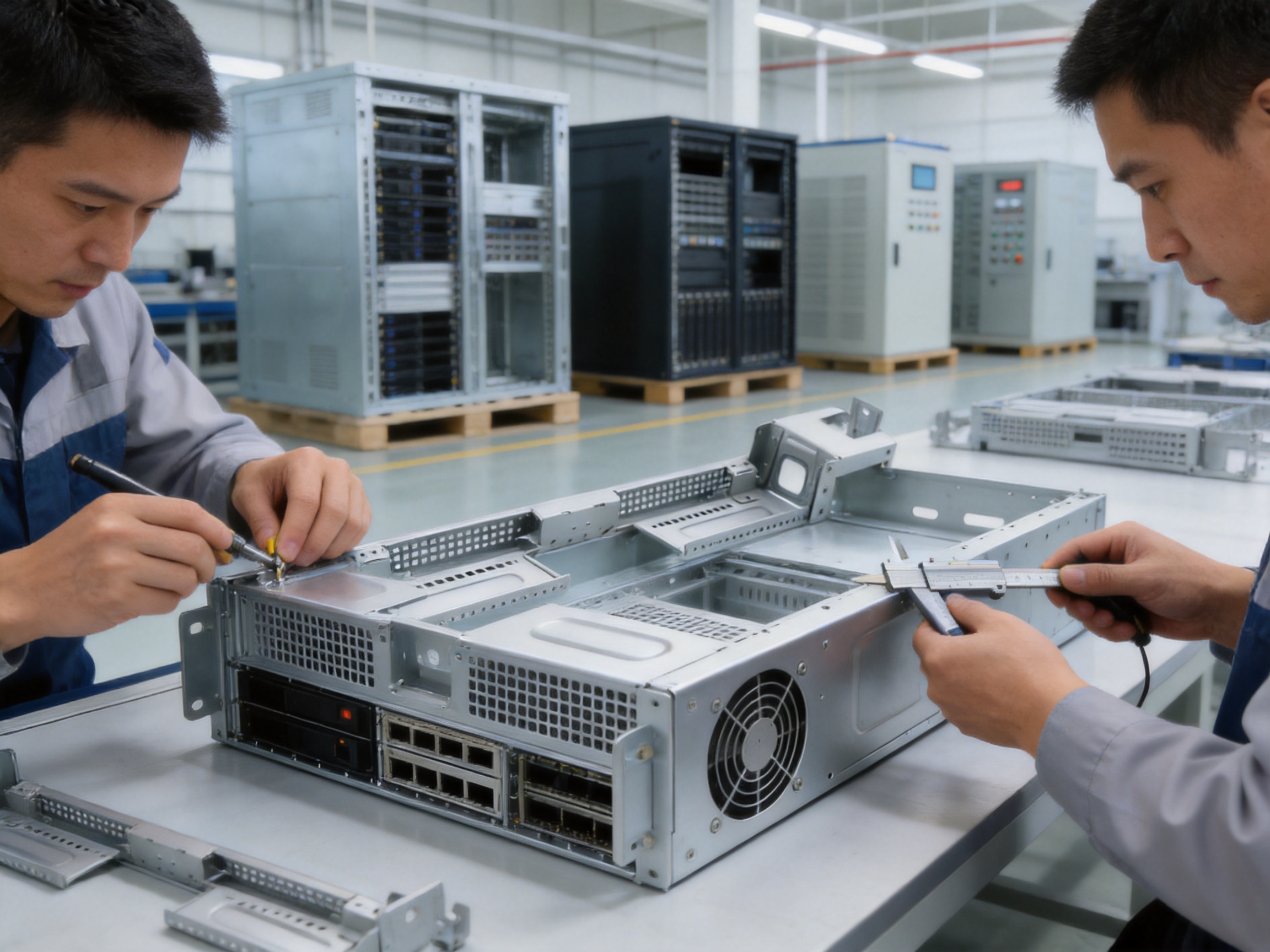
Material inspection verifies that sheet metal meets thickness, grade, surface, and mechanical requirements. Die inspection checks critical tooling dimensions and fitting quality. First article inspection confirms that the initial stamped samples meet drawing requirements before mass production begins. In-process inspection monitors key dimensions, burr condition, flatness, and visual quality during production.
Batch inspection helps ensure consistency. The company inspects each batch for thickness uniformity and edge smoothness, reducing the risk of assembly gaps. Depending on customer requirements, additional inspection may include hole position measurement, bend angle checking, coating thickness evaluation, salt spray testing, appearance checking, and functional assembly testing.
Packaging is also part of quality control. Large stamped panels can be scratched or bent if not handled correctly. Proper stacking, separation, and packaging protect the parts during storage and transportation. For customers, receiving clean and undamaged parts is essential for efficient assembly.
Design Considerations for Custom Computer Stamping Parts
Customers developing custom computer hardware should consider manufacturability early in the design stage. Good stamping design can improve quality, reduce cost, and shorten production time. Important design factors include material thickness, bend radius, hole-to-edge distance, bend relief, tolerance requirements, surface treatment allowance, and assembly sequence.
Bend radius should match material properties and thickness to avoid cracking or excessive springback. Holes should not be too close to bends unless special tooling solutions are used. Large flat areas may require ribs or flanges to improve stiffness. Ventilation openings should balance airflow, strength, and manufacturability. Mounting features should be designed for reliable fastening and repeatable assembly.
Customers should also define the working environment. A server chassis in a controlled data center may have different corrosion and vibration requirements than an industrial computer housing used near manufacturing equipment. By understanding the environment, the supplier can recommend suitable material, thickness, structural features, and surface treatment.
Clear technical communication improves project success. Drawings should specify key dimensions, tolerance levels, surface finish requirements, burr limits, coating requirements, and inspection standards. If the customer has mating parts, samples, or assembly models, sharing them can help the manufacturer verify fit and avoid design conflicts.
Why Manufacturing Experience Matters
Stamping is both an engineering science and a practical craft. Software can assist with design, and machines can perform cutting and forming, but experience remains essential. Experienced manufacturers understand how sheet metal behaves during forming, how to prevent distortion, how to adjust dies, and how to maintain quality during long production runs.
Suzhou Shuangqisi Mold Equipment Co., Ltd. has 15 years of experience in the mold industry and a strong technical team. This background supports reliable die development, efficient troubleshooting, and practical manufacturing recommendations. Experience also helps the company manage cost while maintaining quality, which is important for customers seeking competitive products without sacrificing reliability.
The company’s main clients include industrial enterprises in fields such as servo drives, compressors, and new energy vehicles. Serving such customers requires disciplined production, stable quality, and responsive engineering support. This experience can be applied to high-end computer stamping parts, where precision and durability are also essential.
Cost-Effectiveness Without Sacrificing Performance
High-end stamping parts are not simply expensive parts; they are cost-effective parts when total value is considered. A low-cost part that causes assembly delays, rework, field failure, or customer complaints can become more expensive than a precisely manufactured part. Cost-effectiveness means achieving the required strength, accuracy, durability, and appearance at a competitive total cost.
Integrated die making and stamping production help control cost by reducing outsourcing, improving communication, and optimizing process efficiency. Automation capability can further reduce labor cost and improve production stability for suitable volumes. Strict quality control reduces scrap and rework. Proper material selection avoids both under-design and unnecessary over-design.
For customers, cost-effectiveness appears in several ways. Assembly becomes faster because parts fit correctly. Maintenance becomes easier because panels and brackets align reliably. Product reliability improves because structures resist vibration and corrosion. Inventory management becomes simpler because batch consistency is better. These benefits contribute to lower total manufacturing and service costs.
Support for OEM and Custom Manufacturing
Many computer hardware manufacturers require customized stamping parts rather than standard products. The shape, material, thickness, surface finish, mounting features, and packaging may all need to match a specific product platform. OEM manufacturing capability is therefore important.
A qualified stamping supplier can support customers from drawing review to production delivery. The process may include technical consultation, material recommendation, die design, sample production, trial assembly, tooling correction, pilot run, mass production, inspection, and continuous improvement. This full-process support is especially valuable for new product development.
Custom manufacturing also requires confidentiality and consistency. Computer hardware designs may involve proprietary structures, airflow designs, or assembly methods. A professional supplier must manage drawings and technical information carefully while delivering stable parts according to customer specifications.
Sustainability and Efficient Material Use
Efficient stamping production can contribute to sustainability by reducing waste, improving material utilization, and extending product life. Proper nesting and die design help reduce scrap. Stable production reduces defective parts. Durable stamping parts extend the service life of computer equipment, reducing premature replacement.
Material selection also affects sustainability. Steel and aluminum are widely recyclable, and efficient production planning can help manage scrap responsibly. Surface treatments should be selected to meet performance requirements while avoiding unnecessary environmental burden. In modern industrial supply chains, responsible manufacturing practices are increasingly important to customers.
Automation can further support sustainability by improving process control and reducing inconsistent handling damage. When parts are produced correctly the first time, less energy, material, and labor are wasted. A high-quality manufacturing system therefore supports both business value and resource efficiency.
Q&A Section
What are high-end large computer stamping parts?
They are precision-formed metal components used in computer hardware structures such as server chassis, mainframe frames, industrial computer housings, internal supports, panels, brackets, and mounting structures. They are typically made from cold-rolled steel or aluminum alloy and are designed for strength, accuracy, durability, and reliable assembly.
Why are these stamping parts important for computer equipment?
They provide the mechanical structure that supports and protects electronic components. Accurate and rigid stamped parts help maintain board alignment, fan positioning, drive installation, airflow control, and overall equipment stability. Poor-quality parts can cause assembly gaps, vibration, misalignment, and reliability problems.
What materials are commonly used?
High-strength cold-rolled steel and aluminum alloy are common choices. Cold-rolled steel offers strength, stiffness, and good surface quality, while aluminum alloy provides lighter weight and corrosion resistance. The best material depends on the application, structural load, environment, and customer requirements.
How do these parts compare with ordinary sheet metal parts?
High-end stamping parts offer better dimensional accuracy, smoother edges, improved flatness, stronger rigidity, better surface treatment compatibility, and more stable batch consistency. They are produced through controlled die design, precision machining, stamping, deburring, inspection, and anti-corrosion treatment.
Can the parts be customized for specific computer hardware designs?
Yes. Custom stamping parts can be developed according to customer drawings, samples, assembly requirements, material specifications, surface finish needs, and production volume. The manufacturer can support die design, sample development, mass production, and automation planning.
Why is deburring necessary?
Deburring removes or reduces sharp edges created during cutting and piercing. This improves worker safety, protects cables and electronic components, supports smooth assembly, and improves coating quality. For computer hardware, smooth edges are especially important around holes, slots, ventilation openings, and cable routing areas.
What surface treatments are available?
Depending on material and application, surface treatment may include powder coating, painting, plating, galvanizing, electrophoretic coating, anodizing, conversion coating, or other anti-corrosion processes. The purpose is to improve corrosion resistance, appearance, and long-term durability.
How does integrated die making and stamping production benefit customers?
Integration improves communication, shortens development time, reduces tooling and production conflicts, supports faster troubleshooting, and improves cost control. Customers benefit from a supplier that understands both tooling design and mass production requirements.
What industries can use these computer stamping parts?
They are suitable for server manufacturing, industrial computer production, mainframe systems, control equipment, electronic enclosures, automation equipment, data center hardware, and other high-performance computing applications requiring precise and durable metal structures.
How can customers start a project?
Customers can provide product drawings, samples, material requirements, surface treatment specifications, expected production volume, and assembly information. The manufacturer can then review manufacturability, recommend process solutions, design tooling, produce samples, and prepare for mass production.
Conclusion
High-end large computer stamping parts are essential components for reliable computing hardware. They support the structure, protection, assembly efficiency, airflow design, durability, and professional appearance of server chassis, mainframe frames, and industrial computer housings. Their performance depends on material quality, precision stamping, accurate die design, deburring, surface treatment, dimensional inspection, and structural optimization.
Compared with ordinary competitor parts, these high-end stamping components provide superior flatness, smooth edges, stable dimensions, strong rigidity, anti-corrosion protection, and batch consistency. They help customers reduce assembly gaps, prevent rework, improve production efficiency, and enhance the long-term reliability of computer equipment.
Suzhou Shuangqisi Mold Equipment Co., Ltd. strengthens this product value through integrated manufacturing capabilities. With technical staff, advanced wire cutting machines, CNC machining centers, grinding equipment, punch presses from 80T to 400T, experienced operators, and stamping automation resources, the company can provide dependable support from die design to mass production. Its experience in stamping dies, hardware parts, and automation solutions makes it a strong partner for customers seeking precision, durability, and cost-effective manufacturing.
For computer hardware manufacturers building high-performance systems, the choice of stamping parts is a strategic decision. Reliable metal structures reduce hidden risks, improve assembly quality, and support stable equipment operation. By selecting high-end large computer stamping parts produced through disciplined manufacturing processes, customers can build stronger, more precise, and more dependable computing products for demanding markets.
References
1. Kalpakjian, S., and Schmid, S. R. Manufacturing Engineering and Technology. Pearson Education.
2. Lange, K. Handbook of Metal Forming. Society of Manufacturing Engineers.
3. Altan, T., and Tekkaya, A. E. Sheet Metal Forming: Fundamentals. ASM International.
4. ASM International. ASM Handbook, Volume 14B: Metalworking: Sheet Forming. ASM International.
5. Groover, M. P. Fundamentals of Modern Manufacturing: Materials, Processes, and Systems. Wiley.
6. Suchy, I. Handbook of Die Design. McGraw-Hill Education.
7. Society of Manufacturing Engineers. Tool and Manufacturing Engineers Handbook: Forming. SME.
Product: High-end large computer stamping parts
Previous Post
High-Strength Heavy Truck Stamping Parts for Reliable Commercial Vehicle Performance
Next Post
High-Precision Gas Tank End Stamping Parts for Durable Automotive Fuel Tank Assemblies
Our Products.
Start Your Business with an OEM Manufacturer Right Here!

Provide global customers with complete turn-key solutions
through
innovation!
QUICK LINKS
CONTACT INFO.
-
 +86-139 1308 8972
 -

-
 No. 118 Yexin Road, Wujiang Economic Development Zone, Suzhou, China
Copyright © Suzhou Shuangqisi Mold Equipment Co., Ltd. All Rights Reserved. Custom Stamping Die Metal Stamping Die Manufacturers
