 English
 Español
 Deutsch
-
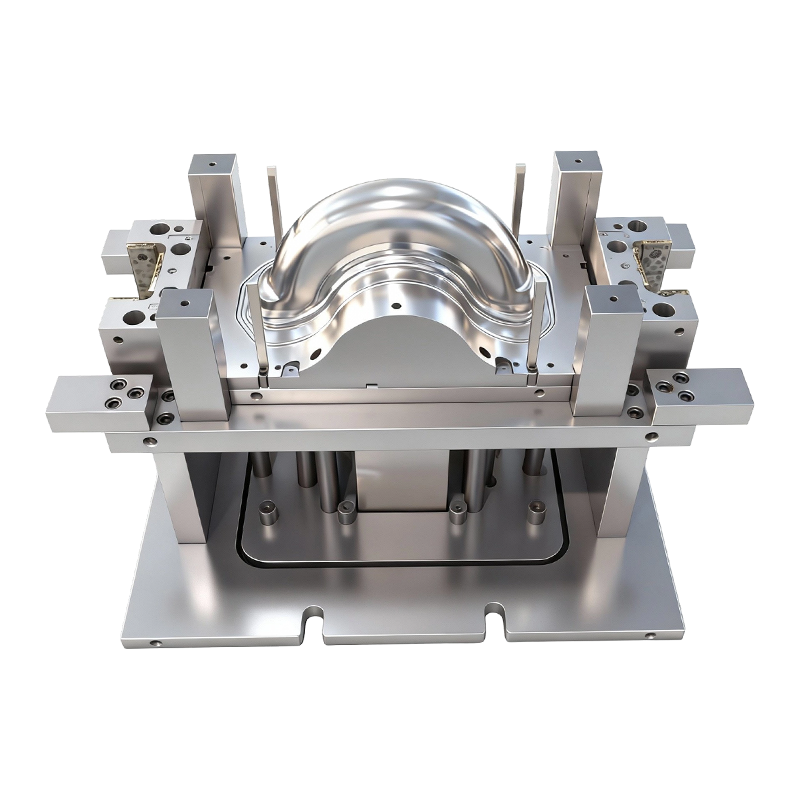
Deep drawing mold for front and rear wheels of two-wheeled electric vehicles
This Deep drawing mold for front and rear wheels o...
-
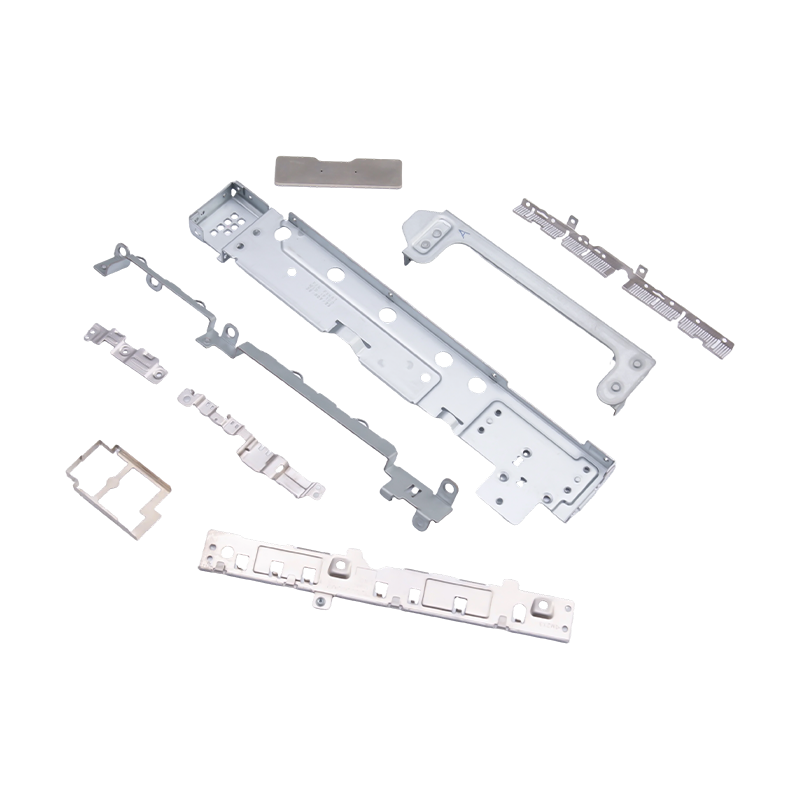
Small stamped parts for laptops and mobile phones
As essential internal components for modern portab...
-
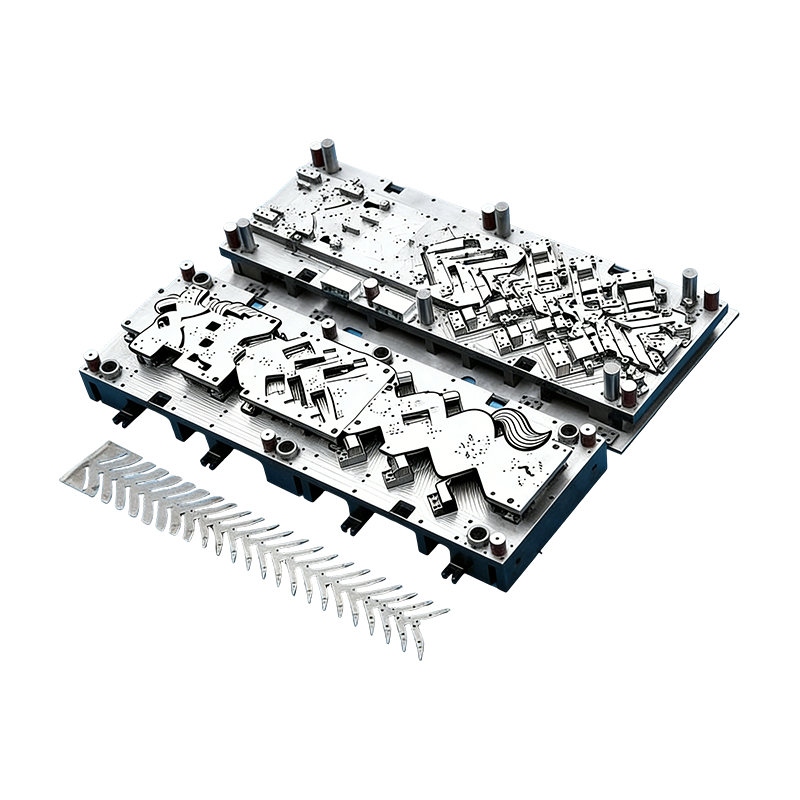
Progressive molds for automotive parts
This Continuous mold for automotive motor housing ...
-
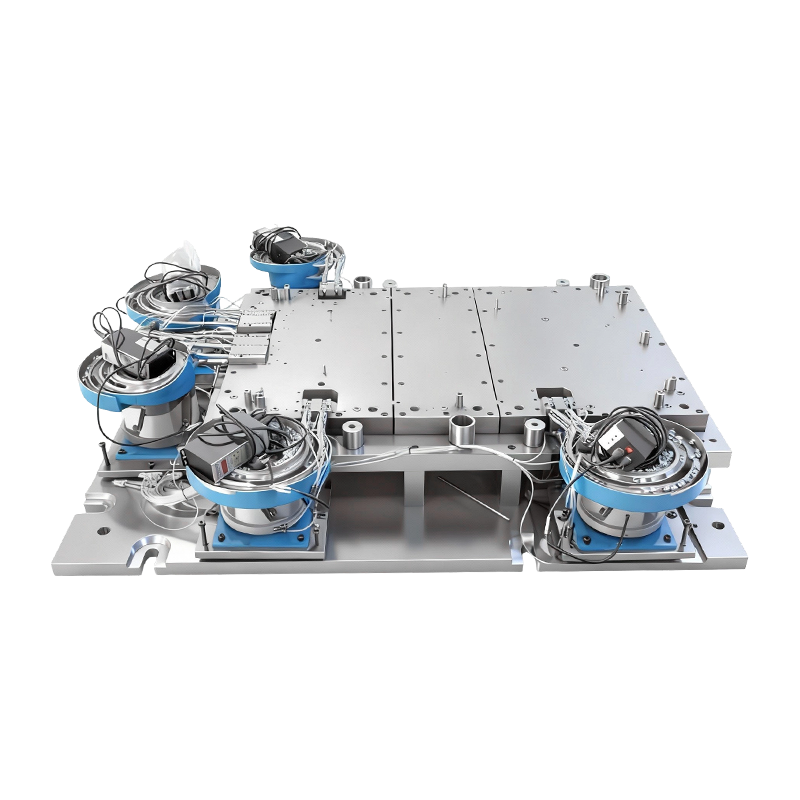
Automatic riveting mold for large computer machine base
This Automatic Riveting Mold for Large Computer Ma...
- E-mail us: [email protected]
- Call us: +86-139 1308 8972

Wang Xinyue – After-Sales Support Supervisor
Home / Author / Wang Xinyue – After-Sales Support Supervisor / Deep Drawing Molds for Front and Rear Wheels of Two-Wheeled Electric Vehicles
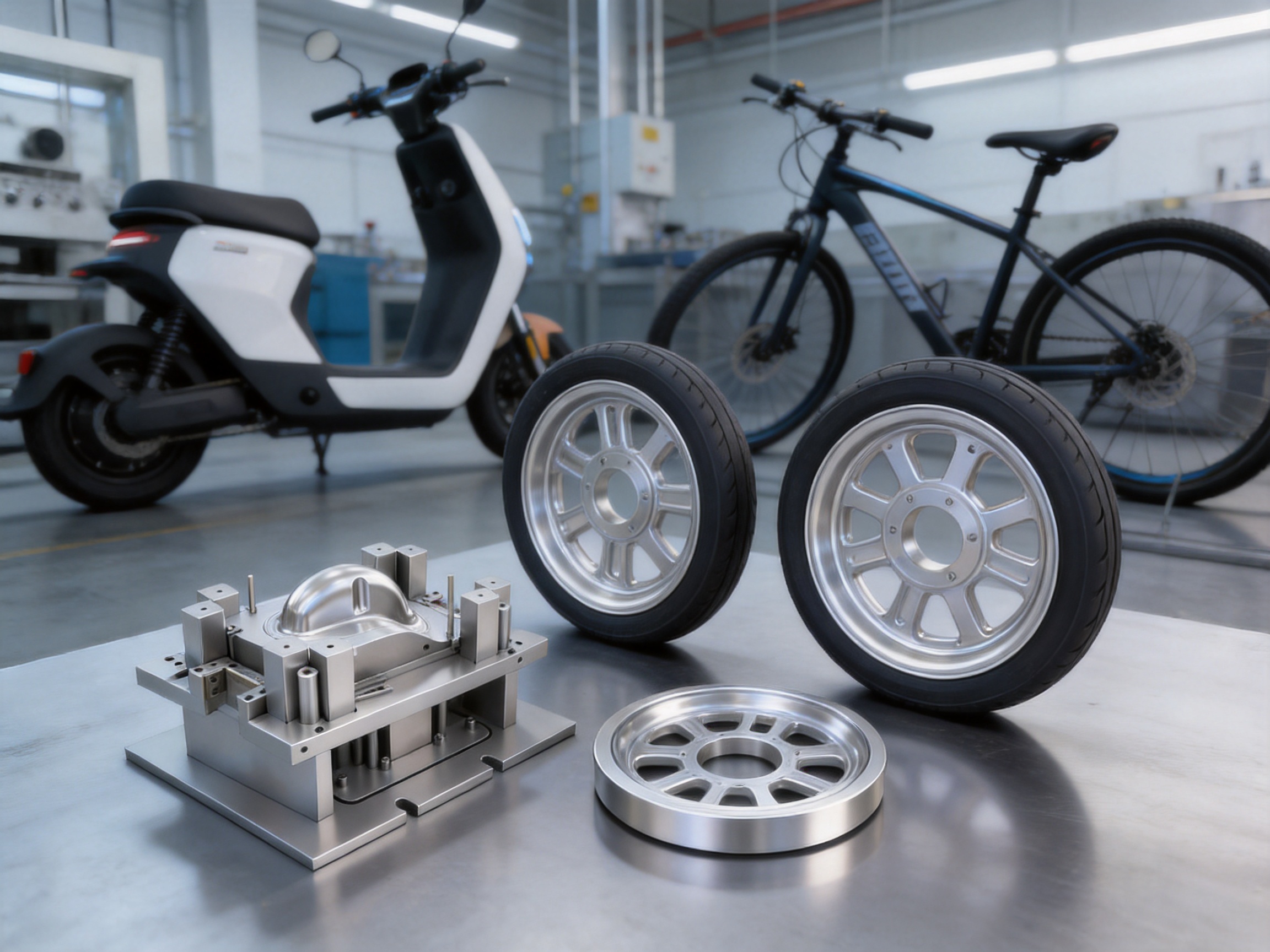
Deep Drawing Molds for Front and Rear Wheels of Two-Wheeled Electric Vehicles
2026-08-15
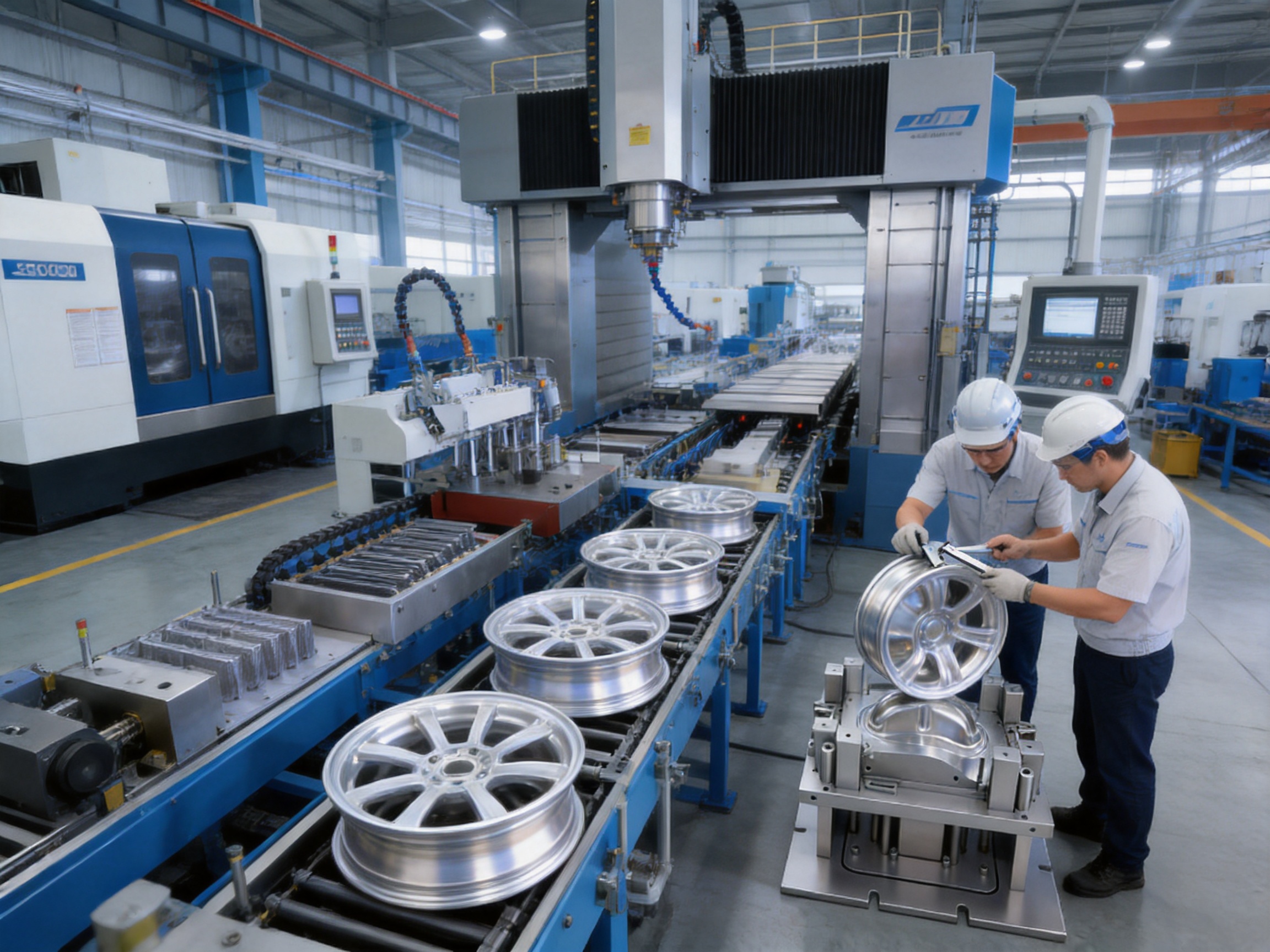
The rapid growth of two-wheeled electric vehicles is creating new requirements for wheel manufacturing. Electric bicycles, electric scooters, and other compact electric vehicles must combine low weight, high load-bearing capability, structural reliability, and efficient production. In this environment, the wheel is more than a simple supporting component. It directly influences vehicle stability, riding comfort, braking performance, durability, and user confidence.
Deep drawing molds for front and rear wheels provide an efficient solution for producing metal wheel blanks with consistent geometry and dependable mechanical performance. Designed specifically for the front and rear wheels of two-wheeled electric vehicles, this type of mold supports the transition from conventional plastic wheel components to stronger metal alternatives. It enables manufacturers to form sheet metal into a controlled wheel structure while maintaining repeatable dimensions and reducing production defects.
The deep drawing mold discussed in this article was developed by Suzhou Shuangqisi Mold Equipment Co., Ltd., a professional manufacturer of stamping dies, hardware parts, and stamping automation equipment. The company integrates product design, mold manufacturing, debugging, and technical service. Its experience in stamping dies and related automation allows it to provide a coordinated solution for customers seeking reliable tooling for electric vehicle wheel production.
Through precise cavity design, controlled material flow, appropriate forming processes, and careful mold adjustment, the wheel deep drawing mold helps manufacturers achieve stable production quality. It is suitable for enterprises that need to improve wheel strength, reduce manual correction, control post-processing costs, and establish a more efficient manufacturing process.
Content
- 1 1. The Role of Metal Wheels in Two-Wheeled Electric Vehicles
- 2 2. Product Overview
- 3 3. How the Deep Drawing Process Works
- 4 4. Advantages Compared with Plastic Wheel Components
- 5 5. Product Advantages for Wheel Manufacturers
- 6 6. Mold Design Features
- 7 7. Advanced Manufacturing Process
- 8 8. Manufacturing Equipment and Technical Capacity
- 9 9. Integrated Stamping and Automation Capabilities
- 10 10. Quality Control from Design to Delivery
- 11 11. Comparison with Less Specialized Tooling
- 12 12. Applications in the New Energy Vehicle Supply Chain
- 13 13. Customization and Project Cooperation
- 14 14. Maintenance and Service Life Considerations
- 15 15. Economic Value for Manufacturers
- 16 16. Why Choose an Integrated Mold Manufacturer
- 17 17. Recommended Project Workflow
- 18 18. Frequently Asked Questions
- 18.1 Q1: What is the main purpose of this deep drawing mold?
- 18.2 Q2: Why use metal wheels instead of plastic wheel components?
- 18.3 Q3: Can the mold be customized for different wheel designs?
- 18.4 Q4: What materials can be used?
- 18.5 Q5: Is one drawing operation always sufficient?
- 18.6 Q6: How does the mold reduce production defects?
- 18.7 Q7: Can the mold be used with stamping automation?
- 18.8 Q8: What press capacity is required?
- 18.9 Q9: How can manufacturers control mold maintenance costs?
- 18.10 Q10: What information should be provided for a quotation?
- 18.11 Q11: Does the supplier provide only molds?
- 18.12 Q12: How does trial production benefit the customer?
- 19 19. Conclusion
- 20 References
- 21 Product: Deep drawing mold for front and rear wheels of two-wheeled electric vehicles
1. The Role of Metal Wheels in Two-Wheeled Electric Vehicles
Two-wheeled electric vehicles operate under changing loads and road conditions. The wheels may experience vertical impact, lateral force, braking stress, vibration, and repeated fatigue during daily use. Although plastic components can offer low weight and relatively simple processing, they may not provide the same level of structural stability and long-term durability required for demanding applications.
Metal wheels can offer a more robust foundation for vehicles that must carry riders, batteries, motors, cargo, and additional accessories. A properly formed metal wheel can provide improved resistance to deformation and better support for adjacent components. It can also contribute to a more durable overall vehicle structure when the material, thickness, geometry, and forming process are properly matched to the application.
However, manufacturing metal wheels is not simply a matter of cutting a flat sheet into a circular shape. The material must be formed into a controlled three-dimensional profile. The wheel blank must maintain accurate dimensions, stable wall geometry, and a smooth surface. If the material flow is poorly controlled, the part may develop wrinkles, cracks, uneven thickness, distortion, or excessive springback.
A dedicated deep drawing mold addresses these challenges by guiding the sheet metal through a carefully designed forming cavity. The punch, die, blank holder, guide elements, and related components work together to control how the blank enters and fills the cavity. This controlled forming action is essential for producing repeatable front and rear wheel components.
2. Product Overview
The deep drawing mold for front and rear wheels of two-wheeled electric vehicles is a specialized stamping tool for forming metal wheel blanks. It is designed for manufacturers that require consistent wheel shape, reliable dimensional accuracy, and efficient repeat production.
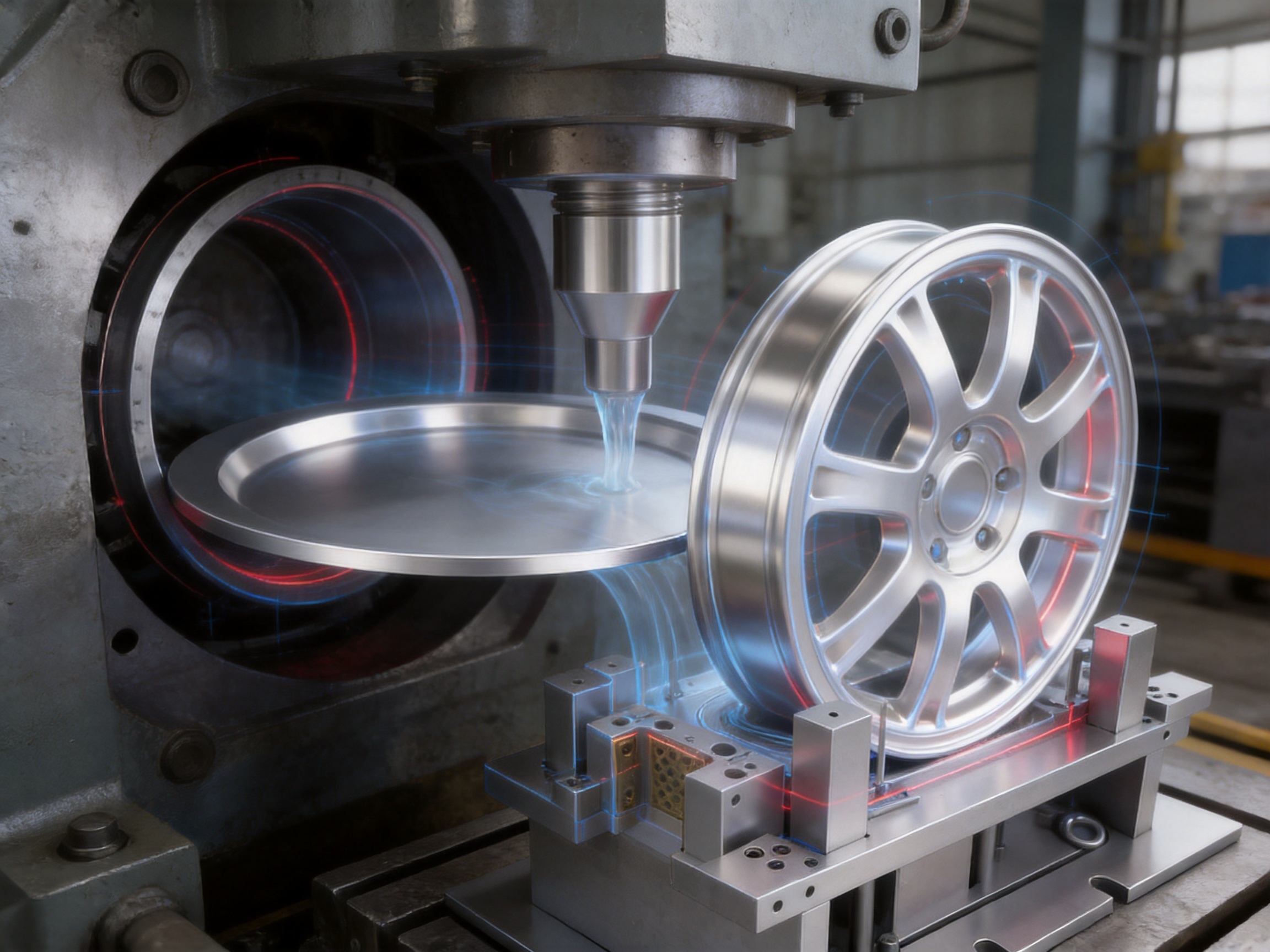
The mold adopts deep drawing technology to transform a metal blank into a wheel component with a defined profile. During the forming cycle, the blank is positioned over the die, held under controlled pressure, and drawn into the cavity by the punch. The cavity geometry supports smooth material movement and helps prevent common forming problems.
Depending on the customer’s material selection, wheel design, equipment configuration, and production requirements, the mold can be adapted for different blank dimensions, forming depths, flange configurations, and component details. The tooling concept can also be integrated into a broader stamping process that includes blanking, drawing, trimming, piercing, flanging, calibration, and inspection.
The mold is not merely a single metal block with a cavity. It is an engineered system consisting of functional components that must operate together with precise alignment. The quality of the final wheel depends on the relationship between the mold structure, forming parameters, press capacity, material properties, lubrication, and operator or automation settings.
For this reason, the development of a wheel deep drawing mold requires both design knowledge and manufacturing experience. A tool may appear technically simple from the outside, but small differences in clearance, corner radius, guide accuracy, or pressure control can have a significant effect on production results.
| Item | Product Characteristics | Production Benefit |
|---|---|---|
| Application | Front and rear metal wheels for two-wheeled electric vehicles | Supports stronger and more durable wheel component production |
| Process | Precision deep drawing and related stamping operations | Creates repeatable three-dimensional wheel geometry |
| Cavity design | Controlled profile and material-flow path | Reduces wrinkles, cracks, distortion, and forming defects |
| Tooling objective | Stable forming with suitable dimensional control | Improves consistency between production batches |
| Customer value | Integrated mold design, manufacturing, debugging, and service | Shortens coordination time and supports faster process implementation |
| Potential integration | Compatible with stamping lines and automation solutions | Improves production efficiency and reduces dependence on manual handling |
3. How the Deep Drawing Process Works
Deep drawing is a sheet metal forming process in which a flat blank is pushed into a die cavity to create a cup-shaped, ring-shaped, or otherwise three-dimensional part. For wheel production, the process is adapted to create the required profile, depth, flange, and structural features of the wheel blank.
The process begins with material preparation. The blank must have suitable dimensions, thickness, surface condition, and material characteristics. A blank that is too small may not provide sufficient material for the entire profile, while a blank that is too large can increase trimming waste and make material control more difficult.
After the blank is placed on the die, the blank holder applies pressure to the surrounding material. The punch then moves downward and draws the blank into the cavity. The blank holder pressure must be carefully selected. Excessive pressure may restrict material flow and create tearing, while insufficient pressure may allow wrinkles to develop in the flange area.
The die radius and punch radius are also important. Sharp corners can concentrate stress and increase the risk of cracking. Excessively large radii may affect the final shape or require additional forming steps. The mold design therefore balances material flow, geometric accuracy, press conditions, and product requirements.
In some cases, the wheel component may require multiple forming stages. A first drawing operation may establish the basic profile, followed by redrawing, shaping, trimming, piercing, flanging, or calibration. The appropriate sequence depends on the wheel design and the forming capability of the selected material.
After forming, the part may be inspected for dimensional accuracy, surface quality, flange condition, concentricity, and deformation. Where necessary, the production process can include additional correction or calibration operations. A well-designed mold reduces the amount of correction required and supports more stable downstream processing.
3.1 Material Flow Control
Material flow is one of the most important factors in deep drawing. The sheet metal must move into the cavity at a controlled rate and in a controlled direction. Uneven flow can cause one section of the wheel to become stretched while another section becomes wrinkled or excessively thick.
The mold cavity, blank holder, drawing beads, corner radii, and clearances all influence material flow. During design and debugging, these elements are adjusted to achieve an acceptable balance between drawability and dimensional stability. The objective is to form the wheel without excessive stress concentration or uncontrolled movement of the blank.
3.2 Control of Forming Defects
Common deep drawing defects include wrinkles, splits, cracks, uneven walls, distortion, surface marks, and springback. These defects may result from inappropriate blank size, unsuitable material properties, excessive forming force, insufficient lubrication, inaccurate alignment, or improper clearance.
A dedicated wheel mold helps reduce these risks through a designed forming path and coordinated tool structure. The mold manufacturer can evaluate the product geometry, select a suitable process route, and make adjustments during trial production. This integrated approach is more effective than treating every defect as an isolated production problem.
4. Advantages Compared with Plastic Wheel Components
The development of this mold was motivated by the limitations that may occur when plastic wheel components are used in applications requiring greater load-bearing capacity and durability. Plastic can be useful in many vehicle applications, but the performance of a wheel depends heavily on its ability to maintain shape under repeated load and environmental conditions.
Metal wheel components can provide a stronger structural foundation when properly designed and manufactured. Their resistance to deformation can be advantageous in vehicles that operate with heavier battery systems, increased carrying capacity, or frequent use on uneven roads.
Metal can also offer improved dimensional stability across a broader range of operating conditions. Temperature changes, repeated mechanical loading, and long-term use may affect plastic components differently from metal components. Selecting a suitable metal forming process gives manufacturers greater control over the final geometry and structural characteristics of the wheel.
Another advantage is the possibility of integrating forming and stamping operations into a repeatable industrial process. Once the mold is correctly installed and adjusted, the same tool can produce a large number of wheel blanks with consistent dimensions. This consistency is important for assembly, balancing, axle alignment, braking-system installation, and replacement-part compatibility.
However, metal does not automatically guarantee superior performance. The result depends on material selection, design, thickness, heat treatment where applicable, surface protection, weld quality, and process control. The deep drawing mold is therefore an important part of a complete engineering solution rather than a replacement for product design and quality management.
5. Product Advantages for Wheel Manufacturers
5.1 Consistent Product Geometry
One of the main advantages of the mold is its ability to produce wheel blanks with consistent shape and size. Accurate geometry is essential for subsequent operations such as trimming, hole punching, flange forming, assembly, and balancing.
When wheel blanks vary significantly from one another, manufacturers may experience problems during assembly. Uneven dimensions can increase adjustment time, reduce production efficiency, and create additional inspection requirements. A stable deep drawing process helps minimize these variations.
5.2 Improved Structural Stability
The controlled cavity design supports uniform forming and helps the material follow the intended wheel profile. A consistent profile can improve the structural stability of the finished component and reduce the risk of localized deformation.
For front and rear wheels, dimensional stability is especially important because both components must work with the vehicle frame, axle system, brake assembly, and tire or rim configuration. Accurate forming contributes to better compatibility between the wheel and related parts.
5.3 Reduced Production Defects
A reasonable cavity design enables smoother material forming. It can reduce the likelihood of tearing, wrinkling, excessive thinning, and irregular edges when the forming conditions are properly established.
Reducing defects provides more than a quality benefit. It also reduces material waste, tool adjustments, rework, manual correction, and rejected parts. These improvements can lower the total manufacturing cost even when the initial investment in a dedicated mold is higher than a less controlled process.
5.4 Lower Post-Processing Requirements
When the wheel blank leaves the forming process with a more stable profile, fewer corrective operations may be required. Trimming and calibration can be performed more efficiently, and operators may spend less time correcting dimensional deviations.
Lower post-processing requirements can also improve production planning. Manufacturers can better estimate cycle time, labor requirements, and inspection workload. This is especially valuable for suppliers serving the growing electric vehicle market, where customers may require both competitive pricing and reliable delivery schedules.
5.5 Support for Production Upgrading
The mold supports the upgrade from less durable wheel solutions to metal wheel components manufactured through a controlled industrial process. It can help enterprises improve product quality while establishing a more standardized production method.
For manufacturers seeking to expand their product range, a specialized wheel mold can provide a foundation for developing additional wheel specifications. The lessons learned from material selection, forming analysis, mold debugging, and inspection can be applied to future models and related stamped components.
Deep drawing mold for front and rear wheels of two-wheeled electric vehicles
6. Mold Design Features
The effectiveness of a deep drawing mold depends on the design of its major functional sections. Each component must be designed according to the wheel geometry, material properties, press characteristics, and production volume.
6.1 Die Cavity
The die cavity defines the external profile of the formed wheel blank. Its geometry must account for material thickness, forming allowance, corner radii, surface requirements, and possible springback. The cavity should provide sufficient space for the material to move without creating uncontrolled gaps or excessive resistance.
Precision machining is essential because cavity errors can be transferred directly to the product. The surface condition of the cavity also affects friction, material movement, and the appearance of the formed part.
6.2 Punch
The punch applies the forming force and determines important internal dimensions of the wheel blank. Its profile must match the product requirements while allowing suitable clearance between the punch and die.
The punch must also withstand repeated mechanical loading. Its material, heat treatment, surface finish, and support structure influence service life. Proper alignment between the punch and die is essential to prevent uneven loading and premature wear.
6.3 Blank Holder
The blank holder controls the material around the drawing area. Its pressure must be stable and appropriate for the selected material and forming depth. A well-designed blank holder helps prevent flange wrinkling while allowing sufficient material flow into the cavity.
Different press systems may require different blank-holder arrangements. The mold design should therefore be compatible with the customer’s available equipment or be developed as part of a complete forming-line proposal.
6.4 Guide and Alignment System
Guide posts, guide bushes, locating features, and other alignment components help maintain the relative position of the mold sections. Accurate guidance is especially important for wheel components because even small misalignment may result in uneven walls, eccentricity, or irregular flange dimensions.
A reliable guide system also supports longer tool life. When the tool closes evenly, the load is distributed more effectively and the risk of localized wear is reduced.
6.5 Trimming and Secondary Operations
Depending on the production route, trimming and piercing may be integrated into the die set or carried out in separate operations. The decision depends on production volume, part geometry, available press capacity, automation requirements, and desired cycle time.
Integrating multiple operations can reduce handling and improve efficiency, but it may also increase tool complexity. Separate operations can provide greater flexibility and easier maintenance. The best solution should be selected according to the customer’s actual production conditions rather than by using a single standard arrangement for every project.
7. Advanced Manufacturing Process
The quality of the finished mold depends on the complete manufacturing process, from initial design review to final debugging. Suzhou Shuangqisi Mold Equipment Co., Ltd. combines engineering, machining, grinding, assembly, and trial production capabilities to control this process more effectively.
7.1 Product and Process Review
Before machining begins, the product geometry and forming requirements should be reviewed. Engineers examine the wheel profile, forming depth, material characteristics, blank size, tolerances, press capacity, and expected production volume.
This review helps identify potential forming risks at an early stage. It can also determine whether the wheel should be formed in one operation or several stages. Early process planning reduces the likelihood of major changes after the mold has already been manufactured.
7.2 Mold Structure Development
After the product requirements are clarified, the mold structure is developed. The design includes the die, punch, blank holder, guide system, support plates, fastening components, wear parts, and any additional mechanisms required for trimming or piercing.
The structure must be sufficiently rigid to resist deformation under press load. At the same time, it must allow practical assembly, maintenance, inspection, and replacement of wear components. A mold that forms accurately but is difficult to maintain may create unnecessary long-term costs.
7.3 Precision Machining
Precision machining creates the functional surfaces and mechanical interfaces of the mold. The company is equipped with imported wire cutting machines, CNC machining centers, grinding machines of different sizes, and other precision machine tools.
CNC machining centers are suitable for producing complex cavity and punch profiles with controlled positioning accuracy. Wire cutting machines can be used for precise contours, narrow slots, and components requiring high dimensional consistency. Grinding operations help achieve the surface finish and dimensional accuracy required by critical mating and forming surfaces.
The availability of multiple machining capabilities within one manufacturing organization improves coordination. It reduces the need to transfer critical components between unrelated suppliers and supports more consistent control over production schedules and quality requirements.
7.4 Heat Treatment and Surface Control
Functional mold components may require suitable material grades and heat treatment to achieve the required balance of hardness, toughness, wear resistance, and dimensional stability. The appropriate treatment depends on the specific component and operating conditions.
Forming surfaces must also be protected from damage during assembly and trial production. Scratches, burrs, or improper handling can affect material flow and produce marks on the wheel blank. Careful cleaning, inspection, and surface management are therefore important parts of tool preparation.
7.5 Assembly and Adjustment
After individual components are machined and inspected, the mold is assembled. During assembly, the manufacturer checks alignment, movement, clearances, fastening, guide action, and the relationship between forming surfaces.
Adjustment is a critical stage. Even a well-designed and accurately machined mold may require practical adjustment because material behavior, press conditions, lubrication, and actual production settings can influence the result. The goal is to ensure that the mold closes smoothly, forms the blank consistently, and can be operated safely.
7.6 Trial Production and Debugging
Trial production allows the manufacturer to evaluate the formed wheel blank under practical conditions. Engineers and debugging personnel inspect the part for wrinkles, cracks, uneven forming, dimensional deviation, surface defects, and other issues.
If necessary, the team adjusts blank-holder pressure, forming sequence, clearances, radii, lubrication conditions, or other process parameters. This stage transforms the theoretical design into a production-ready solution.
The company has experienced senior operators and debugging personnel who support this process. Their practical experience is valuable because deep drawing results are influenced by the interaction of many variables. Effective debugging requires both technical knowledge and the ability to interpret actual forming behavior.
8. Manufacturing Equipment and Technical Capacity
Suzhou Shuangqisi Mold Equipment Co., Ltd. has approximately 60 technical staff and operates a manufacturing facility equipped for mold production and stamping-related work. Its equipment includes imported wire cutting machines, CNC machining centers, more than 10 grinding machines of different sizes, and 25 punch presses ranging from 80 tons to 400 tons.
This equipment range provides flexibility for different tooling sizes and stamping requirements. The punch press capacity allows the company to support a variety of metal stamping projects, including components for servo drives, compressors, and new energy vehicles.
The availability of presses is also important during mold testing. A mold must be evaluated on equipment that can provide suitable force, stroke, working area, speed, and control. Trial production on an appropriately sized press gives more reliable information than testing under conditions that do not represent the customer’s actual application.
Grinding capability is particularly important for deep drawing tools. Smooth and accurate forming surfaces help reduce friction and surface damage. Multiple grinding machines allow the company to process components of different sizes and configurations while maintaining flexibility in production scheduling.
Wire cutting and CNC machining provide complementary capabilities. Complex outlines can be produced with precision, while larger three-dimensional surfaces can be machined efficiently on CNC equipment. Combining these methods helps the manufacturer select a practical process for each individual component.
9. Integrated Stamping and Automation Capabilities
A major strength of the supplier is its connection with stamping automation equipment manufacturing. In 2016, the company invested in and established Suzhou Keshuang Intelligent Technology Co., Ltd., which mainly produces stamping automation equipment.
This relationship allows the broader organization to consider both the mold and the production line. Instead of treating the die as an isolated product, engineers can evaluate material loading, transfer, unloading, part positioning, inspection, and process synchronization.
Automation can provide several benefits for wheel production. It can reduce manual handling, improve repeatability, maintain a more consistent cycle time, and reduce the risk of operator-related positioning errors. Automated transfer is especially useful when the process contains multiple forming or trimming stages.
An integrated solution may include the mold, stamping press arrangement, automatic feeding equipment, transfer mechanisms, part collection, and basic production coordination. The exact configuration depends on the customer’s required capacity, workshop layout, material form, and investment plan.
The company can also provide turnkey solutions for stamping molds and stamping automation. For customers developing a new wheel production line, this can simplify communication because mold design and automation planning can be coordinated from the beginning.
In addition, the company can invest in related production equipment according to customer requirements. This model may be useful for customers that need a cost-effective production solution but do not want to independently coordinate every stage of tooling and equipment development.
10. Quality Control from Design to Delivery
Reliable wheel production requires quality control at every stage. Inspection should not be limited to the final appearance of the mold. The design data, raw materials, machining accuracy, assembly condition, trial parts, and process parameters all influence final performance.
10.1 Design Verification
Design verification begins with checking the product profile and forming route. Engineers assess whether the proposed geometry is suitable for deep drawing and whether the selected process can achieve the required shape without excessive deformation.
Potential interference between mold components should also be identified. The movement of the punch, blank holder, ejector, guide elements, and other mechanisms must be considered throughout the full stroke of the press.
10.2 Dimensional Inspection
Critical mold components should be inspected after machining. Important inspection points may include cavity dimensions, punch dimensions, concentricity, parallelism, guide alignment, clearances, and surface finish.
Inspection of trial parts is equally important. The formed wheel blank should be checked against the customer’s drawing or agreed technical requirements. Measurements may include outer diameter, inner diameter, height, flange dimensions, hole position, wall profile, and runout-related features.
10.3 Surface and Forming Inspection
Visual inspection can identify wrinkles, cracks, scratches, dents, incomplete forming, uneven edges, and other visible problems. For a wheel component, surface quality is important because defects may affect appearance, coating, assembly, or long-term performance.
Forming inspection should also evaluate whether the material has been excessively thinned in high-stress areas. Where required, additional measurement methods can be used to confirm wall thickness distribution and structural consistency.
10.4 Debugging Records
Recording the results of trial production helps create a repeatable process. Useful records may include material specifications, blank dimensions, lubrication conditions, press settings, blank-holder pressure, forming speed, number of stages, and inspection results.
These records support future production and make it easier to identify the cause of changes if the product or material is modified. They also assist operators and maintenance personnel in managing the mold after delivery.
11. Comparison with Less Specialized Tooling
Manufacturers may consider using general-purpose stamping tools, modified existing dies, or low-cost tooling from suppliers without specialized wheel-forming experience. These alternatives may appear economical at the beginning, but their total cost should be evaluated over the complete production life cycle.
A general-purpose mold may not provide the correct material-flow control for a wheel profile. This can lead to more trial-and-error work, greater material waste, increased rework, and inconsistent product quality. In contrast, a dedicated wheel deep drawing mold is developed around the actual component geometry and production requirements.
Another difference is engineering coordination. A specialized manufacturer can review the forming process, mold structure, press capacity, automation requirements, and inspection method as connected elements. A supplier focused only on basic machining may not be able to provide the same level of process support.
Tool maintenance is also an important consideration. A well-structured mold with replaceable wear parts and accessible adjustment areas can be easier to maintain. This can reduce downtime and make it more practical to restore the tool after extended production.
| Evaluation Area | Dedicated Wheel Deep Drawing Mold | Less Specialized Tooling |
|---|---|---|
| Product development | Designed around the wheel profile and forming sequence | May rely on generic or modified geometry |
| Material-flow control | Purpose-designed cavity, radii, and blank-holder arrangement | May require extensive trial and correction |
| Dimensional stability | Focused on repeatable wheel dimensions and alignment | Can vary depending on tool condition and operator adjustment |
| Defect reduction | Process development addresses common drawing defects | Higher risk of wrinkles, cracks, or distortion if not properly engineered |
| Automation integration | Can be coordinated with feeding and transfer equipment | Automation may need to be added after the mold is completed |
| Long-term cost | Potentially lower waste, rework, and post-processing costs | Lower initial tooling cost may be offset by production inefficiency |
| Technical support | Includes design, debugging, manufacturing, and service coordination | May be limited to basic tool delivery |
12. Applications in the New Energy Vehicle Supply Chain
The mold is intended for front and rear wheels used in two-wheeled electric vehicles. These vehicles include electric bicycles, electric scooters, and other compact electric mobility products with metal wheel requirements.
Wheel manufacturers can use the tooling to establish production of formed metal blanks. Vehicle manufacturers and component suppliers may benefit from a more stable source of wheel components with controlled dimensions and consistent production quality.
The company’s existing customer base includes enterprises associated with servo drives, compressors, and new energy vehicles. This experience indicates an understanding of the quality and delivery expectations common in industrial and new energy-related supply chains.
For companies entering the electric vehicle component market, a dedicated mold supplier can help reduce the technical burden associated with process development. The supplier can participate in discussions about materials, equipment, production capacity, tooling life, inspection requirements, and future model expansion.
13. Customization and Project Cooperation
Front and rear wheels may differ in profile, load requirement, brake-system interface, axle arrangement, and assembly dimensions. A mold must therefore be developed according to the customer’s drawings and technical requirements rather than based only on a general product description.
During a project discussion, the customer should provide available information about the wheel design, material grade, material thickness, blank dimensions, forming depth, tolerance requirements, production volume, press model, and automation expectations.
The supplier can then assess the feasibility of the forming process and recommend a suitable tooling structure. If the product design is still under development, early cooperation may help identify geometry that is easier to form and more economical to manufacture.
Customization may involve the cavity profile, forming stages, blank-holder system, trimming method, hole-punching arrangement, calibration operation, ejector design, and automation interface. The final solution should balance product performance, tool complexity, cycle time, maintenance convenience, and investment cost.
13.1 Customer Benefits of Early Technical Involvement
Early technical involvement can prevent avoidable design problems. For example, a sharp transition in the wheel profile may create a forming risk, while an unsuitable flange design may complicate trimming or assembly. Reviewing these details before tool manufacturing can reduce later modifications.
Early cooperation also improves production planning. The customer can understand the expected number of forming stages, press capacity, material utilization, automation needs, and inspection arrangements before committing to a full production line.
When the mold supplier also has stamping automation capabilities, the customer can evaluate the complete production concept rather than purchasing separate systems without coordination.
14. Maintenance and Service Life Considerations
Proper maintenance is necessary to preserve the performance of a deep drawing mold. Operators should clean forming surfaces after production, remove metal particles, inspect guide components, check fasteners, and monitor areas exposed to friction or repeated load.
Lubrication should be managed according to the material and process requirements. Insufficient lubrication can increase friction, surface marks, forming force, and tool wear. Excessive or unsuitable lubrication may affect handling, cleaning, or downstream coating processes.
Wear should be monitored at the punch radius, die radius, blank-holder surface, guide elements, and other high-contact areas. If wear changes the material-flow behavior, the wheel blank may gradually develop dimensional or surface defects even if the mold initially produced acceptable parts.
Maintenance records can help identify trends. Recording production cycles, repairs, replaced components, and dimensional inspection results provides a basis for preventive maintenance. Replacing a wear component before a major failure can reduce unplanned downtime and protect the main mold structure.
The service life of the mold depends on material selection, heat treatment, production volume, press condition, lubrication, maintenance, and operating method. A responsible tooling program should consider all of these factors rather than making service-life assumptions based only on the mold’s initial design.
15. Economic Value for Manufacturers
The economic value of a deep drawing mold should be evaluated through total production cost. The initial tooling price is only one part of the investment. Other factors include material utilization, cycle time, scrap rate, labor, post-processing, maintenance, energy consumption, and production downtime.
A mold that reduces defects can lower scrap and rework. A mold that forms a more accurate part can reduce manual correction and simplify assembly. A mold that integrates effectively with automation can reduce handling requirements and help maintain a stable production rhythm.
These benefits can be particularly meaningful when production volumes are high. Even a small reduction in defect rate or processing time may create significant savings over thousands of wheel components.
At the same time, the tooling solution should be appropriately designed for the customer’s actual volume. A highly complex multi-operation mold may not be economically justified for low-volume production, while a basic tool may be insufficient for mass production. The supplier’s role is to develop a balanced solution that meets technical requirements without unnecessary complexity.
16. Why Choose an Integrated Mold Manufacturer
An integrated manufacturer can provide advantages in communication, process coordination, and responsibility. When design, machining, assembly, debugging, and automation are handled within a connected organization, technical information can move more efficiently between departments.
This arrangement may reduce misunderstandings about tolerances, interfaces, timing, and production conditions. It can also simplify problem resolution because the supplier has a broader understanding of how the mold is intended to operate within the production line.
Suzhou Shuangqisi Mold Equipment Co., Ltd. has approximately 15 years of experience in the mold industry and focuses on stamping dies, hardware parts, and stamping automation equipment. Its technical team and production equipment support projects requiring different levels of customization.
The company’s customers include Anter Group, Ousheng Electric, Dongbei Group, and Huichuan Technology. Its products have been used in areas such as servo drives, compressors, and new energy vehicles. These applications require attention to dimensional control, process stability, and delivery coordination.
The company’s stated strengths include integrated mold-making and stamping automation capabilities, technical expertise, cost and quality control, and a commitment to high-quality stamping die manufacturing. For customers developing metal wheel components, these capabilities can provide a practical foundation for cooperation.
17. Recommended Project Workflow
17.1 Requirement Collection
The project begins with the collection of technical information. The customer should provide product drawings, three-dimensional data if available, material specifications, production targets, press details, and quality expectations.
If some information is not yet finalized, preliminary data can still be used for a feasibility review. However, final tool design should be based on confirmed product requirements to avoid unnecessary changes.
17.2 Feasibility and Process Analysis
Engineers review the wheel design and determine a suitable forming route. They consider whether the part can be formed in one step, whether multiple drawing stages are required, and how trimming, piercing, flanging, and calibration should be arranged.
The analysis should also consider material utilization and the expected production rate. A process that produces a technically acceptable part but creates excessive waste may not be commercially attractive.
17.3 Design Approval
After the forming route and mold structure are developed, the customer and supplier confirm the design. Important topics include component dimensions, tolerances, press compatibility, mold size, safety considerations, maintenance access, and automation interfaces.
Clear approval at this stage helps protect the project schedule. It also establishes a common technical reference for machining and trial production.
17.4 Manufacturing and Inspection
Components are machined using suitable CNC, wire cutting, grinding, and other equipment. Critical dimensions are inspected, and the mold is assembled according to the approved design.
During this stage, communication between design and production personnel is important. If a machining or assembly issue is identified, it should be reviewed against the product and process requirements rather than corrected without technical evaluation.
17.5 Trial Run and Acceptance
The mold is tested under suitable press conditions. Trial parts are inspected, and any required adjustments are completed. Acceptance criteria should cover both the mold and the formed wheel blank.
The customer may evaluate product dimensions, appearance, material flow, cycle time, ease of operation, and compatibility with downstream operations. If automation is included, the complete production sequence should also be tested.
17.6 Delivery and Technical Support
After acceptance, the mold is delivered with relevant technical information and operating guidance. Continued support may include installation assistance, process adjustment, maintenance recommendations, and help with future modifications.
18. Frequently Asked Questions
Q1: What is the main purpose of this deep drawing mold?
The mold is designed to form metal front and rear wheel blanks for two-wheeled electric vehicles. It uses a controlled deep drawing process to create consistent wheel geometry and support stable, repeatable production.
Q2: Why use metal wheels instead of plastic wheel components?
Metal wheels can provide improved load-bearing capability, structural stability, and durability when the material and design are properly selected. They may be more suitable for applications exposed to repeated loads, vibration, impact, and demanding service conditions.
Q3: Can the mold be customized for different wheel designs?
Yes. The mold should be developed according to the customer’s wheel drawings, material, thickness, forming depth, dimensions, tolerance requirements, press capacity, and production volume. Front and rear wheel designs can be evaluated separately when their geometry or loading conditions differ.
Q4: What materials can be used?
The suitable material depends on the wheel design, required strength, formability, thickness, surface requirements, and customer specifications. Material selection should be confirmed through technical review and forming evaluation before final mold construction.
Q5: Is one drawing operation always sufficient?
Not necessarily. The required number of operations depends on the forming depth, profile complexity, material properties, thickness, and dimensional requirements. Some wheel blanks may require a sequence involving drawing, redrawing, trimming, piercing, flanging, or calibration.
Q6: How does the mold reduce production defects?
The mold uses a controlled cavity design and coordinated forming components to guide material flow. Proper punch and die geometry, blank-holder pressure, clearances, radii, alignment, lubrication, and process adjustment help reduce wrinkles, cracks, distortion, and other defects.
Q7: Can the mold be used with stamping automation?
Yes. The mold can be considered together with stamping automation equipment. Automation may include material feeding, transfer, positioning, unloading, and part collection. The specific arrangement depends on the customer’s press, workshop layout, production volume, and process sequence.
Q8: What press capacity is required?
The required press capacity depends on the material, blank size, forming depth, number of operations, and mold design. The supplier operates punch presses ranging from 80 tons to 400 tons and can evaluate equipment compatibility according to the customer’s product and process conditions.
Q9: How can manufacturers control mold maintenance costs?
Regular cleaning, lubrication, alignment checks, inspection of wear components, and timely replacement of damaged parts can help control maintenance costs. Preventive maintenance records are useful for identifying wear trends before they cause major production problems.
Q10: What information should be provided for a quotation?
Useful information includes product drawings, material grade, thickness, blank size, required tolerances, annual or monthly production volume, available press information, desired automation level, and delivery expectations. More complete information allows the supplier to provide a more accurate technical and commercial proposal.
Q11: Does the supplier provide only molds?
The company manufactures stamping dies and hardware parts and also has capabilities related to stamping automation equipment. It can provide integrated or turnkey solutions when customers require coordination between molds, presses, automation, and production processes.
Q12: How does trial production benefit the customer?
Trial production verifies that the mold can produce acceptable wheel blanks under practical conditions. It allows the team to identify and correct forming, dimensional, surface, and operation issues before the mold enters regular production.
19. Conclusion
The deep drawing mold for front and rear wheels of two-wheeled electric vehicles is an important tooling solution for manufacturers developing stronger and more durable metal wheel components. By applying controlled deep drawing technology, the mold helps produce consistent wheel blanks with stable geometry and reduced forming defects.
Its value extends beyond the cavity itself. The complete solution includes process analysis, mold structure design, precision machining, grinding, assembly, debugging, inspection, and technical support. When combined with stamping automation, it can support a more efficient and standardized production line.
Compared with less specialized tooling, a dedicated wheel mold provides a stronger focus on material-flow control, dimensional repeatability, production stability, and post-processing reduction. These advantages can help manufacturers reduce waste, improve assembly consistency, and control the total cost of production.
Suzhou Shuangqisi Mold Equipment Co., Ltd. offers experience in stamping dies, hardware parts, and automation equipment. With technical staff, precision machining resources, multiple grinding machines, punch presses from 80 tons to 400 tons, and experienced debugging personnel, the company can support customized projects for electric vehicle and other industrial applications.
For customers planning to manufacture metal wheels for electric bicycles, electric scooters, or related two-wheeled electric vehicles, cooperation should begin with a clear review of product geometry, material, production volume, press conditions, and automation requirements. A well-engineered mold, supported by an appropriate forming process and disciplined maintenance, can become a long-term asset for improving wheel quality, manufacturing efficiency, and market competitiveness.
References
1. ASM International, ASM Handbook: Forming and Forging, general principles of sheet metal forming and deep drawing.
2. American Society of Mechanical Engineers, Design and Manufacturing Considerations for Metal Forming Tooling, technical guidance on dies, forming forces, and tooling reliability.
3. Society of Automotive Engineers, Automotive and Electric Vehicle Component Manufacturing Practices, general considerations for vehicle component quality and production consistency.
4. International Organization for Standardization, Quality Management Systems—Requirements, principles for process control, inspection, and continual improvement.
5. Company technical information supplied for the development of this article, including product specifications, manufacturing capabilities, equipment resources, and corporate background.
Product: Deep drawing mold for front and rear wheels of two-wheeled electric vehicles
Previous Post
High-End Large Computer Stamping Parts: Precision, Strength, and Reliable Production for Advanced Hardware
Next Post
Heavy Truck Stamping Parts for Durable Commercial Vehicle Performance
Our Products.
Start Your Business with an OEM Manufacturer Right Here!

Provide global customers with complete turn-key solutions
through
innovation!
QUICK LINKS
CONTACT INFO.
-
 +86-139 1308 8972
 -

-
 No. 118 Yexin Road, Wujiang Economic Development Zone, Suzhou, China
Copyright © Suzhou Shuangqisi Mold Equipment Co., Ltd. All Rights Reserved. Custom Stamping Die Metal Stamping Die Manufacturers
