 English
 Español
 Deutsch
-
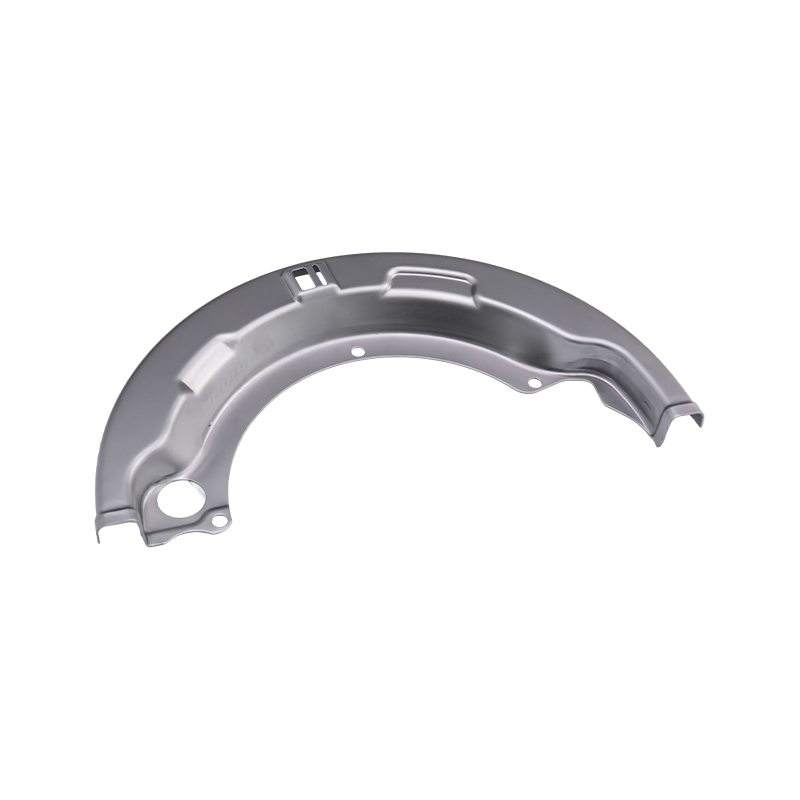
Heavy truck stamping parts
Our Heavy truck stamping parts are precision-manuf...
-
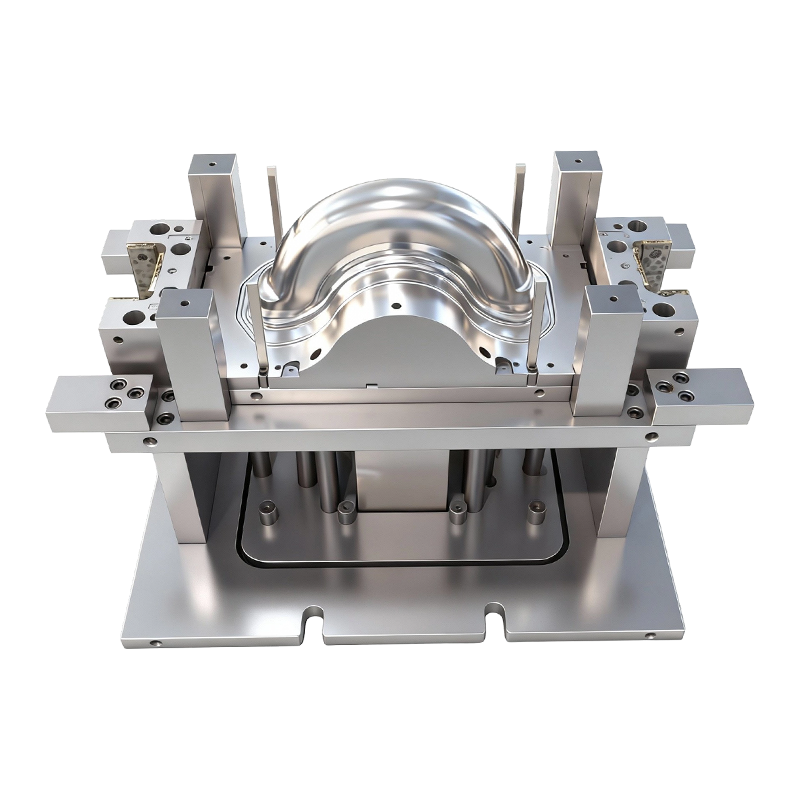
Deep drawing mold for front and rear wheels of two-wheeled electric vehicles
This Deep drawing mold for front and rear wheels o...
-
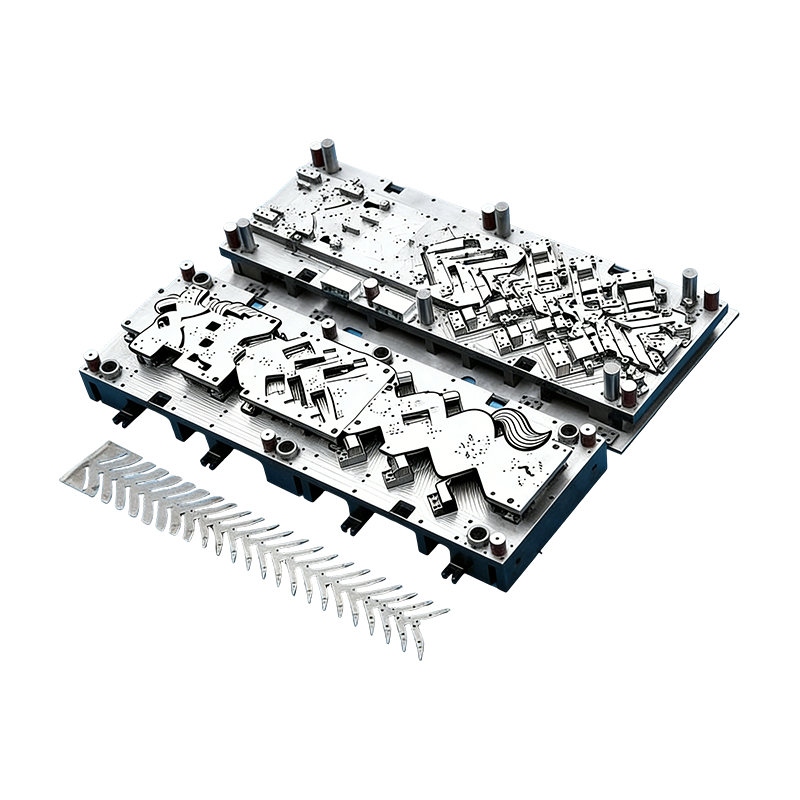
Progressive molds for automotive parts
This Continuous mold for automotive motor housing ...
-
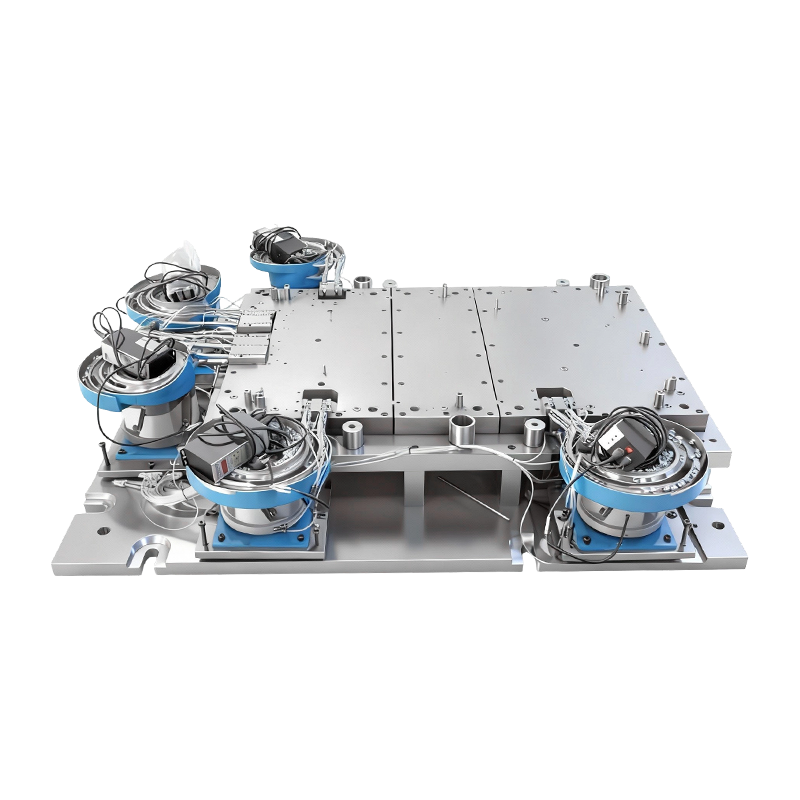
Automatic riveting mold for large computer machine base
This Automatic Riveting Mold for Large Computer Ma...
-
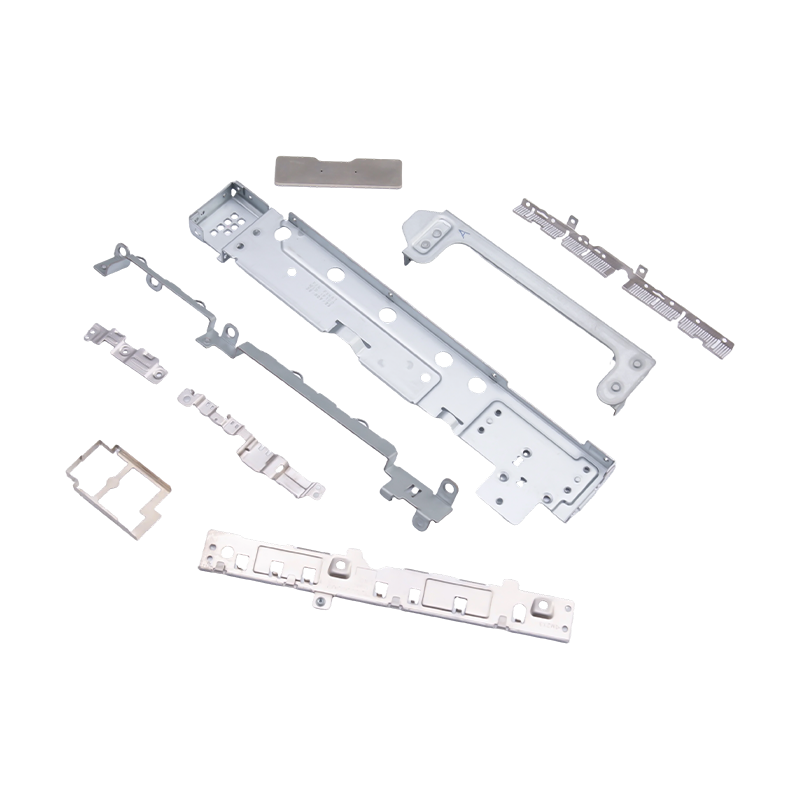
Small stamped parts for laptops and mobile phones
As essential internal components for modern portab...
- E-mail us: [email protected]
- Call us: +86-139 1308 8972

Wang Xinyue – After-Sales Support Supervisor
Home / Author / Wang Xinyue – After-Sales Support Supervisor / Heavy Truck Stamping Parts for Durable Commercial Vehicle Performance
Heavy Truck Stamping Parts for Durable Commercial Vehicle Performance
2026-08-09
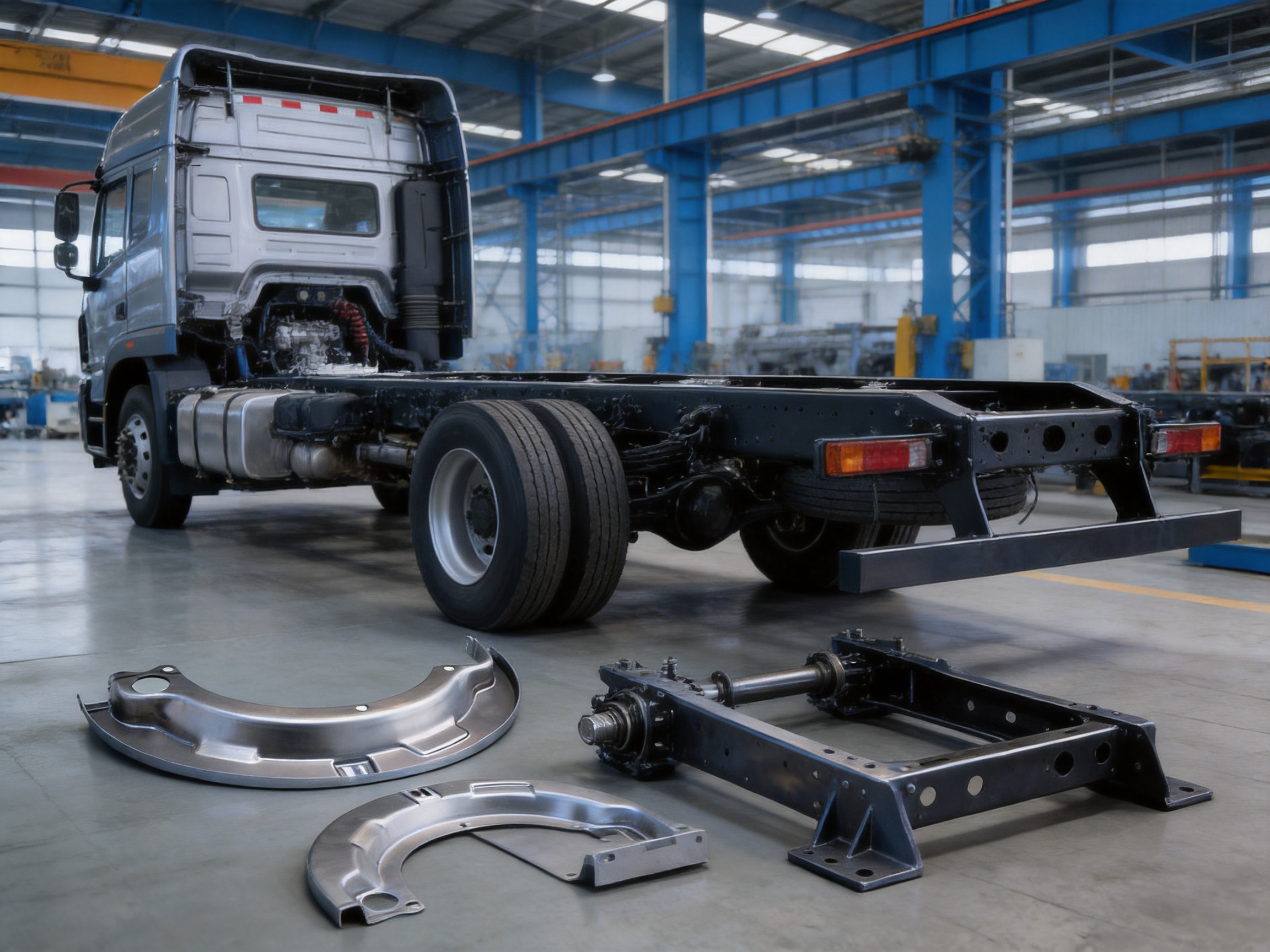
Heavy truck stamping parts are essential structural and functional components in commercial vehicles that operate under demanding conditions. Unlike components used in passenger cars, heavy truck parts must withstand substantially higher loads, continuous vibration, impact from uneven roads, temperature fluctuations, moisture, dust, and long operating cycles. Frame brackets, suspension connecting plates, engine mounting supports, and related stamped components therefore require more than a basic forming process. They require carefully selected materials, controlled tooling, accurate production equipment, disciplined inspection, and dependable manufacturing experience.
Heavy truck stamping parts supplied by Suzhou Shuangqisi Mold Equipment Co., Ltd. are precision-manufactured for heavy-duty vehicle applications, including long-haul transportation, construction vehicles, and other commercial vehicle platforms. Manufactured from high-strength steel plates through advanced cold stamping technology, these components are designed to provide consistent geometry, reliable assembly compatibility, and durable performance under demanding service conditions.
The product line is supported by an integrated manufacturing capability that combines stamping die design, mold production, metal stamping, quality control, and stamping automation equipment. This integrated approach enables the manufacturer to manage important production stages internally rather than relying entirely on disconnected external suppliers. As a result, customers can receive coordinated support for tooling development, part manufacturing, process adjustment, and production equipment planning.
Content
- 1 Understanding the Role of Heavy Truck Stamping Parts
- 2 Core Product Applications
- 3 Material Selection and High-Strength Steel Performance
- 4 Advanced Cold Stamping Technology
- 5 Precision Stamping Dies as the Foundation of Product Quality
- 6 Production Capacity for Heavy-Duty Components
- 7 Dimensional Accuracy and Assembly Compatibility
- 8 Quality Inspection and Performance Verification
- 9 Durability in Harsh Operating Environments
- 10 Advantages Compared with Less Specialized Alternatives
- 11 Manufacturing Workflow from Design to Delivery
- 12 Automation and Turnkey Stamping Solutions
- 13 Applications for Original Equipment and Aftermarket Customers
- 14 Why Manufacturing Experience Matters
- 15 Design Considerations for Heavy Truck Stamped Components
- 16 Maintenance and Long-Term Tooling Reliability
- 17 Packaging, Storage, and Handling
- 18 How Customers Can Evaluate a Supplier
- 19 Frequently Asked Questions
- 19.1 What are heavy truck stamping parts?
- 19.2 What materials are used for these parts?
- 19.3 Why is cold stamping suitable for heavy truck components?
- 19.4 How do frame brackets contribute to truck performance?
- 19.5 Why are suspension connecting plates exposed to high demands?
- 19.6 What is the function of an engine mounting support?
- 19.7 What quality checks are performed?
- 19.8 Can the parts be used for aftermarket repairs?
- 19.9 What press capacities are available?
- 19.10 Can the supplier manufacture stamping dies?
- 19.11 Can automation equipment be included in a project?
- 19.12 How does high-strength steel affect die design?
- 19.13 What information should a customer provide for a quotation?
- 19.14 What makes an integrated supplier valuable?
- 20 Conclusion
- 21 References
- 22 Product: Heavy truck stamping parts
Understanding the Role of Heavy Truck Stamping Parts
Heavy trucks are built around systems that must safely transfer and distribute substantial forces. The chassis, suspension, powertrain, and body structures work together while the vehicle carries cargo, travels over imperfect surfaces, brakes repeatedly, and experiences torsional movement. A small dimensional error in a structural stamped part can affect installation, load distribution, vibration behavior, or the service life of adjacent components.
Stamping parts are produced by placing metal sheet between specially designed dies and applying controlled pressure with a press. Depending on the component design, the process may include blanking, piercing, bending, drawing, forming, flanging, or several operations in sequence. The purpose is to convert flat steel plate into a three-dimensional part with defined mounting holes, bends, reinforcing features, and assembly surfaces.
For heavy truck applications, stamping provides several practical benefits. It can create repeatable parts with uniform thickness, accurate hole locations, consistent bend angles, and smooth external edges. Once the die and production process have been properly developed, stamping also supports efficient batch manufacturing and stable part-to-part consistency.
Heavy truck stamped components may appear simple when viewed individually, but their performance depends on many details. The steel grade must be suitable for the intended load and forming operation. The die must control material flow without introducing excessive deformation. Press parameters must be selected to avoid cracking, wrinkling, or springback beyond acceptable limits. Cutting edges, forming radii, clearance values, and inspection methods all influence the final result.
Core Product Applications
Frame Brackets
Frame brackets help connect and support vehicle structures. They may be installed around the chassis frame, body support system, suspension assembly, or other load-bearing areas. These parts commonly include bends, flanges, mounting holes, and reinforcing formations that allow them to withstand forces while maintaining a controlled relationship between connected assemblies.
A frame bracket must provide suitable stiffness without adding unnecessary mass. Its geometry must also match the original truck assembly so that mounting bolts, adjacent components, and service clearances remain correctly aligned. Precision stamping allows these features to be formed consistently, helping reduce fitting problems during vehicle assembly or replacement-part installation.
For aftermarket users, dimensional compatibility is especially important. A replacement bracket that requires excessive adjustment can increase labor time and create uncertainty during repair. Properly manufactured stamped brackets help service providers complete repairs more efficiently while preserving the intended structural arrangement of the vehicle.
Suspension Connecting Plates
Suspension connecting plates transfer forces between suspension components and the vehicle frame. During operation, they can be exposed to repeated vertical loads, braking forces, lateral movement, and vibration. Their design commonly requires accurately positioned holes and carefully controlled forming features so that the suspension system can operate without unwanted movement or misalignment.
High-strength steel is valuable in this application because it provides a favorable balance between strength and structural efficiency. However, high-strength material can also require greater attention during forming. The tooling must be designed to accommodate material behavior, and the production process must be controlled to prevent cracks, distortion, or excessive springback.
When suspension connecting plates are manufactured with stable dimensions and smooth edges, they can contribute to reliable system assembly and reduce the likelihood of premature wear caused by poor fit. Their resistance to vibration and impact is also important for trucks that regularly travel on rough roads or operate in construction environments.
Engine Mounting Supports
Engine mounting supports connect the powertrain to the vehicle structure while helping control movement generated by engine operation and road conditions. These parts must combine structural strength with dimensional accuracy. The mounting surfaces, holes, and formed sections must remain correctly positioned so that the engine and surrounding components are installed without unnecessary stress.
Engine mounting supports may experience continuous vibration, thermal variation, and dynamic loads. A properly formed steel component can provide dependable support while maintaining the intended position of the powertrain. Consistent thickness and accurate geometry are important because uneven or distorted areas can affect load transfer and assembly performance.
Through controlled cold stamping, these supports can be manufactured with repeatable profiles and clean edges. The resulting parts are suitable for original equipment production programs and replacement applications where dependable fit and structural performance are required.
Heavy truck stamping parts
Material Selection and High-Strength Steel Performance
The supplied heavy truck stamping parts are manufactured from high-strength steel plates selected for demanding commercial vehicle applications. Material selection is one of the most important decisions in stamped-part production because the steel must satisfy both performance and formability requirements.
High-strength steel can support the load-bearing needs of frame and suspension components while helping manufacturers control material usage. A component made from a suitable high-strength plate may achieve the required structural performance without excessive thickness or weight. This can support practical vehicle design objectives while preserving the durability expected from heavy-duty equipment.
At the same time, high-strength steel requires disciplined process development. The material may resist deformation more strongly than conventional mild steel, which can increase forming forces and springback. Die geometry, forming sequence, punch and die clearance, corner radii, and press capacity must therefore be evaluated carefully.
Material consistency also affects production stability. Variations in thickness, hardness, surface condition, or mechanical behavior can influence forming results. For this reason, incoming material control and in-process inspection are important parts of a dependable stamping program.
The goal is not simply to use the strongest available steel. The goal is to select a material that provides the appropriate combination of strength, ductility, forming behavior, surface quality, and cost for the specific heavy truck component. A well-developed stamping process uses the material efficiently while maintaining the required dimensions and mechanical performance.
Advanced Cold Stamping Technology
Cold stamping forms steel plate at room temperature through mechanical pressure. It is widely used for automotive and commercial vehicle parts because it can produce complex shapes with repeatable results and efficient material utilization. For heavy truck components, cold stamping is particularly useful when a part must combine structural geometry with accurate mounting and joining features.
The process begins with product and die analysis. Engineers review the component drawing, material specification, thickness, forming depth, hole arrangement, bend locations, and expected load conditions. They then determine the most suitable production sequence. Some parts may be produced through several operations, while others may use progressive, compound, or transfer-style tooling depending on the design and production volume.
Blanking creates the basic outline of the part. Piercing produces holes and other openings. Bending creates flanges and angles, while forming operations generate reinforcing ribs, offsets, channels, or three-dimensional profiles. Additional trimming and calibration operations may be required to achieve final dimensions.
Each operation must be coordinated with the next. Poor sequencing can cause deformation to accumulate, while insufficient support can result in distortion or unstable geometry. The die design must guide the material in a controlled manner and provide appropriate support during cutting and forming.
Advanced cold stamping also depends on precise machine setup. Press speed, stroke, shut height, feed position, lubrication, and tooling alignment all influence the outcome. Stable settings help reduce variation between production batches and allow inspection results to be connected to specific process conditions.
One advantage of a controlled cold stamping process is the ability to achieve uniform thickness in areas that do not require extensive material flow. Uniform thickness helps provide predictable strength and supports consistent assembly. Smooth edges and controlled cutting conditions also reduce the risk of sharp burrs that could interfere with installation or create safety concerns during handling.
Precision Stamping Dies as the Foundation of Product Quality
A stamping die is not merely a cutting tool. It is the production system that defines the shape, dimensions, surface features, and repeatability of the stamped component. For heavy truck parts, the die must be robust enough for repeated industrial operation while retaining the accuracy required for assembly-critical features.
Die design begins with a detailed understanding of the part. Engineers must examine material strength, thickness, bend radii, hole locations, tolerance requirements, production volume, and press capacity. They must also consider how the part will be removed, transferred, inspected, and used in the vehicle assembly process.
Tooling strength and wear resistance are important because heavy truck parts may require significant forming force. Cutting edges must be designed to maintain acceptable clearance over the operating life of the die. Forming surfaces must be accurately machined and supported to limit deformation under load.
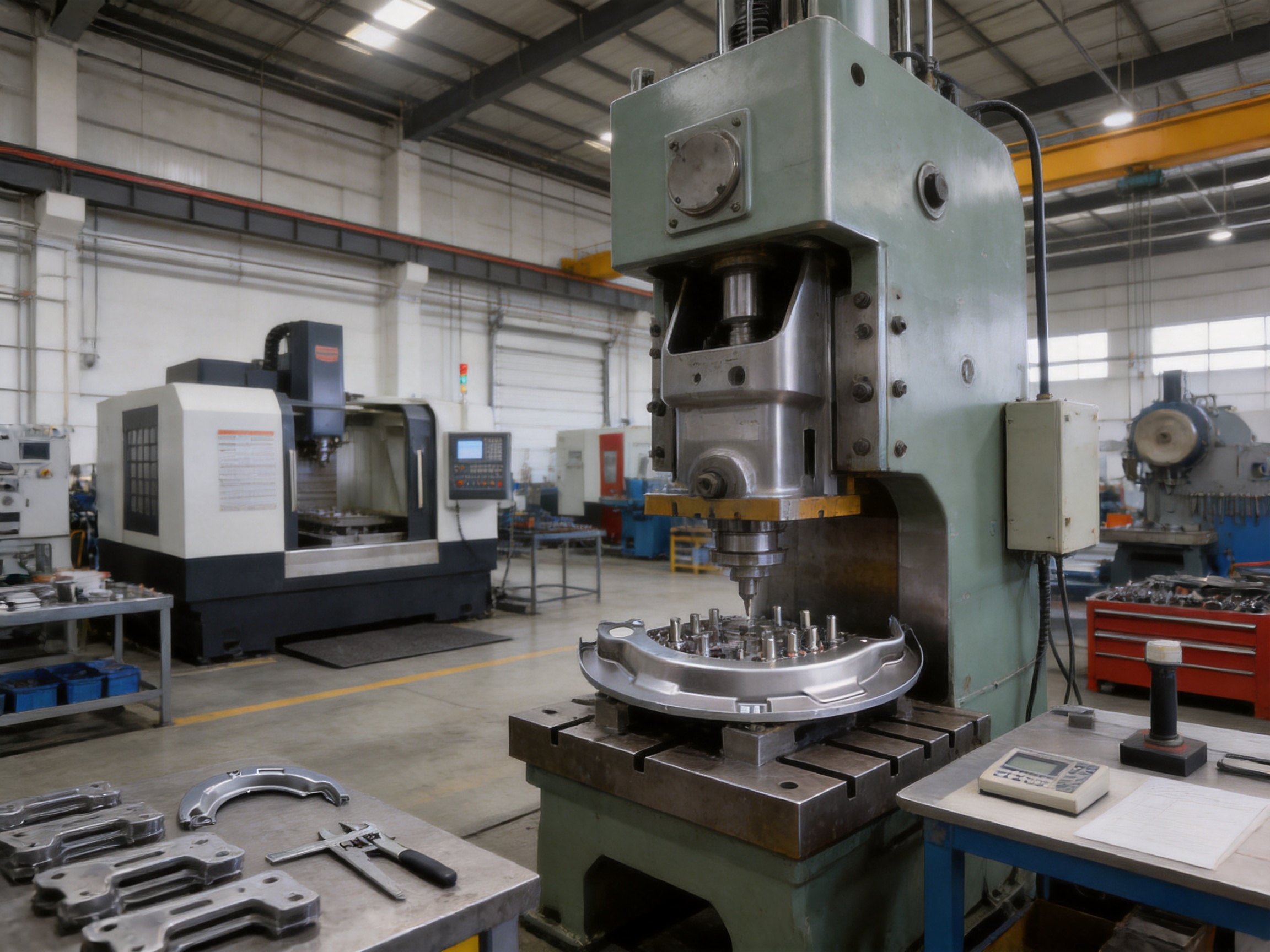
The company’s manufacturing resources include imported wire cutting machines, CNC machining centers, more than ten grinding machines of different sizes, and other precision machine tools. These resources support the manufacture and adjustment of stamping dies with controlled geometry. Wire cutting can be used for detailed profiles and precision features, while CNC machining supports accurate shaping of die components. Grinding equipment helps produce smooth, accurate surfaces and maintain the dimensional relationships required for die assembly.
Die assembly and debugging are equally important. Even a well-designed individual component may require adjustment after assembly to achieve the correct interaction between punches, inserts, guides, pressure pads, and forming surfaces. Experienced operators and debugging personnel can identify issues such as uneven contact, excessive material flow, incomplete forming, burr formation, or springback.
Reliable die development can provide an advantage over suppliers that focus only on basic part production. When the tooling manufacturer understands both die construction and stamping production, it can respond more quickly to process issues and coordinate design changes more effectively. This integrated knowledge is particularly useful for complex structural parts that must meet tight fit and performance expectations.
Production Capacity for Heavy-Duty Components
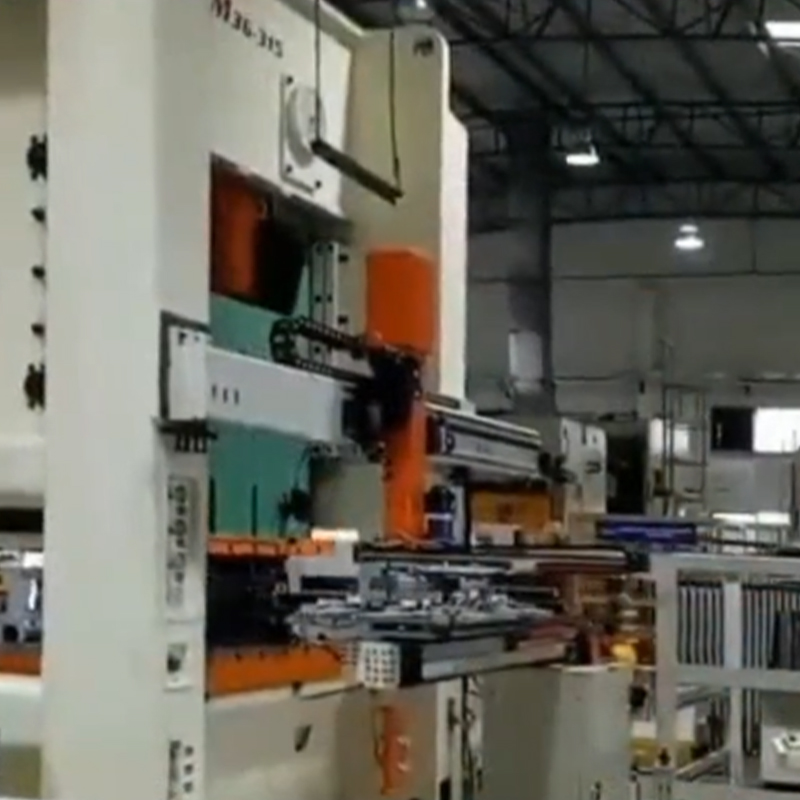
Press capacity is a key consideration when producing heavy truck stamping parts. The company operates 25 punch presses ranging from 80 tons to 400 tons. This range allows different parts to be matched with equipment appropriate to their size, thickness, forming requirements, and production volume.
Using a suitably sized press can improve process stability. A press that is too small may be unable to complete the operation safely or consistently. A press that is excessively large may reduce efficiency or create unnecessary operating costs. Selecting the appropriate capacity supports balanced production planning and helps protect both the die and the material.
The available press range also gives the manufacturer flexibility when developing different types of truck components. Smaller brackets and connecting plates may require a different production arrangement from larger engine supports or frame-related parts. Equipment flexibility allows the production process to be adapted to the actual characteristics of each component.
Production capacity should not be judged only by the number of presses. It also depends on tooling readiness, operator experience, inspection procedures, material supply, maintenance discipline, and the ability to adjust the process when requirements change. The combination of press equipment, precision machining resources, and technical personnel provides a foundation for coordinated production.
| Manufacturing element | Role in heavy truck stamping | Customer benefit |
| High-strength steel plate | Provides structural capability for load-bearing parts | Suitable for demanding commercial vehicle conditions |
| Cold stamping process | Forms accurate two-dimensional and three-dimensional features | Repeatable geometry and efficient batch production |
| Precision stamping dies | Controls cutting, bending, forming, and hole locations | Improved assembly compatibility and dimensional stability |
| CNC machining centers | Produces accurate die components and tooling surfaces | Supports controlled tooling quality |
| Wire cutting equipment | Processes detailed die profiles and precision features | Enables accurate tool construction |
| Grinding machines | Finishes and calibrates tool surfaces | Supports smooth operation and repeatable forming |
| 80 to 400 ton punch presses | Accommodates varied component sizes and forming forces | Provides production flexibility |
| Experienced debugging personnel | Adjusts tooling and stabilizes production conditions | Reduces startup problems and process variation |
Dimensional Accuracy and Assembly Compatibility
Heavy truck stamping parts must fit the assemblies for which they are designed. Dimensional accuracy includes more than overall length and width. It also includes hole position, bend angle, flange height, flatness, profile shape, and the relationship between multiple features.
Accurate mounting holes are particularly important. A small deviation may make it difficult to insert fasteners or may force an installer to enlarge a hole or alter the part. Such modifications can affect structural integrity and increase repair time. Consistent hole locations help the part fit the original assembly as intended.
Flatness is another important consideration. A distorted bracket or plate may not sit correctly against a frame or adjacent component. Gaps, uneven contact, or forced installation can create localized stress. Inspection of flatness helps identify whether the forming process is producing a stable component.
Controlled bend angles contribute to repeatable assembly. If a flange is bent too far or not far enough, the final position of a connected component may change. Stable forming conditions and appropriate calibration operations help maintain the intended geometry throughout production.
The manufacturer’s focus on precise dimensional tolerances supports both original equipment and aftermarket requirements. Customers can use consistent parts in planned production programs, while service providers can reduce the uncertainty often associated with replacement components from inconsistent sources.
Quality Inspection and Performance Verification
Quality inspection is essential for parts used in heavy-duty vehicle structures. The supplied product line undergoes strict inspections for hardness, flatness, and anti-corrosion performance. These checks address several of the conditions that influence service life and installation quality.
Hardness Inspection
Hardness inspection helps evaluate whether the material and forming process are consistent with the intended specification. Significant variation may indicate material inconsistency, heat-related effects, or other process concerns. Monitoring hardness supports better control of mechanical behavior and helps identify potential deviations before parts reach the customer.
Flatness Inspection
Flatness inspection verifies whether critical surfaces remain within the required condition after cutting and forming. This is important for parts that mount against frames, supports, brackets, or other components. Stable flatness can improve contact, reduce installation force, and help maintain the designed load path.
Anti-Corrosion Performance
Heavy trucks often operate in rain, mud, dust, salt-contaminated roads, construction sites, and other harsh environments. Corrosion can reduce cross-sectional strength, damage mounting areas, and shorten the service life of structural components. Inspection of anti-corrosion performance helps ensure that the parts are prepared for practical operating conditions.
Corrosion resistance depends on material condition, surface preparation, protective treatment, storage, handling, and service exposure. It is therefore important to consider anti-corrosion performance as part of the overall manufacturing and supply process rather than as an isolated feature.
Visual and Dimensional Review
Visual inspection can identify burrs, cracks, scratches, wrinkles, incomplete forming, surface damage, and other visible defects. Dimensional review verifies the principal measurements and assembly features. Together, these methods create a practical first level of quality control before parts are packed and shipped.
For demanding customers, inspection records and agreed acceptance criteria can be incorporated into the production program. Clear communication about drawings, tolerances, materials, surface requirements, packaging, and sampling plans helps align the supplier’s process with the customer’s quality system.
Durability in Harsh Operating Environments
Heavy truck components must remain functional over extended operating cycles. Long-haul trucks may accumulate substantial mileage, while construction vehicles can experience severe shock, contamination, and uneven loading. In both cases, parts are exposed to repeated stress rather than a single static load.
Frame brackets and suspension connecting plates are subjected to vibration and impact as the vehicle travels over road surfaces. Engine mounting supports experience powertrain movement and vibration, along with the effects of heat and changing operating conditions. A stamped part must maintain its geometry and connection points while transferring these forces safely.
High-strength steel, accurate forming, and suitable surface protection work together to support durability. Material strength helps the component resist deformation. Controlled geometry supports predictable load transfer. Smooth edges reduce the potential for localized stress concentrations caused by rough cutting or excessive burrs. Corrosion protection helps preserve the material over time.
Durability also depends on correct installation and the condition of related assemblies. Even a high-quality bracket may perform poorly if fasteners are incorrectly tightened, adjacent components are damaged, or the vehicle is operated beyond its design limits. For this reason, stamped parts should be selected according to the vehicle application and installed following appropriate technical procedures.
The product line is intended to help extend the service life of truck systems and reduce maintenance frequency. These benefits are especially valuable for fleet operators because unexpected downtime can affect delivery schedules, utilization rates, and operating costs.
Advantages Compared with Less Specialized Alternatives
Heavy truck stamping parts can be sourced from many suppliers, but not all suppliers provide the same level of tooling capability, equipment range, and process integration. The advantages of this product line are connected to the manufacturer’s ability to combine die production, stamping, inspection, and automation planning.
Application-Specific Engineering
Parts designed for heavy trucks must account for high loads, vibration, impact, and environmental exposure. A supplier with experience in stamping dies and industrial hardware can approach these requirements more systematically than a general sheet-metal workshop focused mainly on light-duty or low-volume work.
Application-specific engineering considers the relationship between the part and the vehicle assembly. It addresses material selection, forming sequence, mounting features, tolerance control, and production repeatability. This helps produce components that are not only visually similar to the required shape but also more suitable for their actual operating role.
Integrated Tooling and Part Manufacturing
When tooling and part production are handled through separate organizations, communication gaps can delay corrections. Tooling changes may require multiple rounds of explanation, and the part manufacturer may not have direct control over the underlying die design.
An integrated supplier can connect the die design with the stamping process. If a part shows springback, uneven forming, burrs, or a fit issue, the technical team can review the tooling and production conditions together. This shortens the path between problem identification and corrective action.
Flexible Equipment Selection
The availability of punch presses from 80 tons to 400 tons allows production planning to be matched to the component. This is more flexible than a production environment with only one or two press sizes. Equipment selection can influence forming stability, die protection, cycle efficiency, and overall production cost.
Support for Automation Projects
Through its associated stamping automation capability, the company can provide customers with turnkey solutions involving stamping molds and automation equipment. Automation may include material feeding, part transfer, process handling, collection, and related production equipment. The appropriate level of automation depends on production volume, part design, labor requirements, cycle time, and customer investment plans.
Having access to both tooling and automation knowledge can help customers plan a more coordinated production line. It can also support customers that need related equipment investment or a complete production solution rather than a standalone die.
Cost and Quality Coordination
A competitive price is valuable only when it is achieved without compromising dimensional accuracy, material suitability, or service life. The company’s stated focus on strict cost and quality control reflects the need to balance these priorities. An efficient die design can reduce material waste and production time, while stable tooling can reduce rework and scrap.
Cost control is also supported by manufacturing experience. With established equipment, technical staff, and production procedures, the supplier can evaluate practical manufacturing methods instead of relying only on theoretical designs. This may help customers obtain a cost-effective solution for repeat orders and long-term programs.
Manufacturing Workflow from Design to Delivery
Requirement Review
The process begins with an understanding of the customer’s component requirements. Relevant information may include drawings, three-dimensional data, steel grade, thickness, annual volume, tolerance requirements, surface treatment, packaging, and intended vehicle application.
For replacement parts, reference samples or existing assembly information may also be useful. The objective is to confirm the functional purpose of the part and identify the features that are critical to installation and performance.
Process and Die Planning
Engineers evaluate the most appropriate stamping sequence and determine whether the part requires blanking, piercing, bending, drawing, forming, trimming, or calibration. They also select a suitable press range and consider how the material will be loaded and removed.
At this stage, potential risks such as cracking, wrinkling, springback, excessive thinning, burrs, and die interference are reviewed. Early process planning helps reduce costly changes later in the project.
Tool Manufacturing
After the tooling design is confirmed, die components are produced using precision machining resources. CNC machining centers, wire cutting machines, and grinding equipment support the creation of accurate working surfaces and interfaces. Tool components are assembled and checked according to the design requirements.
Trial Stamping and Debugging
Trial production allows the technical team to evaluate the interaction between the die, material, and press. Sample parts are reviewed for overall shape, dimensions, hole locations, flatness, surface condition, and forming quality.
Experienced debugging personnel adjust the tooling or process settings when necessary. Adjustments may involve forming surfaces, clearances, pressure conditions, alignment, sequence, or press parameters. The aim is to establish a stable process before regular production begins.
Regular Production
Once the process is approved, production proceeds using the selected punch press and inspection plan. Operators monitor the equipment, material feeding, tool condition, and part appearance. Preventive maintenance and routine checks help preserve die accuracy and production stability.
Final Inspection and Shipment
Finished parts are inspected according to the agreed quality requirements. Checks may include dimensions, flatness, hardness, appearance, edge condition, and anti-corrosion performance. Proper packaging helps protect the components from impact, moisture, contamination, and deformation during storage and transportation.
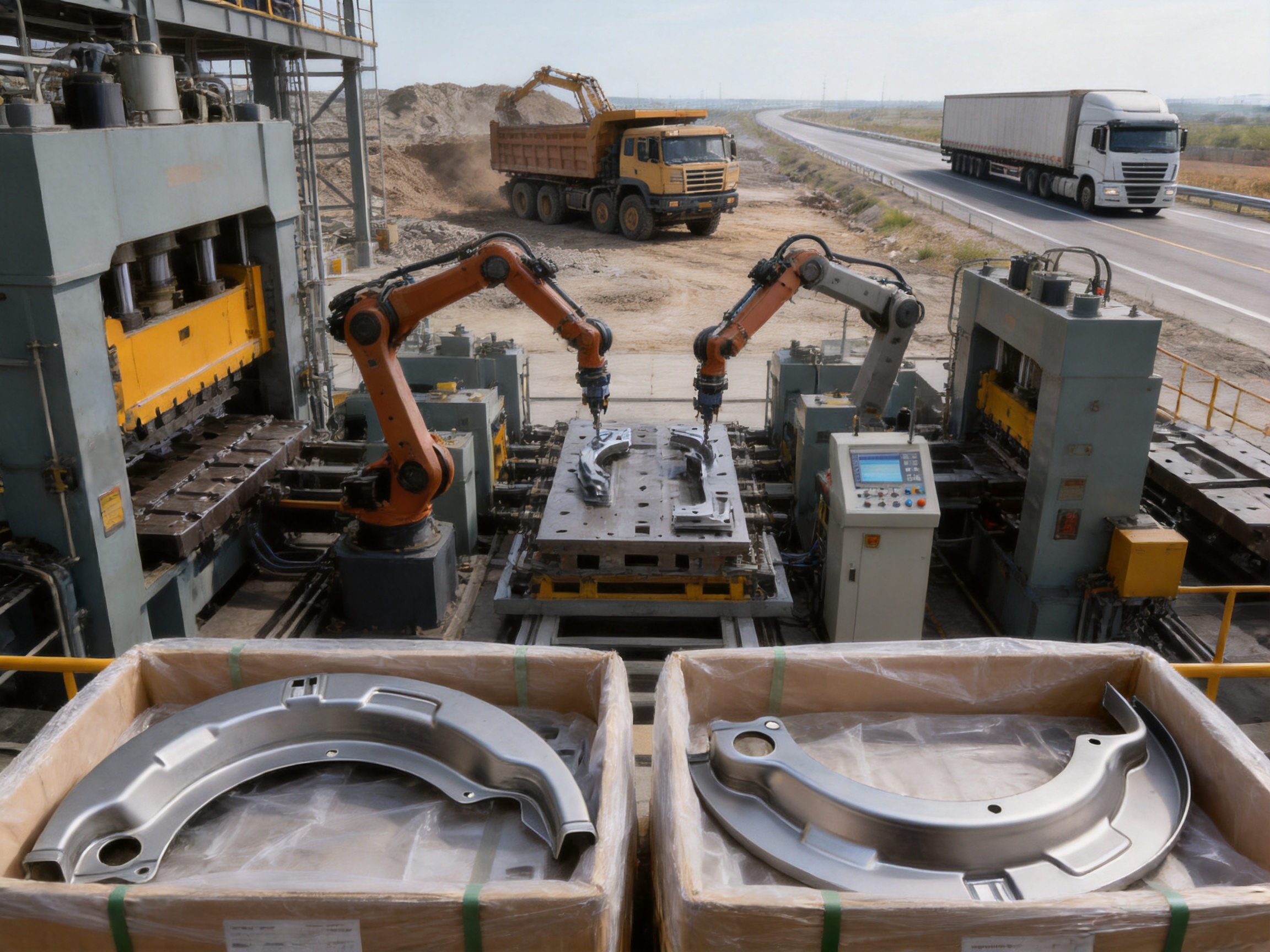
Automation and Turnkey Stamping Solutions
As production volumes increase, customers may seek improved efficiency, reduced manual handling, and more consistent process control. Stamping automation equipment can support these objectives by coordinating material feeding, transfer, positioning, and part collection.
Automation is not identical for every heavy truck component. A low-volume custom bracket may be suitable for a flexible semi-automatic process, while a high-volume program may justify a more integrated automated line. The right solution depends on the part size, material thickness, operation sequence, press configuration, cycle time, and expected return on investment.
A turnkey approach can simplify project coordination. Instead of separately sourcing dies, presses, feeders, transfer devices, and controls, customers can work with a supplier that understands the relationship between these elements. Die geometry must be compatible with material movement, and automation must be able to handle the part without damaging edges or formed features.
The company can provide solutions for stamping molds and stamping automation, and it can invest in related production equipment according to customer needs. This capability may be valuable for manufacturers that are expanding capacity, launching a new truck component, or establishing a dedicated production line.
Automation can also support safer working conditions by reducing manual handling around press operations. It may improve repeatability by maintaining consistent feeding and positioning. In addition, process data and equipment monitoring can help production teams identify interruptions or variations more quickly.
Applications for Original Equipment and Aftermarket Customers
Heavy truck manufacturers require stable component quality, dependable delivery, and tooling that can support planned production. For original equipment programs, the supplier must understand drawing requirements, approval procedures, production volumes, and change-control expectations.
Aftermarket service providers have somewhat different priorities. They may need replacement parts in practical quantities, consistent fit, clear identification, protective packaging, and reliable repeat ordering. A stamped component that matches the original assembly can reduce installation time and help repair facilities return vehicles to service more efficiently.
Fleet maintenance organizations can also benefit from dependable replacement brackets, connecting plates, and engine supports. Maintaining a consistent source for commonly replaced structural components may simplify purchasing and reduce uncertainty about part quality.
Construction vehicle operators face particularly severe conditions. Vehicles may operate on unpaved surfaces, work sites, steep grades, or areas with high levels of dust and moisture. Parts designed for resistance to vibration, impact, and environmental exposure are therefore important for operational reliability.
Why Manufacturing Experience Matters
Suzhou Shuangqisi Mold Equipment Co., Ltd. has 15 years of experience in the mold industry and employs 60 technical staff. This experience provides a foundation for managing the practical challenges of die design, tooling manufacture, stamping production, and process debugging.
Experienced personnel can often recognize production risks earlier because they understand how material behavior, tooling construction, and press operation interact. They can distinguish between a material issue, a die issue, and a setup issue, allowing corrective action to be targeted more efficiently.
The company’s customer base includes Anter Group, Ousheng Electric, Dongbei Group, and Huichuan Technology. Its products have mainly served applications involving servo drives, compressors, and new energy vehicles. Although each application has specific requirements, work across these industrial fields contributes to experience in precision stamping, production control, and technical customer service.
The company’s equipment investment also demonstrates an emphasis on in-house capability. Imported wire cutting machines, CNC machining centers, multiple grinding machines, and a broad range of punch presses allow important manufacturing activities to be coordinated within the organization.
In 2016, the company invested in and established Suzhou Keshuang Intelligent Technology Co., Ltd., which mainly produces stamping automation equipment. This development expanded the company’s ability to support customers seeking integrated tooling and automation solutions.
Design Considerations for Heavy Truck Stamped Components
Successful production begins with a design that is suitable for stamping. Engineers should consider uniform material flow, appropriate corner radii, accessible hole locations, stable flange geometry, and sufficient support around load-bearing areas.
Sharp internal corners can increase stress concentration and make forming more difficult. Excessively deep or abrupt forming features may create cracking or thinning. Closely spaced holes can affect local strength and die construction. These issues should be reviewed before tooling is manufactured.
Springback is another important consideration, especially when high-strength steel is used. After forming pressure is released, the material may partially return toward its original shape. Compensation in the die design, additional calibration, or process adjustment may be required to achieve the final target dimensions.
Part design should also consider inspection and assembly. Critical dimensions must be measurable, and reference surfaces should be defined clearly. Mounting features should be positioned so that the part can be installed using practical tools and procedures.
When customers involve the stamping supplier early in the development process, manufacturability concerns can be identified before they become expensive tooling changes. Design-for-stamping cooperation can improve quality, shorten development time, and reduce production risk.
Maintenance and Long-Term Tooling Reliability
Stamping dies are production assets that require regular maintenance. Cutting edges gradually wear, forming surfaces may develop damage, and guide components can lose accuracy if they are not inspected and lubricated appropriately.
Regular maintenance helps preserve part quality and reduce unexpected downtime. Maintenance activities may include cleaning, lubrication, edge inspection, fastener checks, alignment verification, replacement of worn inserts, and confirmation of critical dimensions.
Tool life depends on material thickness, steel strength, production volume, press conditions, lubrication, die construction, and maintenance practices. A properly designed and maintained die can support stable production over a long service period.
Tooling reliability is directly connected to customer cost. A die that produces inconsistent parts may increase sorting, rework, scrap, and delivery delays. A die that is difficult to maintain may create repeated interruptions. Robust construction and practical maintenance access can therefore be important advantages when comparing suppliers.
Packaging, Storage, and Handling
Heavy truck stamping parts should be protected after production because surface damage or deformation can occur during handling and transportation. Packaging should be selected according to part size, weight, edge condition, surface protection, and shipping distance.
Parts with finished surfaces or anti-corrosion treatment should be kept away from unnecessary moisture and contamination. Components should be stacked or separated in a way that prevents bending, scratching, or impact at mounting features.
Clear labeling can support warehouse management and installation accuracy. Labels may identify part numbers, batch information, quantities, material information, and customer references according to the agreed supply arrangement.
Proper handling is especially important for brackets and plates with formed flanges. If these features are used as lifting or stacking contact points without adequate support, they may be distorted before installation. A well-planned packaging method helps preserve the dimensional quality achieved during stamping.
How Customers Can Evaluate a Supplier
Customers comparing heavy truck stamping suppliers should evaluate more than unit price. Important questions include whether the supplier can manufacture the required die, whether its press capacity matches the component, whether it has experience with high-strength steel, and whether it can control critical dimensions consistently.
Customers should also review inspection capability. Hardness, flatness, dimensional accuracy, edge quality, and anti-corrosion performance may all be relevant depending on the application. Clear acceptance criteria should be agreed before production begins.
Technical communication is another important factor. The supplier should be able to discuss material behavior, forming sequence, tolerance feasibility, tooling maintenance, trial production, and potential design improvements. A technically capable supplier can contribute more value than a company that only quotes a price from a drawing.
For customers seeking an automated line, the evaluation should include the supplier’s ability to coordinate dies and automation equipment. Compatibility between presses, feeders, transfer systems, part orientation, and collection methods can have a major effect on line performance.
Finally, customers should consider long-term support. Heavy truck programs may involve engineering changes, replacement tooling, process adjustments, repeat orders, and technical service. A supplier with integrated capabilities and an established technical team may be better positioned to support the full life cycle of the product.
Frequently Asked Questions
What are heavy truck stamping parts?
Heavy truck stamping parts are metal components formed from steel plate through stamping operations for use in commercial heavy-duty vehicles. Typical examples include frame brackets, suspension connecting plates, and engine mounting supports.
What materials are used for these parts?
The product line is manufactured from high-strength steel plates. The specific grade and thickness should be selected according to the component’s load requirements, forming conditions, corrosion expectations, and customer specifications.
Why is cold stamping suitable for heavy truck components?
Cold stamping can produce repeatable shapes, mounting holes, bends, and reinforcing features with efficient batch production. It also supports uniform thickness, smooth edges, and controlled dimensional tolerances when the tooling and process are properly developed.
How do frame brackets contribute to truck performance?
Frame brackets connect and support structural assemblies. Their geometry helps distribute loads and maintain the position of related components. Accurate dimensions and suitable strength are important for reliable installation and service performance.
Why are suspension connecting plates exposed to high demands?
Suspension connecting plates transfer forces between suspension components and the vehicle frame. They experience repeated vibration, impact, braking forces, and movement caused by uneven roads, making strength and dimensional stability important.
What is the function of an engine mounting support?
An engine mounting support connects the powertrain to the vehicle structure and helps control engine movement. It must maintain accurate mounting relationships while resisting vibration, dynamic loads, and changing operating conditions.
What quality checks are performed?
The product line undergoes strict inspections for hardness, flatness, and anti-corrosion performance. Visual and dimensional checks can also be incorporated according to the customer’s drawings and quality requirements.
Can the parts be used for aftermarket repairs?
Yes. The components are suitable for truck manufacturers and aftermarket service providers. Accurate compatibility with original truck assemblies can help repair facilities reduce fitting difficulties and maintenance time.
What press capacities are available?
The company operates 25 punch presses with capacities ranging from 80 tons to 400 tons. This range provides flexibility for different component sizes, material thicknesses, and forming requirements.
Can the supplier manufacture stamping dies?
Yes. The company is a manufacturer of stamping dies and hardware parts, integrating design, manufacturing, and service. Its equipment includes CNC machining centers, wire cutting machines, grinding machines, and other precision machine tools.
Can automation equipment be included in a project?
Yes. Through its stamping automation capability, the company can provide turnkey solutions involving stamping molds and automation equipment. The appropriate solution depends on production volume, part design, press configuration, and customer requirements.
How does high-strength steel affect die design?
High-strength steel may require greater forming force and more careful control of springback. Die geometry, forming sequence, clearances, corner radii, and calibration operations must be developed to suit the selected material.
What information should a customer provide for a quotation?
Useful information includes part drawings or three-dimensional data, material grade, thickness, annual volume, tolerance requirements, surface treatment, corrosion expectations, packaging needs, and the intended truck application.
What makes an integrated supplier valuable?
An integrated supplier can coordinate die design, tool manufacturing, stamping, inspection, and automation planning. This may simplify communication, shorten correction cycles, and create a more consistent relationship between tooling and finished-part production.
Conclusion
Heavy truck stamping parts must perform reliably in conditions that combine high loads, vibration, impact, environmental exposure, and long service cycles. Frame brackets, suspension connecting plates, and engine mounting supports are important to the structural and functional integrity of commercial vehicles, so their manufacture requires appropriate materials, accurate tooling, stable press production, and disciplined inspection.
The product line described here uses high-strength steel plates and advanced cold stamping technology to provide uniform thickness, smooth edges, precise dimensional tolerances, and compatibility with original truck assemblies. Inspection of hardness, flatness, and anti-corrosion performance supports dependable quality for manufacturers, fleets, construction vehicle operators, and aftermarket service providers.
The manufacturer’s strengths extend beyond the finished components. Its integrated capabilities include stamping die design, precision tool manufacturing, metal stamping, production debugging, and stamping automation. With 60 technical staff, 15 years of mold industry experience, precision machining resources, more than ten grinding machines, 25 punch presses from 80 tons to 400 tons, and access to automation equipment development, the company can support both individual components and broader production programs.
For customers seeking durable heavy truck components, the most important advantage is the combination of product performance and manufacturing coordination. A reliable part begins with an appropriate material and a suitable design, but it reaches its full value only when the die, press, inspection system, and production team work together. This integrated approach helps deliver cost-effective stamping solutions designed for the demanding requirements of heavy-duty transportation and construction applications.
References
1. Automotive stamping and sheet-metal forming principles, including blanking, piercing, bending, drawing, and forming operations.
2. General engineering guidance on high-strength steel selection and formability for structural vehicle components.
3. Industrial practice for stamping die design, tool maintenance, press selection, and process debugging.
4. General quality-control practices for hardness, flatness, dimensional accuracy, edge condition, and corrosion protection of stamped metal parts.
5. Commercial vehicle engineering principles concerning chassis brackets, suspension connections, engine mounting systems, vibration, impact, and load transfer.
6. Manufacturing information supplied for the heavy truck stamping parts product line and associated die-making and stamping automation capabilities.
Product: Heavy truck stamping parts
Previous Post
Deep Drawing Molds for Front and Rear Wheels of Two-Wheeled Electric Vehicles
Next Post
Precision Small Stamped Parts for Laptops and Mobile Phones
Our Products.
Start Your Business with an OEM Manufacturer Right Here!

Provide global customers with complete turn-key solutions
through
innovation!
QUICK LINKS
CONTACT INFO.
-
 +86-139 1308 8972
 -

-
 No. 118 Yexin Road, Wujiang Economic Development Zone, Suzhou, China
Copyright © Suzhou Shuangqisi Mold Equipment Co., Ltd. All Rights Reserved. Custom Stamping Die Metal Stamping Die Manufacturers
