 English
 Español
 Deutsch

-
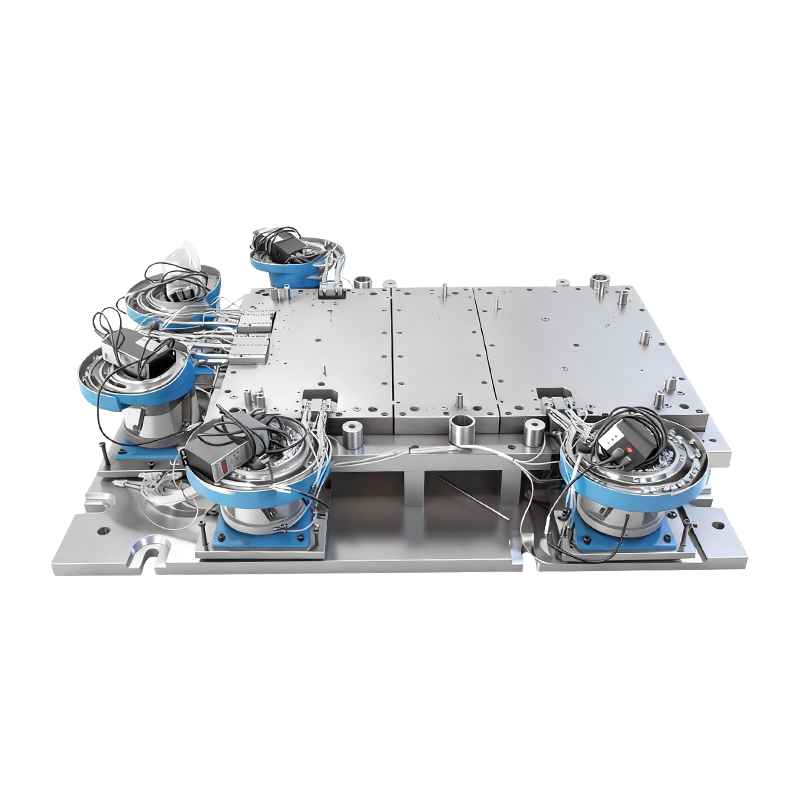
Automatic riveting mold for large computer machine base
This Automatic Riveting Mold for Large Computer Ma...
-
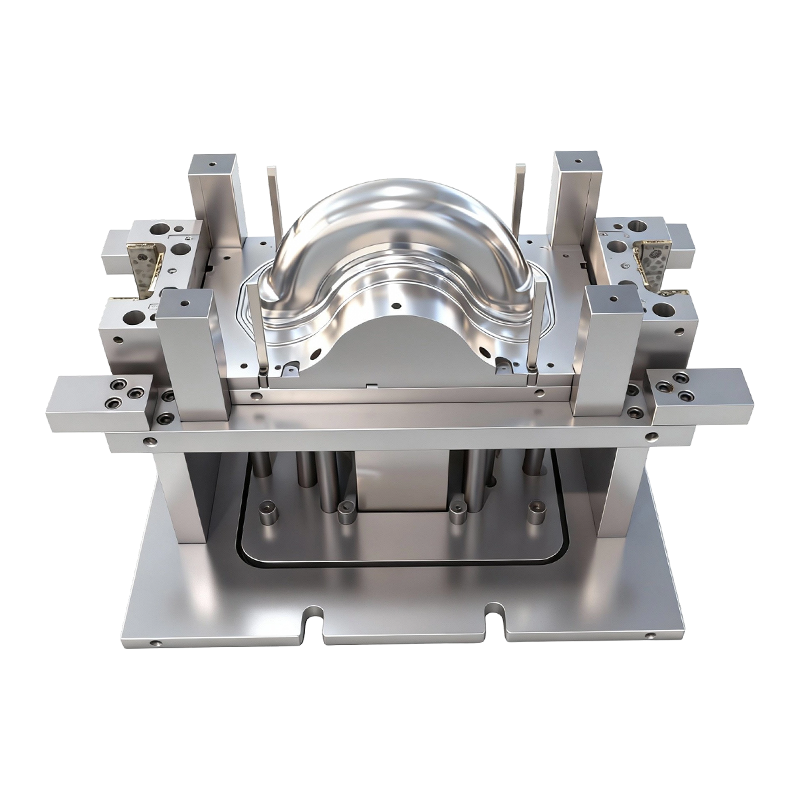
Deep drawing mold for front and rear wheels of two-wheeled electric vehicles
This Deep drawing mold for front and rear wheels o...
-
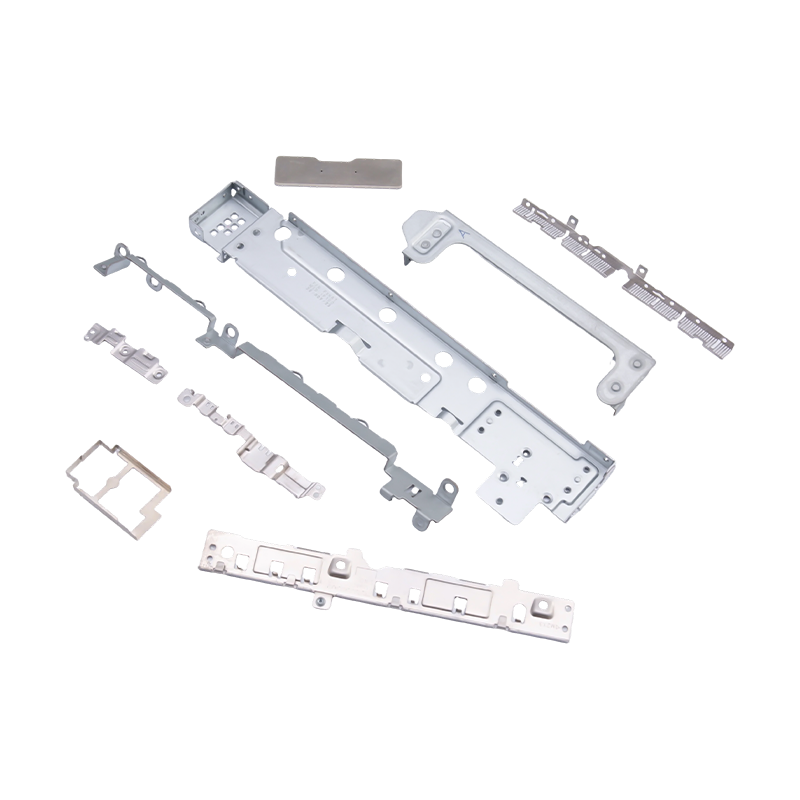
Small stamped parts for laptops and mobile phones
As essential internal components for modern portab...
-
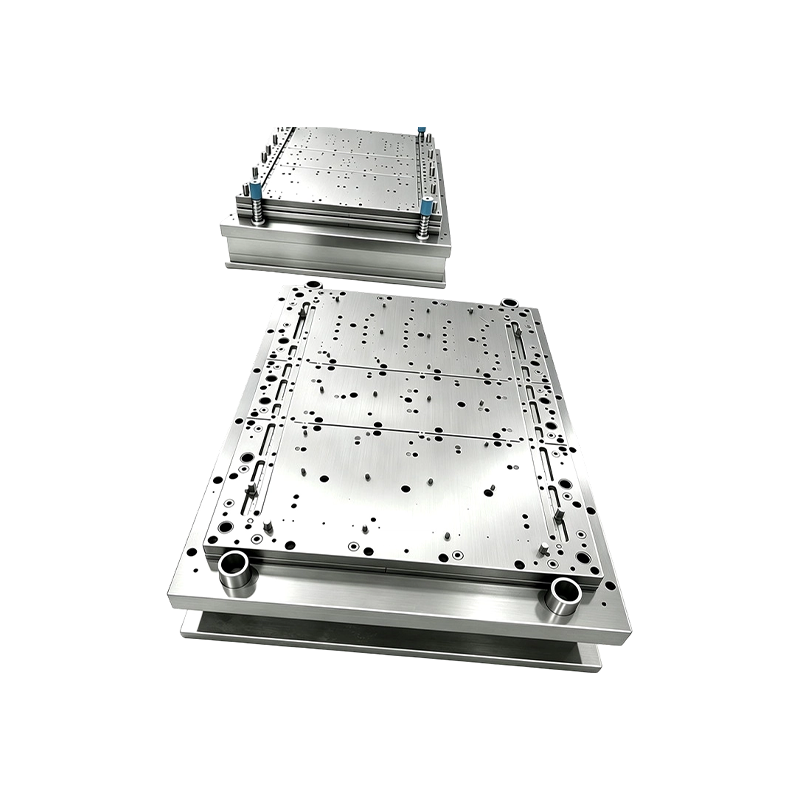
Progressive Stamping Die for Connector & Terminal Parts High Speed Progressive Stamping Die Precision Metal Hardware Stamping Tool mold for Connector Terminal Parts Automotive Components
Progressive Stamping Die for Connector & Termi...
-
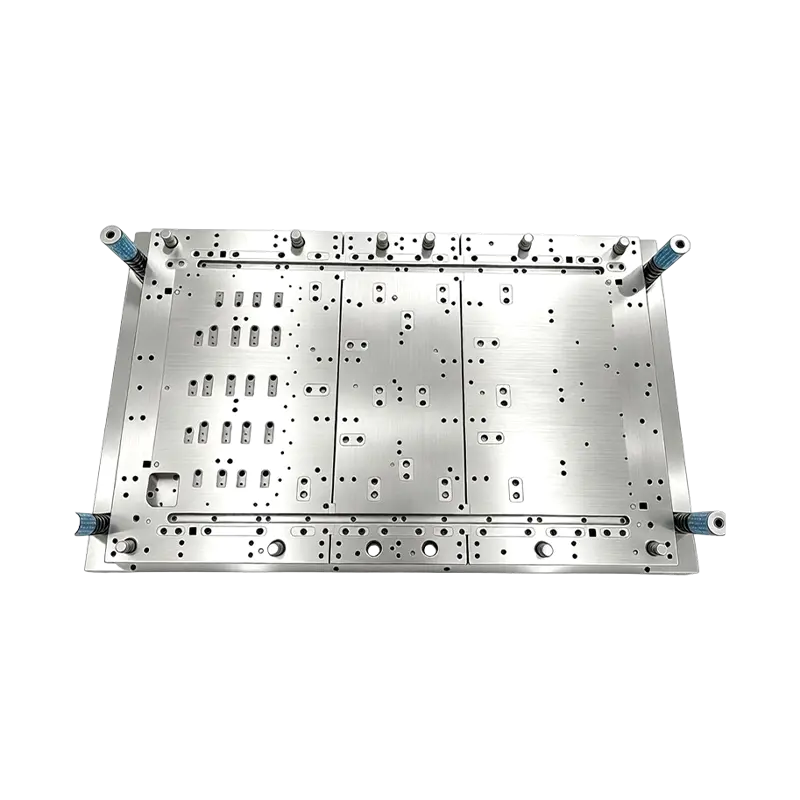
Multi-Station Progressive Stamping Die with Carbide Inserts Custom Multi Station Progressive Stamping Die Carbide Insert Metal Stamping Mold Tool for Equipment Appliances Device Hardware
High Speed Metal Stamping Tool for Precise Equipme...
-
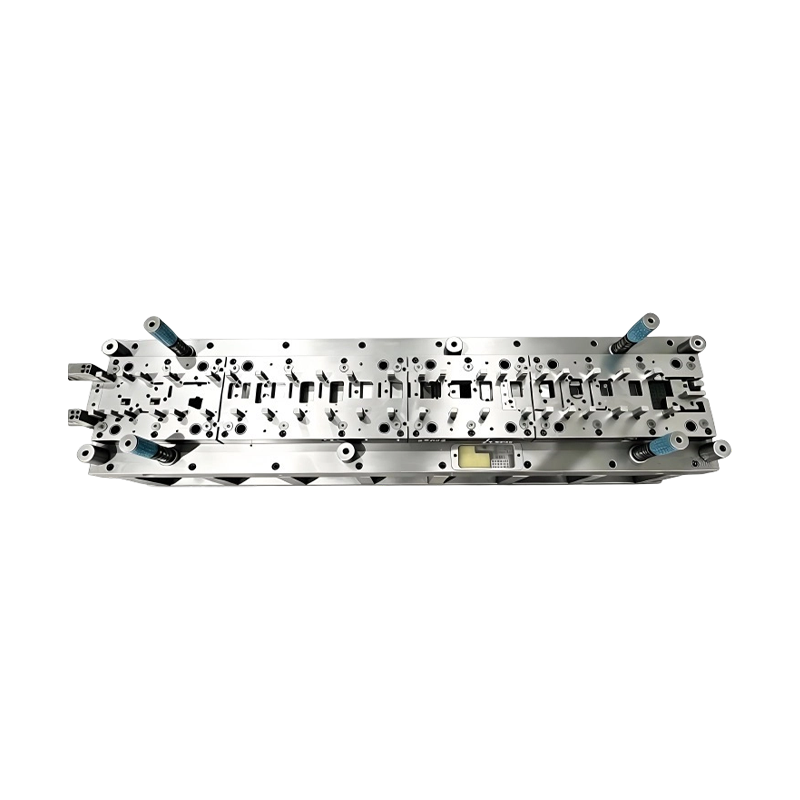
Long-Stroke Multi-Stage Progressive Die Automatic Strip Feed Progressive Die Long Travel Follow on Stamping Tool for Sheet Metal Hardware Press Moulding
Long-Stroke Multi-Stage Progressive DieOur custom ...
- E-mail us: [email protected]
- Call us: +86-139 1308 8972

Wang Xinyue – After-Sales Support Supervisor
Home / Author / Wang Xinyue – After-Sales Support Supervisor / Automatic Riveting Mold for Large Computer Machine Bases: Precision, Automation, and Production Efficiency
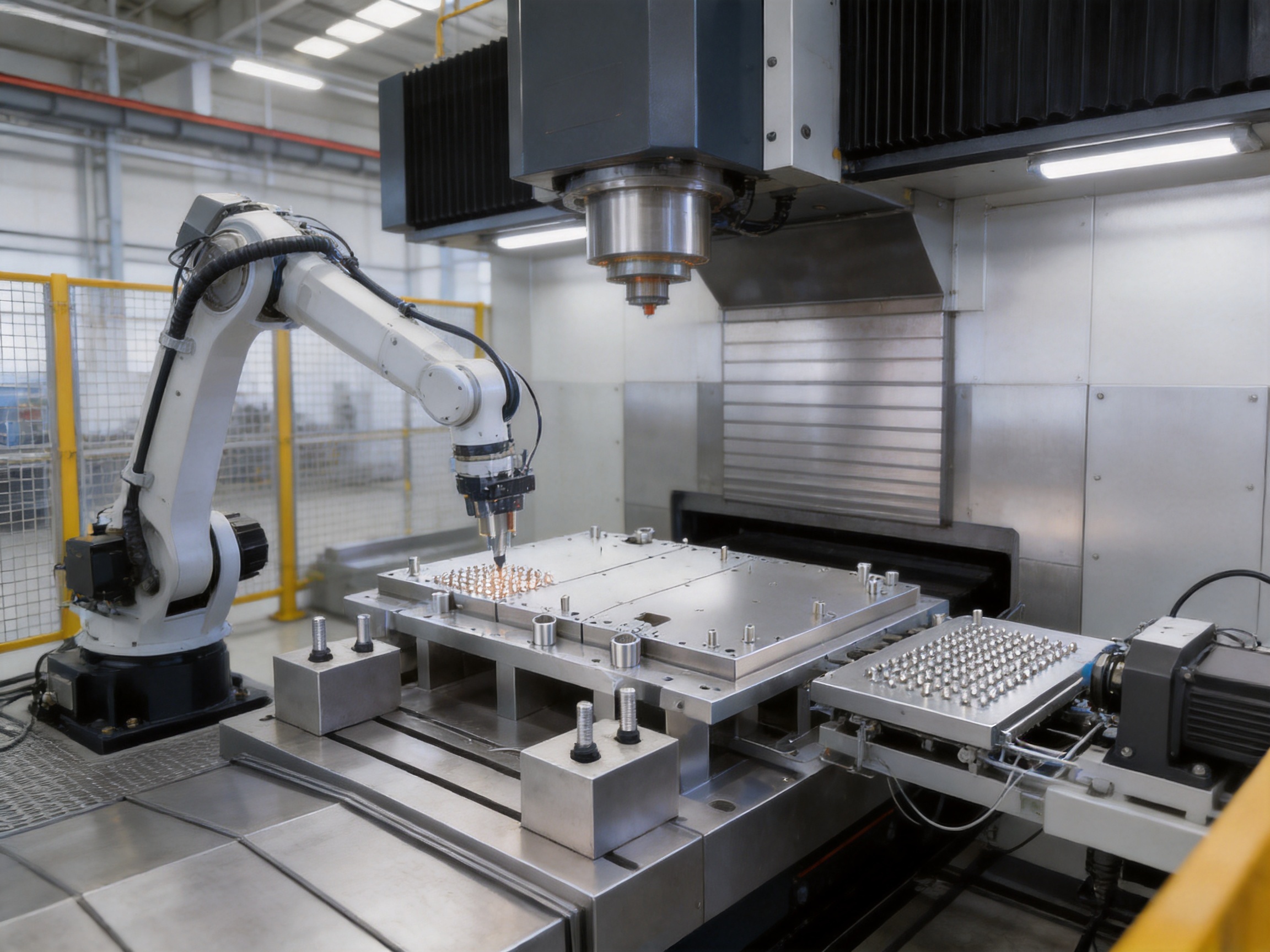
Automatic Riveting Mold for Large Computer Machine Bases: Precision, Automation, and Production Efficiency
2026-09-16
Large computer machine bases require dependable mechanical connections, repeatable positioning, and stable production quality. As computer hardware becomes more powerful and equipment cabinets become larger, the structural base must support heavier assemblies while maintaining dimensional accuracy throughout manufacturing, transportation, installation, and service. Riveted joints are often used in this type of metal fabrication because they can provide reliable fastening without requiring a separate threaded connection at every assembly point. However, manual riveting and semi-automatic production may create positioning inconsistencies, high labor requirements, and difficulties in maintaining uniform cycle times.
The automatic riveting mold for large computer machine bases is designed to address these challenges. It combines a purpose-built stamping die structure with robotic rivet feeding, automated workpiece transfer, and controlled riveting operations. Instead of relying on operators to position each rivet and move each large base component between processes, the robotic system delivers rivets to designated mold locations, supports accurate workpiece handling, and transfers completed components to the next workstation. The stamping machine then applies stable and repeatable forming force to complete the riveting operation.
This equipment is not simply a conventional die with an automatic loading function. It is an integrated production aid developed around the actual size, geometry, fastening arrangement, and stress requirements of large computer machine bases. The mold provides the locating and supporting foundation, while the robot and production line provide controlled movement. Together, these elements create a more consistent manufacturing process with lower manual intervention, reduced operator fatigue, and improved production efficiency.
For manufacturers evaluating metal stamping die suppliers, the value of this solution lies in more than the final mold. It includes application-oriented design, precise machining, experienced assembly, controlled debugging, compatibility with stamping automation, and the ability to develop a practical production solution around the customer’s process. A supplier with both mold-making and automation capabilities can coordinate these elements more effectively than a supplier that provides only an isolated die component.
Content
- 1 1. The Manufacturing Challenge of Large Computer Machine Bases
- 2 2. Product Overview and Operating Principle
- 3 3. Application-Specific Structural Design
- 4 4. Advantages of Robotic Rivet Feeding and Transfer
- 5 5. Precision and Consistency in Riveting Quality
- 6 6. Benefits Compared with Conventional Manual or Generic Solutions
- 7 7. Advanced Manufacturing Capabilities Behind the Mold
- 8 8. Design and Engineering Process
- 9 9. Production Efficiency and Cost Control
- 10 10. Quality Assurance and Technical Support
- 11 11. Installation, Commissioning, and Operator Considerations
- 12 12. Maintenance and Service Life
- 13 13. Why Integrated Mold and Automation Manufacturing Matters
- 14 14. Suitable Applications and Customization Possibilities
- 15 15. Purchasing and Supplier Evaluation Guide
- 16 16. Frequently Asked Questions
- 16.1 Q1: What is an automatic riveting mold for a large computer machine base?
- 16.2 Q2: How does the robotic arm improve the riveting process?
- 16.3 Q3: Can the mold be used with different computer machine base designs?
- 16.4 Q4: Does the mold replace the stamping press?
- 16.5 Q5: What are the main advantages over manual riveting?
- 16.6 Q6: What information is needed before customization?
- 16.7 Q7: How does mold rigidity affect riveting quality?
- 16.8 Q8: Can the supplier provide automation equipment as well as the mold?
- 16.9 Q9: What manufacturing equipment supports production of the mold?
- 16.10 Q10: What maintenance does the mold require?
- 16.11 Q11: Is the system suitable for high-volume production?
- 16.12 Q12: How can a customer evaluate the final riveting result?
- 17 17. Conclusion
- 18 References
- 19 Product: Automatic riveting mold for large computer machine base
1. The Manufacturing Challenge of Large Computer Machine Bases
Large computer machine bases are typically more demanding than small sheet metal brackets or simple flat stamped parts. Their dimensions may require long supporting surfaces, multiple locating references, several fastening positions, and sufficient rigidity to prevent distortion during riveting. The base may also need to align with frames, panels, rails, power modules, cooling systems, or other internal assemblies. A small error at one fastening position can become a larger alignment problem during final assembly.
The production process must therefore control several variables at the same time. The workpiece must be placed consistently in the mold. Rivets must arrive at the correct locations and in the correct orientation. The support structure must resist movement while the stamping machine applies force. The fastening operation must be completed without damaging the base, deforming nearby features, or producing an inconsistent joint. After riveting, the component must be removed safely and delivered to the next process without collision or unnecessary waiting.
Manual production can make these requirements difficult to maintain. An operator may need to lift or reposition a large workpiece repeatedly, identify several riveting positions, place individual rivets, and monitor the stamping cycle. Even when skilled workers perform these activities carefully, production variation can arise from fatigue, changing work habits, inconsistent visual judgment, or interruptions. Manual positioning also makes it harder to guarantee that every rivet follows exactly the same sequence and reference position.
When production volumes increase, these problems become more visible. A process that appears acceptable for a small number of units may create bottlenecks during continuous production. Labor demand increases, cycle time becomes less predictable, and quality inspection may identify defects only after the component has moved to a later stage. The cost of rework can include not only replacement of a defective rivet but also disassembly, additional inspection, material handling, and delayed delivery.
An automatic riveting mold provides a structured response. The mold establishes a repeatable mechanical reference, the robot performs programmed handling, and the stamping machine applies a controlled operation. The result is a process that is easier to standardize, measure, maintain, and improve.
Automatic riveting mold for large computer machine base
2. Product Overview and Operating Principle
The automatic riveting mold for large computer machine bases is an auxiliary production device used together with a stamping press and robotic automation system. Its main purpose is to support and locate the large base component during riveting while coordinating with automatic rivet feeding and workpiece transfer.
At the beginning of the cycle, the machine base is delivered to the working area by a robotic arm or an upstream handling mechanism. The workpiece is placed against the mold’s locating features. These features may include support blocks, side references, positioning pins, stop surfaces, or other application-specific elements. Their role is to establish the correct relationship between the base and the riveting tools.
Rivets are then supplied to the designated positions. The robotic arm can accurately deliver the rivets according to a programmed sequence, reducing the need for manual placement. Depending on the production line configuration, the rivets may be presented from an automatic feeder, transferred by the robot, or supplied through a coordinated feeding arrangement. The mold is designed to accommodate the required riveting positions and to maintain sufficient support around the work area.
Once the workpiece and rivets are correctly positioned, the stamping press performs the riveting operation. The mold supports the base and helps maintain alignment as the press applies force. Because the workpiece is located in a repeatable manner, the riveting result can be more consistent than a manually positioned process. After the cycle is completed, the robot removes the finished component and transfers it to the next workstation.
This sequence can be summarized as follows:
| Process Stage | Primary Function | Main Production Benefit |
|---|---|---|
| Workpiece loading | Robot places the large machine base into the mold | Repeatable handling with reduced manual lifting |
| Workpiece locating | Mold references establish the correct position | Improved positional consistency |
| Rivet feeding | Robot or feeder supplies rivets to specified locations | Lower risk of missed or incorrectly placed rivets |
| Riveting | Stamping press completes the fastening operation | Stable and uniform forming force |
| Unloading | Robot removes the finished component | Faster transfer and reduced handling variation |
| Downstream transfer | Finished base moves to the next workstation | Better line continuity and production flow |
The mold itself is therefore a key interface between the part, the press, the rivet, and the robot. Its performance influences the entire operation. A poorly designed mold may create interference with the robot, insufficient support during riveting, difficult maintenance, or unreliable positioning. A properly engineered mold allows the different parts of the automated line to work together as a coordinated system.
3. Application-Specific Structural Design
Large computer machine bases are not all identical. Their dimensions, material thickness, opening patterns, flange structures, and riveting layouts can differ according to cabinet design and equipment application. For this reason, an automatic riveting mold should be designed around the actual workpiece rather than treated as a universal fixture.
The supporting structure must accommodate the size and weight of the base. A large workpiece may need several support points to prevent sagging or vibration. At the same time, the support locations must not obstruct rivet access or interfere with surrounding features. The mold designer must balance rigidity, accessibility, loading convenience, and maintenance space.
Locating elements are equally important. A reliable mold normally uses a clear positioning strategy that prevents the workpiece from shifting during the press cycle. The locating system may be based on reference edges, holes, formed features, or dedicated points on the component. The design should control unwanted movement without making loading and unloading unnecessarily difficult.
Riveting positions must be coordinated with the mold’s active working areas. Each location should provide suitable backing support and sufficient tool clearance. If a rivet is close to a flange, corner, opening, or raised feature, the mold may need a specially shaped support surface or localized structure. These details are especially important for large bases because the part may contain multiple levels and complex sheet metal forms.
Another consideration is deformation control. Riveting creates localized force. If the surrounding sheet metal is not adequately supported, the base may experience unwanted bending, surface marks, or dimensional movement. A sturdy mold reduces these risks by distributing support around the working region and maintaining the intended geometry during the operation.
The product description emphasizes that the mold is tailored for large computer machine bases and adapted to the workpiece’s size and riveting stress requirements. This application-specific approach is a significant advantage over generic fixtures. A generic device may require additional adjustment, manual compensation, or repeated trial-and-error before it can produce stable results. A customized mold begins with the actual component and process requirements, allowing the structure and working positions to be developed as a unified solution.
4. Advantages of Robotic Rivet Feeding and Transfer
The integration of a robotic arm changes the role of the operator and improves the consistency of the production cycle. Instead of manually positioning every rivet and moving the completed part, the robot follows a programmed route and repeats the same handling sequence. This is especially useful when the large computer machine base is heavy, wide, or difficult to manipulate safely by hand.
One direct benefit is improved placement repeatability. The robot delivers rivets to designated positions according to programmed coordinates and process logic. This reduces dependence on visual judgment and helps prevent common manual errors such as missing a riveting point, placing a rivet off-center, or reversing the intended sequence.
Robotic transfer also makes the line easier to organize. Once the stamping cycle is completed, the arm can remove the component and send it to the next workstation without waiting for an operator to reposition it. This supports a more continuous production rhythm and may reduce idle time between operations.
Another advantage is lower labor intensity. Large machine bases can be awkward to lift, rotate, and align. Repeated manual handling may increase fatigue and create ergonomic risks. By assigning repetitive movement and rivet positioning to the robot, the production team can focus more on supervision, inspection, maintenance, and process management.
Automation can also improve process traceability. A programmed system can be linked to cycle counting, fault signals, inspection routines, or production records. Although the specific control architecture depends on the customer’s line, the automated mold creates a foundation for more measurable production. When a problem occurs, maintenance staff can examine the cycle state, robot position, press status, or sensor signal more systematically than they could in a fully manual process.
Robotic operation does not eliminate the need for engineering supervision. The robot, mold, press, and workpiece must be coordinated carefully. However, when these elements are commissioned correctly, the resulting process can provide a strong combination of precision, repeatability, efficiency, and operator safety.
5. Precision and Consistency in Riveting Quality
Riveting quality depends on correct positioning, suitable force, stable support, and consistent component presentation. The automatic mold contributes to each of these conditions. By establishing a fixed relationship between the workpiece and the press, it helps the riveting tool act at the intended location. By supporting the surrounding sheet metal, it reduces unwanted movement during forming. By coordinating with robotic delivery, it helps ensure that the rivet arrives in a repeatable position.
Consistent riveting is important for both mechanical performance and appearance. A properly formed joint should meet the customer’s required connection strength and dimensional conditions. It should also avoid excessive deformation, loose fastening, surface damage, and other visible defects. When many rivets are used on a single base, uniformity across all positions becomes particularly important.
Compared with a manually positioned process, an automated mold can reduce variation caused by different operators or changing levels of attention. The same mold references, robot coordinates, and press sequence are used from cycle to cycle. This does not guarantee perfect quality by itself, but it creates a more controlled process environment in which quality can be verified and maintained.
Stable production also improves downstream assembly. If the machine base maintains its intended dimensions and fastening positions, subsequent components can be installed with fewer adjustments. Reduced variation can lower rework, simplify inspection, and help manufacturers meet delivery schedules more reliably.
Quality control should still include practical inspection methods. Depending on customer requirements, these may include visual checks, dimensional inspection, rivet-head inspection, joint-strength testing, gauge verification, and periodic first-piece approval. The mold supplier can support the customer by considering inspection access and reference points during the design stage.
6. Benefits Compared with Conventional Manual or Generic Solutions
The main competitive advantage of this automatic riveting mold is the integration of dedicated tooling and automation around a specific large machine base application. Conventional manual fixtures may provide basic support, but they often leave rivet placement and component transfer to operators. Generic fixtures may be less expensive at the initial stage, yet they can require more adjustment and may not fully accommodate the workpiece’s size, shape, or fastening pattern.
A manual solution may also require several operators when the base is large or difficult to handle. One person may hold the workpiece while another places rivets or operates the press. This increases labor use and can create communication-related errors. Automated transfer reduces the number of manual movements and provides a more predictable sequence.
Compared with a simple automated fixture, a purpose-built mold can offer better control of support and access. The structure can be designed around the actual riveting stress, tool clearance, robot path, and workpiece reference system. This reduces the likelihood that automation will be added without adequate mechanical support.
Another competitive strength is the potential for turnkey coordination. A manufacturer that understands both stamping dies and stamping automation can help connect the mold with the press, robot, feeding method, and downstream handling process. This can simplify communication for the customer and reduce the risk of incompatible equipment specifications.
| Evaluation Area | Manual Fixture | Generic Automated Fixture | Application-Specific Automatic Riveting Mold |
|---|---|---|---|
| Rivet positioning | Dependent on operator accuracy | Partly automated, often requiring adjustment | Programmed delivery to designated positions |
| Large workpiece handling | High manual effort | Improved, depending on system design | Integrated robotic loading and transfer |
| Support during riveting | May be basic or manually adjusted | Standardized but not always optimized | Designed around workpiece geometry and riveting stress |
| Process consistency | More affected by fatigue and operator differences | Moderate to high | High potential when properly commissioned |
| Downstream connection | Separate manual handling | May require additional integration | Designed to transfer components to the next workstation |
| Customization | Often limited by simple construction | Depends on the equipment supplier | Developed for the specific base and production requirements |
| Labor intensity | High | Reduced | Substantially reduced for repetitive handling |
The best solution depends on production volume, part design, required quality, and available automation. However, for manufacturers seeking repeatable high-efficiency production of large computer machine bases, the application-specific automated approach offers clear practical advantages.
7. Advanced Manufacturing Capabilities Behind the Mold
The quality of an automatic riveting mold depends heavily on the manufacturing capability of its supplier. Precision design must be followed by accurate machining, careful fitting, controlled assembly, and reliable debugging. Suzhou Shuangqisi Mold Equipment Co., Ltd. operates as a manufacturer integrating stamping die design, manufacturing, service, hardware parts, and stamping automation equipment.
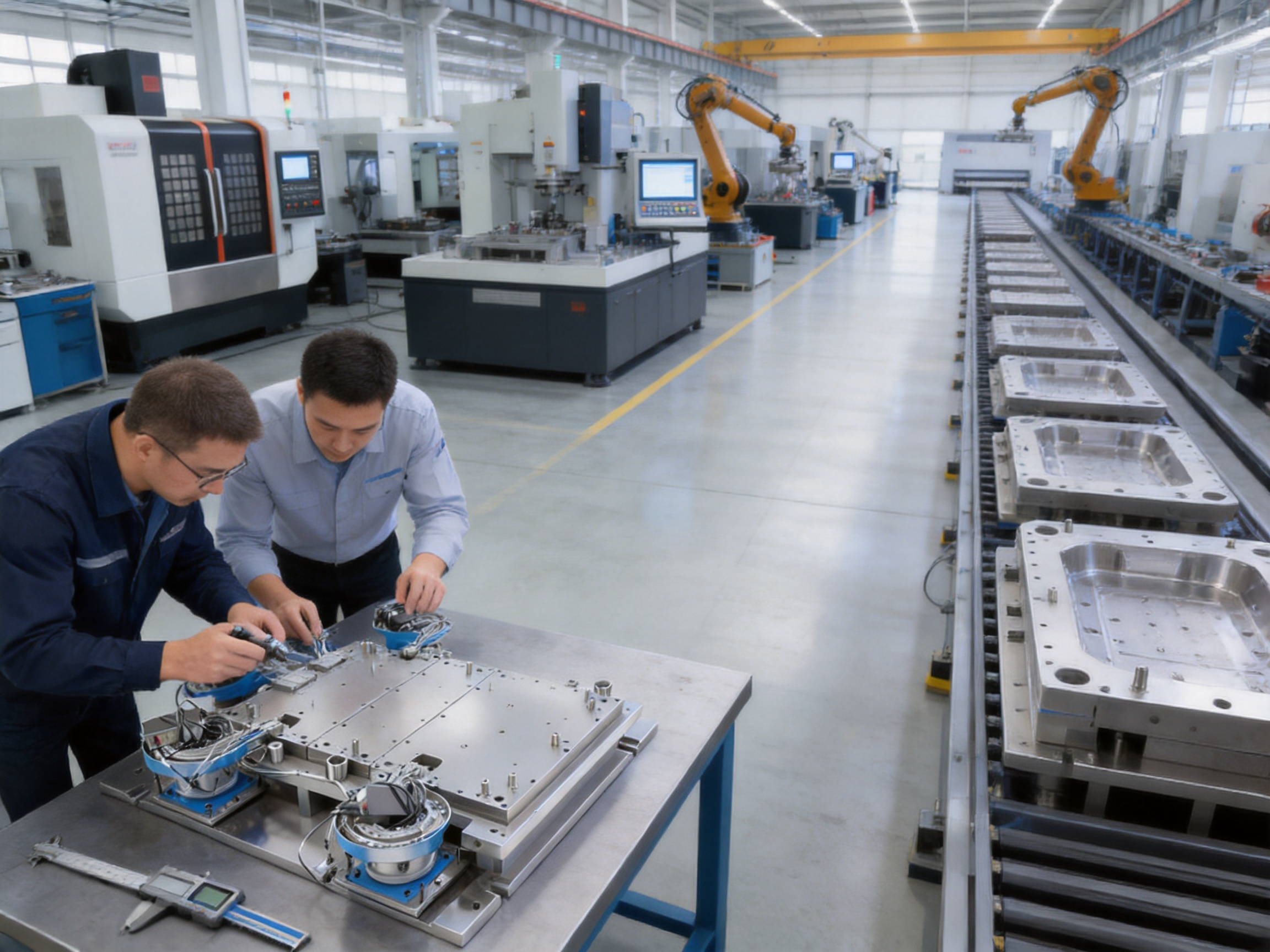
The company has a technical workforce of approximately 60 staff members and maintains equipment intended for precision mold production. Its resources include imported wire cutting machines, CNC machining centers, more than 10 grinding machines of different sizes, and 25 punch presses ranging from 80 tons to 400 tons. These capabilities provide a production base for machining, fitting, testing, and stamping-related verification.
Wire cutting is useful for producing accurate profiles, narrow slots, and detailed components that require controlled dimensional relationships. CNC machining centers support the production of mold bases, support blocks, locating structures, plates, and other components with complex geometry. Grinding machines help refine working surfaces and improve the accuracy of components that require close fit or controlled flatness.
The range of punch presses also gives the manufacturer experience with different forming conditions and production requirements. Although the final customer’s stamping press and riveting process must be evaluated separately, access to multiple press capacities helps the engineering team understand how tooling behaves under different loads and operating conditions.
Equipment alone does not determine mold quality. Skilled operators, experienced fitters, and debugging personnel are essential. Mold components must be assembled according to the design intent, checked for interference, adjusted where necessary, and tested under realistic operating conditions. The company’s senior operators and experienced debugging personnel support this part of the process.
An effective manufacturing workflow generally includes design review, material and component planning, precision machining, heat treatment or surface treatment where required, grinding, assembly, inspection, trial operation, and final adjustment. For an automatic riveting mold, the workflow must also consider robot access, rivet presentation, sensor locations, press stroke, safety clearance, and transfer timing.
The company’s integrated capabilities are particularly relevant to customers who need more than a standalone mold. It can provide stamping dies and stamping automation equipment, creating the possibility of a coordinated solution rather than disconnected components from multiple suppliers.
8. Design and Engineering Process
8.1 Reviewing the Customer’s Part and Process
The design process begins with a review of the large computer machine base and its production objectives. Important information may include the part drawing, three-dimensional model, material, thickness, overall dimensions, riveting positions, rivet specifications, required cycle time, stamping press information, and downstream process arrangement.
The engineering team must understand how the base will enter the mold, where it will be supported, how the robot will approach the workpiece, and how the finished component will leave the station. The mold should not be designed in isolation from the production line. A support block that appears suitable on a drawing may block the robot gripper, interfere with a sensor, or make manual maintenance access difficult.
8.2 Establishing the Locating Strategy
Once the part and process are understood, the locating strategy is developed. The goal is to constrain the workpiece sufficiently for stable riveting while allowing fast and safe loading. References should be selected from reliable part features, and the design should account for tolerances, material variation, and possible burrs.
Large bases may need a combination of primary, secondary, and tertiary references. Support points should prevent unwanted flexing, while stops and pins should control lateral movement. If the workpiece is asymmetrical, the design should make incorrect loading difficult or impossible through clear orientation features.
8.3 Coordinating Mold and Robot Movement
Robot reach and motion must be checked against the mold geometry. The robot needs sufficient space to pick the base, deliver rivets, and remove the finished part. Tooling, grippers, cables, sensors, and safety guards must be considered together. Collision prevention is especially important when the workpiece is large and the robot operates near the press.
The robot’s programmed path should support a practical cycle sequence. Unnecessary movement increases cycle time and may create additional wear. The mold should therefore provide accessible loading positions and clear rivet locations. If the process requires multiple rivets, the sequence can be planned to minimize repositioning and maintain stable support.
8.4 Preparing for Debugging and Maintenance
A good mold design includes adjustment and maintenance considerations from the beginning. Replaceable wear components, accessible fasteners, clear inspection points, and practical cleaning spaces can reduce future downtime. Riveting operations may produce debris or require periodic cleaning, so the mold should not contain inaccessible areas where contamination can accumulate.
During debugging, the team verifies workpiece loading, rivet delivery, press action, robot movement, and unloading. Initial trials may identify the need for minor changes to support heights, locating positions, sensor brackets, or robot coordinates. The ability to make controlled adjustments is an important part of successful commissioning.
9. Production Efficiency and Cost Control
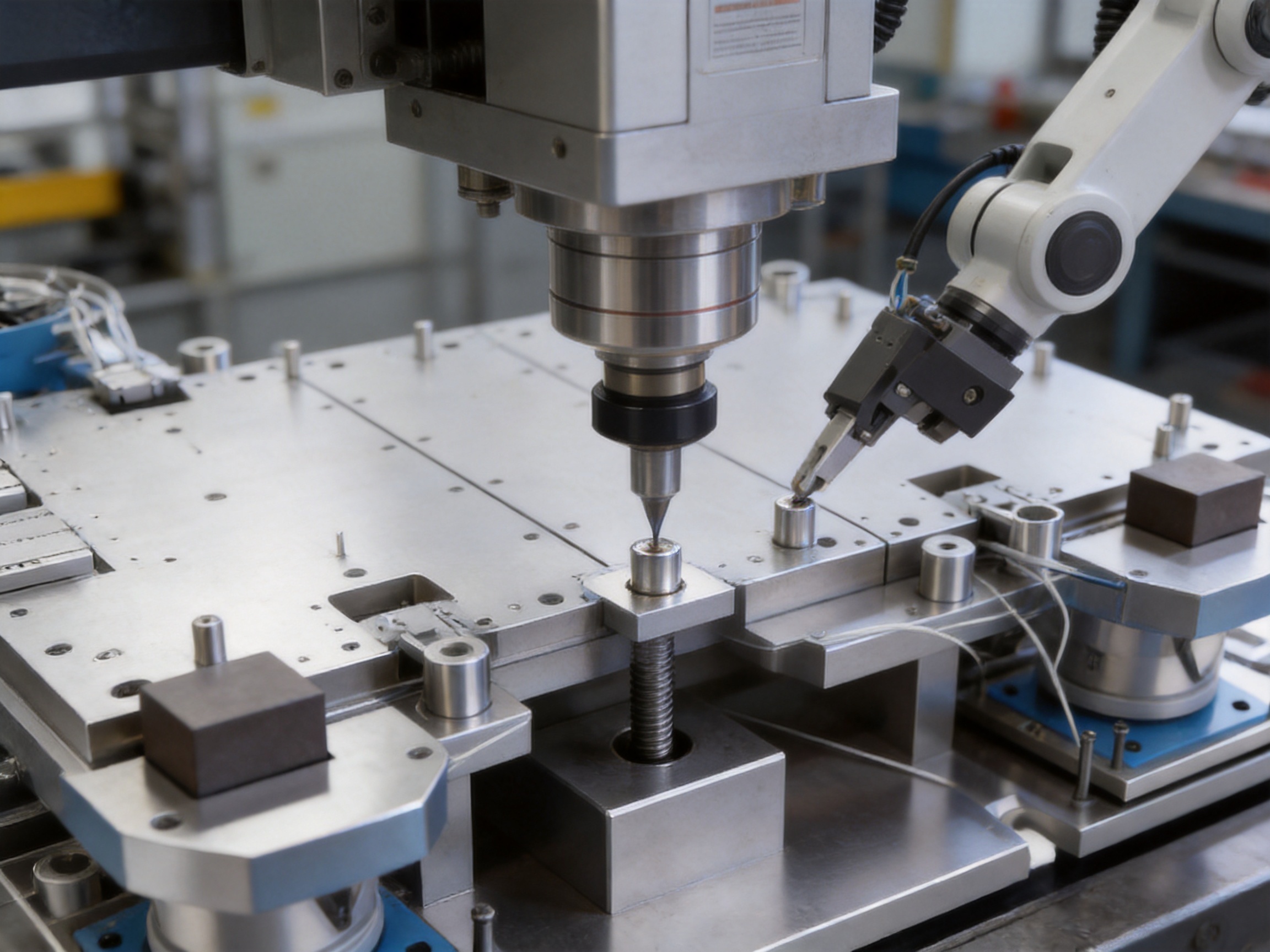
Automation is often evaluated by its effect on labor and cycle time, but its broader value includes quality stability, lower rework, improved workplace ergonomics, and more predictable production planning. The automatic riveting mold supports these benefits by reducing repeated manual actions and creating a standardized production sequence.
When a robot handles rivet feeding and workpiece transfer, operators do not need to repeat the same lifting, positioning, and rivet placement activities for every unit. This can reduce labor intensity and enable personnel to supervise multiple stages or focus on quality control. The exact staffing benefit depends on the complete line configuration, but the direction is clear: repetitive handling is transferred from manual labor to programmed equipment.
Stable cycle time is another advantage. Manual processes may vary according to operator speed, part difficulty, and fatigue. Automated movement can make the duration of each stage more predictable. This helps production managers plan capacity, balance workstations, and identify bottlenecks.
Quality-related savings can be equally important. A misplaced rivet or distorted base may create downstream assembly problems. By improving positional consistency and supporting uniform riveting, the mold can help reduce defects and rework. Fewer defects also mean less material waste, fewer inspection delays, and lower risk of customer complaints.
Cost control begins during design. A mold that uses appropriate materials, practical machining methods, replaceable wear parts, and accessible maintenance features may deliver better total value than a design focused only on minimum initial cost. The supplier’s experience in mold manufacturing and automation helps balance precision, durability, complexity, and production requirements.
The company describes its strengths as integrated mold-making and stamping automation capabilities, reliable technical expertise, strict cost and quality control, and a focus on creating value for customers. These strengths are relevant to customers who want a practical system rather than an overcomplicated solution. Automation should be robust, maintainable, and matched to the actual process.
10. Quality Assurance and Technical Support
Quality assurance for an automatic riveting mold includes both component accuracy and system performance. Individual mold parts must meet their dimensional requirements, but the assembled unit must also locate the workpiece correctly and operate reliably with the press and robot.
Inspection may cover mold base dimensions, locating feature positions, support heights, clearance conditions, working surfaces, fastening interfaces, and replaceable components. Trial assembly helps confirm that the mold can be installed and adjusted as intended. Dry-cycle testing allows the team to check robot movement and interference before live riveting begins.
Live trials are used to evaluate the actual production sequence. The team can inspect rivet placement, forming results, workpiece stability, transfer performance, and cycle coordination. If the customer specifies quality criteria, these requirements should be used during sample approval and final acceptance.
Technical support remains important after delivery. Production staff may need assistance with installation, initial setup, robot coordinates, mold adjustment, troubleshooting, or maintenance planning. A supplier with service experience can help shorten the time required to move from equipment delivery to stable production.
The company has approximately 15 years of experience in the mold industry and serves customers in areas including servo drives, compressors, and new energy vehicles. These sectors generally demand reliable tooling, accurate components, and disciplined production processes. Experience across related industries can provide useful knowledge for developing tooling solutions for computer equipment structures and other precision sheet metal applications.
In 2016, the company invested in and established Suzhou Keshuang Intelligent Technology Co., Ltd., which mainly produces stamping automation equipment. This development reflects an expansion from traditional mold manufacturing toward integrated automation. It also supports the ability to provide customers with turnkey solutions for stamping molds and stamping automation, as well as related production equipment according to specific needs.
11. Installation, Commissioning, and Operator Considerations
Before installation, the customer should confirm the press specifications, available floor space, robot reach, material flow, electrical and pneumatic requirements, safety protection, and downstream workstation arrangement. The mold must be mounted securely and aligned with the press centerline or designated tooling reference. Incorrect installation can affect riveting quality and create unnecessary mechanical stress.
Commissioning normally begins with a low-risk verification sequence. The robot movement is checked without a workpiece or rivet, followed by workpiece loading tests and dry press cycles. The team then confirms sensor signals, interlocks, gripper function, and emergency stop behavior. Only after these checks should live production trials begin.
Operators should receive clear instructions for loading conditions, abnormal part handling, rivet replenishment, cleaning, inspection, and restart procedures. Even in an automated line, operators remain important for monitoring equipment condition and responding to alarms. A well-designed system should make abnormal conditions visible and provide safe access for corrective action.
Safety must be considered throughout the installation and operating process. The press, robot, mold, and transfer area should be protected by appropriate guarding, interlocks, emergency stops, and site-specific safety controls. The exact safety design must follow the customer’s local regulations and equipment standards. Automation reduces manual exposure to repetitive operations, but it does not remove the need for comprehensive machine safety.
12. Maintenance and Service Life
Regular maintenance helps preserve the accuracy and reliability of the automatic riveting mold. Maintenance tasks may include cleaning the support and locating areas, checking fasteners, inspecting wear components, verifying sensor brackets, examining riveting contact surfaces, and confirming that the robot and mold remain properly synchronized.
Because large machine bases may carry surface dust, oil, or small metal particles into the working area, cleaning should be included in the production routine. Accumulated debris can affect locating accuracy or prevent the workpiece from seating correctly. A simple cleaning schedule can prevent small contamination issues from becoming recurring quality problems.
Wear components should be monitored according to production volume and operating conditions. If a locating pin, support surface, or contact component becomes worn, the workpiece may shift or the riveting result may change. Replaceable components make maintenance more efficient and help avoid the need to rebuild the entire mold.
Robot coordinates should also be checked after maintenance, mold adjustment, or major equipment relocation. Even a small change in the mold position can affect rivet delivery and workpiece transfer. A controlled verification procedure helps maintain alignment between the mechanical and programmed systems.
Service life depends on material selection, press load, cycle frequency, maintenance quality, and the specific design of the mold. A supplier should therefore evaluate the customer’s production conditions rather than promise a universal service period. Properly matched materials, accurate machining, sound assembly, and disciplined maintenance can all contribute to longer and more stable operation.
13. Why Integrated Mold and Automation Manufacturing Matters
Many production problems occur at the boundaries between different equipment types. A die supplier may design a mold without fully considering robot access. An automation supplier may program a robot without understanding the mold’s locating requirements. A press supplier may provide suitable capacity without being involved in the workpiece support strategy. When different parties work independently, integration delays and compatibility issues can appear during commissioning.
An integrated supplier can approach the project from the perspective of the complete manufacturing process. Mold dimensions, robot paths, rivet feeding, press action, workpiece transfer, and maintenance access can be evaluated together. This does not mean every component must come from one source, but coordinated engineering can reduce communication gaps.
Suzhou Shuangqisi Mold Equipment Co., Ltd. combines stamping die design and manufacturing with stamping automation equipment through its related technical capabilities and company structure. Its production resources, technical staff, experienced operators, and debugging personnel support this integrated approach. The company can provide molds and products for a range of industrial sectors and can also invest in related production equipment according to customer requirements.
For a customer purchasing an automatic riveting mold for a large computer machine base, this integrated background can be valuable. The customer is not only obtaining a metal fixture but also working with a manufacturer familiar with the relationship between tooling accuracy, press operation, and automated handling. This can make the project easier to communicate and more practical to implement.
14. Suitable Applications and Customization Possibilities
The featured product is designed for large computer machine bases, but the underlying design concept can be applied to other large sheet metal components requiring repeatable riveting and automated transfer. Potentially related applications include equipment cabinets, structural frames, electrical enclosures, industrial control housings, compressor components, and other fabricated assemblies. The exact suitability must be confirmed through drawing review and process evaluation.
Customization may involve the mold outline, workpiece supports, locating points, rivet positions, robot gripper interface, feeding method, press interface, transfer direction, sensor arrangement, and maintenance access. The customer may also require different levels of automation depending on production volume and factory layout.
For a high-volume line, the system may be optimized for short cycle time, automatic inspection, fault reporting, and continuous material supply. For a medium-volume production environment, the design may prioritize quick changeover and flexible part handling. For a new product, the supplier may need to support process development, sample production, and gradual automation implementation.
Customization should always begin with measurable requirements. These may include acceptable positional tolerance, riveting quality criteria, target cycle time, annual production quantity, press capacity, operator involvement, and expected maintenance interval. Clear requirements allow the supplier to design an appropriate solution without adding unnecessary complexity.
15. Purchasing and Supplier Evaluation Guide
When selecting an automatic riveting mold supplier, customers should evaluate more than the product quotation. Important questions include whether the supplier can understand the part design, provide application-specific tooling, coordinate with robots and presses, perform trial production, support installation, and provide replacement components or technical assistance.
Manufacturing resources should also be reviewed. CNC machining, wire cutting, grinding, inspection, assembly, and debugging capabilities affect the supplier’s ability to control quality internally. A supplier with its own equipment and experienced technical personnel may offer better communication and schedule control than a supplier that relies heavily on unrelated subcontractors.
Relevant experience is another consideration. Customers should seek evidence that the supplier has handled complex stamping dies, large workpieces, automation equipment, or industries with demanding quality requirements. The company’s experience serving servo drive, compressor, and new energy vehicle customers demonstrates exposure to industrial applications where tooling reliability and process consistency are important.
Customers should also request a clear scope of supply. The scope may include only the mold, or it may include robot integration, rivet feeding, press coordination, control interfaces, safety devices, installation, debugging, training, and documentation. Defining these boundaries early helps avoid misunderstandings during project execution.
A good supplier should explain the design logic in practical terms. The customer should understand how the part will be located, how rivets will be delivered, how the mold will support the base, how the robot will move, how faults will be handled, and what maintenance will be required. Transparent technical communication is often a strong indicator of project reliability.
16. Frequently Asked Questions
Q1: What is an automatic riveting mold for a large computer machine base?
It is a specialized mold and production support device used with a stamping press and robotic automation system. It locates and supports the large machine base during riveting, receives rivets at designated positions, and supports automatic transfer of the completed component to the next workstation.
Q2: How does the robotic arm improve the riveting process?
The robotic arm can deliver rivets to programmed locations and move the workpiece between process stages. This reduces manual positioning errors, lowers labor intensity, and creates a more repeatable production cycle.
Q3: Can the mold be used with different computer machine base designs?
The featured mold is tailored for a large computer machine base. Different base designs generally require review and possible customization of the locating structure, support points, riveting positions, robot interface, and transfer sequence.
Q4: Does the mold replace the stamping press?
No. The mold works together with the stamping press. The press supplies the forming force required for stable and uniform riveting, while the mold positions and supports the workpiece and coordinates with the automation system.
Q5: What are the main advantages over manual riveting?
The main advantages include more consistent rivet positioning, reduced operator fatigue, lower manual handling requirements, improved cycle-time stability, reduced risk of human-induced defects, and faster transfer to downstream operations.
Q6: What information is needed before customization?
Useful information includes the part drawing or three-dimensional model, material and thickness, overall dimensions, rivet type and positions, required production volume, target cycle time, press specifications, robot arrangement, workpiece orientation, and quality requirements.
Q7: How does mold rigidity affect riveting quality?
A rigid and properly supported mold helps prevent workpiece movement and unwanted deformation while the press applies force. This supports more stable riveting and helps maintain the intended geometry of the base.
Q8: Can the supplier provide automation equipment as well as the mold?
The company provides stamping dies and stamping automation equipment and can offer turnkey solutions for stamping molds and stamping automation according to customer requirements. The exact scope should be confirmed for each project.
Q9: What manufacturing equipment supports production of the mold?
The company reports using imported wire cutting machines, CNC machining centers, more than 10 grinding machines of different sizes, and 25 punch presses ranging from 80 tons to 400 tons. These resources support machining, finishing, trial production, and debugging activities.
Q10: What maintenance does the mold require?
Typical maintenance includes cleaning locating and support areas, checking fasteners, inspecting wear components, verifying sensor and robot interfaces, monitoring riveting contact surfaces, and confirming alignment after adjustments or relocation.
Q11: Is the system suitable for high-volume production?
The automated design is suitable for production environments that benefit from repeatable handling and stable cycle times. The final suitability depends on the required volume, part structure, press capacity, automation layout, and customer quality standards.
Q12: How can a customer evaluate the final riveting result?
Evaluation may include visual inspection, dimensional checks, rivet-head inspection, joint-strength testing, first-piece approval, and periodic process verification. The inspection plan should be based on the customer’s technical requirements.
17. Conclusion
The automatic riveting mold for large computer machine bases provides a practical solution for manufacturers seeking to improve the consistency and efficiency of large sheet metal assembly. Its value comes from the coordination of a sturdy application-specific mold, robotic rivet feeding, automated workpiece transfer, and controlled stamping-machine operation.
By replacing repetitive manual positioning and handling, the system helps reduce labor intensity and human-induced defects. By supporting the workpiece according to its size and riveting stress requirements, it helps create more stable connection quality. By transferring finished components directly to the next workstation, it supports a smoother production flow and a more predictable cycle.
The manufacturing strength behind the product is equally important. Suzhou Shuangqisi Mold Equipment Co., Ltd. integrates stamping die design, mold manufacturing, hardware parts, service, and stamping automation capabilities. Its technical staff, precision machining equipment, grinding resources, punch presses, senior operators, and debugging personnel support the development of reliable tooling solutions. Its industry experience and related automation company further strengthen its ability to provide coordinated production equipment.
For customers producing large computer machine bases or similar structural sheet metal assemblies, the most effective approach is to evaluate the complete process rather than the mold alone. Workpiece geometry, locating accuracy, riveting force, robot movement, press compatibility, inspection, safety, maintenance, and downstream transfer should all be considered together. With appropriate engineering review and commissioning, an automatic riveting mold can become an important part of a modern, efficient, and quality-focused manufacturing line.
References
1. Suzhou Shuangqisi Mold Equipment Co., Ltd. Product information for automatic riveting molds and stamping automation equipment.
2. Suzhou Shuangqisi Mold Equipment Co., Ltd. Company information regarding stamping die design, manufacturing, hardware parts, technical personnel, and production equipment.
3. General principles of sheet metal stamping die design, workpiece locating, support, and press-tool integration.
4. General principles of industrial robot integration for material handling, automated feeding, and production-line transfer.
5. General manufacturing quality-control practices for riveting, dimensional inspection, tooling maintenance, and production process verification.
6. General engineering guidance for machine safety, press operation, robotic work cells, guarding, interlocks, and emergency-stop systems.
Product: Automatic riveting mold for large computer machine base
Previous Post
Precision Battery Cover Stamping Parts for Reliable Energy Enclosures
Next Post
High-End Large Computer Stamping Parts: Precision, Strength, and Reliable Industrial Integration
Our Products.
Start Your Business with an OEM Manufacturer Right Here!

Provide global customers with complete turn-key solutions
through
innovation!
QUICK LINKS
CONTACT INFO.
-
 +86-139 1308 8972
-

-
 No. 118 Yexin Road, Wujiang Economic Development Zone, Suzhou, China
Copyright © Suzhou Shuangqisi Mold Equipment Co., Ltd. All Rights Reserved. Custom Stamping Die Metal Stamping Die Manufacturers
