 English
 Español
 Deutsch

-
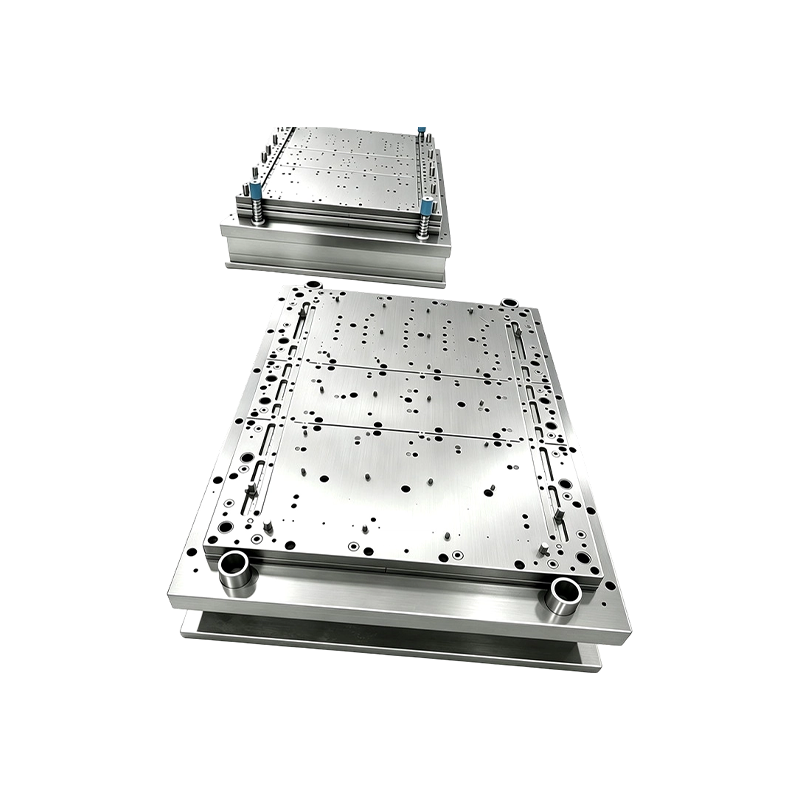
Progressive Stamping Die for Connector & Terminal Parts High Speed Progressive Stamping Die Precision Metal Hardware Stamping Tool mold for Connector Terminal Parts Automotive Components
Progressive Stamping Die for Connector & Termi...
-
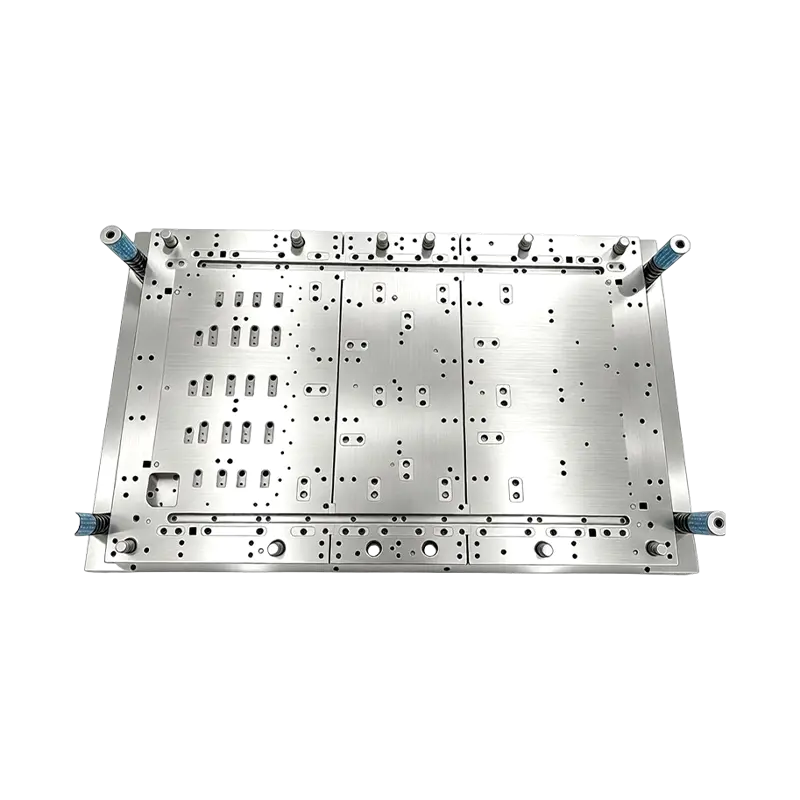
Multi-Station Progressive Stamping Die with Carbide Inserts Custom Multi Station Progressive Stamping Die Carbide Insert Metal Stamping Mold Tool for Equipment Appliances Device Hardware
High Speed Metal Stamping Tool for Precise Equipme...
-
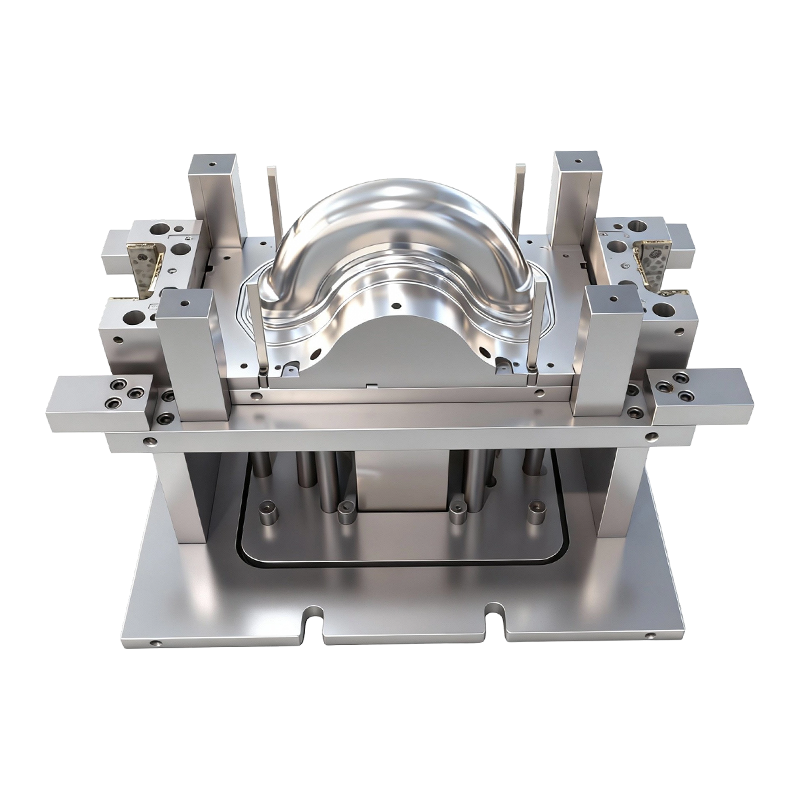
Deep drawing mold for front and rear wheels of two-wheeled electric vehicles
This Deep drawing mold for front and rear wheels o...
-
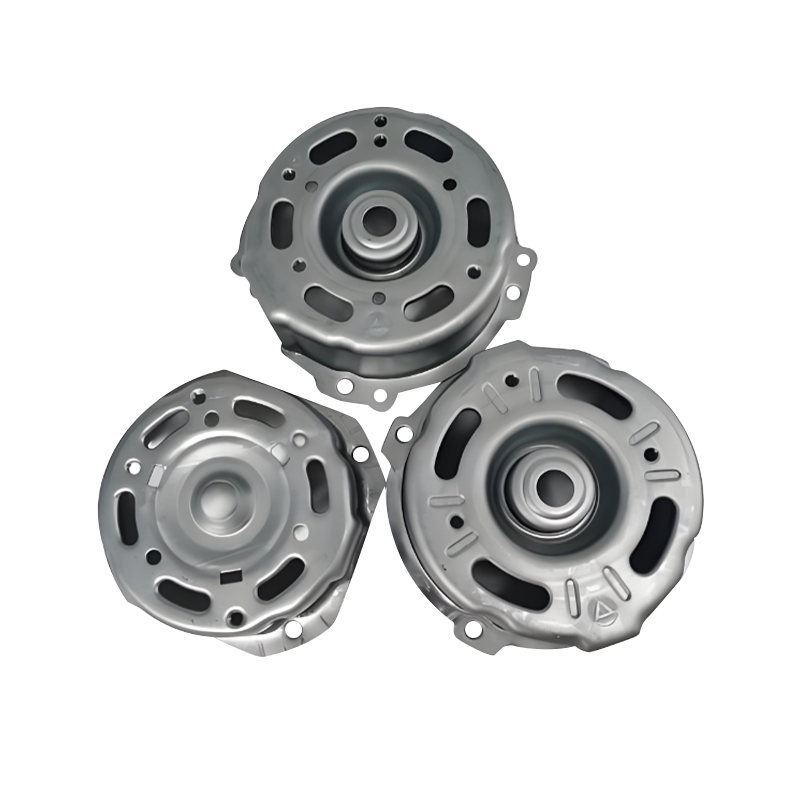
Automotive motor housing stamping parts
Automotive motor housing stamping parts are core c...
-
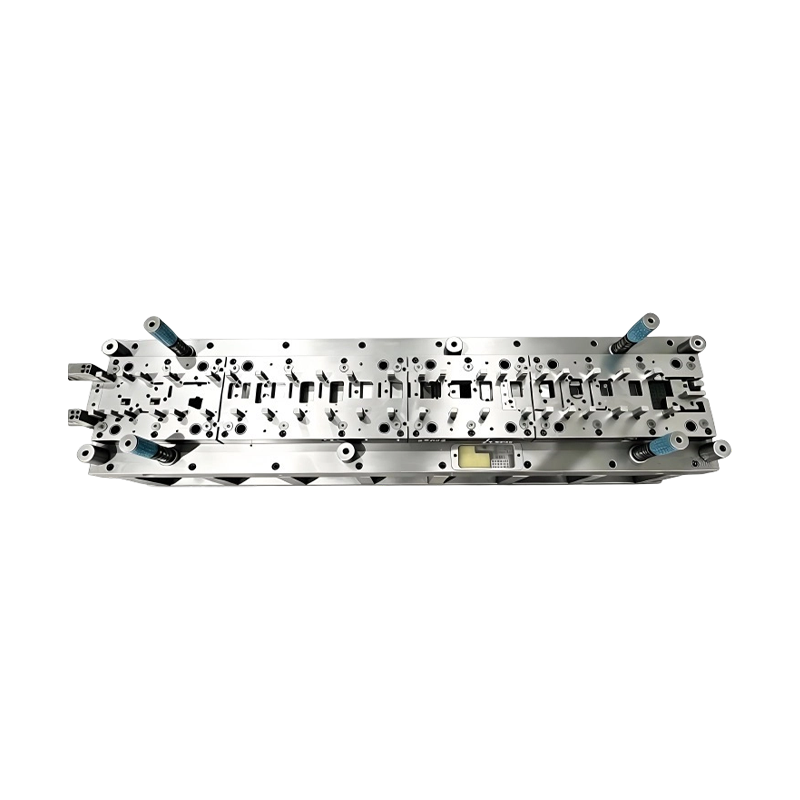
Long-Stroke Multi-Stage Progressive Die Automatic Strip Feed Progressive Die Long Travel Follow on Stamping Tool for Sheet Metal Hardware Press Moulding
Long-Stroke Multi-Stage Progressive DieOur custom ...
- E-mail us: [email protected]
- Call us: +86-139 1308 8972

Chen Siyi – Overseas Sales Manager
Home / Author / Chen Siyi – Overseas Sales Manager / Precision Car Seat Stamping Parts for Safe, Durable, and Efficient Automotive Seating Systems
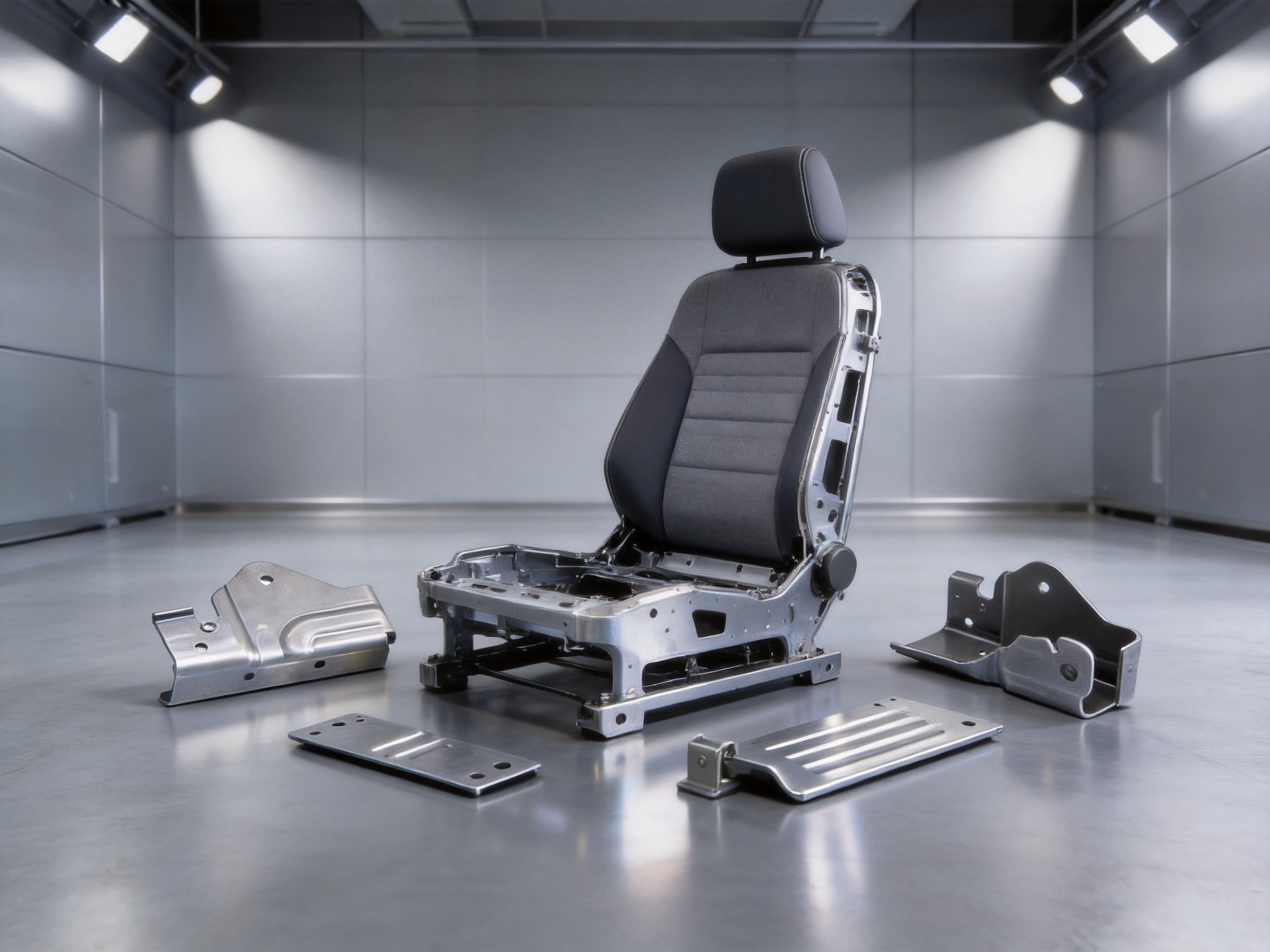
Precision Car Seat Stamping Parts for Safe, Durable, and Efficient Automotive Seating Systems
2026-09-30
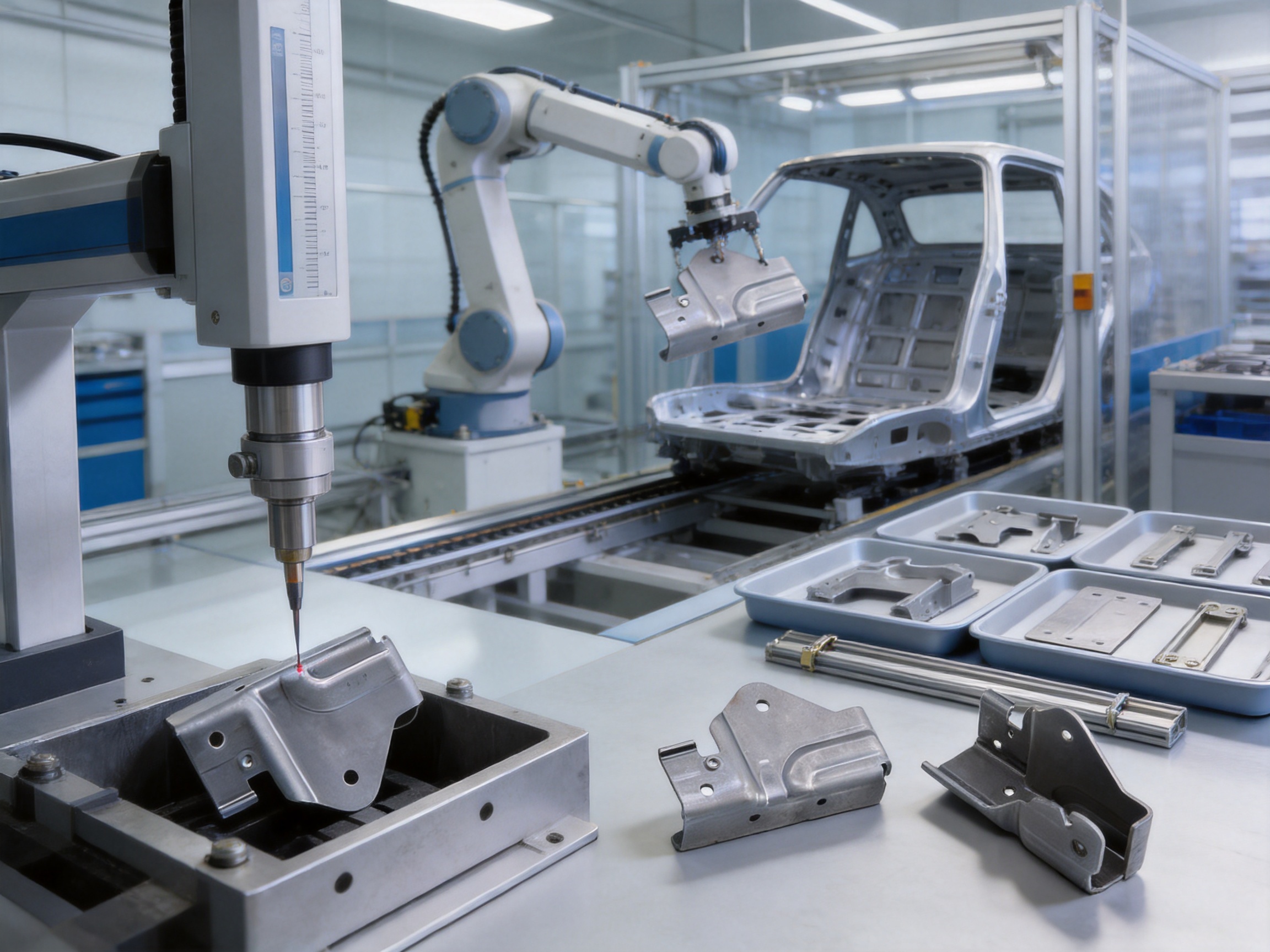
Car seat stamping parts are essential structural components in modern automotive seating systems. Although many of these parts remain concealed beneath cushions, upholstery, and trim, they perform critical functions throughout the life of a vehicle. They connect seat frames, support adjustment mechanisms, reinforce load-bearing areas, guide moving components, and help maintain the correct relationship between the seat and the vehicle body. Their accuracy, strength, surface quality, and consistency directly influence seat safety, comfort, durability, and manufacturing efficiency.
High-quality stamped seat components must satisfy demanding requirements. They need to withstand static loads caused by occupants, repeated dynamic loads generated during driving, vibration, sudden braking, cornering forces, and, in certain applications, crash-related impact loads. At the same time, they must be manufactured with tight dimensional tolerances so that brackets, cushions, rails, springs, recliners, and adjustment mechanisms can be assembled smoothly. An error in a mounting hole, bend angle, flange position, or part profile can affect the entire seat assembly.
For these reasons, automotive seat stamping is not simply a high-volume sheet metal forming operation. It is a coordinated engineering and manufacturing process that combines material selection, die design, simulation, precision machining, press forming, inspection, and continuous process control. Suzhou Shuangqisi Mold Equipment Co., Ltd. provides car seat stamping parts together with stamping die design, die manufacturing, production support, and automation capabilities. This integrated approach helps customers obtain reliable parts while reducing development risks, production interruptions, and total manufacturing costs.
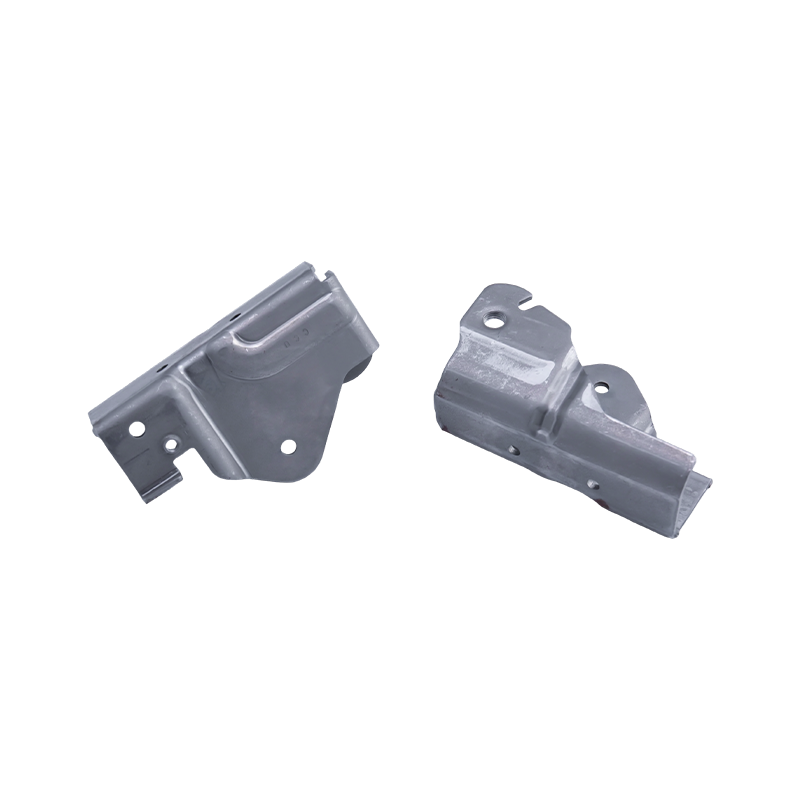
Car seat stamping parts
Content
- 1 Understanding the Role of Car Seat Stamping Parts
- 2 Key Product Advantages
- 3 Applications Across Automotive Seat Systems
- 4 Advanced Manufacturing Process
- 5 Quality Control for Automotive Seat Stamping Parts
- 6 Advantages Over Less Integrated Suppliers
- 7 Design Considerations for Better Seat Stamping Parts
- 8 Operational and Economic Benefits
- 9 Service and Project Coordination
- 10 Why Choose a Specialized Stamping Partner?
- 11 Frequently Asked Questions
- 11.1 What are car seat stamping parts?
- 11.2 Which materials are commonly used?
- 11.3 Why is die accuracy important?
- 11.4 Can the parts be customized for different vehicle models?
- 11.5 How are high-strength steel parts formed?
- 11.6 What press capacity is required?
- 11.7 Can stamping parts be supplied with secondary operations?
- 11.8 How is product quality inspected?
- 11.9 What are the benefits of integrated die and part manufacturing?
- 11.10 Can automation be included in the project?
- 11.11 What information should a customer provide for a quotation?
- 11.12 How can customers reduce stamping development risk?
- 12 Conclusion
- 13 References
- 14 Product: Car seat stamping parts
Understanding the Role of Car Seat Stamping Parts
Automotive seats are assemblies made from numerous metal, plastic, foam, textile, and mechanical components. Within this structure, stamped metal parts provide the framework and connection points needed to transform individual components into a stable and functional seat. Typical examples include seat side brackets, mounting plates, reinforcement panels, hinge plates, support brackets, adjustment brackets, rail connectors, backrest supports, cross-members, and other formed parts.
These parts are usually produced from high-strength steel, mild steel, stainless steel, or aluminum alloy, depending on the design requirements. Steel is commonly selected when high load-bearing capacity, rigidity, fatigue resistance, and cost efficiency are required. Aluminum may be used when weight reduction and corrosion resistance are important. Material thickness, yield strength, elongation, surface condition, and coating must all be considered during the product and die development stages.
A seat stamping part may contain several features in one component. These can include pierced holes, slots, embossed ribs, drawn sections, flanges, beads, mounting tabs, curved profiles, and precisely positioned bend lines. Integrating several features into a single stamped component can reduce the number of assembly operations and improve structural continuity. However, it also increases the technical requirements for die construction and process sequencing.
In a vehicle, seat components must remain stable while the seat is adjusted repeatedly. Driver and passenger seats may be moved forward and backward thousands of times during their service life. Backrests may be reclined and returned to their original positions on a regular basis. Components connected to these functions must therefore maintain dimensional accuracy and resist deformation, wear, fatigue, and loosening.
Rear-seat structures also require reliable stamping parts. Folding backrests, split seats, child-seat anchorage areas, center supports, and trunk-access mechanisms all depend on accurately produced metal components. Even when a rear seat is used less frequently than a driver’s seat, its frame must still withstand occupant loads, cargo-related forces, and vehicle vibration.
Key Product Advantages
High Structural Strength
The primary advantage of precision car seat stamping parts is their ability to provide strong structural support without unnecessary weight. Stamping allows engineers to create ribs, beads, flanges, and formed sections that increase rigidity while using a controlled amount of material. A well-designed stamped component can achieve a favorable balance between strength, weight, and manufacturing cost.
High-strength steel is especially useful for components exposed to concentrated loads. It can help reduce material thickness while maintaining the required mechanical performance. This contributes to lighter seat assemblies and supports broader vehicle weight-reduction goals. The correct forming process is essential, because high-strength materials can be more sensitive to springback, cracking, and dimensional variation than conventional low-carbon steel.
Stamped reinforcements can also distribute loads across a larger area. Instead of allowing a force to concentrate around one bolt, hinge, or mounting hole, an embossed or flanged structure can transfer the load into the surrounding frame. This improves resistance to local deformation and helps maintain the functional alignment of connected components.
Precise Dimensions and Consistent Fit
Automotive seat assemblies depend on many interfaces. Mounting holes must align with rails or vehicle-floor attachment points. Brackets must match cushions and recliner mechanisms. Hinges need correct spacing and parallelism. Slots must provide the intended adjustment range without causing excessive looseness.
Precision stamping dies are designed to control these relationships from one production cycle to the next. The resulting consistency helps manufacturers assemble parts efficiently and reduces the need for manual correction. Stable dimensions also reduce the risk of noise, uneven movement, misalignment, and premature wear in the completed seat.
Dimensional consistency is particularly important when a stamped component is supplied to an automated assembly line. Robotic systems and dedicated fixtures typically depend on repeatable part geometry. A component with unpredictable variation can cause feeding problems, positioning errors, or line stoppages. Consistent stamping supports a smoother connection between part production and final assembly.
Efficient Material Utilization
Compared with machining a complete component from a solid block, stamping can produce large quantities of parts with significantly less material waste. Proper strip or sheet nesting allows multiple parts to be arranged efficiently within the raw material. The design of the blank layout influences yield, production cost, scrap rate, and environmental performance.
Progressive dies, transfer dies, and multi-operation dies can combine several forming and piercing steps into a controlled production sequence. When the part design and die structure are properly coordinated, manufacturers can reduce handling, shorten cycle time, and improve output. This is especially valuable for automotive programs that require stable supply over long production periods.
Smooth Edges and Reliable Surface Quality
Stamped parts for seat systems often need clean edges and controlled burr height. Excessive burrs may interfere with assembly, damage adjacent components, create handling risks, or affect the final appearance of exposed areas. Proper clearance between punch and die, suitable tool materials, correct cutting conditions, and regular die maintenance all contribute to improved edge quality.
Formed surfaces must also be controlled carefully. Uneven draw marks, wrinkles, cracks, dents, or excessive surface distortion can weaken a part or affect its fit. Advanced die design and stable press conditions help produce smooth and uniform surfaces suitable for downstream assembly, coating, welding, or other operations.
Resistance to Vibration and Repeated Loading
Vehicle seats experience continuous vibration from road surfaces, tires, suspension systems, and powertrain operation. These forces are transmitted through seat rails, brackets, frames, and adjustment mechanisms. Stamped parts with appropriate geometry and material properties help prevent fatigue-related deformation and maintain the rigidity of the seat structure.
Formed ribs, gussets, and boxed sections can improve stiffness without requiring a substantial increase in weight. Correctly positioned bends can also prevent unwanted movement between connected parts. When components are designed as part of the complete seat system rather than as isolated pieces, the manufacturer can better control force transmission and long-term reliability.
Applications Across Automotive Seat Systems
Driver Seat Structures
Driver seats typically include multiple adjustment functions, such as forward and backward movement, height adjustment, backrest recline, and sometimes lumbar or cushion extension functions. Stamping parts used in these systems must support repeated operation and maintain precise alignment with rails, motors, cables, recliners, and locking devices.
Driver-seat brackets may be exposed to higher usage frequency than many other seat components. Their surfaces, holes, and bend locations must therefore remain stable during repeated loading. A precision-produced bracket can help reduce looseness and contribute to a firm, quiet adjustment experience.
Passenger Seat Structures
Passenger seats use many of the same structural principles as driver seats, although the exact configuration depends on the vehicle platform and available features. Stamped mounting plates, backrest supports, hinge reinforcements, and frame connectors provide the necessary foundation for fixed or adjustable seating systems.
Passenger seat parts may also need to accommodate folding functions, occupancy sensors, child-seat interfaces, or special packaging requirements. Accurate stamping allows these features to be integrated without excessive manual fitting or additional reinforcement operations.
Rear Seats and Folding Systems
Rear seats often use split backrests, folding hinges, locking plates, and reinforcement brackets. These parts must support occupants while also allowing practical folding and storage functions. Their geometry may be more complex because the seat must operate in more than one position.
Accurate hinge and latch locations are essential. If a bracket is distorted or a hole pattern is out of position, the backrest may not fold correctly, may fail to lock smoothly, or may produce unwanted movement. Properly engineered stamping parts support both functional operation and structural stability.
Seat Rails and Adjustment Components
Seat rails and their related brackets are responsible for controlled movement and secure locking. Stamped components used in these assemblies must provide accurate guide surfaces and mounting positions. They must also resist deformation when the seat is adjusted or when loads are transmitted through the seat during vehicle operation.
Depending on the design, stamped parts may be combined with machined, welded, or rolled components. The stamping supplier must understand how its parts interact with these neighboring components. Close coordination during development can prevent tolerance stack-up and improve the performance of the complete adjustment mechanism.
Advanced Manufacturing Process
Product and Application Review
Manufacturing begins with a detailed review of the customer’s drawings, three-dimensional data, material specifications, annual volume, tolerance requirements, surface expectations, and assembly conditions. The supplier evaluates the part’s functional role and identifies areas that may create forming, tooling, or quality risks.
Important questions include whether the blank can be formed without cracking, whether the bend sequence will create interference, whether springback can be controlled, and whether the proposed tolerance is appropriate for the selected material and process. The team also reviews hole positions, edge conditions, draw depth, corner radii, flange width, and potential risks around high-stress areas.
Early engineering review is a major advantage over a production-only approach. Problems identified before die construction are generally less expensive and less disruptive to correct. Design-for-manufacturing recommendations may include changes to radii, reliefs, hole spacing, material thickness, forming direction, or part segmentation.
Material Selection and Preparation
The choice of material affects strength, formability, springback, corrosion resistance, surface quality, and cost. High-strength steel may be suitable for load-bearing brackets, while a more formable grade may be preferable for deep or complex shapes. Aluminum alloy can reduce weight but may require special attention to tool wear, lubrication, and forming behavior.
Material certificates and incoming inspection records help confirm that the supplied sheet or coil meets the specified grade and thickness. Surface condition should also be checked because rust, scale, oil contamination, or inconsistent coating may affect forming and subsequent finishing operations.
Before production, the material is prepared according to the selected press and die configuration. Accurate blank dimensions and stable feeding conditions are important for minimizing variation. In high-volume applications, coil-fed processing can improve productivity, while individual blanks may be used for larger or more complex components.
Engineering of the Stamping Process
Process engineering determines how the finished part will be produced. The operation plan may include blanking, piercing, bending, drawing, flanging, restriking, trimming, and final calibration. Each operation must be sequenced to control material flow and protect previously formed features.
Some seat parts can be manufactured through a single-operation die, while others require progressive dies or transfer dies. A progressive die performs multiple operations as the strip advances through stations. This arrangement can provide high output and consistent positioning. A transfer die moves individual blanks between stations and is often suitable for larger or more complex parts.
The process plan must also consider press capacity, shut height, stroke length, feed pitch, die space, production speed, and automation requirements. A technically correct part design is not sufficient if the selected press cannot provide the necessary force or working area.
Die Design and Simulation
Stamping die design determines much of the final product quality. Die engineers develop the forming surfaces, cutting edges, guide systems, pressure pads, lifters, pilots, inserts, and other functional elements. The die must provide sufficient strength and wear resistance while allowing practical maintenance and adjustment.
Simulation and engineering analysis can help predict material flow, thinning, thickening, wrinkling, cracking, and springback. These analyses allow the team to refine forming radii, blank-holder forces, draw beads, forming directions, and compensation features before machining begins.
Springback is a common challenge when forming high-strength materials. After the load is released, the material may partially return toward its original shape. If springback is not controlled, brackets may show incorrect angles or mounting surfaces may not align. Die compensation, restrike operations, controlled forming sequences, and accurate process parameters can reduce this problem.
Precision Die Manufacturing
After the design is approved, die components are manufactured using precision machining equipment. Suzhou Shuangqisi Mold Equipment Co., Ltd. is equipped with imported wire cutting machines, CNC machining centers, and more than ten grinding machines of different sizes. This equipment supports the production of accurate cutting inserts, forming blocks, guide components, and complex die surfaces.
Wire cutting is useful for producing precise profiles and narrow clearances in hardened or difficult-to-machine die components. CNC machining centers provide controlled milling of die bases, inserts, forming surfaces, and structural components. Grinding operations help achieve accurate flatness, parallelism, surface finish, and dimensional control.
The die manufacturing process typically includes rough machining, heat treatment when required, semi-finishing, precision machining, grinding, fitting, assembly, and trial production. Each stage must be coordinated because errors introduced early can affect later fitting and part quality.
Die Assembly and Tryout
After individual die components are completed, they are assembled and checked for alignment, movement, clearance, and functional interaction. Punches and inserts must enter their corresponding cavities correctly. Pressure pads and lifters must operate smoothly. Guide posts, bushings, and pilots must maintain stable positioning during the press cycle.
Initial tryout pressing helps reveal issues that may not be visible in a digital model. Trial parts are inspected for wrinkles, cracks, burrs, distortion, incomplete forming, incorrect angles, and dimensional variation. The die may then be adjusted through polishing, shimming, cutting-edge correction, surface modification, or process parameter changes.
Experienced debugging personnel are particularly valuable during this stage. Their practical knowledge helps distinguish between a tooling problem, a material issue, a press condition, and a process-sequence problem. Efficient tryout reduces development time and improves the likelihood of achieving stable production quickly.
Press Production
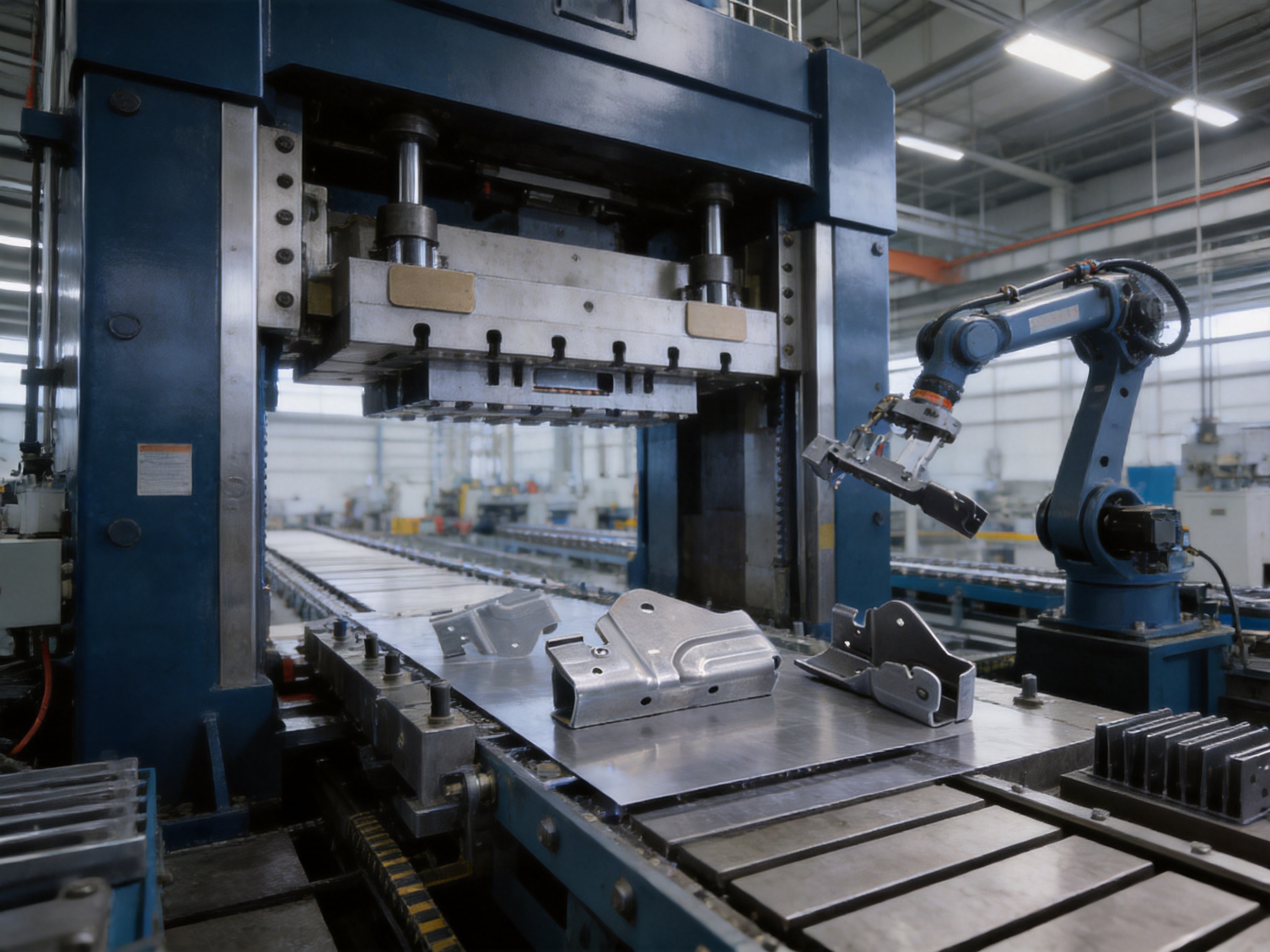
Once the die and process are validated, the part enters production on a suitable press. Suzhou Shuangqisi Mold Equipment Co., Ltd. operates 25 punch presses ranging from 80 tons to 400 tons. This range allows the manufacturer to select equipment according to part size, material strength, forming depth, and required production force.
Press selection influences product consistency and tool life. A press with appropriate capacity and rigidity can maintain stable forming conditions. Excessive or insufficient capacity may create unnecessary stress, poor energy efficiency, or unstable operation. Press speed, feed accuracy, lubrication, and die protection are also controlled to support reliable output.
For higher-volume or repetitive production, automation can be introduced for loading, transfer, unloading, stacking, or inspection. Automated handling reduces manual variation and improves operator safety. It can also support consistent cycle times and more efficient use of press capacity.
Finishing and Secondary Operations
Depending on the customer’s requirements, stamped seat parts may undergo deburring, tapping, welding, riveting, bending correction, surface treatment, or inspection marking. Some components may be supplied as individual stamped parts, while others may be delivered as subassemblies.
Deburring is important when the part will be handled by operators or installed near wiring, foam, textiles, or moving mechanisms. Additional forming or calibration may be used when a critical surface requires tighter control than can be achieved in the primary operation alone.
Surface treatment may include cleaning, oiling, painting, plating, or coating. The selected treatment depends on corrosion requirements, assembly conditions, appearance, and the customer’s specification. The stamping process must be coordinated with later treatment because burrs, sharp edges, contamination, and excessive forming marks can affect coating performance.
Quality Control for Automotive Seat Stamping Parts
Quality control begins with incoming materials and continues throughout die development, production, inspection, and delivery. A stable quality system does not rely solely on final inspection. Instead, it combines preventive engineering, process monitoring, measurement, and corrective action.
| Control Stage | Typical Focus | Benefit to the Customer |
|---|---|---|
| Material inspection | Grade, thickness, surface condition, and certificates | Confirms that raw material is suitable for forming and load requirements |
| Die inspection | Clearance, alignment, cutting edges, forming surfaces, and movement | Reduces tooling-related defects before mass production |
| First-piece approval | Dimensions, hole positions, angles, profile, and appearance | Verifies that the production process meets drawing requirements |
| In-process inspection | Critical dimensions, burrs, cracks, wrinkles, and deformation | Detects variation early and limits batch-level defects |
| Functional verification | Assembly fit, movement, connection, and load-related characteristics | Confirms that the part performs correctly in the seat system |
| Final inspection | Quantity, packaging, traceability, and customer-specific requirements | Supports reliable delivery and production-line acceptance |
Dimensional inspection may include calipers, micrometers, height gauges, gauges, fixtures, coordinate measurement equipment, and profile comparison methods. The measurement method should reflect the feature being checked. For example, a mounting-hole pattern may require a dedicated fixture, while a formed profile may need a contour or three-dimensional inspection process.
Visual inspection remains important for identifying cracks, wrinkles, dents, sharp edges, contamination, and surface damage. However, visual checks should complement—not replace—dimensional and functional verification. Automotive seat parts often contain features that may look acceptable but fail to meet the required geometric relationship.
Traceability can connect raw material, production date, die number, press, operator, inspection results, and shipment batch. This information helps customers manage incoming quality and supports faster investigation if a problem occurs. Clear documentation also improves communication between the stamping supplier and the seat manufacturer.
Advantages Over Less Integrated Suppliers
Combined Die and Part Manufacturing
A key competitive advantage is the integration of stamping die manufacturing with stamped-part production. When a supplier only produces parts using externally sourced dies, communication gaps may arise between tooling engineers and production personnel. Tool corrections can take longer, and responsibility for defects may become unclear.
An integrated manufacturer can evaluate the die and part as one system. The same technical team can identify whether a defect originates from clearance, forming geometry, press settings, material behavior, or maintenance. This shortens the feedback cycle and supports faster improvement.
Broad Equipment Capability
The combination of wire cutting machines, CNC machining centers, grinding equipment, and presses from 80 tons to 400 tons provides flexibility. Different seat components can be matched with appropriate tooling and press capacity rather than being forced into a one-size-fits-all process.
This flexibility is useful for customers with multiple part sizes or different vehicle programs. Small brackets, medium reinforcements, and larger structural components may require different manufacturing approaches. A supplier with broader internal capability can coordinate these requirements more efficiently.
Experienced Technical Personnel
Automotive stamping quality depends on practical experience as well as equipment. Senior operators understand how material, die condition, lubrication, press speed, and alignment affect the finished part. Experienced debugging personnel can improve a tool during tryout and identify the root cause of defects instead of applying temporary adjustments.
The company has a technical workforce of approximately 60 people, supported by senior operators and experienced debugging staff. This human expertise complements the company’s machinery and helps manage complex customer requirements.
Support for Custom and OEM Requirements
Car seat stamping parts are rarely universal products. They are usually designed for a particular seat structure, platform, vehicle model, or adjustment system. The supplier must therefore be able to interpret customer drawings, maintain confidentiality, follow specified materials, and produce parts according to individual technical requirements.
OEM-oriented support includes design review, tooling development, sample production, trial assembly, process validation, mass production, and delivery coordination. The ability to provide these services under one manufacturing organization can reduce the number of external interfaces for the customer.
Turnkey Stamping and Automation Solutions
In addition to molds and stamped products, Suzhou Shuangqisi Mold Equipment Co., Ltd. can provide stamping automation equipment through its related intelligent technology operation. This makes it possible to consider tooling, presses, material handling, transfer systems, and production efficiency as part of a broader solution.
Automation may include feeding systems, transfer mechanisms, part unloading, stacking, counting, and production monitoring. The appropriate level of automation depends on part geometry, output requirements, labor conditions, and customer investment plans. A coordinated solution can help customers avoid compatibility problems between dies and handling equipment.
Design Considerations for Better Seat Stamping Parts
Control of Bend Radii
Bend radii must be selected according to material grade, thickness, forming direction, and load requirements. A radius that is too small may cause cracking or accelerated tool wear. A radius that is too large may affect packaging, fit, or structural stiffness. Properly chosen radii also improve material flow and reduce unpredictable springback.
Strategic Use of Ribs and Embossments
Ribs and embossments can increase stiffness without adding substantial weight. Their shape and orientation should follow expected load paths. Poorly positioned features may create stress concentrations or interfere with adjacent parts. When designed correctly, they can reduce vibration, improve resistance to buckling, and maintain the alignment of brackets under load.
Hole and Slot Placement
Mounting holes and adjustment slots must be located with consideration for tolerance stack-up. The part drawing should define critical hole-to-hole relationships rather than only individual dimensions. Slots may provide assembly flexibility, but excessive slot length can reduce positional stability or weaken the surrounding material.
Edge and Burr Management
Edges that contact cushions, foam, wiring, textiles, or moving mechanisms should be designed and processed carefully. Burr direction can also affect safety and assembly. Appropriate clearance, sharp cutting edges, secondary deburring, and edge rounding may be used to achieve the required condition.
Weld and Assembly Compatibility
Some stamped seat components are welded or riveted to other structural parts. Flange width, flatness, material coating, and accessibility must support the selected joining method. A part that is dimensionally correct by itself may still be difficult to weld if its flange is too narrow, distorted, or poorly positioned.
Operational and Economic Benefits
Reliable stamping parts contribute to more than structural performance. They can improve the complete economics of seat manufacturing. Consistent parts reduce line stoppages, manual rework, tool adjustments, and rejected assemblies. They also support more predictable production planning.
High-volume stamping provides a low per-part cost after tooling has been developed. When the die is designed for long life and maintainability, the customer can benefit from stable output over an extended program. Tool components that can be replaced or adjusted individually may reduce maintenance time and avoid the need for complete die replacement.
Material efficiency also has an economic effect. Optimized nesting, controlled scrap, and suitable material thickness can lower raw material consumption. Lightweight designs may reduce transportation and vehicle energy requirements, while robust parts can reduce warranty risk associated with structural failure or premature wear.
Automation adds further benefits when production volume justifies the investment. Automated feeding and unloading can improve cycle consistency and reduce operator exposure to repetitive handling. It can also make production data easier to collect and analyze, supporting ongoing process improvement.
Service and Project Coordination
A successful stamping project requires communication from the initial inquiry through mass production. Customers should receive clear feedback regarding part feasibility, material selection, die structure, estimated lead time, sample requirements, inspection criteria, packaging, and delivery schedules.
During development, technical communication should focus on measurable requirements. These may include critical dimensions, allowable burr height, surface condition, flatness, springback limits, load requirements, and assembly fit. Clear priorities help the engineering team concentrate effort on the features that influence safety and function most directly.
Sample evaluation is another important stage. Trial parts should be tested in realistic assembly conditions whenever possible. A bracket that passes dimensional inspection may still reveal interference, difficult insertion, inadequate clearance, or poor movement when installed in the complete seat structure. Early trial assembly allows corrections before production quantities increase.
After launch, the supplier should continue monitoring tool condition and part quality. Wear at cutting edges, forming surfaces, guide components, and pressure pads can gradually change the part. Preventive maintenance, periodic inspection, and documented die servicing help maintain consistent output throughout the program.
Why Choose a Specialized Stamping Partner?
A specialized stamping partner understands that the customer is not purchasing sheet metal alone. The customer is purchasing a component that must fit a complex mechanical system, remain reliable under repeated load, and support the safety expectations of the automotive industry.
Specialization brings knowledge of material behavior, die construction, press operation, seat-frame architecture, and production quality. It also helps the supplier identify common failure modes such as springback, cracking around pierced holes, flange distortion, inconsistent burrs, insufficient rigidity, and tolerance stack-up.
Suzhou Shuangqisi Mold Equipment Co., Ltd. has approximately 15 years of experience in the mold industry and focuses on stamping dies, hardware parts, and stamping automation equipment. Its customer base includes organizations associated with electrical products, compressors, servo drives, and new energy vehicles. Experience across these industries can support a disciplined approach to precision manufacturing, even when the specific seat component is customized for a new automotive program.
The company’s manufacturing resources, technical personnel, integrated tooling capability, and automation support provide a practical foundation for producing automotive seat stamping parts. Its stated objective is to create value through quality control, cost management, reliable engineering, and long-term customer cooperation.
Frequently Asked Questions
What are car seat stamping parts?
Car seat stamping parts are formed metal components used in driver seats, passenger seats, and rear seats. They may include brackets, mounting plates, reinforcement panels, hinge components, rail supports, cross-members, and adjustment-system parts. They are produced by pressing sheet metal through specially designed dies.
Which materials are commonly used?
High-strength steel, mild steel, stainless steel, and aluminum alloys may be used. The correct material depends on the required load capacity, formability, weight, corrosion resistance, surface condition, and customer specification.
Why is die accuracy important?
Die accuracy controls the part’s profile, holes, bends, flanges, and formed features. Accurate dies improve consistency, assembly fit, structural performance, and production efficiency. They also reduce the need for manual correction and rework.
Can the parts be customized for different vehicle models?
Yes. Automotive seat stamping parts are commonly customized according to vehicle platform, seat structure, adjustment mechanism, material, thickness, tolerance, and assembly method. A supplier can develop the die and process from customer drawings or three-dimensional data.
How are high-strength steel parts formed?
High-strength steel parts are formed using carefully selected radii, forming sequences, clearances, pressure conditions, and sometimes restrike or calibration operations. Simulation and trial pressing help control cracking, wrinkling, and springback.
What press capacity is required?
The required capacity depends on material strength, thickness, part size, forming depth, cutting length, and die design. A suitable press must provide sufficient force, working area, stroke, and rigidity. Available equipment ranging from 80 tons to 400 tons can accommodate many different stamping applications.
Can stamping parts be supplied with secondary operations?
Depending on the project, parts may receive deburring, tapping, welding, riveting, calibration, surface treatment, inspection marking, or other secondary operations. These requirements should be confirmed during the engineering review.
How is product quality inspected?
Quality may be controlled through material verification, die inspection, first-piece approval, in-process checks, dimensional measurement, visual inspection, functional assembly checks, and final inspection. The specific control plan should reflect the customer’s drawing and application requirements.
What are the benefits of integrated die and part manufacturing?
Integrated manufacturing allows tooling engineers and production teams to communicate directly. It can shorten correction cycles, improve process feedback, reduce responsibility gaps, and support better control of part quality and delivery schedules.
Can automation be included in the project?
Yes. Stamping automation may include feeding, transfer, unloading, stacking, counting, and production monitoring. The appropriate solution depends on production volume, part geometry, press layout, labor requirements, and the customer’s investment plan.
What information should a customer provide for a quotation?
Useful information includes part drawings or three-dimensional files, material grade and thickness, annual or monthly volume, tolerance requirements, surface expectations, secondary operations, inspection standards, packaging requirements, and delivery schedule. Assembly photographs or samples can also help clarify the part’s function.
How can customers reduce stamping development risk?
Customers can reduce risk by involving the supplier early, reviewing manufacturability before die construction, identifying critical dimensions, approving material specifications, conducting trial assembly, and establishing a clear inspection plan. Early cooperation is usually more effective than correcting problems after mass production begins.
Conclusion
Car seat stamping parts are small in appearance but fundamental to the safety, stability, comfort, and durability of automotive seating systems. Their performance depends on much more than the ability to press a sheet of metal into shape. Material selection, structural design, die accuracy, press capability, process control, inspection, and assembly compatibility must work together.
Precision-stamped brackets, reinforcements, mounting plates, hinge components, and adjustment supports help seat manufacturers create strong and reliable products while maintaining efficient production. Compared with less integrated supply models, a manufacturer that combines die design, die construction, stamping production, technical debugging, quality control, and automation support can provide better project coordination and faster response to technical challenges.
With experienced technical personnel, imported wire cutting equipment, CNC machining centers, multiple grinding machines, and punch presses from 80 tons to 400 tons, Suzhou Shuangqisi Mold Equipment Co., Ltd. is equipped to support customized automotive stamping requirements. Its integrated mold and automation capabilities provide a foundation for cost-effective, repeatable, and high-quality car seat stamping parts.
For automotive seat manufacturers, the best stamping partner is one that understands the entire product lifecycle—from design feasibility and die engineering to production stability, inspection, maintenance, and delivery. That complete perspective helps transform stamped sheet metal into dependable structural components capable of meeting the demanding requirements of modern vehicles.
References
1. Automotive Industry Action Group. Quality Management System Requirements for Automotive Production and Relevant Service Parts Organizations.
2. American Society for Metals. ASM Handbook: Forming and Forging.
3. American Society for Testing and Materials. Standard Practices for Mechanical Testing and Evaluation of Metallic Materials.
4. International Organization for Standardization. Quality Management Systems—Particular Requirements for Automotive Production and Relevant Service Parts Organizations.
5. International Organization for Standardization. Road Vehicles—Functional Safety and Automotive Product Development Principles.
6. Society of Automotive Engineers. Recommended Practices for Automotive Seating Systems and Vehicle Interior Components.
7. Schuler GmbH. Metal Forming Handbook: Fundamentals, Processes, and Tooling Principles.
8. Product engineering and manufacturing information supplied for automotive seat stamping parts, stamping dies, and stamping automation equipment.
Product: Car seat stamping parts
Previous Post
High-End Oven Stamping Parts: Precision, Heat Resistance, and Reliable Manufacturing for Advanced Oven Systems
Next Post
Long-Stroke Multi-Stage Progressive Dies for Complex Sheet Metal Forming
Our Products.
Start Your Business with an OEM Manufacturer Right Here!

Provide global customers with complete turn-key solutions
through
innovation!
QUICK LINKS
CONTACT INFO.
-
 +86-139 1308 8972
-

-
 No. 118 Yexin Road, Wujiang Economic Development Zone, Suzhou, China
Copyright © Suzhou Shuangqisi Mold Equipment Co., Ltd. All Rights Reserved. Custom Stamping Die Metal Stamping Die Manufacturers
