 English
 Español
 Deutsch
-
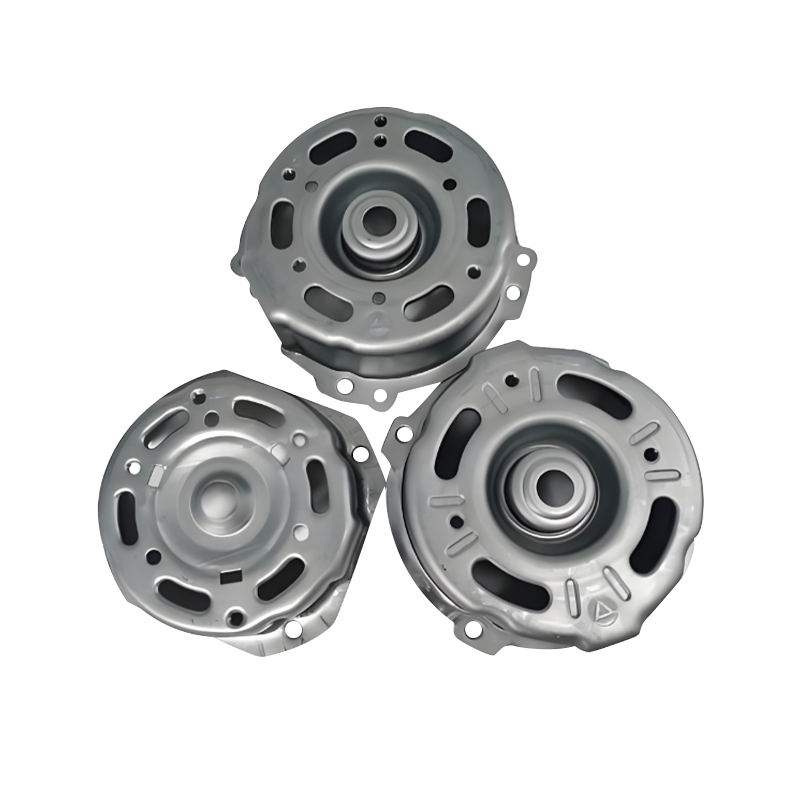
Automotive motor housing stamping parts
Automotive motor housing stamping parts are core c...
-
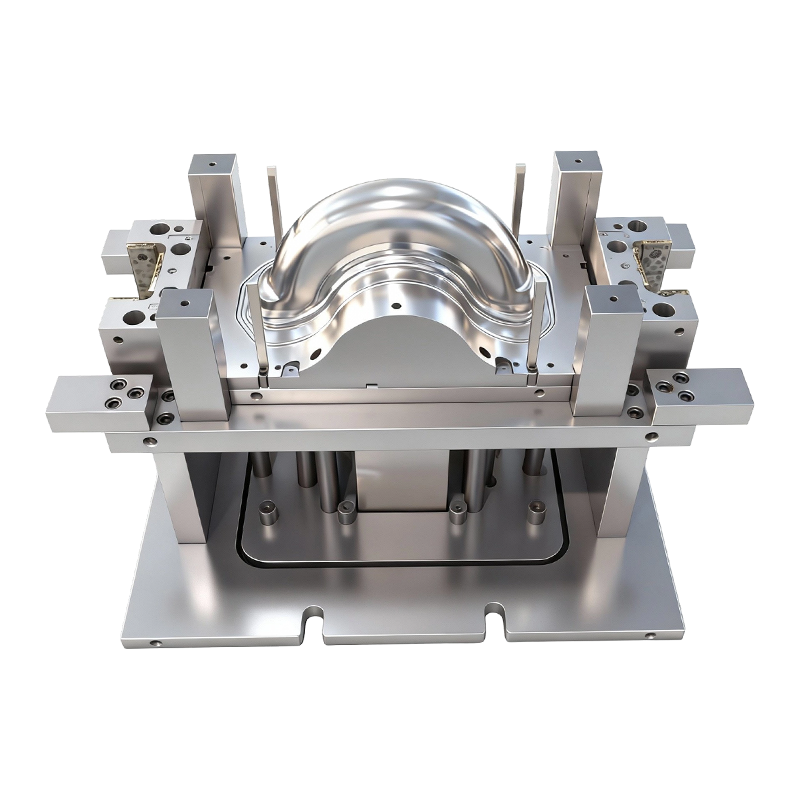
Deep drawing mold for front and rear wheels of two-wheeled electric vehicles
This Deep drawing mold for front and rear wheels o...
-
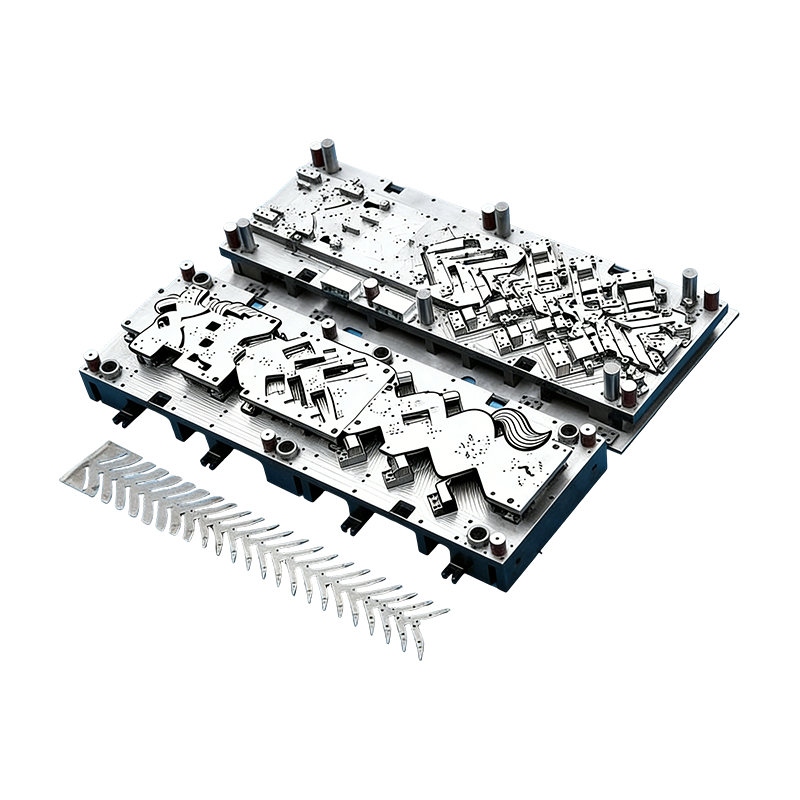
Progressive molds for automotive parts
This Continuous mold for automotive motor housing ...
-
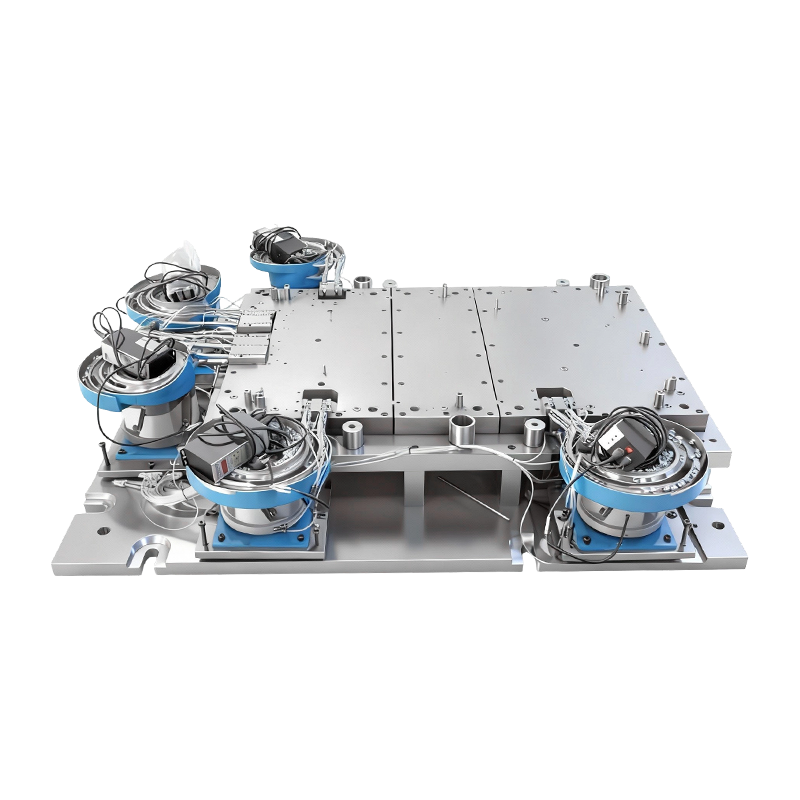
Automatic riveting mold for large computer machine base
This Automatic Riveting Mold for Large Computer Ma...
-
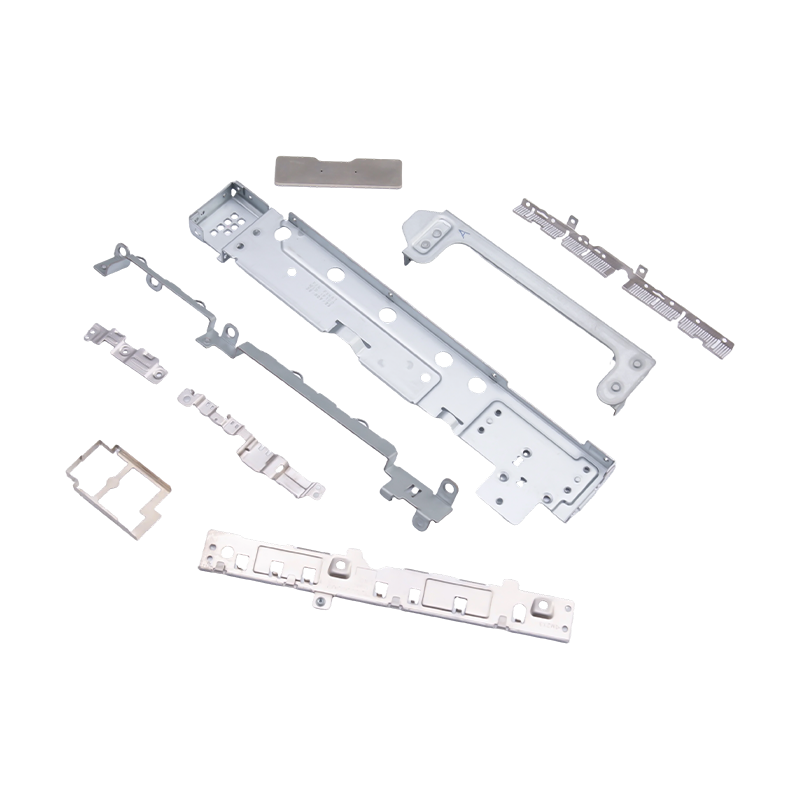
Small stamped parts for laptops and mobile phones
As essential internal components for modern portab...
- E-mail us: [email protected]
- Call us: +86-139 1308 8972

Chen Siyi – Overseas Sales Manager
Home / Author / Chen Siyi – Overseas Sales Manager / Precision Automotive Motor Housing Stamping Parts for Durable Electric Drive Systems
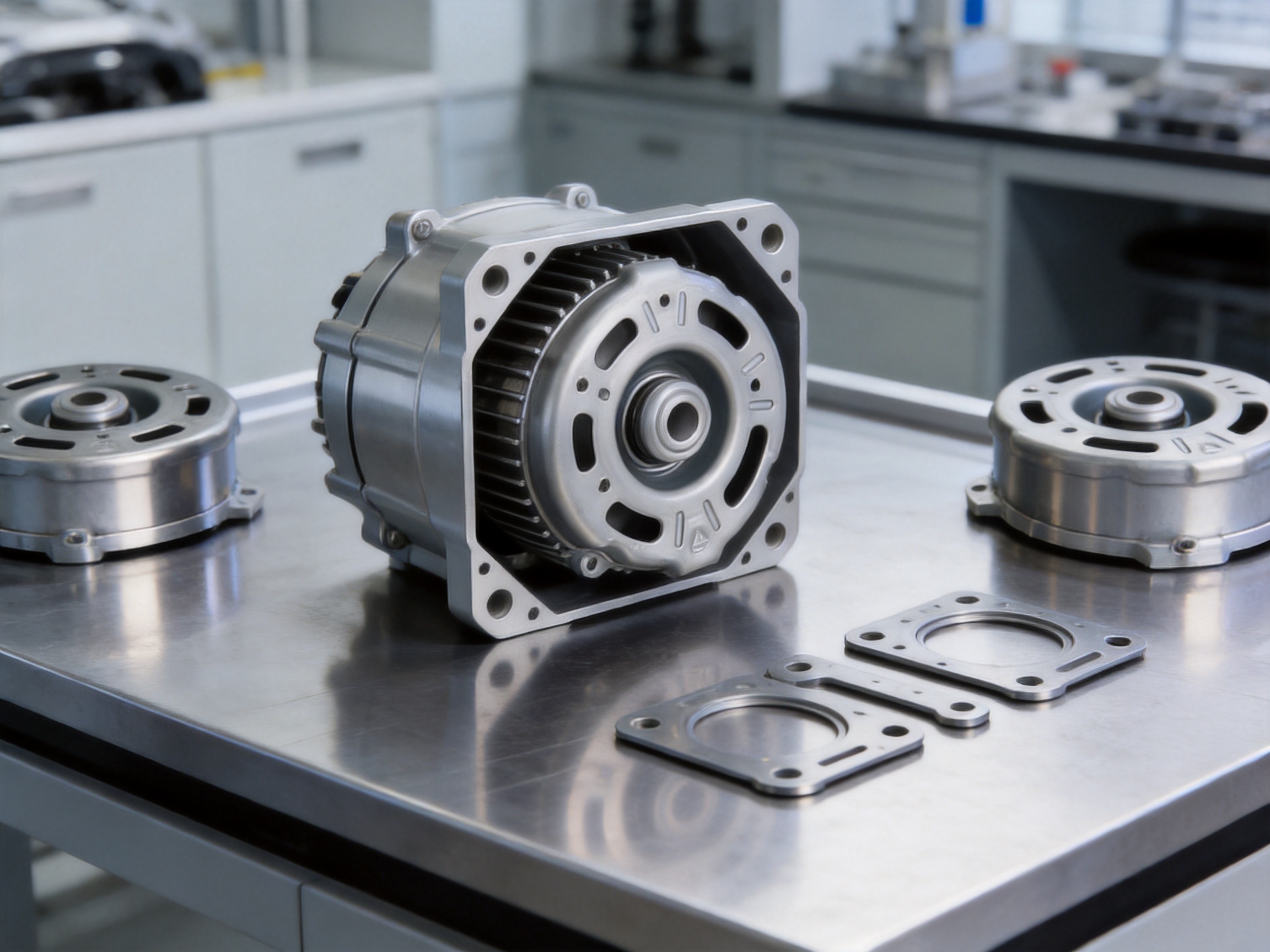
Precision Automotive Motor Housing Stamping Parts for Durable Electric Drive Systems
2026-05-31
Automotive motor housing stamping parts are essential structural components used to secure, protect, cool, and stabilize motors in modern vehicles. As vehicles become more electrified, intelligent, compact, and performance-oriented, the quality of motor housings directly influences system reliability, assembly efficiency, vibration control, thermal management, and long-term durability. These stamped components are no longer simple metal shells; they are precision-engineered parts designed to withstand demanding automotive conditions, including continuous vibration, impact loads, temperature fluctuation, humidity, corrosion, and high-volume assembly requirements.
The automotive motor housing stamping parts discussed in this article are manufactured through high-precision metal stamping processes using high-strength steel or aluminum alloy materials. They feature uniform wall thickness, strict dimensional control, stable geometry, and well-designed ventilation, drainage, and installation structures. Their purpose is to protect automotive motors while supporting efficient heat dissipation and reliable connection with related components. For automotive manufacturers, these parts help improve production consistency, reduce assembly complexity, and enhance the overall safety and durability of electrical and mechanical systems.
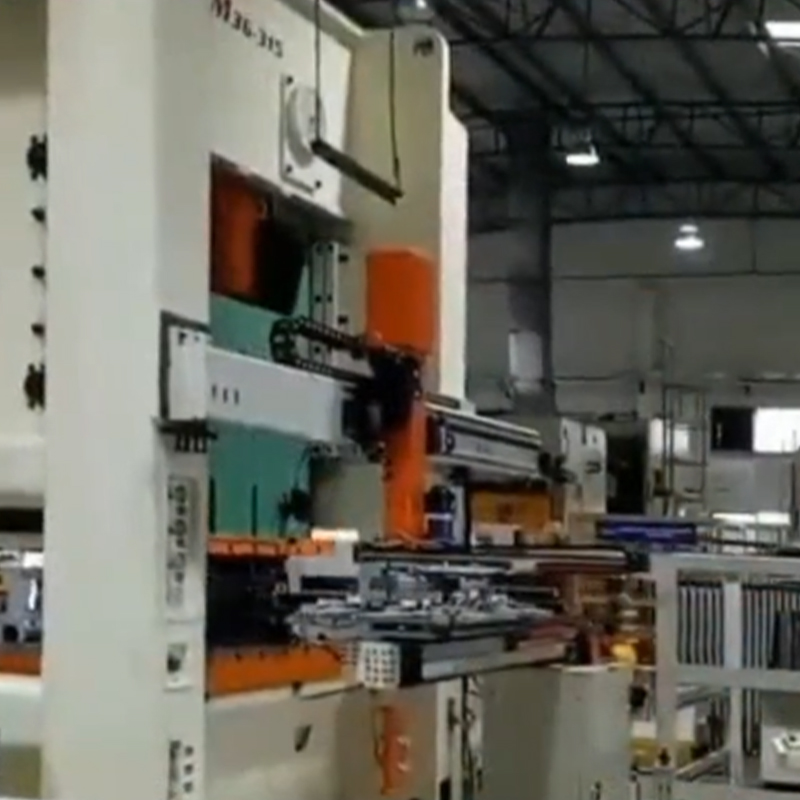
Suzhou Shuangqisi Mold Equipment Co., Ltd. specializes in stamping dies, stamping parts, and stamping automation equipment. With experience in die design, die manufacturing, stamping production, debugging, and automation integration, the company is positioned to provide comprehensive solutions for customers requiring high-quality automotive motor housing stamping parts. Its manufacturing foundation includes imported wire cutting machines, CNC machining centers, multiple grinding machines, punch presses ranging from 80T to 400T, skilled operators, experienced debugging personnel, and a strong technical team. These capabilities allow the company to control quality from mold design to mass production, which is especially important for automotive components that must meet strict tolerances and stable performance expectations.
Automotive motor housing stamping parts
Content
- 1 Understanding Automotive Motor Housing Stamping Parts
- 2 Key Product Advantages
- 3 Why Stamping Is Ideal for Motor Housing Production
- 4 Material Selection: High-Strength Steel and Aluminum Alloy
- 5 Advanced Die Design as the Foundation of Product Quality
- 6 Manufacturing Equipment and Process Strengths
- 7 Integrated Mold-Making and Stamping Automation Capabilities
- 8 Quality Control for Automotive Reliability
- 9 Design Features That Improve Motor Performance
- 10 Competitive Advantages Over Ordinary Stamping Suppliers
- 11 Applications in Modern Automotive Systems
- 12 Manufacturing Process Flow
- 13 Engineering for Cost-Effective Performance
- 14 Customization and OEM Support
- 15 Assembly Efficiency and Platform Compatibility
- 16 Sustainability and Lightweight Manufacturing
- 17 Q&A: Automotive Motor Housing Stamping Parts
- 17.1 What are automotive motor housing stamping parts used for?
- 17.2 What materials are commonly used for these parts?
- 17.3 Why is stamping suitable for motor housing production?
- 17.4 How do these parts improve motor service life?
- 17.5 What makes a high-quality motor housing stamping part different from a standard stamped part?
- 17.6 Can the parts be customized for different motor models?
- 17.7 Why is die design so important?
- 17.8 What manufacturing strengths support stable product quality?
- 17.9 How does stamping automation benefit automotive customers?
- 17.10 What testing is important for automotive motor housing stamping parts?
- 18 Conclusion
- 19 References
- 20 Product: Automotive motor housing stamping parts
Understanding Automotive Motor Housing Stamping Parts
An automotive motor housing is a protective and structural enclosure for a motor used in a vehicle. Depending on the application, the motor may be part of a servo drive, compressor, electric pump, cooling fan, actuator, new energy vehicle system, or other electrical drive mechanism. The housing must hold the motor in the correct position, protect internal parts from external damage, help manage heat, and provide mounting interfaces for assembly into larger systems.
Stamping is an ideal manufacturing method for such parts because it can form complex metal shapes with high repeatability, excellent production efficiency, and controlled cost. Compared with many machining-intensive processes, stamping can produce large quantities of consistent components after the die is properly developed and validated. For automotive suppliers and vehicle manufacturers, this consistency is valuable because every part must fit into automated or semi-automated assembly lines without repeated adjustment.
Automotive motor housing stamping parts usually require a combination of forming, trimming, piercing, bending, drawing, embossing, and sometimes secondary finishing operations. The stamping die must be designed to guide the metal flow correctly, prevent cracking or wrinkling, maintain uniform thickness, and achieve the required installation geometry. Even a small deviation in hole position, flange angle, or mounting surface flatness can create difficulties during assembly or reduce motor performance. Therefore, die accuracy and process stability are just as important as the raw material itself.
The product is typically manufactured from high-strength steel or aluminum alloy. High-strength steel offers excellent mechanical performance, impact resistance, dimensional stability, and cost efficiency. Aluminum alloy provides lighter weight, good corrosion resistance, and favorable heat dissipation. The selection depends on application requirements such as load, weight target, thermal demand, corrosion environment, and cost strategy. In both cases, precise stamping helps preserve the intended material properties while achieving the required shape.
Key Product Advantages
The primary advantage of automotive motor housing stamping parts is their ability to combine strength, accuracy, and production efficiency. In an automotive environment, a motor housing must perform under continuous mechanical and thermal stress. It must resist vibration generated by vehicle movement, road impact, motor rotation, and surrounding system operation. If the housing deforms, loosens, or cracks, the motor may experience misalignment, noise, excessive wear, reduced efficiency, or failure. A well-designed stamped housing provides reliable support and protection over a long service life.
Uniform wall thickness is another major advantage. In stamped components, controlled thickness distribution helps maintain consistent strength and predictable performance. Uneven thickness may create weak points, stress concentration, or assembly variation. Through optimized die design and forming process control, the housing can maintain stability while reducing unnecessary material consumption. This balance is important for automotive production, where every gram, every second, and every tolerance matters.
Tight dimensional tolerance is essential for seamless assembly. Automotive motor housing stamping parts often connect with brackets, fasteners, seals, electronic modules, shafts, covers, and other stamped or machined components. Standardized interfaces reduce assembly difficulty and allow the part to match different motor models or production platforms. When hole positions, edge profiles, mounting surfaces, and locating features are accurate, manufacturers can reduce rework, improve takt time, and increase line productivity.
Structural stability is also a key competitive advantage. A motor housing must resist deformation not only during use but also during transportation, installation, and fastening. Stamping parts with carefully designed ribs, flanges, reinforcement areas, and formed edges can achieve high rigidity without excessive material thickness. This design approach contributes to cost control and weight reduction while maintaining durability.
Heat dissipation performance is increasingly important. Motors generate heat during operation, and excessive thermal accumulation can shorten component life or reduce efficiency. Automotive motor housing stamping parts may include drainage and ventilation structures that encourage airflow and prevent moisture accumulation. Properly designed openings, channels, and formed surfaces can support internal air circulation and improve the operating environment of the motor.
Corrosion resistance and pressure resistance are also critical. Automotive parts may be exposed to water, road salt, dust, oil, temperature cycling, and chemical contaminants. The housing must maintain integrity in these conditions. Material selection, forming quality, surface treatment compatibility, and testing procedures all contribute to long-term resistance. Reliable corrosion performance is particularly important for vehicles used in harsh climates or high-humidity environments.
Why Stamping Is Ideal for Motor Housing Production
Metal stamping offers a powerful combination of repeatability, speed, flexibility, and cost effectiveness. Once the stamping die is developed and optimized, each press stroke can produce a part or a key forming stage with stable accuracy. For high-volume automotive programs, this advantage is significant because it enables predictable output and consistent quality over long production runs.
Compared with fully machined housings, stamped housings can reduce material waste and processing time. Machining removes material from a block or casting, which may be suitable for certain precision applications but can be less efficient for thin-walled protective structures. Stamping forms sheet metal into the desired shape, making it highly suitable for motor housing components that require strong but lightweight construction.
Compared with some casting processes, stamping can provide better wall thickness control for thin metal parts, cleaner edges after proper trimming, and faster cycle times. Cast components may require longer cooling, additional machining, or more complex defect control related to porosity and shrinkage. Stamped parts, by contrast, can achieve high productivity and clean integration with downstream assembly when the die and material are properly matched.
Stamping also supports design refinement. Features such as mounting holes, flanges, stiffening ribs, drawn cavities, ventilation slots, locating tabs, and drainage paths can often be integrated into the tooling sequence. This reduces the need for multiple separate manufacturing steps and helps improve part-to-part consistency. For automotive motor housing stamping parts, integrated features mean fewer secondary operations, reduced labor input, and lower risk of dimensional variation.
| Performance Factor | Precision Stamped Motor Housing Parts | Common Lower-Precision Alternatives | Customer Benefit |
|---|---|---|---|
| Dimensional accuracy | Tight tolerance controlled by precision dies and stable press processes | Higher variation may require adjustment or rework | Smoother assembly and improved production efficiency |
| Wall thickness | Uniform thickness with optimized forming control | Uneven material distribution may create weak areas | Better strength consistency and predictable performance |
| Structural rigidity | Reinforced by formed ribs, flanges, and stable geometry | May require thicker material to achieve similar strength | Weight and cost optimization |
| Thermal performance | Designed ventilation and heat dissipation structures | Limited airflow or poor heat release design | Longer motor service life and reduced thermal risk |
| Production scalability | Suitable for high-volume automotive manufacturing | Lower productivity or inconsistent repeatability | Stable supply and competitive unit cost |
| Assembly compatibility | Standardized interfaces for multiple motor models | Interface inconsistency can slow assembly | Reduced assembly time and easier platform integration |
Material Selection: High-Strength Steel and Aluminum Alloy
The performance of a motor housing begins with the correct material. High-strength steel is widely used when the application requires excellent rigidity, impact resistance, and cost-effective durability. It can maintain shape under mechanical load and is suitable for components exposed to vibration and fastening stress. When properly stamped, it provides reliable structural support without unnecessary complexity.
Aluminum alloy is often selected when lightweight design and heat dissipation are priorities. Electric and hybrid vehicles frequently demand weight reduction because vehicle range, energy efficiency, and system packaging are influenced by component mass. Aluminum alloy also offers natural corrosion resistance and good thermal conductivity, making it suitable for housings where heat management is a major consideration.
The choice between high-strength steel and aluminum alloy is not simply a matter of strength versus weight. Engineers must consider forming behavior, springback, surface treatment, installation method, sealing requirements, operating temperature, and cost. High-strength steel may require advanced die compensation to control springback, while aluminum alloy may require careful lubrication and forming strategy to avoid surface damage or cracking. A manufacturer with strong die design and process debugging capability can support both material routes and help customers select the most suitable solution.
Suzhou Shuangqisi Mold Equipment Co., Ltd. has experience in stamping die design and manufacturing, which is a major advantage when working with different materials. Material behavior must be understood before production begins. The die clearance, forming radius, blank shape, press force, lubrication, and process sequence all affect final quality. A supplier that controls both mold development and stamping production can respond quickly when material or design adjustments are needed.
Advanced Die Design as the Foundation of Product Quality
For automotive motor housing stamping parts, the die is the foundation of product quality. Even the best material cannot compensate for poor die design. The die determines how the sheet metal flows, where stress is concentrated, how holes are positioned, how edges are trimmed, and how the final geometry is maintained. Precision die design reduces the risk of cracks, wrinkles, burrs, springback, and dimensional drift.
A professional die design process begins with product analysis. Engineers evaluate the part structure, material thickness, required tolerances, forming depth, hole layout, flange angles, surface quality requirements, and assembly conditions. They identify areas that may be difficult to form and develop strategies to control deformation. This may involve adjusting the blank shape, adding draw beads, changing forming sequence, optimizing radii, or designing progressive die stations.
Simulation and practical experience are both important. Digital design tools can help predict metal flow and forming risks, but experienced engineers and debugging personnel are essential for final optimization. Automotive motor housing parts often include multiple functional features in a compact structure, which requires careful coordination between design intent and production reality. A small improvement in die design can significantly reduce scrap rate and improve mass production stability.
Suzhou Shuangqisi Mold Equipment Co., Ltd. integrates die design, manufacturing, and service, allowing the company to manage the entire development cycle. This integration gives customers a practical advantage because communication is more direct, technical feedback is faster, and responsibility is clearer. When a supplier only performs stamping but depends on outside tooling support, troubleshooting can be slower. When die and stamping teams work together, improvements can be implemented more efficiently.
Manufacturing Equipment and Process Strengths
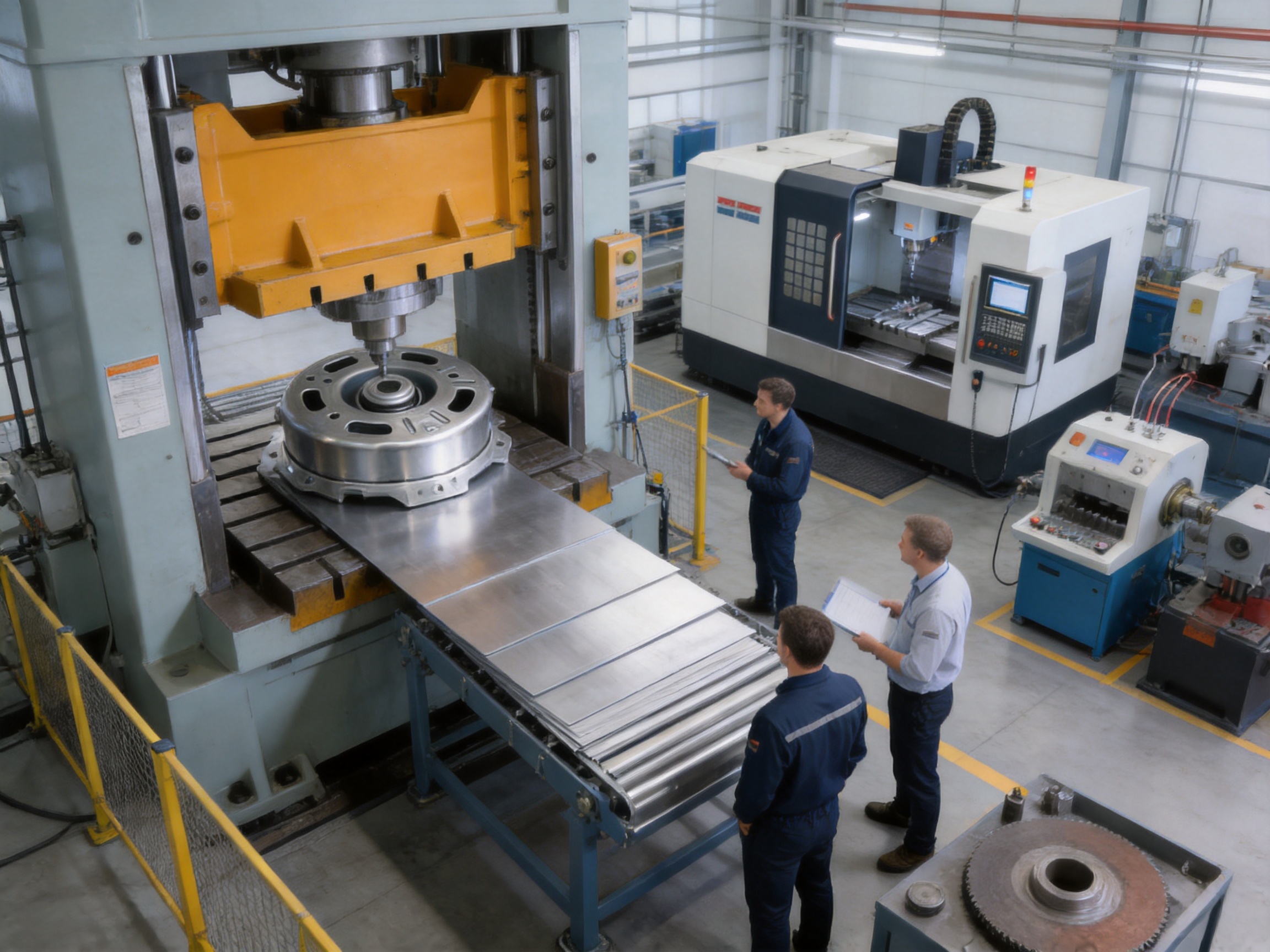
Modern automotive stamping requires advanced equipment and disciplined process control. The company is equipped with imported wire cutting machines, CNC machining centers, more than 10 grinding machines of various sizes, and 25 punch presses ranging from 80T to 400T. These resources support die manufacturing, die maintenance, prototype development, and stable production of stamped components.
Imported wire cutting machines are important for producing precise die inserts, punches, and complex contours. Wire cutting can achieve high accuracy for detailed tooling features, which directly affects part dimensions and edge quality. CNC machining centers provide flexibility and precision for larger tooling components, cavities, plates, and structural elements. Grinding machines help achieve fine surface finish, flatness, and tolerance control, which are essential for tool life and part consistency.
Punch presses from 80T to 400T allow the manufacturer to select the appropriate equipment according to part size, material thickness, forming difficulty, and production volume. A motor housing stamping part may require different press forces depending on whether it involves shallow forming, deep drawing, multiple bends, or reinforced structures. Having a wide range of press capacities improves production flexibility and helps match the process to the part rather than forcing the part into an unsuitable equipment range.
Experienced operators and debugging personnel are equally important. Equipment alone does not guarantee quality. Skilled technicians understand the sound, feel, and behavior of a stamping process. They can identify early signs of misalignment, abnormal wear, burr growth, feeding instability, or material issues. Debugging personnel can adjust die clearances, forming pressure, guiding systems, lubrication, and feeding parameters to achieve stable production. This human expertise is a key factor that differentiates reliable stamping suppliers from ordinary processors.
The company’s technical team includes 60 technical staff, providing support for design, manufacturing, testing, troubleshooting, and customer service. For automotive customers, technical responsiveness is valuable because development schedules are often tight and product changes may occur during validation. A strong technical team can help shorten development time, reduce risk, and provide practical engineering suggestions.
Integrated Mold-Making and Stamping Automation Capabilities
One of the company’s major strengths is the ability to provide integrated solutions involving stamping molds and stamping automation. In 2016, the company invested in and established Suzhou Keshuang Intelligent Technology Co., Ltd., which mainly produces stamping automation equipment. This creates a broader manufacturing ecosystem that supports not only part production but also automated feeding, transfer, handling, and production efficiency improvement.
Automation is increasingly important in automotive stamping because customers expect stable quality, high output, lower labor dependency, and traceable process control. Automated systems can reduce manual handling, improve safety, and maintain consistent feeding and positioning. For motor housing stamping parts, stable feeding is especially important because even slight misalignment may affect hole position, forming accuracy, or edge quality.
Turnkey solutions are valuable for customers that need more than a single stamped part. A complete solution may include product manufacturability analysis, die design, die manufacturing, stamping trial, process optimization, automation planning, mass production, inspection, and continuous improvement. By offering both stamping molds and stamping automation, the company can support customers from concept to production, reducing coordination complexity.
Another advantage is the ability to invest in related production equipment according to customer needs. This flexible approach allows the company to align capacity and technology with customer projects. For automotive manufacturers and Tier suppliers, supplier willingness to invest in proper equipment can improve supply stability and long-term cooperation.
Quality Control for Automotive Reliability
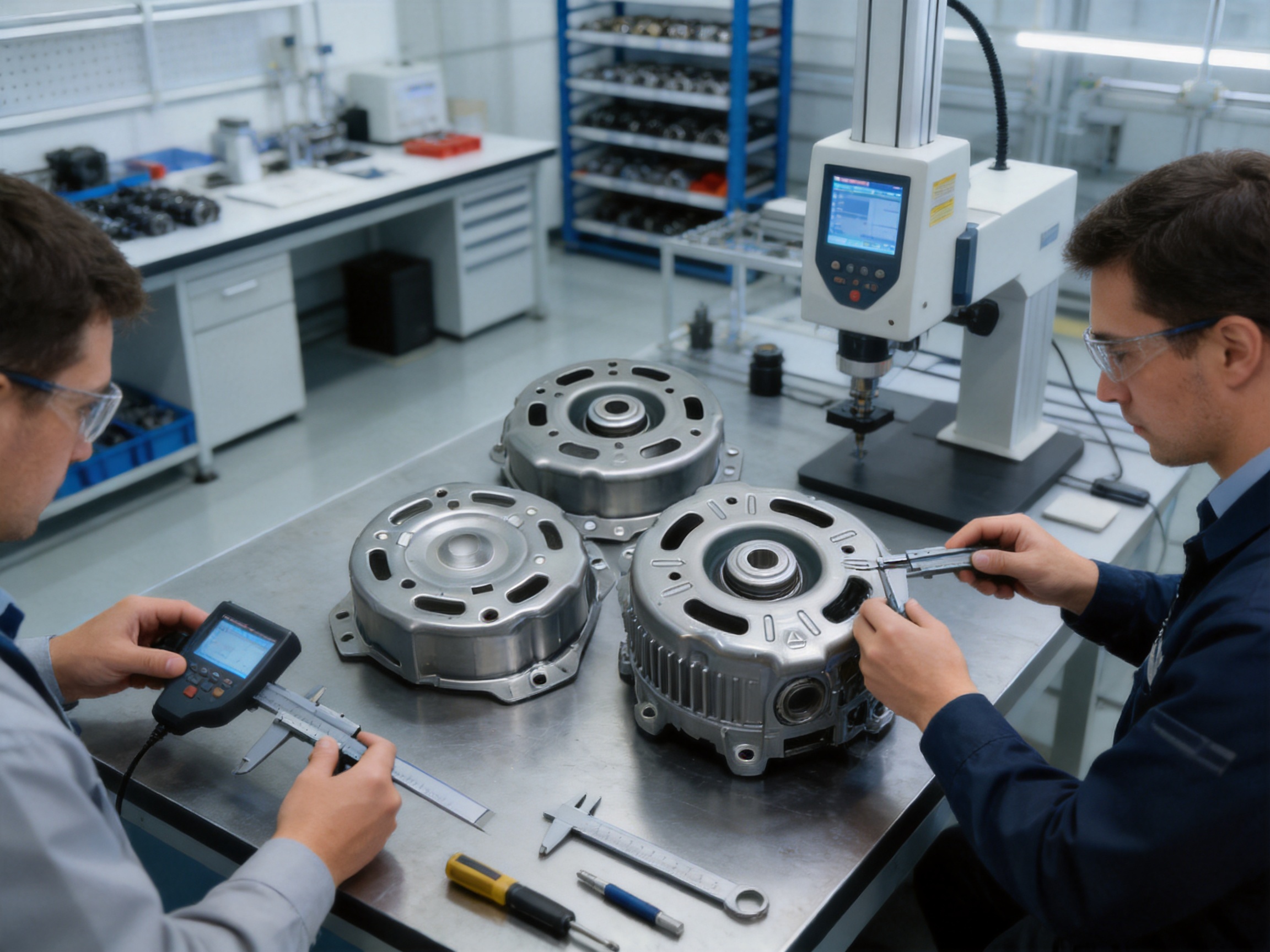
Automotive components must meet demanding quality expectations because failures can affect safety, warranty cost, brand reputation, and end-user satisfaction. Automotive motor housing stamping parts must therefore be inspected and validated through strict processes. Key quality factors include dimensional accuracy, material conformity, surface condition, burr control, flatness, coating compatibility, corrosion resistance, pressure resistance, and functional assembly performance.
Dimensional inspection ensures that mounting holes, locating surfaces, flanges, and formed features match the drawing requirements. Precision measurement tools can verify critical dimensions during initial sample approval and mass production. Regular inspection helps detect tool wear or process drift before nonconforming parts reach customers.
Pressure resistance testing may be required when the housing must maintain structural integrity under mechanical load or sealed system conditions. Corrosion resistance testing evaluates the part’s ability to withstand environmental exposure. In automotive applications, corrosion is not only a cosmetic issue; it can weaken material, affect fastening reliability, and reduce service life. Proper testing helps confirm that the component can perform in diverse working conditions.
Burr control is another important factor. Burrs around pierced holes or trimmed edges can interfere with assembly, damage wires or seals, create safety hazards, or affect coating quality. Precision dies, proper clearance, tool maintenance, and secondary deburring when required help ensure clean edges. A high-quality stamping supplier pays attention to these details because they influence downstream efficiency.
Surface quality matters as well. Scratches, dents, oil contamination, or forming marks may affect coating, sealing, or appearance depending on the application. Controlled handling and stable forming conditions help maintain surface consistency. For aluminum alloy parts, surface protection can be especially important because the material may be more sensitive to visible marking during forming.
Quality control is not limited to final inspection. The most effective approach is preventive quality management throughout the process. This includes material verification, die maintenance, press parameter control, first-piece inspection, in-process inspection, operator training, and continuous improvement. The company’s integrated capabilities support this preventive approach by connecting design, tooling, stamping, and debugging teams.
Design Features That Improve Motor Performance
A motor housing affects motor performance more than many people realize. While it does not generate torque or electrical power directly, it creates the physical environment in which the motor operates. A housing with poor rigidity may allow vibration or misalignment. A housing with poor heat dissipation may contribute to thermal stress. A housing with inadequate drainage may allow moisture accumulation. A housing with inaccurate interfaces may slow assembly or reduce system reliability.
Drainage structures are important because vehicles operate in rain, snow, mud, humidity, and road splash. Moisture that remains inside or around a motor can accelerate corrosion, damage electrical insulation, or reduce service life. Properly designed drainage paths help remove water and prevent accumulation. In stamped parts, drainage features can often be formed or pierced during production, providing function without excessive cost.
Heat dissipation structures support air circulation and reduce thermal accumulation. Motors generate heat from electrical resistance, magnetic losses, friction, and load conditions. If heat cannot escape efficiently, internal components may age faster. Stamped housings can include openings, channels, vents, or shaped surfaces that improve airflow while maintaining structural protection. Balancing openness and strength requires careful engineering because too many openings may reduce rigidity, while too few may limit cooling.
Standardized interface design improves assembly efficiency. Automotive manufacturers often use platform strategies, meaning similar components may be used across different models or system variants. A housing that can match different motor models through standardized mounting points, hole patterns, and locating features can reduce development cost and simplify supply chain management. Precision stamping helps maintain these interfaces accurately across large production volumes.
Noise and vibration considerations are also important. A stable housing can reduce resonance, rattling, and structural noise. Formed ribs and flanges may be used to increase stiffness and shift vibration behavior. Proper fastening surfaces ensure that the housing connects firmly to surrounding structures. In electric and hybrid vehicles, noise control is especially important because the absence of engine noise makes other sounds more noticeable to passengers.
Competitive Advantages Over Ordinary Stamping Suppliers
Automotive customers have many choices when selecting stamping suppliers, but not all suppliers provide the same value. A basic supplier may be able to stamp simple parts, but automotive motor housing components require deeper process knowledge, tooling precision, quality discipline, and engineering support. The advantages of a professional manufacturer become clear when projects involve tight tolerances, functional features, high-volume delivery, or challenging materials.
The first advantage is integrated die and stamping capability. When the same organization can design the die, manufacture the die, debug the process, and produce the final parts, technical responsibility is unified. Problems can be solved faster because tooling and production teams communicate directly. This reduces delays, avoids blame shifting, and supports continuous improvement.
The second advantage is equipment depth. With imported wire cutting machines, CNC machining centers, grinding machines, and a broad range of punch presses, the company can handle both tooling precision and production flexibility. Some competitors may rely on outsourced die components or limited press capacity, which can create bottlenecks and reduce control over quality. In contrast, strong in-house equipment improves responsiveness and consistency.
The third advantage is experience in industries related to servo drives, compressors, and new energy vehicles. These applications demand reliable stamping components with stable dimensions and strong performance. Experience with such customers helps build practical knowledge of precision assemblies, motor-related parts, and automotive-grade expectations. This background is highly relevant to motor housing stamping parts.
The fourth advantage is cost and quality control. Competitive pricing is valuable only when quality remains stable. The company emphasizes strict cost and quality control, which allows customers to pursue value rather than simply low initial price. Poor-quality parts can create hidden costs through scrap, rework, assembly downtime, warranty claims, and supplier management effort. A stable stamping partner helps reduce total cost of ownership.
The fifth advantage is automation capability. Many stamping suppliers can produce parts, but fewer can also provide automation solutions. Automation knowledge allows better process planning, improved production efficiency, and future scalability. For customers expecting growing demand, this capability supports long-term supply stability.
Applications in Modern Automotive Systems
Automotive motor housing stamping parts can be used in a variety of systems where electric motors or motor-driven devices must be protected and secured. These include new energy vehicle drive-related systems, auxiliary motors, compressor motors, servo-related assemblies, electric pumps, cooling modules, HVAC systems, seat adjustment motors, window lift motors, wiper motors, and other actuator applications. The exact geometry and material depend on the motor type and installation environment.
In new energy vehicles, motor-related components are especially important because electrification increases the number and importance of electrical drive systems. Lightweight construction, heat management, and reliability become central design priorities. Stamped motor housing parts can support these goals by providing strong, lightweight, and repeatable structures suitable for large-scale manufacturing.
In compressor applications, motor housings may need to withstand vibration, thermal cycling, and pressure-related conditions. Dimensional accuracy helps ensure proper alignment and sealing. Corrosion resistance is also important because compressor systems may operate in demanding environments. The company’s experience supplying products for compressors provides useful manufacturing knowledge for such applications.
In servo drive applications, precision and stability are critical. Servo systems rely on accurate motion control, and housing components must support alignment and vibration control. Stamped parts used in these systems must maintain tight tolerances and consistent mechanical properties. Experience with servo drive-related products demonstrates the company’s capability to support precision electromechanical assemblies.
For conventional automotive auxiliary motors, cost-effective mass production is often a key requirement. Stamping allows high productivity while maintaining functional quality. Well-designed stamped housings can help manufacturers meet both cost and reliability targets, especially when production volumes are large.
Manufacturing Process Flow
A typical process for automotive motor housing stamping parts begins with customer requirements analysis. The engineering team reviews drawings, specifications, material requirements, tolerance standards, annual volume, assembly conditions, and testing expectations. If necessary, manufacturability suggestions are provided to improve forming feasibility, reduce cost, or enhance performance.
The next stage is die design. Engineers determine whether the part is best produced using a progressive die, transfer die, single-operation die, or combined process. The decision depends on part complexity, volume, material, forming depth, and tolerance requirements. For high-volume production, progressive dies can offer excellent efficiency, while transfer processes may be suitable for deeper or more complex forming.
After design approval, die manufacturing begins. Tooling components are machined using CNC equipment, wire cutting, grinding, and other precision processes. Each component must meet strict dimensional requirements because small tooling deviations can become part deviations. Tool assembly follows, including alignment, fitting, polishing, and guiding system setup.
Trial stamping is then performed. Initial samples are evaluated for dimensions, surface quality, forming defects, burrs, and assembly function. If issues appear, debugging personnel adjust the die or process parameters. This stage is essential because theoretical design must be validated through real material behavior. Several rounds of trial and correction may be required before the process reaches production stability.
Once samples meet requirements, customer approval and production preparation follow. Inspection standards, control plans, packaging methods, and production schedules are established. During mass production, operators monitor the press process and inspectors verify key dimensions. Tool maintenance is performed to prevent wear-related defects. When automation is applied, feeding and handling systems help improve consistency and output.
Final products are packed according to customer requirements to prevent deformation, scratching, corrosion, or contamination during transportation. Proper packaging is especially important for stamped motor housing parts with precise interfaces, formed edges, or surface treatment requirements.
Engineering for Cost-Effective Performance
Cost-effective performance does not mean reducing quality. It means achieving the required performance with efficient material use, reliable processes, and minimal waste. In automotive stamping, cost is influenced by material utilization, die complexity, press cycle time, scrap rate, secondary operations, inspection burden, packaging, logistics, and production stability.
Optimized blank layout can reduce material waste. Since metal material is a major cost factor, efficient nesting and strip design can significantly improve competitiveness. However, material savings must not compromise forming quality. A well-designed blank shape supports smooth material flow and reduces defects.
Process integration can also reduce cost. If holes, slots, ribs, flanges, and trimming can be completed within a well-planned die sequence, secondary operations may be minimized. Fewer operations mean less handling, lower labor cost, shorter production time, and reduced variation. This is one reason why die design expertise is so important.
Stable production reduces hidden cost. A low unit price is not meaningful if the process produces frequent defects or delivery delays. Stable stamping reduces scrap, rework, downtime, and customer complaints. For automotive customers, supply reliability and quality consistency are often more valuable than the lowest quotation.
The company’s ability to combine mold-making, stamping, and automation supports cost-effective production. It can evaluate the entire process rather than focusing on one isolated step. This broader perspective helps customers obtain parts that are not only technically qualified but also practical for mass production.
Customization and OEM Support
Automotive motor housing stamping parts are often customized according to specific motor designs, vehicle platforms, installation spaces, and performance requirements. Customization may involve material selection, thickness, surface treatment, hole patterns, mounting structures, drainage design, ventilation layout, reinforcement ribs, and tolerance requirements. OEM support requires flexibility and engineering communication.
Suzhou Shuangqisi Mold Equipment Co., Ltd. is positioned as an OEM metal stamping die manufacturer and stamping die company in China, with capabilities in custom stamping die design and manufacturing. For customers requiring unique automotive motor housing parts, this means the company can support product development from early design review to production tooling and mass supply.
Customization begins with understanding the customer’s functional goals. Is the priority weight reduction, higher strength, better cooling, easier assembly, lower cost, or compatibility with multiple motor models? Once priorities are clear, engineers can recommend suitable forming methods and design adjustments. For example, a flange may be modified to improve rigidity, a ventilation pattern may be optimized for airflow, or a hole position may be adjusted for better stamping feasibility.
OEM customers also benefit from confidentiality, process stability, and long-term service. Automotive projects often last for years, and a supplier must support spare parts, engineering changes, replacement tooling, and continuous improvement. A company with 15 years of mold industry experience and a strong technical team can provide sustained support over the product lifecycle.
Assembly Efficiency and Platform Compatibility
Assembly efficiency is a major advantage of precision stamped motor housing components. In automotive manufacturing, assembly lines depend on repeatable parts. If a housing fits correctly every time, workers or automated systems can install it quickly. If dimensions vary, the line may slow down due to adjustment, sorting, or rework.
Standardized interfaces help the same or similar housing concepts serve multiple motor models. This does not mean every part is identical, but it means mounting logic, locating features, and dimensional control can be designed with platform compatibility in mind. Automotive manufacturers increasingly prefer modular strategies to reduce complexity. Precision stamping supports this trend by delivering repeatable geometries at scale.
Fastener alignment is a simple but important example. If holes are not accurately positioned, screws may cross-thread, installation force may increase, or the assembly may fail inspection. If locating tabs or surfaces are inconsistent, the motor may sit at an incorrect angle. These issues can create noise, vibration, electrical stress, or premature wear. Tight tolerance stamping reduces such risks.
Packaging and handling also influence assembly efficiency. Stamped parts must arrive at the assembly line without deformation or damage. A supplier experienced in automotive parts understands that quality includes not only the part leaving the press but also the condition in which it reaches the customer.
Sustainability and Lightweight Manufacturing
Automotive manufacturers increasingly focus on sustainability, energy efficiency, and material optimization. Stamped motor housing parts can support these goals through lightweight design, efficient material usage, and high production efficiency. When properly engineered, stamped structures can achieve required strength with less material by using formed reinforcement rather than excessive thickness.
Aluminum alloy options support lightweight vehicle design, while high-strength steel options provide strong performance with optimized thickness. Efficient die layouts reduce scrap, and stable stamping processes reduce waste caused by defects. Automation can also improve energy and labor efficiency by reducing repeated handling and improving production flow.
Durability itself is a sustainability advantage. A component that lasts longer reduces replacement needs, warranty waste, and resource consumption. By resisting vibration, impact, temperature stress, and corrosion, automotive motor housing stamping parts contribute to longer motor life and more reliable vehicle operation.
Q&A: Automotive Motor Housing Stamping Parts
What are automotive motor housing stamping parts used for?
They are used to secure, protect, and support automotive motors. They help maintain motor alignment, resist vibration and impact, provide mounting interfaces, and support heat dissipation and drainage in vehicle operating environments.
What materials are commonly used for these parts?
High-strength steel and aluminum alloy are commonly used. High-strength steel provides excellent rigidity and impact resistance, while aluminum alloy offers lightweight performance, corrosion resistance, and good heat dissipation.
Why is stamping suitable for motor housing production?
Stamping is suitable because it enables high-volume production, stable repeatability, precise forming, efficient material use, and integration of features such as holes, flanges, ribs, ventilation openings, and drainage structures.
How do these parts improve motor service life?
They protect the motor from external impact, reduce vibration-related damage, support proper installation, and improve airflow or drainage. These functions help reduce thermal accumulation, corrosion risk, and mechanical stress.
What makes a high-quality motor housing stamping part different from a standard stamped part?
A high-quality motor housing stamping part has tight dimensional tolerance, uniform wall thickness, stable structural strength, clean edges, accurate mounting features, good surface quality, and reliable corrosion and pressure resistance.
Can the parts be customized for different motor models?
Yes. The parts can be customized according to motor size, mounting interface, material requirement, heat dissipation needs, drainage design, thickness, surface treatment, and automotive platform requirements.
Why is die design so important?
The die controls the final shape, tolerance, material flow, edge quality, and production stability. A well-designed die reduces defects such as cracking, wrinkling, springback, burrs, and dimensional variation.
What manufacturing strengths support stable product quality?
Stable quality is supported by precision die manufacturing, imported wire cutting machines, CNC machining centers, grinding machines, 80T to 400T punch presses, experienced operators, skilled debugging personnel, and a technical team capable of process optimization.
How does stamping automation benefit automotive customers?
Stamping automation improves feeding stability, production efficiency, safety, repeatability, and scalability. It reduces manual handling and supports consistent high-volume production for automotive programs.
What testing is important for automotive motor housing stamping parts?
Important testing may include dimensional inspection, pressure resistance testing, corrosion resistance testing, surface inspection, burr inspection, material verification, and assembly validation according to customer requirements.
Conclusion
Automotive motor housing stamping parts play a critical role in modern vehicle systems. They protect and secure motors, support heat dissipation, resist vibration and impact, improve assembly efficiency, and contribute to long-term reliability. As automotive systems become more electrified and compact, the requirements for these components continue to rise. Precision, stability, material performance, and manufacturing consistency are now essential.
The product’s advantages include high-strength steel or aluminum alloy construction, uniform wall thickness, tight dimensional tolerance, stable structure, reasonable drainage and heat dissipation design, standardized interfaces, and compliance with demanding automotive quality expectations. These advantages help automotive manufacturers improve production efficiency, reduce assembly problems, and enhance the durability of electrical systems.
Suzhou Shuangqisi Mold Equipment Co., Ltd. strengthens these product advantages through integrated die design, die manufacturing, stamping production, and automation capabilities. With advanced equipment, experienced technical staff, strong debugging expertise, and a focus on cost and quality control, the company can support customized automotive motor housing stamping parts from development to mass production. Its experience in serving customers in servo drives, compressors, and new energy vehicles further demonstrates its ability to meet demanding industrial requirements.
For customers seeking reliable, cost-effective, and precision-engineered motor housing stamping parts, choosing a supplier with strong tooling knowledge, stamping experience, and automation capability is essential. A well-made motor housing is more than a protective shell; it is a functional component that supports motor performance, vehicle safety, production efficiency, and long-term system durability.
References
1. Altan, T., and Tekkaya, A. E. Sheet Metal Forming: Processes and Applications. ASM International.
2. Kalpakjian, S., and Schmid, S. R. Manufacturing Engineering and Technology. Pearson Education.
3. Lange, K. Handbook of Metal Forming. Society of Manufacturing Engineers.
4. Davies, G. Materials for Automobile Bodies. Butterworth-Heinemann.
5. ASM International. ASM Handbook, Volume 14B: Metalworking: Sheet Forming. ASM International.
6. Society of Automotive Engineers. Automotive Engineering Principles and Manufacturing Standards Collection.
Product: Automotive motor housing stamping parts
Previous Post
Deep Drawing Mold for Metal Front and Rear Wheels of Two-Wheeled Electric Vehicles
Next Post
Automotive Motor Housing Stamping Parts for Reliable Electric and Mechanical Drive Systems
Our Products.
Start Your Business with an OEM Manufacturer Right Here!

Provide global customers with complete turn-key solutions
through
innovation!
QUICK LINKS
CONTACT INFO.
-
 +86-139 1308 8972
 -

-
 No. 118 Yexin Road, Wujiang Economic Development Zone, Suzhou, China
Copyright © Suzhou Shuangqisi Mold Equipment Co., Ltd. All Rights Reserved. Custom Stamping Die Metal Stamping Die Manufacturers
