 English
 Español
 Deutsch
-
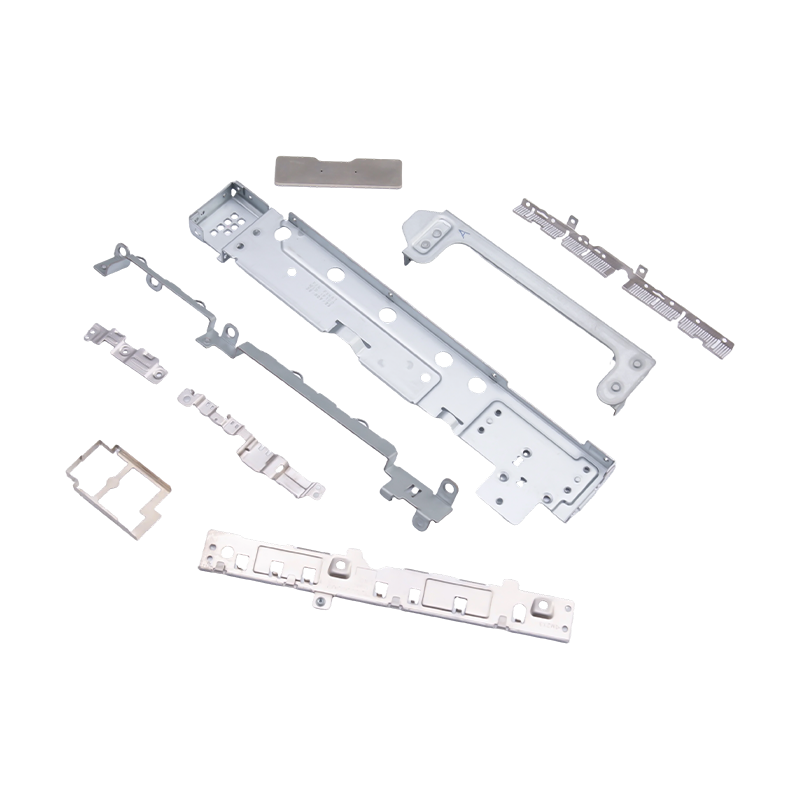
Small stamped parts for laptops and mobile phones
As essential internal components for modern portab...
-
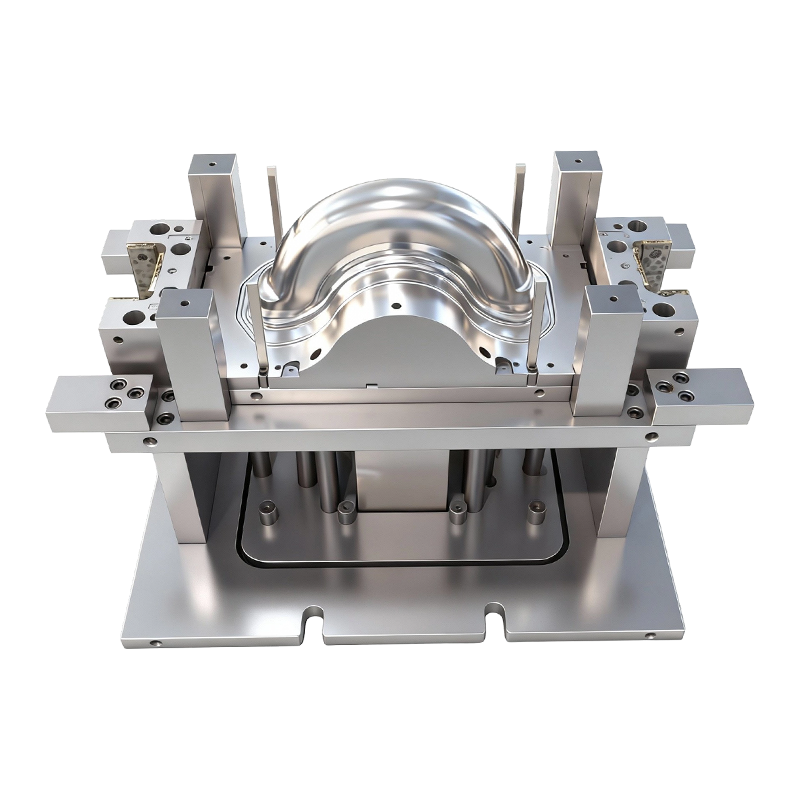
Deep drawing mold for front and rear wheels of two-wheeled electric vehicles
This Deep drawing mold for front and rear wheels o...
-
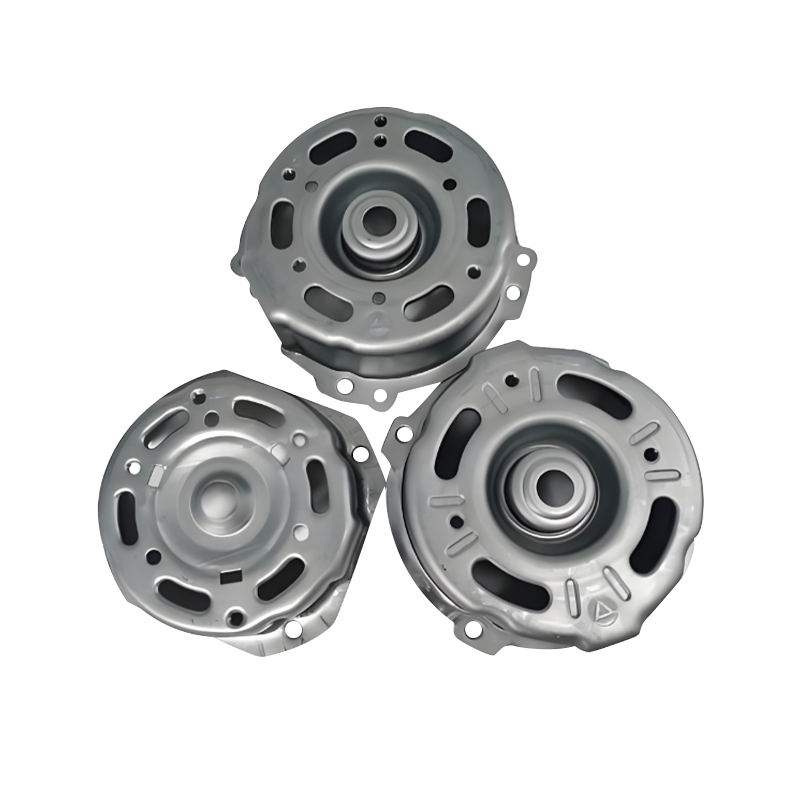
Automotive motor housing stamping parts
Automotive motor housing stamping parts are core c...
-
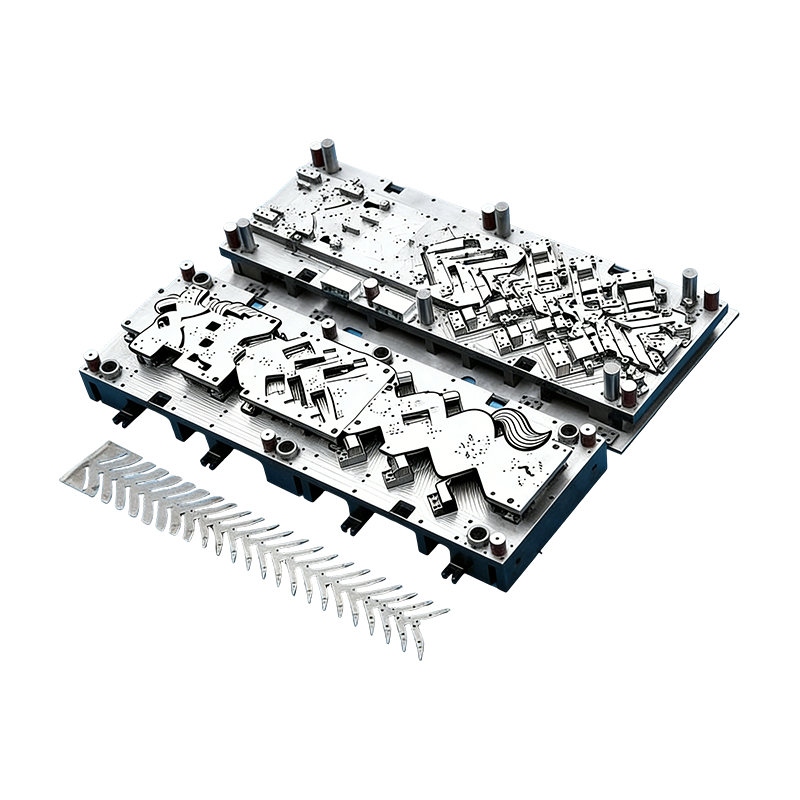
Progressive molds for automotive parts
This Continuous mold for automotive motor housing ...
-
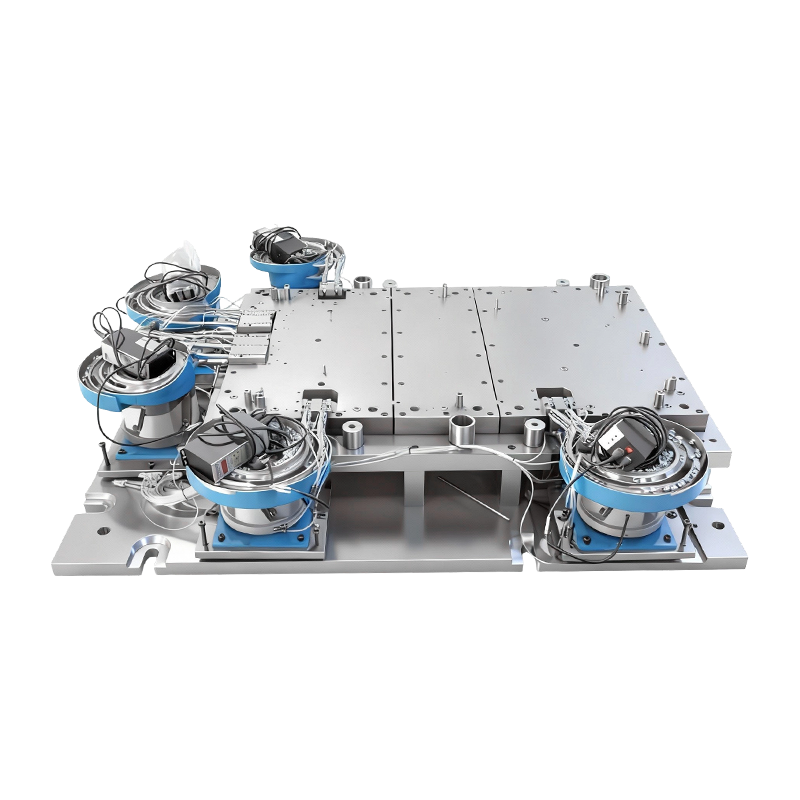
Automatic riveting mold for large computer machine base
This Automatic Riveting Mold for Large Computer Ma...
- E-mail us: [email protected]
- Call us: +86-139 1308 8972

Chen Siyi – Overseas Sales Manager
Home / Author / Chen Siyi – Overseas Sales Manager / Automotive Motor Housing Stamping Parts for Reliable Electric and Mechanical Drive Systems
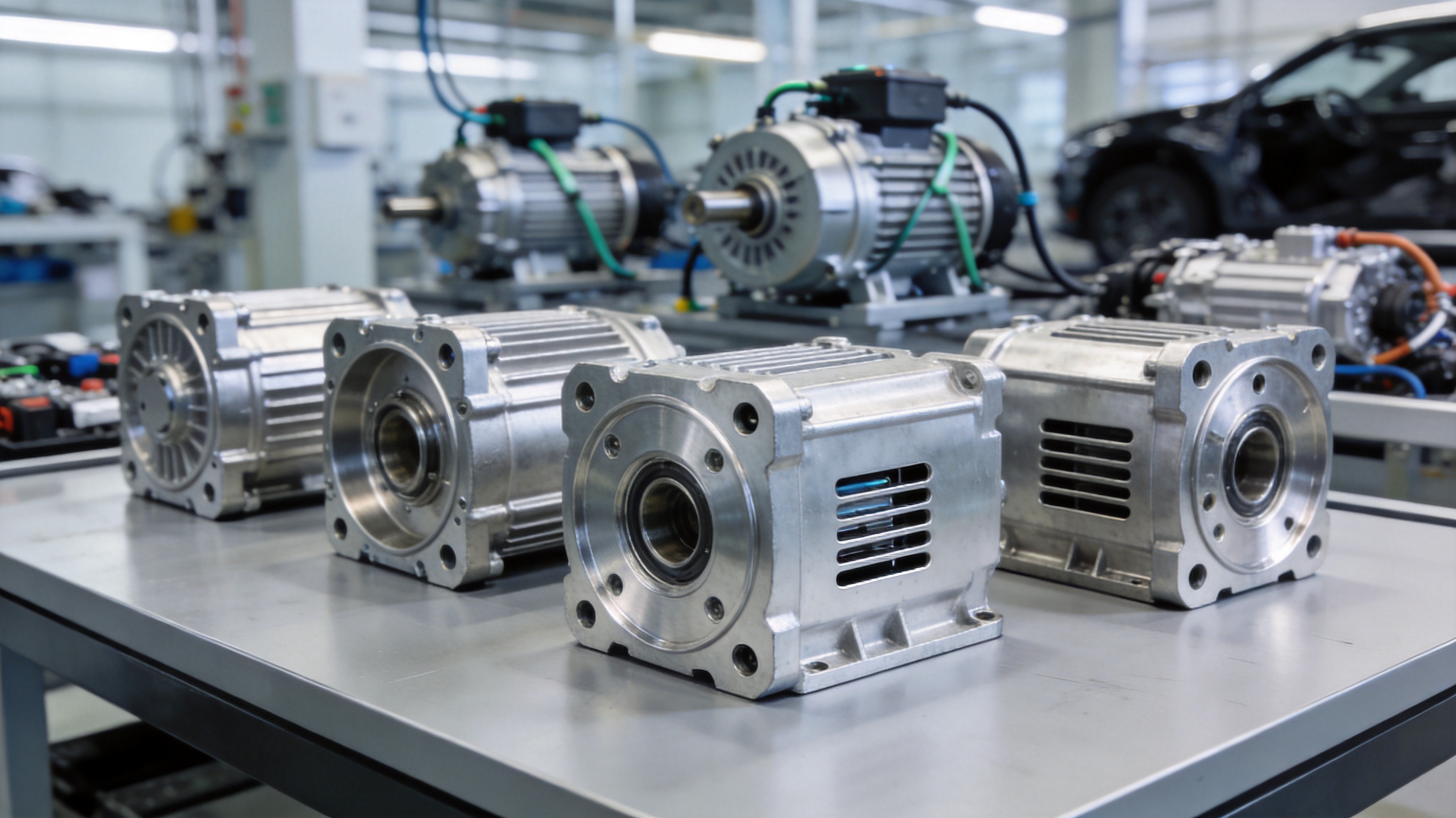
Automotive Motor Housing Stamping Parts for Reliable Electric and Mechanical Drive Systems
2026-05-25
Automotive motor housing stamping parts are essential structural components used to secure, protect, and stabilize motors in modern vehicles. As automotive systems become more electrified, compact, and performance-oriented, the quality of motor housing components directly affects reliability, thermal control, assembly efficiency, vibration resistance, and long-term durability. A stamped motor housing is not merely a metal shell; it is a precision-engineered part that must meet demanding dimensional, mechanical, and environmental requirements throughout the vehicle life cycle.
In applications such as new energy vehicles, servo drive systems, compressors, pumps, fans, and other automotive electrical assemblies, motor housings must operate under heat, vibration, impact, moisture, and continuous mechanical stress. High-quality stamping parts help the motor remain aligned, protected, and efficient. They also support fast assembly on production lines and reduce the risk of deformation, corrosion, noise, and premature failure.
Suzhou Shuangqisi Mold Equipment Co., Ltd. manufactures automotive motor housing stamping parts through integrated die design, precision machining, stamping production, and automation support. Located in Suzhou, China, the company combines stamping die expertise, hardware parts production, and stamping automation capabilities to provide reliable components for automotive and industrial customers. With 15 years of experience in the mold industry, 60 technical staff, advanced imported wire cutting machines, CNC machining centers, grinding equipment, and 25 punch presses from 80T to 400T, the company is positioned to deliver stable, cost-effective, and high-precision stamping solutions.
Content
- 1 Understanding Automotive Motor Housing Stamping Parts
- 2 Why Motor Housing Quality Matters in Automotive Applications
- 3 Key Product Advantages
- 4 Comparison with Common Competitor Limitations
- 5 Manufacturing Strength: From Die Design to Stamped Product
- 6 Material Selection for Automotive Motor Housing Stamping Parts
- 7 Design Features That Improve Performance
- 8 Quality Control and Testing
- 9 Cost-Effectiveness in High-Volume Production
- 10 Applications in Automotive and Related Industries
- 11 How Advanced Manufacturing Processes Create Customer Value
- 12 Why Integrated Mold and Automation Capability Is a Strong Competitive Advantage
- 13 Procurement Considerations for Automotive Motor Housing Stamping Parts
- 14 Customization and Engineering Collaboration
- 15 Sustainability and Resource Efficiency
- 16 Q&A: Automotive Motor Housing Stamping Parts
- 16.1 Q1: What are automotive motor housing stamping parts used for?
- 16.2 Q2: What materials are commonly used for these parts?
- 16.3 Q3: Why is stamping suitable for motor housing production?
- 16.4 Q4: How do these stamping parts improve motor service life?
- 16.5 Q5: What makes Suzhou Shuangqisi Mold Equipment Co., Ltd. competitive in this field?
- 16.6 Q6: Can the parts be customized for different motor models?
- 16.7 Q7: What tests are important for automotive motor housing stamping parts?
- 16.8 Q8: Why is integrated die-making important?
- 16.9 Q9: How does stamping automation benefit customers?
- 16.10 Q10: What information should customers provide when requesting a quotation?
- 17 Conclusion
- 18 References
Understanding Automotive Motor Housing Stamping Parts
An automotive motor housing stamping part is typically made from high-strength steel, aluminum alloy, or other selected sheet metal materials. Through progressive stamping, transfer stamping, or customized die-forming processes, flat metal sheets are transformed into complex housing structures with controlled wall thickness, accurate holes, tabs, ribs, flanges, and mounting interfaces. These features allow the part to protect the motor, support internal components, manage airflow, and connect precisely with surrounding assemblies.
The main functions of automotive motor housing stamping parts include mechanical protection, motor positioning, heat dissipation, vibration absorption, structural support, and assembly integration. In many automotive systems, the motor operates in a limited space near other components. The housing must therefore provide strength without excessive weight, precision without unnecessary production cost, and corrosion resistance without compromising formability.
Compared with casting or heavy machining in certain applications, stamping offers distinct advantages. It can provide high production efficiency, repeatable dimensional accuracy, lower unit cost in mass production, lighter structures, and smoother integration with automated assembly lines. Stamping is especially valuable when the product requires consistent wall thickness, complex geometric profiles, and repeatable quality across large batches.
The motor housing stamping parts described here are designed with uniform wall thickness, tight dimensional tolerance, and excellent structural stability. These characteristics help the housing resist vibration, impact, and high temperature during vehicle operation. Reasonable drainage and heat dissipation structures can also be incorporated into the stamped design, facilitating air circulation inside or around the motor, reducing heat accumulation, and extending motor service life.
Why Motor Housing Quality Matters in Automotive Applications
The performance of a motor housing stamping part has a direct influence on the performance of the motor assembly. If the housing is unstable, warped, poorly formed, or dimensionally inconsistent, the motor may suffer from misalignment, noise, vibration, reduced efficiency, seal failure, or assembly difficulty. In automotive manufacturing, even small dimensional deviations can disrupt production flow, increase rework, and create hidden reliability risks.
Modern vehicles contain more motors than ever before. Electric power steering, thermal management systems, seat adjustment systems, cooling fans, brake actuators, compressor motors, battery system auxiliaries, and drive-related components all depend on stable metal structures. In new energy vehicles, the demand for precise and durable motor-related components is even higher because electrical systems must operate safely under changing temperature, humidity, and load conditions.
A high-quality stamped motor housing protects the motor from external mechanical damage while maintaining dimensional relationships between bearings, shafts, terminals, covers, seals, and fasteners. It may also act as part of the heat transfer path, allowing heat to escape from the motor body more efficiently. When stamped features are designed correctly, they can improve stiffness without adding unnecessary material, helping manufacturers achieve both strength and weight reduction.
For automotive suppliers, the value of a reliable motor housing stamping part is not limited to the part itself. It affects assembly speed, production yield, downstream quality, warranty risk, and customer satisfaction. Therefore, selecting a capable stamping manufacturer with strong die design, process control, and testing ability is critical.
Key Product Advantages
High Structural Stability
Automotive motor housing stamping parts must withstand vehicle vibration, motor torque reaction, road shock, and environmental stress. Structural stability is achieved through material selection, stamping die design, forming sequence control, and reinforcement features such as ribs, beads, flanges, and curved surfaces. A well-designed stamped housing distributes stress evenly and reduces the likelihood of cracking, deformation, or fatigue failure.
Suzhou Shuangqisi Mold Equipment Co., Ltd. focuses on precision die development and forming control so that stamped housings maintain consistent geometry in batch production. This is especially important for motor applications because dimensional distortion may cause difficult assembly or performance instability. Compared with lower-grade stamping suppliers that rely mainly on trial-and-error production, a process-driven manufacturer can reduce defect rates and improve long-term part consistency.
Tight Dimensional Tolerance
Motor housing components usually require accurate hole positions, flatness, concentricity-related features, interface dimensions, and mounting surfaces. Tight dimensional tolerance ensures that the stamped housing fits with covers, brackets, motor cores, fasteners, seals, and vehicle structures. It also supports automated assembly, where parts must be positioned quickly and repeatedly without manual adjustment.
The company’s manufacturing capabilities include imported wire cutting machines, CNC machining centers, grinding machines, and experienced die debugging personnel. These resources help ensure that die components are accurately manufactured and maintained. High die precision is the foundation of high stamping precision. When the die is stable, the final stamped part can achieve reliable repeatability across production batches.
Uniform Wall Thickness
Uniform wall thickness is one of the important benefits of sheet metal stamping. Unlike some casting processes where thickness variation can occur due to flow behavior and solidification, stamping starts with controlled sheet material and forms it into the desired geometry. Uniform thickness improves predictable strength, thermal behavior, and assembly fit. It also helps reduce unnecessary weight.
For motor housings, uniform wall thickness supports better mechanical balance and can reduce localized stress concentration. In high-volume automotive production, it also simplifies quality inspection because material behavior is more consistent from part to part.
Effective Heat Dissipation Design
Heat is one of the major enemies of motor performance and service life. Excessive temperature can damage insulation, reduce efficiency, accelerate wear, and affect electronic components near the motor. A stamped motor housing can include ventilation openings, drainage features, raised structures, or airflow channels depending on the application requirements. These design elements help air circulate and reduce thermal accumulation.
The described automotive motor housing stamping parts are designed with reasonable drainage and heat dissipation structures. This supports motor reliability in demanding operating conditions, especially where the motor is located in a confined space or exposed to temperature variation. A stamping manufacturer with strong die design capability can help convert thermal and structural requirements into manufacturable metal features.
Reliable Corrosion Resistance
Automotive components may be exposed to water, salt spray, humidity, oil, dust, and temperature cycles. Corrosion resistance is therefore a key requirement for motor housing parts. Depending on customer specifications, stamped housings can use corrosion-resistant materials, surface treatment, coating, plating, or protective finishing processes. Strict corrosion resistance testing helps confirm that the part can perform reliably in practical use.
Because the product undergoes strict pressure and corrosion resistance tests, customers can have greater confidence in its durability. This is an advantage over suppliers that focus only on forming and do not adequately verify environmental performance.
Standardized Interface Design
Automotive manufacturers and system suppliers value components that are easy to assemble and compatible with different motor models or product platforms. Standardized interface design can include consistent mounting holes, locating features, slots, tabs, and joining surfaces. These features simplify assembly procedures, reduce the chance of operator error, and improve production efficiency.
The automotive motor housing stamping parts are engineered for seamless matching with different motor models. This supports flexible production and makes the component suitable for customers managing multiple product lines. For suppliers serving automotive manufacturers, this adaptability is a major competitive advantage.
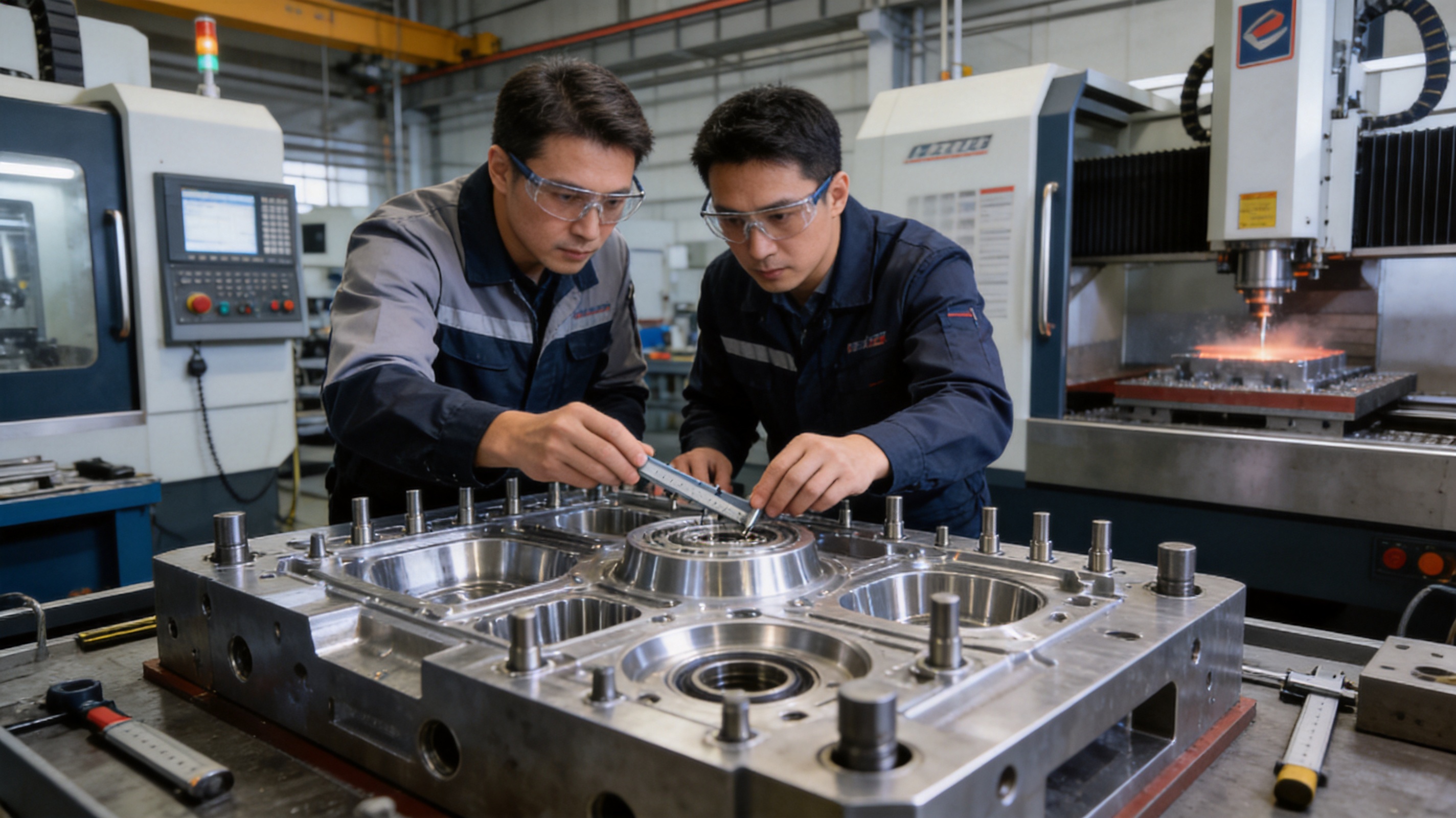
Comparison with Common Competitor Limitations
In the stamping industry, product quality can vary significantly among manufacturers. Some competitors may offer low prices but lack integrated die-making capacity, advanced machining equipment, experienced debugging personnel, or sufficient quality control. These limitations can result in unstable dimensions, higher scrap rates, delayed delivery, poor surface quality, inconsistent burr control, and limited engineering support.
A manufacturer with integrated mold design, stamping production, and automation capability can solve problems more efficiently. When die design, machining, stamping, and debugging are coordinated within one system, communication is faster and process changes are more controlled. This reduces the risk of repeated outsourcing, schedule delays, and unclear responsibility.
Suzhou Shuangqisi Mold Equipment Co., Ltd. has advantages in integrated mold-making and stamping automation capabilities. The company can provide turnkey solutions for stamping molds and stamping automation, and can also invest in related production equipment according to customer needs. This flexibility is valuable for automotive customers that require stable supply, customized processes, and cost-effective production.
Another advantage is the company’s experience serving customers in fields such as servo drives, compressors, and new energy vehicles. These industries require precise metal parts and reliable manufacturing processes. Experience in such applications helps the company understand requirements for dimensional stability, material performance, heat resistance, assembly precision, and production repeatability.
| Evaluation Item | High-Precision Motor Housing Stamping Parts | Common Low-End Alternatives |
|---|---|---|
| Dimensional Consistency | Controlled by precision dies, CNC machining, wire cutting, grinding, and experienced debugging | Often affected by unstable dies, insufficient process control, and inconsistent inspection |
| Structural Stability | Designed with reinforced features, uniform thickness, and optimized forming sequence | May show deformation, weak corners, or uneven stress distribution |
| Heat Dissipation | Can include planned airflow, drainage, and heat release structures | May lack thermal design and rely only on basic enclosure function |
| Production Efficiency | Suitable for automated stamping and scalable batch production | May require more manual correction, rework, and sorting |
| Quality Verification | Pressure resistance, corrosion resistance, and dimensional inspections can be integrated | Testing may be limited or inconsistent |
| Engineering Support | Supported by die design, manufacturing, stamping, and automation teams | May depend on external tooling suppliers and limited technical service |
Manufacturing Strength: From Die Design to Stamped Product
Integrated Stamping Die Design
The quality of a stamped motor housing begins with the stamping die. A die must account for material springback, forming depth, trimming requirements, hole accuracy, burr direction, part release, and production speed. For complex motor housing parts, the die may include multiple stations for blanking, drawing, bending, piercing, forming, trimming, and calibration.
Suzhou Shuangqisi Mold Equipment Co., Ltd. is a professional manufacturer of stamping dies and hardware parts integrating design, manufacturing, and service. This integration is important because the manufacturer can evaluate part feasibility early, optimize the die structure, and reduce costly modifications after production begins. Engineers and technicians can coordinate on forming simulation, process planning, die assembly, trial stamping, and final debugging.
Compared with companies that only perform stamping using externally purchased dies, an integrated die manufacturer can respond more quickly when the customer requires design changes, tolerance adjustment, or production improvement. The ability to design and build the die internally improves control over quality, delivery time, and cost.
Precision Machining of Die Components
Die accuracy depends on the precision of its components. Imported wire cutting machines are used for high-accuracy cutting of complex contours, punches, inserts, and die plates. CNC machining centers support accurate milling, drilling, and shaping of die components. Grinding machines help achieve fine surface finish and precise flatness. The company has more than 10 grinding machines of various sizes, supporting the fine adjustment and maintenance required for precision dies.
When die components are manufactured accurately, the stamping process becomes more stable. Accurate punches and cutting edges reduce burrs, improve hole quality, and extend die service life. Well-ground surfaces and properly fitted inserts reduce wear and improve repeatability. These details are especially important for automotive motor housing parts because the product must meet strict assembly and performance expectations.
Stamping Production with 80T to 400T Punch Presses
The company operates 25 punch presses ranging from 80T to 400T. This press range allows production of different sizes and complexities of stamped parts. Smaller presses can be used for lighter components or secondary operations, while larger presses support parts requiring higher forming force. For automotive motor housing stamping parts, selecting the correct press tonnage is essential for stable forming, accurate dimensions, and tool life.
Press capacity alone is not enough. Stable feeding, accurate die setup, proper lubrication, controlled stroke parameters, and experienced operators are also necessary. Senior operators and experienced debugging personnel help ensure that each production run meets quality requirements. They can identify issues such as material wrinkling, cracking, springback, burr formation, or dimensional drift and adjust the process accordingly.
Stamping Automation Capability
Automation is increasingly important in modern stamping production. Automated feeding, transfer, part collection, inspection integration, and robotic handling can reduce manual labor, improve safety, increase production speed, and enhance consistency. In 2016, the company invested in and established Suzhou Keshuang Intelligent Technology Co., Ltd., which mainly produces stamping automation equipment. This gives the overall group stronger capability to provide turnkey solutions for stamping molds and stamping automation.
For customers, automation capability means more than machine supply. It means the manufacturer understands how the die, press, feeder, transfer system, and production layout work together. This is a major advantage in high-volume automotive manufacturing, where production efficiency and repeatability are critical. A supplier that can combine mold-making and automation can help customers reduce hidden costs, shorten project development cycles, and improve production stability.
Experienced Technical Team
The company has 60 technical staff and 15 years of experience in the mold industry. Experienced technicians understand how to translate a drawing into a stable stamping process. They know how material grade, thickness, grain direction, lubricant, forming speed, die clearance, and press condition affect the final part. This practical knowledge is difficult to replace with equipment alone.
For automotive motor housing stamping parts, technical experience helps prevent quality problems before they occur. During product development, the team can evaluate whether a feature is difficult to form, whether a tolerance is realistic, whether a reinforcement rib should be modified, or whether a drainage opening may create a weak point. This engineering support is valuable for customers seeking reliable parts and efficient production.
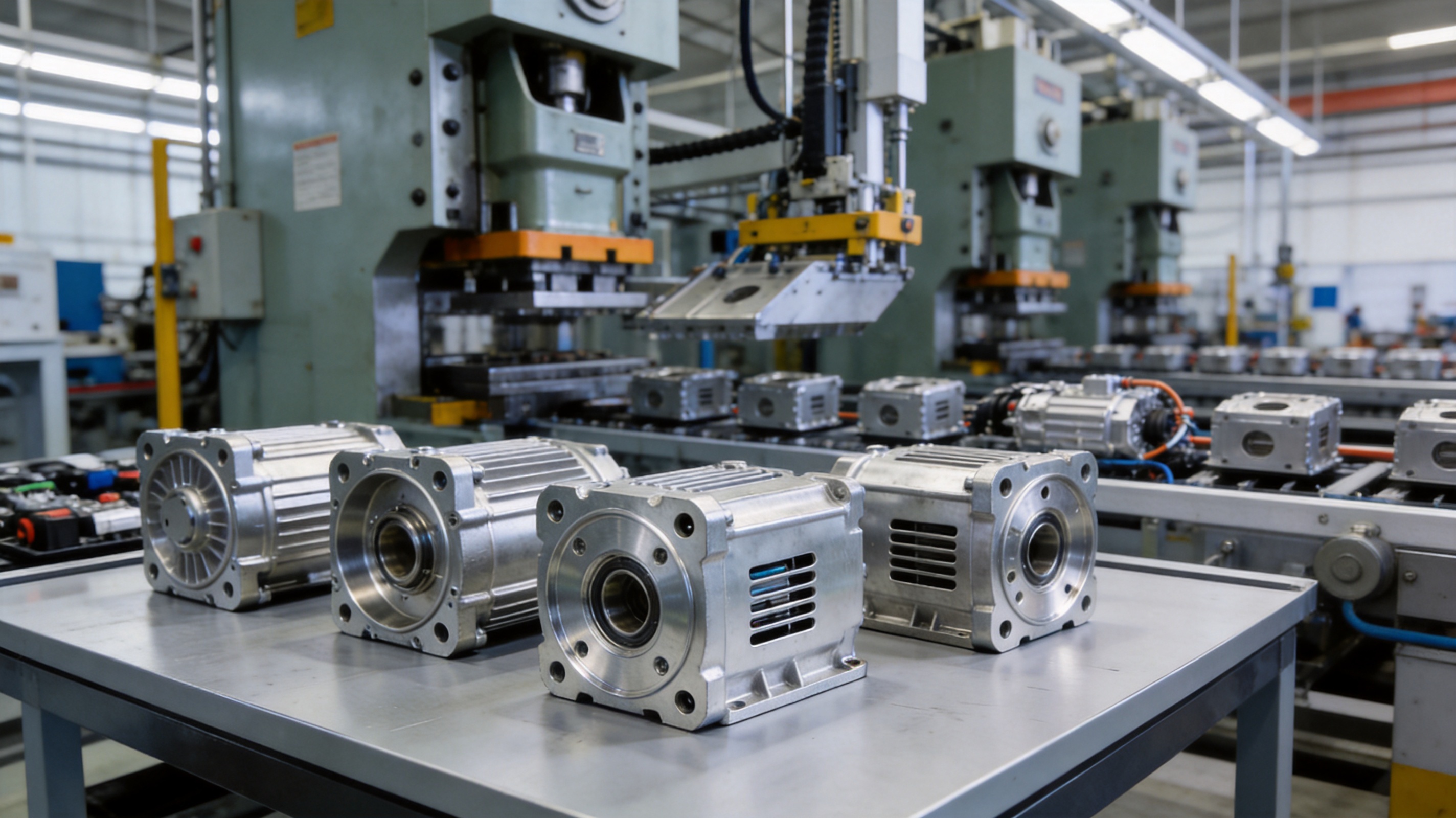
Material Selection for Automotive Motor Housing Stamping Parts
Material selection is a central factor in the performance of motor housing stamping parts. High-strength steel is often selected when strength, stiffness, impact resistance, and cost efficiency are priorities. Aluminum alloy may be preferred when weight reduction, corrosion resistance, and thermal conductivity are important. The final material choice depends on motor type, installation position, temperature environment, mechanical load, surface treatment requirement, and customer specification.
High-strength steel provides excellent structural support and resistance to deformation. It is suitable for applications where the housing must withstand vibration, impact, or load-bearing conditions. With proper coating or surface treatment, steel stamped parts can provide long service life in automotive environments. The challenge is that high-strength steel may require careful forming design to avoid cracking or springback. Precision die design and press control help solve these issues.
Aluminum alloy offers the benefits of low density and good heat transfer. For vehicles where weight reduction is important, aluminum motor housing stamping parts can help improve overall efficiency. Aluminum also has natural corrosion resistance, although additional treatment may still be required depending on the environment. Forming aluminum requires attention to surface protection, lubrication, and springback characteristics.
The company’s process capability allows it to work with customer-defined materials and develop suitable stamping methods. By combining material understanding with die-making expertise, the manufacturer can support both performance and production efficiency.
Design Features That Improve Performance
Drainage Structures
Drainage structures help prevent liquid accumulation inside or near the motor housing. Water or condensation can increase corrosion risk, damage electrical connections, and reduce insulation reliability. Properly located drainage holes, slots, or formed channels allow moisture to escape while preserving structural strength.
In stamped motor housing design, drainage features must be carefully positioned. If holes are too large or placed in high-stress areas, they may weaken the part. If they are too small or poorly located, they may not function effectively. Precision stamping makes it possible to create repeatable drainage features with consistent dimensions.
Heat Dissipation and Airflow Paths
Motor housings may need ventilation openings, raised patterns, or shaped surfaces that assist heat transfer. Stamping can create these features efficiently. A housing with better airflow can reduce thermal accumulation, helping protect motor windings, bearings, magnets, and electronic interfaces. Improved thermal management may also extend service life and improve system reliability.
The ability to combine structural forming and thermal design is one reason stamped motor housings are widely used. Instead of adding separate brackets or vents, the housing itself can incorporate multiple functions in one part. This reduces component count and simplifies assembly.
Mounting Flanges and Locating Features
Mounting flanges and locating features are essential for fast and accurate assembly. A stamped housing can include flanges, tabs, bosses, holes, and alignment notches formed directly in the part. When these features are consistent, assembly workers or automated systems can position the part quickly and correctly.
Standardized interfaces are especially important for customers producing multiple motor models. By designing compatible mounting features, manufacturers can reduce tooling variation, simplify inventory, and improve production flexibility.
Reinforcement Ribs and Beads
Reinforcement ribs and beads increase stiffness without greatly increasing material usage. Stamping is an efficient way to form these features. Ribs can reduce vibration, improve resistance to bending, and help the housing maintain shape under load. For motor applications, improved stiffness can also reduce noise and improve alignment.
The placement of ribs requires engineering judgment. Reinforcement should support the part where stress is highest while avoiding forming defects. Skilled die designers can create rib geometries that balance manufacturability and strength.
Quality Control and Testing
Automotive motor housing stamping parts must comply with automotive industry quality standards and customer-specific requirements. Quality control should begin with incoming material inspection and continue through die setup, first-piece approval, in-process inspection, final inspection, and performance testing. The goal is to detect variation early and ensure consistent batch quality.
Dimensional inspection verifies that the stamped housing meets drawing requirements. This may include measurements of hole diameter, hole position, height, width, flange angle, flatness, and profile shape. For parts used in automated assembly, dimensional consistency is particularly important because even small deviations can cause feeding or installation problems.
Pressure resistance tests may be required when the housing must withstand mechanical load, sealing pressure, or assembly force. These tests help confirm that the part will not deform or fail under expected conditions. Corrosion resistance tests help verify that the material and surface treatment can resist environmental exposure.
Surface quality is also important. Burrs, sharp edges, scratches, oil contamination, cracks, and wrinkles may affect safety, assembly, and long-term durability. Proper die clearance, tool maintenance, lubrication, and inspection procedures help control these issues. A manufacturer with strong grinding, machining, and die maintenance capability can keep production stable over time.
Cost-Effectiveness in High-Volume Production
One of the major advantages of stamping is cost-effectiveness in batch production. Once the die is developed and validated, each stamping cycle can produce parts quickly and repeatedly. Compared with processes that require extensive machining, stamping can reduce material waste, production time, and labor cost. For automotive customers, this helps achieve competitive total cost while maintaining quality.
Cost-effectiveness, however, should not be confused with low-price production. A poorly designed die or unstable process may create hidden costs through scrap, rework, delayed delivery, assembly problems, and warranty claims. A capable stamping manufacturer focuses on total value: stable quality, reliable delivery, efficient production, and technical support.
Suzhou Shuangqisi Mold Equipment Co., Ltd. emphasizes strict cost and quality control. Its ability to provide molds, stamping products, and automation support helps customers reduce coordination complexity. When needed, the company can also invest in related production equipment according to customer needs to deliver cost-effective products and services. This customer-oriented approach supports long-term cooperation rather than one-time production.
Applications in Automotive and Related Industries
Automotive motor housing stamping parts are used in a wide range of vehicle systems. In new energy vehicles, they may be used in electric drive auxiliary systems, thermal management systems, battery cooling systems, charging-related mechanisms, and various motorized actuators. In traditional and hybrid vehicles, they may support fans, pumps, compressors, steering systems, and comfort-related motor assemblies.
The company’s customer base includes enterprises in areas such as servo drives, compressors, and new energy vehicles. This experience is relevant because these industries require precision metal parts with stable quality. Servo drive applications demand accuracy and reliability. Compressor applications require parts capable of withstanding vibration and pressure-related conditions. New energy vehicle applications emphasize safety, durability, weight control, and high-volume production stability.
Motor housing stamping parts may also be used beyond automotive systems, including industrial automation, home appliances, power tools, and electromechanical equipment. However, automotive applications generally impose stricter requirements, making automotive-grade manufacturing capability a strong advantage.
How Advanced Manufacturing Processes Create Customer Value
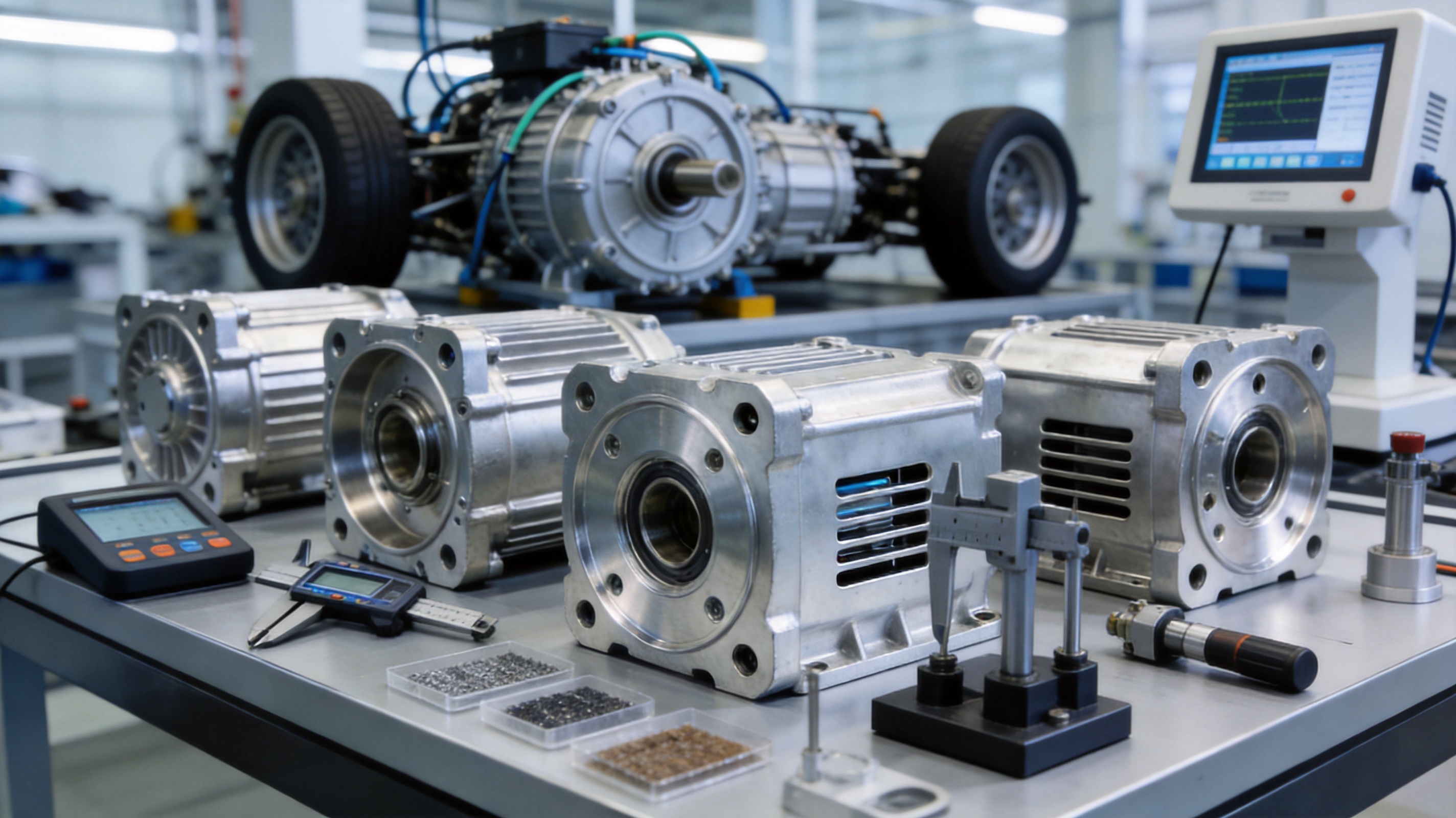
Advanced manufacturing is not only about owning machines. It is about using equipment, people, process knowledge, and quality systems together to create consistent value. For automotive motor housing stamping parts, value is created through early design support, precise die manufacturing, controlled stamping production, reliable inspection, and responsive service.
During the design stage, the manufacturer can review drawings and provide manufacturability suggestions. This may include adjusting bend radii, optimizing hole locations, modifying rib shapes, selecting suitable material thickness, or improving tolerance design. These suggestions can reduce tooling risk and improve production efficiency.
During die manufacturing, precision machining ensures that the die matches design intent. Wire cutting, CNC machining, and grinding support accurate inserts, punches, and forming surfaces. Skilled assembly and debugging bring the die to stable production condition. The quality of this stage determines whether mass production will be smooth or problematic.
During stamping production, press selection, die setup, feeding accuracy, lubrication, operator skill, and in-process inspection all contribute to final quality. With punch presses from 80T to 400T, the company can choose suitable equipment according to product size and forming requirements. This flexibility supports both small and medium-sized parts and more demanding housing structures.
During quality assurance, inspection and testing confirm that the parts meet requirements. Strict pressure and corrosion resistance tests help ensure reliable performance in diverse working conditions. By controlling quality throughout the process, the manufacturer reduces risks for downstream customers.
Why Integrated Mold and Automation Capability Is a Strong Competitive Advantage
Many stamping suppliers can produce metal parts, but fewer can provide a complete solution covering die design, die manufacturing, stamping production, and automation equipment. Integrated capability is valuable because automotive customers often need more than a single part; they need a stable production system that can meet quality, cost, and delivery requirements over time.
When a manufacturer understands both the mold and the automation system, it can design the process more efficiently. For example, part orientation, feeding direction, ejection method, carrier strip design, and transfer features can be planned with automation in mind. This reduces later modifications and improves production speed. Automation also helps reduce manual handling damage and variation.
The establishment of an affiliated intelligent technology company focused on stamping automation equipment strengthens the ability to provide turnkey solutions. For customers, this means one supplier can help with tooling, production, automation planning, and process improvement. This is particularly beneficial for new product development, production line upgrades, and high-volume automotive programs.
Procurement Considerations for Automotive Motor Housing Stamping Parts
When selecting a supplier for automotive motor housing stamping parts, buyers should evaluate more than price. Important factors include die design capability, equipment level, quality control system, material experience, stamping capacity, automation support, delivery reliability, engineering communication, and willingness to support customization.
A good supplier should be able to understand drawings, identify forming risks, suggest improvements, and provide realistic production plans. The supplier should also have equipment suitable for precision die manufacturing and batch stamping. Experienced operators and debugging personnel are essential because even a well-designed die requires careful setup and maintenance.
Buyers should also consider whether the supplier can support long-term production. Automotive programs may continue for years, requiring consistent quality and reliable delivery. Tool maintenance, replacement parts, process documentation, and inspection records all contribute to long-term stability.
Suzhou Shuangqisi Mold Equipment Co., Ltd. provides an attractive option for customers seeking precision stamped motor housing parts because it combines technical staff, advanced equipment, stamping capacity, automation capability, cost control, and industry experience. Its location in Suzhou, a major manufacturing hub, also supports access to industrial resources and logistics convenience.
Customization and Engineering Collaboration
Automotive motor housing stamping parts often require customization. Different motors may have different dimensions, mounting positions, ventilation requirements, drainage needs, material specifications, surface treatments, and tolerance standards. A capable manufacturer must work closely with the customer to convert functional requirements into a manufacturable stamped part.
Customization may begin with a customer drawing or sample. The engineering team reviews the design and evaluates forming feasibility. If necessary, they recommend modifications to improve strength, reduce springback, prevent cracking, or simplify die structure. Once the design is confirmed, the die is manufactured, assembled, tested, and adjusted. Trial samples are inspected and submitted for customer approval before mass production.
This collaborative process reduces the chance of production failure. It also helps customers improve product performance and reduce total cost. For example, a slight change in flange geometry may improve stiffness. A modified hole location may reduce stress concentration. A better rib design may eliminate the need for thicker material. These improvements are only possible when the supplier has both engineering knowledge and manufacturing experience.
Sustainability and Resource Efficiency
Automotive manufacturers increasingly care about sustainability, material utilization, and energy efficiency. Stamping can support these goals by enabling lightweight structures, efficient material nesting, high-speed production, and reduced machining waste. When dies are well designed, scrap can be controlled and production efficiency improved.
Lightweight motor housing parts can contribute to overall vehicle efficiency, especially in new energy vehicles where weight affects driving range and energy consumption. Aluminum alloy stamping may be selected for weight reduction, while optimized steel stamping can achieve strength with controlled material thickness.
Automation can also improve resource efficiency by reducing process variation and scrap. Stable production means fewer rejected parts and less wasted material. Preventive die maintenance extends tool life and reduces the need for frequent replacement. These factors contribute to more sustainable manufacturing.
Q&A: Automotive Motor Housing Stamping Parts
Q1: What are automotive motor housing stamping parts used for?
They are used to secure, protect, and support motors in automotive systems. They help maintain motor alignment, resist vibration and impact, support heat dissipation, and provide standardized mounting interfaces for assembly.
Q2: What materials are commonly used for these parts?
Common materials include high-strength steel and aluminum alloy. Steel provides strength and cost efficiency, while aluminum alloy offers weight reduction and good thermal conductivity. The final choice depends on application requirements.
Q3: Why is stamping suitable for motor housing production?
Stamping is suitable because it enables high-volume production, uniform wall thickness, consistent dimensions, complex formed features, and competitive unit cost after tooling development. It is ideal for automotive components requiring repeatable quality.
Q4: How do these stamping parts improve motor service life?
They protect the motor from mechanical damage, maintain accurate positioning, help reduce vibration, and support heat dissipation through drainage and airflow structures. These functions reduce stress on the motor and help extend service life.
Q5: What makes Suzhou Shuangqisi Mold Equipment Co., Ltd. competitive in this field?
The company combines stamping die design, precision die manufacturing, stamping production, and automation capability. It has 60 technical staff, 15 years of industry experience, imported wire cutting machines, CNC machining centers, grinding equipment, and 25 punch presses from 80T to 400T.
Q6: Can the parts be customized for different motor models?
Yes. The parts can be designed with standardized interfaces or customized features to match different motor models. Customization may include mounting holes, drainage structures, heat dissipation features, flanges, ribs, and surface treatments.
Q7: What tests are important for automotive motor housing stamping parts?
Important tests include dimensional inspection, pressure resistance testing, corrosion resistance testing, surface quality inspection, and material verification. These tests help ensure reliability in different automotive working conditions.
Q8: Why is integrated die-making important?
Integrated die-making allows faster problem solving, better control of tooling accuracy, improved communication, and more stable production. It helps reduce development risk and supports consistent mass production quality.
Q9: How does stamping automation benefit customers?
Stamping automation improves production speed, consistency, safety, and efficiency. It reduces manual handling and helps support high-volume automotive production with stable quality.
Q10: What information should customers provide when requesting a quotation?
Customers should provide drawings, material requirements, thickness, annual quantity, tolerance standards, surface treatment requirements, application environment, testing requirements, and any assembly-related specifications.
Conclusion
Automotive motor housing stamping parts are vital components for reliable vehicle motor systems. They provide protection, structural support, thermal management, vibration resistance, and assembly efficiency. As vehicles become more electrified and technically advanced, the demand for precise and durable stamped motor housing parts continues to grow.
High-quality stamped housings require more than basic metal forming. They depend on expert die design, precision machining, stable stamping equipment, experienced operators, strict inspection, and understanding of automotive performance requirements. Features such as uniform wall thickness, tight dimensional tolerance, drainage structures, heat dissipation design, standardized interfaces, and corrosion resistance all contribute to dependable motor performance.
Suzhou Shuangqisi Mold Equipment Co., Ltd. offers strong manufacturing advantages through its integrated capabilities in stamping dies, stamping parts, and stamping automation equipment. With advanced machines, 80T to 400T punch presses, 60 technical staff, experienced debugging personnel, and 15 years of industry experience, the company can provide cost-effective and reliable solutions for automotive motor housing stamping parts. Its ability to support turnkey mold and automation solutions further differentiates it from many competitors.
For automotive manufacturers and motor system suppliers seeking stable quality, efficient production, and engineering collaboration, precision automotive motor housing stamping parts represent a practical and high-value solution. A capable supplier can help improve product durability, simplify assembly, reduce production risk, and support the long-term development of safer and more reliable automotive electrical systems.
References
1. Kalpakjian, S., and Schmid, S. R. Manufacturing Engineering and Technology. Pearson Education.
2. Lange, K. Handbook of Metal Forming. Society of Manufacturing Engineers.
3. Altan, T., and Tekkaya, A. E. Sheet Metal Forming: Fundamentals. ASM International.
4. Davies, G. Materials for Automobile Bodies. Butterworth-Heinemann.
5. Society of Automotive Engineers. Automotive Sheet Metal Forming and Stamping Process Guidelines.
6. ASM International. Metals Handbook: Forming and Forging.
7. Schuler GmbH. Metal Forming Handbook. Springer.
8. International Automotive Task Force. Automotive Quality Management System Reference Materials.
Previous Post
Precision Automotive Motor Housing Stamping Parts for Durable Electric Drive Systems
Next Post
Heavy Truck Stamping Parts for Durable Commercial Vehicle Performance
Our Products.
Start Your Business with an OEM Manufacturer Right Here!

Provide global customers with complete turn-key solutions
through
innovation!
QUICK LINKS
CONTACT INFO.
-
 +86-139 1308 8972
 -

-
 No. 118 Yexin Road, Wujiang Economic Development Zone, Suzhou, China
Copyright © Suzhou Shuangqisi Mold Equipment Co., Ltd. All Rights Reserved. Custom Stamping Die Metal Stamping Die Manufacturers
