 English
 Español
 Deutsch
-
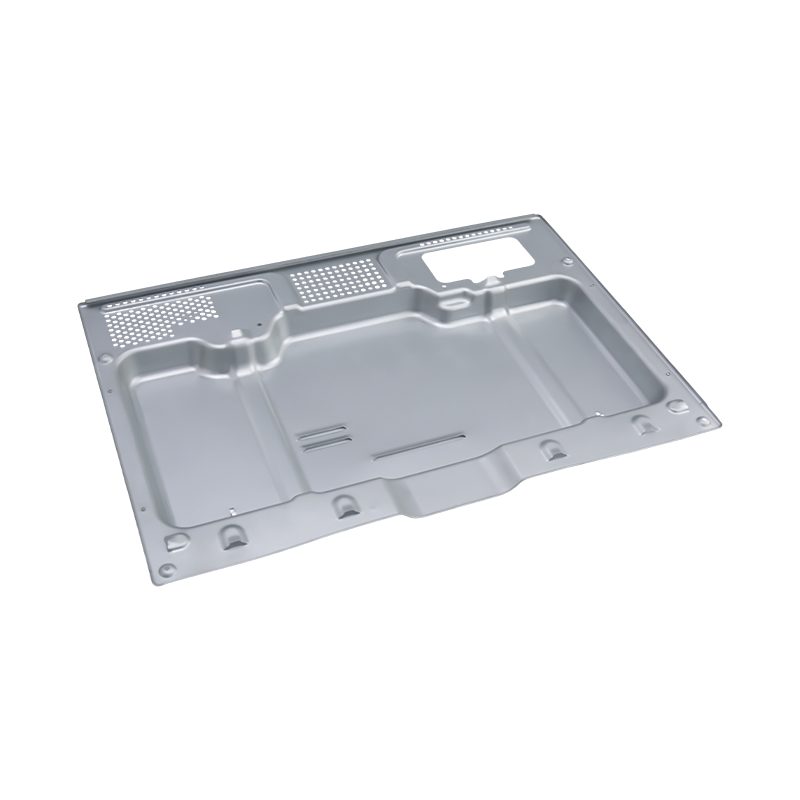
High-end oven stamping parts
Our High-end oven stamping parts are precision-man...
-
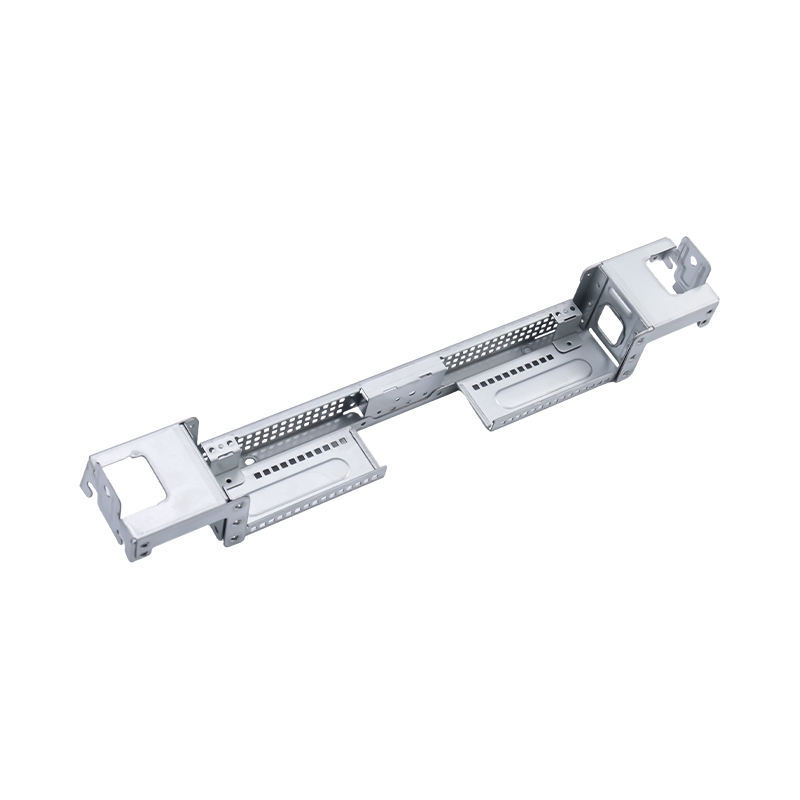
High-end large computer stamping parts
Our High-end large computer stamping parts are pre...
-
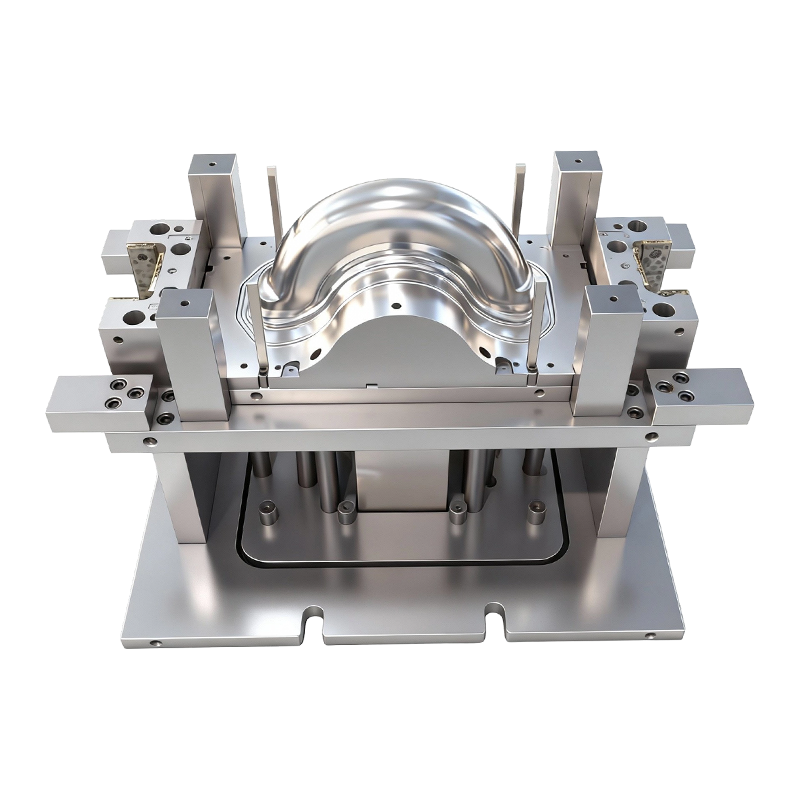
Deep drawing mold for front and rear wheels of two-wheeled electric vehicles
This Deep drawing mold for front and rear wheels o...
-
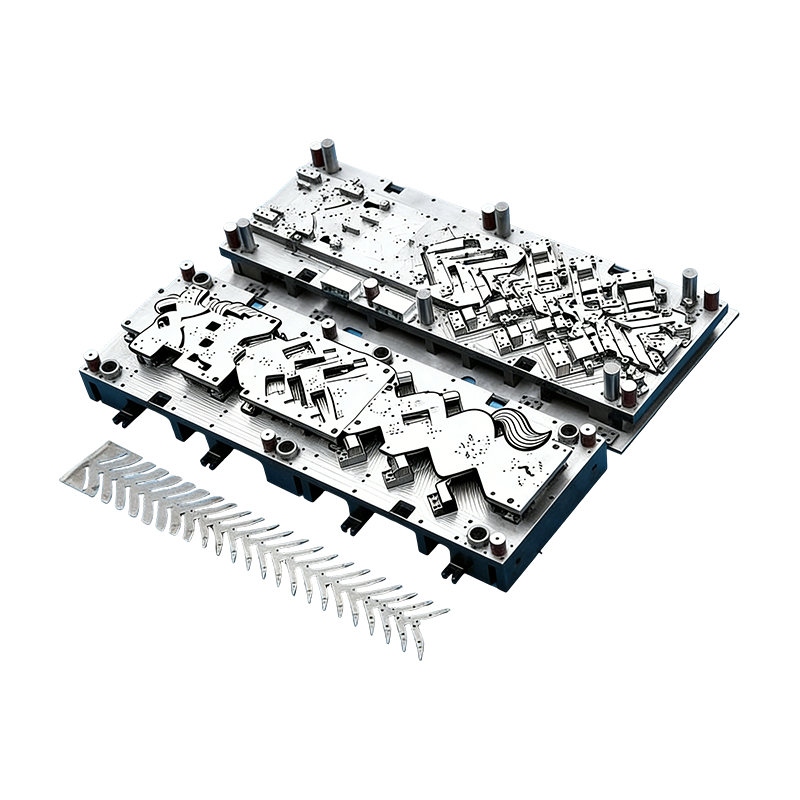
Progressive molds for automotive parts
This Continuous mold for automotive motor housing ...
-
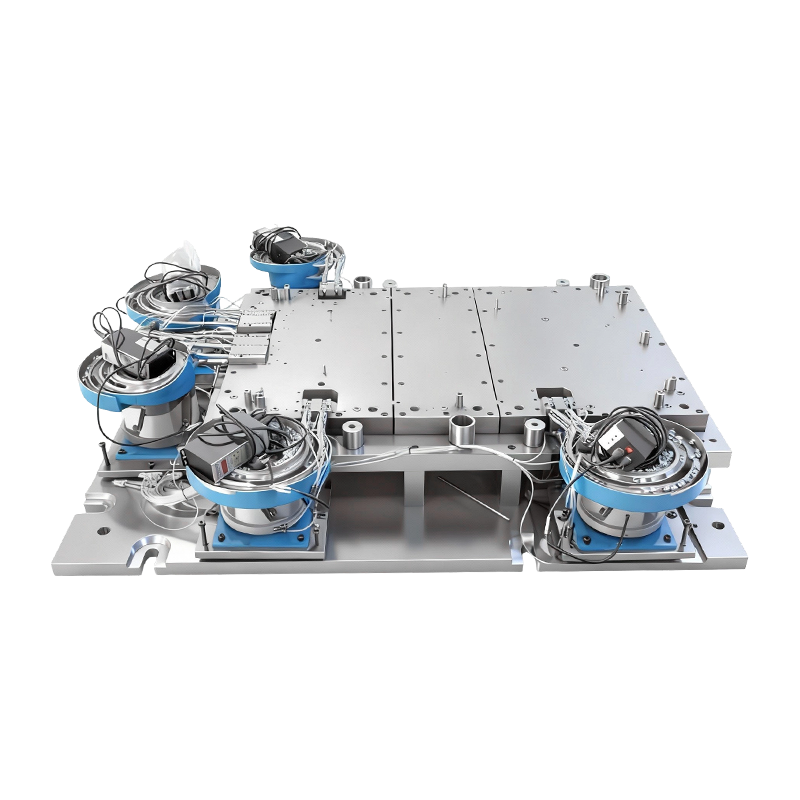
Automatic riveting mold for large computer machine base
This Automatic Riveting Mold for Large Computer Ma...
- E-mail us: [email protected]
- Call us: +86-139 1308 8972

Chen Siyi – Overseas Sales Manager
Home / Author / Chen Siyi – Overseas Sales Manager / High-End Oven Stamping Parts: Precision Components for Safer, More Durable Oven Manufacturing
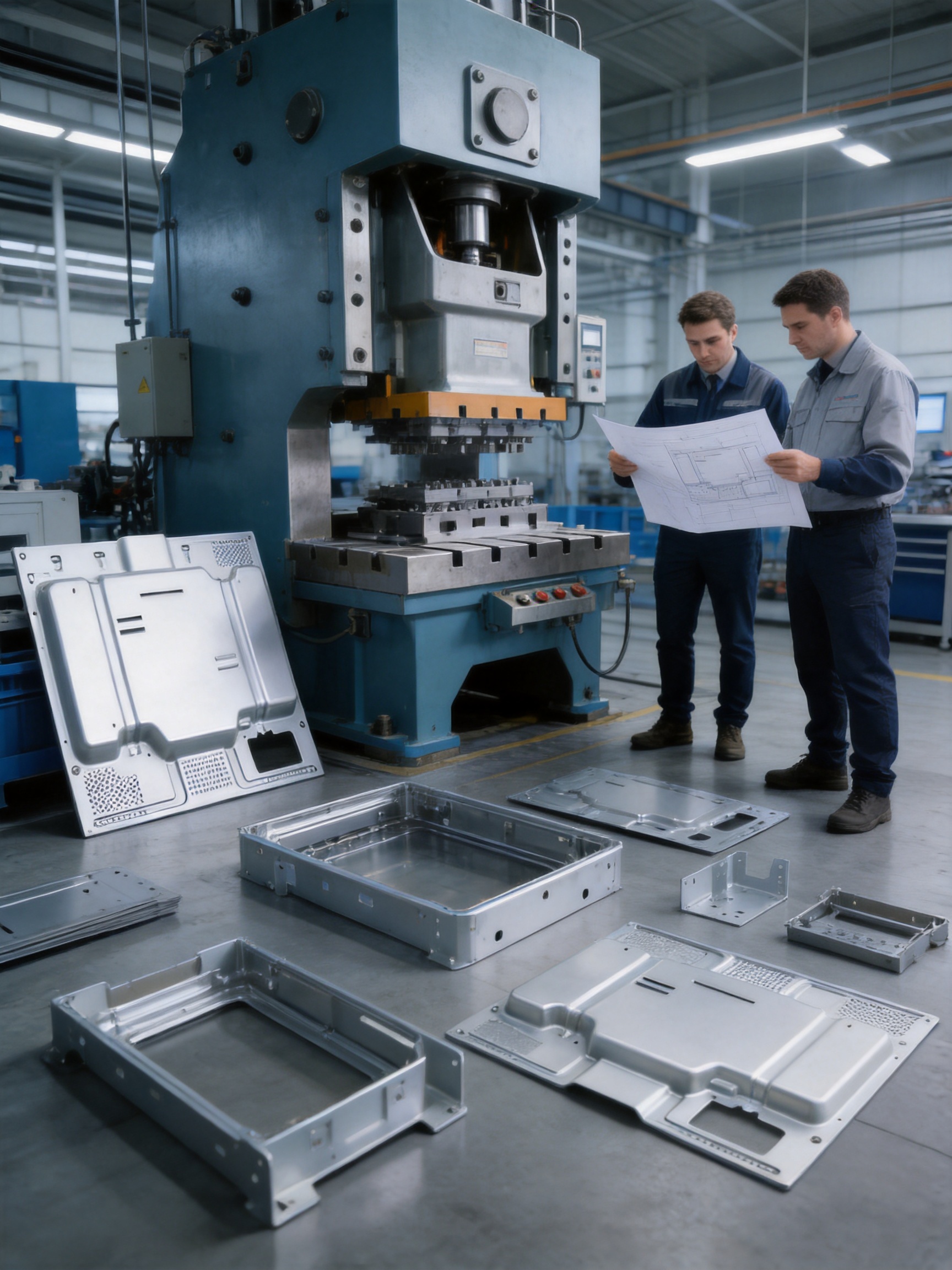
High-End Oven Stamping Parts: Precision Components for Safer, More Durable Oven Manufacturing
2026-08-11
Modern ovens are no longer simple heating appliances. Premium household ovens, commercial baking systems, built-in cooking units, and professional food-service equipment all require carefully engineered structures that can tolerate repeated heating and cooling cycles, mechanical loading, vibration, moisture, and long-term use. Behind the visible oven shell and door assembly are numerous stamped metal parts that determine the equipment’s strength, alignment, safety, serviceability, and overall manufacturing efficiency.
High-end oven stamping parts are precision-manufactured components developed for these demanding applications. They may be used in oven shells, door frames, heating element brackets, internal support structures, mounting assemblies, reinforcement plates, guide components, and other structural or functional positions. Although many of these parts are relatively small compared with the complete oven, their dimensional accuracy and material performance have a direct effect on the finished appliance.
Premium stamping parts must maintain stable dimensions under heat, fit accurately during assembly, resist corrosion, and provide reliable support over thousands of operating cycles. They must also be manufactured economically enough to support high-volume production. This combination of performance, repeatability, and cost control makes advanced stamping die design and manufacturing essential.
High-end oven stamping parts are produced through carefully controlled cold and hot stamping processes, supported by precision tooling, experienced engineering, advanced machining equipment, and strict inspection procedures. The result is a dependable component solution for oven manufacturers seeking consistent quality, improved assembly efficiency, and lower long-term maintenance costs.
High-end oven stamping parts
Content
- 1 What Are High-End Oven Stamping Parts?
- 2 Why Oven Applications Require Specialized Stamping Technology
- 3 Material Selection for Heat-Resistant Oven Components
- 4 Cold Stamping and Hot Stamping Processes
- 5 Precision Die Design for Oven Stamping Parts
- 6 Manufacturing Process from Design to Delivery
- 7 Advanced Equipment Supporting Consistent Quality
- 8 Surface Treatment and Corrosion Resistance
- 9 Dimensional Accuracy and Quality Control
- 10 Advantages Compared with Ordinary Stamped Components
- 11 Design Advantages for Oven Manufacturers
- 12 Applications in Premium Household Ovens
- 13 Applications in Commercial and Professional Ovens
- 14 Customization Capabilities
- 15 Integrated Die Manufacturing and Stamping Automation
- 16 Manufacturing Strengths and Technical Experience
- 17 How High-End Parts Reduce Total Manufacturing Cost
- 18 Quality and Safety Considerations
- 19 Recommended Technical Specification Checklist
- 20 Production Comparison: General Parts and High-End Parts
- 21 Packaging, Storage, and Delivery
- 22 Maintenance of Stamping Dies
- 23 Why Choose an Integrated Manufacturing Partner?
- 24 Project Development Process for New Oven Components
- 25 Q&A About High-End Oven Stamping Parts
- 25.1 What types of oven components can be manufactured by stamping?
- 25.2 Which materials are suitable for oven stamping parts?
- 25.3 What is the difference between cold stamping and hot stamping?
- 25.4 How can stamping parts resist high temperatures?
- 25.5 Can stamping parts be customized for different oven models?
- 25.6 How do precision stamping parts improve assembly?
- 25.7 What surface treatments are available?
- 25.8 Can the supplier provide stamping dies as well as stamped parts?
- 25.9 Can stamping automation be included in the project?
- 25.10 What information should be included in an inquiry?
- 25.11 How are quality and repeatability controlled?
- 25.12 How can high-end stamping parts lower total cost?
- 26 Conclusion
- 27 References
- 28 Product: High-end oven stamping parts
What Are High-End Oven Stamping Parts?
High-end oven stamping parts are formed metal components manufactured by placing sheet metal or metal blanks into specially designed stamping dies. A press then applies controlled force to cut, bend, draw, emboss, pierce, or otherwise shape the material. Depending on the component design and material characteristics, several operations may be combined into a progressive die, compound die, transfer die, or a series of individual tools.
These parts are generally designed around the functional requirements of a specific oven. A door-frame component, for example, may need precise mounting holes, controlled flatness, and high resistance to repeated thermal expansion. A heating element bracket may require a particular bend angle, sufficient stiffness, electrical clearance, and stable positioning after prolonged exposure to heat. An internal support plate may need a combination of structural strength, ventilation openings, and corrosion resistance.
Common oven stamping parts include reinforcement brackets, support plates, hinge supports, mounting plates, heating element holders, door-frame sections, side panels, guide rails, retaining clips, fixing components, structural connectors, and customized sheet-metal assemblies. Some components are visible, while others are installed inside the oven cabinet or behind thermal insulation.
The phrase “high-end” refers not only to the appearance of a part. It also describes the full engineering and manufacturing standard behind the component. A high-end part is expected to have stable material properties, accurate dimensions, clean edges, controlled surface quality, reliable corrosion resistance, and consistent performance from the first production batch to subsequent large-volume deliveries.
Why Oven Applications Require Specialized Stamping Technology
Ovens operate in an environment that is more demanding than many ordinary sheet-metal applications. Internal temperatures can rise significantly during baking, roasting, sterilization, or commercial cooking. At the same time, the equipment is repeatedly switched on and off, creating thermal expansion and contraction. Components may also be exposed to steam, grease, cleaning agents, food residues, and mechanical stress caused by door movement or rack loading.
These conditions create several technical challenges. A part that is acceptable at room temperature may lose dimensional stability at operating temperature. A poorly designed bend may become a stress concentration and develop fatigue damage after repeated cycles. An inadequately treated surface may corrode or discolor. A rough edge may complicate assembly or create a safety concern for operators and service personnel.
Stamping dies must therefore be designed with the material’s forming behavior, springback, thermal environment, assembly method, and service conditions in mind. The die must produce accurate geometry without causing excessive thinning, cracking, distortion, burrs, or surface damage. At the same time, the process should support efficient production and minimize material waste.
Advanced oven stamping technology addresses these requirements through coordinated control of material selection, die structure, press parameters, forming sequence, heat treatment, surface finishing, dimensional inspection, and production planning. This integrated approach is more reliable than treating stamping as a simple cutting and bending operation.
Material Selection for Heat-Resistant Oven Components
Material selection is one of the most important decisions in the development of oven stamping parts. Different positions inside and outside an oven experience different combinations of heat, mechanical loading, moisture, and chemical exposure. The material must be chosen according to the actual service environment rather than by thickness or cost alone.
Heat-resistant steel is often selected for components exposed to elevated temperatures or repeated thermal cycles. It offers a useful combination of strength, formability, durability, and resistance to oxidation. Depending on the design, stainless steel or other corrosion-resistant steel grades may be used where surface stability and cleanliness are particularly important.
Aluminum alloys can be suitable for applications that benefit from low weight, good thermal conductivity, and efficient forming. Aluminum components may help reduce the overall mass of a door or support assembly. However, the alloy, temper, forming radius, and surface treatment must be selected carefully because aluminum may respond differently to bending, springback, and heat exposure than steel.
Material thickness is also critical. An excessively thin part may not provide sufficient stiffness or may deform during installation. An excessively thick part may increase weight, material consumption, and forming force without delivering meaningful performance benefits. Engineering evaluation helps identify the thickness that provides the required structural performance while supporting efficient production.
Material certificates, incoming inspections, and traceability procedures can help ensure that the selected material is consistent from batch to batch. Important checks may include thickness, surface condition, hardness, chemical composition, tensile behavior, and suitability for the intended forming process. Stable raw material quality improves die performance and reduces variation in finished components.
Cold Stamping and Hot Stamping Processes
Cold stamping is widely used for oven components because it can provide high production efficiency, accurate repeatability, and clean integration of cutting and forming operations. In cold stamping, the sheet material is processed at or near room temperature. The process is suitable for many brackets, plates, frames, covers, support pieces, and mounting components.
Cold stamping can produce precise holes, slots, bends, embossments, and contours in a single operation or through a sequence of die stations. When the tool is correctly engineered, the process offers consistent dimensions and a high level of interchangeability. This is particularly valuable for oven manufacturers operating automated or semi-automated assembly lines.
Hot stamping may be considered when a material or geometry requires improved formability, reduced forming resistance, or enhanced dimensional control after thermal processing. The exact process depends on the part design, material type, thickness, and required performance. Heat-assisted forming can be useful for certain complex shapes or components that would be difficult to manufacture reliably through cold forming alone.
The choice between cold stamping and hot stamping is not made in isolation. Engineers evaluate the complete production route, including blank preparation, forming, trimming, piercing, calibration, cooling, surface treatment, and inspection. The most effective process is the one that balances geometry, strength, dimensional accuracy, cycle time, tooling life, and overall production cost.
For some products, a combination of processes may be appropriate. A blank can be cut and partially formed in one stage, followed by calibration, piercing, or secondary bending in later stages. This allows the tool design to manage material flow and springback more effectively than attempting to complete every feature in one operation.
Precision Die Design for Oven Stamping Parts
The stamping die is the foundation of part quality. Even high-quality material and a powerful press cannot compensate for a poorly designed tool. A precision die must reproduce the intended geometry while controlling cutting clearance, material flow, forming force, return springback, part release, and tool durability.
Die design begins with a detailed review of the component drawing and its functional requirements. Engineers consider the reference datums, assembly interfaces, hole locations, bend radii, flatness requirements, surface appearance, allowable tolerances, and inspection method. They also review how the part will be handled and assembled after stamping.
For parts used in oven door frames or support structures, alignment features are especially important. A small error in a mounting hole or bend angle may cause assembly difficulty, uneven sealing, door misalignment, or stress in connected components. The die must therefore control the features that determine the part’s position in the complete oven assembly.
Progressive dies are useful for high-volume production because they combine multiple operations in a continuous strip-feeding process. A progressive tool may pierce holes, create notches, form bends, emboss stiffening features, and cut the finished part from the strip. This reduces manual handling and supports stable cycle times.
Compound dies can perform multiple cutting actions in one press stroke, making them appropriate for components that require accurate relationships between several holes or external profiles. Transfer dies can move individual blanks between forming stations and are suitable for larger or more complex components.
Tool materials, inserts, guide systems, punches, dies, and wear surfaces are selected according to the production volume and material characteristics. Precision grinding, wire cutting, CNC machining, and careful fitting help produce the required clearances and surface conditions. A properly maintained tool can support long-term production while reducing burr growth and dimensional drift.
Managing Springback and Forming Variation
Springback occurs when the material partially returns toward its original shape after forming force is removed. It is affected by material strength, thickness, bend radius, grain direction, tooling geometry, and forming method. In oven components, springback can influence door-frame alignment, bracket angles, support flatness, and assembly fit.
Experienced die engineers compensate for springback through tool geometry, forming sequence, over-bending, restriking, coining, calibration, or controlled process adjustments. The correct solution depends on the component and material. A calibration station may be added when a precise final angle or flat surface is required.
Forming simulation and trial production can help identify potential deformation before mass production. Prototype samples are measured against the drawing, and the tool is adjusted where necessary. This process reduces the risk of discovering critical fit problems only after the die has entered full production.
Manufacturing Process from Design to Delivery
A reliable oven stamping part is created through a complete manufacturing workflow rather than a single press operation. Each stage contributes to final quality and delivery performance.
1. Engineering Review
The process begins with a review of the customer’s drawing, samples, performance requirements, annual volume, material specification, and assembly conditions. Engineers identify critical dimensions and determine whether the proposed geometry is suitable for stamping. If necessary, they recommend adjustments to radii, hole spacing, forming direction, tolerances, or material thickness to improve manufacturability.
2. Process Planning
After the design review, the manufacturing team determines the forming route. This may include blanking, piercing, bending, drawing, embossing, trimming, calibration, and secondary operations. The team also evaluates strip layout, material utilization, press capacity, production speed, and expected tool life.
3. Die Design and Tool Manufacturing
Precision dies are designed according to the selected process. Die components are machined using appropriate equipment, which may include CNC machining centers, wire cutting machines, grinding machines, and other precision tools. Careful machining and fitting are essential for maintaining dimensional accuracy and achieving smooth part release.
4. Trial Stamping and Debugging
Before mass production, the die is tested through trial stamping. Samples are checked for dimensions, burrs, cracks, wrinkles, deformation, surface marks, flatness, and assembly fit. Experienced operators and debugging personnel adjust the tool, press settings, feeding system, or forming sequence until the process is stable.
5. Production Stamping
Once the tool is approved, production begins on a suitable press. Press capacity must match the forming force and component size. The manufacturing facility supporting these products is equipped with punch presses ranging from 80 tons to 400 tons, enabling the production of both relatively small precision parts and larger structural components.
6. Finishing and Surface Treatment
Stamped parts may undergo deburring, cleaning, anti-rust treatment, heat-resistant coating, heat-resistant spraying, or other specified finishing operations. Surface treatment is selected according to the part’s location, temperature exposure, corrosion risk, appearance requirements, and food-contact or hygiene considerations.
7. Inspection and Packing
Finished components are inspected before shipment. Inspection may include dimensional measurement, hole-position verification, angle checks, flatness checks, visual examination, coating inspection, and functional assembly testing. Parts are then packed to prevent deformation, scratching, contamination, or corrosion during storage and transportation.
Advanced Equipment Supporting Consistent Quality
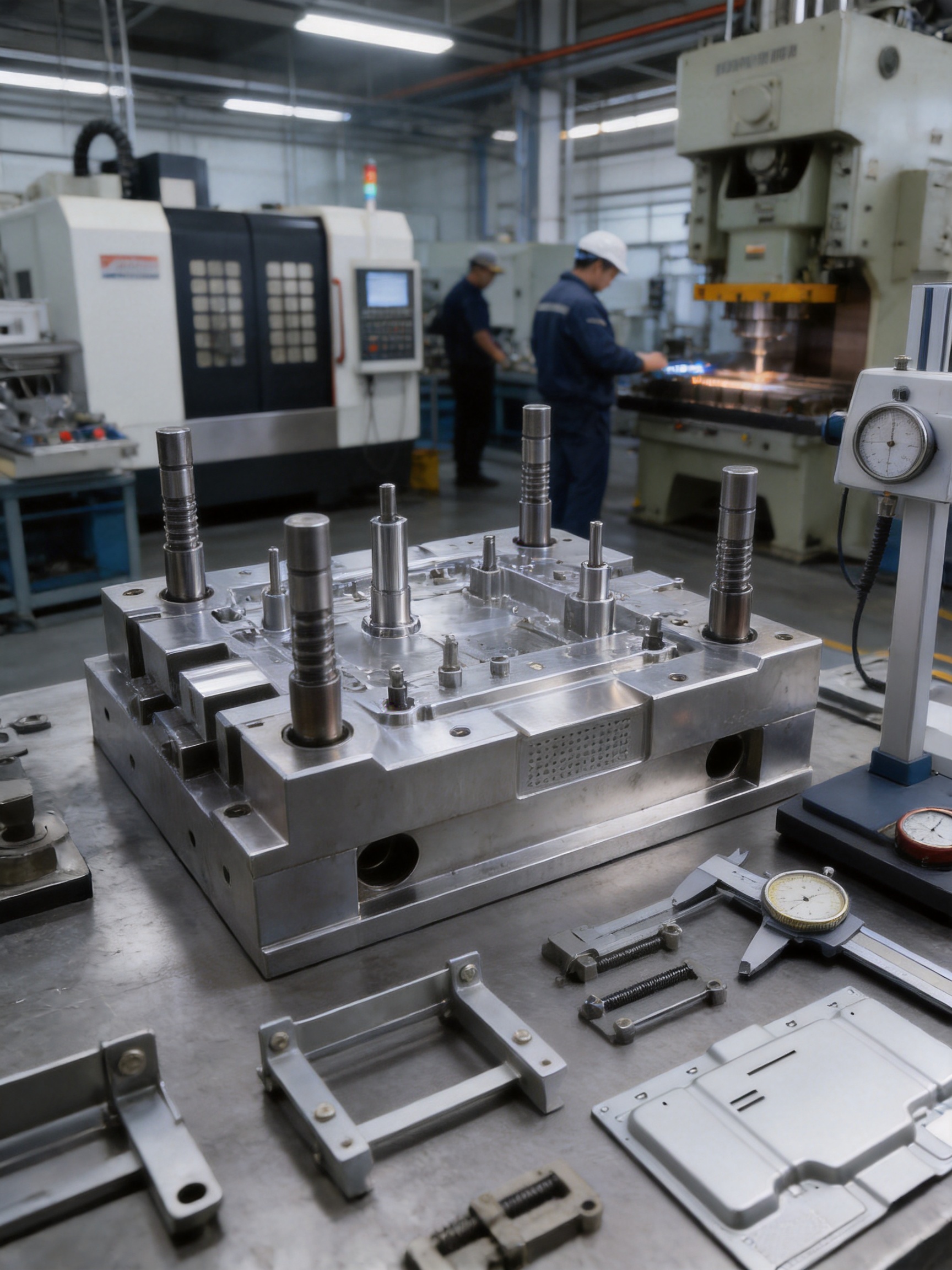
Equipment capability directly influences the accuracy, efficiency, and repeatability of stamping production. A capable manufacturing partner requires more than a press shop. It also needs machining, grinding, wire cutting, fitting, inspection, and process-debugging resources.
The manufacturing organization supporting these oven stamping solutions operates with imported wire cutting machines, CNC machining centers, more than ten grinding machines of various sizes, and 25 punch presses with capacities from 80 tons to 400 tons. This equipment combination supports the complete cycle from die production to component stamping.
Wire cutting is valuable for producing accurate profiles, narrow slots, and complex die components. CNC machining centers provide efficient and repeatable machining for die plates, inserts, holders, and structural tool components. Grinding equipment helps achieve the required flatness, parallelism, surface finish, and dimensional control.
A range of press capacities allows production planning to match the component’s forming requirements. Using a press that is too small may create overload and instability, while using a press that is unnecessarily large may reduce efficiency. Matching the press to the part helps protect both the tooling and the production schedule.
Equipment alone does not guarantee quality. Its value depends on maintenance, calibration, operator skill, process discipline, and engineering judgment. The combination of advanced machinery and experienced personnel is what allows the manufacturing system to produce reliable stamping parts at competitive prices.
Surface Treatment and Corrosion Resistance
Oven components can be exposed to humidity, steam, grease, cleaning chemicals, and temperature changes. Surface treatment helps protect the base material and improves the service life of the part. It can also improve appearance, reduce the risk of corrosion during storage, and provide a more consistent surface for assembly.
Deburring is one of the most important finishing operations. Stamping naturally creates cut edges, and process conditions may produce small burrs. Removing these burrs improves handling safety, reduces the risk of interference between parts, and helps prevent damage to wires, insulation, seals, or adjacent components.
Anti-rust coating may be applied where the base material requires additional protection. Heat-resistant spraying or other high-temperature surface treatments may be selected for components that operate near heating elements or hot internal surfaces. The coating must be compatible with the expected temperature range and should not peel, blister, or deteriorate during service.
Surface treatment specifications should be determined according to the component’s actual location. An external reinforcement plate, an internal bracket, and a part located near a heating element may require different treatments. A professional manufacturer reviews the service conditions before recommending the finishing process.
Where food-related hygiene is relevant, the full material and coating system should be selected in accordance with the applicable customer requirements and regulatory standards. Surface treatment should be uniform, clean, and free from defects that could interfere with assembly or maintenance.
Dimensional Accuracy and Quality Control
Dimensional consistency is essential for the interchangeability of oven stamping parts. If hole positions, bend angles, or external profiles vary excessively, assembly operators may need to force parts into position, enlarge holes, add shims, or perform rework. These actions increase labor costs and can reduce the reliability of the finished oven.
Quality control begins with raw material inspection. Material thickness, surface condition, and basic mechanical properties are reviewed to ensure that the material matches the approved specification. Stable input material reduces fluctuations in forming behavior and helps maintain tool settings.
During die trials, first-off samples are inspected against engineering drawings and reference samples. Critical features receive special attention. These may include mounting holes, hinge locations, bracket angles, edge profiles, embossing depth, flatness, and the relationship between multiple formed surfaces.
In-process inspection can identify gradual changes caused by tool wear, material variation, press instability, or incorrect setup. Operators may monitor burr size, part appearance, dimensional checkpoints, and production frequency. When deviations are detected early, corrective action can be taken before a large quantity of nonconforming parts is produced.
Final inspection confirms that the completed batch meets the agreed requirements. Depending on the product, this may include sampling plans, full inspection of critical dimensions, gauge checks, coating verification, visual inspection, and trial assembly. Inspection records support traceability and provide useful information for continuous improvement.
Advantages Compared with Ordinary Stamped Components
High-end oven stamping parts offer several advantages over ordinary stamped components produced without specialized material evaluation, tooling control, or process development.
Improved Thermal Stability
Components are designed with heat-resistant steel or suitable aluminum alloys and are processed to maintain their intended geometry during repeated heating and cooling. This reduces the possibility of deformation, misalignment, or loss of structural support.
Higher Dimensional Repeatability
Precision dies, controlled press operations, and inspection procedures help ensure that parts from different production batches remain interchangeable. This is especially important for manufacturers with standardized oven platforms or multiple assembly locations.
Better Structural Performance
Embossed ribs, controlled bends, reinforced profiles, and optimized material thickness can improve stiffness without adding unnecessary weight. A structurally efficient component supports the oven more effectively and may reduce vibration or movement during operation.
Cleaner and Safer Edges
Deburring and controlled cutting conditions reduce sharp edges and burrs. This supports safer handling by operators and service technicians and lowers the risk of damaging nearby insulation, wiring, seals, or painted surfaces.
More Reliable Surface Protection
Anti-rust coatings and heat-resistant finishing processes help components withstand moisture, heat, and routine cleaning conditions. A protected surface can extend service life and improve the visual and functional quality of the finished appliance.
Reduced Assembly Rework
Accurate mounting features and stable formed geometry help parts fit correctly on the first assembly attempt. This reduces manual adjustment, rejected assemblies, production interruptions, and post-sales service requirements.
Flexible Customization
Standardized components can be supplied for established oven designs, while customized parts can be developed for new models, special capacities, different door systems, or commercial equipment. A manufacturer with both die-making and stamping capabilities can coordinate design changes more efficiently.
Design Advantages for Oven Manufacturers
Oven manufacturers benefit from stamped components that are designed with the complete production system in mind. A part should not merely satisfy its isolated drawing dimensions. It should also support efficient assembly, stable supply, cost control, maintenance, and future product upgrades.
Stamping allows many parts to be produced at high speed once the die has been developed and approved. Compared with machining each component from solid material, stamping can reduce material removal, shorten cycle time, and improve consistency for high-volume production.
Die-based manufacturing also makes it possible to integrate several features into one component. A single stamped bracket may include mounting holes, positioning tabs, reinforcing ribs, and bends that would otherwise require multiple separate pieces. This can reduce the number of fasteners and simplify assembly.
Lightweight design is another potential advantage. By using ribs, beads, formed flanges, and optimized profiles, engineers can achieve the required stiffness with efficient material usage. This may reduce the weight of door systems, support assemblies, or external panels without compromising their intended function.
Customized stamping solutions can also help manufacturers standardize parts across several oven models. Common mounting features or shared bracket designs may reduce inventory complexity and improve purchasing efficiency. The degree of standardization depends on the product family and the customer’s engineering strategy.
Applications in Premium Household Ovens
Premium household ovens place strong emphasis on appearance, smooth operation, thermal stability, quiet performance, and long service life. Stamped parts used in these products must often satisfy both visible and hidden quality requirements.
Door-frame components need precise geometry so that glass panels, seals, hinges, and insulation layers can be assembled correctly. A stable frame helps the door open and close smoothly and supports uniform sealing around the oven cavity.
Heating element brackets must hold the heating components in the correct position while maintaining appropriate clearances. Their design must account for heat exposure, vibration, electrical insulation requirements, and installation access.
Internal support plates and reinforcement brackets provide structural stability for racks, trays, fans, heating assemblies, and other functional elements. These parts may be exposed to heat and cleaning conditions for many years, making material and surface protection important.
External shells and decorative structural pieces may require clean profiles, controlled flatness, and attractive surface condition. Even when a component is later covered or painted, dimensional variation can affect the final appearance of the appliance.
Applications in Commercial and Professional Ovens
Commercial ovens often operate more frequently and under heavier loads than household ovens. They may be used in restaurants, bakeries, food-processing facilities, hotels, institutional kitchens, and other professional environments.
Because commercial equipment may experience long operating cycles, repeated door opening, heavy trays, frequent cleaning, and higher service demands, the stamping parts must be designed for durability and maintainability. Reinforcement plates, hinge supports, rack supports, and mounting brackets may require additional strength or more robust surface protection.
Commercial oven manufacturers also value supply reliability. Production interruptions can affect delivery schedules and customer installations. A supplier with in-house die manufacturing, stamping capability, and experienced debugging personnel can respond more efficiently to tool adjustments, design changes, or production requirements.
Customized production is particularly useful for commercial equipment because oven dimensions, door configurations, heating layouts, and installation environments can differ significantly. A flexible engineering team can support both standard parts and specialized low- or medium-volume components.
Customization Capabilities
Different oven models may require different hole patterns, bend angles, thicknesses, materials, coatings, or assembly features. High-end stamping parts can be customized to match these requirements while preserving production efficiency.
The customization process normally begins with customer drawings, three-dimensional models, physical samples, or performance requirements. Engineers review the design for stamping feasibility and identify any features that may cause cracking, wrinkling, distortion, or excessive tooling complexity.
When a design change is recommended, the goal is not to alter the product’s function. Instead, the aim is to improve manufacturability, dimensional stability, tool life, material utilization, or assembly performance. Early communication between the customer and the manufacturer can prevent costly changes after tooling has been completed.
Customized solutions may include new progressive dies, compound dies, transfer tooling, secondary forming tools, inspection fixtures, assembly aids, or dedicated production equipment. The appropriate solution depends on annual demand, part complexity, tolerances, and the customer’s production plan.
After prototype approval, the final process can be documented through drawings, inspection standards, control plans, tool maintenance procedures, and packaging specifications. This documentation supports repeat orders and helps maintain consistent quality over the life of the oven model.
Integrated Die Manufacturing and Stamping Automation
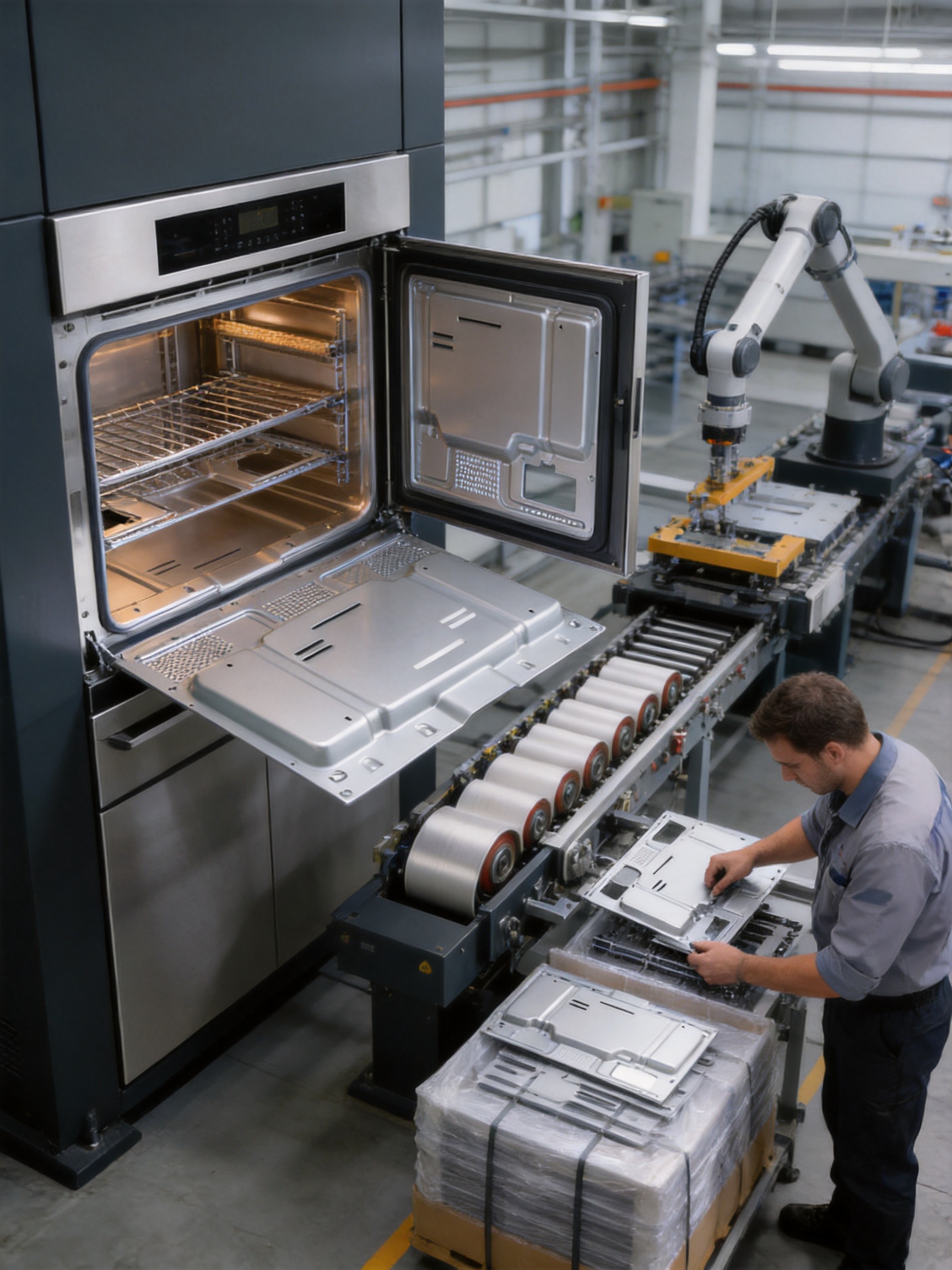
One important strength of an integrated supplier is the ability to provide both stamping dies and stamping automation equipment. These capabilities can be coordinated from the beginning of a project instead of being developed by separate companies with limited communication.
Stamping automation may include coil feeding, straightening, transfer systems, robotic handling, part separation, stacking, inspection, and other production-support functions. Automation can reduce manual handling, improve cycle consistency, and increase operator safety.
For high-volume oven components, automated feeding and transfer can help maintain a stable production rhythm. It can also reduce the risk of scratches, incorrect orientation, and handling deformation. When parts require multiple operations, a coordinated automation system can move them efficiently from one stage to the next.
Integrated die and automation planning also allows the tool design to account for how the part will be fed, released, transferred, and collected. Features such as carrier strips, pickup points, gripping surfaces, and stacking orientation can be considered before the die is manufactured.
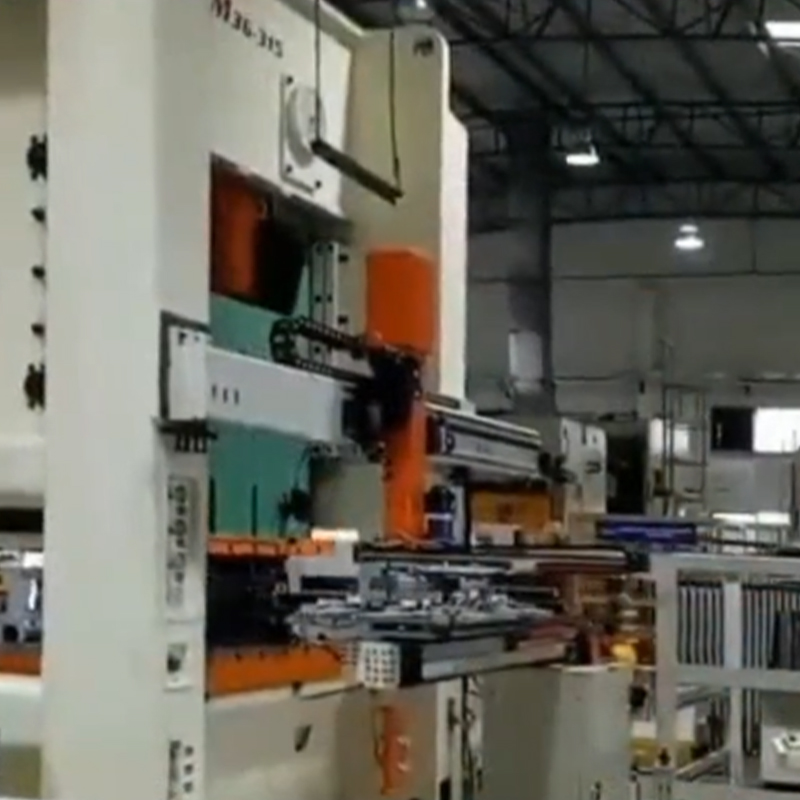
The company supporting these solutions has invested in a related intelligent technology business focused on stamping automation equipment. This provides an additional foundation for turnkey solutions involving stamping molds, automation, and related production equipment. Depending on customer requirements, the supplier can also support investment in production equipment intended to provide a cost-effective manufacturing solution.
Manufacturing Strengths and Technical Experience
The manufacturer has approximately 15 years of experience in the mold industry and employs 60 technical staff. This experience supports the development of stamping dies and hardware parts for demanding industrial applications.
The company’s customer base includes organizations associated with servo drives, compressors, new energy vehicles, electrical products, and other industrial fields. Although oven stamping parts have their own thermal and hygiene considerations, experience in these industries contributes useful knowledge in precision forming, structural components, production control, and complex tooling.
The company integrates design, manufacturing, debugging, stamping, and service. This reduces the number of communication stages between the initial drawing and the finished part. Engineering questions can be reviewed directly with tooling personnel, press operators, and debugging specialists.
Cost control is another important strength. A well-designed stamping process can reduce material waste, manual labor, production time, and rework. However, cost reduction must be managed without sacrificing the dimensions, material performance, or service life required by the oven manufacturer.
Strict quality control and experienced senior operators help maintain production stability. The ability to manufacture dies internally also gives the supplier greater control over tool modifications, maintenance, replacement components, and production scheduling.
How High-End Parts Reduce Total Manufacturing Cost
The purchase price of a stamped part is only one part of the total cost. Manufacturers should also consider tooling life, production speed, assembly labor, inspection, scrap, inventory, warranty claims, maintenance, and service requirements.
Accurate components reduce assembly adjustments. When door frames, brackets, and support plates fit correctly, production employees spend less time correcting misalignment or compensating for dimensional variation.
Stable stamping processes also reduce scrap. A die that maintains its cutting and forming performance produces more conforming parts before requiring maintenance. Material utilization can be improved through efficient strip layouts and appropriate nesting of blanks.
Durable surface treatment and suitable materials can reduce corrosion-related failures. This is particularly valuable for commercial ovens or equipment installed in humid, heavily used, or frequently cleaned environments.
Reliable components may also reduce warranty and after-sales service costs. A bracket that retains its position, a door frame that stays aligned, or a support plate that resists deformation contributes to the long-term performance of the oven system.
When a supplier can provide die manufacturing, stamping production, automation planning, and related equipment support, the customer may also reduce coordination costs. A unified technical partner can help align tooling, process, automation, and production objectives.
Quality and Safety Considerations
Oven stamping parts contribute directly to appliance safety. Brackets must hold heating elements securely. Door-frame components must support proper closure and sealing. Internal supports must carry their intended loads without unexpected deformation. Edges must be finished so that they do not create unnecessary handling risks.
Quality requirements should be established according to the part’s function and location. Critical components may require tighter dimensional tolerances, more frequent inspection, or functional testing. Noncritical components may be controlled through a different sampling plan, provided that their performance remains reliable.
Surface treatment must also be considered carefully. Coatings should be suitable for the expected thermal conditions and should not interfere with assembly, insulation, electrical clearance, or cleaning. Where food-contact or food-adjacent conditions apply, the customer and supplier should confirm the applicable material and surface requirements before production.
Traceability supports effective quality management. Records may include raw material batches, die identification, production dates, machine settings, inspection results, coating information, and packaging details. Such records make it easier to investigate issues and implement corrective actions when necessary.
Recommended Technical Specification Checklist
When sourcing high-end oven stamping parts, manufacturers should provide as much technical information as possible. Clear specifications reduce quotation uncertainty and accelerate engineering review.
| Specification Area | Recommended Information | Purpose |
|---|---|---|
| Part function | Support, reinforcement, heating-element mounting, door-frame, shell, or other application | Helps determine structural and thermal requirements |
| Material | Steel or aluminum alloy, grade, temper, thickness, and surface condition | Supports material selection and forming analysis |
| Operating environment | Temperature exposure, humidity, steam, grease, cleaning agents, and duty cycle | Guides material and surface-treatment decisions |
| Dimensions | Three-dimensional model, drawings, critical tolerances, bend angles, and flatness | Defines die and inspection requirements |
| Annual volume | Expected order quantity, batch size, and forecast period | Supports die type and automation planning |
| Surface treatment | Deburring, anti-rust coating, heat-resistant spraying, or other finish | Defines finishing and corrosion-resistance requirements |
| Assembly requirements | Fasteners, mating components, sealing surfaces, and installation direction | Ensures correct fit and functional performance |
| Inspection standard | Measurement method, sampling plan, gauges, and acceptance criteria | Creates a consistent quality-control basis |
Production Comparison: General Parts and High-End Parts
The following comparison illustrates why specialized engineering and process control are important when producing oven components.
| Evaluation Item | General Stamped Part | High-End Oven Stamping Part |
|---|---|---|
| Material selection | Based mainly on availability and basic cost | Selected according to heat, corrosion, strength, and forming requirements |
| Tooling approach | Standard die with limited application analysis | Application-specific die designed for geometry, springback, tool life, and assembly fit |
| Dimensional control | Basic sampling inspection | Critical-feature control supported by trials, in-process checks, and final inspection |
| Thermal performance | May not be evaluated in detail | Considered during material, geometry, and surface-treatment selection |
| Edge quality | May contain burrs requiring customer rework | Deburred and controlled for safer handling and easier assembly |
| Customization | Limited changes to standard products | Designed for specific oven models and production requirements |
| Automation compatibility | Handling method considered after tooling | Die, part features, feeding, transfer, and collection can be planned together |
| Long-term service | Focused mainly on initial delivery | Supported by tool maintenance, process records, and repeat-order consistency |
Packaging, Storage, and Delivery
Even a precisely manufactured part can be damaged if it is not packaged correctly. Oven stamping parts should be protected against impact, bending, moisture, contamination, and surface scratching during transportation.
Packaging design should consider part size, weight, shape, stacking method, surface treatment, and shipping distance. Small brackets may be packed in separated trays or protective bags, while larger panels and frames may require reinforced cartons, pallets, separators, or custom supports.
Parts with coated or polished surfaces should be prevented from rubbing against one another. Moisture-control measures may be appropriate for steel components, particularly when they will be stored for an extended period before assembly.
Clear labels can identify part numbers, quantities, production batches, material information, and customer purchase orders. Good labeling reduces warehouse errors and supports traceability throughout the customer’s production system.
Maintenance of Stamping Dies
Tool maintenance is essential for consistent oven stamping production. Even a well-designed die experiences wear at cutting edges, forming surfaces, guides, springs, and other moving or contacting components.
Routine maintenance may include cleaning, lubrication, inspection of punches and die inserts, measurement of critical clearances, replacement of worn components, and verification of guide alignment. The maintenance interval depends on material type, production volume, part geometry, and tool construction.
Early signs of tool wear may include increased burrs, changing hole dimensions, inconsistent bend angles, scratches, part sticking, unusual noise, or rising press force. Addressing these signs promptly can prevent larger quality problems and unplanned downtime.
A manufacturer with in-house machining and grinding resources can often produce replacement inserts or make tool corrections more efficiently than a supplier that must outsource every modification. This capability supports faster response during mass production and repeat orders.
Why Choose an Integrated Manufacturing Partner?
Oven manufacturers often need more than a component supplier. They need a technical partner capable of understanding product design, tooling, production volume, automation, inspection, and delivery requirements as a connected system.
An integrated manufacturing partner can review the part at the design stage, recommend practical changes, build the die, perform trial stamping, debug the process, produce the components, and coordinate automation when required. This shortens the communication chain and makes responsibility clearer.
The combination of professional die manufacturing, precision stamping, automation equipment, experienced personnel, and strict quality control provides a stronger foundation for long-term cooperation. It also allows the supplier to support both standardized components and customized projects.
For customers developing a new oven model, early supplier involvement can help identify cost and manufacturing risks before they become difficult to change. For customers with established products, a reliable supplier can support repeat production, tooling maintenance, engineering changes, and capacity expansion.
Project Development Process for New Oven Components
A typical new project can follow a structured sequence to ensure that technical and commercial objectives remain aligned.
Initial Requirement Confirmation
The customer provides drawings, models, samples, material requirements, annual demand, delivery expectations, and application information. The supplier confirms the operating environment and identifies critical functional features.
Manufacturability Evaluation
Engineers assess whether the proposed part can be stamped efficiently. They review bend radii, hole locations, material flow, springback, press capacity, strip layout, and possible secondary operations.
Quotation and Process Proposal
The supplier presents the recommended die type, production route, surface treatment, inspection method, tooling cost, part price, and estimated development schedule. Any assumptions or customer-supplied conditions should be clearly stated.
Tool Design and Manufacturing
After approval, the die is designed and manufactured using precision machining and grinding equipment. Tool components are assembled, checked, and prepared for trial production.
Sample Approval
Trial parts are produced and evaluated. The customer may conduct dimensional inspection, assembly testing, thermal evaluation, or other functional checks. Tool adjustments are completed before formal approval.
Mass Production and Continuous Improvement
Approved parts enter regular production. Quality records, customer feedback, and production data are used to improve tool life, cycle time, material utilization, and delivery performance over time.
Q&A About High-End Oven Stamping Parts
What types of oven components can be manufactured by stamping?
Stamping can produce oven shells, door-frame components, heating element brackets, reinforcement plates, internal support structures, mounting plates, guide parts, clips, retaining pieces, and many other customized metal components. The exact solution depends on the material, geometry, thickness, tolerance, and annual volume.
Which materials are suitable for oven stamping parts?
Heat-resistant steel and suitable stainless steel grades are commonly considered for components exposed to heat, moisture, or repeated thermal cycles. Aluminum alloys may be appropriate where low weight and thermal conductivity are important. The final material should be selected according to the actual operating environment and forming requirements.
What is the difference between cold stamping and hot stamping?
Cold stamping forms material at or near room temperature and is widely used for many brackets, panels, frames, and support parts. Hot stamping uses heat-assisted forming when improved formability or specific material performance is required. The best process depends on part geometry, material, thickness, strength, and production objectives.
How can stamping parts resist high temperatures?
Thermal performance is supported through suitable material selection, proper part geometry, controlled forming, and heat-resistant surface treatment where required. Engineers should evaluate the complete service environment, including temperature cycles, mechanical loading, moisture, cleaning conditions, and proximity to heating elements.
Can stamping parts be customized for different oven models?
Yes. Parts can be customized according to drawings, three-dimensional models, physical samples, or functional requirements. Customization may involve material, thickness, hole pattern, bend angle, mounting geometry, surface treatment, and packaging.
How do precision stamping parts improve assembly?
Accurate holes, stable bend angles, controlled flatness, and clean edges help components fit correctly during assembly. This reduces manual adjustment, rework, production delays, and the risk of misalignment in doors, heating systems, insulation, and internal supports.
What surface treatments are available?
Common options include deburring, cleaning, anti-rust coating, heat-resistant spraying, and other customer-specified finishes. The appropriate treatment depends on the part location, temperature, corrosion exposure, appearance requirements, and applicable hygiene or safety specifications.
Can the supplier provide stamping dies as well as stamped parts?
An integrated manufacturer can design and manufacture stamping dies and then use those tools to produce the required components. This provides closer control over tool quality, process debugging, production consistency, maintenance, and engineering changes.
Can stamping automation be included in the project?
Yes. Depending on production volume and part characteristics, automation may include coil feeding, straightening, transfer, robotic handling, inspection, stacking, and other functions. Die and automation planning can be coordinated to improve efficiency and reduce manual handling.
What information should be included in an inquiry?
An inquiry should include part drawings or models, material and thickness, annual volume, operating temperature, surface-treatment requirements, critical tolerances, assembly information, inspection standards, packaging expectations, and target delivery schedule. More complete information allows a more accurate technical proposal.
How are quality and repeatability controlled?
Quality is controlled through raw material inspection, die trials, dimensional checks, in-process monitoring, final inspection, surface-treatment verification, and production records. Critical features can receive additional inspection or functional assembly testing according to the customer’s requirements.
How can high-end stamping parts lower total cost?
They can reduce total cost by improving material utilization, lowering scrap, increasing production speed, minimizing assembly rework, extending service life, reducing corrosion-related failures, and limiting after-sales maintenance. The lowest initial part price does not always represent the lowest overall manufacturing cost.
Conclusion
High-end oven stamping parts are essential to the strength, safety, durability, and manufacturing efficiency of premium household and commercial ovens. Their performance depends on more than the press stroke that forms them. Material selection, die design, forming sequence, thermal considerations, surface treatment, inspection, packaging, and ongoing tool maintenance all contribute to the final result.
Precision-manufactured components made from heat-resistant steel or suitable aluminum alloys can provide stable dimensions, reliable structural support, clean assembly interfaces, and improved resistance to heat and corrosion. Cold and hot stamping processes can be selected or combined according to the material, geometry, and production requirements.
A capable manufacturing partner adds value through integrated engineering, die manufacturing, stamping production, automation planning, advanced equipment, experienced operators, and strict quality control. With 60 technical staff, a broad range of precision machining resources, punch presses from 80 tons to 400 tons, and approximately 15 years of mold-industry experience, the manufacturing organization described in this article is positioned to support both standardized and customized oven component programs.
For oven manufacturers, the right stamping solution can improve assembly efficiency, reduce rework, strengthen product reliability, and lower long-term operating costs. Whether the requirement involves a heating element bracket, door-frame component, reinforcement plate, internal support, or complete customized stamping program, precision tooling and disciplined production provide the foundation for dependable results.
References
1. ASM International, ASM Handbook: Forming and Forging.
2. American Society of Mechanical Engineers, Dimensioning and Tolerancing Principles for Mechanical Components.
3. International Organization for Standardization, Quality Management Systems—Requirements.
4. International Organization for Standardization, Geometrical Product Specifications and Verification.
5. Society of Manufacturing Engineers, Sheet Metal Forming and Stamping Technology.
6. Metal forming engineering practices concerning die clearance, springback control, press selection, tool maintenance, and process inspection.
7. Technical guidance for heat-resistant materials, corrosion protection, surface finishing, and appliance component manufacturing.
Product: High-end oven stamping parts
Previous Post
Advanced Stamping Automation Equipment for Efficient Metal Forming Production
Next Post
Advanced Stamping Automation Equipment for Reliable, Efficient Metal Forming
Our Products.
Start Your Business with an OEM Manufacturer Right Here!

Provide global customers with complete turn-key solutions
through
innovation!
QUICK LINKS
CONTACT INFO.
-
 +86-139 1308 8972
 -

-
 No. 118 Yexin Road, Wujiang Economic Development Zone, Suzhou, China
Copyright © Suzhou Shuangqisi Mold Equipment Co., Ltd. All Rights Reserved. Custom Stamping Die Metal Stamping Die Manufacturers
