 English
 Español
 Deutsch
-
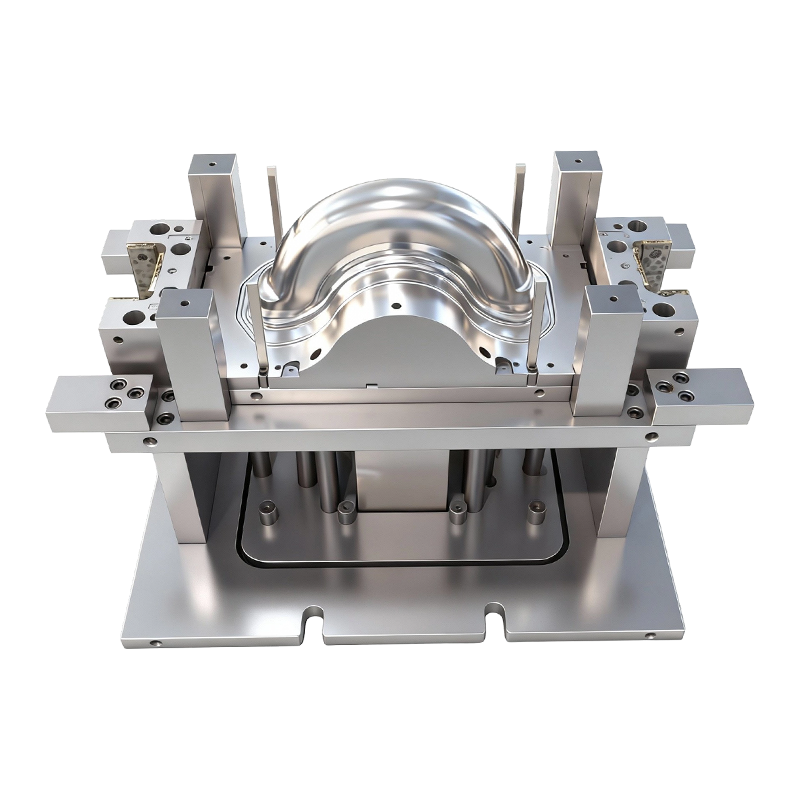
Deep drawing mold for front and rear wheels of two-wheeled electric vehicles
This Deep drawing mold for front and rear wheels o...
-
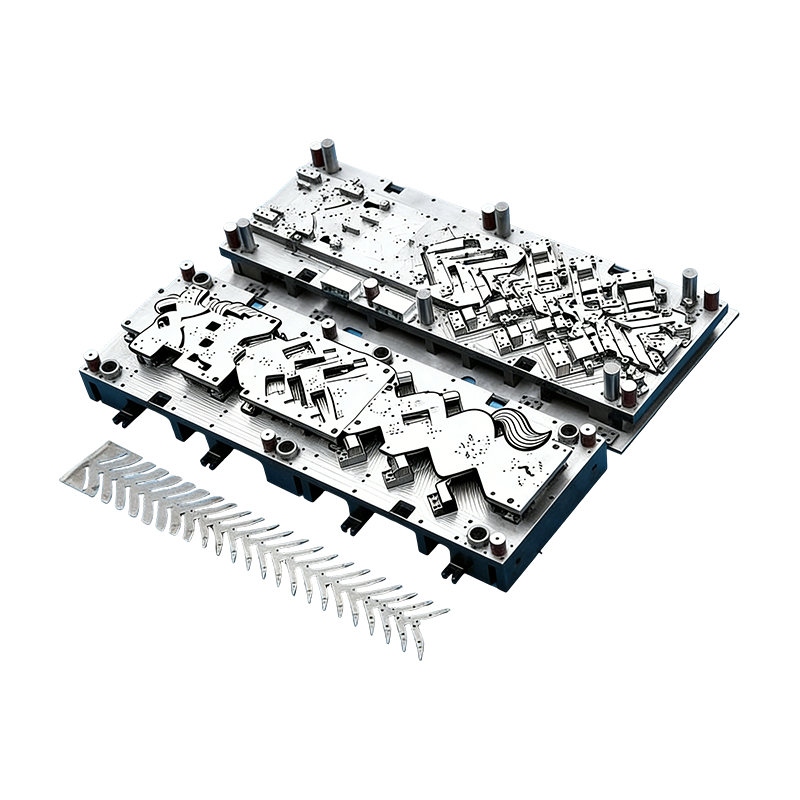
Progressive molds for automotive parts
This Continuous mold for automotive motor housing ...
-
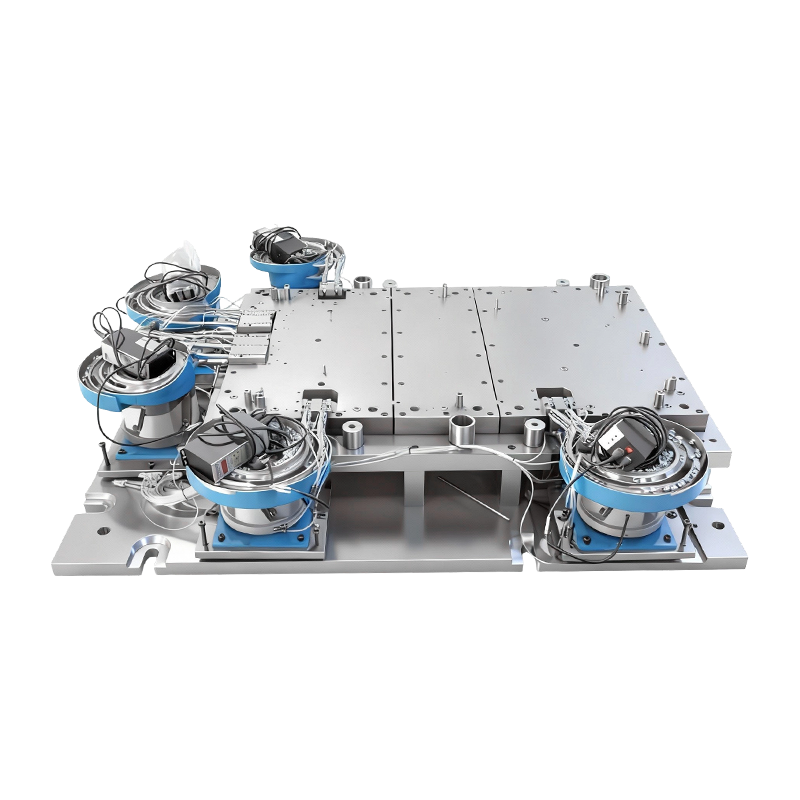
Automatic riveting mold for large computer machine base
This Automatic Riveting Mold for Large Computer Ma...
-
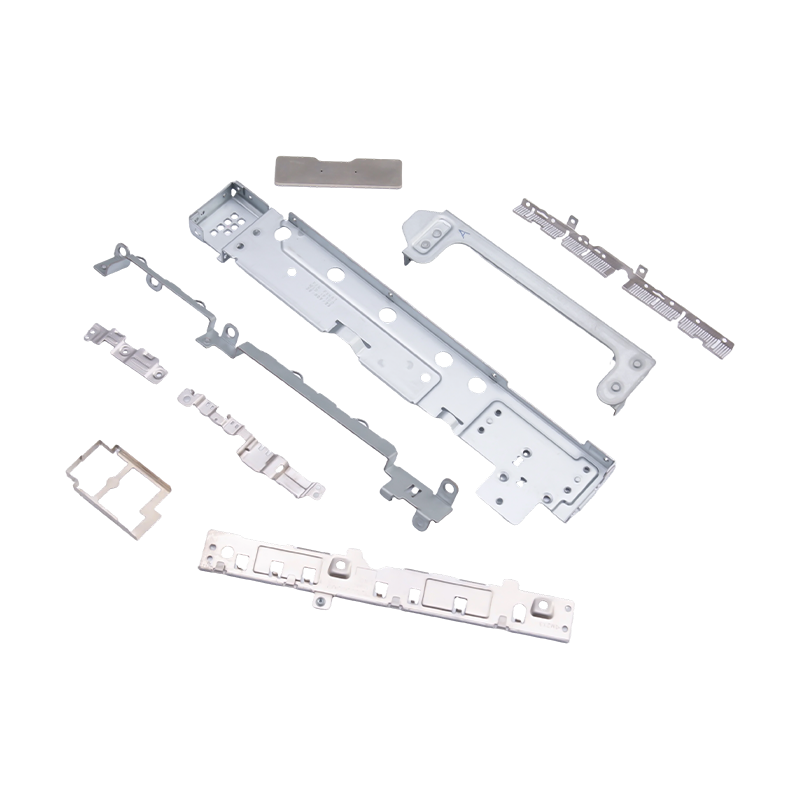
Small stamped parts for laptops and mobile phones
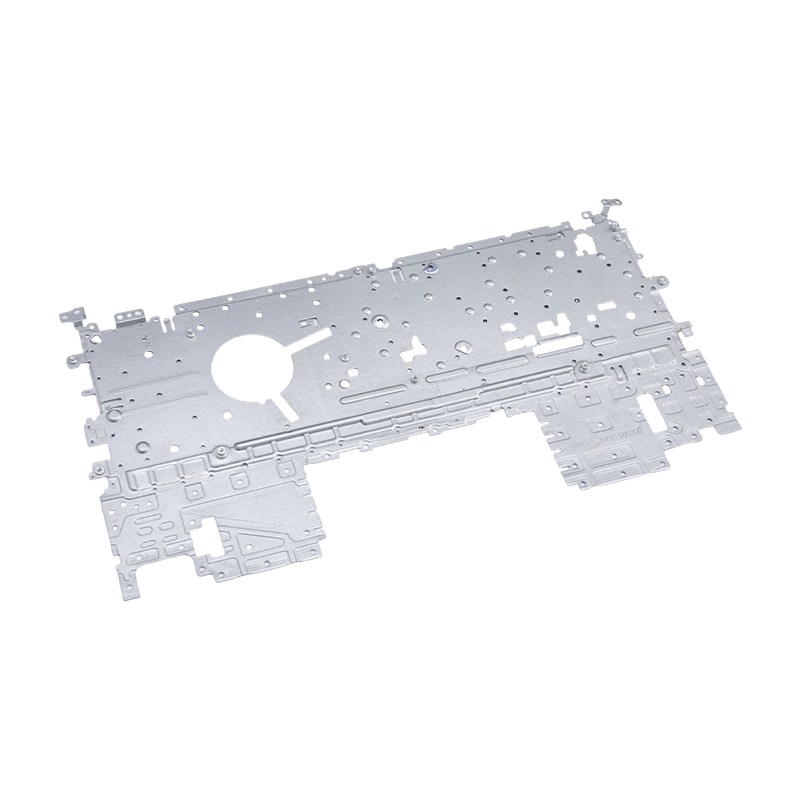
As essential internal components for modern portab...
-
Laptop stamping parts
Our laptop stamping parts are precision-manufactur...
- E-mail us: [email protected]
- Call us: +86-139 1308 8972

Chen Siyi – Overseas Sales Manager
Home / Author / Chen Siyi – Overseas Sales Manager / Advanced Stamping Automation Equipment for Efficient Metal Forming Production
Advanced Stamping Automation Equipment for Efficient Metal Forming Production
2026-08-13
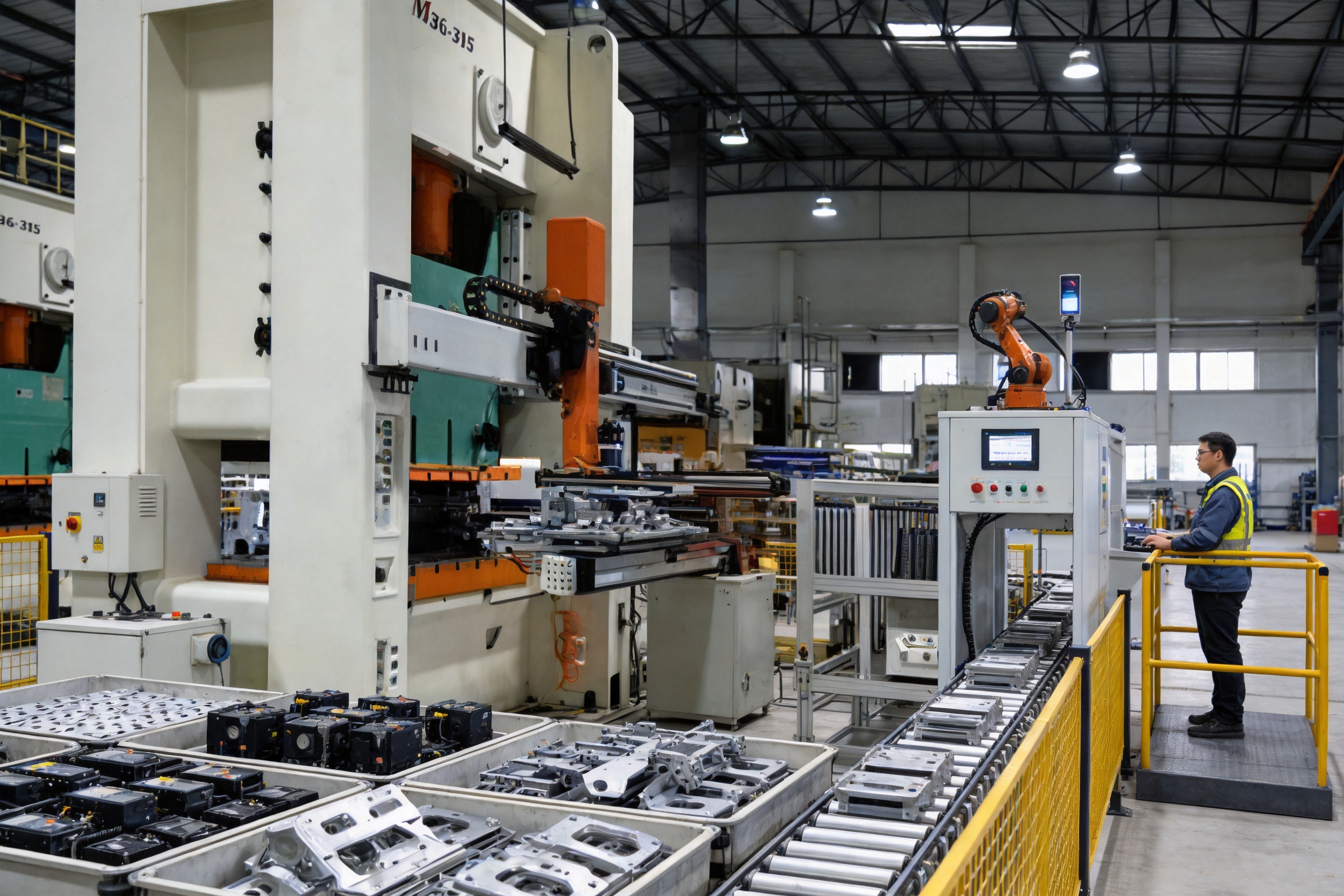
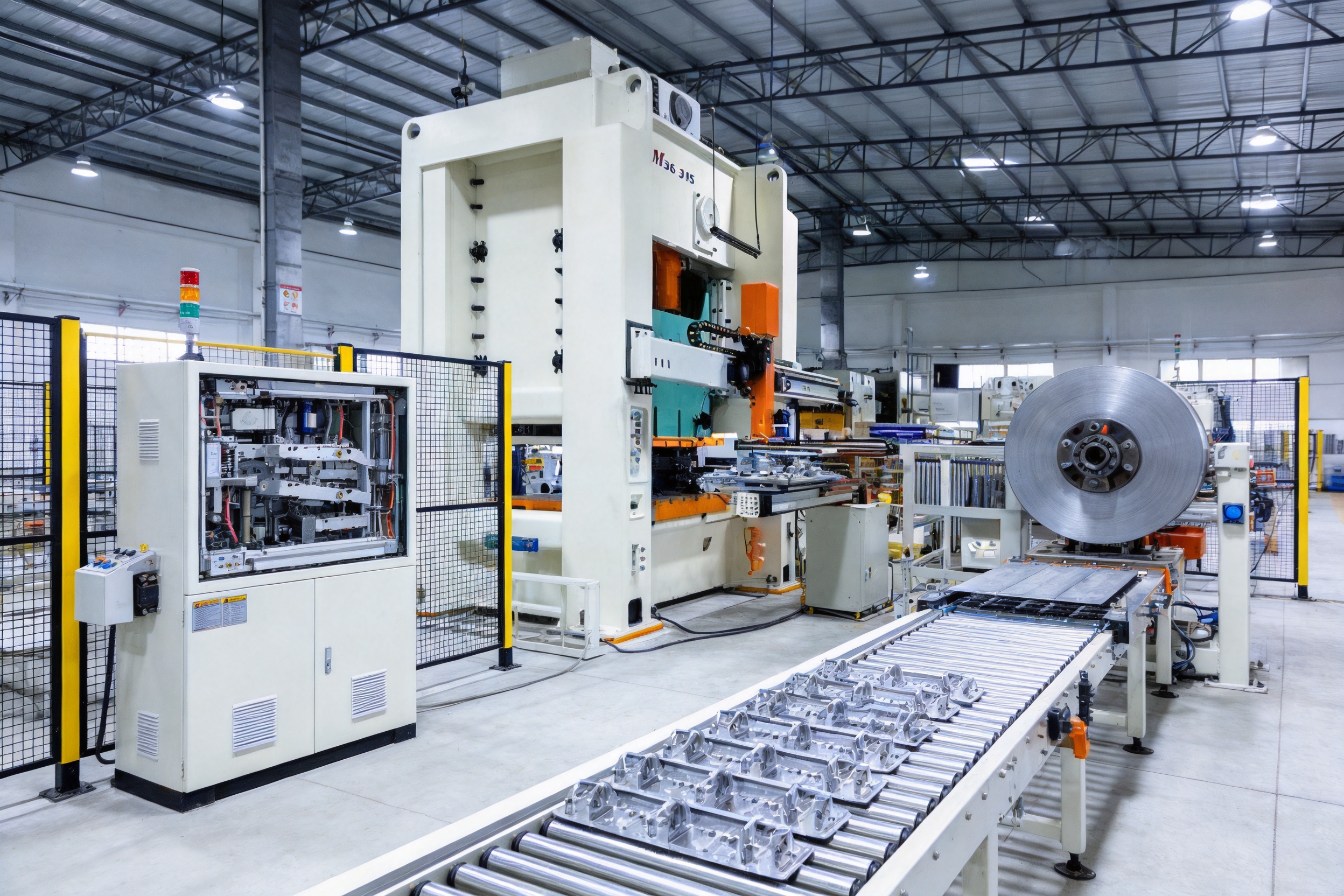
Modern metal forming operations require more than a reliable press and a well-designed die. Manufacturers must coordinate material feeding, stamping, transfer, inspection, production monitoring, safety, and maintenance in one stable production system. Stamping automation equipment provides the connection between these functions. When it is correctly designed and integrated, it can improve production consistency, reduce manual handling, support higher throughput, and help manufacturers control manufacturing costs.
Suzhou Shuangqisi Mold Equipment Co., Ltd. provides stamping automation equipment together with stamping dies and stamped hardware parts. This combined capability enables the company to approach automation from the perspective of the complete production process rather than treating the automation system as an isolated machine. The company’s experience in die design, die manufacturing, press operation, debugging, and hardware production supports the development of practical automation solutions for different stamping requirements.
Located in Suzhou, China, the company has approximately 15 years of experience in the mold industry, a technical team of 60 people, and production resources that include imported wire cutting machines, CNC machining centers, more than 10 grinding machines of different sizes, and 25 punch presses ranging from 80 tons to 400 tons. In 2016, it invested in and established Suzhou Keshuang Intelligent Technology Co., Ltd., which focuses mainly on stamping automation equipment. This development strengthened the company’s ability to provide integrated solutions covering stamping dies, automation systems, production equipment, and related technical services.
The result is a manufacturing model designed for customers that need a coordinated solution. Instead of sourcing a die from one supplier, an automation system from another, and commissioning support from a third party, customers can work with an organization capable of connecting the major elements of the stamping line. This approach can simplify communication, improve compatibility between equipment and tooling, and provide a clearer path from design to production.
Content
- 1 Understanding the Role of Stamping Automation Equipment
- 2 Core Applications of Stamping Automation
- 3 Advantages of an Integrated Stamping Solution
- 4 Manufacturing Strengths Supporting Automation Equipment
- 5 Advanced Process from Design to Delivery
- 5.1 1. Requirement Analysis
- 5.2 2. Process and Die Evaluation
- 5.3 3. Automation Concept Development
- 5.4 4. Mechanical and Electrical Design
- 5.5 5. Precision Machining and Component Production
- 5.6 6. Assembly and System Integration
- 5.7 7. Dry-Cycle and Material Testing
- 5.8 8. Debugging and Customer Acceptance
- 5.9 9. Installation and Production Support
- 6 How Automation Can Improve Production Performance
- 7 Advantages Compared with Less Integrated Supplier Models
- 8 Applications in Key Industrial Sectors
- 9 Design Considerations for Selecting the Right Equipment
- 10 Operational and Maintenance Benefits
- 11 Why Manufacturing Depth Matters to Customers
- 12 Project Support and Customer Collaboration
- 13 Quality-Oriented Production Philosophy
- 14 What Makes This Equipment a Practical Competitive Choice?
- 15 Frequently Asked Questions
- 15.1 What is stamping automation equipment?
- 15.2 Can stamping automation equipment be used with an existing press?
- 15.3 Why is die-making experience important for automation design?
- 15.4 What industries can use this equipment?
- 15.5 Does the company provide only automation machines?
- 15.6 What press capacities are available for the company’s production activities?
- 15.7 What machining capabilities support the equipment?
- 15.8 Can the company provide a turnkey solution?
- 15.9 How does automation affect manual labor?
- 15.10 What information should a customer provide before requesting a quotation?
- 16 Conclusion
- 17 References
- 18 Product: Stamping Automation Equipment
Understanding the Role of Stamping Automation Equipment
Stamping automation equipment is used to move, position, transfer, feed, and manage metal parts during a stamping process. Depending on the product and production method, an automated system may handle coils, strips, blanks, partially formed components, or finished parts. It may also coordinate multiple stamping operations in sequence.
A typical automated stamping arrangement can include a press, die set, feeder, straightener, decoiler, transfer mechanism, part separator, material detection system, control cabinet, safety guarding, and production monitoring functions. Not every project requires all of these elements. The appropriate configuration depends on the material, part size, geometry, thickness, required production volume, press capacity, die construction, and downstream process requirements.
The purpose of automation is not simply to make a line move faster. A successful system must move material at a controlled speed, maintain accurate positioning, protect the die and press, support stable part quality, and allow operators to monitor the process safely. Equipment must also be compatible with the tooling and the customer’s existing production environment.
For this reason, automation design should begin with a detailed understanding of the stamping process. The die structure, forming sequence, feed pitch, material behavior, press stroke, working height, and part removal method all influence the automation layout. An equipment supplier with die-making experience can evaluate these relationships earlier and reduce the risk of designing an automation system that is difficult to commission or operate.
Core Applications of Stamping Automation
Stamping automation equipment can support a wide range of metal forming applications. It is commonly used for components in electrical products, compressors, servo drives, industrial equipment, automotive systems, and new energy vehicle applications. The exact automation solution varies according to the product and manufacturing objective.
Coil and Strip Feeding
Coil-fed stamping lines are suitable for continuous production from metal strip. A decoiler releases the material, a straightener removes coil curvature, and a feeder advances the strip into the die at a controlled pitch. Coordinated feeding helps maintain repeatable positioning and supports continuous operation.
For applications using progressive dies, the feed system must work closely with the die layout. Feed length, pilot positioning, strip guidance, scrap discharge, and press timing all influence production performance. A properly coordinated system helps reduce feeding errors and supports the consistent formation of parts through multiple die stations.
Transfer and Part Handling
Transfer automation is used when parts must move between separate forming stages or between multiple operations within a production line. Transfer mechanisms can reduce manual handling and provide a repeatable method for positioning components. This is valuable for parts that are difficult to handle by hand, require several forming operations, or must maintain a controlled orientation.
The transfer process must be designed around the part geometry and die clearance. Grippers, fingers, supports, and transfer paths need to avoid interference with forming surfaces. The timing of lifting, moving, and placing must also be coordinated with the press cycle. Careful design and commissioning are essential because a small positioning error can affect both product quality and equipment safety.
Blank Loading and Finished-Part Removal
Some stamping processes begin with individual blanks rather than coil material. Automated blank loading can place each blank into the die in a consistent position. At the end of the process, finished-part removal equipment can separate acceptable components from scrap or transfer them to a conveyor, container, or subsequent process.
Automated removal is especially helpful when parts are produced in high quantities or when the stamped component has sharp edges, complex geometry, or a hot, oily, or otherwise difficult-to-handle surface. By reducing repetitive manual movement, automation can support a more organized and controlled production environment.
Integration with Existing Presses
Not every customer requires a completely new stamping line. In many cases, an existing press can be upgraded with a suitable feeder, transfer unit, or handling system. The feasibility of such an upgrade depends on the press’s rated capacity, stroke, speed, bolster dimensions, shut height, control system, and available installation space.
An integrated supplier can review these factors together with the die and part requirements. This can help customers determine whether a retrofit, partial automation upgrade, or new line is the most practical choice. The objective is to achieve an appropriate balance between production performance, investment, installation time, and long-term maintainability.
Stamping Automation Equipment
Advantages of an Integrated Stamping Solution
The principal advantage of combining stamping automation with die manufacturing is process compatibility. A die and an automation system cannot be evaluated independently. Their dimensions, timing, working height, material path, clearance, and handling requirements must work together. When one organization is responsible for both areas, design communication can be more direct.
Better Coordination Between Dies and Automation
Stamping dies determine how material enters, moves through, and exits the forming process. Progressive dies require precise strip feeding and controlled pitch. Transfer dies require coordinated movement between stations. Single-operation dies may require accurate loading and unloading. In each case, the automation system must match the tool’s operating conditions.
Experience in stamping die design allows the engineering team to consider automation requirements during the tooling stage. This may include planning the feed direction, designing suitable locating features, allowing space for grippers, defining sensor positions, and considering scrap discharge. These decisions can reduce later modifications and help create a more stable production line.
One Technical Communication Channel
When dies, presses, and automation equipment are supplied by different companies, project communication may become fragmented. A tooling supplier may focus on forming performance, while an automation supplier focuses on movement and controls. If responsibility for the complete process is unclear, problems can be difficult to assign and resolve.
An integrated supplier can coordinate technical discussions across tooling, equipment, production, and commissioning. This does not eliminate the need for customer participation, but it can simplify the flow of information. Part drawings, material specifications, press data, cycle requirements, and quality expectations can be reviewed as part of one project.
Turnkey Project Capability
The company can provide turnkey solutions for stamping molds and stamping automation. A turnkey approach means that the supplier can support multiple stages of the project, including process review, die design, equipment planning, manufacturing, assembly, debugging, and production support.
Turnkey delivery is valuable when the customer wants a production-ready solution rather than separate components. It can also be useful for customers entering a new product area or establishing a new stamping line. By combining related services, the supplier can help reduce the coordination burden and support a more structured transition into production.
Potentially Lower Total Project Cost
Equipment price is only one part of the cost of an automated stamping project. Engineering changes, repeated trials, transport between suppliers, installation delays, die modifications, and production downtime can all increase total expenditure. A solution that is inexpensive at the purchasing stage may become costly if compatibility problems appear during commissioning.
The company’s combination of mold-making and automation capabilities supports cost control across the project. Its own machining and press resources can assist with tooling development and testing, while its automation capability can be planned around the actual die and press requirements. The company also states that it can invest in related production equipment according to customer needs, creating additional flexibility for customers seeking cost-effective manufacturing support.
Consistent Quality Management
Automation is closely linked to product quality. Stable feeding, positioning, and transfer reduce the possibility of inconsistent operations caused by manual variation. However, automated movement alone does not guarantee quality. The die must be accurate, the press must be suitable, the material must meet specifications, and the entire system must be properly adjusted.
By combining equipment manufacturing with stamping die production, the company can address these factors together. Its strict approach to cost and quality control supports the goal of delivering reliable products while maintaining competitive pricing. Quality management can begin during design and continue through machining, assembly, trial production, debugging, and final delivery.
Manufacturing Strengths Supporting Automation Equipment
The performance of stamping automation equipment depends on the quality of its mechanical components, control elements, fabricated structures, and integration work. It also depends on the supplier’s ability to understand the production environment in which the equipment will operate. The company’s manufacturing resources and stamping background provide several advantages in this respect.
Experienced Technical Personnel
The company has 60 technical staff and senior operators with experience in mold manufacturing and production debugging. Technical personnel play an important role in automation projects because equipment must be designed for actual operating conditions rather than only for theoretical specifications.
Experienced personnel can identify practical issues such as difficult part release, unstable strip guidance, excessive scrap accumulation, restricted maintenance access, or interference between grippers and tooling. They can also evaluate whether a proposed cycle is realistic for the press, material, and die. This practical knowledge supports more efficient development and commissioning.
Precision Machining Resources
The company is equipped with imported wire cutting machines, CNC machining centers, more than 10 grinding machines of various sizes, and other precision machine tools. These resources support the production of stamping dies, die components, machine parts, and other precision elements associated with automation equipment.
Wire cutting is commonly used for accurate profiles and complex die components. CNC machining centers support the production of precision cavities, plates, bases, brackets, and structural components. Grinding equipment can help achieve the dimensional accuracy and surface quality required for mating components and working surfaces.
Access to these machining resources allows the supplier to maintain greater control over important manufacturing stages. It can also support faster response when a component requires adjustment during assembly or trial production. In an automation project, this flexibility may be valuable because final alignment and fit often depend on actual test results.
Press Capacity for Testing and Production
The company has 25 punch presses with capacities ranging from 80 tons to 400 tons. This range provides support for different die sizes, material thicknesses, and forming loads. Press resources can be used for die trials, process verification, debugging, and production of stamped parts.
Testing dies under suitable press conditions is important before delivery. Trial operations can reveal feed alignment issues, forming defects, excessive burrs, part deformation, scrap discharge problems, or interference with automation components. Early identification of these issues enables corrections before the equipment is installed at the customer’s facility.
The availability of multiple presses also provides practical flexibility. Different tooling projects may require different press capacities or working dimensions. A suitable test press can help the engineering team evaluate the die under conditions closer to the intended production environment.
Assembly and Debugging Experience
Automation equipment is not complete when individual components have been manufactured. Assembly, alignment, control integration, dry-cycle testing, material trials, and production debugging are essential stages. A supplier with experienced debugging personnel can identify problems that may not be visible in drawings or individual component inspections.
During debugging, the team may verify feeding distance, synchronization, transfer timing, part positioning, die clearance, sensor response, guarding, and emergency stop functions. The equipment can then be adjusted to achieve a reliable operating cycle. The purpose of this work is to deliver a system that is practical for daily production rather than merely functional during a short demonstration.
Advanced Process from Design to Delivery
A disciplined manufacturing process helps ensure that stamping automation equipment meets the customer’s production requirements. While the exact workflow depends on the project, an integrated development process generally includes the following stages.
1. Requirement Analysis
The project begins with an understanding of the product and production objective. Important information may include part drawings, material type, material thickness, annual demand, target cycle time, dimensional tolerances, surface requirements, press specifications, available floor space, and the customer’s preferred loading and unloading method.
The supplier should also understand whether the customer needs a new automated line, an automation upgrade for an existing press, a coil-fed system, a transfer system, or a combination of equipment. Maintenance expectations, operator access, safety requirements, and future product expansion can also influence the design.
2. Process and Die Evaluation
Once the product requirements are understood, the stamping process can be reviewed. Engineers evaluate the number of forming operations, material flow, blank shape, feed direction, forming loads, scrap layout, and part removal method. If a progressive die is required, the strip layout and pitch must be coordinated with the feeder. If a transfer process is selected, the movement between stations must be studied.
This stage is where die-making experience is particularly valuable. Automation cannot compensate for an unsuitable forming sequence or poor material flow. The tooling and automation plan should therefore be developed together.
3. Automation Concept Development
The next stage is the development of an equipment concept. The concept may define the type of feeder, transfer system, decoiler, straightener, blank loader, part separator, conveyor, sensor arrangement, and control architecture. It should also consider the press layout, operator position, maintenance access, and safety guarding.
Different concepts may be compared according to productivity, flexibility, investment, footprint, ease of operation, and compatibility with the customer’s existing equipment. The most sophisticated solution is not always the best solution. A practical design should provide the required performance without adding unnecessary complexity.
4. Mechanical and Electrical Design
After the concept is approved, detailed mechanical and electrical design can begin. Mechanical design covers frames, supports, guides, grippers, transfer components, mounting interfaces, adjustment mechanisms, and access points. Electrical design covers control cabinets, sensors, actuators, communication, operator controls, safety circuits, and sequence management.
The design should allow for adjustment and maintenance. Wear components should be accessible, inspection points should be visible, and the equipment should provide a clear method for diagnosing common problems. Good design is not limited to initial operation; it should support the full service life of the equipment.
5. Precision Machining and Component Production
Once drawings are released, components are manufactured using suitable machining processes. CNC machining centers can produce structural and precision components, wire cutting can be used for complex profiles, and grinding can support accurate fit and surface requirements. Stamping die components are manufactured alongside the automation-related parts when both are included in the project scope.
Dimensional control is important because small deviations in guides, mounting faces, grippers, or die components can affect the movement of material and parts. Inspection at suitable stages helps prevent errors from being carried into assembly.
6. Assembly and System Integration
During assembly, mechanical components are fitted and aligned, electrical systems are installed, and the automation equipment is connected with the die and press interfaces. The system is checked for physical interference, correct movement, access for operators, and compatibility with safety provisions.
Integration is a critical stage because the individual parts must operate as one system. A feeder may function correctly by itself but fail to maintain the required pitch when connected to a particular die. A transfer mechanism may move properly without material but require adjustment once the actual part and tooling are introduced. System integration reveals these practical relationships.
7. Dry-Cycle and Material Testing
Dry-cycle testing allows the system to run without material so that movement sequences, timing, sensors, safety circuits, and control logic can be checked. The team can verify that the press, feeder, transfer unit, and other devices operate in the correct order.
Material testing then evaluates actual feeding, forming, transfer, and removal. The test should examine part positioning, surface condition, dimensions, burrs, deformation, scrap discharge, and cycle stability. If necessary, the equipment, die, or control sequence can be adjusted.
8. Debugging and Customer Acceptance
Debugging involves refining the equipment for stable operation. Experienced operators and debugging personnel may adjust feed settings, transfer timing, guides, sensors, gripper positions, and die parameters. The goal is to reach a production condition that meets the agreed requirements and can be operated by the customer’s production team.
Customer acceptance can include functional checks, sample production, dimensional inspection, safety verification, and documentation review. Clear acceptance criteria help both parties confirm that the system is ready for installation or delivery.
9. Installation and Production Support
After delivery, installation and commissioning are important for transferring the equipment into the customer’s production environment. Floor conditions, press alignment, electrical connections, material specifications, and environmental factors can influence final performance.
Production support may include operating guidance, adjustment recommendations, maintenance instructions, and troubleshooting assistance. A supplier that understands both the die and automation system can provide more coordinated support when a production issue occurs.
How Automation Can Improve Production Performance
When correctly selected and maintained, stamping automation equipment can improve several aspects of manufacturing performance.
Higher Production Consistency
Automated feeding and transfer provide repeatable movement and positioning. This reduces dependence on manual placement and can help maintain more stable operating conditions. Consistency is particularly important when parts have close dimensional requirements or when the die includes multiple forming stations.
Stable operation also makes process monitoring easier. When the equipment follows a repeatable cycle, abnormal conditions such as misfeeds, part displacement, or unexpected stoppages can be identified more quickly.
Reduced Manual Handling
Manual loading and unloading can be repetitive and time-consuming. It may also expose operators to sharp edges, moving tooling, or difficult ergonomic conditions. Automation reduces the amount of direct handling required during normal operation. Operators can focus more on material preparation, quality checks, equipment monitoring, and maintenance activities.
Reduced handling can also help protect parts from accidental scratches, dents, contamination, or incorrect orientation. This is valuable for visible components and precision hardware parts.
Improved Use of Press Capacity
A press represents a significant production resource. If the press must wait for manual loading, unloading, or repositioning, its available capacity may not be fully utilized. An automated system can coordinate material movement with the press cycle and help reduce unnecessary idle time.
The actual productivity improvement depends on part geometry, die design, material characteristics, cycle time, and equipment configuration. Automation should therefore be evaluated using the complete production cycle rather than a single machine speed.
More Predictable Production Planning
Automated processes can support more predictable production scheduling because the movement sequence is controlled and repeatable. This can help manufacturers estimate output, plan material consumption, and organize downstream operations.
Predictability is especially important for industries such as electrical equipment, compressors, servo drives, and new energy vehicles, where component demand may require stable supply and repeatable production performance.
Better Scalability
A well-designed automation system can provide a foundation for future production growth. Customers may begin with one automated process and later add inspection, conveying, secondary operations, or additional lines. Modular planning and accessible interfaces can make future development easier.
However, scalability should be considered during the original design. Available floor space, press capacity, control architecture, material flow, and maintenance access all influence whether later expansion will be practical.
Advantages Compared with Less Integrated Supplier Models
Customers comparing automation equipment suppliers should evaluate more than equipment appearance or initial price. The supplier’s engineering depth, manufacturing resources, die experience, commissioning ability, and support structure can affect the total result.
| Evaluation Factor | Integrated Stamping Solution | Separated Supplier Arrangement |
|---|---|---|
| Die and automation compatibility | Tooling and automation can be developed as connected elements. | Compatibility may require additional coordination between companies. |
| Technical communication | One primary project team can coordinate major technical issues. | Responsibilities may be divided among several suppliers. |
| Commissioning efficiency | Die, press, and automation debugging can be addressed together. | Problems may require repeated communication and separate service visits. |
| Manufacturing control | Machining, die manufacturing, assembly, and testing can be coordinated internally. | Components may come from different production and quality systems. |
| Cost management | Design and production decisions can be reviewed for total project value. | Additional engineering, modification, and coordination costs may arise. |
| Turnkey delivery | Suitable for customers seeking a complete stamping production solution. | Customers may need to manage multiple contracts and interfaces. |
| Long-term support | Tooling and automation knowledge can be maintained within one technical relationship. | Support may be divided between die, press, controls, and handling suppliers. |
The table does not mean that every multi-supplier project is unsuitable. Specialized suppliers can provide excellent products in their respective fields. However, an integrated model can be advantageous when the project involves complex tooling, multiple forming stages, tight timing requirements, or a customer that wants a single coordinated solution.
Applications in Key Industrial Sectors
Servo Drives and Electrical Equipment
Servo drive and electrical equipment manufacturers often require stamped components with consistent dimensions, repeatable hole positions, and controlled flatness. Automated stamping can support stable production of brackets, laminations, housings, terminals, and other hardware components, depending on the specific design.
In these applications, feeding accuracy and die condition can influence assembly performance. An integrated solution can help coordinate the die layout, material movement, part separation, and production handling requirements.
Compressors
Compressor production may involve numerous stamped hardware components that must fit together accurately. Automation can support the high-volume production of formed parts, covers, brackets, and related components. Stable handling helps reduce damage and supports organized transfer to subsequent assembly operations.
Because compressor components may be produced in different shapes and sizes, equipment flexibility is important. A supplier with both press capacity and automation experience can help determine an appropriate configuration for the required production range.
New Energy Vehicles
New energy vehicle manufacturing continues to require precision metal components for electrical systems, powertrain-related assemblies, battery systems, thermal management, and structural applications. The specific part requirements vary widely, but many involve repeatable forming, accurate positioning, and efficient production.
Automation can help manufacturers respond to demand for consistent components while reducing repetitive manual handling. For new projects, an integrated supplier can review the relationship between the part, die, press, and handling system from the beginning.
General Hardware Parts
Hardware parts are used in many industrial products and may be produced in large volumes. Automation is suitable for processes where repeatability, production rhythm, and labor efficiency are important. The equipment configuration can be adjusted according to material type, component size, required forming operations, and production quantity.
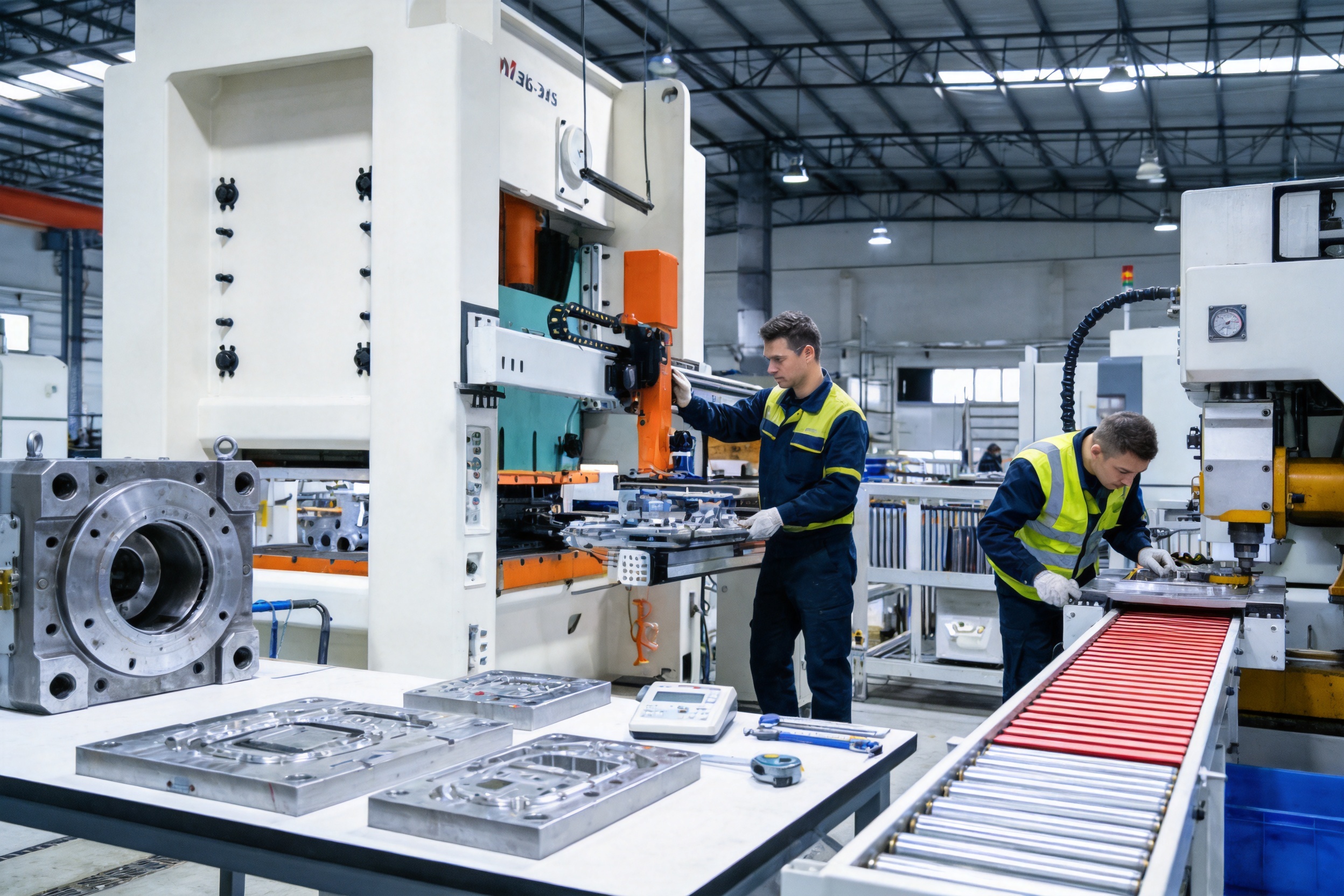
Design Considerations for Selecting the Right Equipment
Choosing stamping automation equipment should begin with the production requirements rather than a standard machine list. The following factors should be reviewed before finalizing a solution.
Part Geometry and Material Behavior
Part shape affects how the component can be loaded, gripped, transferred, and removed. Deep-drawn, flanged, pierced, bent, or progressive-stamped parts may require different handling methods. Material thickness, strength, surface condition, and lubricity also affect feeding and gripping.
A part with a delicate surface may require soft or carefully positioned grippers. A narrow strip may require specialized guidance. A component with a complex flange may need a transfer path that avoids contact with sensitive features. These details should be considered during the initial engineering review.
Press Specifications
The press must provide suitable tonnage, stroke, working height, bolster dimensions, speed range, and control interfaces. The automation system must be mechanically and electrically compatible with the press. If an existing press is being upgraded, its condition and available interface points should be assessed carefully.
The company’s range of 80-ton to 400-ton punch presses provides experience with different press capacities and stamping requirements. This experience can support the evaluation of whether a customer’s existing press is appropriate or whether a different configuration should be considered.
Required Output and Cycle Time
Production volume influences the degree of automation required. A low-volume process may benefit from semi-automatic handling, while a high-volume process may justify continuous coil feeding or multi-station transfer automation. The target output should be calculated using realistic cycle conditions, including loading, forming, transfer, inspection, stoppage, and maintenance.
It is important not to specify speed without considering stability. A slightly slower system that operates consistently may provide better annual output than a faster system that experiences frequent misfeeds or adjustments.
Quality and Inspection Needs
Some products require frequent dimensional checks, presence detection, orientation verification, or surface inspection. Automation equipment can be designed with appropriate inspection points or interfaces for separate inspection equipment. The inspection strategy should be defined according to the customer’s quality requirements.
Even when inspection is performed manually, automated part separation and organized transfer can make quality control easier. Good part flow helps prevent mixed batches, incorrect orientation, and confusion between acceptable parts and scrap.
Safety and Maintenance
Safety guarding, emergency stop functions, access control, and safe maintenance procedures should be included in the equipment design. Operators need clear access to loading areas, inspection points, adjustment locations, and maintenance components without unnecessary exposure to moving mechanisms.
Maintenance access is equally important. Lubrication points, wear components, sensors, guides, and adjustment mechanisms should be positioned so that technicians can inspect and service them efficiently. A machine that is difficult to maintain may lose the productivity advantages provided by automation.
Operational and Maintenance Benefits
Long-term value depends on how well the equipment performs after installation. Operators should receive clear instructions for setup, material loading, production monitoring, fault response, and routine maintenance. Standard operating procedures can help preserve consistent conditions across different shifts.
Routine maintenance may include checking fasteners, guides, grippers, sensors, pneumatic or mechanical components, lubrication points, and electrical connections. The die should also be maintained according to its own requirements. Since the die and automation system work together, maintenance teams should understand their interaction.
For example, a worn guide may cause material misalignment, while a damaged gripper may produce incorrect transfer positioning. A sensor that is contaminated or displaced may create false signals or allow a fault to continue. Regular inspection can identify these issues before they cause major downtime or die damage.
Documentation is an important part of serviceability. Equipment drawings, electrical diagrams, spare-parts information, operating parameters, and troubleshooting procedures help the customer maintain the line. A supplier with experience in both tooling and automation can make documentation more complete because it understands the complete production process.
Why Manufacturing Depth Matters to Customers
A stamping automation project combines design, machining, controls, assembly, tooling, and production knowledge. If a supplier specializes only in one area, it may need to outsource other critical activities. Outsourcing is not automatically a disadvantage, but it can make communication, quality control, and schedule management more complex.
In contrast, Suzhou Shuangqisi Mold Equipment Co., Ltd. has developed capabilities across stamping dies, stamped hardware parts, and automation equipment. Its production resources, technical employees, senior operators, debugging personnel, and press capacity create a foundation for internal coordination.
The company’s customer base includes Anter Group, Ousheng Electric, Dongbei Group, and Huichuan Technology. Its products and molds have mainly served applications related to servo drives, compressors, and new energy vehicles. These sectors require dependable production equipment and consistent component quality, making practical process experience an important consideration.
The company emphasizes high-quality products, competitive prices, strict cost control, and customer value. Its business development reflects an effort to combine manufacturing capability with intelligent production equipment. The establishment of Suzhou Keshuang Intelligent Technology Co., Ltd. in 2016 further expanded its focus on stamping automation.
Project Support and Customer Collaboration
Successful automation requires cooperation between the supplier and the customer. The customer should provide accurate product drawings, material data, press information, expected output, quality requirements, and site conditions. The supplier should translate this information into a workable equipment and tooling plan.
During development, regular technical reviews can help confirm die layout, feeding direction, transfer method, equipment footprint, safety requirements, and acceptance standards. Early agreement on these subjects can reduce later changes.
Customers should also identify their preferred level of service. Some may require a complete turnkey line, while others may need only a feeder, transfer mechanism, or automation upgrade. The company’s ability to provide molds, stamped parts, and automation equipment allows the project scope to be adapted to different needs.
For customers that lack certain production resources, the company states that it can invest in related production equipment according to customer requirements. This provides a possible path for customers seeking a broader manufacturing partnership rather than a one-time equipment purchase.
Quality-Oriented Production Philosophy
Quality in stamping automation is built through many connected decisions. It begins with selecting a suitable process and continues through design review, material selection, precision machining, assembly, control integration, trial production, and final debugging.
Precision machining helps components fit correctly. Experienced operators help identify practical manufacturing issues. Press trials help verify die performance. Debugging personnel help coordinate the production cycle. Technical staff help convert customer requirements into equipment functions. Each stage contributes to the final result.
The company’s stated commitment to strict cost and quality control reflects the need to balance performance with commercial practicality. Customers generally require equipment that is reliable and maintainable without unnecessary expense. A strong supplier must therefore avoid both underengineering and excessive complexity.
High-quality development also includes continuous improvement. Feedback from production can reveal opportunities to improve feeding stability, access, cycle coordination, maintenance, or operator usability. Over time, this experience can strengthen future equipment designs and support better solutions for different stamping applications.
What Makes This Equipment a Practical Competitive Choice?
The competitive value of the stamping automation equipment is based on integration, manufacturing resources, and application knowledge. The company is not presented only as an equipment trader. It is a manufacturer with capabilities in die design, die manufacturing, stamped hardware production, press operation, and automation development.
This combination can be particularly valuable for projects where the tooling and automation must be closely matched. It can also help customers reduce the number of technical interfaces they must manage. The availability of precision machining equipment and multiple punch presses supports internal production and testing. The technical team and experienced debugging personnel provide practical process knowledge.
Compared with a low-cost equipment supplier that provides a standard machine without detailed process review, an integrated manufacturer can offer a more application-specific solution. Compared with a supplier that focuses only on dies, the company can extend its support into feeding, transfer, handling, and automation. Compared with a general automation integrator without stamping experience, its die and press knowledge can support more accurate process coordination.
These advantages do not mean that every project will use the same machine configuration. Instead, they support a design approach in which the equipment is selected according to the customer’s part, die, press, production volume, and quality objectives.
Frequently Asked Questions
What is stamping automation equipment?
Stamping automation equipment is a group of mechanical, electrical, and control systems used to feed, position, transfer, load, unload, inspect, or organize metal parts during a stamping process. It may include feeders, decoilers, straighteners, transfer mechanisms, conveyors, part separators, sensors, control cabinets, and safety systems.
Can stamping automation equipment be used with an existing press?
In many cases, automation can be designed for an existing press, but feasibility depends on press capacity, stroke, working height, bolster dimensions, speed, controls, installation space, and mechanical interfaces. A technical review is needed before confirming an upgrade or retrofit solution.
Why is die-making experience important for automation design?
The die controls the material path, forming sequence, part position, feed pitch, and release conditions. Automation must work around these features. Die-making experience helps engineers design feeding and transfer functions that match the actual tooling and reduce the risk of interference or unstable operation.
What industries can use this equipment?
Stamping automation can support electrical equipment, servo drives, compressors, industrial hardware, automotive components, and new energy vehicle applications. The appropriate system depends on the part design, material, production volume, press, and required forming process.
Does the company provide only automation machines?
The company provides stamping dies, stamping parts, and stamping automation equipment. Its integrated capabilities include die design and manufacturing, stamped hardware production, automation equipment, process debugging, and related production support.
What press capacities are available for the company’s production activities?
The company has 25 punch presses ranging from 80 tons to 400 tons. This press range supports different die trials, stamping processes, and hardware production requirements. The appropriate press depends on the forming load and product specifications.
What machining capabilities support the equipment?
The company is equipped with imported wire cutting machines, CNC machining centers, more than 10 grinding machines of different sizes, and other precision machine tools. These resources support the manufacture of die components, precision parts, structural elements, and related equipment components.
Can the company provide a turnkey solution?
Yes. The company can provide turnkey solutions for stamping molds and stamping automation. Depending on customer needs, the project may include design, manufacturing, testing, debugging, equipment integration, and related production equipment support.
How does automation affect manual labor?
Automation reduces repetitive manual loading, unloading, feeding, and transfer tasks. Operators can focus more on material preparation, quality monitoring, maintenance, and production supervision. The exact labor impact depends on the equipment configuration and the customer’s process.
What information should a customer provide before requesting a quotation?
Useful information includes part drawings, material type and thickness, production quantity, required cycle time, dimensional tolerances, press specifications, existing equipment details, preferred automation level, factory layout, and quality requirements. Complete information helps the supplier develop a more accurate concept and quotation.
Conclusion
Stamping automation equipment is an important part of modern metal forming production. Its value comes from coordinated operation: material must be fed accurately, the die must form the part consistently, transfer mechanisms must move components safely, and the press must operate within a stable production cycle.
Suzhou Shuangqisi Mold Equipment Co., Ltd. combines stamping die design and manufacturing with stamped hardware production and automation equipment. Its 60 technical staff, approximately 15 years of mold industry experience, precision machining resources, 25 punch presses from 80 tons to 400 tons, and experienced debugging personnel support an integrated approach to customer projects.
The company’s investment in Suzhou Keshuang Intelligent Technology Co., Ltd. in 2016 strengthened its focus on stamping automation. Together with its existing die-making capability, this provides a foundation for turnkey solutions covering molds, automation, and related production equipment.
For manufacturers seeking more than a standard machine, an integrated stamping automation supplier can offer advantages in compatibility, communication, testing, cost management, and long-term support. By reviewing the die, press, material, part, and automation system as one production solution, customers can work toward improved consistency, reduced manual handling, better production planning, and dependable manufacturing performance.
References
1. Company-provided corporate information for Suzhou Shuangqisi Mold Equipment Co., Ltd.
2. Company-provided product information for stamping automation equipment.
3. General principles of metal stamping die design and progressive die production.
4. General engineering practices for press-feed automation, transfer handling, and automated part removal.
5. General manufacturing guidance concerning precision machining, equipment commissioning, production debugging, and preventive maintenance.
Product: Stamping Automation Equipment
Previous Post
Advanced Stamping Automation Equipment for Efficient, Reliable Metal Forming
Next Post
High-End Oven Stamping Parts: Precision Components for Safer, More Durable Oven Manufacturing
Our Products.
Start Your Business with an OEM Manufacturer Right Here!

Provide global customers with complete turn-key solutions
through
innovation!
QUICK LINKS
CONTACT INFO.
-
 +86-139 1308 8972
 -

-
 No. 118 Yexin Road, Wujiang Economic Development Zone, Suzhou, China
Copyright © Suzhou Shuangqisi Mold Equipment Co., Ltd. All Rights Reserved. Custom Stamping Die Metal Stamping Die Manufacturers
