 English
 Español
 Deutsch
-
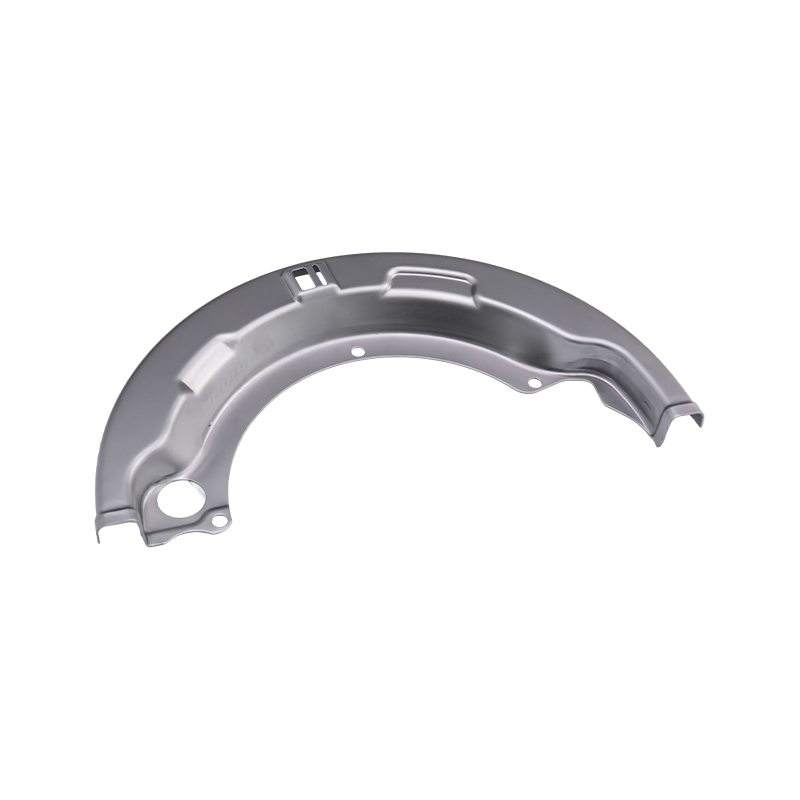
Heavy truck stamping parts
Our Heavy truck stamping parts are precision-manuf...
-
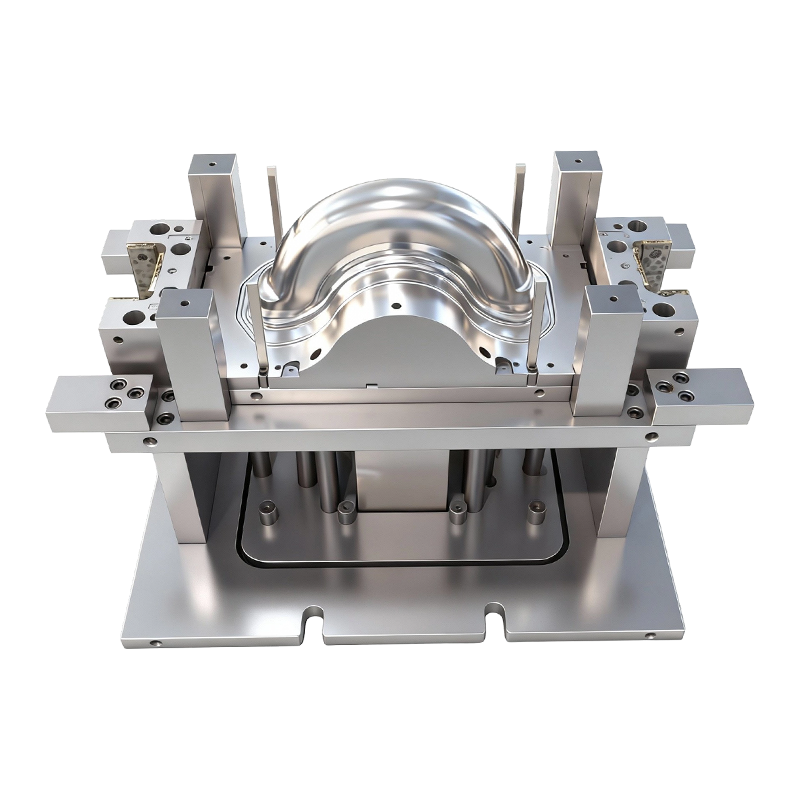
Deep drawing mold for front and rear wheels of two-wheeled electric vehicles
This Deep drawing mold for front and rear wheels o...
-
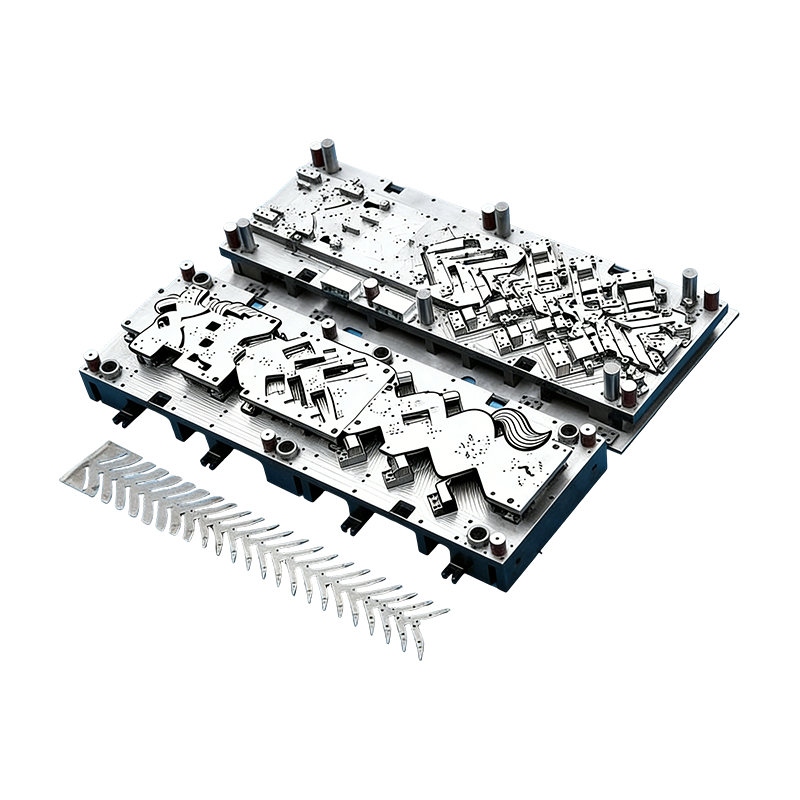
Progressive molds for automotive parts
This Continuous mold for automotive motor housing ...
-
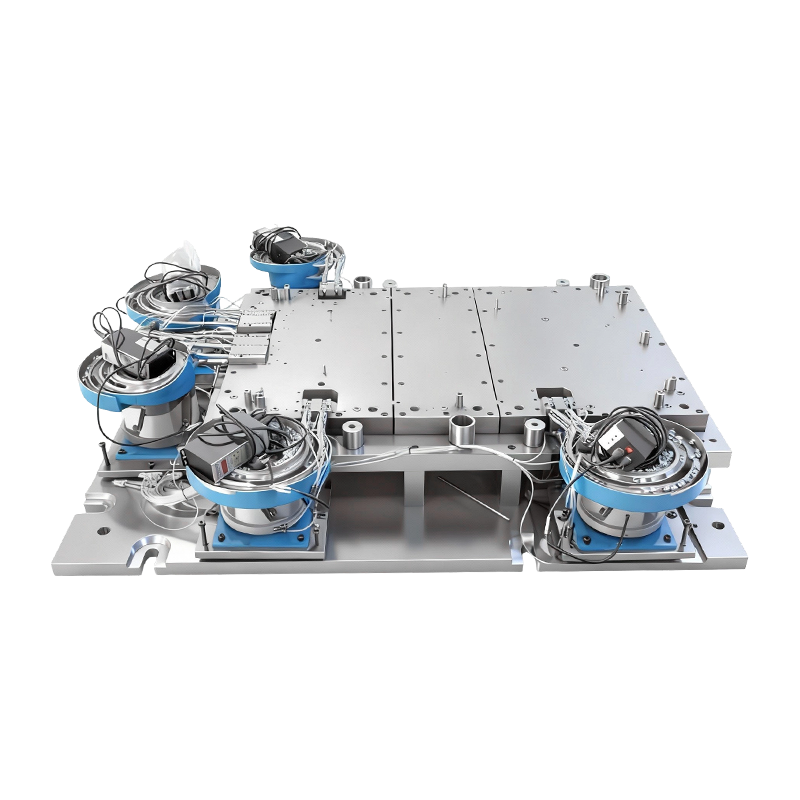
Automatic riveting mold for large computer machine base
This Automatic Riveting Mold for Large Computer Ma...
-
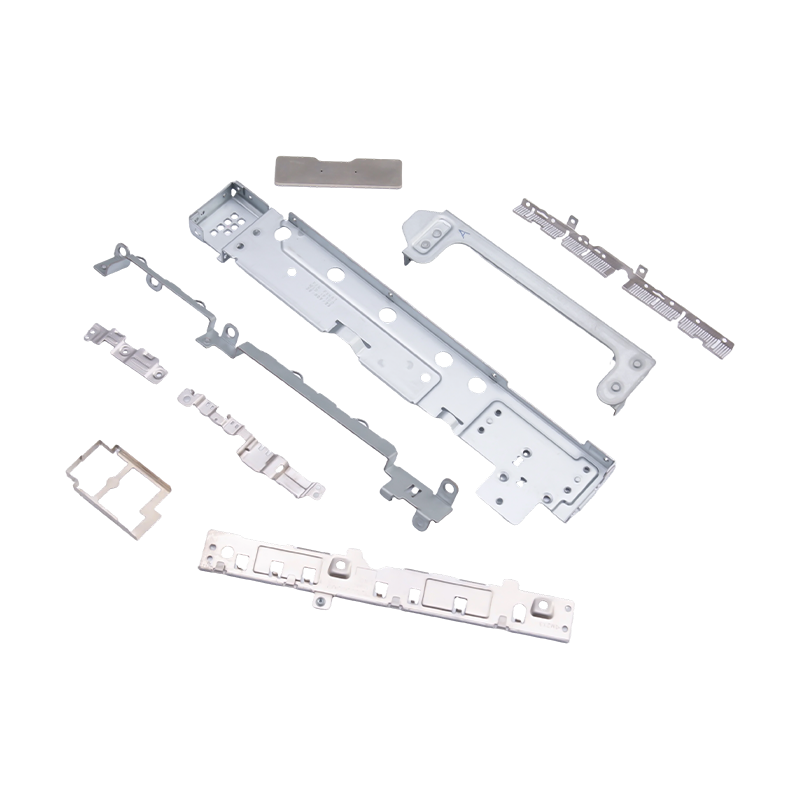
Small stamped parts for laptops and mobile phones
As essential internal components for modern portab...
- E-mail us: [email protected]
- Call us: +86-139 1308 8972

Chen Siyi – Overseas Sales Manager
Home / Author / Chen Siyi – Overseas Sales Manager / Heavy Truck Stamping Parts for Durable Commercial Vehicle Performance
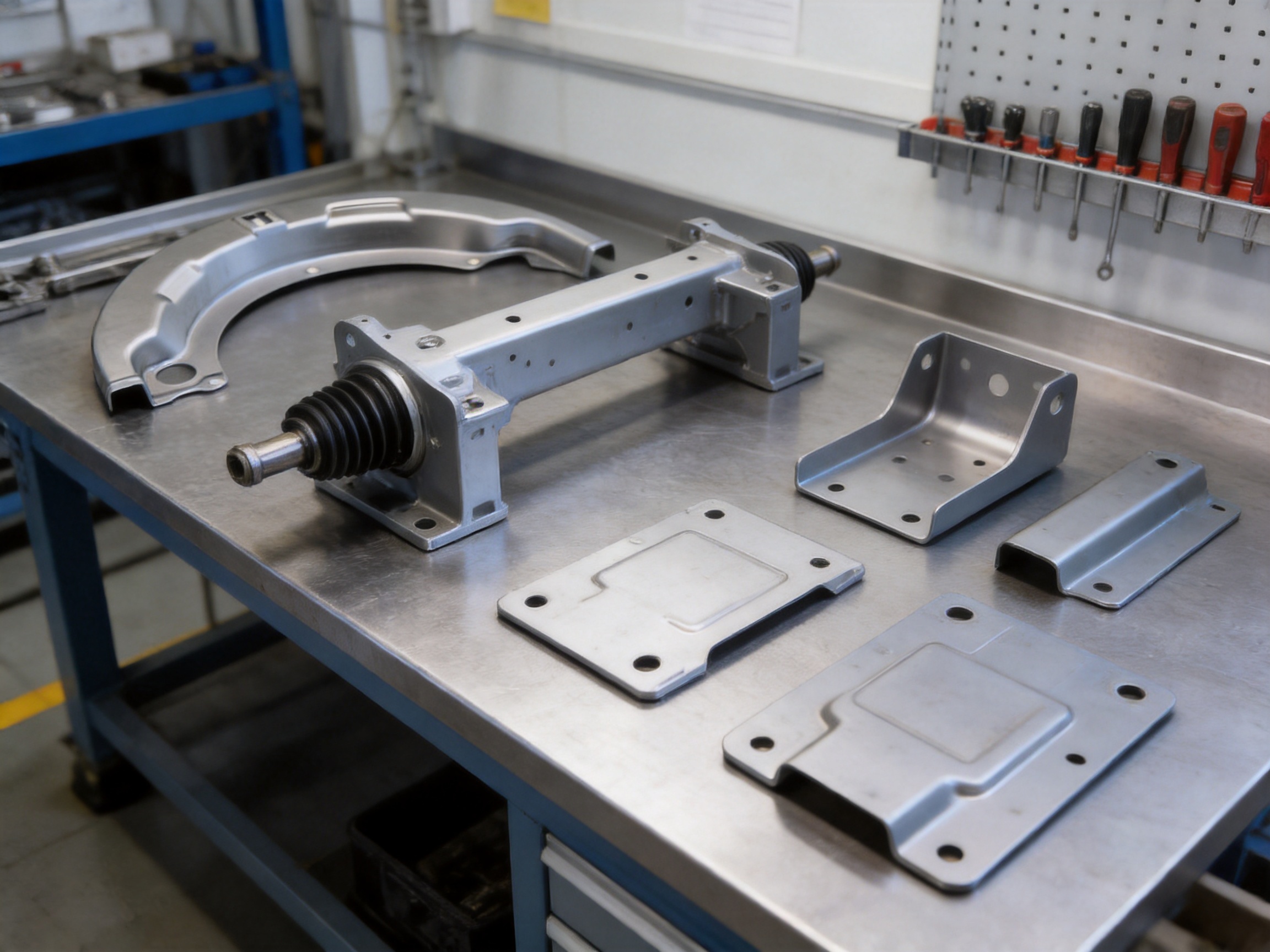
Heavy Truck Stamping Parts for Durable Commercial Vehicle Performance
2026-06-08
Heavy truck stamping parts are essential structural and functional components used in commercial vehicles that operate under demanding loads, long duty cycles, constant vibration, and harsh road conditions. In heavy-duty transportation, construction logistics, mining support, and fleet service environments, every bracket, connecting plate, engine mounting support, and reinforced stamped component must perform consistently over time. These parts are not simple metal pieces; they are precision-engineered elements that influence vehicle stability, service life, assembly efficiency, maintenance cost, and operational safety.
The heavy truck stamping parts introduced here are manufactured for commercial heavy-duty vehicles and are designed to meet the demanding load-bearing and durability requirements of long-haul transportation and construction applications. Produced from high-strength steel plates through advanced cold stamping technology, they offer uniform thickness, clean and smooth edges, accurate dimensional tolerances, and reliable compatibility with original truck assemblies. The product line includes core components such as frame brackets, suspension connecting plates, and engine mounting supports, with each part inspected for hardness, flatness, corrosion resistance, and overall consistency.
In the competitive automotive component market, heavy truck manufacturers and aftermarket service providers require more than basic metal forming. They need reliable engineering, stable mass production, cost control, responsive customization, and strict quality management. Suzhou Shuangqisi Mold Equipment Co., Ltd. provides these capabilities through an integrated manufacturing system that combines stamping die design, stamping part production, mold debugging, machining, inspection, and stamping automation solutions. With extensive experience in the mold industry, a technical team of approximately 60 staff members, and advanced equipment including imported wire cutting machines, CNC machining centers, grinding machines, and punch presses from 80T to 400T, the company supports customers that require high-performance stamped products for demanding industrial and automotive applications.
Content
- 1 Understanding the Role of Heavy Truck Stamping Parts
- 2 Product Overview and Key Component Range
- 3 Why High-Strength Steel and Cold Stamping Matter
- 4 Competitive Advantages Over Common Market Alternatives
- 5 Manufacturing Process from Material to Finished Part
- 6 Quality Control for Heavy-Duty Reliability
- 7 Application Value for Truck Manufacturers
- 8 Application Value for Aftermarket Service Providers
- 9 Technical Comparison Table
- 10 Design Considerations for Heavy Truck Stamped Components
- 11 Advanced Equipment and Manufacturing Strengths
- 12 Integrated Mold-Making and Stamping Automation Capability
- 13 Durability in Vibration, Impact, and Harsh Environments
- 14 Cost Efficiency Through Precision and Process Control
- 15 Customization and OEM Support
- 16 Supply Capability and Industry Experience
- 17 How Heavy Truck Stamping Parts Support Vehicle Lifecycle Value
- 18 Packaging, Handling, and Delivery Considerations
- 19 Selection Guide for Buyers
- 20 Frequently Asked Questions
- 20.1 What are heavy truck stamping parts?
- 20.2 What materials are used for these stamping parts?
- 20.3 Why is cold stamping suitable for heavy truck components?
- 20.4 How do these parts compare with ordinary stamped parts?
- 20.5 What quality inspections are performed?
- 20.6 Can the parts be customized for different truck models?
- 20.7 What types of heavy truck systems use these parts?
- 20.8 How do these parts help reduce maintenance costs?
- 20.9 What manufacturing advantages does the supplier provide?
- 20.10 Who can use these heavy truck stamping parts?
- 21 Conclusion
- 22 References
- 23 Product: Heavy truck stamping parts
Understanding the Role of Heavy Truck Stamping Parts
Heavy trucks differ from passenger cars in both operating environment and mechanical stress. A long-haul tractor, dump truck, mixer truck, cargo chassis, or construction vehicle may carry heavy payloads for thousands of kilometers, travel across uneven roads, operate in wet and corrosive climates, and endure strong vibration from engines, drivetrains, suspension systems, and road impacts. Under these conditions, stamped parts must maintain structural integrity and precise geometry. A small dimensional error, weak edge, uneven thickness, or unstable mounting hole can lead to assembly problems, abnormal vibration, fatigue cracks, early corrosion, or increased maintenance frequency.
Stamping parts are widely used in heavy truck systems because metal stamping can create strong, repeatable, lightweight, and cost-effective components at scale. Compared with many machined or welded alternatives, stamped components can provide excellent material utilization, consistent dimensions, high production efficiency, and stable mechanical performance. When designed correctly, a stamped part can distribute stress efficiently, strengthen local mounting areas, reduce unnecessary weight, and support rapid assembly on the production line.
For heavy trucks, common stamped parts include frame brackets, reinforcement plates, suspension connecting plates, engine mounting supports, chassis support plates, mounting clips, gussets, covers, and structural connectors. These parts may appear secondary when compared with engines or axles, but they often determine how well systems are fixed, aligned, reinforced, and protected. A suspension connecting plate, for example, must resist repeated dynamic loads. An engine mounting support must maintain position under torque, vibration, and heat. A frame bracket must match the truck chassis accurately and must not deform during assembly or operation.
The heavy truck stamping parts discussed in this article are engineered to satisfy these operating requirements. They are designed for reliable performance in heavy-duty operations and are suitable for truck manufacturers, component suppliers, repair networks, and aftermarket service providers that need durable and precisely manufactured stamped components.
Product Overview and Key Component Range
The heavy truck stamping parts product line focuses on structural and supporting components for commercial vehicles. These parts are made primarily from high-strength steel plates, selected according to load requirements, forming characteristics, thickness specifications, and durability targets. The use of advanced cold stamping technology enables accurate shaping without compromising dimensional stability. Through properly designed dies, controlled press operations, and strict inspection procedures, the parts achieve smooth edges, consistent thickness, accurate hole positions, and dependable flatness.
Frame brackets are among the most important stamped components in heavy truck systems. They connect or support chassis-related parts and must provide strong load transfer while maintaining precise installation geometry. Poorly formed brackets can create misalignment, stress concentration, or assembly delays. High-quality frame brackets help improve vehicle assembly efficiency and contribute to stable long-term operation.
Suspension connecting plates are also central to heavy truck performance. Suspension systems experience constant dynamic loads as vehicles travel over uneven roads, carry variable cargo weights, and respond to braking, turning, and acceleration forces. A stamped suspension connecting plate must resist fatigue, vibration, and deformation. The part must combine sufficient strength with precise mounting dimensions to ensure proper connection with related suspension assemblies.
Engine mounting supports require both strength and vibration resistance. Heavy truck engines produce considerable torque and vibration, especially under high load or low-speed operation. Engine supports must maintain stable positioning while absorbing and transferring mechanical forces. Stamped engine mounting supports must therefore meet strict requirements for geometry, surface condition, hardness, and anti-corrosion performance.
In addition to these components, the production capability can support customized parts according to customer drawings, samples, or application requirements. Because the manufacturer also specializes in stamping dies, customers can benefit from coordinated die design and stamped part production. This reduces communication gaps, improves manufacturability, and supports faster transition from prototype to batch production.
Why High-Strength Steel and Cold Stamping Matter
The selection of high-strength steel plate is a key reason these heavy truck stamping parts can withstand demanding working conditions. Heavy trucks need parts that can carry load, resist deformation, and survive vibration cycles over long service periods. High-strength steel provides a favorable balance of strength, toughness, formability, and cost. It allows stamped parts to achieve reliable structural performance without unnecessary material waste.
Cold stamping is particularly valuable for heavy truck components because it allows metal plates to be formed at room temperature using precisely designed dies and press equipment. Compared with manual fabrication or less controlled forming methods, cold stamping offers higher repeatability, faster production speed, more consistent dimensions, and better suitability for mass production. It can also produce clean edges, accurate bends, embossed features, ribs, holes, and complex shapes that improve strength and assembly performance.
Uniform thickness is one of the major benefits of properly controlled cold stamping. In heavy truck applications, uneven thickness can cause weak zones, unpredictable stress distribution, and premature failure. By controlling material selection, blanking, forming pressure, die clearance, and process sequence, the manufacturer can produce parts with stable thickness and reliable performance.
Smooth edges are also important. Burrs, sharp cracks, and rough edges can interfere with assembly, damage nearby components, increase corrosion risk, and create safety hazards for workers. Precision stamping and secondary finishing processes help ensure that edges are clean and suitable for truck assembly environments.
Dimensional accuracy is another competitive advantage. Heavy truck assembly lines require parts that fit correctly with chassis, engine, suspension, and body structures. When stamped parts are inaccurate, manufacturers may face rework, installation delays, welding issues, uneven load transfer, or quality complaints. Precision dies, accurate machining, and quality inspection help ensure compatibility with original truck assemblies and reduce production risk for customers.
Competitive Advantages Over Common Market Alternatives
Many suppliers can produce stamped metal parts, but heavy truck applications require more than basic stamping capacity. The advantages of these heavy truck stamping parts come from a combination of material selection, die expertise, manufacturing control, inspection discipline, and integrated service capability. Compared with competitors that focus only on low-cost pressing, this approach provides better reliability and long-term value.
First, the parts are designed and manufactured with attention to heavy-duty operating conditions. In markets where some stamped parts are produced for general use, dimensions and strength may be acceptable for light-duty assemblies but inadequate for heavy truck environments. These heavy truck stamping parts are intended for vibration, impact, harsh weather, load-bearing structures, and long service cycles. This makes them suitable for demanding applications where failure can cause costly downtime.
Second, the company has strong stamping die design and manufacturing capability. Die quality directly determines stamping part quality. A poorly designed die may create inconsistent bending angles, uneven hole positions, excessive burrs, cracking, springback, or unstable production. Because Suzhou Shuangqisi Mold Equipment Co., Ltd. integrates die design, manufacturing, debugging, and stamping production, it can optimize parts from the tooling stage. This advantage improves production stability and reduces defects.
Third, advanced equipment supports precision manufacturing. The company is equipped with imported wire cutting machines, CNC machining centers, more than 10 grinding machines of various sizes, and 25 punch presses ranging from 80T to 400T. These machines allow accurate die components, stable press forming, and flexible production for different material thicknesses and part sizes. Competitors with limited equipment may struggle to maintain stable tolerances or may need outsourcing, which can increase lead time and reduce process control.
Fourth, experienced operators and debugging personnel provide practical manufacturing knowledge. Heavy truck stamping parts often require careful control of forming sequence, die clearance, lubrication, springback compensation, material feed, and press parameters. Senior operators can identify early signs of cracking, deformation, abnormal wear, and dimensional drift. Experienced debugging personnel can adjust dies efficiently before mass production. This reduces trial-and-error time and supports consistent part quality.
Fifth, the company can provide turnkey solutions for stamping molds and stamping automation. This is an important advantage for customers that need not only parts but also production systems, process improvement, or automated manufacturing support. With the establishment of Suzhou Keshuang Intelligent Technology Co., Ltd. in 2016 to focus on stamping automation equipment, the broader manufacturing capability includes automation solutions that improve efficiency, repeatability, and cost competitiveness.
Finally, strict cost and quality control help customers receive competitive products without sacrificing performance. In heavy truck manufacturing and repair, the cheapest component is not always the most economical. A low-priced part that fails early can cause downtime, labor cost, warranty claims, and safety risk. A reliable stamped part with stable dimensions and corrosion resistance reduces these hidden costs and supports better lifecycle value.
Manufacturing Process from Material to Finished Part
The production of heavy truck stamping parts begins with understanding the customer’s requirements. These requirements may include drawings, material specifications, target vehicle platform, assembly location, load conditions, surface treatment needs, tolerance requirements, annual volume, and packaging standards. Engineering personnel evaluate the part design and determine the most suitable stamping process, die structure, material grade, and production flow.
Material selection is then confirmed. High-strength steel plates are chosen according to mechanical requirements and forming needs. Thickness must be controlled carefully because it affects strength, die clearance, press tonnage, bending behavior, and final dimensions. Incoming material inspection helps verify that steel plates meet required standards for surface condition, thickness, hardness, and mechanical properties.
Next, blanking or cutting prepares the material for stamping. The blank shape must be optimized to reduce material waste while ensuring stable forming. If the blank shape is inaccurate, later forming steps may produce wrinkles, cracks, or dimensional errors. Proper nesting and cutting strategies improve material utilization, supporting competitive pricing.
The stamping die is designed and manufactured with precision. Depending on the part complexity, the die may include blanking, piercing, bending, forming, trimming, flanging, or progressive operations. Advanced wire cutting, CNC machining, and grinding equipment help produce accurate die inserts, punches, guide components, and forming surfaces. Precision die manufacturing is essential because even small tooling errors can be transferred directly to every stamped part.
During trial stamping, operators and engineers test the die under controlled conditions. They check forming quality, hole position, edge condition, flatness, bending angles, springback, and material flow. Adjustments may be made to the die, press parameters, lubrication, or process sequence. This debugging stage is critical for achieving stable mass production.
Once the process is approved, batch production begins on suitable punch presses. The availability of presses from 80T to 400T allows the company to match equipment to part size, material thickness, and forming force requirements. Proper equipment selection prevents underpowered forming, excessive tool stress, and unstable production. During production, workers monitor parts and machines to ensure continuous quality.
After stamping, parts may undergo deburring, cleaning, surface treatment, or anti-corrosion processing according to customer requirements. Heavy truck parts often need corrosion protection because they may be exposed to rain, road salt, mud, dust, industrial pollution, and temperature changes. Surface treatments can improve durability and extend service life.
Final inspection verifies that parts meet specified requirements. Inspection items may include dimensional tolerances, hole position, flatness, hardness, surface condition, edge quality, and anti-corrosion performance. Qualified parts are packaged to prevent deformation, corrosion, and surface damage during transportation and storage.
Quality Control for Heavy-Duty Reliability
Quality control is especially important for heavy truck stamping parts because these components are often used in critical structural and mounting positions. A quality problem can affect assembly accuracy, driving safety, maintenance frequency, and customer satisfaction. For this reason, the product line is supported by strict inspection procedures throughout the manufacturing process.
Hardness testing helps confirm that the material and forming process produce parts with appropriate mechanical performance. If hardness is too low, a part may deform under load. If hardness is too high or poorly controlled, it may become brittle or difficult to form without cracking. Proper hardness control supports the balance between strength and durability.
Flatness inspection is important for parts that must sit flush against frames, brackets, engines, or suspension components. Poor flatness can cause uneven fastening force, misalignment, vibration, and premature fatigue. By controlling stamping parameters and inspecting flatness, the manufacturer helps ensure reliable assembly.
Dimensional inspection confirms that hole locations, bend angles, overall length, width, height, and mounting features match the design requirements. Heavy truck assembly often depends on tight positional relationships. If a mounting hole is shifted even slightly, installation may require force, rework, or rejection. Precision inspection protects customers from these problems.
Edge inspection checks for burrs, cracks, tearing, or sharp defects. In heavy truck parts, poor edge quality can become a starting point for fatigue cracking or corrosion. Clean edges improve both safety and service life.
Anti-corrosion performance is also tested or verified according to customer needs. Heavy trucks may operate in coastal areas, cold regions with deicing salts, construction sites, mining areas, and humid climates. Corrosion can weaken stamped parts and shorten vehicle service life. Appropriate surface treatment and inspection help protect parts in harsh environments.
Process control is not limited to final inspection. Effective quality management includes incoming material checks, die maintenance, first-article inspection, in-process inspection, equipment monitoring, operator training, and packaging control. This full-process approach reduces defect rates and supports stable delivery.
Application Value for Truck Manufacturers
Truck manufacturers need stamped parts that support efficient assembly and reliable vehicle performance. In modern commercial vehicle production, assembly lines must meet strict schedules. Components that do not fit correctly can interrupt production, increase labor time, and create quality risks. Heavy truck stamping parts with precise dimensions and stable tolerances help reduce these problems.
For original equipment manufacturers, compatibility with original truck assemblies is essential. Parts must match design drawings, fastening positions, welding requirements, and load paths. Precision-manufactured frame brackets, suspension connecting plates, and engine mounting supports help ensure that vehicle systems are assembled accurately.
Consistency is also critical. A manufacturer may require thousands or hundreds of thousands of identical stamped parts. Even if the first sample is acceptable, the supplier must maintain stable quality over long production runs. Integrated die manufacturing, press production, and quality inspection help ensure repeatability.
Cost control matters, but it must not weaken performance. Heavy truck manufacturers operate in competitive markets and need suppliers that can reduce waste, improve production efficiency, and optimize processes. The use of cold stamping, optimized die design, automation capability, and controlled production helps provide cost-effective solutions without compromising essential quality.
Engineering support is another advantage. When a customer introduces a new heavy truck model or modifies an existing vehicle platform, stamped components may need redesign or optimization. A supplier with mold design and manufacturing experience can assist with manufacturability review, die development, prototyping, and process improvement. This shortens development cycles and reduces risk.
Application Value for Aftermarket Service Providers
Aftermarket service providers, repair centers, and parts distributors need reliable replacement components that restore vehicle function and minimize downtime. Heavy trucks are commercial assets, and downtime directly affects income. A truck waiting for replacement parts cannot transport goods or support construction work. Therefore, aftermarket stamped parts must be durable, consistent, and compatible.
High-quality replacement stamping parts can reduce repeat repairs. If a low-grade bracket or support deforms quickly, the vehicle may return for service, creating dissatisfaction and additional labor. Durable stamped parts with good corrosion resistance and accurate fit help repair centers improve service quality.
Compatibility is especially important in the aftermarket. Repair technicians need parts that install smoothly without excessive adjustment. Accurate hole positions, stable shape, and proper edge finishing make installation more efficient. This reduces labor time and improves repair reliability.
For distributors, stable product quality supports brand reputation and customer trust. When parts are consistent from batch to batch, distributors can confidently supply repair networks and fleet customers. Strong packaging and corrosion protection also help maintain product condition during storage and transportation.
Heavy truck fleets benefit from lower maintenance frequency. Parts designed to resist vibration, impact, and harsh environments can extend service intervals and reduce unexpected failures. This is particularly important for logistics companies, construction fleets, and operators working in remote areas where breakdowns are costly.
Technical Comparison Table
| Evaluation Area | High-Quality Heavy Truck Stamping Parts | Common Low-Control Alternatives | Customer Benefit |
|---|---|---|---|
| Material | High-strength steel plates selected for load-bearing and durability requirements | General steel or inconsistent material selection | Better resistance to deformation, impact, and fatigue |
| Process | Advanced cold stamping with controlled die design and press parameters | Basic pressing with limited process optimization | More stable dimensions and repeatable production quality |
| Edge Quality | Smooth edges with reduced burrs and improved safety | Rough edges, burrs, or inconsistent trimming | Easier assembly and reduced corrosion or cracking risk |
| Dimensional Accuracy | Precise tolerances for compatibility with original truck assemblies | Variable hole positions and bending angles | Faster installation and fewer assembly problems |
| Durability | Designed to resist vibration, impact, load, and harsh environments | Limited verification under heavy-duty conditions | Longer service life and lower maintenance frequency |
| Quality Inspection | Hardness, flatness, corrosion resistance, and dimensional checks | Minimal final inspection or inconsistent testing | Reduced risk of defective parts reaching customers |
| Supplier Capability | Integrated stamping die design, machining, stamping, and automation support | Single-process production with outsourcing dependency | Shorter development cycle, better cost control, and stable supply |
Design Considerations for Heavy Truck Stamped Components
Effective heavy truck stamping parts begin with proper design. A stamped component must satisfy mechanical performance, manufacturability, cost, and assembly requirements. Engineers must consider material thickness, bend radius, hole spacing, load direction, stress concentration, surface treatment, and forming sequence.
Load path design is fundamental. A bracket or connecting plate must transfer force without concentrating stress in weak areas. Ribs, flanges, embossments, and reinforcement features can improve stiffness while controlling weight. However, these features must be compatible with stamping limits. If a shape is too deep or too sharp for the material, cracking or thinning may occur.
Bend radius affects both strength and manufacturability. A radius that is too small may create cracks or excessive stress. A radius that is too large may reduce assembly space or stiffness. Proper die design and material selection help achieve the right balance.
Hole positions must account for forming effects. Holes pierced before bending may shift or distort during forming, while holes pierced after forming may require more complex tooling. Engineers choose the sequence based on accuracy requirements and production efficiency.
Springback is another major consideration in cold stamping. High-strength steel tends to partially return toward its original shape after forming. If not compensated, springback can cause incorrect angles and poor fit. Experienced die designers account for springback through tooling geometry, forming sequence, and process adjustment.
Surface treatment should be considered early. If a part requires coating, plating, painting, or other anti-corrosion processes, design features must allow proper coverage and drainage. Sharp corners, hidden cavities, or overlapping surfaces can affect coating quality.
Because Suzhou Shuangqisi Mold Equipment Co., Ltd. has both stamping die and stamped part manufacturing capability, it can support these design considerations from the beginning. This integrated approach improves manufacturability and reduces the risk of redesign after tooling begins.
Advanced Equipment and Manufacturing Strengths
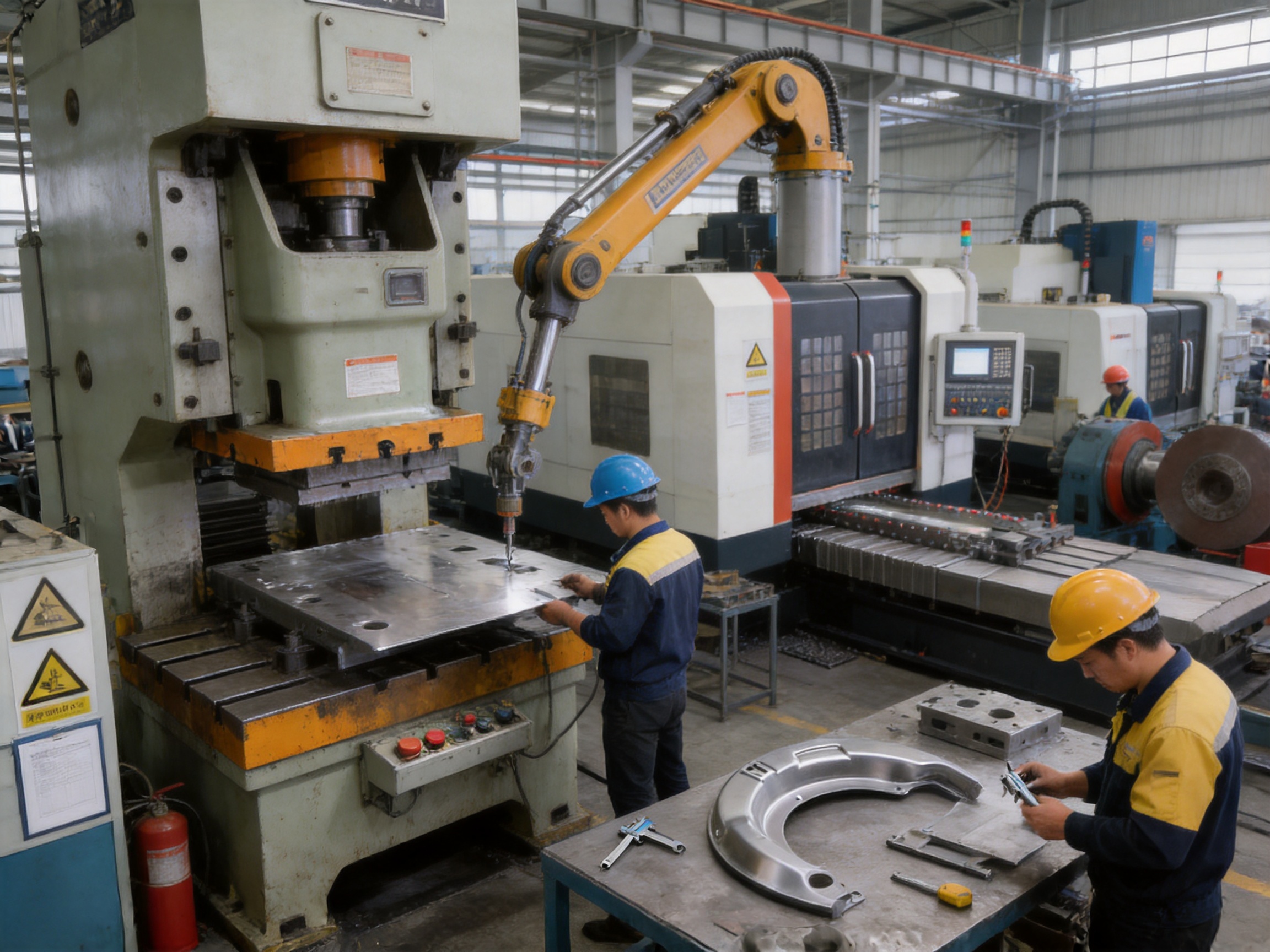
The manufacturing strength behind the heavy truck stamping parts is built on advanced equipment, technical experience, and integrated process capability. The company’s equipment includes imported wire cutting machines, CNC machining centers, more than 10 grinding machines of various sizes, and 25 punch presses ranging from 80T to 400T. This equipment foundation supports accurate tooling, reliable stamping, and flexible production for different heavy truck component requirements.
Imported wire cutting machines are valuable for producing precise die components with complex profiles. In stamping dies, cutting accuracy affects punch shape, clearance, edge quality, and part dimensions. High-precision wire cutting helps ensure that tooling components meet tight specifications.
CNC machining centers support the production of die bases, inserts, cavities, forming blocks, and other precision components. CNC machining allows complex geometries and repeatable accuracy, reducing manual variation and improving die quality. Accurate dies create accurate parts.
Grinding machines are essential for surface precision, flatness, and fit between die components. Proper grinding improves die life, reduces wear, and supports stable stamping. For heavy truck stamping parts, die surfaces must withstand repeated contact with high-strength steel, making tool precision and maintenance especially important.
Punch presses from 80T to 400T provide flexible production capability. Smaller presses can efficiently produce lighter components, while larger presses support thicker materials and bigger parts requiring greater forming force. Matching the press to the part improves quality, safety, and productivity.
Beyond equipment, the company’s experienced technical and operating team is a major strength. Machine tools alone do not guarantee quality. Skilled staff are needed to design dies, plan processes, debug tooling, control production, maintain equipment, inspect parts, and communicate with customers. With approximately 60 technical staff members and experienced operators, the company can address diverse customer needs and solve manufacturing challenges efficiently.
Integrated Mold-Making and Stamping Automation Capability
A distinguishing advantage of the company is the integration of stamping die manufacturing and stamping automation capability. Many suppliers produce stamped parts but depend on outside toolmakers. Others make dies but do not operate large-scale stamping production. An integrated supplier can coordinate tooling, process, production, and automation more effectively.
Stamping die design determines the foundation of part quality. If the die is not optimized, production may suffer from cracks, wrinkles, burrs, unstable dimensions, or excessive tool wear. By controlling die design internally, the company can quickly adjust tooling to improve part quality and production efficiency.
Stamping automation improves consistency and productivity. Automated feeding, transfer, handling, or related systems can reduce manual labor, improve safety, increase speed, and minimize variation. Automation is especially useful in repeat production of high-volume parts. Since Suzhou Keshuang Intelligent Technology Co., Ltd. was established in 2016 to focus on stamping automation equipment, customers can receive support not only for parts but also for automated production solutions.
Turnkey solutions are valuable for customers who need a complete manufacturing approach. A turnkey solution may include part analysis, die design, die manufacturing, press process planning, automation equipment, trial production, quality validation, and batch production support. This reduces coordination complexity and helps customers launch products more efficiently.
The company can also invest in related production equipment according to customer needs to deliver cost-effective products and services. This flexible approach is useful when customers require dedicated capacity, customized production lines, or long-term supply agreements. It demonstrates a commitment to practical cooperation and customer value.
Durability in Vibration, Impact, and Harsh Environments
Heavy truck components face constant vibration from engines, drivetrains, road irregularities, and cargo movement. Vibration can loosen fasteners, create fatigue cracks, and accelerate wear. Stamped parts used in mounting or structural positions must be designed and manufactured to resist these effects.
The heavy truck stamping parts discussed here are designed to resist vibration and impact. High-strength steel provides mechanical durability, while accurate forming ensures that stress is distributed correctly. Smooth edges and proper surface condition reduce crack initiation points. Consistent thickness helps prevent weak zones.
Impact resistance is important for construction and long-haul vehicles. Trucks may operate on gravel roads, uneven construction sites, potholes, and loading areas where sudden forces occur. Brackets and connecting plates must withstand these loads without permanent deformation or fracture.
Environmental resistance is also essential. Moisture, mud, road salt, temperature variation, and chemical exposure can cause corrosion. Once corrosion begins, it can reduce material thickness and weaken the part. Anti-corrosion inspection and surface protection help extend service life.
By combining high-strength materials, precision stamping, strict inspection, and appropriate corrosion protection, these parts help reduce maintenance frequency. For fleet operators and truck owners, this means fewer interruptions, lower repair costs, and more dependable vehicle availability.
Cost Efficiency Through Precision and Process Control
Cost efficiency in heavy truck stamping parts is not simply a matter of unit price. True cost efficiency includes material utilization, production speed, defect rate, assembly efficiency, durability, maintenance reduction, and supply reliability. A slightly cheaper part may become expensive if it causes rework, warranty claims, or vehicle downtime.
Cold stamping is naturally efficient for medium and high-volume production because it can produce large numbers of parts quickly once tooling is prepared. When dies are accurately designed and properly maintained, each press stroke creates consistent parts with minimal waste. This supports competitive pricing.
Material optimization also contributes to cost control. Proper blank layout reduces scrap. Correct material grade selection avoids overengineering while still meeting strength requirements. Process engineering can reduce unnecessary operations and improve production flow.
Quality control reduces hidden costs. Detecting problems early prevents defective parts from reaching customers. Stable quality reduces returns, complaints, and production interruptions. For truck manufacturers, this is particularly valuable because assembly line downtime can be very expensive.
Automation can further improve cost efficiency. Automated feeding and handling reduce labor variation, improve cycle time, and enhance safety. For high-volume parts, automation can significantly improve productivity.
The company’s strict cost and quality control philosophy supports customers that need both performance and competitive pricing. This is especially important in the heavy truck industry, where component reliability and cost pressure must be balanced carefully.
Customization and OEM Support
Heavy truck platforms vary by manufacturer, region, payload class, chassis design, suspension type, engine arrangement, and application. Therefore, stamped parts often need customization. The ability to develop parts according to drawings, samples, or technical requirements is a key supplier capability.
OEM support may begin with reviewing the customer’s design. Engineers evaluate whether the part can be stamped efficiently, whether material thickness is suitable, whether bends and holes are manufacturable, and whether the die structure can meet tolerance requirements. This early review helps prevent costly changes later.
Prototype and trial production allow customers to verify fit, function, and performance before full-scale production. During this stage, feedback can be used to adjust tooling or process parameters. For heavy truck parts, prototype validation may include assembly checks, load testing, vibration evaluation, or corrosion testing depending on customer requirements.
Once the design is approved, batch production can be arranged. The company’s stamping equipment and technical team support stable production volumes. Packaging and delivery can be adapted to customer needs, helping ensure parts arrive in usable condition.
OEM customers also benefit from confidentiality, technical communication, and long-term cooperation. A reliable supplier understands that stamped components are part of larger vehicle systems and must support the customer’s design goals, production schedule, and market reputation.
Supply Capability and Industry Experience
Industry experience is an important indicator of supplier reliability. Suzhou Shuangqisi Mold Equipment Co., Ltd. has 15 years of experience in the mold industry and focuses on stamping dies, hardware parts, and stamping automation solutions. This background provides practical knowledge of die development, stamping challenges, manufacturing efficiency, and quality control.
The company’s customer base includes well-known industrial clients such as Anter Group, Ousheng Electric, Dongbei Group, and Huichuan Technology. Its products and molds have been used in fields such as servo drives, compressors, and new energy vehicles. Although these industries differ from heavy trucks, they also require precision, consistency, and reliable manufacturing. This broad experience strengthens the company’s ability to serve demanding automotive and industrial customers.
The company is located at No. 118 Yexin Road, Wujiang Economic Development Zone, Suzhou, China. Suzhou is an important manufacturing region with strong industrial supply chains, technical resources, logistics advantages, and skilled labor availability. This location supports efficient procurement, production, and delivery.
With a technical team, advanced equipment, and a commitment to high-quality development, the company aims to create value for customers and become a renowned manufacturer of high-quality stamping dies. This strategic direction aligns with the needs of heavy truck customers that require reliable long-term suppliers rather than short-term trading relationships.
How Heavy Truck Stamping Parts Support Vehicle Lifecycle Value
The value of a heavy truck component should be evaluated over the full vehicle lifecycle. A part that performs reliably for years contributes to lower total ownership cost. A part that fails early may create repair expenses, downtime, safety concerns, and reputational damage.
Reliable frame brackets help maintain chassis integrity and proper connection between systems. Strong suspension connecting plates contribute to stable handling and load support. Durable engine mounting supports help control vibration and maintain engine positioning. Together, these parts influence comfort, safety, maintenance, and performance.
In fleet operations, small improvements in component durability can create significant savings. If a fleet operates hundreds of trucks, reducing replacement frequency for brackets and supports can lower parts cost, labor cost, and downtime. Reliable stamped parts also help maintenance teams plan service schedules more effectively.
For truck manufacturers, durable components improve brand reputation. Commercial vehicle buyers expect trucks to operate under demanding conditions. If stamped parts fail, customers may associate the problem with the vehicle brand. Using high-quality parts helps protect that reputation.
For repair networks, dependable replacement parts improve customer satisfaction. A repair that lasts builds trust, while repeated failures damage credibility. Therefore, heavy truck stamping parts with proven quality provide value across the entire supply chain.
Packaging, Handling, and Delivery Considerations
Heavy truck stamping parts must be protected after production. Even high-quality parts can be damaged by poor packaging, careless handling, or unsuitable storage. Bent brackets, scratched coatings, or corroded surfaces can create problems before installation.
Packaging should prevent deformation by supporting parts properly and avoiding excessive stacking pressure. Parts with precision surfaces or coated finishes may require separators, protective wrapping, or corrosion-resistant packaging. Heavy components should be packed in strong containers suitable for transport.
Clear labeling improves warehouse and assembly efficiency. Labels may include part number, batch number, quantity, production date, and customer information. Batch traceability helps quality management if questions arise later.
Delivery reliability is also important. Truck manufacturers often operate according to production schedules, while aftermarket distributors need stock availability. A supplier with stable production planning and process control can better support on-time delivery.
Selection Guide for Buyers
When selecting heavy truck stamping parts, buyers should evaluate more than appearance. A stamped part may look acceptable but still have hidden issues such as improper hardness, poor flatness, inaccurate hole position, insufficient corrosion protection, or unstable material quality.
Buyers should confirm material specifications and ensure that the selected steel meets load and durability needs. They should review dimensional tolerances and compare them with assembly requirements. They should ask about inspection procedures for hardness, flatness, edge quality, and corrosion resistance.
Supplier capability should also be evaluated. Does the supplier design and manufacture dies? Does it have suitable press tonnage? Does it have CNC machining, wire cutting, grinding, and inspection capability? Can it support customization and batch production? Can it provide automation or process improvement if needed?
Communication is another important factor. A good supplier can understand drawings, discuss manufacturability, respond to technical questions, and solve problems quickly. This is particularly important for OEM projects or customized parts.
Cost should be considered in relation to quality and service life. The best choice is often the supplier that provides stable performance, reliable delivery, and competitive pricing over the long term.
Frequently Asked Questions
What are heavy truck stamping parts?
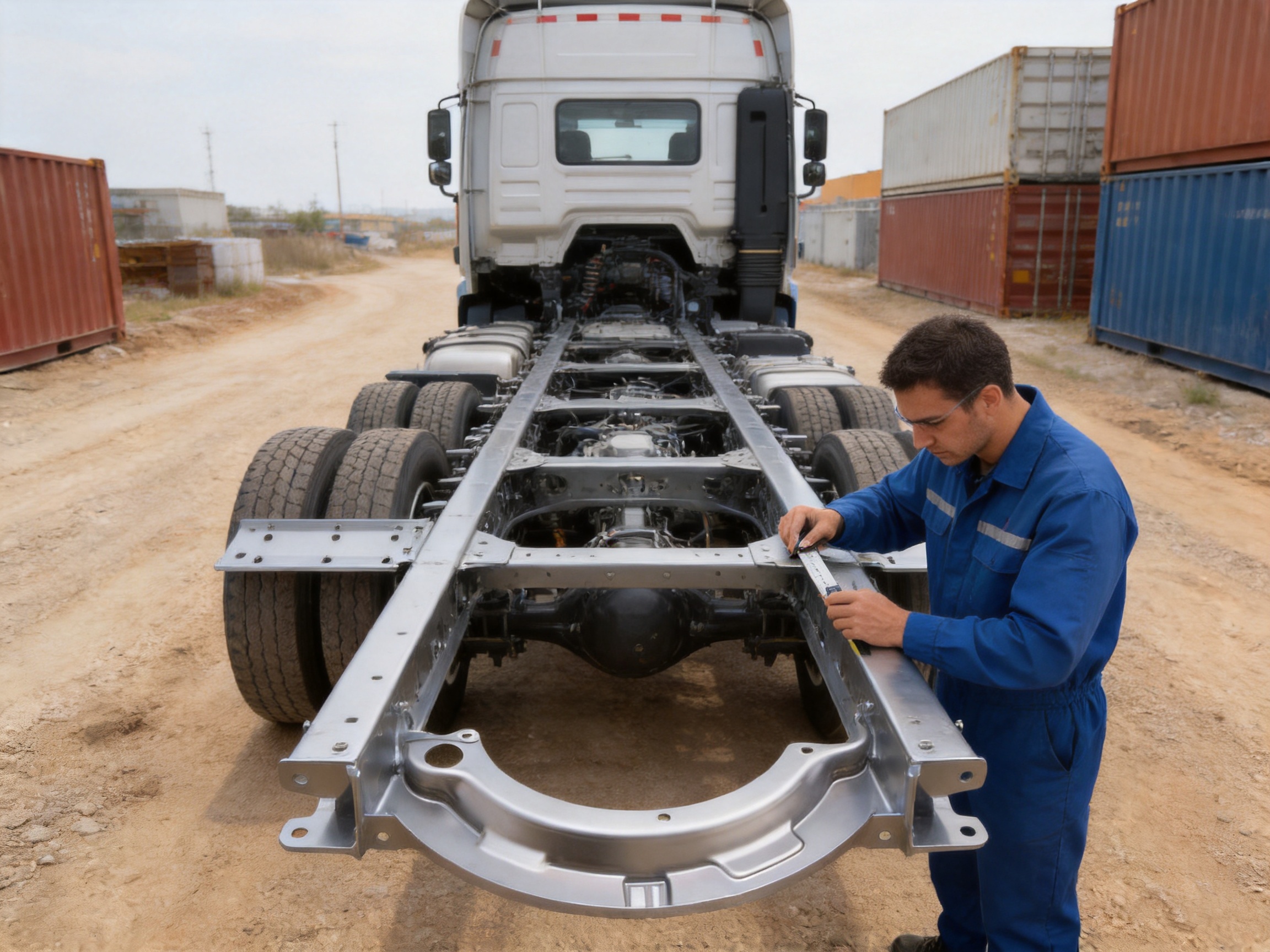
Heavy truck stamping parts are metal components formed from steel plates through stamping processes. They are used in commercial heavy-duty vehicles for functions such as structural support, mounting, reinforcement, and system connection. Examples include frame brackets, suspension connecting plates, and engine mounting supports.
What materials are used for these stamping parts?
These parts are primarily manufactured from high-strength steel plates. The material is selected according to load requirements, forming needs, thickness specifications, and durability expectations for heavy truck applications.
Why is cold stamping suitable for heavy truck components?
Cold stamping provides high efficiency, stable dimensions, consistent thickness, smooth edges, and repeatable mass production. It is suitable for heavy truck components because it can produce strong, accurate, and cost-effective parts that meet demanding assembly and performance requirements.
How do these parts compare with ordinary stamped parts?
Compared with ordinary or low-control stamped parts, high-quality heavy truck stamping parts offer better material selection, more accurate dimensions, smoother edges, improved corrosion resistance, stronger fatigue performance, and more reliable compatibility with truck assemblies.
What quality inspections are performed?
Quality inspections may include hardness testing, flatness inspection, dimensional measurement, edge quality checks, surface condition review, and anti-corrosion performance verification. These inspections help ensure reliability under heavy-duty operating conditions.
Can the parts be customized for different truck models?
Yes. The parts can be customized according to customer drawings, samples, technical specifications, and application requirements. The supplier’s integrated die design and stamping production capability supports OEM and customized projects.
What types of heavy truck systems use these parts?
They can be used in chassis structures, suspension systems, engine mounting systems, frame assemblies, reinforcement positions, and other structural or supporting areas of heavy-duty commercial vehicles.
How do these parts help reduce maintenance costs?
Durable stamping parts resist vibration, impact, corrosion, and deformation. This reduces the likelihood of early failure, repeated repair, and vehicle downtime, helping fleets and service providers lower maintenance frequency and operating cost.
What manufacturing advantages does the supplier provide?
The supplier provides integrated stamping die design, die manufacturing, machining, stamping production, debugging, inspection, and stamping automation support. Its equipment includes imported wire cutting machines, CNC machining centers, grinding machines, and punch presses from 80T to 400T.
Who can use these heavy truck stamping parts?
They are suitable for truck manufacturers, automotive component suppliers, aftermarket service providers, repair networks, parts distributors, and fleet maintenance organizations that require reliable heavy-duty stamped components.
Conclusion
Heavy truck stamping parts play a critical role in the reliability, safety, and efficiency of commercial heavy-duty vehicles. Frame brackets, suspension connecting plates, engine mounting supports, and related components must withstand load, vibration, impact, corrosion, and long service cycles. For this reason, product quality depends on strong materials, precision tooling, advanced stamping processes, strict inspection, and experienced manufacturing support.
The heavy truck stamping parts presented here are manufactured from high-strength steel plates using advanced cold stamping technology. They provide uniform thickness, smooth edges, accurate dimensional tolerances, and reliable compatibility with original truck assemblies. Their resistance to vibration, impact, and harsh environmental conditions helps extend truck system service life and reduce maintenance frequency.
Beyond the product itself, the manufacturing strength behind these parts adds important value. Suzhou Shuangqisi Mold Equipment Co., Ltd. integrates stamping die design, mold manufacturing, stamping production, quality control, and stamping automation capability. With advanced wire cutting machines, CNC machining centers, grinding machines, punch presses from 80T to 400T, experienced technical staff, and 15 years of mold industry experience, the company can provide reliable and cost-effective solutions for heavy truck manufacturers and aftermarket service providers.
In a market where many suppliers compete mainly on price, a stronger advantage comes from long-term value. Precision-made heavy truck stamping parts reduce assembly problems, improve durability, support stable vehicle performance, and lower lifecycle cost. For customers seeking dependable commercial vehicle components, a supplier with integrated tooling, stamping, and automation strength offers a clear competitive advantage.
References
1. Society of Automotive Engineers. Commercial Vehicle Chassis Design and Durability Principles.
2. Kalpakjian, S., and Schmid, S. Manufacturing Engineering and Technology.
3. Altan, T., and Tekkaya, A. E. Sheet Metal Forming: Fundamentals and Applications.
4. ASM International. Metals Handbook: Forming and Forging.
5. Davies, G. Materials for Automobile Bodies.
6. Lange, K. Handbook of Metal Forming.
7. Automotive Industry Action Group. Production Part Approval Process Reference Manual.
8. International Organization for Standardization. Quality Management Systems for Automotive Production and Relevant Service Part Organizations.
Product: Heavy truck stamping parts
Previous Post
High-End Large Computer Stamping Parts for Stable, Accurate, and Scalable Hardware Manufacturing
Next Post
Precision Laptop Stamping Parts for Durable, Lightweight Electronic Assemblies
Our Products.
Start Your Business with an OEM Manufacturer Right Here!

Provide global customers with complete turn-key solutions
through
innovation!
QUICK LINKS
CONTACT INFO.
-
 +86-139 1308 8972
 -

-
 No. 118 Yexin Road, Wujiang Economic Development Zone, Suzhou, China
Copyright © Suzhou Shuangqisi Mold Equipment Co., Ltd. All Rights Reserved. Custom Stamping Die Metal Stamping Die Manufacturers
