 English
 Español
 Deutsch
-
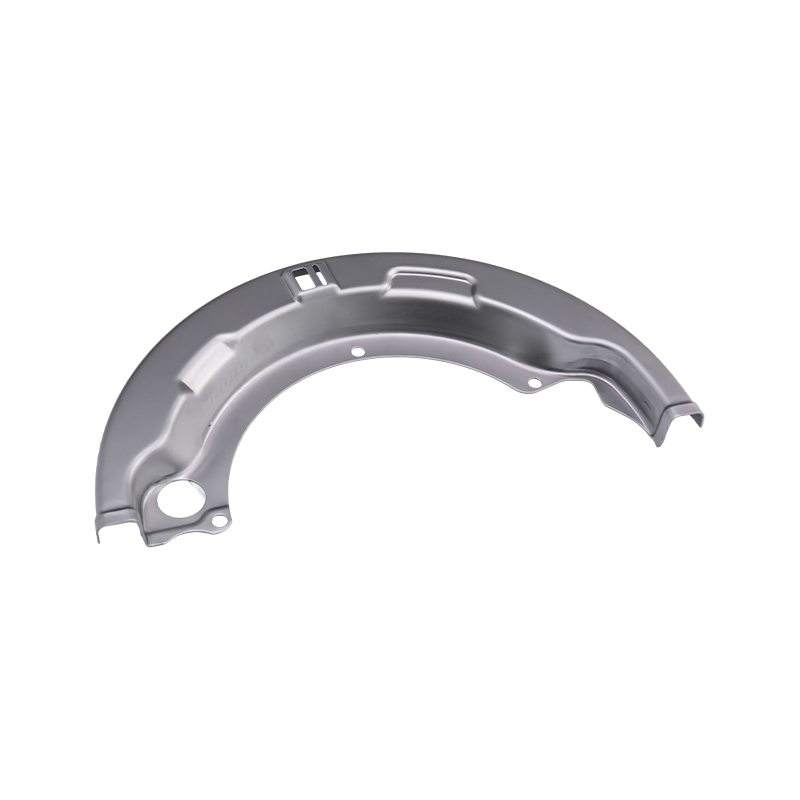
Heavy truck stamping parts
Our Heavy truck stamping parts are precision-manuf...
-
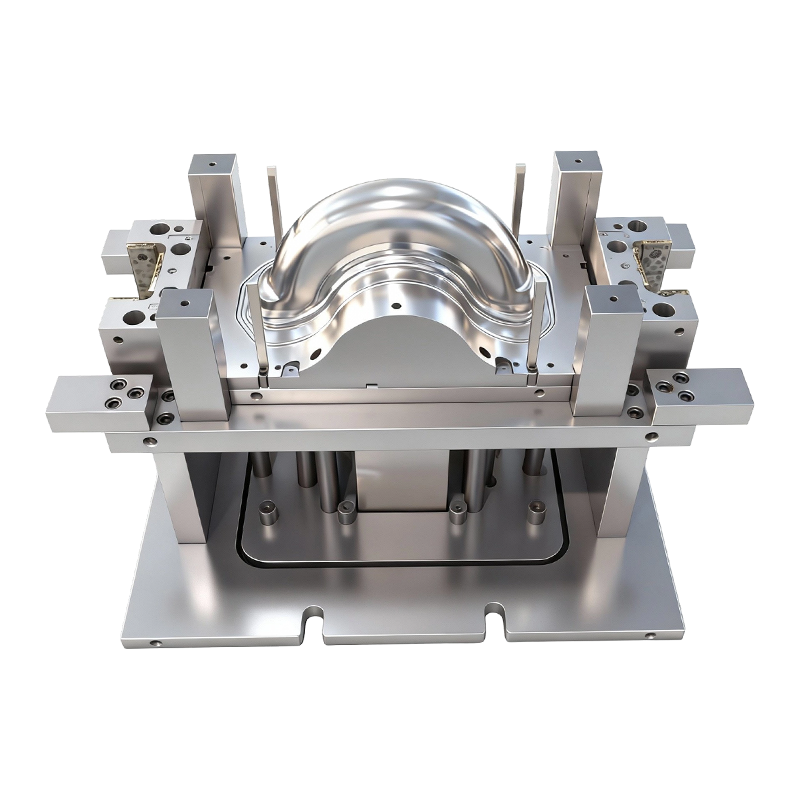
Deep drawing mold for front and rear wheels of two-wheeled electric vehicles
This Deep drawing mold for front and rear wheels o...
-
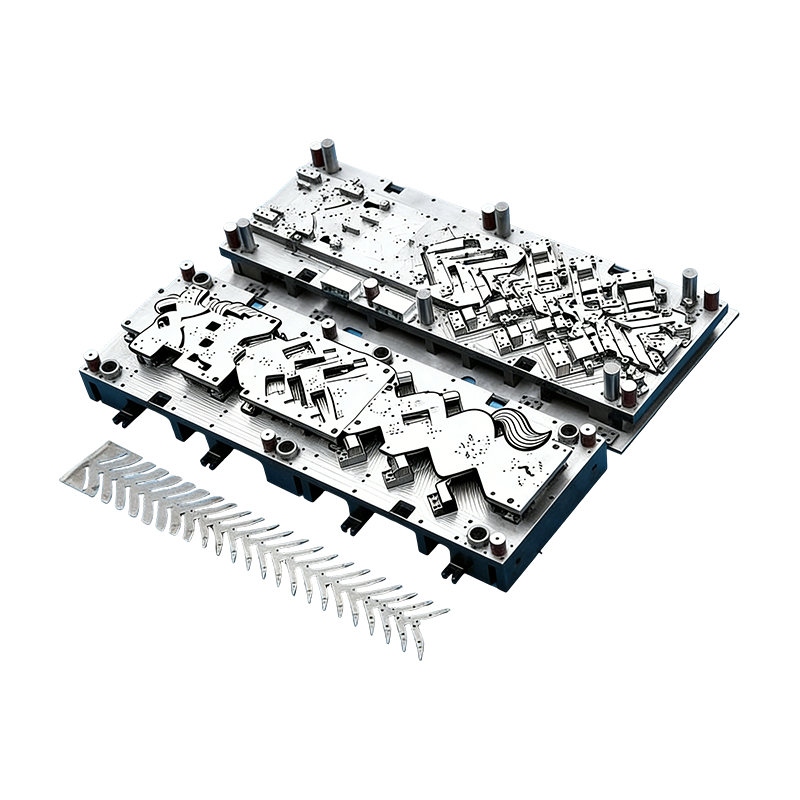
Progressive molds for automotive parts
This Continuous mold for automotive motor housing ...
-
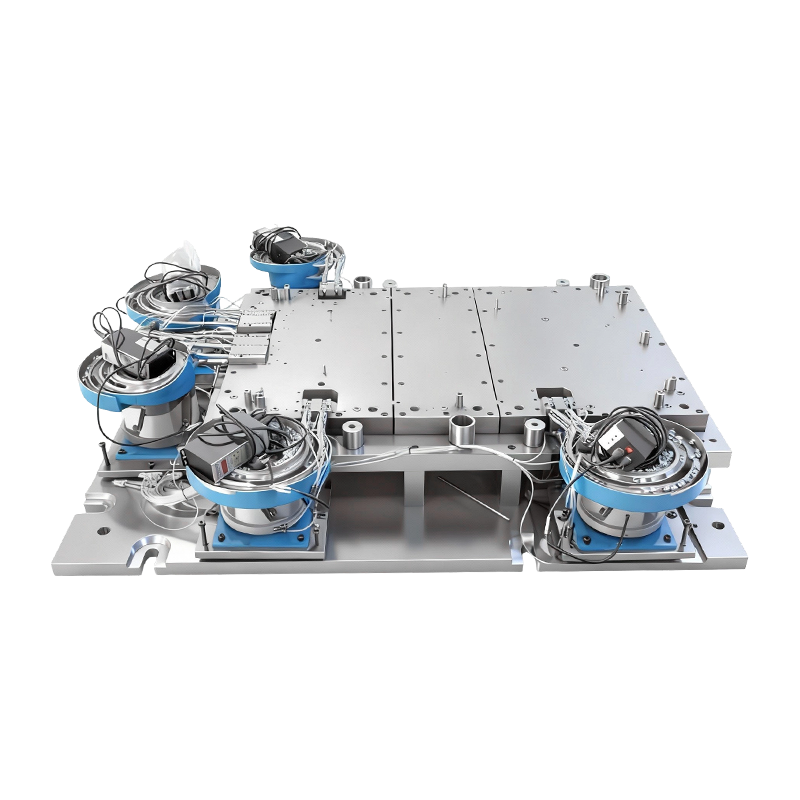
Automatic riveting mold for large computer machine base
This Automatic Riveting Mold for Large Computer Ma...
-
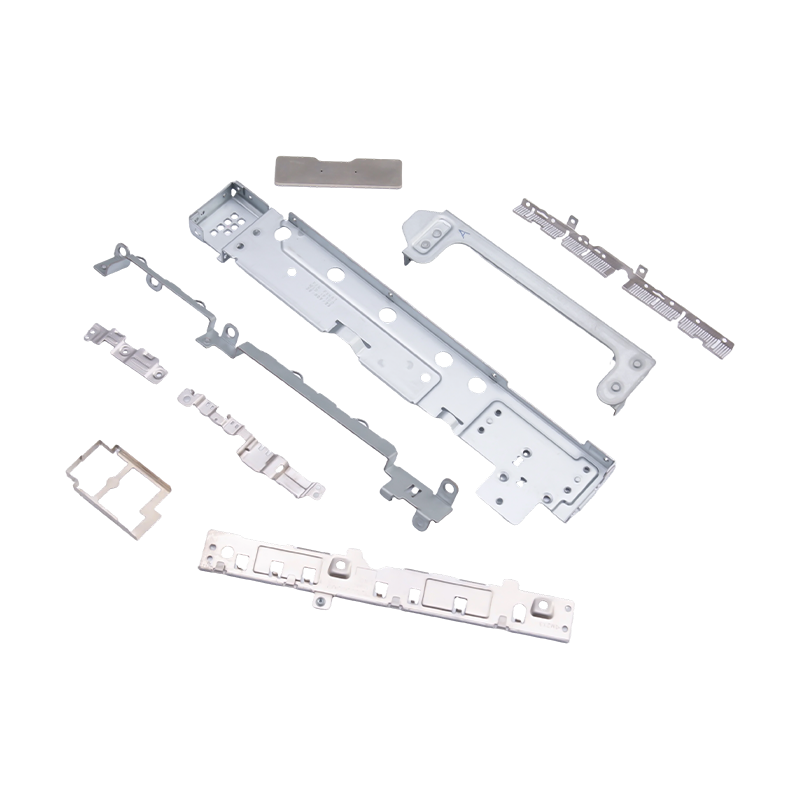
Small stamped parts for laptops and mobile phones
As essential internal components for modern portab...
- E-mail us: [email protected]
- Call us: +86-139 1308 8972

Chen Siyi – Overseas Sales Manager
Home / Author / Chen Siyi – Overseas Sales Manager / Heavy Truck Stamping Parts for Durable Commercial Vehicle Performance
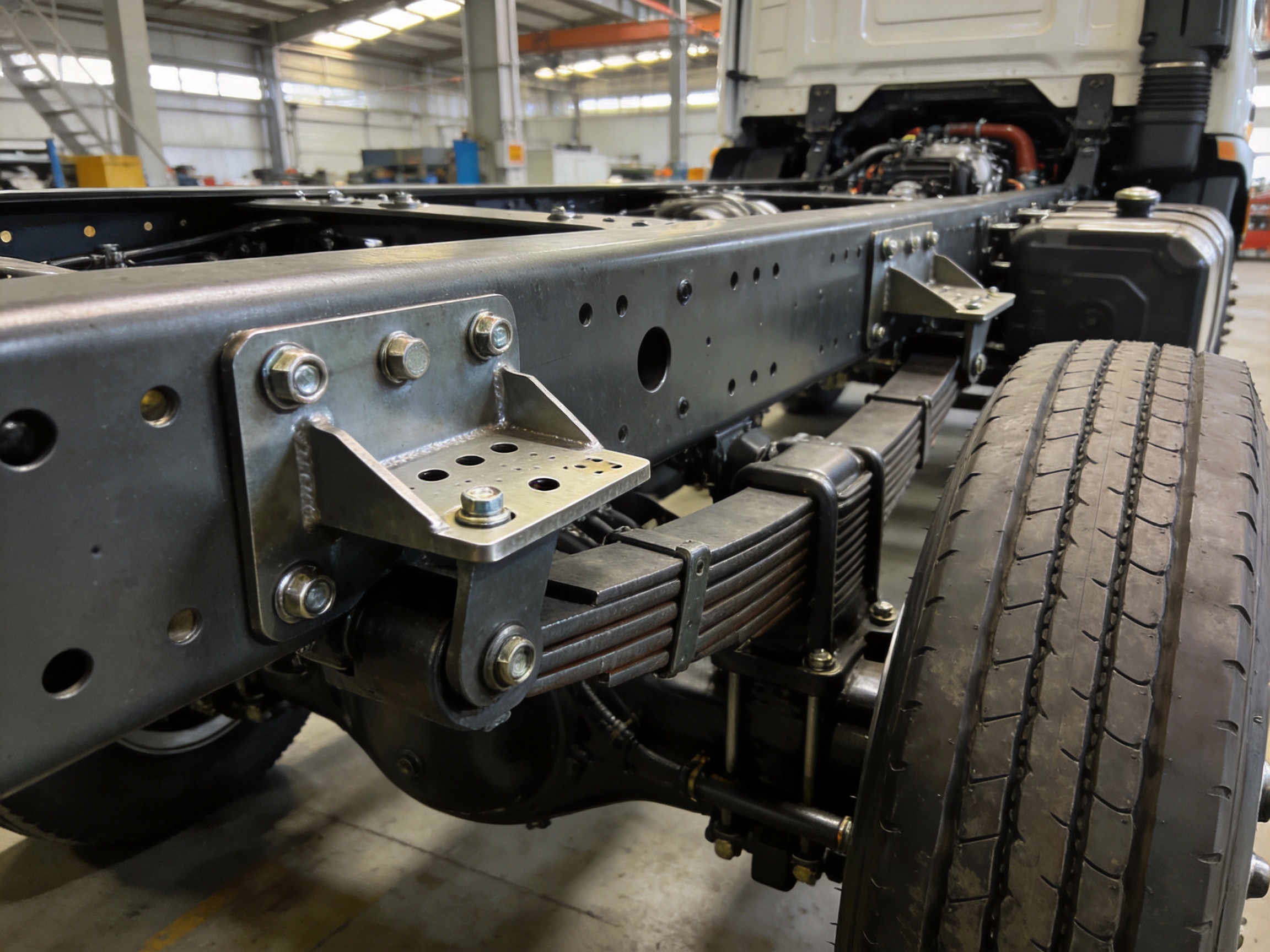
Heavy Truck Stamping Parts for Durable Commercial Vehicle Performance
2026-05-23
Heavy truck stamping parts are among the most important structural and functional components used in modern commercial vehicles. In long-haul transportation, construction logistics, mining support, infrastructure service, and other heavy-duty applications, trucks operate under continuous vibration, fluctuating load, harsh weather, and demanding road conditions. Under these circumstances, every bracket, connecting plate, mounting support, and reinforced metal component must deliver stable mechanical performance over a long service life. Precision-manufactured heavy truck stamping parts help vehicle manufacturers and aftermarket service providers achieve this goal by offering reliable strength, dimensional consistency, assembly compatibility, and cost-efficient production quality.
The heavy truck stamping parts discussed in this article are manufactured from high-strength steel plates through advanced cold stamping technology. They are designed for commercial heavy-duty vehicle systems that require uniform material thickness, smooth edge quality, accurate hole positioning, and dependable load-bearing performance. Typical applications include frame brackets, suspension connecting plates, engine mounting supports, reinforced installation plates, and other metal components used in vehicle chassis, powertrain, and structural systems. Compared with ordinary fabricated parts, precision stamping parts provide better repeatability, cleaner geometry, improved production efficiency, and more reliable consistency for mass production.
Suzhou Shuangqisi Mold Equipment Co., Ltd. is a professional manufacturer integrating stamping die design, die manufacturing, metal stamping production, and stamping automation equipment support. Located in Suzhou, China, the company has built its capabilities around precision mold technology, advanced processing equipment, experienced technicians, strict quality control, and integrated production services. With around 60 technical staff, imported wire cutting machines, CNC machining centers, more than 10 grinding machines of different sizes, 25 punch presses ranging from 80T to 400T, and experienced die debugging personnel, the company can support customers that require custom stamping dies, automotive stamping parts, hardware components, and turnkey stamping automation solutions.
Content
- 1 Product Overview: What Heavy Truck Stamping Parts Are Designed to Do
- 2 Core Product Advantages in Heavy-Duty Vehicle Applications
- 3 Common Heavy Truck Stamping Part Types
- 4 Performance Comparison with Ordinary Alternatives
- 5 Advanced Manufacturing Processes Behind Product Quality
- 6 Company Strengths Supporting Reliable Supply
- 7 Why Integrated Die and Automation Capability Matters
- 8 Application Value for Truck Manufacturers
- 9 Application Value for Aftermarket Service Providers
- 10 Quality Factors Customers Should Evaluate When Choosing a Supplier
- 11 Cost Performance: Why Precision Often Saves Money
- 12 Design Considerations for Custom Heavy Truck Stamping Parts
- 13 Process Reliability in Harsh Operating Environments
- 14 Turnkey Support for Stamping Dies and Stamping Automation
- 15 Q&A: Heavy Truck Stamping Parts and Manufacturing Capability
- 15.1 Q1: What are heavy truck stamping parts?
- 15.2 Q2: Why is high-strength steel used for these parts?
- 15.3 Q3: What advantages does cold stamping provide?
- 15.4 Q4: How do precision-stamped parts reduce maintenance frequency?
- 15.5 Q5: What types of heavy truck parts can be manufactured?
- 15.6 Q6: Why is stamping die capability important when choosing a supplier?
- 15.7 Q7: What equipment supports the manufacturing process?
- 15.8 Q8: What inspections are performed on heavy truck stamping parts?
- 15.9 Q9: Are these parts suitable for aftermarket replacement?
- 15.10 Q10: Can custom stamping dies and automation solutions be provided?
- 16 Contact and Cooperation Information
- 17 Conclusion
- 18 References
Product Overview: What Heavy Truck Stamping Parts Are Designed to Do
Heavy truck stamping parts are metal components formed by applying controlled pressure to steel sheets or plates with the help of specialized stamping dies. The forming process may include blanking, punching, bending, drawing, flanging, trimming, embossing, or multi-stage progressive operations. For heavy-duty truck applications, the purpose is not simply to shape metal. The purpose is to create components that can repeatedly withstand high load, impact, road vibration, thermal change, corrosion exposure, and strict assembly requirements.
In heavy trucks, stamped components often serve as connecting, supporting, fixing, reinforcing, or protective parts. Frame brackets may connect subassemblies to the main chassis. Suspension connecting plates may transfer force between suspension elements and structural mounting points. Engine mounting supports may help position and stabilize powertrain components. These parts may appear simple from the outside, but their dimensional accuracy and mechanical stability directly influence vehicle assembly quality, operating safety, noise control, vibration resistance, and maintenance frequency.
The product line is engineered for commercial heavy-duty vehicles used in long-haul transportation and construction applications. These trucks carry large payloads, travel long distances, and often operate on uneven roads. Therefore, the metal parts installed in them need more than basic strength. They need repeatable precision, fatigue resistance, anti-corrosion performance, and stable compatibility with original truck assemblies. Properly designed stamping parts contribute to better vehicle durability because they reduce the risk of looseness, deformation, abnormal wear, and premature part replacement.
Cold stamping technology is especially suitable for these components because it can produce consistent dimensions and high-volume efficiency while maintaining good material properties. When the tooling is well designed and the press process is controlled, stamped parts can achieve smooth edges, uniform thickness, reliable bending angles, and accurate hole patterns. For truck manufacturers, these advantages mean easier assembly and lower rework rates. For aftermarket service providers, they mean parts that fit properly and perform reliably during replacement or maintenance.
Core Product Advantages in Heavy-Duty Vehicle Applications
The main competitive advantage of high-quality heavy truck stamping parts is their ability to combine strength, precision, consistency, and manufacturability. In heavy truck production, a component that is strong but inconsistent creates assembly problems. A component that is accurate but lacks durability creates safety and maintenance concerns. A component that is inexpensive but has poor edge quality may reduce initial cost but increase downstream losses. Therefore, the best stamping parts are developed with a balanced focus on material, tooling, process control, inspection, and application performance.
One key advantage is high load-bearing capacity. The parts are made from high-strength steel plates selected to meet the load and deformation requirements of heavy commercial vehicles. Material selection is important because heavy trucks often experience alternating stress, impact, and vibration. A suitable steel grade can provide the necessary strength while still allowing stable stamping and bending performance. Combined with optimized die design, the finished part can maintain its shape and function under demanding operating conditions.
Another advantage is dimensional precision. Stamping dies allow repeated production of parts with consistent shapes and hole positions. This is essential for truck assemblies where multiple parts must align with bolts, welds, brackets, chassis points, or equipment interfaces. Poor dimensional control can cause installation delays, forced assembly, stress concentration, or long-term fatigue issues. Precision stamping reduces these risks by ensuring that parts are produced according to controlled tolerances.
Uniform thickness is also a major performance benefit. In heavy truck stamped components, unexpected thinning or uneven deformation may weaken the part. Advanced cold stamping processes help maintain stable material distribution. For bending, forming, and flanging operations, die clearance and forming sequence must be carefully planned to avoid cracks, wrinkling, excessive thinning, or springback errors. A manufacturer with strong die design and debugging ability can control these factors more effectively than suppliers relying on basic forming methods.
Smooth edge quality improves both safety and performance. Burrs, cracks, sharp edges, and rough cut surfaces may interfere with assembly, damage surrounding components, or become starting points for corrosion and fatigue cracks. Through precision blanking, punching, trimming, grinding, and inspection, the parts can achieve clean edges and reliable surface quality. This is particularly important for components installed near wiring, hoses, suspension elements, and moving mechanical assemblies.
Anti-corrosion performance is another essential requirement. Heavy trucks may operate in rain, snow, mud, high humidity, salt-exposed roads, construction dust, or chemical environments. Stamping parts must be inspected and treated according to relevant anti-corrosion needs. Depending on customer requirements, surface treatment may include cleaning, rust prevention, coating preparation, plating, painting, or other protective processes. Reliable anti-corrosion performance helps extend service life and reduce maintenance frequency.
Common Heavy Truck Stamping Part Types
The heavy truck stamping part family includes several core components used in chassis, suspension, engine, and auxiliary systems. Although specific part geometry varies by vehicle model, the functional logic is similar: each component must support, connect, reinforce, or position a critical system. Below are several important examples.
Frame Brackets
Frame brackets are widely used to connect vehicle systems to the truck frame. They may support pipes, tanks, cables, suspension-related components, or auxiliary equipment. Because the frame is one of the most important load-bearing structures of the truck, brackets installed on or near it must have excellent dimensional accuracy and stable strength. If a bracket does not align properly, it may create assembly stress. If it lacks sufficient rigidity, it may deform during operation. Precision-stamped frame brackets can provide repeatable mounting quality and reliable structural support.
Suspension Connecting Plates
Suspension connecting plates are used in areas where mechanical force transfer is frequent and intense. Heavy truck suspension systems experience continuous vertical movement, vibration, impact from road surfaces, and load changes. Connecting plates must resist fatigue and maintain positioning accuracy. Stamped plates made from high-strength steel can be engineered with suitable thickness, hole locations, reinforcing bends, and surface treatment to improve long-term reliability. Compared with less precise fabrication methods, stamping can provide better repeatability for high-volume suspension components.
Engine Mounting Supports
Engine mounting supports help secure the engine or related powertrain components. They must handle vibration, torque reaction, and temperature-related stress. Since engine installation space is often limited, the support must fit precisely within the assembly environment. Incorrect hole positioning or poor bending accuracy may cause installation problems, abnormal vibration, or uneven force distribution. High-quality stamped mounting supports reduce these risks through accurate die forming and strict inspection.
Reinforcing Plates and Installation Supports
Heavy trucks use many smaller reinforcing plates, installation supports, protective covers, and custom metal brackets. Although some of these parts may not appear as large as main structural elements, they still play critical roles in the overall reliability of the vehicle. A small bracket failure can cause cable damage, pipe looseness, vibration noise, or secondary mechanical issues. Precision stamping is an effective way to manufacture these parts with consistent quality and controlled cost.
Performance Comparison with Ordinary Alternatives
In the market, buyers may compare precision-stamped truck components with ordinary welded parts, low-cost cut-and-bent plates, poorly controlled stamping parts, or components from suppliers with limited die development capabilities. The differences are often visible in dimensional accuracy, edge finish, forming consistency, corrosion protection, batch stability, and delivery reliability. For heavy truck applications, these differences can directly affect assembly efficiency and service life.
| Comparison Item | Precision Heavy Truck Stamping Parts | Ordinary or Low-Control Alternatives | Practical Benefit for Buyers |
|---|---|---|---|
| Dimensional Consistency | Produced by accurate stamping dies with controlled tolerances | May vary between batches or even within the same batch | Improves assembly efficiency and reduces rework |
| Edge Quality | Smooth edges with controlled burrs and stable trimming | Rough edges, burrs, cracks, or inconsistent cuts may appear | Enhances safety, fit, and fatigue resistance |
| Material Utilization | Optimized layout and die design reduce waste | Material usage may be less efficient | Supports cost control in volume production |
| Load Performance | Designed using high-strength steel and proper forming strategy | May lack optimized geometry or reliable material selection | Supports heavy-duty operation and longer service life |
| Batch Production | Suitable for stable medium- and high-volume manufacturing | Quality may depend heavily on manual work | Improves supply reliability for OEM and aftermarket needs |
| Tooling Support | Backed by die design, manufacturing, debugging, and maintenance capability | May rely on outsourced or less experienced tooling support | Shortens development cycles and improves problem solving |
This comparison shows that the value of precision-stamped parts is not limited to the piece price. A lower-priced part may appear attractive at the purchasing stage but may cause hidden costs during assembly, inspection, maintenance, or warranty service. In contrast, a well-designed and well-manufactured stamping part can reduce operational risk and improve total cost performance over the life of the vehicle.
Advanced Manufacturing Processes Behind Product Quality
The reliability of heavy truck stamping parts begins before mass production. It starts with product analysis, material selection, stamping die design, manufacturing process planning, die debugging, trial production, inspection, and continuous improvement. A manufacturer with integrated die-making and stamping capability can control more variables throughout this process. This is one of the major strengths of Suzhou Shuangqisi Mold Equipment Co., Ltd.
Product and Application Analysis
Before manufacturing begins, engineers analyze the part function, installation position, load direction, assembly requirements, material thickness, hole positions, bend radii, flatness requirements, and surface treatment needs. For heavy truck parts, this analysis is especially important because the components may be exposed to dynamic stress rather than simple static loading. Engineers must understand whether the part functions as a support, connector, reinforcement, or mounting base. This helps determine the most suitable material, forming method, die structure, and inspection standard.
Material Selection and Preparation
High-strength steel plates are commonly used for heavy truck stamping parts because they combine mechanical strength with formability. Material selection must match the intended performance level. If the steel is too soft, the part may deform under load. If it is too hard or insufficiently formable, cracks may occur during stamping. Material thickness must also be controlled. For structural truck components, small deviations in thickness may influence strength, fit, and forming behavior. Proper material preparation supports stable production and finished part reliability.
Stamping Die Design
Stamping die design is one of the most critical stages. The die determines how the steel plate will be cut, bent, drawn, flanged, or formed. For a heavy truck part, the die must produce the required shape while managing springback, stress distribution, trimming accuracy, burr direction, and material flow. A professional die manufacturer considers the entire production sequence, not only the final geometry. The goal is to make the process stable, efficient, and repeatable.
Die design may involve blank layout optimization, die clearance calculation, guide structure selection, punch and die insert design, forming radius planning, pressure pad design, stripper design, and maintenance access. For progressive dies or multi-station dies, each station must work in harmony. An error in one stage can create cumulative defects in later stages. Experienced mold designers help prevent these problems by combining engineering knowledge with practical production experience.
Precision Die Manufacturing
After design approval, the die components are manufactured using advanced precision equipment. Suzhou Shuangqisi Mold Equipment Co., Ltd. is equipped with imported wire cutting machines, CNC machining centers, grinding machines, and other precision machine tools. Wire cutting is useful for creating accurate profiles, punches, die inserts, and complex shapes. CNC machining centers improve dimensional consistency and efficiency for mold plates and key components. Grinding machines help achieve fine surface accuracy and parallelism, which are essential for die assembly and stamping quality.
Precision die manufacturing affects the final product directly. If a punch edge is inaccurate, hole quality may be poor. If die clearance is inconsistent, burrs may increase. If guide components are not properly processed, the die may wear quickly or produce unstable parts. Therefore, investing in proper tooling equipment and skilled operators is a fundamental advantage for stamping part suppliers.
Die Assembly, Debugging, and Trial Production
After die components are manufactured, skilled technicians assemble the die, check clearances, adjust moving parts, verify guide accuracy, and perform trial stamping. Debugging is a decisive step because even a well-designed die may require fine adjustment in real production conditions. Factors such as material behavior, press condition, lubrication, springback, and feeding accuracy may require optimization.
Experienced debugging personnel can identify and solve problems such as cracking, wrinkling, burrs, deformation, misalignment, hole distortion, springback, and unstable feeding. This practical knowledge is especially valuable for heavy truck stamping parts because the materials may be thicker or stronger than light-duty components. A supplier with senior operators and experienced debugging personnel can shorten the development cycle and deliver more stable production quality.
Cold Stamping Production
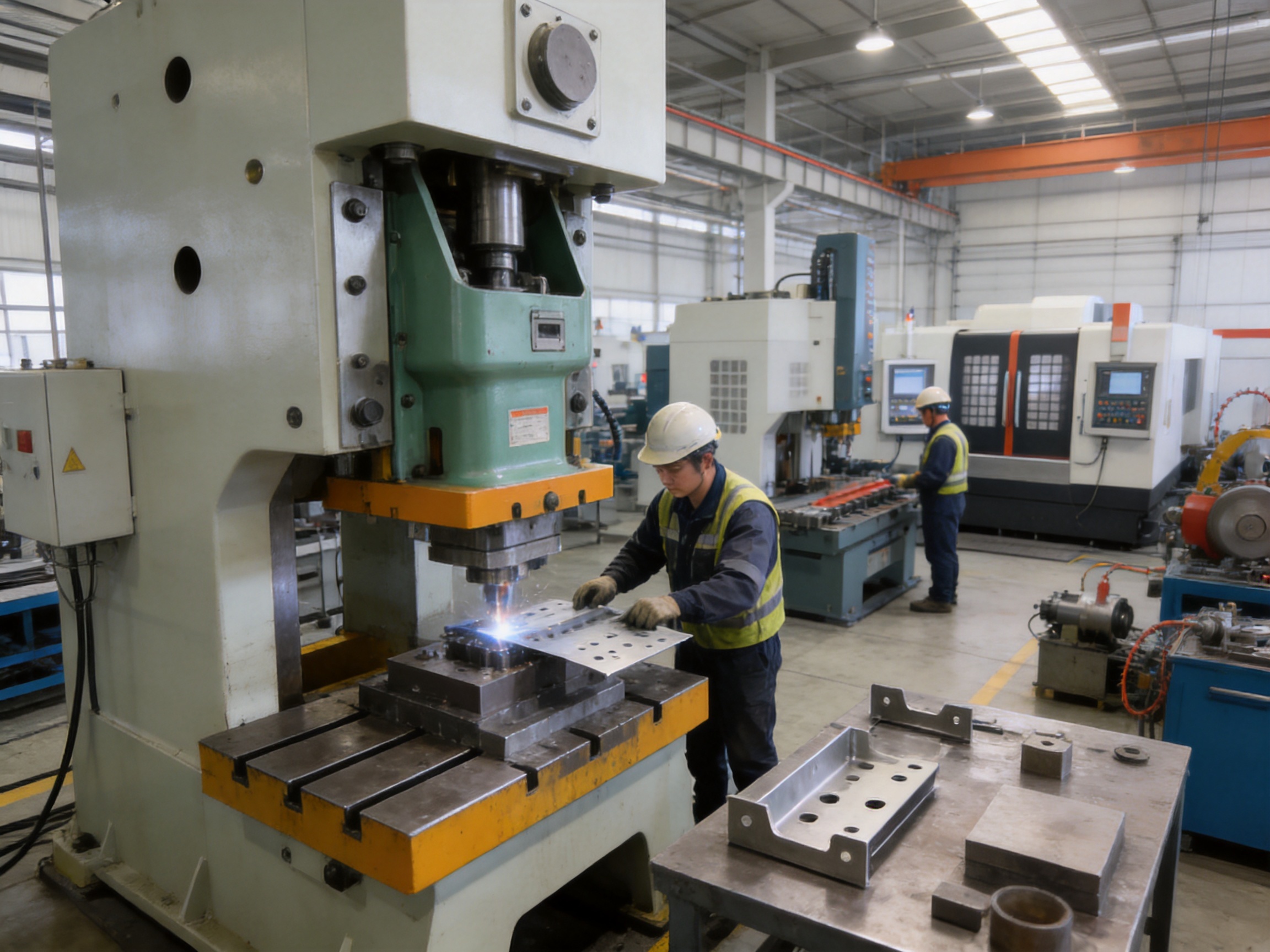
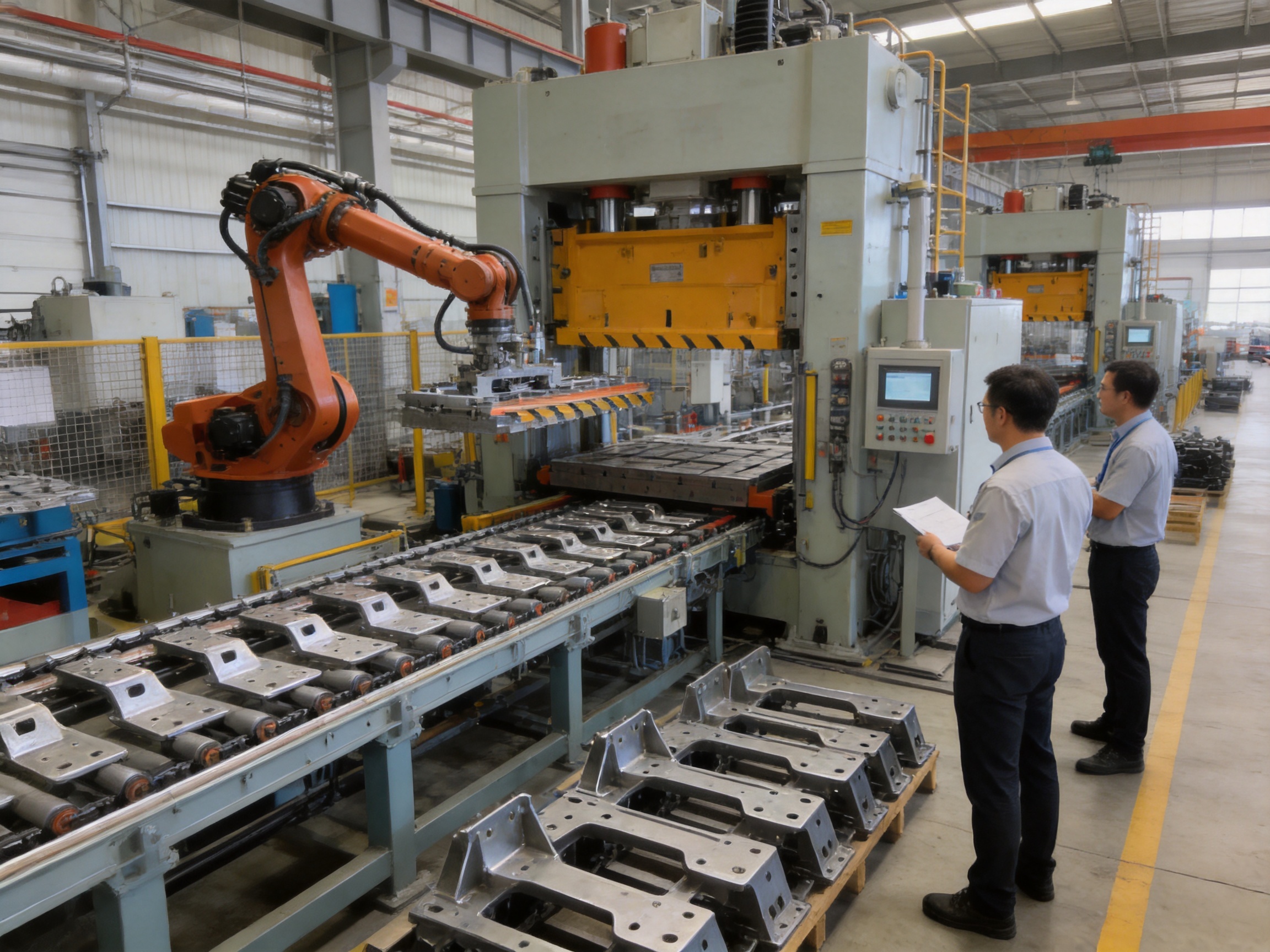
Cold stamping production forms the steel without heating it to a high temperature. This process is efficient, repeatable, and suitable for producing parts with accurate dimensions and good surface quality. The company operates 25 punch presses ranging from 80T to 400T, allowing it to match different part sizes, material thicknesses, and forming requirements. Smaller presses may be suitable for compact brackets or thin plates, while higher-tonnage presses can handle larger or stronger components.
During production, press parameters, feeding accuracy, die condition, lubrication, material batch, and operator procedures must be controlled. Consistent process control helps ensure that parts meet the required hardness, flatness, dimensional accuracy, and surface quality. For high-volume truck components, stable stamping production also supports predictable delivery schedules and cost-efficient manufacturing.
Inspection and Quality Control
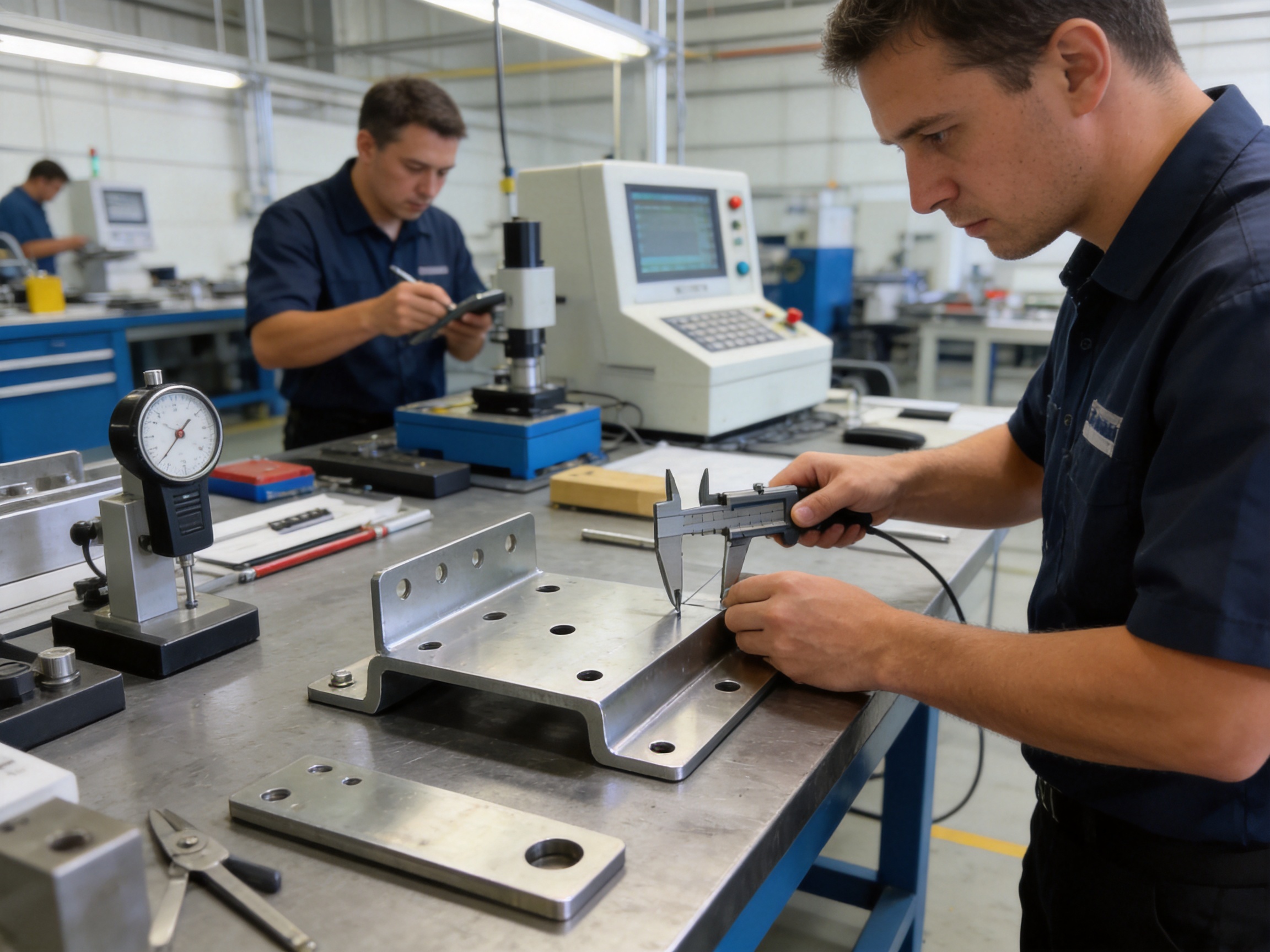
Quality inspection is essential for heavy truck stamping parts. The product line undergoes checks for hardness, flatness, dimensional accuracy, edge condition, and anti-corrosion performance. Depending on customer specifications, inspection may include caliper measurement, fixture checking, height measurement, surface inspection, hardness testing, coating verification, and functional fit evaluation. For parts that interface with vehicle assemblies, inspection fixtures can help verify whether the component will fit correctly during installation.
Strict inspection is more than a final step. It is part of a feedback system. If a measurement trend begins to move toward the tolerance limit, technicians can adjust the process before nonconforming parts are produced in large quantities. This approach supports both quality assurance and cost control. It also helps customers receive stable components from batch to batch.
Company Strengths Supporting Reliable Supply
Suzhou Shuangqisi Mold Equipment Co., Ltd. has several strengths that are particularly relevant to heavy truck stamping part customers. First, the company combines stamping die manufacturing and stamping part production. This integrated structure allows technical problems to be solved more efficiently because die designers, mold makers, stamping operators, and quality staff can coordinate directly. If a part requires design adjustment, die repair, process optimization, or production improvement, the internal team can respond quickly.
Second, the company has 15 years of experience in the mold industry. Experience matters because stamping production often involves details that cannot be fully understood from drawings alone. Material springback, burr control, edge cracking, forming sequence, die wear, and press matching all require practical judgment. A team with long-term mold and stamping experience can anticipate risks and reduce trial-and-error costs.
Third, the company has a strong technical team of approximately 60 technical staff. This supports product development, mold engineering, production support, inspection, and service. For customers that need customized components, technical communication is critical. The team can evaluate drawings, propose manufacturing solutions, optimize die structures, and support cost-effective production planning.
Fourth, the company is equipped with advanced processing and production equipment, including imported wire cutting machines, CNC machining centers, grinding machines, and 25 punch presses from 80T to 400T. Equipment capability determines whether a supplier can handle precision tooling and stable stamping production. A broad press range also improves flexibility for different product sizes and thicknesses.
Fifth, the company can provide stamping automation solutions through its investment in Suzhou Keshuang Intelligent Technology Co., Ltd., established in 2016. This adds value for customers that need turnkey solutions involving stamping dies and automation equipment. Automation can improve production efficiency, reduce manual handling, enhance safety, and support consistent quality. For buyers seeking long-term cost control, integrated mold and automation capability is an important advantage.
Sixth, the company serves customers in industries such as servo drives, compressors, and new energy vehicles, with clients including Anter Group, Ousheng Electric, Dongbei Group, and Huichuan Technology. Experience across demanding industrial sectors supports disciplined quality management and process reliability. Heavy truck customers can benefit from this manufacturing discipline when sourcing automotive stamping parts.
Why Integrated Die and Automation Capability Matters
Many stamping part suppliers can produce simple metal parts, but not all suppliers can design and build the tooling that determines part quality. Even fewer can combine stamping dies with automation equipment. Integrated die and automation capability provides advantages throughout the product life cycle.
During development, the supplier can evaluate part manufacturability and propose changes that reduce cost while protecting performance. For example, slight adjustments to bend radius, hole location, or blank shape may improve forming stability and reduce scrap. A supplier without tooling expertise may simply process the drawing as received, even if the design creates unnecessary production risk. A supplier with mold design knowledge can help customers improve manufacturability early.
During production, integrated tooling capability allows faster troubleshooting. If burrs increase, the die edge can be inspected and repaired. If springback changes, forming sections can be adjusted. If dimensional drift occurs, guide components, inserts, and press settings can be checked systematically. This reduces downtime and helps maintain stable delivery.
During long-term supply, automation can improve repeatability. Automated feeding, transfer, unloading, or inspection systems may reduce human error and increase production efficiency. For heavy truck parts that require stable quantities over time, automation support can help control labor cost, improve safety, and maintain consistent output. A turnkey supplier that understands both stamping dies and automation equipment can design more practical production systems.
This is an important point for customers comparing suppliers. A supplier that only offers low-cost stamping may not be able to support complex development, fast engineering changes, or process upgrades. A supplier with mold-making, stamping, and automation knowledge can deliver broader value beyond the individual part.
Application Value for Truck Manufacturers
Truck manufacturers need parts that install smoothly on the production line. When stamped components arrive with accurate dimensions, consistent flatness, and reliable hole alignment, assembly workers can install them quickly without forced correction. This reduces line delays, improves takt time, and lowers the risk of quality defects caused by manual adjustment.
Precision heavy truck stamping parts also support vehicle performance. Structural brackets and connecting plates help maintain system positioning under load. Engine mounting supports contribute to powertrain stability. Suspension-related plates help transfer force properly. If these parts are inaccurate or weak, the vehicle may experience abnormal noise, vibration, deformation, or premature wear. Therefore, high-quality stamping parts support both manufacturing efficiency and end-user satisfaction.
Another value is supply stability. Truck manufacturers usually require reliable batch delivery, traceable quality, and fast response to engineering changes. A supplier with in-house die design, precision processing, stamping production, and quality inspection can respond more effectively to these needs. If production volume increases or a design update is required, the manufacturer can coordinate tooling and production adjustments internally.
Application Value for Aftermarket Service Providers
Aftermarket service providers need replacement parts that fit correctly and last in demanding service conditions. Heavy truck operators cannot afford long downtime. If a replacement bracket or support does not fit, repair time increases. If it fails early, the vehicle may require another maintenance stop. Precision-stamped replacement parts help reduce these issues by providing compatibility with original truck assemblies and reliable performance.
For aftermarket distributors, product consistency also protects reputation. Customers expect the same quality from batch to batch. Parts with inconsistent hole locations, burrs, weak surfaces, or poor corrosion resistance can create complaints and returns. Sourcing from a manufacturer with strict process control and inspection helps aftermarket providers supply dependable components to workshops and fleet operators.
Durability is especially important for fleets operating in construction, logistics, mining, and municipal service. These vehicles often run under heavy load and harsh conditions. Stamping parts designed to resist vibration, impact, and environmental exposure can help extend service intervals and reduce maintenance frequency. This creates economic value for fleet owners and service networks.
Quality Factors Customers Should Evaluate When Choosing a Supplier
When selecting a supplier for heavy truck stamping parts, customers should consider more than quotation price. The first factor is tooling capability. Does the supplier design and manufacture stamping dies internally? Can it control precision machining, die assembly, and debugging? Strong tooling capability is the foundation of stable part quality.
The second factor is equipment capability. Does the supplier have suitable presses for the required material thickness, part size, and production volume? Press tonnage, stability, and die matching affect forming quality. The availability of punch presses from 80T to 400T provides flexibility for different heavy truck components.
The third factor is technical experience. Heavy truck components often require practical forming knowledge. A supplier with 15 years of mold industry experience and senior operators can better handle springback, burrs, cracks, flatness, and die wear. Experienced staff can also communicate more effectively during development and problem solving.
The fourth factor is inspection discipline. Customers should verify whether the supplier checks hardness, flatness, dimensions, edge quality, and anti-corrosion performance. Good inspection prevents defective parts from reaching assembly lines and helps maintain long-term reliability.
The fifth factor is integrated service. A supplier that can provide stamping dies, stamping parts, and automation solutions may be better suited for long-term cooperation. Integrated service can reduce communication costs, shorten project timelines, and support continuous improvement.
Cost Performance: Why Precision Often Saves Money
In heavy truck parts procurement, cost performance is not the same as the lowest unit price. A component with poor fit may increase assembly labor. A part with inconsistent quality may require sorting and rework. A bracket with weak corrosion resistance may fail early and create warranty cost. A poorly designed die may generate high scrap rates. These hidden costs can exceed the initial purchasing savings.
Precision stamping helps reduce total cost by improving production efficiency and part consistency. Once the die is optimized, each stamping cycle can produce accurate parts at high speed. Material layout can be optimized to reduce waste. Stable tooling reduces scrap and rework. Accurate parts reduce assembly correction. Durable components reduce maintenance frequency. For both OEM and aftermarket customers, these advantages translate into better long-term value.
The company’s strict cost and quality control further strengthens this value. By combining mold-making, stamping production, and automation support, the manufacturer can optimize the entire production chain rather than treating each step separately. This integrated control supports competitive pricing while protecting quality.
Design Considerations for Custom Heavy Truck Stamping Parts
Many heavy truck projects require customized parts according to vehicle model, load condition, installation location, and production requirements. When developing custom stamping parts, several design considerations are important.
Material grade and thickness must be selected according to strength and forming requirements. Bend radius must be suitable for the material to avoid cracking. Hole positions must allow proper assembly and avoid excessive stress concentration. Edge conditions should be controlled to reduce burrs and fatigue risks. Surface treatment requirements should match the working environment. Flatness and tolerance standards should be realistic but strict enough for proper function.
Manufacturability should be considered early. Some shapes may look simple in a drawing but require complex forming steps. Early communication between customer engineers and stamping die specialists can reduce tooling cost and improve process stability. For example, adjusting a flange length, changing the order of operations, or modifying a cutout may improve part quality without affecting function.
Prototype and trial production are also valuable. Before mass production, trial parts can be inspected for fit, flatness, strength, and surface quality. If needed, die adjustments can be made before full production begins. This reduces the risk of large-scale defects and supports smoother launch.
Process Reliability in Harsh Operating Environments
Heavy trucks are not laboratory machines. They operate in environments where dust, moisture, road salt, impact, vibration, temperature variation, and overloading may occur. Stamping parts must therefore be built for real-world conditions. The manufacturing process must support not only initial appearance but also long-term function.
Vibration resistance depends on material strength, geometry, hole quality, and assembly fit. If a stamped plate has poor hole accuracy, bolts may not seat correctly, leading to looseness. If a bend has microcracks, vibration may accelerate fatigue failure. If burrs are excessive, they may damage adjacent parts or coating layers. Careful stamping and inspection reduce these risks.
Impact resistance depends on proper material and forming design. Heavy truck components may face sudden force from road shock or operating load. High-strength steel and reinforced geometry help maintain part integrity. Uniform thickness and controlled forming reduce weak points.
Corrosion resistance depends on surface quality and protective treatment. Rough edges and surface defects can become corrosion starting points. Clean stamping, deburring control, and suitable anti-corrosion processes improve durability. Inspection of anti-corrosion performance helps ensure that parts can withstand harsh environments.
Turnkey Support for Stamping Dies and Stamping Automation
In addition to manufacturing heavy truck stamping parts, the company can provide customers with turnkey solutions for stamping molds and stamping automation. This is valuable for customers that need a complete production system rather than only individual components. A turnkey approach may include product analysis, die design, die manufacturing, press process planning, automation equipment support, trial production, and technical service.
Automation equipment can include feeding systems, transfer mechanisms, unloading devices, safety-related handling equipment, and production line integration depending on customer needs. By investing in related production equipment according to customer requirements, the company can deliver cost-effective products and services. This flexibility supports customers who want to improve efficiency, reduce manual work, and establish stable production capability.
For heavy truck stamping parts, automation may be especially useful when parts are produced in large quantities or when material handling is difficult due to size or thickness. Automated systems can improve repeatability and reduce operator fatigue. When combined with high-quality dies, automation supports stable, efficient, and safe production.
Q&A: Heavy Truck Stamping Parts and Manufacturing Capability
Q1: What are heavy truck stamping parts?
Heavy truck stamping parts are metal components formed from steel plates or sheets using stamping dies and press equipment. They are used in commercial heavy-duty vehicles as brackets, connecting plates, engine mounting supports, reinforcing plates, and other structural or functional components. Their purpose is to provide strength, accurate fit, and long-term durability under demanding operating conditions.
Q2: Why is high-strength steel used for these parts?
High-strength steel offers the mechanical performance required for load-bearing and vibration-resistant truck components. Heavy trucks operate under high stress, so parts must resist deformation, fatigue, and impact. The right steel grade provides strength while maintaining sufficient formability for cold stamping.
Q3: What advantages does cold stamping provide?
Cold stamping provides high production efficiency, repeatable dimensions, good surface quality, and stable part geometry. It is suitable for producing large quantities of components with consistent tolerances. When combined with well-designed dies, it helps achieve uniform thickness, smooth edges, accurate holes, and reliable bending shapes.
Q4: How do precision-stamped parts reduce maintenance frequency?
Precision-stamped parts fit correctly, distribute loads properly, and resist vibration and impact. Accurate dimensions reduce assembly stress, while good edge quality and anti-corrosion performance help prevent premature damage. As a result, truck systems can operate longer with fewer part-related maintenance issues.
Q5: What types of heavy truck parts can be manufactured?
Typical parts include frame brackets, suspension connecting plates, engine mounting supports, reinforcing plates, installation supports, and customized metal brackets. The exact product range can be developed according to customer drawings, vehicle models, material requirements, and production volume.
Q6: Why is stamping die capability important when choosing a supplier?
The stamping die determines the accuracy and stability of the finished part. A supplier with in-house die design, precision machining, assembly, and debugging capability can better control quality, solve forming problems, and support custom development. Strong tooling capability also improves long-term production consistency.
Q7: What equipment supports the manufacturing process?
The manufacturing process is supported by imported wire cutting machines, CNC machining centers, grinding machines, precision machine tools, and punch presses ranging from 80T to 400T. This equipment allows the company to manufacture accurate dies and produce a wide range of stamping parts.
Q8: What inspections are performed on heavy truck stamping parts?
Inspection may include checks for dimensional accuracy, hardness, flatness, edge condition, surface quality, and anti-corrosion performance. Depending on customer requirements, inspection fixtures and additional measurement methods may be used to verify assembly compatibility and production consistency.
Q9: Are these parts suitable for aftermarket replacement?
Yes. Because they are designed for compatibility with original truck assemblies and built for heavy-duty durability, they are suitable for aftermarket service providers, distributors, repair workshops, and fleet maintenance operations. Accurate fit helps reduce repair time and vehicle downtime.
Q10: Can custom stamping dies and automation solutions be provided?
Yes. The company can provide stamping die design and manufacturing, stamping part production, and stamping automation solutions. This integrated service supports customers that need turnkey production capability, improved efficiency, and cost-effective long-term supply.
Contact and Cooperation Information
Suzhou Shuangqisi Mold Equipment Co., Ltd. provides stamping dies, stamping parts, and stamping automation equipment for customers seeking reliable manufacturing support. The company is located at No. 118 Yexin Road, Wujiang Economic Development Zone, Suzhou, China. Customers interested in heavy truck stamping parts, automotive stamping parts, metal stamping die manufacturing, or custom stamping die design and manufacturing can contact the company by phone at +86-139 1308 8972 or by email at [email protected].
The company focuses on creating value for customers through technical expertise, strict cost control, quality management, and integrated production solutions. With mold design and manufacturing experience, precision machining resources, punch press capacity, and automation support, it is positioned to serve customers that need dependable stamped components for demanding commercial vehicle applications.
Conclusion
Heavy truck stamping parts play an essential role in the strength, reliability, and assembly quality of commercial heavy-duty vehicles. Frame brackets, suspension connecting plates, engine mounting supports, and other stamped components must withstand vibration, impact, load, corrosion, and harsh operating environments. Precision manufacturing is therefore not optional; it is a requirement for long-term vehicle performance.
Compared with ordinary alternatives, high-quality stamped parts provide better dimensional consistency, smoother edges, improved load-bearing performance, reliable anti-corrosion characteristics, and stronger batch stability. These advantages help truck manufacturers improve assembly efficiency and help aftermarket service providers reduce installation problems and maintenance frequency.
The manufacturing strength behind these parts includes advanced cold stamping technology, high-strength steel material selection, professional stamping die design, precision die manufacturing, experienced debugging, controlled press production, and strict inspection. Suzhou Shuangqisi Mold Equipment Co., Ltd. strengthens this value through integrated mold-making, stamping production, and stamping automation capability. With advanced equipment, experienced technical staff, 15 years of mold industry experience, and a commitment to quality and cost control, the company can support customers with reliable heavy truck stamping parts and turnkey stamping solutions.
For customers seeking durable, precise, and cost-effective automotive stamping parts, the right manufacturing partner can make a significant difference. Reliable heavy truck stamping parts not only support vehicle performance but also reduce hidden costs, improve service life, and contribute to safer and more efficient heavy-duty operations.
References
1. Kalpakjian, S., and Schmid, S. R. Manufacturing Engineering and Technology. Pearson Education.
2. Altan, T., and Tekkaya, A. E. Sheet Metal Forming: Processes and Applications. ASM International.
3. Lange, K. Handbook of Metal Forming. McGraw-Hill.
4. Dieter, G. E. Mechanical Metallurgy. McGraw-Hill Education.
5. Society of Automotive Engineers. Automotive Sheet Steel Forming and Manufacturing Practice References.
Previous Post
Automotive Motor Housing Stamping Parts for Reliable Electric and Mechanical Drive Systems
Next Post
Precision Battery Cover Stamping Parts for Safer and More Reliable Battery Enclosures
Our Products.
Start Your Business with an OEM Manufacturer Right Here!

Provide global customers with complete turn-key solutions
through
innovation!
QUICK LINKS
CONTACT INFO.
-
 +86-139 1308 8972
 -

-
 No. 118 Yexin Road, Wujiang Economic Development Zone, Suzhou, China
Copyright © Suzhou Shuangqisi Mold Equipment Co., Ltd. All Rights Reserved. Custom Stamping Die Metal Stamping Die Manufacturers
