 English
 Español
 Deutsch
-
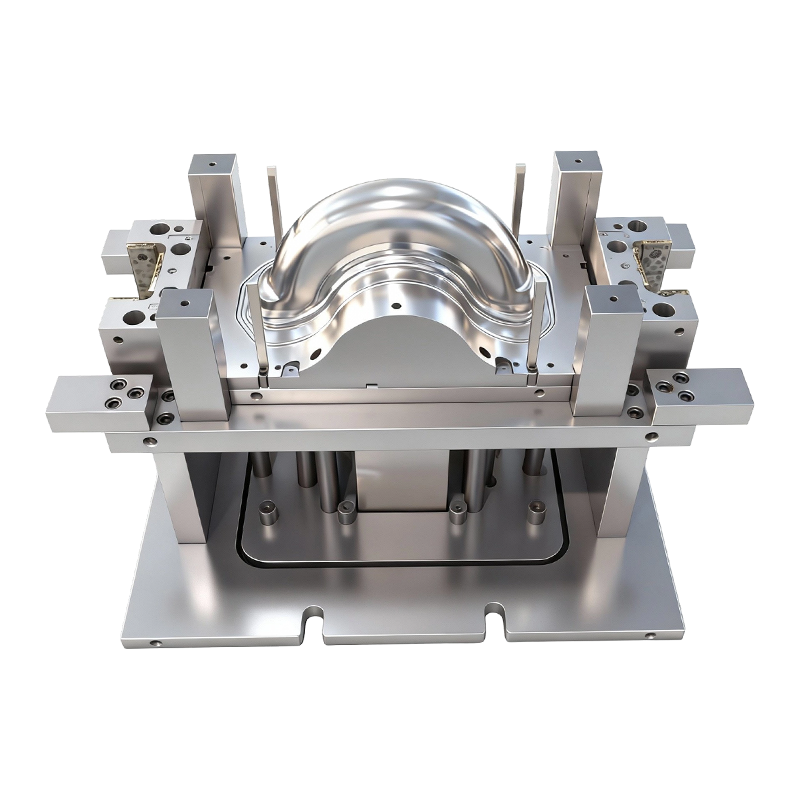
Deep drawing mold for front and rear wheels of two-wheeled electric vehicles
This Deep drawing mold for front and rear wheels o...
-
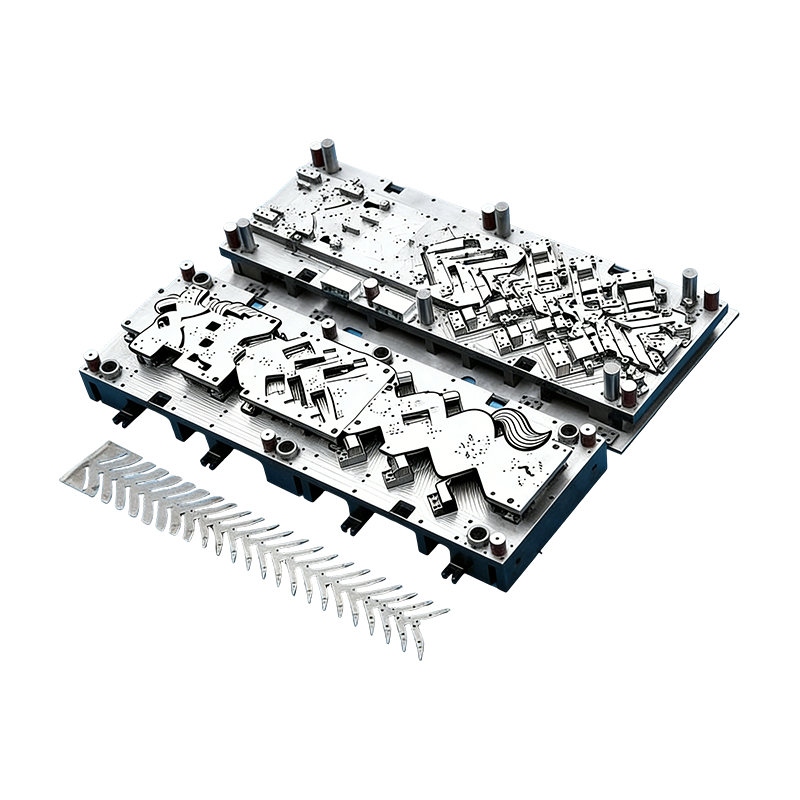
Progressive molds for automotive parts
This Continuous mold for automotive motor housing ...
-
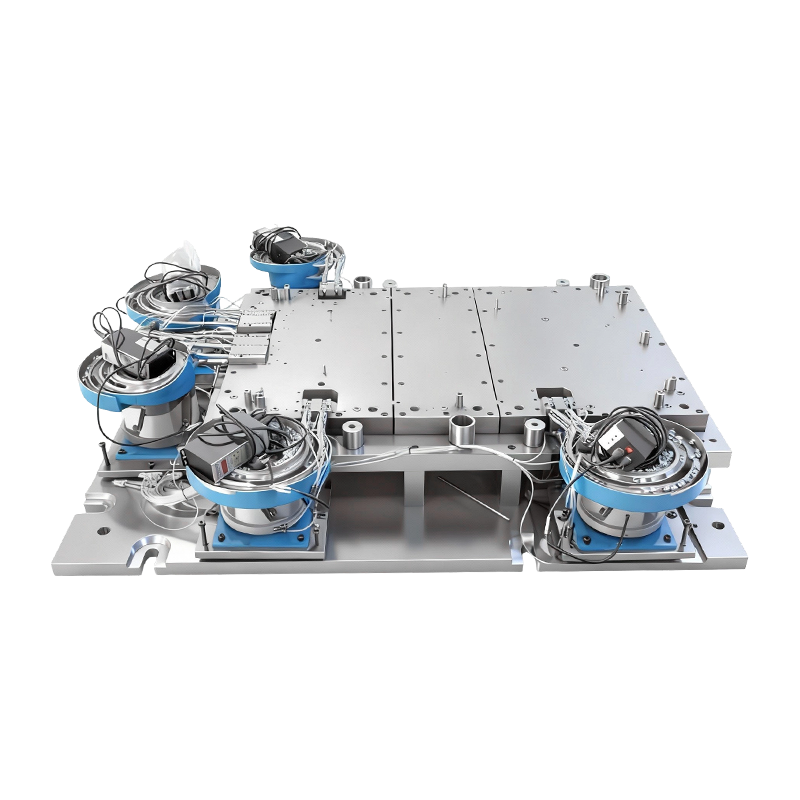
Automatic riveting mold for large computer machine base
This Automatic Riveting Mold for Large Computer Ma...
-
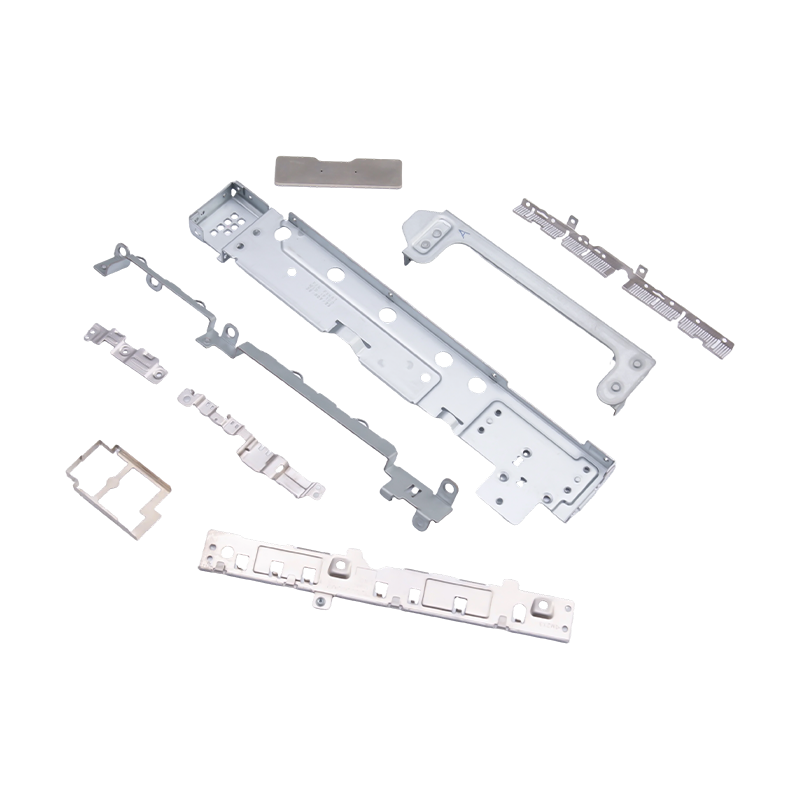
Small stamped parts for laptops and mobile phones
As essential internal components for modern portab...
-
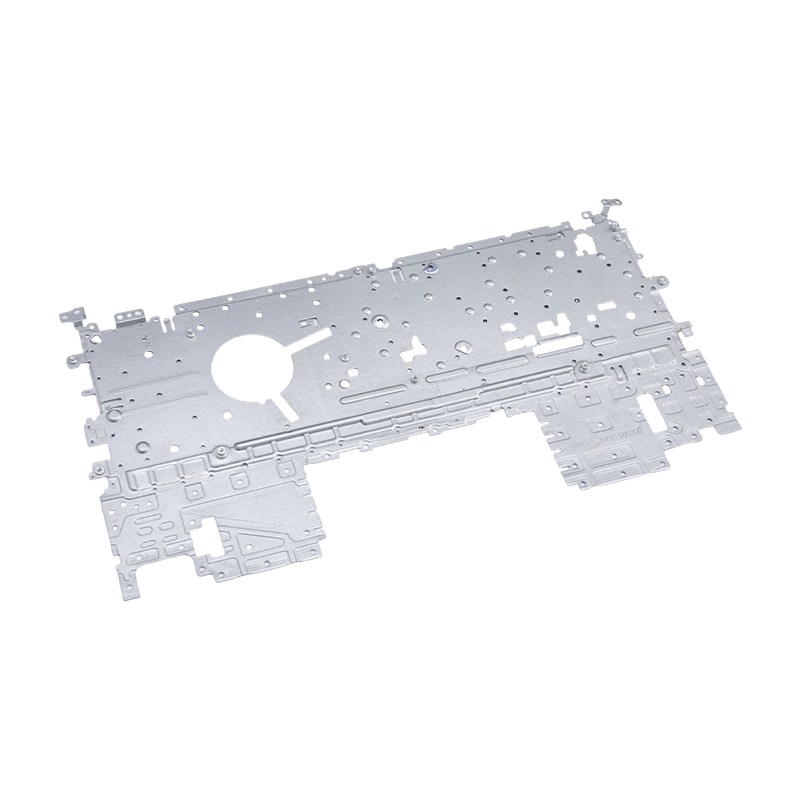
Laptop stamping parts
Our laptop stamping parts are precision-manufactur...
- E-mail us: [email protected]
- Call us: +86-139 1308 8972

Chen Siyi – Overseas Sales Manager
Home / Author / Chen Siyi – Overseas Sales Manager / Advanced Stamping Automation Equipment for Efficient, Reliable Metal Forming
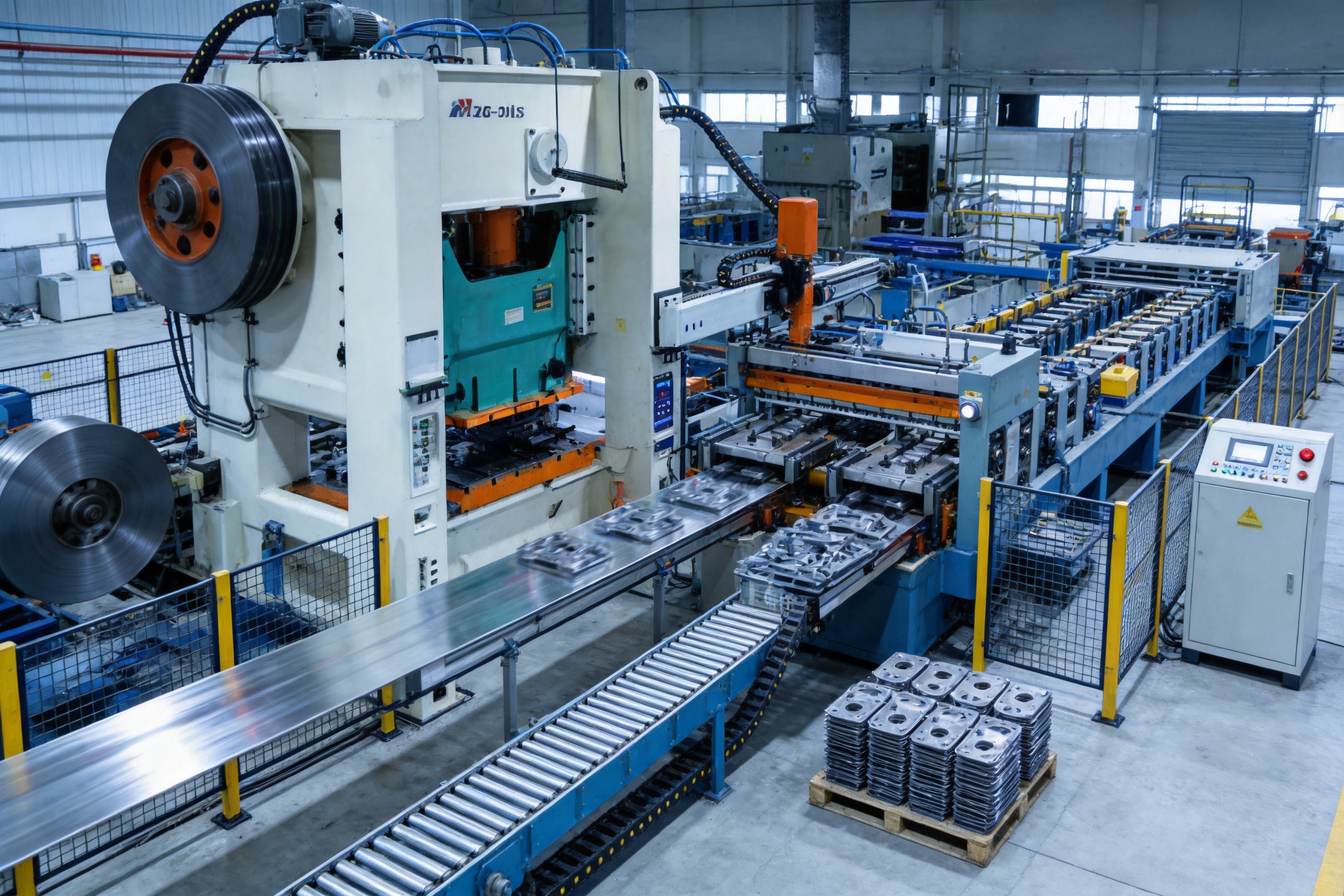
Advanced Stamping Automation Equipment for Efficient, Reliable Metal Forming
2026-08-17
Modern metal forming manufacturers face constant pressure to improve productivity, maintain consistent quality, reduce labor dependency, and control operating costs. These demands are especially important in industries such as automotive components, compressors, servo drives, electrical equipment, and new energy vehicles, where stamped parts must meet strict dimensional and performance requirements. Stamping automation equipment provides a practical solution by connecting material feeding, die operations, part transfer, inspection, and production control into an integrated manufacturing process.
Stamping automation equipment is designed to make pressworking operations faster, safer, and more repeatable. Instead of relying on manual loading and unloading between individual operations, automated systems coordinate the movement of strip, coil, blanks, or formed parts through the production line. This reduces handling time, supports stable cycle times, and helps manufacturers obtain consistent output over long production runs.
Suzhou Shuangqisi Mold Equipment Co., Ltd. is a professional manufacturer of stamping dies, stamped hardware parts, and stamping automation equipment. By combining die design and manufacturing with automation engineering, the company can provide a more complete solution than a supplier that specializes in only one part of the process. Its integrated capabilities support the development of stamping lines in which tooling, press performance, feeding systems, transfer systems, and production requirements are considered together from the beginning.
With approximately 15 years of experience in the mold industry, a team of 60 technical staff, advanced machining resources, and practical experience serving industrial customers, the company focuses on delivering reliable and cost-effective stamping solutions. Its automation activities are supported by the establishment of Suzhou Keshuang Intelligent Technology Co., Ltd. in 2016, which mainly produces stamping automation equipment. This structure enables the business to address both tooling and automated production requirements.
Content
- 1 Understanding Stamping Automation Equipment
- 2 Core Functions of Automated Stamping Lines
- 3 Advantages of Stamping Automation Equipment
- 4 Integrated Die and Automation Engineering
- 5 Manufacturing Capabilities Supporting Automation Projects
- 6 Typical Manufacturing Process for Stamping Automation Equipment
- 7 Key Equipment Configurations
- 8 Why Integrated Solutions Can Outperform Conventional Supplier Models
- 9 Applications Across Industrial Sectors
- 10 Quality Control in Automated Stamping Production
- 11 Design Considerations for Selecting Stamping Automation Equipment
- 12 Cost-Effectiveness and Customer Value
- 13 Turnkey Stamping Mold and Automation Solutions
- 14 Service, Debugging, and Long-Term Reliability
- 15 Environmental and Operational Benefits
- 16 Future Development of Stamping Automation
- 17 Company Strengths and Manufacturing Position
- 18 Q&A: Stamping Automation Equipment
- 18.1 What is stamping automation equipment?
- 18.2 What are the main benefits of automating a stamping line?
- 18.3 Can automation equipment be used with an existing press?
- 18.4 Why is it useful to purchase stamping dies and automation from one supplier?
- 18.5 What industries use stamping automation equipment?
- 18.6 What information should a customer provide before requesting a solution?
- 18.7 How does automation improve safety?
- 18.8 Does automation eliminate the need for skilled operators?
- 18.9 What does debugging involve?
- 18.10 How can a customer control long-term maintenance costs?
- 18.11 Can a stamping automation system be customized?
- 19 Conclusion
- 20 References
- 21 Product: Stamping Automation Equipment
Understanding Stamping Automation Equipment
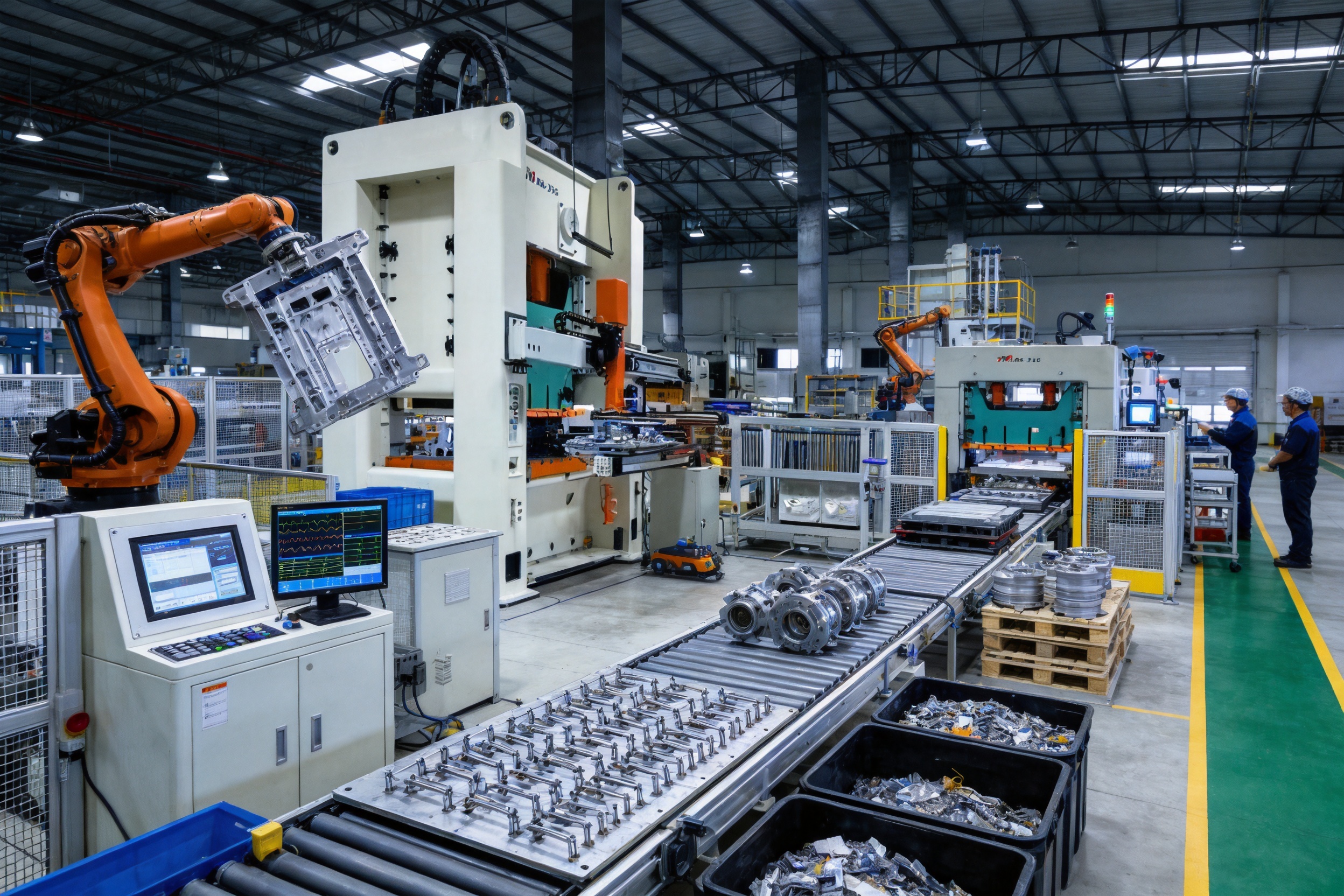
Stamping automation equipment refers to a group of mechanical, electrical, and control systems used to automate one or more stages of a metal stamping process. The equipment may be configured for a single press, a progressive die line, a transfer press, a tandem press line, or a customized production cell. Depending on the part geometry and production volume, the system can include coil handling, straightening, feeding, blank separation, robotic transfer, part collection, lubrication, scrap removal, detection, and production monitoring.
The exact configuration depends on several factors. These include material type, material thickness, coil width, blank shape, part size, die construction, press capacity, required cycle time, allowable tolerances, downstream operations, and the degree of flexibility required by the customer. An automation solution for a small electrical terminal will be very different from one designed for a large automotive structural component or a compressor housing component.
A well-engineered system does more than move material from one location to another. It must synchronize motion with the press and die, maintain accurate positioning, avoid collisions, protect tooling, accommodate normal production variation, and allow operators to perform setup and maintenance safely. The equipment must also be compatible with the customer’s existing machinery when the project involves upgrading an established line rather than installing a completely new system.
For this reason, stamping automation should be treated as a complete production engineering project rather than as an isolated machine purchase. The best results are achieved when the automation supplier understands the part, the die, the press, the material, and the customer’s production objectives.
Stamping Automation Equipment
Core Functions of Automated Stamping Lines
Automatic Material Feeding
Coil-fed stamping lines commonly use a decoiler, straightener, and servo feeder to deliver material to the die. The decoiler supports the coil and controls its release. The straightener removes coil memory and reduces curvature. The servo feeder then advances the strip according to the programmed pitch. Each component must be correctly sized and synchronized with the press to prevent material deformation, feeding errors, and unnecessary downtime.
Accurate feeding is particularly important for progressive dies because every station performs a specific operation. A small feeding error at the beginning of the strip can cause misalignment at later stations, leading to defective parts or possible die damage. Servo-controlled feeding systems improve positioning accuracy and allow production parameters to be adjusted for different materials and part designs.
Blank Loading and Transfer
For processes using individual blanks, automation equipment can separate, orient, and load blanks into the die. Transfer systems can then move the part from one forming station to the next. These systems may use mechanical transfer bars, grippers, vacuum devices, or industrial robots, depending on the part geometry and line arrangement.
Transfer motion must be carefully coordinated with the press stroke. The system needs to enter and leave the die area at the correct time, maintain the required orientation, and avoid contact with the die or the partially formed part. When the equipment is properly designed, transfer automation can support high-speed production while reducing the risk of manual handling damage.
Part Removal and Collection
After forming, completed parts may need to be removed from the die, separated from scrap, stacked, sorted, or transferred to another operation. Automated collection systems help ensure that parts are handled consistently. Depending on the customer’s needs, the line may include stacking tables, conveyor systems, bins, palletizing mechanisms, or robotic handling.
Part collection is not only a convenience feature. For delicate or dimensionally sensitive components, improper handling can cause scratches, bending, or deformation after the stamping operation has been completed. Automated unloading equipment can be designed with suitable grippers, contact surfaces, and motion profiles to protect finished parts.
Scrap Removal
Scrap management is an important part of an efficient stamping line. Progressive stamping generates skeleton scrap and process offcuts, while blanking and forming operations may produce separate waste pieces. Automated scrap conveyors, chutes, cutters, and collection systems can remove waste from the press area without interrupting production.
Efficient scrap handling improves workplace safety, reduces manual cleaning, and prevents waste material from interfering with the die or moving components. It also supports more organized factory operations and can make material recycling easier.
Safety and Process Monitoring
Automation systems can include safety guarding, interlocked access doors, emergency stops, light curtains, presence sensors, die protection, and press synchronization controls. These functions are intended to reduce the risk of injury and protect expensive tooling and equipment.
Process monitoring may include sensors that detect double blanks, missing parts, incorrect feeding, abnormal pressure, die obstruction, or incomplete transfer. When an abnormal condition is detected, the system can stop the line or send an alarm to the operator. Early detection reduces the possibility of producing large quantities of defective parts.
Advantages of Stamping Automation Equipment
Higher Production Efficiency
The most visible advantage of automation is increased productivity. Manual loading and unloading require repeated operator movement and create unavoidable pauses between press cycles. Automated equipment performs these actions in a programmed sequence, allowing the press to operate at a more stable and efficient rhythm.
Higher production efficiency does not simply mean a faster press stroke. It also means fewer interruptions, reduced waiting time, faster changeovers, and more consistent material flow. When the feeding and transfer systems are matched correctly to the die and press, manufacturers can obtain greater output from the same production area.
Improved Product Consistency
Manual handling can introduce variation in blank orientation, feeding position, transfer timing, and part placement. Automated systems repeat programmed movements with a high degree of consistency. This supports stable part quality, especially when the production run is long or the product requires multiple forming operations.
Consistency is valuable for components used in servo drives, compressors, electrical assemblies, and new energy vehicles. These applications often require reliable fit, accurate hole location, controlled geometry, and repeatable mechanical performance. Automation helps reduce process variation and supports better control of the manufacturing conditions.
Reduced Labor Dependency
Stamping operations can involve repetitive work near moving presses, including lifting blanks, transferring parts, removing scrap, and stacking finished products. Automation reduces the amount of direct manual handling required in these areas. Operators can focus more on setup, process supervision, quality checks, and maintenance rather than repeating physically demanding motions.
Reducing labor dependency does not mean eliminating skilled personnel. On the contrary, automated production requires capable technicians who understand dies, controls, sensors, press behavior, and maintenance procedures. The difference is that skilled employees are able to apply their knowledge to higher-value activities while automated mechanisms perform repetitive movements.
Enhanced Workplace Safety
Automated handling keeps operators farther from the point of operation during normal production. Properly guarded systems can reduce exposure to pinch points, sharp metal edges, moving slides, and falling parts. Safety systems can also stop the machine when access doors are opened or when an abnormal condition is detected.
Safety performance depends on correct engineering, installation, training, and maintenance. Automation is not a substitute for safe operating procedures, but it provides an important foundation for reducing unnecessary human exposure to hazardous areas.
Lower Long-Term Operating Costs
Automated equipment requires investment, but it can reduce the total cost per part over the service life of the production line. Potential savings may result from lower manual handling requirements, reduced scrap, fewer quality claims, less downtime, improved tooling protection, and higher output from existing press capacity.
A cost-effective solution is not necessarily the system with the lowest initial price. The more important question is whether the equipment is correctly matched to the customer’s production volume, part design, maintenance capability, and future plans. A system that is unnecessarily complicated may create avoidable maintenance costs, while an undersized system may limit productivity. Careful engineering is therefore essential.
Better Production Data and Control
Modern automation equipment can be designed with programmable controls, alarm functions, parameter storage, and production monitoring. These capabilities make it easier to record cycle information, identify recurring faults, manage product changeovers, and standardize operating procedures.
When production information is visible, manufacturers can make better decisions about maintenance schedules, tooling adjustments, material usage, and capacity planning. Even a relatively simple automated line can provide meaningful improvements in process transparency.
Integrated Die and Automation Engineering
One of the principal advantages of Suzhou Shuangqisi Mold Equipment Co., Ltd. is its combined expertise in stamping dies, stamping parts, and automation equipment. This integration allows the company to evaluate how the tooling and automation will work together instead of treating them as separate purchases.
The design of a stamping die directly affects automation requirements. Die height, guide arrangements, part orientation, strip layout, lifter positions, pilot pins, scrap discharge, and forming sequence all influence how material or parts can be moved. If these factors are not considered early, the final automation system may require complicated modifications or may not achieve the desired cycle time.
Conversely, automation requirements can influence the die design. A transfer system may require specific clearance zones. A robot may need dedicated gripping surfaces. A conveyor may require an appropriate exit direction. A vision or presence sensor may need a clear inspection position. By considering these points during the die development stage, the manufacturer can create a more coordinated and reliable production system.
This integrated approach can also simplify communication. Customers do not need to coordinate every technical issue between a die supplier and a separate automation supplier. A single engineering team can discuss part drawings, material specifications, press information, cycle requirements, and production targets in a unified manner.
Manufacturing Capabilities Supporting Automation Projects
Technical Personnel and Engineering Experience
The company has approximately 60 technical staff involved in design, manufacturing, debugging, production, and related technical activities. A team with experience in both tooling and automation can better identify the practical details that determine whether a project performs well after installation.
Engineering experience is particularly important during the transition from design to production. A system may appear satisfactory in a drawing but require adjustments when actual material behavior, press vibration, part springback, or operating conditions are encountered. Experienced engineers and debugging personnel can analyze these conditions and make controlled improvements during trial production.
Precision Wire Cutting
Imported wire cutting machines are used to produce precision components for dies and related tooling. Wire electrical discharge machining is suitable for manufacturing profiles, inserts, punches, and other components requiring accurate contours and fine surface quality.
In stamping tooling, the accuracy of critical inserts and cutting edges directly influences part quality and die life. Proper wire cutting practices help maintain the required geometry, particularly in complex profiles, narrow slots, and precision cutting areas. The quality of these components also affects how reliably the die operates at production speed.
CNC Machining Centers
CNC machining centers provide controlled milling and drilling for die bases, forming components, automation frames, brackets, guide structures, and other precision parts. Computer-controlled machining improves repeatability and allows complex surfaces and mounting features to be produced according to digital design data.
For automation equipment, accurate machining is important because the relationship between frames, guide rails, servo units, grippers, sensors, and press interfaces determines system stability. Misalignment may lead to vibration, premature wear, inaccurate transfer, or repeated stoppages. CNC machining helps establish the dimensional foundation required for dependable operation.
Grinding Equipment
The company has more than 10 grinding machines of various sizes. Grinding is used to achieve accurate dimensions and surface finishes on die components, guide parts, plates, inserts, and other precision elements.
Flatness, parallelism, and surface quality are critical in stamping die construction. Properly ground components can improve fit, reduce uneven loading, and support consistent movement. These details also help with maintenance because accurately manufactured components are easier to replace and adjust.
Press Capacity
The company operates 25 punch presses ranging from 80 tons to 400 tons. This range supports the production and trial of a variety of stamped components and provides useful flexibility during die development and process verification.
Press capacity affects more than the maximum forming force. Stroke length, shut height, bolster dimensions, slide speed, feed direction, and available working space all influence whether a die and automation system are suitable for a specific press. Access to different press capacities helps the engineering team evaluate tooling under conditions that are more representative of the customer’s intended production process.
Experienced Debugging Personnel
Die debugging and automation commissioning are practical stages that require observation and adjustment. Senior operators and experienced debugging personnel can identify issues such as material feeding instability, excessive noise, poor part release, transfer interference, sensor misalignment, or inconsistent forming results.
Careful debugging helps transform a theoretical design into a production-ready system. It also allows the supplier to establish suitable operating parameters and provide more useful guidance for installation and future maintenance.
Typical Manufacturing Process for Stamping Automation Equipment
1. Requirement Review
Every project begins with a review of the customer’s production objectives. Relevant information includes part drawings, material grade, thickness, coil or blank dimensions, required output, press specifications, existing die details, factory layout, operator requirements, and safety expectations.
The supplier should also understand whether the customer needs a new automated line, an automation upgrade for an existing press, a complete turnkey solution, or a system that can be expanded later. Clear requirements reduce the risk of designing equipment that does not match actual production conditions.
2. Process and Feasibility Analysis
Engineers analyze the forming sequence and determine the most appropriate automation concept. The analysis may compare progressive die feeding, transfer stamping, tandem press operations, robotic handling, or a combination of these methods.
At this stage, engineers consider cycle time, material utilization, die access, part orientation, transfer distance, gripper design, scrap discharge, maintenance access, and safety zones. The objective is to select a process that balances productivity, reliability, flexibility, and investment cost.
3. Die and Automation Design
Once the process concept is established, the die and automation equipment can be developed together. Three-dimensional modeling helps engineers review interference, accessibility, movement paths, mounting relationships, and maintenance requirements before manufacturing begins.
Automation design may include the machine frame, guide mechanisms, servo feeder, transfer units, grippers, vacuum systems, sensors, control cabinets, pneumatic circuits, safety guarding, and operator interface. The die design must provide the appropriate features for material guidance, part positioning, forming, cutting, and release.
4. Component Manufacturing
Approved designs are converted into manufacturing drawings and production instructions. Die components and automation parts are processed using CNC machining, wire cutting, grinding, drilling, turning, welding, and other suitable methods.
Manufacturing quality depends on controlling dimensions, material selection, heat treatment where required, surface finishing, and inspection. Critical components should be checked against drawings before assembly. Proper traceability of parts helps simplify later adjustments and replacement.
5. Assembly
Die assembly requires accurate fitting of plates, guides, punches, inserts, springs, lifters, sensors, and other components. Automation assembly involves the installation of frames, rails, cylinders, servo mechanisms, grippers, conveyors, guards, electrical elements, and control hardware.
During assembly, engineers verify that moving components have sufficient clearance and that adjustment points are accessible. Wiring and pneumatic lines should be arranged to avoid interference, excessive bending, heat exposure, and unnecessary maintenance difficulty.
6. Trial Stamping and Debugging
Trial production is used to check forming quality, feeding stability, transfer timing, part release, scrap handling, cycle time, and safety functions. Engineers may adjust feeder pitch, sensor positions, gripper timing, stroke coordination, press parameters, lubrication, and die settings.
Trial stamping also provides an opportunity to examine burrs, wrinkles, cracks, springback, dimensional variation, and surface marks. If the root cause is related to tooling, the die may be modified. If it is related to automation, the movement sequence or control parameters may be refined.
7. Inspection and Acceptance
Before delivery, the system should be checked against agreed technical requirements. Acceptance may include dimensional inspection of stamped parts, dry-cycle testing, production-speed testing, safety verification, alarm testing, and review of operating documentation.
A structured acceptance process gives the customer confidence that the equipment is ready for installation and production. It also creates a record of the initial operating condition, which can be useful for future maintenance and troubleshooting.
8. Installation and Technical Support
Turnkey projects may include installation guidance, commissioning support, operator training, maintenance recommendations, and production ramp-up assistance. The objective is to help the customer achieve stable operation rather than simply deliver a machine.
Technical support should address routine lubrication, sensor cleaning, inspection of fasteners, replacement of wear components, backup of control parameters, and safe procedures for die changes or product changeovers.
Key Equipment Configurations
| Configuration | Typical Application | Main Advantages | Important Considerations |
|---|---|---|---|
| Coil-fed progressive stamping line | High-volume small and medium components | Continuous production, efficient material flow, reduced manual handling | Requires accurate strip layout, feeding, piloting, and scrap management |
| Transfer press automation | Parts requiring multiple forming stages | Integrated movement between stations and flexible forming sequences | Transfer timing, gripper clearance, and part stability are critical |
| Robotic press line | Large parts, flexible production, varied product families | Flexible handling, programmable motion, reduced operator exposure | Requires suitable robot reach, tooling, programming, and floor space |
| Blank loading and unloading cell | Individual blanks and discrete press operations | Simple automation upgrade and improved handling consistency | Blank separation, orientation, and stacking must be controlled |
| Scrap removal system | Progressive and high-volume stamping operations | Cleaner work area, reduced stoppages, improved material recovery | Chute and conveyor design must match scrap shape and volume |
| Customized turnkey line | Complex production requirements or new factories | Unified design, coordinated equipment, single technical interface | Requires detailed early planning and project management |
Why Integrated Solutions Can Outperform Conventional Supplier Models
Many manufacturers purchase dies, presses, feeders, transfer mechanisms, and control systems from separate suppliers. This model can work, but it often creates additional coordination requirements. Different suppliers may use different design standards, communication methods, component preferences, and acceptance criteria.
An integrated stamping die and automation supplier can reduce these coordination challenges. Die features can be designed specifically for the intended material flow and handling method. Automation components can be selected according to the die layout and press conditions. Trial production can evaluate the complete system rather than isolated pieces of equipment.
This approach may provide several competitive advantages:
Unified technical responsibility: The customer has a clearer point of contact for questions involving die performance, part transfer, feeding, and commissioning.
Better compatibility: Tooling and automation are developed around compatible dimensions, clearances, timing, and control requirements.
Faster problem solving: When a production issue occurs, the supplier can investigate both tooling and automation causes without assuming that another supplier is responsible.
More efficient project planning: Engineering, machining, assembly, trial production, and commissioning can be coordinated within one project structure.
Potentially lower total cost: Integrated design can reduce duplicated engineering work, redesign, modification, and installation delays.
Improved future support: A supplier that understands the complete system is better positioned to provide replacement parts, upgrades, and process improvements later.
Applications Across Industrial Sectors
Automotive and New Energy Vehicle Components
Automotive and new energy vehicle manufacturing requires large quantities of repeatable metal components. These may include brackets, structural parts, motor-related components, connector elements, shielding parts, and other stamped hardware. Automation supports the required volume while helping protect surface quality and dimensional consistency.
New energy vehicle production also creates demand for components used in battery systems, electric drive units, charging systems, and power electronics. These products may require clean handling, accurate positioning, and controlled processes. Automated stamping lines can be configured to support these requirements while allowing manufacturers to monitor production conditions.
Servo Drives and Electrical Equipment
Servo drives and electrical equipment often use precision stamped components such as brackets, terminals, laminations, covers, mounting parts, and conductive hardware. These parts may have small features, narrow tolerances, or complex profiles. Progressive dies combined with precise feeding can produce high volumes efficiently.
Stable automation also helps reduce the risk of part mixing or incorrect orientation before assembly. Where required, sensors and inspection functions can be added to verify part presence and process completion.
Compressors and Mechanical Assemblies
Compressor manufacturing involves a wide range of stamped and formed parts. Depending on the product, components may require deep drawing, bending, piercing, flanging, or multiple sequential operations. Transfer or tandem automation can move parts through these stages while reducing manual handling.
Reliable part movement is particularly valuable when components are large, heavy, oily, or difficult to handle repeatedly. Automated systems can improve workplace ergonomics and provide more predictable production flow.
General Hardware Parts
Industrial hardware manufacturers often produce large product families with different dimensions and forming sequences. Flexible automation equipment can support changeovers and help reduce the time required to move between product specifications.
The appropriate level of flexibility depends on production volume. A high-volume product may justify a dedicated high-speed system, while a mixed-product factory may benefit from programmable robots, adjustable feeders, quick-change tooling, or modular handling devices.
Quality Control in Automated Stamping Production
Automation improves repeatability, but quality still depends on disciplined control throughout the manufacturing process. Important control points include incoming material verification, die component inspection, dimensional inspection, press setup, feeding accuracy, forming force, lubrication, sensor function, and finished-part measurement.
Material consistency is essential. Variations in thickness, hardness, coating, or surface condition can influence forming behavior and tool wear. The automation system should be configured for the material range specified by the customer, and operating parameters should not be changed without evaluating their effect on part quality.
Die quality is equally important. Cutting clearances, forming radii, guide accuracy, punch condition, and surface finish affect burrs, cracks, wrinkles, and dimensional stability. Regular inspection and preventive maintenance help preserve performance over the tool’s service life.
Automated sensors can provide additional protection by detecting missing material, double blanks, incomplete transfer, or abnormal conditions. However, sensors must be correctly positioned, protected from contamination, and checked regularly. A sensor that is ignored or poorly maintained cannot provide reliable process protection.
Finished parts should be inspected according to the customer’s quality plan. Depending on the application, inspection may include dimensional checks, visual inspection, burr measurement, hardness testing, functional testing, and surface evaluation. Inspection results should be recorded and reviewed when process adjustments are made.
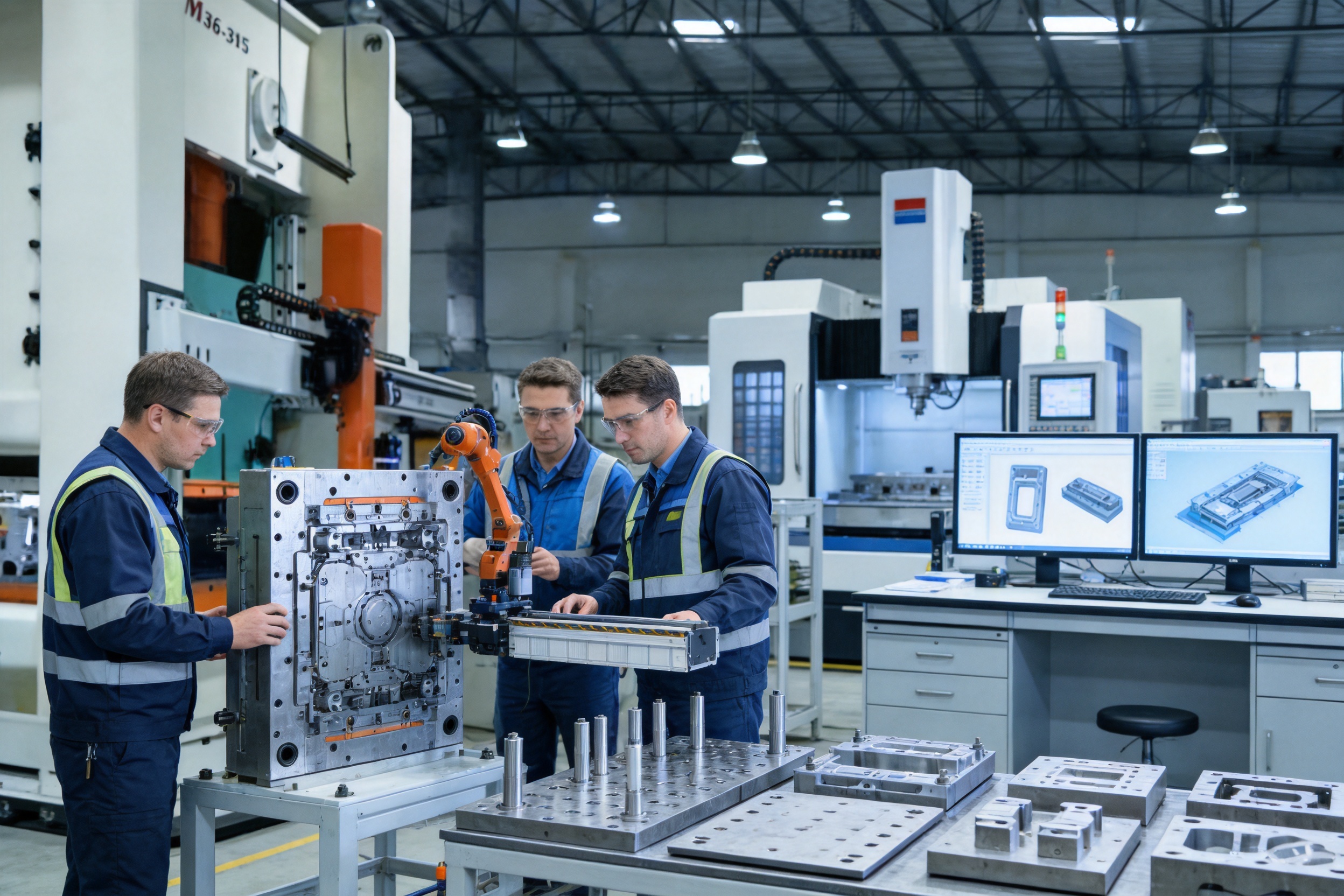
Design Considerations for Selecting Stamping Automation Equipment
Production Volume
Expected annual volume and required hourly output are among the first factors to consider. High-volume production may justify dedicated automation with short cycle times and extensive integration. Lower-volume production may require a more flexible arrangement that supports multiple products and frequent changeovers.
Part Geometry
Part shape determines the appropriate handling method. Flat blanks may be suitable for vacuum or magnetic handling, while formed parts may require mechanical grippers or custom fingers. Parts with deep draws, flanges, holes, or fragile edges need carefully designed contact points to prevent damage.
Material Characteristics
Steel, stainless steel, aluminum, copper, and coated materials behave differently during feeding and forming. Material thickness, surface finish, stiffness, weight, and tendency to adhere to tooling all influence the choice of feeder, gripper, lubricant, and transfer method.
Press Compatibility
The selected equipment must match the press’s tonnage, stroke, speed, shut height, bolster dimensions, control interface, and available space. A feeder or transfer mechanism that is technically capable but poorly matched to the press may reduce production stability.
Changeover Requirements
Customers producing multiple parts should consider how long it takes to change dies, adjust feeders, replace grippers, update programs, and verify safety systems. Quick-change features and stored operating parameters can reduce downtime and improve equipment utilization.
Maintenance Access
Routine maintenance should be possible without excessive disassembly. Lubrication points, electrical cabinets, sensors, guide rails, belts, bearings, cylinders, and wear parts should be accessible. A system that is easy to maintain is more likely to deliver reliable performance over time.
Factory Layout
Automation equipment must fit the available floor space and allow sufficient room for material loading, product unloading, die changes, operator movement, maintenance, and safety access. Layout planning should also consider crane coverage, electrical supply, compressed air, ventilation, and scrap collection.
Cost-Effectiveness and Customer Value
Cost-effective stamping automation is achieved through a balance of performance, durability, maintainability, and investment. A reliable supplier should not simply add unnecessary functions. Instead, the system should be designed around the actual production objective.
For some customers, the priority may be maximum output. For others, the priority may be flexible changeover, reduced manual handling, improved quality, or integration with an existing press. The correct solution may range from a straightforward automatic feeder to a complete line with transfer automation, inspection, scrap handling, and production monitoring.
Suzhou Shuangqisi Mold Equipment Co., Ltd. emphasizes competitive pricing together with technical capability. Its in-house manufacturing resources can help control the production of important tooling and machine components. The ability to manufacture dies, stamped parts, and automation equipment within a connected organization may also reduce the need for external coordination and help maintain control over schedule and quality.
Investment decisions should consider total cost of ownership. Important factors include initial equipment cost, installation, training, energy consumption, maintenance, spare parts, expected downtime, tooling life, output, labor requirements, and potential quality losses. A slightly higher initial investment may be justified if it delivers substantially greater reliability and productivity.
Turnkey Stamping Mold and Automation Solutions
A turnkey solution is designed to give the customer a coordinated production package rather than a collection of unrelated components. Depending on the project, this may include process planning, die design, die manufacturing, automation design, press compatibility review, assembly, trial production, installation support, commissioning, and operator training.
The company can also invest in related production equipment according to customer needs. This capability may be useful for customers developing a new product line, expanding capacity, or seeking a supplier capable of supporting a broader manufacturing project.
A turnkey approach is especially valuable when the customer has limited internal automation engineering resources. Instead of managing multiple technical interfaces, the customer can work with a supplier that understands the relationship between the die and automated handling system. This can shorten the learning curve during commissioning and improve the transition to stable production.
Successful turnkey delivery still requires strong cooperation from the customer. Accurate drawings, material information, press data, factory layout, quality requirements, and production targets should be provided early. Regular design reviews and clear acceptance standards help ensure that the final system meets practical expectations.
Service, Debugging, and Long-Term Reliability
Automation equipment is a long-term production asset. Its value depends on reliable operation after installation, not only on its appearance during delivery. Technical service should therefore include practical assistance with setup, debugging, maintenance, troubleshooting, and process optimization.
During commissioning, technicians may need to adjust feed length, part positioning, press timing, gripper pressure, sensor sensitivity, pneumatic settings, and control parameters. These adjustments should be documented so that the customer’s operators can repeat them safely and consistently.
Preventive maintenance should cover moving guides, bearings, cylinders, servo mechanisms, grippers, belts, sensors, electrical connections, and safety devices. Wear parts should be monitored before they cause unplanned downtime. Critical spare parts should be identified according to the operating environment and production schedule.
Operator training is also important. Personnel should understand normal operating procedures, emergency stops, die change methods, alarm responses, basic inspection, and safe access rules. Well-trained operators can identify abnormal conditions earlier and prevent minor issues from becoming major failures.
Environmental and Operational Benefits
Automation can support more efficient use of material and energy by stabilizing the stamping process. Accurate feeding may reduce misfeeds and scrap, while consistent cycle control can improve press utilization. Better scrap collection also supports recycling and cleaner factory conditions.
Reduced manual handling may improve ergonomics by limiting repetitive lifting and movement. Automated systems can also reduce the need for operators to work directly beside the point of operation during normal production.
Environmental performance depends on the complete production system, including press efficiency, lubricant usage, material yield, maintenance, and end-of-life recycling. Stamping automation equipment contributes by supporting stable processes and reducing avoidable waste, but these benefits are maximized when automation is combined with responsible process management.
Future Development of Stamping Automation
Stamping automation is continuing to develop through improved servo technology, motion control, sensors, vision systems, digital interfaces, and data collection. Future systems are likely to provide more flexible changeover, improved condition monitoring, and better integration with factory production management platforms.
Predictive maintenance functions may help identify abnormal vibration, temperature, motor load, or cycle behavior before a breakdown occurs. Vision inspection may support automatic verification of part presence, orientation, surface condition, or feature location. Digital production records may improve traceability and allow engineers to compare performance across different products and shifts.
However, advanced functions are most effective when they are based on a reliable mechanical foundation. Accurate dies, rigid frames, stable guides, correct press matching, and disciplined maintenance remain essential. Technology should be applied to solve real production problems rather than added only for appearance.
Manufacturers with combined die-making and automation expertise are well positioned to support this development. Their knowledge of forming processes allows them to identify where sensors, controls, and automated handling can provide genuine value. Their understanding of machining and tooling also helps ensure that advanced automation is supported by dependable physical equipment.
Company Strengths and Manufacturing Position
Suzhou Shuangqisi Mold Equipment Co., Ltd. is located in Wujiang Economic Development Zone, Suzhou, China. The company specializes in the design, manufacturing, and service of stamping dies and hardware parts, while also providing stamping automation equipment through its intelligent technology activities.
Its manufacturing base includes imported wire cutting machines, CNC machining centers, more than 10 grinding machines of different sizes, and 25 punch presses with capacities from 80 tons to 400 tons. These resources support precision component production, die development, trial stamping, and process verification.
The company’s customer experience includes work for Anter Group, Ousheng Electric, Dongbei Group, and Huichuan Technology. Its products and tooling are mainly used in servo drives, compressors, new energy vehicles, and related industrial applications. These sectors demand dependable production, practical engineering, and consistent quality.
The company’s strengths can be summarized as follows:
Integrated capability: Die design, die manufacturing, stamped parts, and automation can be addressed within a connected technical organization.
Practical experience: Approximately 15 years in the mold industry provides experience with real production challenges, debugging, and customer requirements.
Equipment resources: Precision machining, grinding, wire cutting, and press capabilities support controlled manufacturing and testing.
Technical personnel: A team of around 60 technical staff contributes to design, production, debugging, and service activities.
Application knowledge: Experience in electrical, compressor, servo drive, automotive, and new energy vehicle fields supports industry-specific project planning.
Turnkey support: Customers can request coordinated solutions covering stamping dies and automation rather than sourcing each element separately.
Cost awareness: The company focuses on providing competitive prices while maintaining technical performance and quality control.
Q&A: Stamping Automation Equipment
What is stamping automation equipment?
Stamping automation equipment is a mechanical and control system that automates the movement of coil material, blanks, or formed parts through a stamping process. It may include decoilers, straighteners, servo feeders, transfer mechanisms, robots, grippers, conveyors, scrap removal devices, sensors, safety systems, and control cabinets.
What are the main benefits of automating a stamping line?
The main benefits include higher productivity, more consistent feeding and transfer, reduced manual handling, improved workplace safety, lower labor dependency, reduced handling damage, better scrap control, and more stable product quality. The actual benefit depends on the part, press, die, production volume, and system design.
Can automation equipment be used with an existing press?
In many cases, automation can be designed or adapted for an existing press. The supplier must review the press tonnage, stroke, speed, shut height, bolster size, control interface, available space, and safety functions before confirming compatibility.
Why is it useful to purchase stamping dies and automation from one supplier?
A combined supplier can design the die and automation as a coordinated system. This may improve compatibility, reduce communication between multiple vendors, simplify debugging, and provide a clearer technical responsibility for the complete production process.
What industries use stamping automation equipment?
Typical industries include automotive components, new energy vehicles, servo drives, electrical equipment, compressors, appliances, industrial hardware, and other high-volume metal forming applications.
What information should a customer provide before requesting a solution?
Useful information includes part drawings, material type and thickness, annual production volume, desired cycle time, blank or coil dimensions, press specifications, existing die information, factory layout, quality requirements, and the preferred level of automation.
How does automation improve safety?
Automated systems reduce the need for operators to load, unload, and transfer parts directly near moving press components. Guarding, interlocks, emergency stops, sensors, and die protection functions can further reduce exposure to hazardous conditions when they are correctly designed and maintained.
Does automation eliminate the need for skilled operators?
No. Automation reduces repetitive handling, but skilled personnel remain necessary for setup, die changes, parameter adjustment, quality control, maintenance, troubleshooting, and process improvement. Training is essential for safe and reliable operation.
What does debugging involve?
Debugging involves testing the die and automation under actual operating conditions. Technicians may adjust feeding length, transfer timing, gripper position, sensors, press settings, lubrication, and forming parameters. They also inspect part quality, cycle stability, scrap discharge, and safety functions.
How can a customer control long-term maintenance costs?
Maintenance costs can be controlled through preventive inspection, proper lubrication, timely replacement of wear parts, operator training, parameter backup, clean sensor surfaces, and keeping appropriate spare parts available. Choosing equipment with accessible maintenance points also improves long-term serviceability.
Can a stamping automation system be customized?
Yes. Automation is normally customized according to the part geometry, material, die structure, press, production volume, layout, and handling requirements. Options may include coil feeding, blank loading, robotic transfer, part stacking, inspection, scrap removal, and production monitoring.
Conclusion
Stamping automation equipment is an important investment for manufacturers seeking higher productivity, consistent quality, improved safety, and better control of operating costs. Its success depends on more than the selection of a feeder or robot. The die, press, material, transfer process, controls, safety systems, inspection plan, and maintenance strategy must work together as one production solution.
Suzhou Shuangqisi Mold Equipment Co., Ltd. offers a combination of stamping die manufacturing, hardware part production, automation equipment, engineering support, and debugging experience. Its technical staff and manufacturing resources, including wire cutting machines, CNC machining centers, grinding machines, and punch presses from 80 tons to 400 tons, provide a practical foundation for developing and testing customized solutions.
By integrating die-making and stamping automation capabilities, the company can help customers reduce coordination difficulties and develop more compatible production lines. Its experience serving servo drive, compressor, electrical, automotive, and new energy vehicle applications further supports its ability to address demanding industrial requirements.
For manufacturers planning a new automated stamping line or upgrading an existing production process, the most valuable solution is one that combines suitable technology with dependable engineering, controlled manufacturing, realistic debugging, and long-term service. Properly designed stamping automation equipment can deliver durable value by increasing output, protecting quality, improving workplace conditions, and supporting the future development of efficient metal forming operations.
References
1. ASM International, ASM Handbook: Forming and Forging.
2. Society of Manufacturing Engineers, Fundamentals of Metal Forming and Stamping.
3. American Society of Mechanical Engineers, Safety Standards for Mechanical Power Presses.
4. International Organization for Standardization, ISO 9001: Quality Management Systems—Requirements.
5. International Organization for Standardization, ISO 12100: Safety of Machinery—General Principles for Design.
6. Metalworking industry technical literature on progressive dies, transfer stamping, servo feeding, and automated press lines.
7. Manufacturer-provided technical information concerning stamping dies, stamped hardware parts, stamping automation equipment, machining resources, and industrial applications.
Product: Stamping Automation Equipment
Previous Post
Progressive Molds for Automotive Parts: Precision, Productivity, and Integrated Stamping Solutions
Next Post
Advanced Stamping Automation Equipment for Efficient Metal Forming Production
Our Products.
Start Your Business with an OEM Manufacturer Right Here!

Provide global customers with complete turn-key solutions
through
innovation!
QUICK LINKS
CONTACT INFO.
-
 +86-139 1308 8972
 -

-
 No. 118 Yexin Road, Wujiang Economic Development Zone, Suzhou, China
Copyright © Suzhou Shuangqisi Mold Equipment Co., Ltd. All Rights Reserved. Custom Stamping Die Metal Stamping Die Manufacturers
