 English
 Español
 Deutsch
-
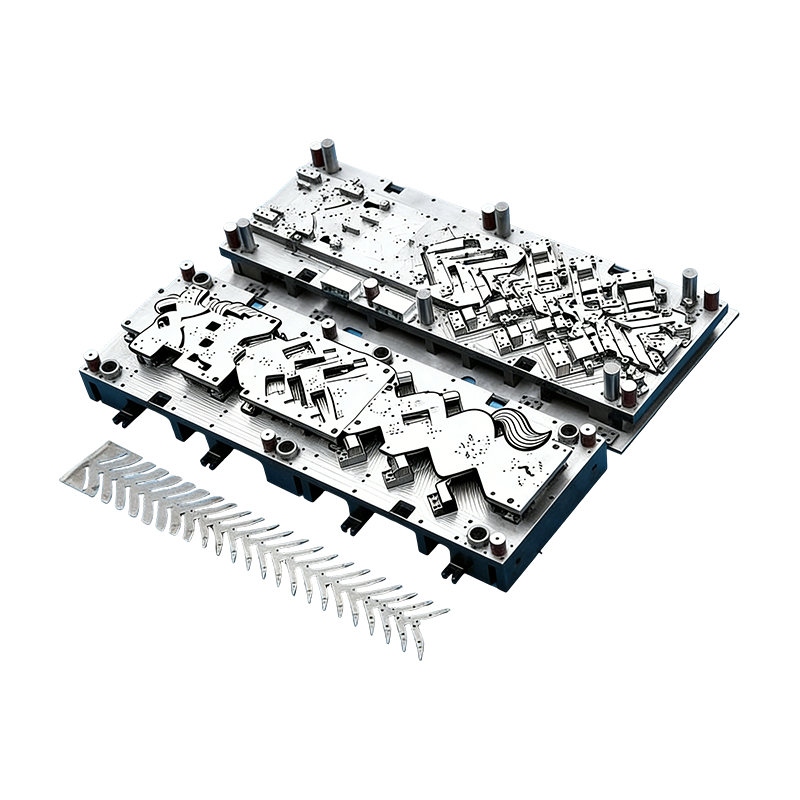
Progressive molds for automotive parts
This Continuous mold for automotive motor housing ...
-
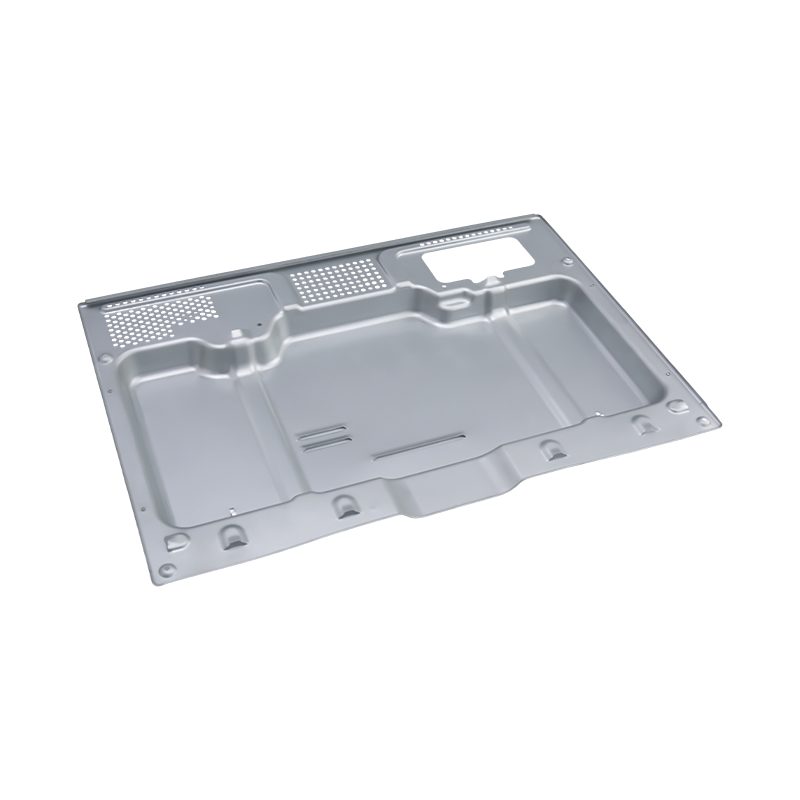
High-end oven stamping parts
Our High-end oven stamping parts are precision-man...
-
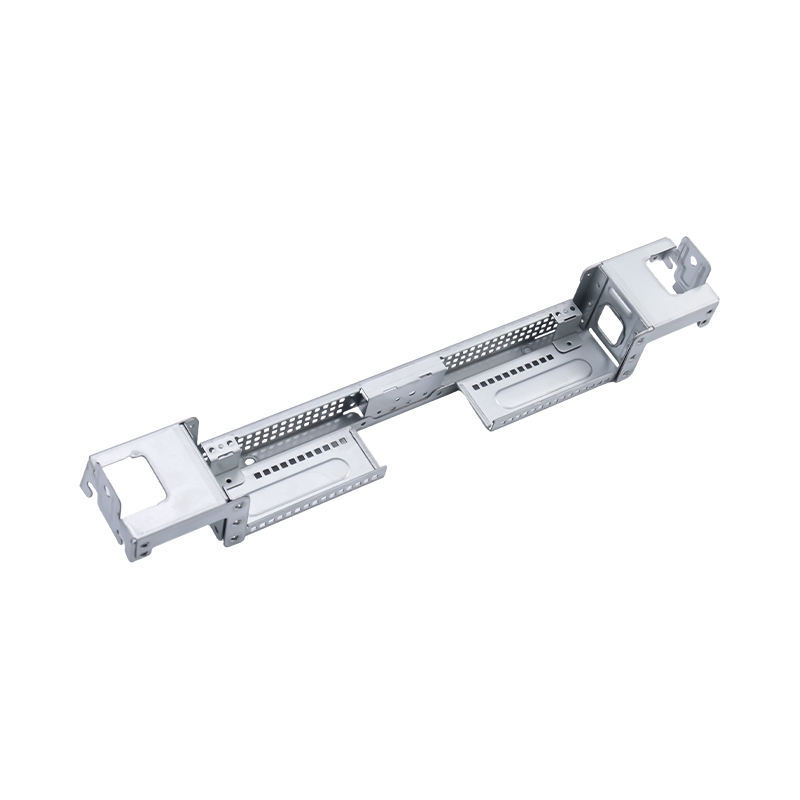
High-end large computer stamping parts
Our High-end large computer stamping parts are pre...
-
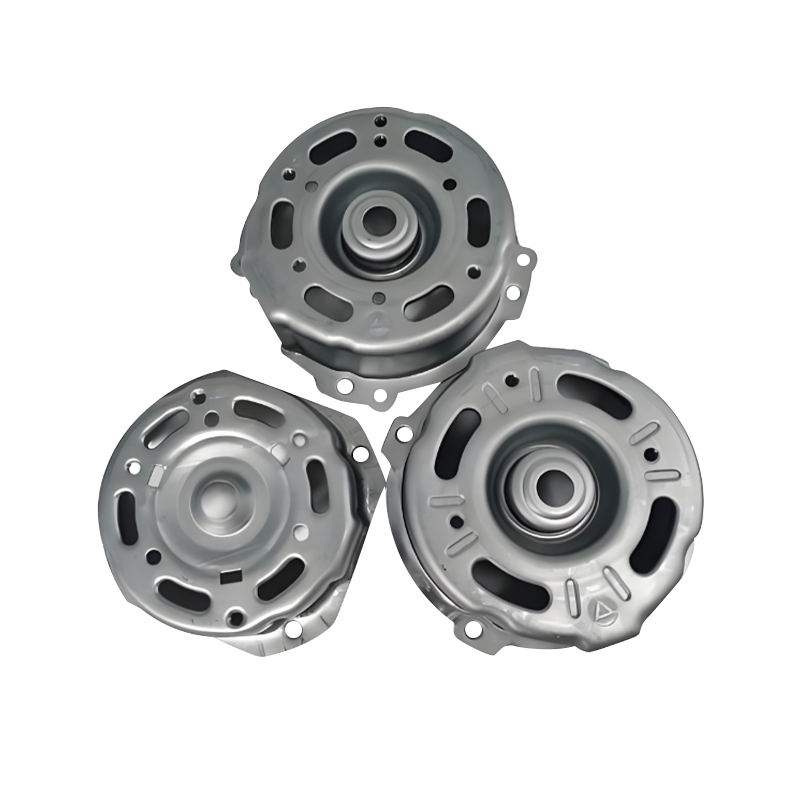
Automotive motor housing stamping parts
Automotive motor housing stamping parts are core c...
-
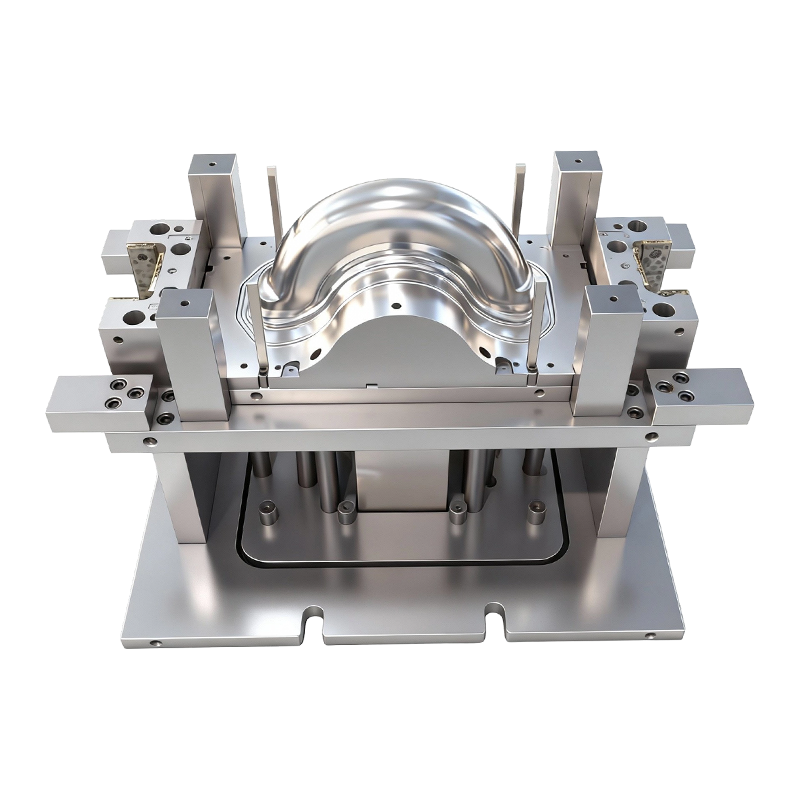
Deep drawing mold for front and rear wheels of two-wheeled electric vehicles
This Deep drawing mold for front and rear wheels o...
-
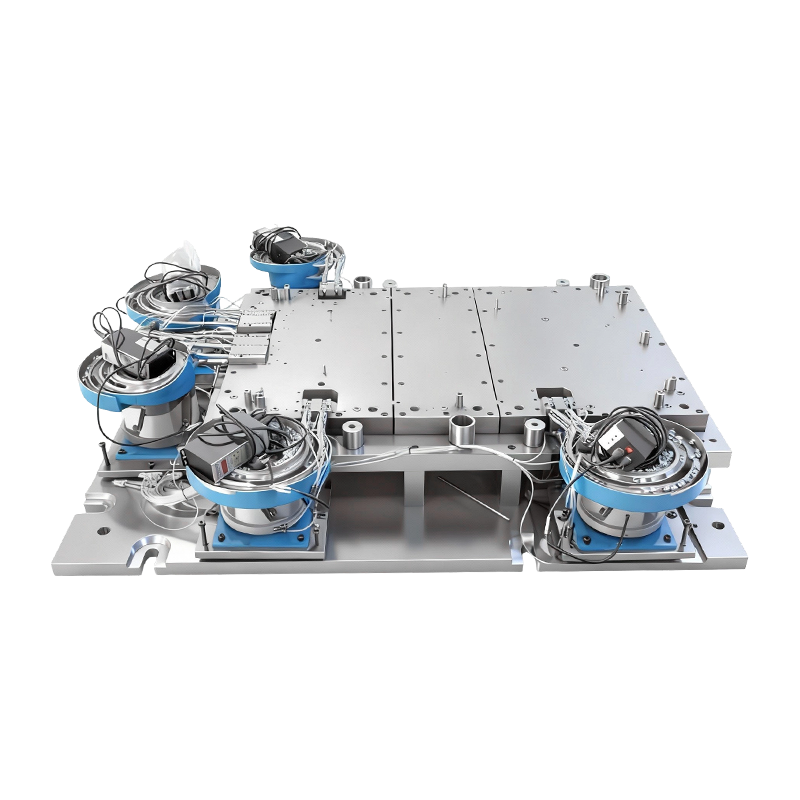
Automatic riveting mold for large computer machine base
This Automatic Riveting Mold for Large Computer Ma...
- E-mail us: [email protected]
- Call us: +86-139 1308 8972

Zhou Mengjie – Technical Sales Specialist
Home / Author / Zhou Mengjie – Technical Sales Specialist / Progressive Molds for High-Precision Automotive Motor Housings
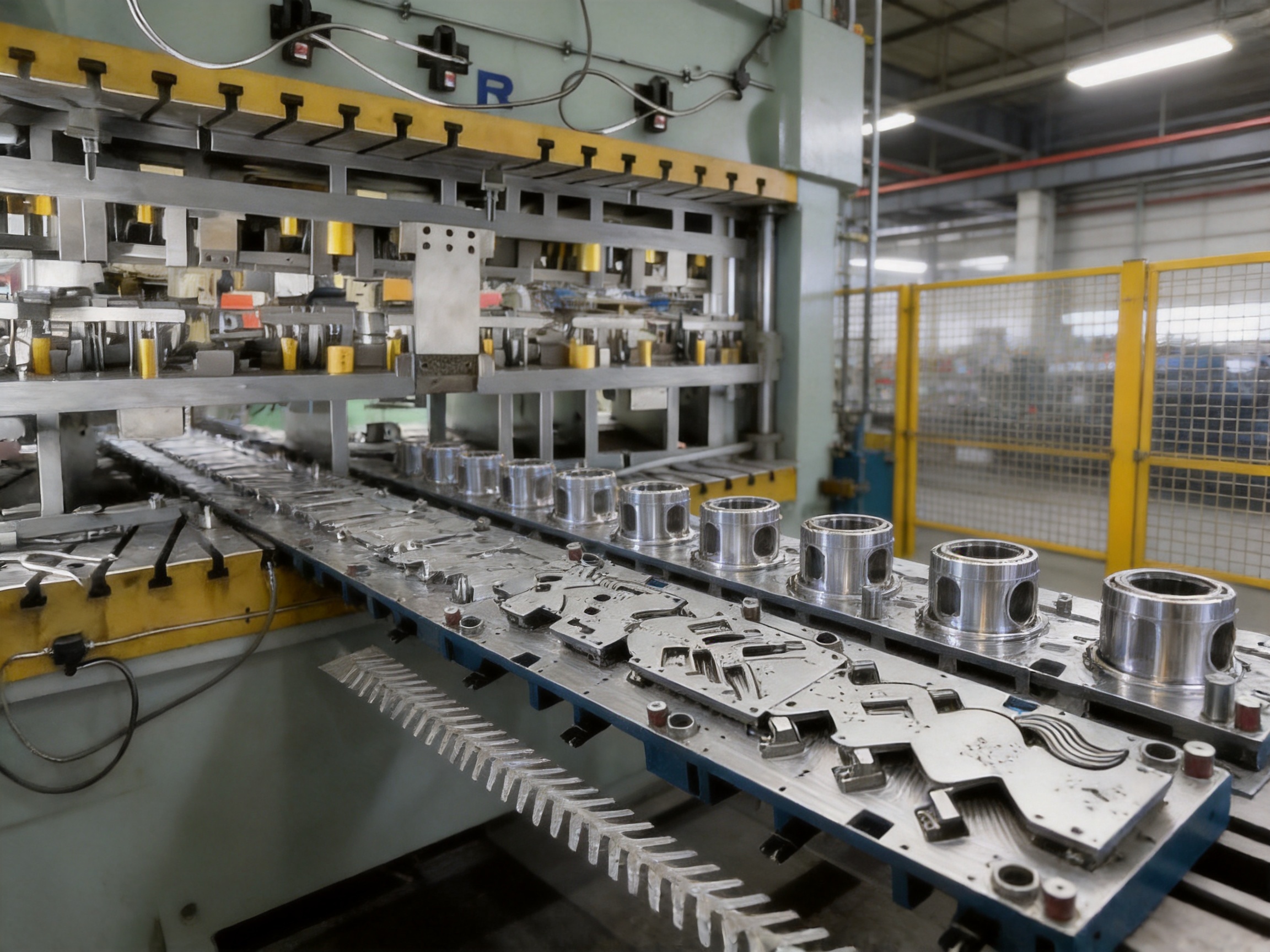
Progressive Molds for High-Precision Automotive Motor Housings
2026-08-07
Automotive manufacturers are under constant pressure to produce lighter, more reliable, and more cost-effective components while maintaining strict dimensional and functional requirements. Motor housings and other small automotive parts are particularly demanding because they often combine deep-drawn geometries, close-fitting assembly surfaces, uniform wall-thickness requirements, and high-volume production schedules. A progressive mold designed for these applications provides an effective way to integrate multiple forming operations into one continuous manufacturing sequence.
The progressive mold for automotive parts described in this article is engineered for the high-volume production of automotive motor housings and related small-sized components. It combines stamping, drawing, forming, piercing, shaping, and other potential operations in an integrated die structure. By allowing material to move through a series of stations in a controlled sequence, the mold supports rapid and repeatable production while reducing handling, intermediate storage, and production interruptions.
Manufactured by Suzhou Shuangqisi Mold Equipment Co., Ltd., the solution reflects a broader capability in metal stamping die design, precision machining, mold assembly, debugging, and stamping automation. The manufacturer serves industries including automotive, new energy vehicles, servo drives, compressors, and electrical equipment. Its experience in both mold manufacturing and automation equipment enables it to address not only the die itself but also the wider production process surrounding the die.
This article examines the construction, operation, advantages, manufacturing methods, quality considerations, maintenance features, and application value of progressive molds for automotive motor housings. It also explains why an integrated supplier with in-house machining resources, experienced technical personnel, and automation capabilities can offer advantages over suppliers that provide only a basic die structure.
Progressive molds for automotive parts
Content
- 1 1. The Role of Progressive Molds in Automotive Production
- 2 2. Product Design for Automotive Motor Housings
- 3 3. Advantages Compared with Conventional Die Arrangements
- 4 4. Materials and Wear-Resistant Construction
- 5 5. Advanced Manufacturing Process
- 6 6. Manufacturing Resources and Technical Strength
- 7 7. Integrated Mold and Stamping Automation Solutions
- 8 8. Modular Maintenance and Serviceability
- 9 9. Quality Control for Precision Automotive Components
- 10 10. Applications in Automotive and New Energy Vehicle Production
- 11 11. Economic Value for Manufacturers
- 12 12. Selecting a Progressive Die Manufacturing Partner
- 13 13. Recommended Project Development Sequence
- 14 14. Operating Considerations
- 15 15. Frequently Asked Questions
- 15.1 What is a progressive mold for automotive parts?
- 15.2 Why is a progressive die suitable for motor housings?
- 15.3 Can the mold produce other small automotive parts?
- 15.4 What materials are used in the mold?
- 15.5 How does the modular structure help maintenance?
- 15.6 What equipment is available for manufacturing and testing?
- 15.7 Does the supplier provide stamping automation?
- 15.8 What information should a customer provide before requesting a quotation?
- 15.9 How can a customer evaluate die quality?
- 15.10 Is a progressive mold always the lowest-cost option?
- 16 16. Conclusion
- 17 References
- 18 Product: Progressive molds for automotive parts
1. The Role of Progressive Molds in Automotive Production
A progressive mold is a specialized stamping die that performs a sequence of operations as strip or sheet material advances through the die. Each station carries out a specific task, such as blanking, piercing, drawing, bending, forming, trimming, or calibration. With every press stroke, the material moves forward by a controlled pitch, and the part gradually approaches its final shape.
For automotive motor housings, this progressive approach is valuable because the product may require several forming stages. A flat metal strip or blank may need to be pierced, shaped, drawn into a cylindrical or partially cylindrical profile, trimmed, and formed to create accurate mounting or fitting surfaces. Performing these actions through a coordinated die reduces the need to transfer semi-finished parts between separate machines.
Traditional production arrangements may use individual dies for each operation. Although this approach can be suitable for low-volume or highly variable production, it often involves additional material handling, multiple setups, greater labor requirements, and more opportunities for positioning errors. A progressive mold consolidates the production flow and can improve consistency from one part to the next.
The term “continuous mold” is also commonly used to describe this type of tooling because the production process can continue for extended periods once the press, feeder, material, and die have been properly adjusted. In this context, continuous operation does not mean uncontrolled operation. It depends on accurate material feeding, stable press performance, correct lubrication, reliable sensors, and a die structure capable of managing repeated loads.
For high-volume automotive applications, the principal objective is not simply to make one acceptable part. The objective is to make large quantities of acceptable parts at a stable cycle rate, with predictable quality, controlled scrap, and minimal unplanned downtime. A well-designed progressive mold supports this objective by coordinating each forming stage within one carefully engineered system.
2. Product Design for Automotive Motor Housings
Automotive motor housings must usually satisfy several functional requirements at the same time. They may need to protect internal motor components, maintain a defined exterior shape, provide accurate interfaces for assembly, and withstand mechanical, thermal, and vibrational conditions. Even when the housing is relatively small, its production can be technically demanding because the final component must fit with shafts, bearings, covers, brackets, electrical parts, or other powertrain assemblies.
The progressive mold is designed around the geometry and production requirements of the specific automotive component. Its forming stations can be arranged to gradually develop the housing profile rather than forcing the material into its final shape in a single operation. This staged approach helps control material flow and can reduce the risk of excessive thinning, wrinkling, tearing, distortion, or uneven forming.
Uniform wall thickness is an important consideration in drawn automotive parts. If material flows unevenly during deep drawing, certain areas may become too thin while others may develop excess material or wrinkles. A carefully designed sequence of drawing and forming operations helps distribute deformation more effectively. The exact number and arrangement of stations depend on the material grade, thickness, depth-to-diameter ratio, corner radii, required tolerances, and final shape.
The mold also supports the creation of precise fitting surfaces. These surfaces may include mounting faces, locating areas, openings, flange regions, or other features needed for assembly. When these features are formed and controlled within one integrated system, the relationship between them can be more stable than when parts are repositioned manually between separate operations.
Automotive motor housings and small components often require repeatable dimensional performance over long production runs. The die must therefore be designed not only for the nominal part shape but also for wear behavior, maintenance access, material variation, press conditions, and the practical realities of continuous production. A mold that performs well during initial trials but becomes difficult to maintain may not provide the required commercial value. For this reason, serviceability and replaceable components are important elements of the product design.
Integrated Stamping and Forming
The main product advantage is the integration of multiple manufacturing actions into a single progressive tool. Stamping and forming operations can be arranged in a logical sequence, allowing the component to develop progressively as it advances through the die. This reduces the number of separate production stages and can shorten the overall manufacturing route.
Integration also helps reduce the number of times a part must be handled. Every manual or automated transfer introduces a possibility of misalignment, surface damage, or variation in orientation. In a progressive mold, the strip or connected workpiece remains guided through the die, which supports better positional control and repeatability.
High-Volume Production Capability
The mold is intended for mass-production environments where consistent cycle performance is essential. Once the die has been installed, adjusted, and validated on a suitable press, the continuous feeding process can support a high output rate. This can be particularly beneficial for automotive suppliers that must meet scheduled deliveries and maintain stable production across multiple shifts.
High-volume capability does not depend on speed alone. A faster cycle with frequent stoppages may be less productive than a slightly slower cycle with stable operation. The mold’s modular design, wear-resistant materials, and maintenance accessibility are therefore important because they help sustain production over time.
Dimensional Stability
Dimensional stability is central to the value of a precision automotive die. The mold uses high-hardness alloy steel components to resist wear under repeated stamping and forming loads. Wear resistance helps preserve the working clearances, forming radii, cutting edges, and guiding relationships that influence the final part.
Maintaining dimensional accuracy over a long production run helps reduce the risk of gradual quality drift. It also supports more predictable inspection results and reduces the need for frequent corrective adjustments. The actual achievable tolerance depends on material, press accuracy, die construction, process parameters, and inspection methods, but a stable die foundation is an essential starting point.
3. Advantages Compared with Conventional Die Arrangements
Progressive molds for automotive parts compete not only with other progressive dies but also with conventional single-operation dies, transfer systems, manual production routes, and less integrated tooling solutions. The most appropriate solution depends on part geometry and production volume, but the progressive design offers several important advantages for suitable applications.
Reduced Production Handling
When separate dies are used for blanking, drawing, trimming, and forming, the semi-finished product must be moved between operations. This may require operators, robots, conveyors, trays, or intermediate fixtures. Each transfer adds time and may create alignment variation. A progressive mold keeps the material within a guided process for the majority of the operation.
Reduced handling can improve productivity and may also reduce the risk of scratches, dents, contamination, or accidental deformation. It can make the production line easier to organize because fewer intermediate storage locations are required.
Improved Repeatability
Repeatability is improved when the same die performs the same sequence in a controlled and repeatable manner. The strip is positioned by feeding and guiding elements, while each station is designed in relation to the others. This helps maintain a consistent relationship between formed features, holes, edges, and reference surfaces.
By contrast, transferring a part between independent dies can introduce small positioning differences. These differences may accumulate, especially when the part has to be reoriented or clamped several times. A progressive process does not eliminate all variation, but it can reduce the number of opportunities for variation to enter the process.
Lower Labor Intensity
Continuous die production can reduce the amount of direct manual handling required for each part. Operators can focus on setup, monitoring, material replenishment, quality checks, and maintenance rather than repeatedly loading and unloading individual workpieces. When combined with automatic feeding and stamping automation equipment, the production line can be configured for efficient and consistent operation.
Lower labor intensity can be especially valuable in high-volume programs. It may also improve workplace organization by reducing repetitive handling tasks and creating a more structured production flow.
More Efficient Use of Floor Space
An integrated die can reduce the number of separate presses, fixtures, transfer areas, and intermediate stations needed for a component. This may help manufacturers use factory space more efficiently. The actual space savings depend on the production plan, press size, material feed arrangement, and downstream operations, but integration generally simplifies the process layout.
Faster Response to Production Requirements
Automotive programs often require reliable output and timely adjustments. A modular die structure can make it easier to access specific areas, replace damaged components, and carry out maintenance. This can reduce production interruptions compared with a highly complicated structure in which every repair requires extensive disassembly.
Quick replacement does not mean that maintenance can be neglected. Instead, it means the die is designed with practical maintenance in mind. Replaceable wear components, accessible fasteners, organized inserts, and clear service procedures can all contribute to shorter recovery time after wear or damage.
4. Materials and Wear-Resistant Construction
The working components of a progressive mold are exposed to repeated mechanical loads, sliding contact, impact, friction, and, depending on the process, cutting and drawing stresses. The use of high-hardness alloy steel supports the durability required for continuous automotive production.
Material selection must be matched to the function of each component. Cutting edges may require a different performance balance from guide elements, forming inserts, backing plates, or structural die blocks. Important considerations can include hardness, toughness, resistance to chipping, dimensional stability after heat treatment, machinability, and suitability for surface finishing.
Hardness alone is not enough to guarantee die life. A component that is extremely hard but insufficiently tough may be vulnerable to cracking or edge failure. Similarly, an overly soft component may wear quickly even if it has good toughness. Effective die engineering balances these properties according to the working conditions at each station.
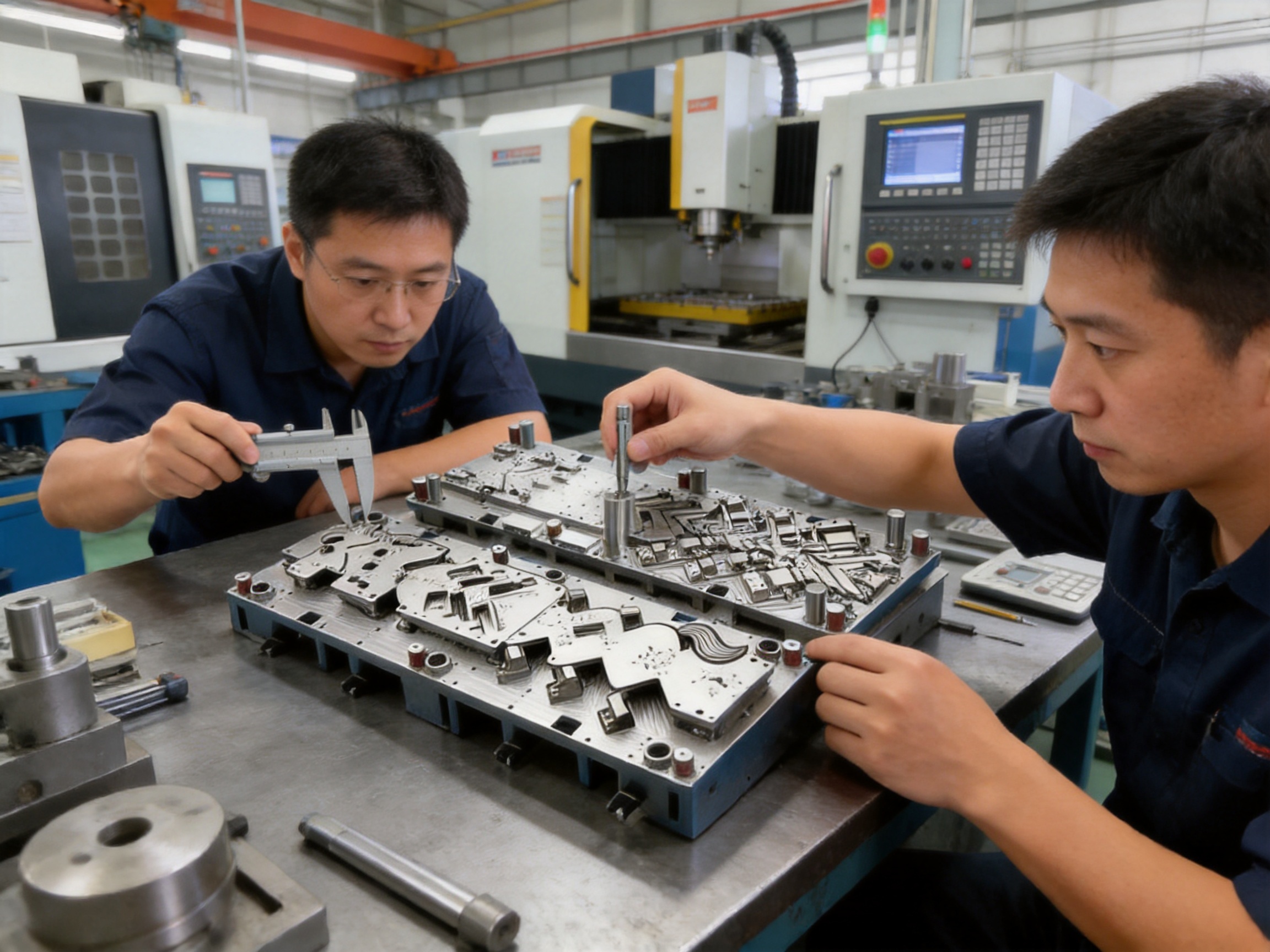
Precision grinding and machining are also important. Even a suitable alloy steel will not perform correctly if clearances, radii, surfaces, or alignments are inaccurate. The manufacturer’s equipment includes imported wire cutting machines, CNC machining centers, and more than ten grinding machines of various sizes. These resources support the production of accurate die components and provide flexibility for different part dimensions and tooling structures.
Wire cutting can be useful for producing detailed profiles and precise openings, while CNC machining supports the creation of complex cavities, blocks, plates, and locating features. Grinding contributes to surface accuracy and finish, particularly on components where flatness, parallelism, or precise edge conditions are important.
High-quality construction also includes correct heat-treatment management, careful assembly, controlled fitting, and suitable inspection. These steps help ensure that the completed mold performs as an integrated system rather than as a collection of individually machined parts.
5. Advanced Manufacturing Process
The manufacture of a progressive mold for automotive motor housings begins with understanding the product, material, press conditions, and required production volume. The process must connect design decisions with manufacturing capabilities and final operating conditions. A technically attractive die design is not sufficient if it cannot be manufactured accurately, maintained efficiently, or operated reliably on the customer’s available equipment.
Product and Process Review
The first stage is a review of the part drawing, three-dimensional model, material specification, thickness, tolerances, surface requirements, production quantity, and press information. Engineers evaluate the part geometry to determine which features can be stamped, drawn, pierced, trimmed, or formed progressively.
This review also considers material utilization. Strip layout influences the amount of scrap produced, the stability of the feeding process, and the overall cost per part. A suitable layout must balance material efficiency with adequate carrier strength, station spacing, forming feasibility, and safe removal of the finished component.
For deep-drawn features, the engineering review considers draw depth, corner radius, blank-holder behavior, material flow, and the number of forming steps. For piercing and trimming, it considers cutting clearance, slug control, edge quality, and the sequence required to prevent distortion.
Progressive Die Design
After the process route is established, engineers develop the die structure. The design may include upper and lower die plates, guide pillars and bushes, punches, dies, forming inserts, drawing components, stripper elements, carriers, pilots, lifters, sensors, and replacement wear parts.
The stations are arranged so that each operation prepares the material for the next one. Early stations may create pilot holes or initial blanks. Intermediate stations may perform drawing or shaping operations. Later stations may complete trimming, piercing, calibration, or separation. The final sequence depends on the product and must be validated through engineering analysis and practical trials.
Guidance and alignment are critical. The upper and lower sections must remain accurately related during repeated press strokes. The strip must advance by the correct pitch, and the material must be supported at the appropriate stages. Poor guidance can lead to uneven wear, broken punches, dimensional variation, or feeding problems.
Precision Machining
Once the design is approved, die components are manufactured using precision equipment. CNC machining centers produce structural and shaped components according to programmed tool paths. Wire cutting machines create fine profiles and openings where required. Grinding machines refine critical surfaces and help achieve the required geometric accuracy.
Machining accuracy is influenced by equipment condition, tool selection, workholding, temperature control, operator skill, and inspection practices. Experienced operators are essential because complex dies often require practical judgment during machining and fitting. The manufacturer maintains a team of technical staff and senior operators with experience in mold production and debugging.
Component Preparation and Fitting
After machining, components are checked, deburred, cleaned, and prepared for assembly. Working edges and forming surfaces must be examined carefully. Small burrs, improper clearances, or foreign particles can affect die performance and damage the workpiece during initial trials.
Fitting brings individual components together into a coordinated tool. The relationship between punches, die openings, guide elements, forming surfaces, strippers, and carriers must be verified. The goal is to achieve smooth movement, correct contact, stable support, and consistent material flow.
Assembly and Debugging
Die assembly is followed by debugging on a suitable punch press. The team checks feeding, pilot engagement, material positioning, forming sequence, cutting action, part removal, and overall press behavior. Initial trials may reveal areas requiring adjustment, such as draw depth, pressure, clearance, timing, lifter height, or strip support.
Debugging is a practical engineering stage rather than a simple final inspection. It confirms how the designed process behaves under actual operating conditions. Experienced debugging personnel can identify whether a problem comes from material feeding, die alignment, forming sequence, press parameters, lubrication, or a component that requires modification.
The company operates 25 punch presses ranging from 80 tons to 400 tons. This equipment supports die testing, stamping production, and process verification across a range of applications. Press capacity must be matched carefully to the required forming and cutting forces, die dimensions, stroke, speed, and feeding configuration.
Trial Production and Quality Verification
Trial production is used to evaluate sample parts against the customer’s requirements. Dimensional checks may include overall height, diameter, wall thickness, hole position, flange geometry, flatness, and fitting surfaces. Visual inspection can identify wrinkles, cracks, scratches, burrs, dents, or other surface defects.
Quality verification should also assess process stability. A small number of acceptable samples does not necessarily demonstrate that the mold is ready for long-term continuous production. The die must be observed over a meaningful run to confirm feeding behavior, component wear, lubrication, scrap removal, and consistency of the final parts.
6. Manufacturing Resources and Technical Strength
The manufacturer’s strength lies in the combination of equipment, technical personnel, production experience, and related automation capability. Suzhou Shuangqisi Mold Equipment Co., Ltd. has 60 technical staff and approximately 15 years of experience in the mold industry. This background supports the development of stamping dies for demanding industrial applications.
The company’s equipment includes imported wire cutting machines, CNC machining centers, more than ten grinding machines of different sizes, and 25 punch presses from 80 tons to 400 tons. Such a combination provides support across the complete tooling route, from component machining to assembly, trial stamping, and debugging.
Having multiple grinding machines can be advantageous because different die components may require different working envelopes or processing arrangements. CNC machining centers provide flexibility for complex structures, while wire cutting supports precision profiles and detailed cutting features. The available press range also makes it possible to evaluate tooling under appropriate force conditions instead of relying solely on theoretical calculations.
Equipment, however, is only one part of manufacturing capability. Skilled personnel are needed to interpret drawings, adjust processes, fit components, identify defects, and make practical improvements. Senior operators and experienced debugging personnel can help convert a design into a stable production tool. Their knowledge is particularly valuable when a part includes difficult forming characteristics or when production conditions differ from the original assumptions.
The company’s main clients include Anter Group, Ousheng Electric, Dongbei Group, and Huichuan Technology. Its products are used in applications involving servo drives, compressors, and new energy vehicles. These sectors require reliable tooling because component production is often closely connected to larger equipment and assembly schedules.
The manufacturer also invested in and established Suzhou Keshuang Intelligent Technology Co., Ltd. in 2016. This related company focuses mainly on stamping automation equipment. The combination of die manufacturing and automation provides an integrated foundation for customers seeking more than a standalone mold.
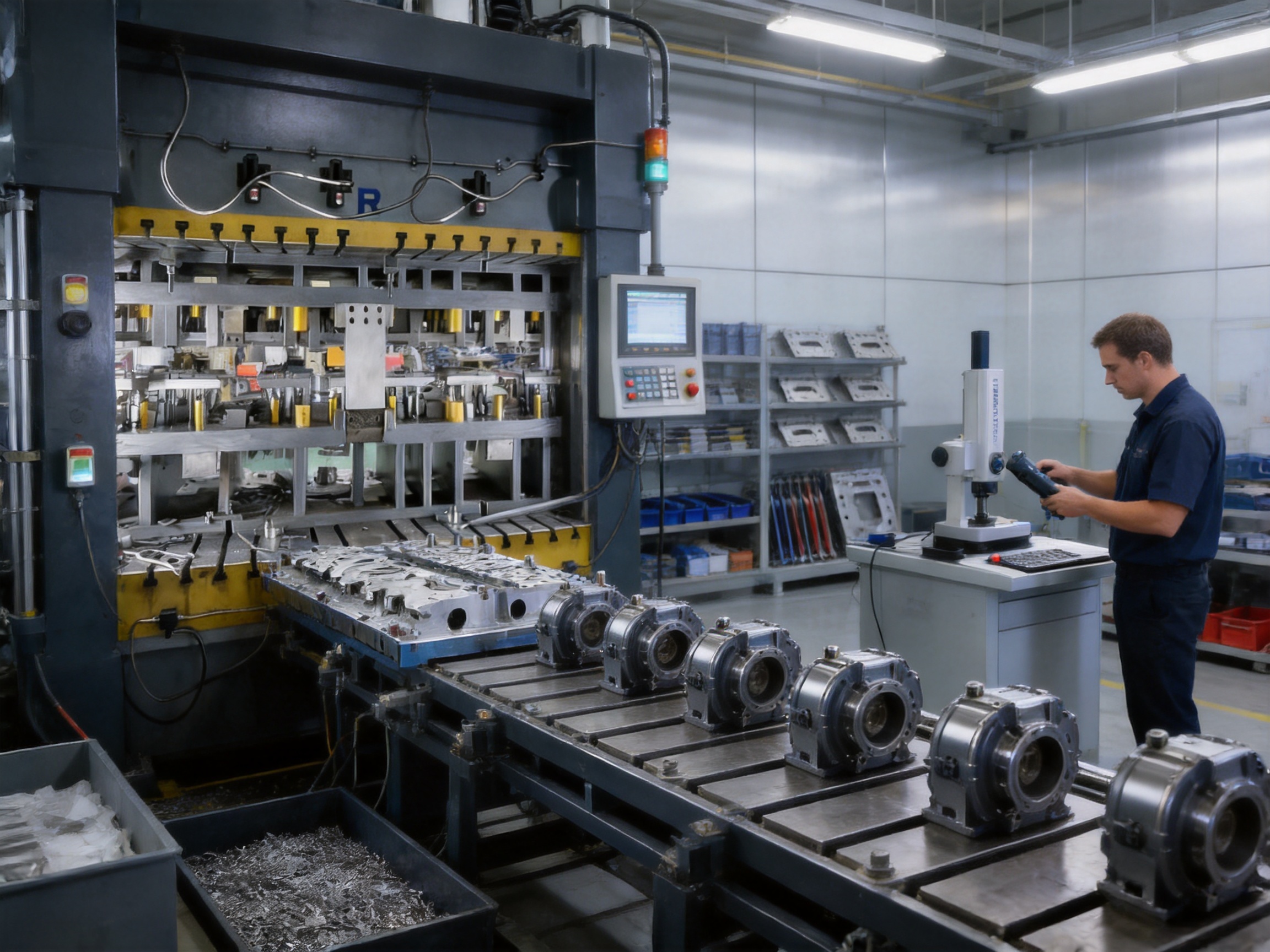
7. Integrated Mold and Stamping Automation Solutions
A progressive mold is most effective when it is correctly connected to the rest of the production line. Material feeding, straightening, lubrication, scrap collection, part detection, press control, and finished-part handling all influence production performance. A die supplier that understands these surrounding systems can provide more practical support during implementation.
Through its stamping automation capabilities, the manufacturer can offer turnkey solutions for stamping molds and automation equipment. Depending on the customer’s needs, this may involve equipment planning, feeder integration, production-line coordination, and related implementation support. The exact configuration depends on the product, material, press, required output, and factory layout.
Automation can improve process consistency by controlling feeding pitch, timing, transfer, and part handling. It may also reduce the risk of human error and help operators monitor the line more effectively. In a high-volume automotive application, the value of automation is not limited to labor reduction. It can support stable cycle performance, controlled material movement, and better coordination between the die and the press.
Integrated supply can also simplify communication. When the mold, automation, and production requirements are evaluated by connected technical teams, potential interface problems may be identified earlier. Examples include incorrect feed height, insufficient space for material coils, incompatible press signals, inadequate scrap discharge, or improper access for maintenance.
The company can also invest in related production equipment according to customer requirements. This ability may help customers develop a cost-effective production package instead of sourcing each element independently. A coordinated solution can make installation, commissioning, and operator training more straightforward, although the final arrangement should always be confirmed through a detailed technical specification.
8. Modular Maintenance and Serviceability
Continuous production places significant demands on maintenance. Even a durable die will eventually require cleaning, inspection, adjustment, sharpening, or component replacement. The progressive mold described here uses a modular design that allows damaged or worn parts to be replaced more easily.
Modularity can reduce the time needed to restore production because technicians may be able to replace a specific insert, punch, forming element, guide component, or wear part without rebuilding the entire die. It can also simplify spare-parts management because critical components can be identified and prepared in advance.
Maintenance access should be considered during the design stage. Technicians need to reach inspection points, fastening elements, lubrication areas, and replaceable components safely and efficiently. A die that is difficult to disassemble can increase downtime and create a greater risk of accidental damage during service.
Recommended maintenance activities may include removing stamping debris, checking fasteners, inspecting cutting edges, verifying guide conditions, measuring critical clearances, cleaning lubrication passages, checking sensors, and examining the workpiece for early signs of quality drift. The specific schedule should be established according to production volume, material properties, press speed, lubrication, and observed wear.
Preventive maintenance is generally more effective than waiting for a failure. Gradual wear may first appear as increasing burrs, dimensional changes, scratches, unstable feeding, or a change in forming behavior. Early detection allows the team to plan repairs during scheduled downtime rather than responding to an unexpected breakdown.
Serviceability also contributes to the total cost of ownership. The original purchase price is only one part of the economic evaluation. Production interruptions, replacement parts, labor, scrap, rework, and lost delivery capacity can have a major effect on the long-term value of a die. A durable and maintainable mold can therefore provide advantages beyond its initial technical specifications.
9. Quality Control for Precision Automotive Components
Quality control begins before machining. A clear understanding of the product drawing, material, tolerance requirements, and intended assembly function helps establish appropriate inspection points. The die design must then translate these requirements into controlled forming and cutting operations.
During machining, inspection can verify dimensions, profiles, flatness, alignment, surface condition, and critical clearances. Components that form or cut the part require particular attention because small deviations may influence the final workpiece. Inspection equipment and methods should be selected according to the required accuracy and feature type.
During assembly, technicians verify that moving components operate smoothly and that the upper and lower die sections align correctly. The assembled die should be checked for interference, proper return action, secure fastening, and correct operation of guides, strippers, lifters, and other mechanisms.
During trial stamping, sample parts are examined for both dimensional and visual quality. Uniform wall thickness is especially important for drawn housings. The team may also evaluate the consistency of flange areas, fitting surfaces, openings, and mounting features. If defects are identified, the cause must be determined rather than corrected only through superficial adjustments.
Process quality can be affected by factors outside the die, including material thickness variation, hardness variation, coil shape, lubrication, press deflection, feeding accuracy, and operator settings. A complete quality approach considers the die and the production system together.
For automotive suppliers, documentation is also valuable. Die drawings, component lists, maintenance instructions, trial records, adjustment notes, and inspection results can support future service and production traceability. Clear documentation helps ensure that the tool remains understandable even when personnel or production conditions change.
10. Applications in Automotive and New Energy Vehicle Production
The mold is intended primarily for automotive motor housings and small-sized automotive parts. These may be used in powertrain systems, electric motor assemblies, compressors, servo-related products, and other vehicle or industrial applications where formed metal components are required.
New energy vehicles have increased demand for electric motors, power electronics, thermal-management systems, compressors, and related precision components. Many of these systems contain stamped or drawn metal parts that must be produced consistently at scale. Progressive tooling can support this demand by combining efficient production with controlled geometry.
Motor housings may require accurate interfaces because they are assembled with internal electromagnetic, mechanical, or thermal components. A housing that is dimensionally inconsistent can create problems during assembly, sealing, alignment, noise control, or long-term operation. The mold’s focus on precise fitting surfaces and stable forming is therefore relevant to both conventional automotive and electric-vehicle applications.
The same tooling principles can apply to other compact metal components. Depending on the design, progressive dies may be adapted for covers, brackets, shields, connectors, structural inserts, sleeves, electrical parts, compressor components, and other stamped products. Each application requires its own engineering analysis, but the core benefits of integrated operations, controlled feeding, and repeatable forming remain relevant.
Production volume is a key factor in determining whether a progressive mold is appropriate. For large annual quantities, the initial investment in a complex die may be justified by lower labor content, shorter cycle time, and improved repeatability. For low-volume or frequently changing products, a simpler tooling arrangement may sometimes be more economical. A professional die manufacturer should evaluate the complete business case rather than recommending the same structure for every part.
11. Economic Value for Manufacturers
The economic value of a progressive mold comes from the relationship between tooling investment and production performance. A well-designed die may reduce the cost per part by lowering handling requirements, improving material utilization, reducing labor intensity, and supporting higher output.
Stable production can also reduce indirect costs. When the process is repeatable, manufacturers may experience less scrap, fewer rework activities, fewer emergency adjustments, and more predictable planning. Consistent output helps production managers schedule downstream assembly and customer deliveries with greater confidence.
Material utilization should be considered carefully. Strip layout, carrier design, nesting, and scrap management all influence material consumption. A design that saves material but creates unstable feeding may not be beneficial overall. The best solution balances raw-material efficiency with reliable operation and acceptable maintenance requirements.
Maintenance cost is another important factor. High-hardness alloy steel components and modular replacement features can help extend service intervals and reduce repair complexity. Actual die life depends on material, production speed, lubrication, forming load, maintenance discipline, and other operating conditions, so performance should be evaluated using application-specific data.
The company’s ability to provide both molds and automation may further improve project economics. Coordinating the tooling and automation design can reduce integration work and help customers avoid incompatible equipment selections. The result may be a more efficient path from product design to production launch.
12. Selecting a Progressive Die Manufacturing Partner
Choosing a supplier for automotive tooling involves more than comparing quotations. Buyers should evaluate engineering capability, machining resources, press capacity, debugging experience, maintenance support, communication quality, and the supplier’s understanding of the intended application.
A capable supplier should be able to discuss the part geometry, material behavior, station sequence, expected production volume, press requirements, strip layout, inspection plan, and maintenance strategy. The supplier should also explain which assumptions must be confirmed before final design approval.
Manufacturing resources are important because they influence schedule control and quality consistency. In-house or closely managed machining, grinding, wire cutting, assembly, and testing can reduce dependence on multiple external parties. It may also make technical communication more direct when changes are required during development.
Debugging experience is particularly important for deep-drawing and progressive-forming applications. A die may require practical adjustments after the first trial, and the ability to diagnose material flow, wrinkling, tearing, burrs, feeding instability, or dimensional drift can significantly affect project success.
Customers should also ask about spare parts and after-sales support. A complete service approach may include replacement components, maintenance instructions, troubleshooting guidance, process recommendations, and technical assistance during installation or ramp-up. These services help preserve the value of the tooling after delivery.
The manufacturer discussed here integrates design, manufacturing, and service. Its stated advantages include mold-making and stamping automation capabilities, technical expertise, cost control, quality control, and experience serving industrial customers. This integrated model is suitable for buyers looking for a long-term production partner rather than a supplier of isolated die components.
13. Recommended Project Development Sequence
Requirement Confirmation
The customer should provide the part drawing or three-dimensional model, material grade, thickness, annual volume, required tolerances, surface requirements, press information, and production expectations. Any special requirements related to assembly, sealing, electrical insulation, corrosion protection, or downstream operations should also be identified.
Feasibility and Process Proposal
The engineering team reviews the part and proposes an appropriate manufacturing route. This may include a progressive die, a combination of progressive and secondary operations, or another tooling arrangement. The proposal should explain the operation sequence, estimated material utilization, press requirements, automation needs, and expected inspection points.
Design Approval
After the process route is accepted, the detailed die design is prepared. The customer and supplier review critical dimensions, reference points, station arrangement, maintenance access, spare parts, sensors, and interface requirements. Design approval should occur before major machining begins.
Machining and Assembly
Approved components are machined, finished, inspected, and assembled. The supplier should maintain appropriate control over component identity, revisions, and inspection results. Careful assembly is required to ensure that the die functions as a coordinated mechanism.
Trial and Adjustment
The mold is tested on a suitable press using the specified or representative material. Trial parts are inspected, and any required adjustments are recorded. The trial process should evaluate both part quality and production stability.
Delivery and Production Support
After acceptance, the die is delivered with relevant documentation, maintenance information, and recommended operating conditions. Installation and production support may be provided as required. Early production monitoring is useful because it allows the team to address practical issues before they become repeated quality problems.
14. Operating Considerations
Correct operation begins with the proper installation of the die on a compatible press. The press must provide adequate force, stroke, shut height, table size, speed range, and control capability. The feeder and material coil system must also be correctly aligned with the die.
Material preparation is important. Coil material should meet the specified thickness, hardness, width, and surface condition. Excessive variation can affect drawing behavior and dimensional stability. Material should be stored and handled in a way that prevents contamination, corrosion, or deformation before it enters the line.
Lubrication should be controlled according to the material and forming requirements. Insufficient lubrication may increase friction, wear, surface damage, and forming force. Excessive or poorly managed lubrication may affect cleanliness, downstream processing, or workplace conditions. The appropriate method should be established during debugging and maintained consistently.
Operators should monitor feeding accuracy, abnormal noise, vibration, scrap discharge, part appearance, and changes in press load. Early warning signs should be investigated promptly. Continuing to run a die after a punch has started chipping or a guide has become damaged can cause more extensive problems.
Safety procedures must be followed during setup, operation, inspection, and maintenance. Guards, interlocks, lockout procedures, lifting equipment, and personal protective equipment should be used in accordance with applicable plant requirements. Only trained personnel should adjust or service the die and press.
15. Frequently Asked Questions
What is a progressive mold for automotive parts?
A progressive mold is a stamping die that performs multiple operations at separate stations as strip material advances through the tool. For automotive motor housings, these operations may include blanking, piercing, drawing, forming, trimming, and calibration.
Why is a progressive die suitable for motor housings?
Motor housings often require several coordinated forming operations and accurate fitting surfaces. A progressive die integrates these operations, reduces part handling, supports consistent positioning, and is well suited to high-volume production.
Can the mold produce other small automotive parts?
Yes. The same engineering approach may be adapted for various small automotive, electric-vehicle, compressor, servo-drive, and electrical components. The die sequence must be redesigned for each part’s geometry, material, tolerances, and production volume.
What materials are used in the mold?
The product uses high-hardness alloy steel components for working areas that require wear resistance and dimensional stability. The precise material selection depends on the function of each die component and the forming conditions.
How does the modular structure help maintenance?
A modular structure allows specific worn or damaged components to be accessed and replaced without necessarily rebuilding the entire mold. This can reduce maintenance time, simplify spare-parts management, and limit production interruptions.
What equipment is available for manufacturing and testing?
The manufacturer has imported wire cutting machines, CNC machining centers, more than ten grinding machines of various sizes, and 25 punch presses ranging from 80 tons to 400 tons. These resources support machining, finishing, assembly, testing, and debugging.
Does the supplier provide stamping automation?
Yes. The company also has an associated business focused mainly on stamping automation equipment. It can provide integrated or turnkey solutions involving stamping molds and automation according to customer requirements.
What information should a customer provide before requesting a quotation?
Useful information includes the part drawing or model, material grade, thickness, tolerances, annual quantity, press specifications, surface requirements, production schedule, and any special assembly or inspection requirements.
How can a customer evaluate die quality?
Evaluation should include the accuracy of trial parts, stability during extended runs, material utilization, ease of maintenance, component quality, documentation, debugging performance, and the supplier’s ability to provide technical support and replacement parts.
Is a progressive mold always the lowest-cost option?
Not necessarily. A progressive mold may require a higher initial investment than simple single-operation tooling. However, for suitable high-volume applications, its productivity, repeatability, reduced labor, and lower handling requirements may provide a lower total cost per part.
16. Conclusion
The progressive mold for automotive motor housings is designed to address the central challenges of high-volume metal component production: precision, consistency, speed, durability, and maintainability. Its integrated stamping and forming sequence allows manufacturers to produce automotive motor housings and small parts with fewer intermediate handling steps and a more controlled production flow.
High-hardness alloy steel components support wear resistance and help preserve dimensional accuracy during extended operation. The modular construction facilitates maintenance and replacement, reducing the potential impact of damaged or worn components. The design is particularly suitable for applications requiring uniform wall thickness, accurate fitting surfaces, and stable output for automotive powertrain or electric-vehicle systems.
The manufacturer adds value through a combination of mold design, precision machining, grinding, wire cutting, press testing, debugging, technical personnel, and stamping automation capability. Its 60 technical staff, established production resources, experience in automotive and industrial applications, and related automation business provide a foundation for integrated project execution.
For manufacturers evaluating tooling options, the most important consideration is the complete production result rather than the die alone. A successful solution must connect part design, material behavior, station sequence, machining accuracy, press compatibility, automation, inspection, maintenance, and customer support. When these elements are planned together, a progressive mold can become a reliable foundation for efficient and repeatable automotive component manufacturing.
References
1. Automotive Industry Action Group, Automotive Quality Core Tools and Production Quality Planning Principles.
2. American Society of Mechanical Engineers, General Principles of Metal Forming and Mechanical Manufacturing.
3. International Organization for Standardization, Quality Management Principles for Manufacturing Organizations.
4. Society of Manufacturing Engineers, Fundamentals of Sheet Metal Stamping and Progressive Die Engineering.
5. Standard engineering references on deep drawing, sheet-metal material flow, die clearance, forming sequence, and press-force calculation.
6. Manufacturer-provided product and company information concerning progressive molds, stamping dies, precision machining resources, punch presses, and stamping automation capabilities.
Product: Progressive molds for automotive parts
Previous Post
High-End Large Computer Stamping Parts: Precision, Strength, and Reliable Industrial Integration
Next Post
High-Strength Heavy Truck Stamping Parts for Reliable Commercial Vehicle Performance
Our Products.
Start Your Business with an OEM Manufacturer Right Here!

Provide global customers with complete turn-key solutions
through
innovation!
QUICK LINKS
CONTACT INFO.
-
 +86-139 1308 8972
 -

-
 No. 118 Yexin Road, Wujiang Economic Development Zone, Suzhou, China
Copyright © Suzhou Shuangqisi Mold Equipment Co., Ltd. All Rights Reserved. Custom Stamping Die Metal Stamping Die Manufacturers
