 English
 Español
 Deutsch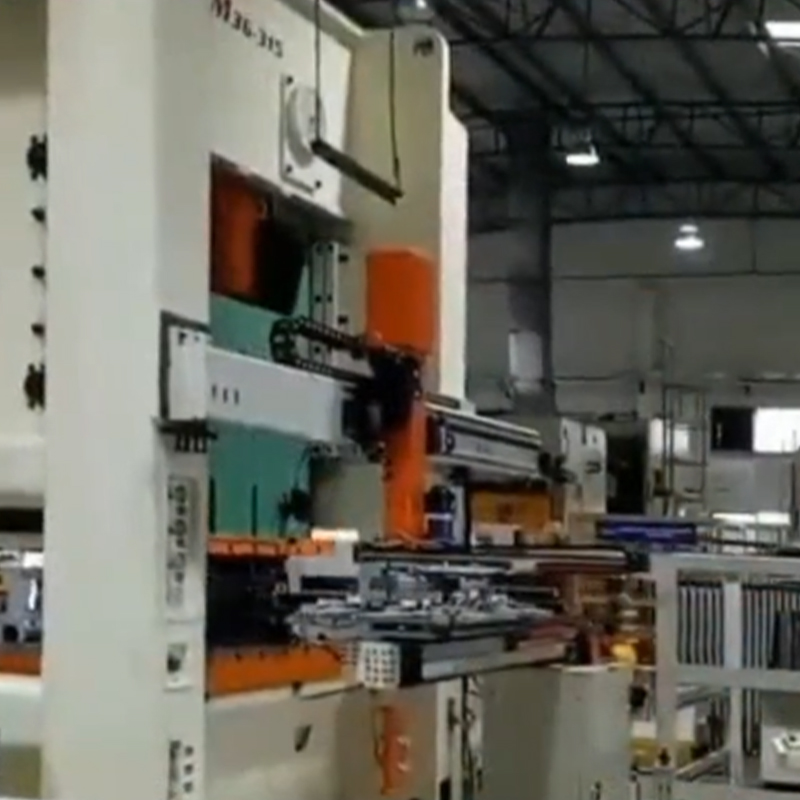

-
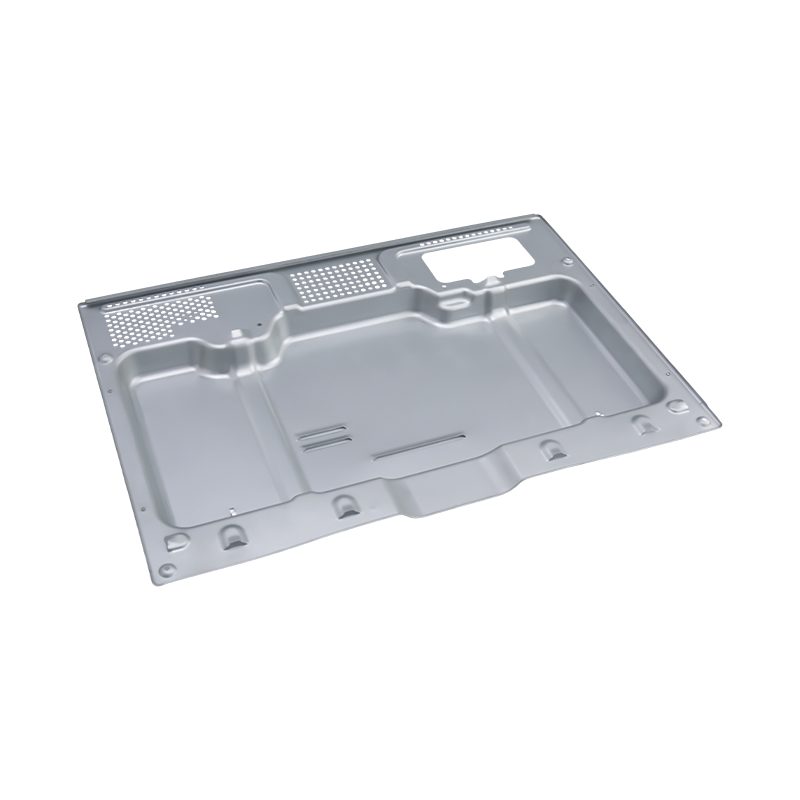
High-end oven stamping parts
Our High-end oven stamping parts are precision-man...
-
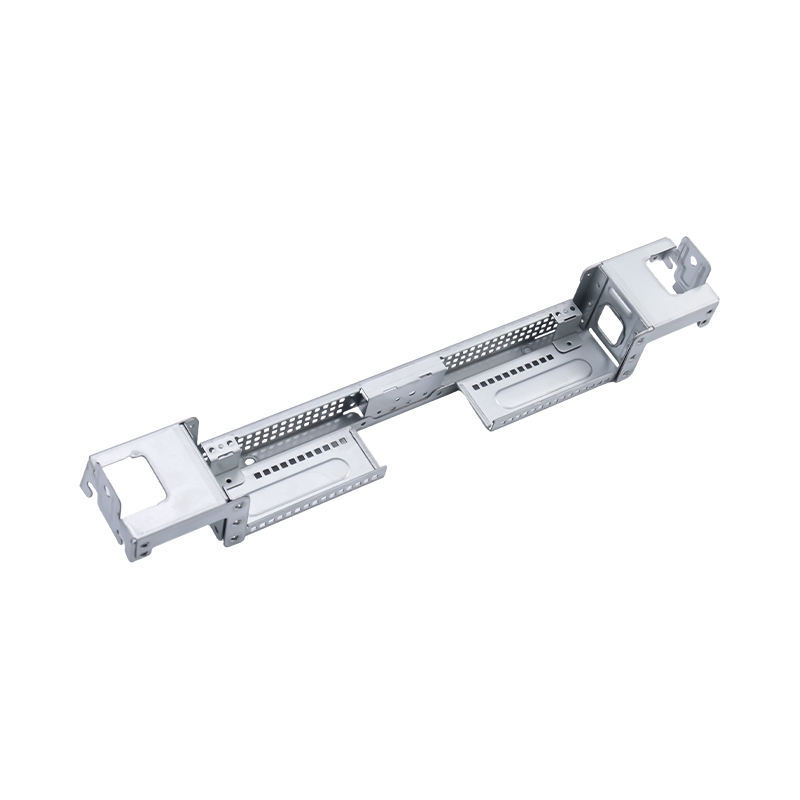
High-end large computer stamping parts
Our High-end large computer stamping parts are pre...
-
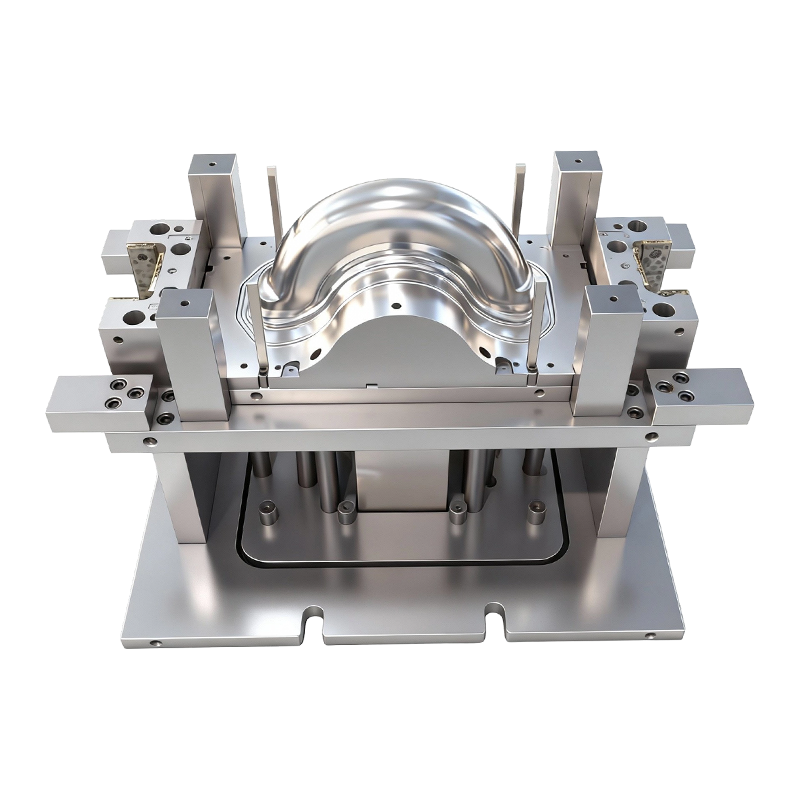
Deep drawing mold for front and rear wheels of two-wheeled electric vehicles
This Deep drawing mold for front and rear wheels o...
-
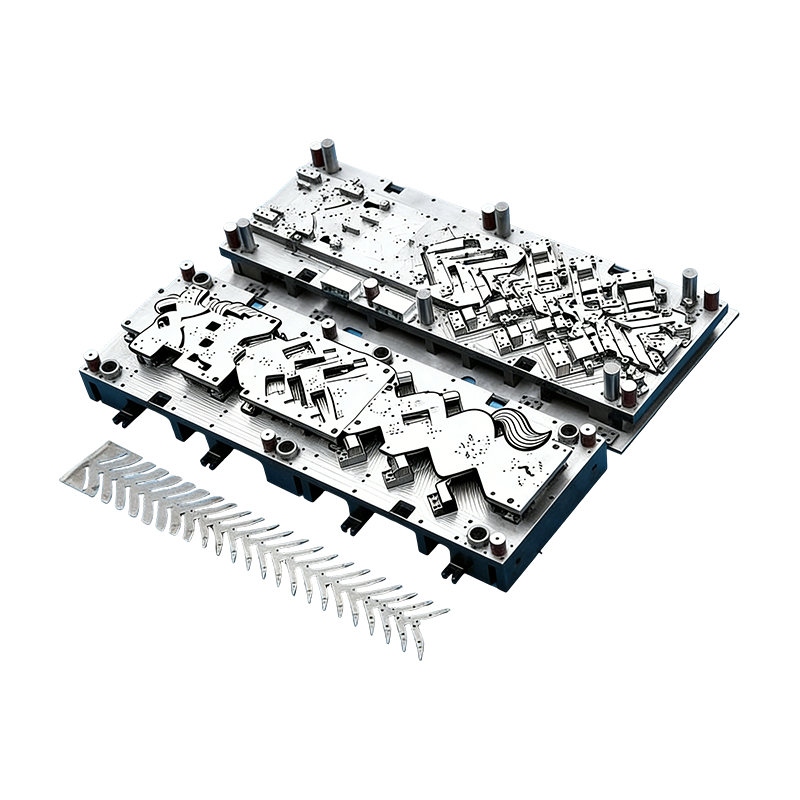
Progressive molds for automotive parts
This Continuous mold for automotive motor housing ...
-
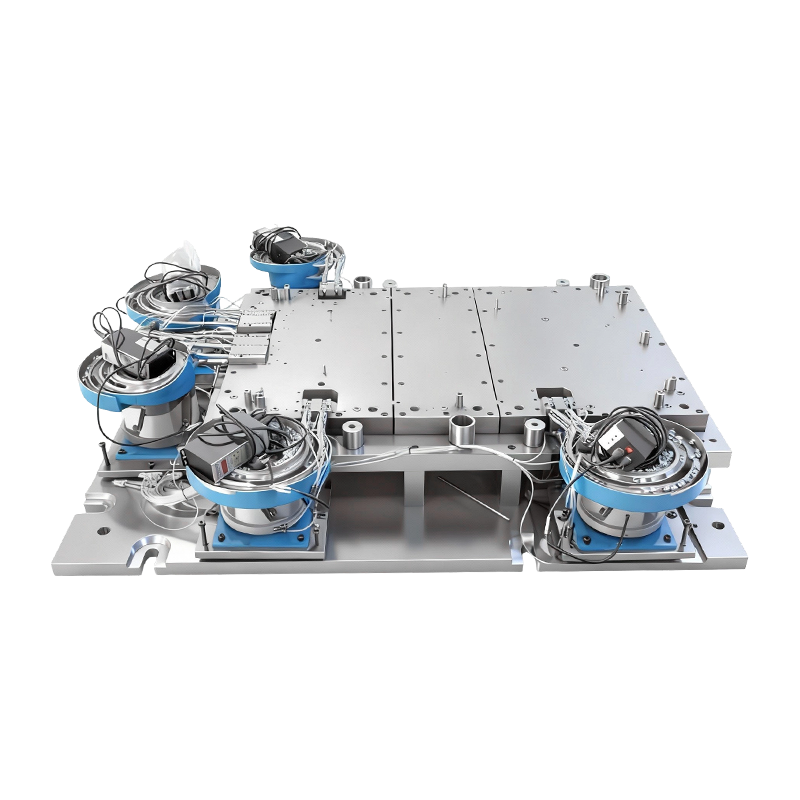
Automatic riveting mold for large computer machine base
This Automatic Riveting Mold for Large Computer Ma...
- E-mail us: [email protected]
- Call us: +86-139 1308 8972

Zhou Mengjie – Technical Sales Specialist
Home / Author / Zhou Mengjie – Technical Sales Specialist / Advanced Stamping Automation Equipment for High-Efficiency Metal Forming
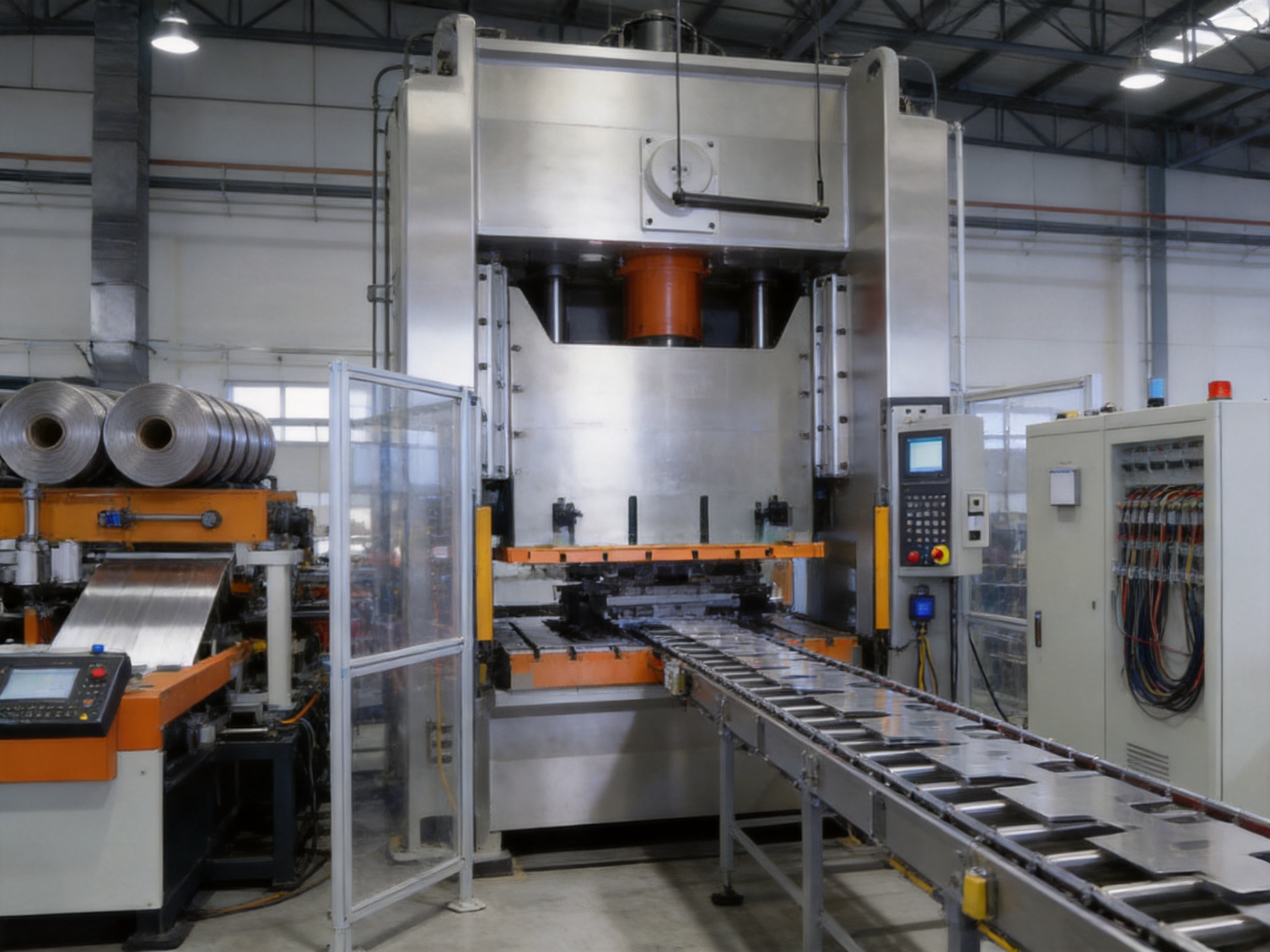
Advanced Stamping Automation Equipment for High-Efficiency Metal Forming
2026-06-28
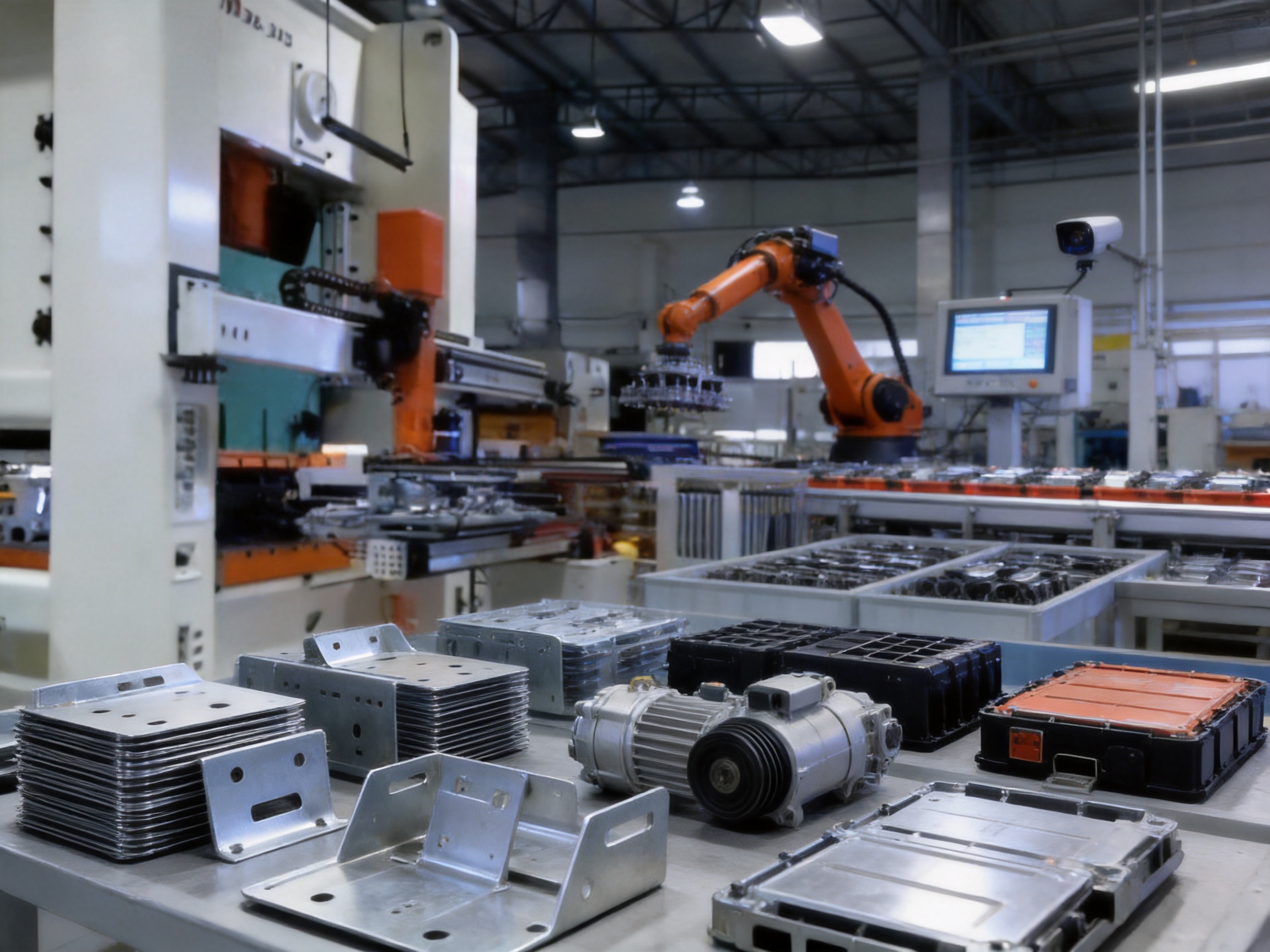
Stamping automation equipment has become an essential foundation for modern metal forming operations, especially in industries where precision, repeatability, production speed, safety, and cost control determine long-term competitiveness. As manufacturers face rising labor costs, shorter product development cycles, stricter quality expectations, and increasing demand for stable mass production, automated stamping systems provide a practical and scalable solution. By integrating feeding, transferring, positioning, stamping, unloading, inspection, and process monitoring into one coordinated production line, stamping automation equipment allows factories to achieve consistent output while reducing manual intervention.
The product discussed in this article is stamping automation equipment designed for metal stamping production lines, including automated feeding systems, transfer mechanisms, robotic handling units, press-line automation devices, die-related auxiliary systems, and customized turnkey automation solutions. It is especially suitable for customers that require reliable production of stamped metal parts for servo drives, compressors, new energy vehicles, electrical components, hardware assemblies, and other precision industrial applications.
Suzhou Shuangqisi Mold Equipment Co., Ltd. is a professional manufacturer with strong capabilities in stamping dies, stamping parts, and stamping automation equipment. Located at No. 118 Yexin Road, Wujiang Economic Development Zone, Suzhou, China, the company combines die design, die manufacturing, stamping production, equipment integration, debugging, and service. With years of experience in the mold industry, advanced processing equipment, skilled technicians, and the ability to provide turnkey solutions, the company is positioned to support customers that need both tooling and automation from one coordinated supplier.
Content
- 1 The Role of Stamping Automation Equipment in Modern Manufacturing
- 2 Product Overview: What Stamping Automation Equipment Includes
- 3 Key Advantages Over Conventional and Competitor Systems
- 4 Manufacturing Strength Behind the Equipment
- 5 Integrated Design: From Stamping Dies to Automated Production Lines
- 6 Advanced Processing and Precision Machining
- 7 Experienced Debugging and Practical Production Verification
- 8 Applications in Servo Drives, Compressors, and New Energy Vehicles
- 9 Turnkey Solutions for Customers
- 10 Cost Control Without Compromising Quality
- 11 Quality Control Throughout the Manufacturing Process
- 12 Important Design Features of High-Performance Stamping Automation Equipment
- 13 How Automation Protects Stamping Dies
- 14 Flexible Customization for Different Production Needs
- 15 Reducing Labor Dependence and Improving Workforce Value
- 16 Press Compatibility and Production Line Integration
- 17 Why Supplier Experience Matters
- 18 Selection Guide for Buyers
- 19 Implementation Process from Concept to Production
- 20 Environmental and Operational Benefits
- 21 Q&A: Common Questions About Stamping Automation Equipment
- 21.1 What is stamping automation equipment?
- 21.2 What are the main benefits of using automation in stamping production?
- 21.3 Is customized equipment better than standard automation equipment?
- 21.4 How does automation protect stamping dies?
- 21.5 Can stamping automation equipment be used with existing presses?
- 21.6 What industries commonly use stamping automation equipment?
- 21.7 What information should customers provide before requesting a solution?
- 21.8 How long does it take to implement a stamping automation project?
- 21.9 Does automation reduce the need for operators?
- 21.10 Why is it beneficial to choose a supplier with both die and automation capabilities?
- 21.11 What makes the equipment suitable for high-volume production?
- 21.12 How can buyers evaluate return on investment?
- 22 Conclusion
- 23 References
- 24 Product: Stamping Automation Equipment
The Role of Stamping Automation Equipment in Modern Manufacturing
Metal stamping has traditionally relied on press operators, manual loading, manual unloading, and separate inspection steps. This approach may be suitable for small-batch or low-complexity production, but it often creates challenges when volumes increase or when part quality becomes more demanding. Human operators can experience fatigue, loading positions may vary, production rhythm may fluctuate, and safety risks can increase when hands are close to the working area of a punch press. Stamping automation equipment addresses these issues by replacing repetitive manual tasks with programmable, stable, and synchronized mechanical actions.
In a typical automated stamping line, raw material or semi-finished blanks are supplied to the press through a controlled feeding system. The system may include decoiling, straightening, feeding, blank separation, robotic pickup, mechanical transfer, or servo-driven positioning depending on the production method. Once the workpiece is positioned correctly, the press performs the stamping operation, and the automation system moves the part to the next station or unloads it after completion. Sensors, control units, safety guards, and human-machine interfaces work together to monitor the production cycle and reduce the risk of misfeeds, jams, or abnormal operation.
The value of automation is not limited to speed. In precision manufacturing, the more important value is process stability. When each part is fed, positioned, formed, and removed with consistent motion, the entire production process becomes easier to control. Stable feeding reduces die damage. Accurate positioning reduces scrap. Controlled timing improves press utilization. Automated unloading reduces scratches and deformation. Process monitoring provides useful data for maintenance and quality analysis. These combined benefits make stamping automation equipment a core asset for manufacturers that want to move from labor-intensive production to intelligent, efficient, and repeatable manufacturing.
Product Overview: What Stamping Automation Equipment Includes
Stamping automation equipment can be configured in many forms because different stamped parts require different production methods. Some customers need compact loading and unloading equipment for a single press. Others require continuous coil-fed production lines with decoilers, straighteners, feeders, lubricating systems, progressive dies, and conveyors. Some production environments require transfer automation between multiple die stations, while others need robotic arms to handle irregular blanks or formed components. A capable supplier must therefore understand both stamping die technology and automation integration.
The equipment category may include automatic feeders, servo feeders, pneumatic feeders, robotic loading and unloading units, multi-axis transfer systems, blank destacking equipment, conveyor systems, collection systems, safety devices, sensor units, control cabinets, press synchronization systems, and customized fixtures. In more advanced projects, automation equipment may be integrated with inspection systems, part counting modules, oiling or lubrication systems, defect detection units, and centralized production monitoring.
For customers, the most important point is that the equipment should be designed around the actual stamping process rather than treated as an isolated machine. The shape of the part, material thickness, press tonnage, die structure, feeding pitch, forming sequence, production target, plant layout, and operator requirements must all be considered during design. This is where the strength of a company with both stamping die and automation capabilities becomes highly valuable. When die designers, machining technicians, stamping engineers, automation designers, and debugging personnel work together, the final system is more practical, easier to adjust, and more reliable in production.
Key Advantages Over Conventional and Competitor Systems
One of the main advantages of advanced stamping automation equipment is the ability to improve productivity without sacrificing quality. A properly designed system can maintain a stable production rhythm for long periods, reduce idle time between press strokes, and support continuous operation. Compared with manual feeding and unloading, automated equipment delivers faster cycle times and more predictable output. Compared with poorly integrated automation, a customized system designed around the die and press can reduce adjustment time, improve reliability, and prevent unnecessary downtime.
Another important advantage is quality consistency. Manual operations often introduce small variations that may not be visible at first but can accumulate into dimensional errors, burr problems, surface defects, or assembly difficulties. Automation equipment reduces these variations by controlling positioning, transfer motion, clamping force, feeding length, and timing. For high-volume production, even a small reduction in scrap rate can result in substantial savings in material cost, labor cost, and rework cost.
Safety is also a major advantage. Stamping presses can be dangerous if operators must place hands near the die area. Automation equipment reduces direct human contact with the stamping zone. Safety guarding, light curtains, emergency stop devices, interlocked doors, sensors, and controlled motion logic create a safer working environment. By reducing repetitive manual handling, the equipment can also help prevent fatigue-related injuries and improve overall workplace conditions.
Compared with competitors that provide only standard machines, a supplier with strong tooling knowledge can deliver automation that matches the actual forming process. This is a significant difference. Many stamping problems are not caused by the press alone; they arise from the interaction between material behavior, die clearance, feeding accuracy, part ejection, transfer stability, and press timing. When automation engineers understand die structures and stamping part requirements, they can design more suitable grippers, transfer paths, blank positioning methods, and unloading solutions.
| Comparison Item | Conventional Manual Stamping | Generic Automation Equipment | Customized Stamping Automation Equipment |
|---|---|---|---|
| Production Efficiency | Limited by operator speed and fatigue | Improved, but may require frequent adjustment | High and stable output matched to press and die rhythm |
| Quality Consistency | Variable loading and unloading accuracy | Better consistency, but dependent on integration quality | High repeatability through process-specific positioning and transfer |
| Safety | Higher risk due to manual handling near press area | Improved safety with guards and automatic movement | Enhanced safety through coordinated design, sensors, and controlled access |
| Die Protection | Greater risk of misfeeds and incorrect placement | Moderate protection depending on sensor configuration | Strong protection through feeding control, detection, and press synchronization |
| Flexibility | Flexible for very small batches but labor-intensive | Often limited to standard applications | Designed for specific products while allowing planned adjustments |
| Total Cost Control | Higher labor and scrap cost over time | Lower labor cost but possible hidden downtime | Lower long-term cost through stable production and reduced waste |
Manufacturing Strength Behind the Equipment
The performance of stamping automation equipment depends heavily on the manufacturing strength of the supplier. Precision mechanical structures, reliable electrical controls, strong fixtures, accurate machined components, stable assembly, and experienced debugging are all necessary. Suzhou Shuangqisi Mold Equipment Co., Ltd. has built its capabilities around practical metal forming production. The company has technical staff, experienced operators, debugging personnel, and advanced precision processing equipment that support both mold manufacturing and automation equipment production.
The company is equipped with imported wire cutting machines, CNC machining centers, more than ten grinding machines of different sizes, punch presses ranging from 80T to 400T, and other precision machine tools. These resources allow it to process key components, manufacture die parts, verify stamping performance, and support production trials. The presence of multiple punch presses is particularly important because it enables the company to evaluate stamping equipment and related tooling under realistic production conditions rather than only in design simulations.
Advanced manufacturing capability provides several benefits to customers. First, it improves dimensional accuracy. Automation equipment often requires precise movement, alignment, and assembly. Machined parts must fit correctly, guide components must move smoothly, and transfer mechanisms must repeat their positions accurately. Second, it shortens project communication because many key operations can be performed internally. Third, it improves cost control because machining, adjustment, and trial operations can be coordinated more efficiently. Fourth, it supports customization because engineers can modify components, fixtures, and structures according to the customer's part requirements.
Integrated Design: From Stamping Dies to Automated Production Lines
A major advantage of the company is the ability to integrate stamping die design and stamping automation design. This integrated approach is highly valuable because die structure has a direct influence on automation performance. For example, a part that is difficult to eject from the die may require special lifting mechanisms, air blowing, vacuum pickup, magnetic pickup, or custom grippers. A part with thin material may require gentle handling to avoid deformation. A part with complex geometry may need precise orientation before entering the next station. If the automation system is designed without understanding these die-related details, production problems may appear after installation.
Integrated design begins with understanding the customer's product drawings, material specifications, production volume, tolerance requirements, press specifications, and plant layout. Engineers then analyze the stamping process and determine whether the part is best produced by progressive die, transfer die, single-station die, compound die, or another method. Based on this process decision, the automation equipment can be designed to support feeding, transferring, unloading, and inspection. This reduces the risk of mismatch between tooling and automation.
When die designers and automation engineers cooperate from the early stage, they can optimize the system as a whole. The die can be designed with automation-friendly features such as reliable part release, consistent pickup points, proper scrap removal, and sensor positions. The automation system can be designed with appropriate travel paths, clamping methods, and cycle timing. The press can be selected or adjusted to match the required tonnage and production speed. This whole-process thinking creates a more reliable and cost-effective production line.
Advanced Processing and Precision Machining
Precision machining is the foundation of reliable automation equipment. Moving components in feeding and transfer systems must maintain alignment over long production periods. If machined parts are inaccurate, the equipment may experience vibration, positioning drift, uneven wear, and increased maintenance requirements. By using CNC machining centers, wire cutting machines, grinding machines, and other precision equipment, key mechanical components can be produced with controlled accuracy and repeatability.
Wire cutting is especially useful for producing precise die components, special profiles, guide elements, and complex metal parts. CNC machining centers support accurate milling, drilling, boring, and surface processing for structural components and fixture parts. Grinding machines help achieve fine surface finish and dimensional control for parts that require smooth sliding or accurate contact. These capabilities support both the production of stamping dies and the manufacturing of automation equipment parts.
In automation equipment manufacturing, precision is not only about individual parts; it is also about assembly relationships. Guide rails, servo-driven modules, cylinders, grippers, limit blocks, sensor brackets, and frame structures must be aligned carefully. Proper machining reduces the amount of adjustment required during assembly and improves long-term stability. For customers, this translates into smoother operation, fewer stoppages, reduced maintenance, and better production consistency.
Experienced Debugging and Practical Production Verification
Even a well-designed automation system must be carefully debugged before it can enter stable production. Debugging is the process of verifying mechanical movement, electrical control, safety logic, sensor response, feeding accuracy, press synchronization, part handling, and abnormal-condition protection. Experienced debugging personnel are essential because many production issues can only be identified when equipment operates with real materials, real dies, and real press conditions.
Suzhou Shuangqisi Mold Equipment Co., Ltd. has experienced debugging personnel who understand both stamping and automation. This experience helps shorten the commissioning period and improves the final production result. For example, if a part shifts during transfer, the cause may be gripper pressure, part surface oil, die ejection height, transfer speed, vibration, or incorrect timing. An experienced team can identify the root cause quickly and make practical adjustments. This is different from a purely theoretical approach that may overlook workshop realities.
Production verification also helps protect the customer's investment. Before equipment is delivered or accepted, key performance indicators such as feeding accuracy, cycle stability, safety function, and part quality can be checked. Debugging can include dry runs, low-speed production, full-speed trials, misfeed testing, emergency stop testing, and inspection of finished parts. This systematic verification gives customers greater confidence that the equipment will perform reliably after installation.
Applications in Servo Drives, Compressors, and New Energy Vehicles
Stamping automation equipment is widely used in industries that require precision metal parts. The company serves customers in fields such as servo drives, compressors, and new energy vehicles. These industries demand reliable stamped components with stable dimensions, clean edges, correct forming angles, and consistent surface quality. Automated stamping production helps meet these requirements while supporting high-volume output.
In servo drive applications, stamped metal parts may be used in structural brackets, shielding components, connectors, mounting plates, heat dissipation parts, and internal hardware. These parts often require tight tolerances and stable production because servo drive systems are used in industrial automation and motion control. Any dimensional inconsistency may affect assembly efficiency or product performance. Automation improves feeding accuracy and reduces handling damage.
In compressor applications, stamped parts may be used in motor components, housings, brackets, covers, and internal assemblies. Compressor manufacturing often requires high repeatability because parts are assembled into systems that must operate under vibration, pressure, and long service conditions. Automated stamping helps maintain stable output and reduce variation between batches.
In new energy vehicle applications, stamped parts are used in battery systems, electrical control units, thermal management components, connectors, brackets, shielding parts, and structural assemblies. The new energy vehicle industry is growing rapidly, and manufacturers need scalable production solutions. Stamping automation equipment supports high-volume production while helping control cost and quality. It also assists manufacturers in responding to rapid design changes by enabling planned customization and efficient production line updates.
Turnkey Solutions for Customers
A turnkey solution means that the supplier can provide a complete or near-complete production solution rather than only one machine. In stamping manufacturing, this may include process analysis, die design, die manufacturing, automation equipment design, equipment manufacturing, press matching, installation, debugging, trial production, operator training, and after-sales service. This model is especially useful for customers that want to reduce coordination complexity and achieve faster production readiness.
The company can provide customers with turnkey solutions for stamping molds and stamping automation. This capability is supported by its experience in die manufacturing, stamping production, automation equipment, and cost control. Customers benefit from having one coordinated team responsible for the relationship between tooling and equipment. Instead of managing multiple suppliers who may each focus only on their own scope, the customer can work with a supplier that understands the complete stamping process.
Turnkey service can reduce project risk. If a problem appears during production, the cause may involve the die, material, automation equipment, press settings, lubrication, or operator method. When one supplier understands the whole system, troubleshooting becomes faster and more efficient. It also reduces responsibility disputes and improves communication. For customers launching new products, this integrated support can shorten the time from product drawing to stable production.
Cost Control Without Compromising Quality
Cost control is a major concern for every manufacturer, but low initial price does not always mean low total cost. In stamping production, total cost includes equipment purchase, die cost, installation, debugging, labor, material waste, downtime, maintenance, safety management, and production efficiency. A cheaper system that causes frequent stoppages, die damage, poor part quality, or high maintenance cost may become more expensive over time. The goal of advanced stamping automation equipment is to reduce total production cost while maintaining stable quality.
The company emphasizes high-quality products at competitive prices. This is supported by internal technical capability, experienced staff, advanced processing equipment, and practical production knowledge. By controlling design, machining, assembly, and debugging, the company can reduce unnecessary outsourcing, improve process efficiency, and offer cost-effective solutions. Customers can obtain equipment that is not only affordable but also suitable for long-term operation.
Cost control also comes from reducing waste. Accurate feeding reduces material loss. Stable transfer reduces defective parts. Sensor protection reduces die accidents. Efficient cycle timing improves press utilization. Automated collection reduces secondary handling. Clear control interfaces reduce operator mistakes. Each small improvement contributes to lower production cost and better factory performance.
Quality Control Throughout the Manufacturing Process
Quality control for stamping automation equipment should begin at the design stage and continue through machining, assembly, wiring, testing, debugging, and customer acceptance. During design, engineers must select appropriate structures, materials, drives, sensors, and safety components. During machining, dimensional accuracy and surface quality must be checked. During assembly, alignment, lubrication, fastening, and movement smoothness must be verified. During electrical installation, wiring standards, signal reliability, and control logic must be tested.
For equipment used in stamping production, quality control also includes die protection and production stability. Sensors may be used to detect material presence, feeding length, part removal, air pressure, transfer position, guard status, or abnormal load conditions. Control systems can stop the press if a misfeed or unsafe condition occurs. This prevents damage to expensive dies and reduces downtime.
The company's background in mold and stamping production helps it understand quality from the customer's perspective. The final goal is not simply to make the equipment move; the goal is to produce qualified stamped parts consistently. Therefore, quality evaluation should include the condition of stamped parts, the stability of production rhythm, the ease of operation, and the maintainability of the equipment.
Important Design Features of High-Performance Stamping Automation Equipment
High-performance stamping automation equipment should be accurate, stable, safe, easy to operate, easy to maintain, and adaptable to the actual production environment. Accuracy is achieved through precise mechanical structures, servo control, proper guide systems, and stable fixtures. Stability comes from robust frames, reliable components, vibration control, and correct synchronization with the press. Safety requires guards, interlocks, emergency stops, warning devices, and risk-conscious layout design.
Ease of operation is another critical factor. Operators should be able to understand equipment status, adjust key parameters, respond to alarms, and perform routine tasks without excessive complexity. A clear human-machine interface can display production count, speed, alarm messages, manual operation controls, and maintenance reminders. For factories with multiple product models, recipe management or parameter storage can improve changeover efficiency.
Maintainability affects long-term cost. Components that require regular inspection should be accessible. Wearing parts should be replaceable. Wiring and pneumatic lines should be organized. Lubrication points should be clear. Mechanical adjustments should be logical. When equipment is designed with maintenance in mind, downtime is reduced and technicians can keep the line running efficiently.
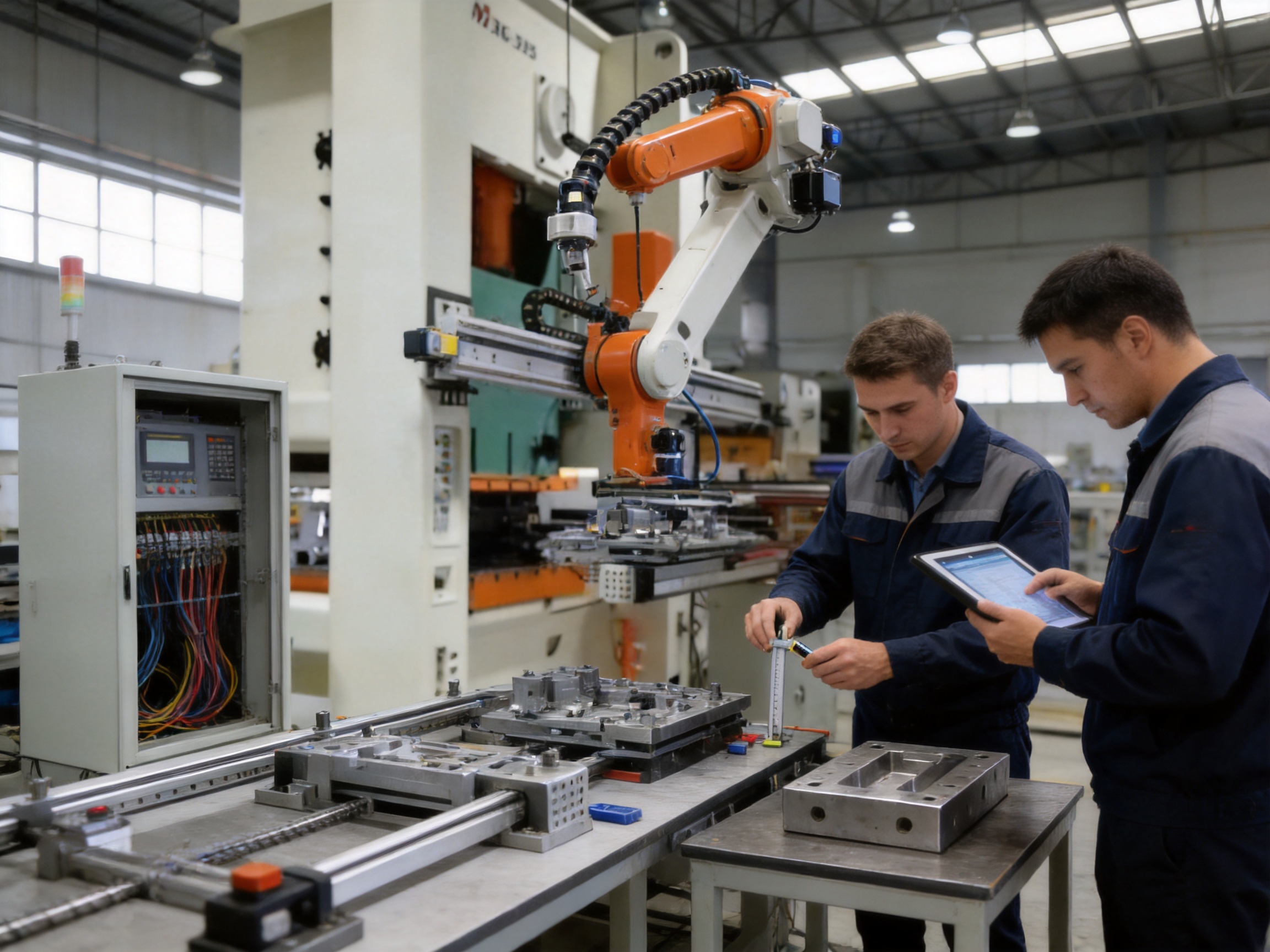
How Automation Protects Stamping Dies
Stamping dies are valuable assets, and die damage can cause serious production losses. A single misfeed, double blank, stuck part, or incorrect transfer may damage die components, stop production, and require expensive repair. Stamping automation equipment helps protect dies by controlling material movement and detecting abnormal conditions before the press completes a dangerous stroke.
Feed accuracy is one of the most important die protection factors. If strip material or a blank is not positioned correctly, the punch may strike the wrong area and damage the die. Servo feeding systems can provide precise feeding length and repeatability. Sensors can confirm material presence and position. Transfer systems can confirm that a part has been removed before the next stroke. If a fault is detected, the control system can stop the press and alert the operator.
Part ejection and scrap removal are also important. If scrap accumulates or a stamped part remains in the die, the next stroke may cause damage. Automation systems can include air blowers, conveyors, scrap chutes, part detection sensors, and transfer confirmation signals. These features improve production safety and reduce the risk of unplanned downtime.
Flexible Customization for Different Production Needs
No two stamping projects are exactly the same. Material type, thickness, part geometry, tolerance, production volume, press type, plant space, and budget may vary significantly. Therefore, flexible customization is essential. A supplier should not force every customer to use the same equipment configuration. Instead, the equipment should be selected and designed according to the product and process.
For coil-fed progressive die production, the system may require decoiling, straightening, feeding, lubrication, scrap handling, and finished part collection. For blank-fed stamping, the system may require blank destacking, sheet separation, robotic pickup, positioning tables, and automatic unloading. For transfer die production, multi-axis transfer equipment may be needed to move parts between stations. For single-press applications, loading and unloading devices may be sufficient. For high-mix production, quick-change tooling and adjustable grippers may be valuable.
The company's combination of stamping die knowledge and automation equipment manufacturing makes it possible to create practical custom solutions. This flexibility helps customers achieve better output without purchasing unnecessary functions. It also supports future upgrades when production volume increases or product models change.
Reducing Labor Dependence and Improving Workforce Value
Automation does not simply replace workers; it changes the way workers contribute to production. In manual stamping lines, workers often spend much of their time loading blanks, removing parts, counting components, and handling repetitive tasks. These tasks can be tiring and may expose workers to safety risks. With stamping automation equipment, workers can shift toward higher-value responsibilities such as equipment monitoring, quality checking, maintenance support, process improvement, and production management.
Reducing labor dependence is especially important when factories face hiring challenges or when production demand fluctuates. Automated lines can maintain stable output with fewer operators. This allows companies to allocate skilled workers more effectively and reduce the impact of labor shortages. It also improves consistency between shifts because the equipment follows the same programmed process rather than relying on individual operator habits.
Improved workforce value also supports long-term factory development. Operators who learn to manage automated equipment gain more technical skills. Maintenance personnel develop stronger knowledge of mechanical, electrical, pneumatic, and control systems. Production managers gain more predictable output data. In this way, stamping automation equipment contributes not only to productivity but also to the modernization of factory management.
Press Compatibility and Production Line Integration
Stamping automation equipment must be compatible with the press equipment used in the factory. Press tonnage, stroke length, shut height, bolster size, speed range, signal interface, safety control, and mechanical layout all affect automation design. The company has experience with punch presses ranging from 80T to 400T, allowing it to understand practical press-line requirements for different stamping applications.
Press synchronization is a key technical requirement. The automation equipment must move at the correct time relative to the press stroke. If the transfer system enters the die area too early or exits too late, it may create safety risks or damage equipment. Proper signal communication between the press and automation system ensures that movement occurs only during safe windows. This can involve press angle signals, top-dead-center confirmation, safety relays, programmable logic control, and interlocked motion sequences.
Production line integration may also include material supply, finished part collection, inspection stations, packaging areas, and data systems. A well-planned layout reduces unnecessary movement and makes the workshop easier to manage. Operators should have clear access paths, maintenance space, and safe working zones. The goal is to create a production line that is efficient, safe, and practical for daily operation.
Why Supplier Experience Matters
Experience matters in stamping automation because many problems are application-specific. A supplier that has only theoretical knowledge may design equipment that looks good on paper but struggles in real production. Practical experience helps engineers anticipate problems such as material springback, oil contamination, blank sticking, scrap jamming, vibration, part deformation, sensor misreading, and operator changeover errors.
Suzhou Shuangqisi Mold Equipment Co., Ltd. has approximately fifteen years of experience in the mold industry and a strong technical team. The company has served customers including Anter Group, Ousheng Electric, Dongbei Group, and Huichuan Technology. These customer relationships reflect practical experience in supplying molds and products for demanding industrial fields. In 2016, the company invested in and established Suzhou Keshuang Intelligent Technology Co., Ltd., which mainly produces stamping automation equipment. This development strengthened the company's ability to provide integrated stamping and automation solutions.
Experienced suppliers can also communicate more effectively with customers. They can ask the right technical questions, identify hidden risks, recommend suitable process methods, and provide realistic project schedules. They understand that customers need stable production, not just equipment delivery. This service mindset is important for long-term cooperation.
Selection Guide for Buyers
When selecting stamping automation equipment, buyers should evaluate more than the machine appearance or quoted price. The first consideration should be whether the supplier understands the stamped part and production process. A good supplier should review product drawings, material properties, tolerance requirements, production volume, press specifications, and plant layout before proposing a solution.
The second consideration is customization capability. Standard equipment may be sufficient for simple applications, but many stamping projects require special fixtures, grippers, sensors, conveyors, or control logic. Buyers should confirm whether the supplier can design and manufacture these custom elements.
The third consideration is manufacturing strength. Precision machining, assembly quality, electrical control capability, and debugging experience affect equipment performance. Buyers should pay attention to the supplier's processing equipment, technical staff, quality control methods, and production trial capability.
The fourth consideration is after-sales support. Even reliable equipment may require adjustment, maintenance, operator training, or future upgrades. A supplier with practical stamping experience can provide more useful support when production conditions change.
The fifth consideration is total cost of ownership. Buyers should consider labor savings, scrap reduction, die protection, production speed, maintenance cost, and long-term reliability. A well-designed automation system may deliver a stronger return on investment than a low-cost but unstable alternative.
Implementation Process from Concept to Production
A successful stamping automation project usually follows a structured process. The first step is requirement analysis. Engineers collect information about the customer's part, material, production target, existing press, available space, quality requirements, and budget. The second step is process planning. The team determines the stamping method, feeding method, transfer method, unloading method, and inspection needs. The third step is equipment design, including mechanical layout, electrical control, safety systems, and human-machine interface planning.
The fourth step is manufacturing. Mechanical components are machined, frames are fabricated, purchased components are prepared, control cabinets are assembled, and wiring is completed. The fifth step is assembly and internal testing. The equipment is assembled, movement is checked, sensors are tested, and control logic is verified. The sixth step is die and press coordination. If the project includes dies, the tooling is tested with the automation system to confirm feeding, transfer, and part removal.
The seventh step is trial production and debugging. Real materials are used to test stability, part quality, cycle speed, and safety functions. Adjustments are made based on actual performance. The eighth step is delivery, installation, and customer training. Operators and maintenance personnel learn how to use the equipment, respond to alarms, perform daily checks, and conduct basic maintenance. The final step is ongoing support and improvement. Feedback from production can be used to optimize parameters and plan future upgrades.
Environmental and Operational Benefits
Stamping automation equipment can contribute to cleaner and more efficient manufacturing. By reducing scrap and rework, it helps conserve metal material and reduce waste disposal. By improving production stability, it can reduce unnecessary machine idling and inefficient operation. By controlling lubrication and handling more consistently, it can help maintain a cleaner production area.
Operationally, automation supports better production planning. When output is more predictable, managers can schedule orders, arrange material supply, and coordinate downstream assembly more effectively. Automated counting and monitoring can provide useful production data. This supports better decision-making and improves responsiveness to customer demand.
Automation also supports standardized production. Standardized processes are easier to train, audit, and improve. When a factory wants to expand production or replicate a successful process in another line, automation makes the process more transferable. This is an important advantage for manufacturers pursuing long-term growth.
Q&A: Common Questions About Stamping Automation Equipment
What is stamping automation equipment?
Stamping automation equipment refers to machines and systems that automatically handle feeding, positioning, transferring, unloading, collecting, inspecting, or monitoring workpieces in metal stamping production. It can be used with single presses, progressive dies, transfer dies, and complete stamping lines.
What are the main benefits of using automation in stamping production?
The main benefits include higher production efficiency, improved quality consistency, reduced labor dependence, better operator safety, lower scrap rates, improved die protection, more stable production rhythm, and better long-term cost control.
Is customized equipment better than standard automation equipment?
For many stamping applications, customized equipment is better because it is designed around the actual part, die, press, material, and production target. Standard equipment may work for simple tasks, but customized systems usually provide better stability, accuracy, and efficiency for demanding production.
How does automation protect stamping dies?
Automation protects dies by controlling feeding accuracy, confirming part presence, detecting misfeeds, ensuring that parts are removed before the next stroke, monitoring transfer positions, and stopping the press when abnormal conditions occur. This reduces the risk of costly die damage.
Can stamping automation equipment be used with existing presses?
Yes, in many cases automation equipment can be designed for existing presses. Engineers need to evaluate press tonnage, stroke, speed, signal interface, working space, safety system, and die structure before designing the integration plan.
What industries commonly use stamping automation equipment?
It is widely used in automotive, new energy vehicles, compressors, electrical equipment, servo drives, home appliances, electronic components, hardware, and industrial manufacturing. Any industry requiring high-volume precision metal parts may benefit from stamping automation.
What information should customers provide before requesting a solution?
Customers should provide part drawings, material specifications, thickness, annual or monthly production volume, tolerance requirements, press information, die information if available, plant layout, required cycle time, quality concerns, and any special handling or inspection requirements.
How long does it take to implement a stamping automation project?
The timeline depends on project complexity, customization level, tooling requirements, machining workload, purchased component lead time, and debugging needs. A simple loading and unloading system may be faster, while a complete turnkey stamping line requires more planning, manufacturing, and testing.
Does automation reduce the need for operators?
Automation reduces repetitive manual handling and allows fewer operators to manage more output. However, operators remain important for monitoring equipment, checking quality, changing materials, responding to alarms, and performing routine maintenance.
Why is it beneficial to choose a supplier with both die and automation capabilities?
A supplier with both capabilities can design the die and automation system as one coordinated process. This improves part release, transfer stability, feeding accuracy, sensor placement, debugging efficiency, and overall production reliability.
What makes the equipment suitable for high-volume production?
High-volume suitability comes from robust mechanical design, accurate feeding, reliable controls, strong safety systems, stable press synchronization, durable components, easy maintenance, and practical debugging based on real production conditions.
How can buyers evaluate return on investment?
Buyers should compare labor savings, increased output, reduced scrap, lower rework, fewer die accidents, improved safety, lower downtime, and better delivery reliability against the equipment investment. The strongest value often appears in long-term stable production.
Conclusion
Stamping automation equipment is no longer just an optional upgrade for metal forming factories. It is a strategic tool for improving productivity, quality, safety, cost control, and manufacturing competitiveness. As stamped parts become more precise and production schedules become more demanding, automated systems help factories achieve stable output with reduced labor dependence and better process control.
The strongest stamping automation solutions are those designed around the complete production process. Feeding, stamping, transferring, unloading, inspection, die protection, and press synchronization must work together as one system. This requires practical knowledge of stamping dies, metal forming behavior, machining, assembly, controls, and debugging. A supplier with integrated die-making and automation capability can deliver more reliable and cost-effective solutions than a supplier focused only on standard equipment.
Suzhou Shuangqisi Mold Equipment Co., Ltd. offers important strengths in this field, including technical staff, advanced processing equipment, stamping press resources, mold industry experience, practical debugging capability, and turnkey service for stamping molds and automation. With the ability to support customers in servo drives, compressors, new energy vehicles, and other industrial fields, the company provides stamping automation equipment designed for real production value. For manufacturers seeking higher efficiency, stronger quality consistency, safer operation, and long-term cost reduction, customized stamping automation equipment is a powerful investment in modern manufacturing.
References
1. Kalpakjian, S., and Schmid, S. R. Manufacturing Engineering and Technology. Pearson Education.
2. Altan, T., and Tekkaya, A. E. Sheet Metal Forming: Processes and Applications. ASM International.
3. Groover, M. P. Automation, Production Systems, and Computer-Integrated Manufacturing. Pearson Education.
4. Lange, K. Handbook of Metal Forming. Society of Manufacturing Engineers.
5. Boljanovic, V. Sheet Metal Forming Processes and Die Design. Industrial Press.
6. Wilson, F. W. Fundamentals of Tool Design. Society of Manufacturing Engineers.
Product: Stamping Automation Equipment
Previous Post
High-Precision Gas Tank End Stamping Parts for Durable Automotive Fuel Tank Assemblies
Next Post
Small Stamped Parts for Laptops and Mobile Phones: Precision Metal Components for Compact Electronics
Our Products.
Start Your Business with an OEM Manufacturer Right Here!

Provide global customers with complete turn-key solutions
through
innovation!
QUICK LINKS
CONTACT INFO.
-
 +86-139 1308 8972
 -

-
 No. 118 Yexin Road, Wujiang Economic Development Zone, Suzhou, China
Copyright © Suzhou Shuangqisi Mold Equipment Co., Ltd. All Rights Reserved. Custom Stamping Die Metal Stamping Die Manufacturers
