 English
 Español
 Deutsch
-
High-end oven stamping parts
Our High-end oven stamping parts are precision-man...
-
High-end large computer stamping parts
Our High-end large computer stamping parts are pre...
-
Automotive motor housing stamping parts
Automotive motor housing stamping parts are core c...
-
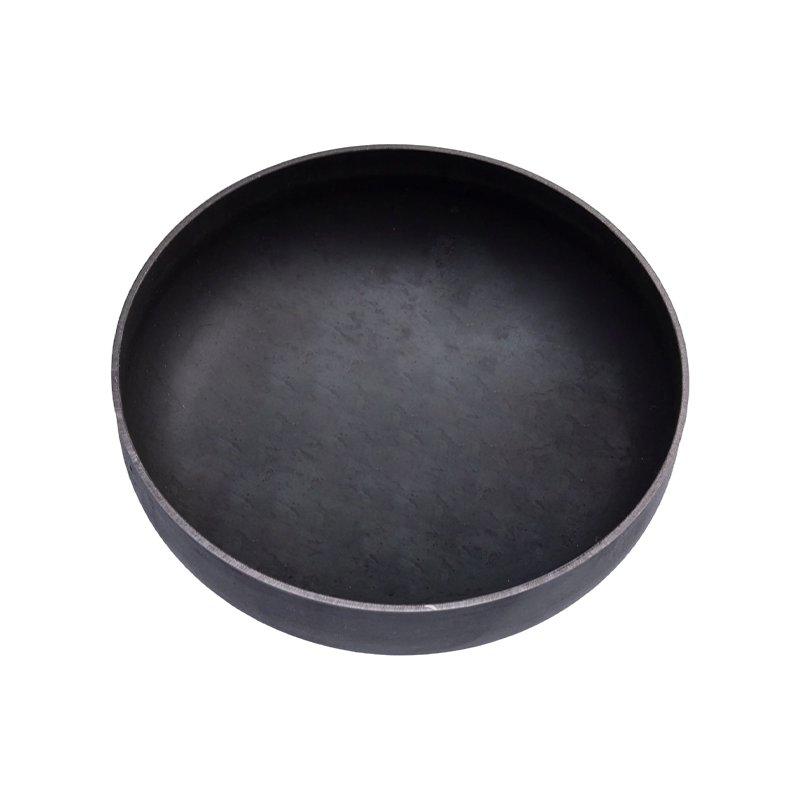
Gas tank end stamping parts
Gas tank end stamping parts are core structural co...
-
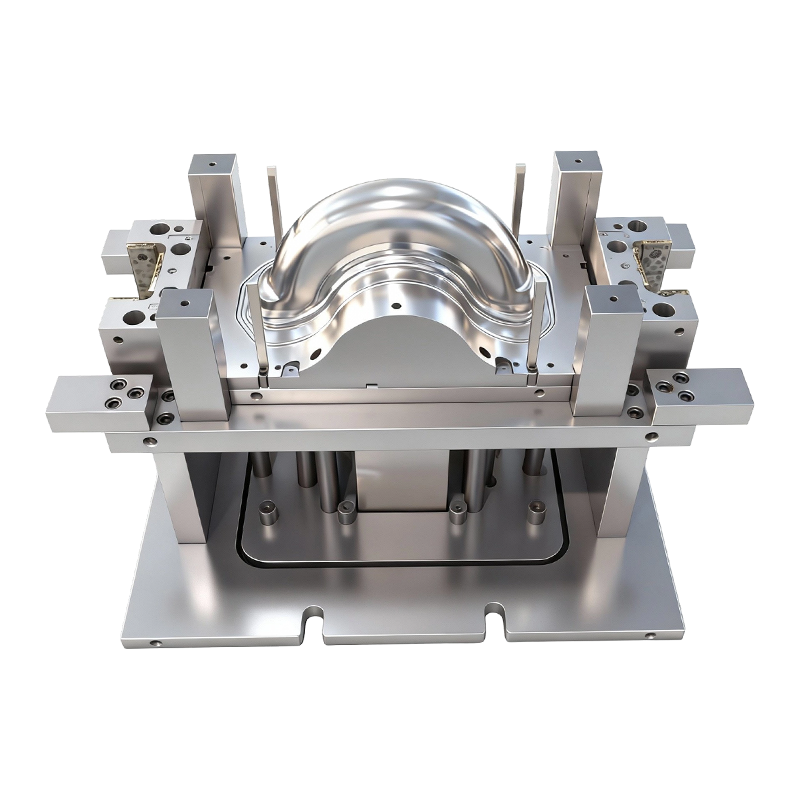
Deep drawing mold for front and rear wheels of two-wheeled electric vehicles
This Deep drawing mold for front and rear wheels o...
- E-mail us: [email protected]
- Call us: +86-139 1308 8972

Wang Xinyue – After-Sales Support Supervisor
Home / Author / Wang Xinyue – After-Sales Support Supervisor / High-Precision Gas Tank End Stamping Parts for Durable Automotive Fuel Systems
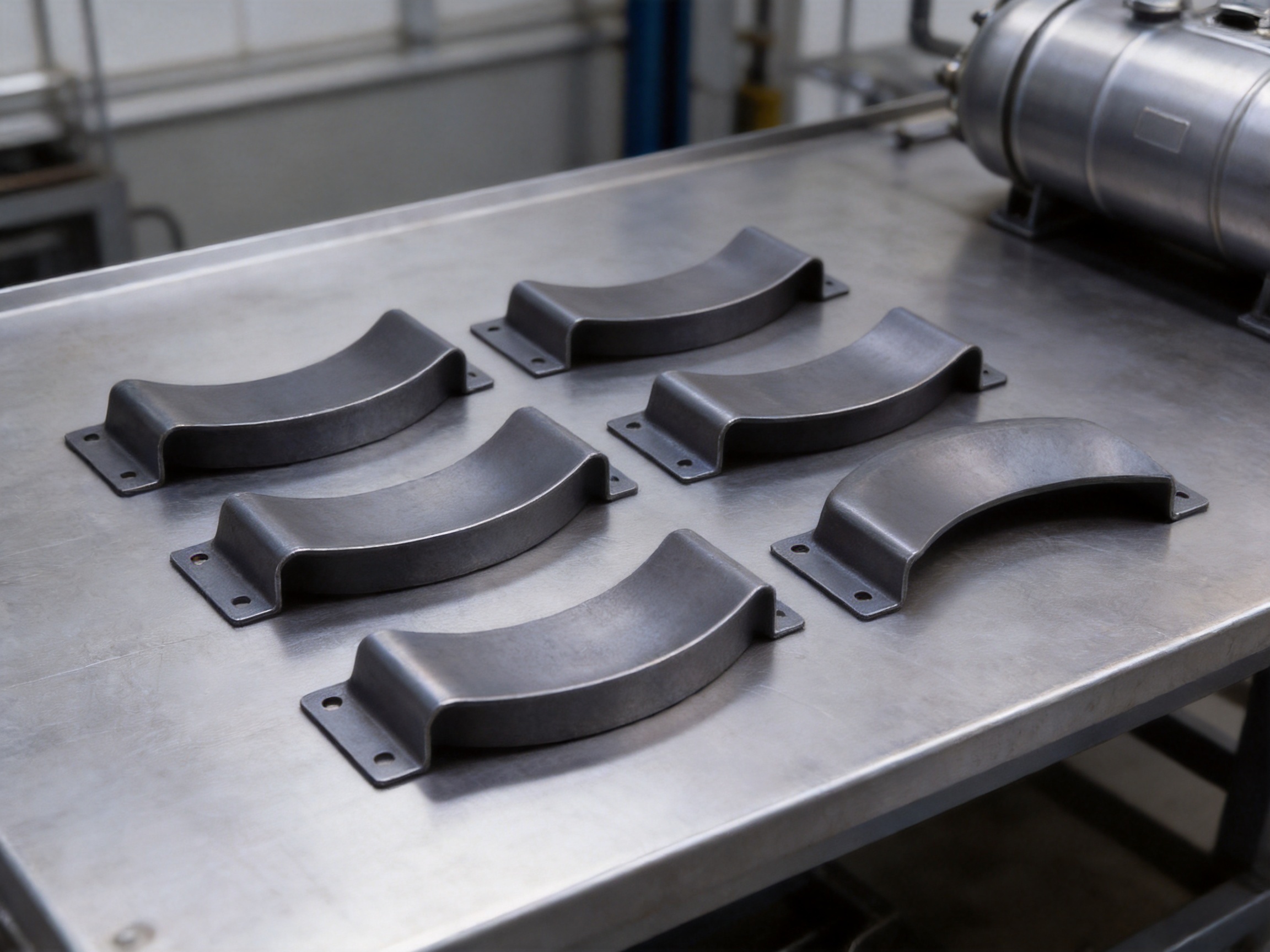
High-Precision Gas Tank End Stamping Parts for Durable Automotive Fuel Systems
2026-07-06
Gas tank end stamping parts are essential structural components used to close and reinforce the two ends of an automotive fuel tank assembly. Although these parts may appear simple from the outside, their performance directly affects fuel containment, assembly accuracy, corrosion resistance, vibration durability, and long-term safety. In modern passenger cars, commercial vehicles, and new energy hybrid platforms, fuel tank components must be manufactured with reliable dimensional control and stable material performance. A small deviation in shape, thickness, or surface quality can lead to assembly difficulty, leakage risk, welding inconsistency, or reduced service life.
Suzhou Shuangqisi Mold Equipment Co., Ltd. provides gas tank end stamping parts manufactured through high-precision stamping processes, supported by professional die design, advanced machining equipment, experienced technical staff, and strict quality control. The company focuses on stamping dies, stamping parts, and stamping automation equipment, allowing it to deliver not only individual components but also integrated manufacturing solutions for customers that require repeatable quality, cost control, and stable production capacity.
The gas tank end stamping parts described here are typically produced from cold-rolled steel or aluminum alloy materials according to customer requirements. They are designed to match the cylindrical body of the fuel tank and form a secure end closure. Their primary function is to ensure sealing performance and structural stability under internal pressure, vehicle vibration, temperature changes, humidity, road impact, and long-term exposure to corrosive operating environments.
In comparison with ordinary stamped tank covers or low-precision fabricated end plates, high-quality gas tank end stamping parts offer more consistent wall thickness, smoother surfaces, better dimensional repeatability, stronger mechanical strength, and improved compatibility with automated assembly lines. These advantages make them suitable for original equipment manufacturers, fuel tank suppliers, automotive parts manufacturers, and maintenance teams seeking durable components that meet demanding production standards.
Gas tank end stamping parts
Content
- 1 Product Overview: What Gas Tank End Stamping Parts Do
- 2 Key Advantages Over Conventional or Low-Precision Alternatives
- 3 Materials and Performance Characteristics
- 4 Advanced Stamping Process for Fuel Tank End Components
- 5 Manufacturing Strengths of Suzhou Shuangqisi Mold Equipment Co., Ltd.
- 6 Why Precision Die Design Matters for Gas Tank End Parts
- 7 Quality Control for Safety-Critical Fuel System Components
- 8 Compatibility with Passenger and Commercial Vehicle Fuel Tanks
- 9 Corrosion Resistance and Long-Term Durability
- 10 Process Integration: From Mold Development to Stamping Automation
- 11 Reducing Customer Cost Through Better Engineering
- 12 Applications in Automotive Fuel Tank Production
- 13 Comparison with Competing Manufacturing Approaches
- 14 Design and Customization Support
- 15 Supply Capability and Customer Service
- 16 Q&A: Common Questions About Gas Tank End Stamping Parts
- 16.1 Q1: What are gas tank end stamping parts used for?
- 16.2 Q2: What materials can be used for these parts?
- 16.3 Q3: Why is stamping preferred for producing fuel tank end parts?
- 16.4 Q4: How do these parts help prevent fuel leakage?
- 16.5 Q5: Can the parts be customized for different vehicle models?
- 16.6 Q6: What makes Suzhou Shuangqisi Mold Equipment Co., Ltd. competitive?
- 16.7 Q7: What quality checks are important for gas tank end stamping parts?
- 16.8 Q8: Are these parts suitable for automated assembly lines?
- 16.9 Q9: How does die quality affect the finished product?
- 16.10 Q10: How can customers start a project?
- 17 Conclusion: A Reliable Choice for Automotive Fuel Tank Manufacturing
- 18 References
- 19 Product: Gas tank end stamping parts
Product Overview: What Gas Tank End Stamping Parts Do
A fuel tank is not simply a container. It is a pressure-sensitive, safety-critical automotive assembly that must store fuel securely while withstanding a wide range of mechanical and environmental conditions. The end stamping parts are mounted at both ends of the tank body and are responsible for closing the structure, maintaining geometry, and supporting leak-resistant assembly. They must match the cylindrical or semi-cylindrical profile of the tank with high precision so that welding, sealing, and fitting operations can be performed consistently.
Gas tank end stamping parts are formed by controlled stamping operations, usually involving blanking, drawing, forming, trimming, flanging, piercing, and final inspection. Depending on the fuel tank design, the component may include curved surfaces, reinforcement features, flanges, mounting geometry, or connection areas for related accessories. Every contour must be carefully controlled to prevent stress concentration, wrinkling, cracking, thinning, or springback distortion.
The product is used in automotive fuel tank assemblies for passenger vehicles and commercial vehicles. It can be adapted to different tank models and dimensions according to drawings, samples, or project specifications. Because fuel tank systems are subject to strict safety and performance requirements, these components must be manufactured with particular attention to material selection, die accuracy, surface condition, and inspection standards.
A well-manufactured gas tank end stamping part contributes to the overall reliability of the fuel tank in several ways. It helps prevent leakage, resists internal expansion pressure, maintains the designed tank shape, improves welding consistency, and reduces assembly defects. It also supports long service life by resisting deformation, vibration fatigue, corrosion, and external environmental changes.
Key Advantages Over Conventional or Low-Precision Alternatives
Many competitors can produce general stamped metal components, but gas tank end stamping parts require a higher level of process discipline. The main difference lies not only in forming a piece of metal into a curved shape, but in achieving stable quality across batches while maintaining tight dimensional tolerances, smooth surfaces, and reliable mechanical properties. Suzhou Shuangqisi Mold Equipment Co., Ltd. combines die manufacturing expertise, stamping production experience, and automation capability to provide products that are more consistent and production-ready.
One important advantage is uniform thickness control. During the drawing and forming process, metal tends to stretch unevenly. If the die design is poor or the forming parameters are unstable, localized thinning can occur, increasing the risk of cracking or pressure failure. High-precision dies and controlled stamping parameters help distribute material flow evenly, resulting in stronger and more reliable parts.
Another advantage is smooth surface quality. Gas tank end parts must be free from cracks, dents, severe scratches, burrs, and deformation. Surface defects can interfere with sealing, welding, coating, or corrosion protection. A smooth surface improves compatibility with downstream processes and reduces rework costs for the customer.
Dimensional consistency is also critical. A part that looks acceptable visually may still fail during assembly if its flange width, curvature, height, roundness, or locating holes are out of tolerance. High-precision stamping ensures that parts match the tank body, valves, and accessories with minimal adjustment. This is particularly valuable for customers using automated welding or assembly equipment, where inconsistent parts can cause line stoppages.
Compared with basic sheet metal fabrication, stamping die production offers better repeatability for large-volume manufacturing. Once the die is validated and production parameters are stabilized, the process can deliver thousands or millions of parts with consistent geometry. This makes the product suitable for automotive supply chains that demand stable delivery, batch traceability, and predictable cost.
The company’s integrated capabilities also create a cost-performance advantage. Because it can design and manufacture stamping dies, produce stamping parts, and provide stamping automation solutions, it can optimize the whole process rather than treating each step separately. This helps customers shorten development cycles, reduce coordination risk, improve production efficiency, and control total project cost.
Materials and Performance Characteristics
Gas tank end stamping parts can be manufactured from cold-rolled steel or aluminum alloy materials depending on the application. Cold-rolled steel is widely used because of its good formability, dimensional stability, weldability, and mechanical strength. Aluminum alloy may be selected where lightweight design, corrosion resistance, or vehicle efficiency is a priority. The final material selection is usually determined by the fuel tank design, operating environment, weight requirements, joining method, and customer standard.
Cold-rolled steel provides a dense and consistent surface, making it suitable for precision stamping and post-processing. Its strength helps the end part resist pressure and deformation, while its formability allows complex curved geometries to be achieved without cracking when the die and process are properly designed. For automotive fuel systems, steel components may also receive surface treatment or coating to improve corrosion resistance.
Aluminum alloy offers the benefit of lower density, helping reduce vehicle weight. This can be important in fuel economy and emission optimization. Aluminum also provides natural corrosion resistance, though its forming behavior differs from steel and requires careful die design, lubrication, and springback compensation. When aluminum is used, the stamping process must be optimized to prevent galling, tearing, or dimensional variation.
Regardless of material, the key performance requirements include uniform thickness, stable shape, smooth edges, high mechanical strength, corrosion resistance, and compatibility with assembly processes. The component must withstand internal fuel pressure changes, external road vibration, thermal expansion and contraction, and long-term environmental exposure.
| Performance Item | Requirement for Gas Tank End Stamping Parts | Customer Benefit |
|---|---|---|
| Dimensional Accuracy | Stable curvature, flange size, profile, and assembly position | Improves fit with tank body and reduces assembly defects |
| Surface Quality | Smooth surface free from cracks, deformation, severe scratches, and burrs | Supports sealing, welding, coating, and appearance consistency |
| Thickness Uniformity | Controlled material flow during drawing and forming | Enhances pressure resistance and fatigue durability |
| Mechanical Strength | Material and forming process designed for structural stability | Resists vibration, impact, and internal expansion pressure |
| Corrosion Resistance | Suitable material selection and compatibility with surface protection | Extends service life in humid and harsh environments |
| Production Repeatability | Precision dies and controlled stamping processes | Ensures stable batch quality for OEM and supplier production |
Advanced Stamping Process for Fuel Tank End Components
The manufacturing process begins with product analysis. Engineers review customer drawings, technical requirements, target material, annual production volume, tolerance standards, and assembly conditions. For gas tank end stamping parts, the analysis must focus on draw depth, radius design, flange formation, trimming allowance, springback risk, and possible thinning areas. The goal is to build a forming plan that balances product strength, surface quality, and production efficiency.
After analysis, die design is performed. A high-quality stamping die is the foundation of consistent part performance. The die must guide material flow accurately, control pressure distribution, and prevent defects such as wrinkling, cracking, excessive thinning, and edge distortion. Engineers consider blank shape, binder force, draw beads, forming radius, punch and die clearance, and trimming sequence. For complex components, simulation and trial adjustment may be used to refine the process before mass production.
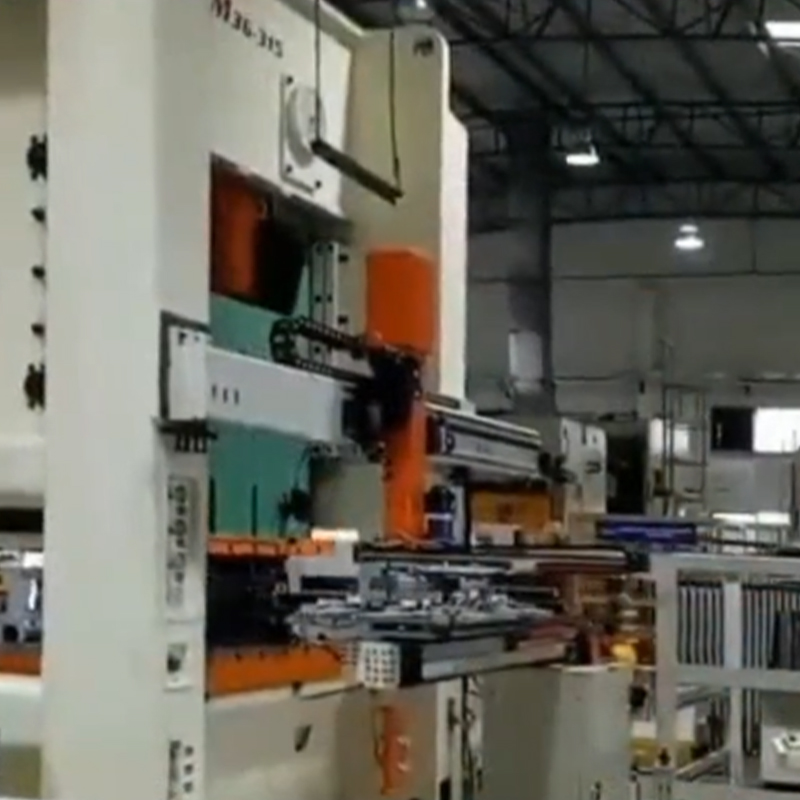
Die manufacturing then requires precision machining. Suzhou Shuangqisi Mold Equipment Co., Ltd. is equipped with imported wire cutting machines, CNC machining centers, grinding machines of various sizes, punch presses from 80T to 400T, and other advanced precision machine tools. These capabilities allow the company to produce accurate die components, maintain tight clearances, and improve the service life of production tooling.
Once the die is manufactured, trial stamping and debugging are conducted. Experienced operators and debugging personnel adjust process parameters, inspect first samples, and identify areas requiring correction. The part may be checked for thickness distribution, surface quality, dimensional accuracy, edge condition, and assembly suitability. This trial stage is essential because even a well-designed die may need fine tuning to compensate for real material behavior and press conditions.
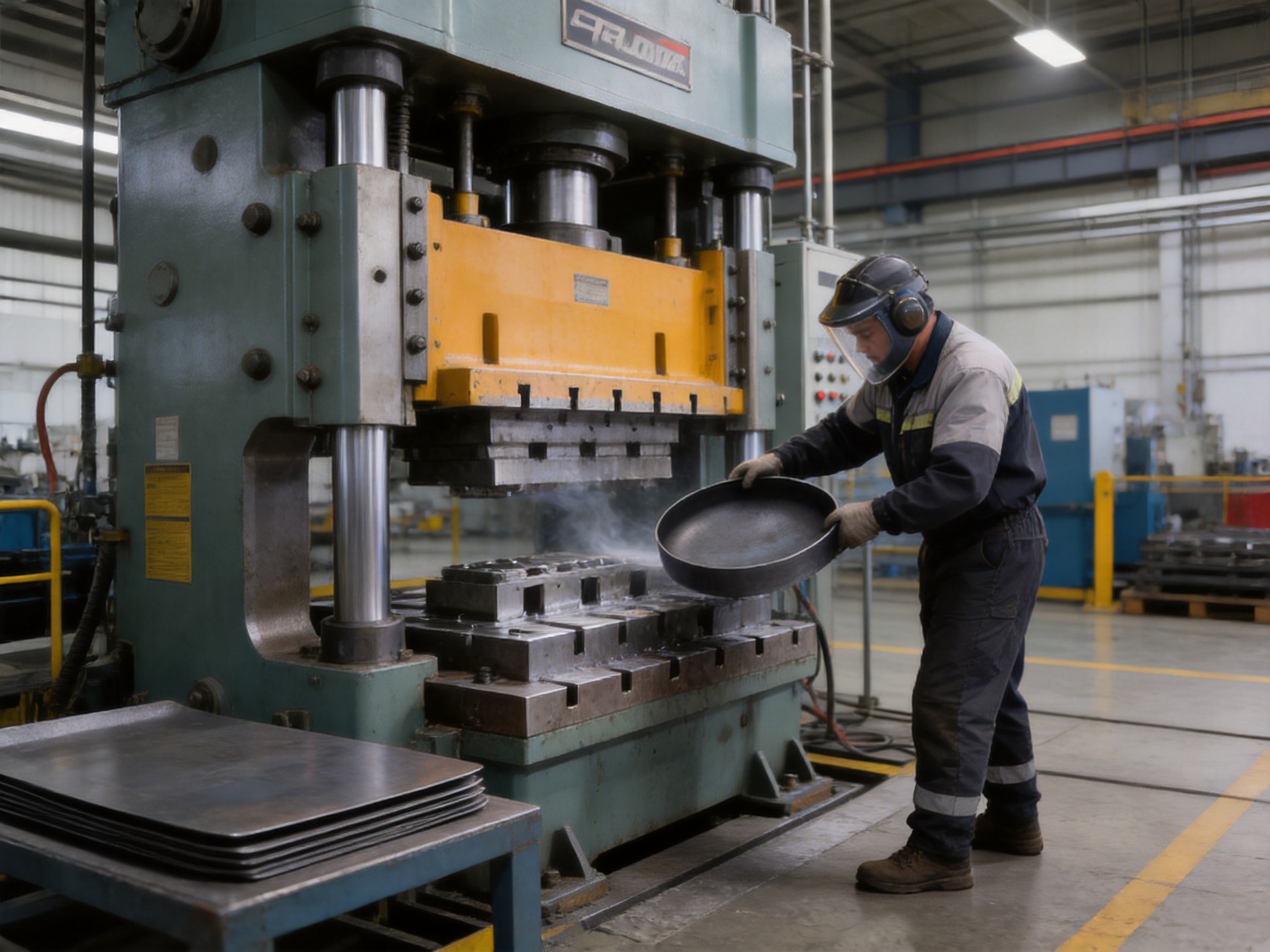
During production, blanking prepares the sheet material to the appropriate size and shape. Drawing and forming operations then shape the metal into the tank end geometry. Trimming removes excess material, while flanging or piercing may create assembly features according to the final design. Throughout this process, proper lubrication, press force, die alignment, and material feeding are controlled to ensure consistent output.
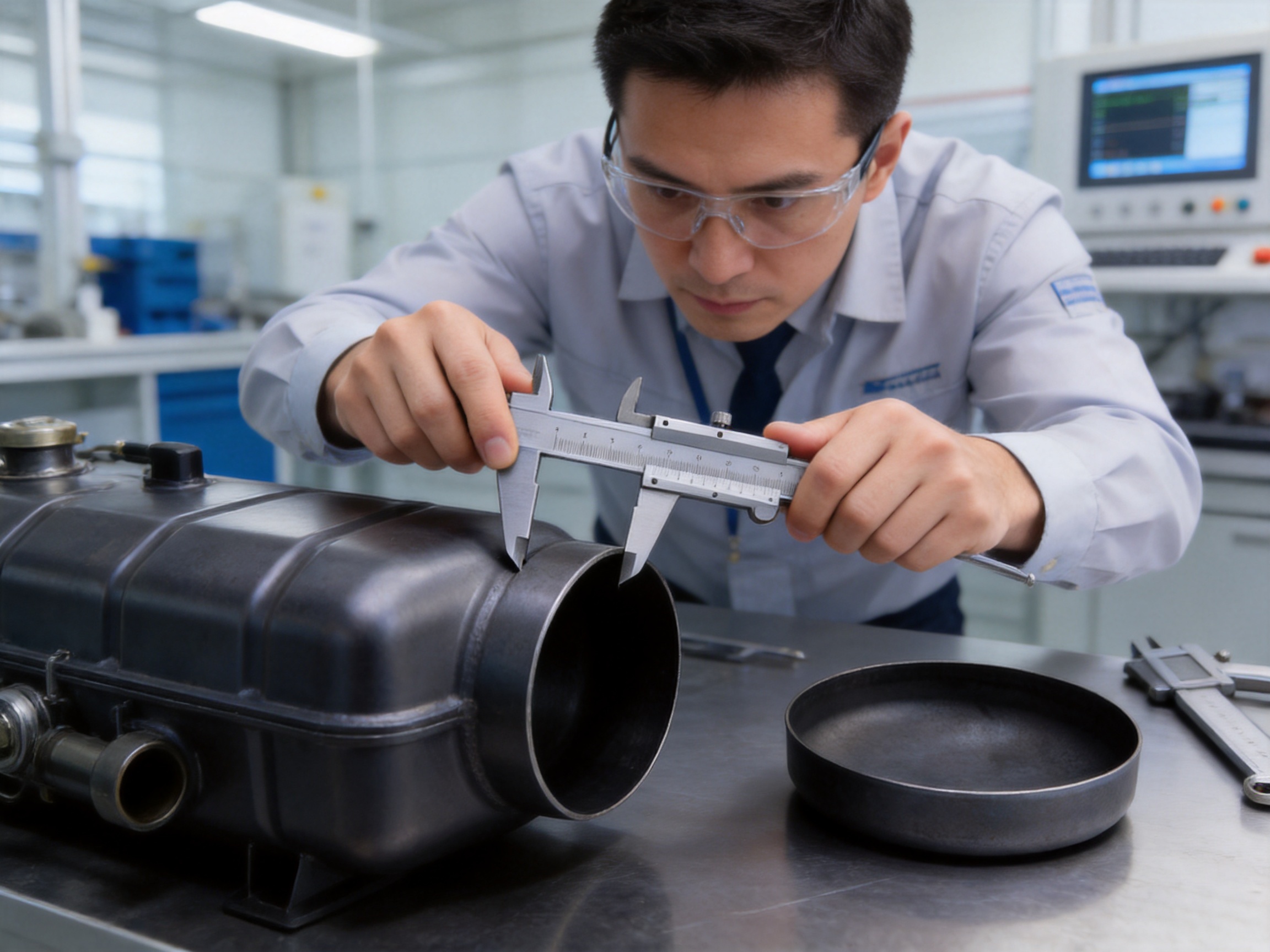
Final inspection verifies whether the stamped parts meet customer and OEM requirements. Dimensional checks may include profile measurement, height, flange width, hole position, roundness, and contour accuracy. Visual inspection confirms that surfaces are free from cracks, deformation, and unacceptable defects. In projects requiring higher validation, additional testing such as material property checks, thickness measurement, welding trial evaluation, or corrosion-related assessment may be performed.
Manufacturing Strengths of Suzhou Shuangqisi Mold Equipment Co., Ltd.
Suzhou Shuangqisi Mold Equipment Co., Ltd. is located at No. 118 Yexin Road, Wujiang Economic Development Zone, Suzhou, China. The company is a professional manufacturer integrating stamping die design, stamping die manufacturing, hardware parts production, and technical service. With 15 years of experience in the mold industry and a team of 60 technical staff, it has developed strong capabilities in precision tooling, stamping production, and customer-specific solutions.
The company’s equipment foundation is a major advantage. Imported wire cutting machines support accurate machining of die inserts and complex contours. CNC machining centers allow efficient production of precision die components. More than 10 grinding machines of various sizes improve surface accuracy and fitting precision. Punch presses ranging from 80T to 400T provide flexible production capacity for different part sizes and forming requirements. These resources enable the company to handle both die manufacturing and stamped part production in a coordinated manner.
Technical experience is equally important. In stamping production, equipment alone cannot guarantee quality. Skilled operators must understand material flow, die behavior, press adjustment, and defect correction. The company has senior operators and experienced debugging personnel who can solve forming problems efficiently. This practical knowledge helps reduce trial time, improve part stability, and support customers with diverse requirements.
The company serves customers in fields such as servo drives, compressors, new energy vehicles, and automotive components. Its main clients include Anter Group, Ousheng Electric, Dongbei Group, and Huichuan Technology. These industries demand precision, reliability, and consistent delivery, which has helped the company build experience in producing parts and tooling for technically demanding applications.
Another important strength is the company’s ability to provide turnkey solutions. In 2016, it invested in and established Suzhou Keshuang Intelligent Technology Co., Ltd., which mainly produces stamping automation equipment. This gives the group the ability to combine stamping molds, stamping production, and automation systems. For customers, this means the supplier can support the entire process from die development to automated production planning.
For gas tank end stamping parts, integrated capability brings practical benefits. The die can be designed with future production efficiency in mind. Stamping automation can be considered during part feeding, transfer, unloading, and inspection. Production equipment can be selected or invested in according to customer needs. The result is a more cost-effective and scalable manufacturing solution.
Why Precision Die Design Matters for Gas Tank End Parts
Stamping die design is often the hidden factor behind product quality. The end user may only see the finished fuel tank end part, but every dimension, surface, and forming mark reflects the quality of the die. A poorly designed die can cause defects that are difficult to eliminate during production, while a well-designed die can produce stable parts with lower scrap and higher efficiency.
For gas tank end stamping parts, die design must address the natural tendency of sheet metal to wrinkle, stretch, and spring back. Because the component is curved and often includes a flange or transition radius, material flow must be controlled carefully. If metal flows too freely, wrinkles may appear. If it is restricted too much, thinning or cracking may occur. The die must balance these forces through proper blank holder design, draw bead placement, forming radius, and press settings.
Springback is another key challenge. After forming, metal tends to recover slightly from the stamped shape. This can cause dimensional deviation, especially in curved parts. Experienced die designers compensate for springback by adjusting tooling geometry and process sequence. This is particularly important when the part must match a cylindrical tank body precisely.
Edge quality also depends on die accuracy. Burrs, uneven trimming, or distorted edges can interfere with welding or sealing. Precision trimming dies and proper clearance selection help achieve clean edges and stable flange geometry. For automotive assembly, this contributes to better process reliability.
High-quality dies also improve production economics. They reduce scrap, shorten adjustment time, extend tool life, and minimize downtime. When customers compare suppliers, the lowest unit price may not represent the lowest total cost. A supplier with better die design and process control can often deliver lower overall cost through fewer defects, smoother assembly, and longer production stability.
Quality Control for Safety-Critical Fuel System Components
Fuel tank components must be produced with strict quality awareness because they are related to vehicle safety. A leak or structural failure may lead to serious consequences. Therefore, gas tank end stamping parts require inspection standards that go beyond ordinary appearance checks. Quality control must cover incoming material, die condition, process parameters, dimensional accuracy, surface quality, and batch consistency.
Incoming material control verifies that the steel or aluminum alloy meets the required grade, thickness, mechanical properties, and surface condition. If the material has inconsistent hardness, poor surface quality, or thickness variation, the forming process may become unstable. Good material control reduces the risk of cracking, wrinkling, and dimensional deviation.
During production, operators monitor press performance, die alignment, lubrication, feeding accuracy, and part appearance. Any change in noise, resistance, surface marks, or forming behavior may indicate a developing problem. Early detection helps prevent large batches of defective parts.
Dimensional inspection is performed to confirm that the part meets drawing requirements. For gas tank end parts, important dimensions may include overall profile, edge height, flange width, radius, contour position, hole locations, and assembly surfaces. Checking fixtures or measurement tools may be used depending on customer requirements.
Surface inspection ensures that the part is free from cracks, severe scratches, deformation, dents, and unacceptable burrs. Since these parts may later be welded, coated, or assembled into a fuel tank, surface defects can affect downstream quality. Smooth surfaces improve production flow and reduce rework.
Batch quality management helps maintain consistency over time. Automotive customers need stable parts not only for one sample batch but for continuous production. The company’s combination of experienced personnel and controlled equipment supports repeatable manufacturing, helping customers meet OEM standards and maintain reliable supply.
Compatibility with Passenger and Commercial Vehicle Fuel Tanks
The gas tank end stamping parts are compatible with many passenger car and commercial vehicle fuel tank models. Compatibility does not mean that one standard component fits every tank; rather, it means the product can be customized and manufactured to match different tank structures, sizes, and assembly requirements. Automotive fuel tanks vary in volume, shape, mounting position, material, and accessory layout. The end part must be designed accordingly.
For passenger cars, the fuel tank may be optimized for space efficiency, lightweight performance, and noise reduction. The end stamping part must support compact packaging and reliable sealing while maintaining sufficient structural strength. Dimensional accuracy is especially important because modern vehicle platforms often have limited installation space.
For commercial vehicles, fuel tanks may be larger and subject to stronger vibration, longer operating hours, and more demanding environmental exposure. End stamping parts for these applications must provide robust strength and fatigue resistance. They may also require thicker materials or reinforced geometry depending on the tank design.
For fuel tank manufacturers, consistent part geometry improves welding and assembly. If the end part matches the tank body accurately, the welding seam can be more uniform, sealing performance can be improved, and production speed can be increased. This is valuable for both manual and automated assembly lines.
For maintenance and replacement applications, durable stamping parts help ensure reliable repair and long-term performance. Although OEM production remains the most demanding market, quality components are also important for aftermarket and maintenance teams that need dependable fuel tank parts.
Corrosion Resistance and Long-Term Durability
Automotive fuel tanks operate in environments where corrosion resistance is crucial. Moisture, road salt, mud, temperature variation, and fuel vapor can all contribute to material degradation. Gas tank end stamping parts must maintain their structural and sealing function over years of service. Corrosion can weaken the part, damage weld areas, and increase leakage risk.
The product’s corrosion performance begins with material selection. Cold-rolled steel may be paired with suitable surface treatment or coating, while aluminum alloy provides inherent corrosion advantages in many conditions. The stamping process must also avoid surface damage that could reduce corrosion protection. Scratches, cracks, and rough edges can become initiation points for corrosion.
Smooth surfaces and uniform forming reduce localized stress and coating defects. When a part is formed without excessive thinning or cracking, it provides a stronger foundation for subsequent protective processes. Good edge trimming also helps coating coverage and reduces sharp points where corrosion may begin.
Vibration resistance is another major durability factor. Vehicles are exposed to continuous vibration from engines, road surfaces, acceleration, braking, and load changes. Fuel inside the tank also creates dynamic movement. The end stamping parts must resist fatigue and maintain shape under repeated stress. Uniform thickness and proper geometry improve fatigue life.
Temperature changes can cause expansion and contraction. In cold environments, materials may become less ductile; in hot environments, fuel vapor pressure may increase. A reliable end stamping part must withstand these changes without distortion or leakage. Strong mechanical properties and stable assembly geometry help meet this requirement.
Humidity and condensation may occur inside and outside the tank system. Components with good corrosion resistance and compatible surface protection can perform better in such conditions. This is particularly important for vehicles operating in coastal regions, rainy climates, or areas where deicing salt is used.
Process Integration: From Mold Development to Stamping Automation
One of the strongest competitive advantages behind these gas tank end stamping parts is process integration. Many suppliers focus only on stamping production, while others specialize only in mold manufacturing. Suzhou Shuangqisi Mold Equipment Co., Ltd. combines die design, die manufacturing, stamping production, and access to stamping automation equipment through its related intelligent technology company. This integrated structure provides customers with a more complete solution.
In the development phase, engineers can design the die while considering production efficiency and automation compatibility. For example, part orientation, feeding method, transfer clearance, scrap removal, and unloading method can be planned early. This reduces later modification costs and helps customers achieve smoother mass production.
During die trial and debugging, production feedback can be quickly applied to tooling improvements. If a part shows minor thinning, springback, or edge variation, the tooling team and stamping team can work together to correct it. This is faster than relying on separate suppliers who must communicate across different organizations.
In mass production, automation can improve consistency, reduce labor intensity, and increase output. Automated feeding and transfer systems can stabilize production rhythm and reduce handling damage. For customers requiring large quantities, automation planning can significantly improve efficiency and cost control.
The company can also invest in related production equipment according to customer needs. This flexibility is valuable for customers that require dedicated capacity or cost-effective production but do not want to manage tooling and equipment investment independently. By aligning equipment with project demand, the company can provide practical and competitive manufacturing support.
Reducing Customer Cost Through Better Engineering
Cost in automotive stamping is not limited to the price of each part. True cost includes die development, trial time, scrap rate, production stability, assembly efficiency, inspection requirements, delivery reliability, and long-term defect risk. A lower-priced component that causes welding problems, leakage, or rework can become much more expensive than a precision-manufactured part.
High-quality gas tank end stamping parts reduce cost by improving first-pass assembly yield. When parts fit the tank body correctly, workers and machines spend less time adjusting or correcting alignment. Welding quality becomes more stable, and inspection failures are reduced.
Consistent part quality also reduces inventory risk. Customers do not need to hold excessive safety stock to compensate for unstable supply. Reliable batch production supports lean manufacturing and predictable delivery schedules.
Durable dies reduce tooling maintenance cost and downtime. A die manufactured with accurate machining, proper material selection, and experienced fitting can operate longer before repair is needed. This supports stable production and reduces unexpected delays.
Engineering support during the early project stage can also prevent expensive redesign. If manufacturability issues are identified before the die is built, customers can avoid repeated modifications. This is one of the benefits of working with a supplier experienced in both die design and stamping production.
For large-volume projects, even small improvements in scrap rate, cycle time, or assembly yield can create significant savings. Therefore, the company’s value lies not only in producing a metal part but in improving the customer’s complete production economics.
Applications in Automotive Fuel Tank Production
Gas tank end stamping parts are used primarily in automotive fuel tank assemblies. Their role may vary depending on tank design, but they usually serve as the end closure and structural reinforcement for the tank body. They are suitable for fuel tank manufacturers, automotive component suppliers, OEM support projects, and maintenance applications requiring reliable replacement parts.
In a typical production process, the stamped end parts are matched with the tank body and then joined by welding, sealing, or other assembly methods. The quality of the end part strongly affects the quality of the joint. If the flange or contact surface is uneven, the joint may become inconsistent. If the part is dimensionally unstable, the assembly fixture may not locate it accurately. If the surface has defects, coating and sealing performance may be affected.
Because of these requirements, fuel tank manufacturers prefer parts that are stable, clean, and ready for assembly. A reliable supplier can help reduce downstream process problems and improve production efficiency. This is especially important when customers operate automated lines, where part variation can cause stoppages or equipment alarms.
The product is also relevant for commercial vehicle tank production, where strength and durability are highly valued. Commercial vehicles often operate under heavier loads and longer cycles, so fuel tank components must maintain performance over extended service periods.
In new energy vehicle-related applications, hybrid vehicles may still use fuel tanks and require high-quality fuel system components. The company’s experience serving new energy vehicle-related customers supports its understanding of evolving automotive industry requirements.
Comparison with Competing Manufacturing Approaches
Some competing products may be produced using lower-precision dies, simplified forming processes, or less controlled material handling. These approaches may reduce initial cost but often create hidden quality risks. Common problems include uneven thickness, inconsistent curvature, wrinkling, burrs, cracking, springback variation, and poor edge quality.
Low-precision fabrication may also struggle to meet OEM standards. Automotive supply chains demand repeatability, traceability, and consistent assembly performance. A part that passes visual inspection may still fail when measured against a fixture or assembled with automated equipment. For fuel tank end components, this is a serious concern because sealing and structural performance depend on accurate geometry.
Compared with these alternatives, precision stamping offers stronger repeatability. The use of carefully designed dies, stable press equipment, and experienced debugging helps control the forming process. This results in parts that are more consistent from batch to batch.
Another difference is supplier capability. A manufacturer that only performs stamping may depend on outside mold suppliers for tooling changes, which can slow project response. A manufacturer that only builds molds may not fully understand long-term production issues. The integrated model of Suzhou Shuangqisi Mold Equipment Co., Ltd. provides stronger coordination between tooling and production.
Automation capability further strengthens competitiveness. As labor costs rise and automotive customers demand higher consistency, automated stamping solutions become increasingly important. The company’s related automation capability helps customers prepare for efficient production instead of relying only on manual handling.
The company’s combination of technical team, advanced equipment, customer experience, and cost control makes its gas tank end stamping parts a competitive choice for customers seeking both quality and value.
Design and Customization Support
Different fuel tanks require different end stamping part designs. Therefore, customization is an important part of the product offering. Customers may provide drawings, technical specifications, samples, material requirements, tolerance standards, annual volume estimates, and assembly information. Based on this information, the engineering team can evaluate manufacturability and propose a production plan.
Customization may involve part size, curvature, flange shape, material thickness, hole placement, reinforcement features, surface requirements, and inspection standards. For some projects, the part may need to match existing tank body tooling. For new projects, the end part can be developed together with the tank design to improve manufacturability.
Early communication is important. Engineers need to understand how the part will be assembled, whether welding or sealing is used, what surface treatment will follow, and what functional tests are required. This information affects die design and process planning.
For customers with high production volumes, the company can consider stamping automation and dedicated equipment planning. For customers with smaller or medium batches, cost-effective tooling and production methods can be selected. This flexible approach helps serve diverse automotive and industrial customers.
Customization also supports quality optimization. If customers have experienced leakage, poor fit, or deformation with previous suppliers, the company can analyze possible causes and improve the die or process design. This problem-solving capability is valuable in competitive automotive manufacturing.
Supply Capability and Customer Service
Suzhou Shuangqisi Mold Equipment Co., Ltd. emphasizes design, manufacturing, and service. For automotive parts customers, service is not only about communication after delivery; it begins at the quotation and engineering review stage. A responsive supplier can help customers clarify technical requirements, avoid design risks, and plan realistic production schedules.
The company’s technical staff can support mold development, stamping process optimization, sample production, trial correction, and mass production quality control. Its equipment base provides the capacity to manufacture dies and produce parts under one manufacturing system. This reduces dependence on external resources and improves schedule control.
Competitive pricing is supported by strict cost control and integrated production. Because the company can manage mold-making, stamping, and automation-related planning, it can reduce unnecessary process waste and provide customers with cost-effective products and services.
Reliable delivery is another key service factor. Automotive customers often work with fixed production plans, and delayed components can affect assembly schedules. A supplier with internal tooling and stamping capability is better positioned to respond to production changes, maintenance needs, or urgent adjustments.
The company’s commitment to high-quality development reflects its long-term strategy. It aims to create value for customers, strengthen technical expertise, and become a renowned manufacturer of high-quality stamping dies. Gas tank end stamping parts are aligned with this strategy because they require precision, reliability, and manufacturing discipline.
Q&A: Common Questions About Gas Tank End Stamping Parts
Q1: What are gas tank end stamping parts used for?
They are used to seal and reinforce the two ends of automotive fuel tank assemblies. Their function is to maintain structural stability, support leak-resistant assembly, and help the tank withstand pressure, vibration, temperature changes, and harsh operating conditions.
Q2: What materials can be used for these parts?
Common materials include cold-rolled steel and aluminum alloy. Cold-rolled steel offers strength, formability, and weldability, while aluminum alloy provides lightweight performance and good corrosion resistance. The final material depends on customer requirements and fuel tank design.
Q3: Why is stamping preferred for producing fuel tank end parts?
Stamping provides high repeatability, stable dimensions, smooth surfaces, and efficient mass production. Compared with low-precision fabrication, stamping is better suited for automotive components that require consistent quality and reliable assembly performance.
Q4: How do these parts help prevent fuel leakage?
They are manufactured with accurate geometry, smooth sealing or welding surfaces, and uniform thickness. This helps the end parts fit the tank body correctly and supports stable joining processes, reducing the risk of leakage caused by poor alignment or surface defects.
Q5: Can the parts be customized for different vehicle models?
Yes. The parts can be customized according to drawings, samples, tank dimensions, material requirements, and assembly standards. They can be adapted for passenger cars, commercial vehicles, and other automotive fuel tank applications.
Q6: What makes Suzhou Shuangqisi Mold Equipment Co., Ltd. competitive?
The company integrates stamping die design, die manufacturing, stamping parts production, and stamping automation capability. It has advanced equipment, experienced operators, a technical team of 60 staff, and 15 years of mold industry experience. This enables stable quality, efficient development, and cost-effective production.
Q7: What quality checks are important for gas tank end stamping parts?
Important checks include material verification, dimensional inspection, surface inspection, thickness measurement, edge quality inspection, and assembly compatibility evaluation. For demanding projects, additional validation may be performed according to customer standards.
Q8: Are these parts suitable for automated assembly lines?
Yes. Their stable dimensions and smooth surfaces make them suitable for automated welding, handling, and assembly processes. The company’s stamping automation experience can also support customers planning automated production systems.
Q9: How does die quality affect the finished product?
Die quality determines the accuracy, surface condition, thickness distribution, and repeatability of the stamped part. A precision die reduces defects such as wrinkling, cracking, burrs, and springback variation, helping ensure stable production quality.
Q10: How can customers start a project?
Customers can provide drawings, samples, material specifications, tolerance requirements, expected volume, and assembly information. The engineering team can then evaluate manufacturability, develop a die and process plan, and support sample production and mass production.
Conclusion: A Reliable Choice for Automotive Fuel Tank Manufacturing
Gas tank end stamping parts are safety-critical components that require precision manufacturing and dependable quality control. Their role in sealing and reinforcing automotive fuel tanks makes them essential to fuel system performance, durability, and assembly reliability. High-quality parts must provide uniform thickness, smooth surfaces, accurate dimensions, corrosion resistance, and mechanical strength.
Suzhou Shuangqisi Mold Equipment Co., Ltd. offers clear advantages in this field through its integrated capabilities in stamping die design, die manufacturing, stamping parts production, and stamping automation. With advanced equipment, experienced technical staff, strict quality control, and 15 years of industry experience, the company can provide reliable components that meet the needs of automotive parts manufacturers, fuel tank suppliers, OEM-related projects, and maintenance teams.
Compared with ordinary stamped components or low-precision alternatives, these gas tank end stamping parts offer better repeatability, stronger assembly compatibility, improved durability, and lower total production risk. Their performance benefits are especially valuable in modern automotive manufacturing, where safety, efficiency, and consistency are essential.
For customers seeking dependable fuel tank end components supported by professional tooling and manufacturing expertise, this product provides a practical balance of quality, durability, customization, and cost-effectiveness.
References
1. Society of Automotive Engineers. Automotive Fuel and Emissions Control Systems, technical reference materials.
2. ASM International. Sheet Metal Forming: Fundamentals and Applications.
3. Schuler GmbH. Metal Forming Handbook.
4. Kalpakjian, S., and Schmid, S. Manufacturing Engineering and Technology.
5. American Welding Society. Automotive Sheet Metal Joining and Weld Quality Guidelines.
6. International Organization for Standardization. Quality management and automotive production standards reference documents.
Product: Gas tank end stamping parts
Previous Post
Advanced Stamping Automation Equipment for Efficient Metal Forming
Next Post
High-End Oven Stamping Parts for Reliable Thermal Performance
Our Products.
Start Your Business with an OEM Manufacturer Right Here!

Provide global customers with complete turn-key solutions
through
innovation!
QUICK LINKS
CONTACT INFO.
-
 +86-139 1308 8972
 -

-
 No. 118 Yexin Road, Wujiang Economic Development Zone, Suzhou, China
Copyright © Suzhou Shuangqisi Mold Equipment Co., Ltd. All Rights Reserved. Custom Stamping Die Metal Stamping Die Manufacturers
