 English
 Español
 Deutsch

-
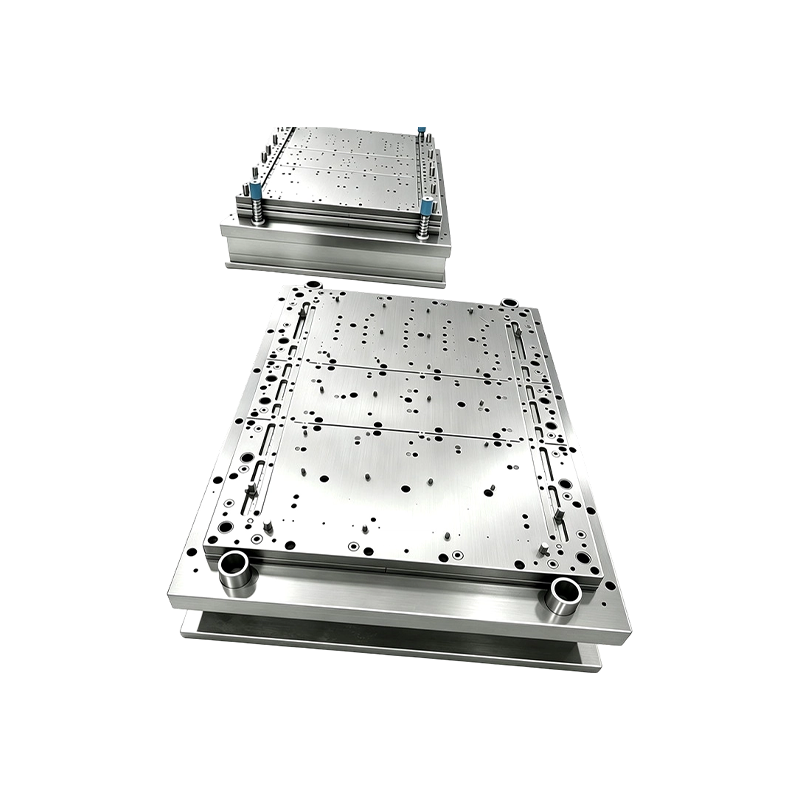
Progressive Stamping Die for Connector & Terminal Parts High Speed Progressive Stamping Die Precision Metal Hardware Stamping Tool mold for Connector Terminal Parts Automotive Components
Progressive Stamping Die for Connector & Termi...
-
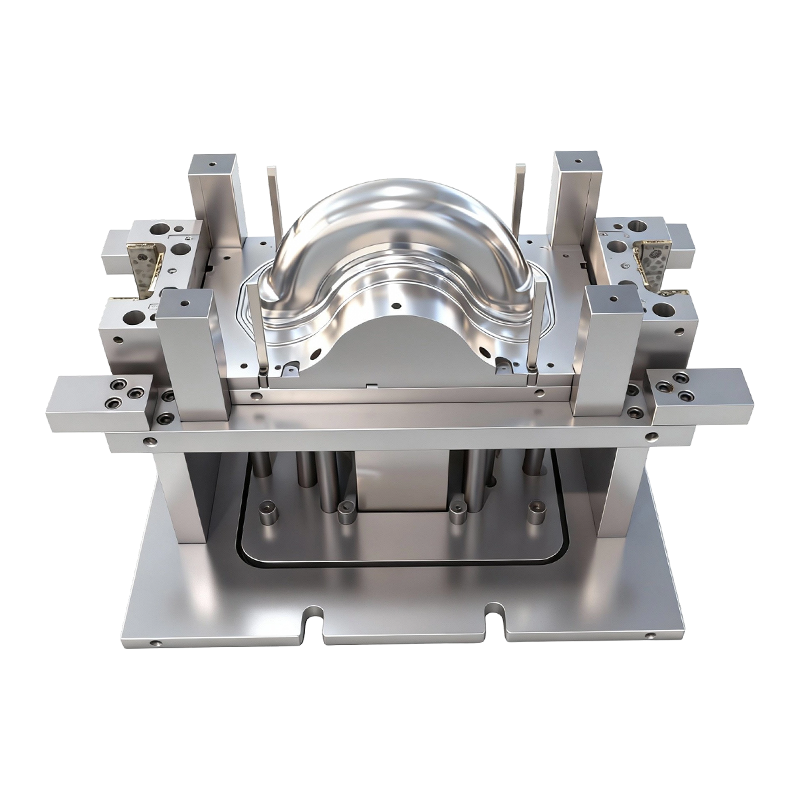
Deep drawing mold for front and rear wheels of two-wheeled electric vehicles
This Deep drawing mold for front and rear wheels o...
-
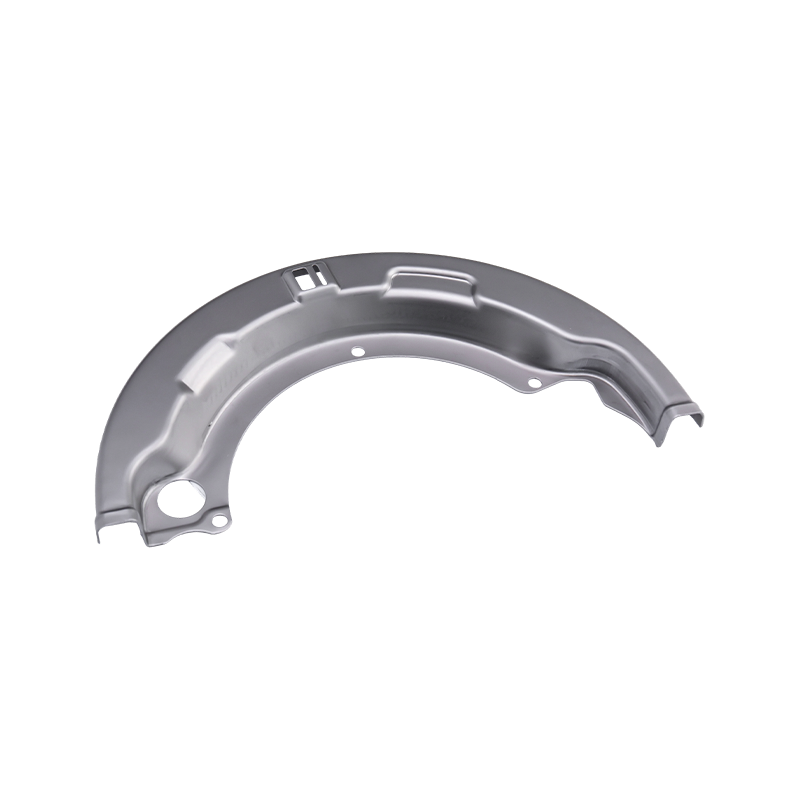
Heavy truck stamping parts
Our Heavy truck stamping parts are precision-manuf...
-
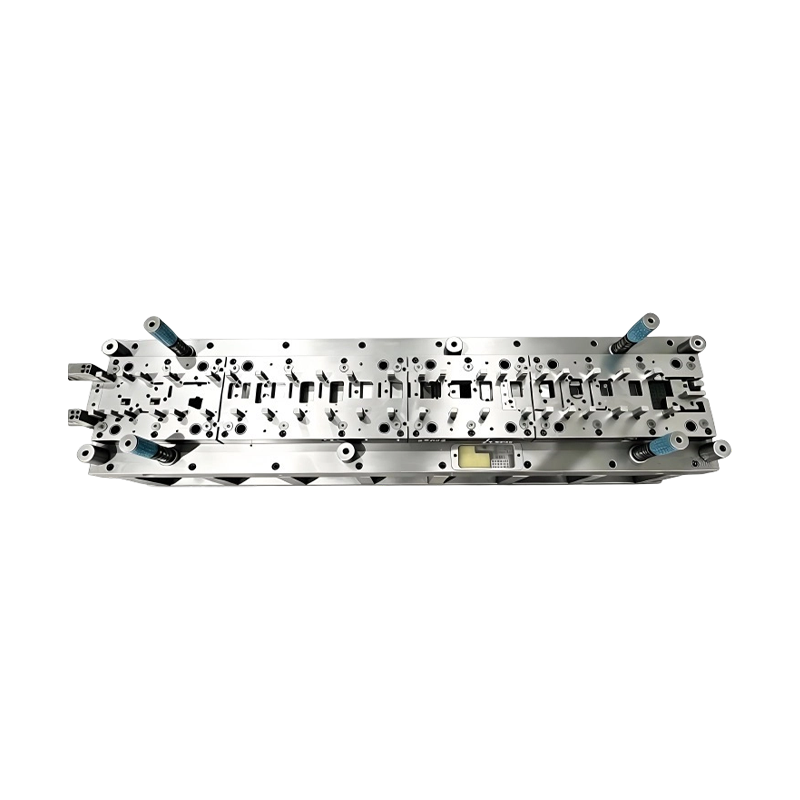
Long-Stroke Multi-Stage Progressive Die Automatic Strip Feed Progressive Die Long Travel Follow on Stamping Tool for Sheet Metal Hardware Press Moulding
Long-Stroke Multi-Stage Progressive DieOur custom ...
-
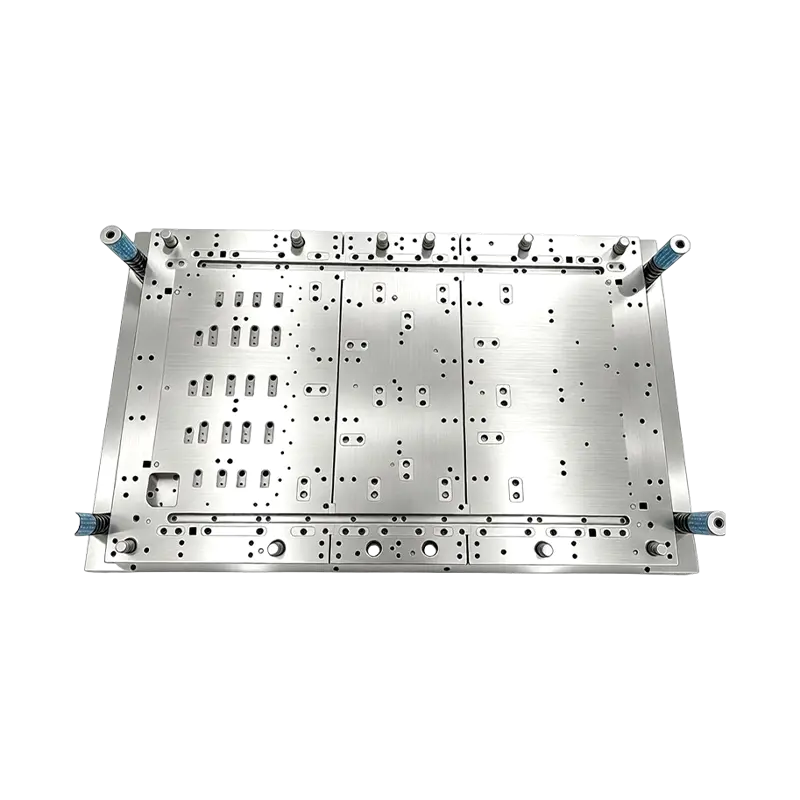
Multi-Station Progressive Stamping Die with Carbide Inserts Custom Multi Station Progressive Stamping Die Carbide Insert Metal Stamping Mold Tool for Equipment Appliances Device Hardware
High Speed Metal Stamping Tool for Precise Equipme...
- E-mail us: [email protected]
- Call us: +86-139 1308 8972

Wang Xinyue – After-Sales Support Supervisor
Home / Author / Wang Xinyue – After-Sales Support Supervisor / Heavy Truck Stamping Parts: Precision, Durability, and Integrated Manufacturing for Commercial Vehicles
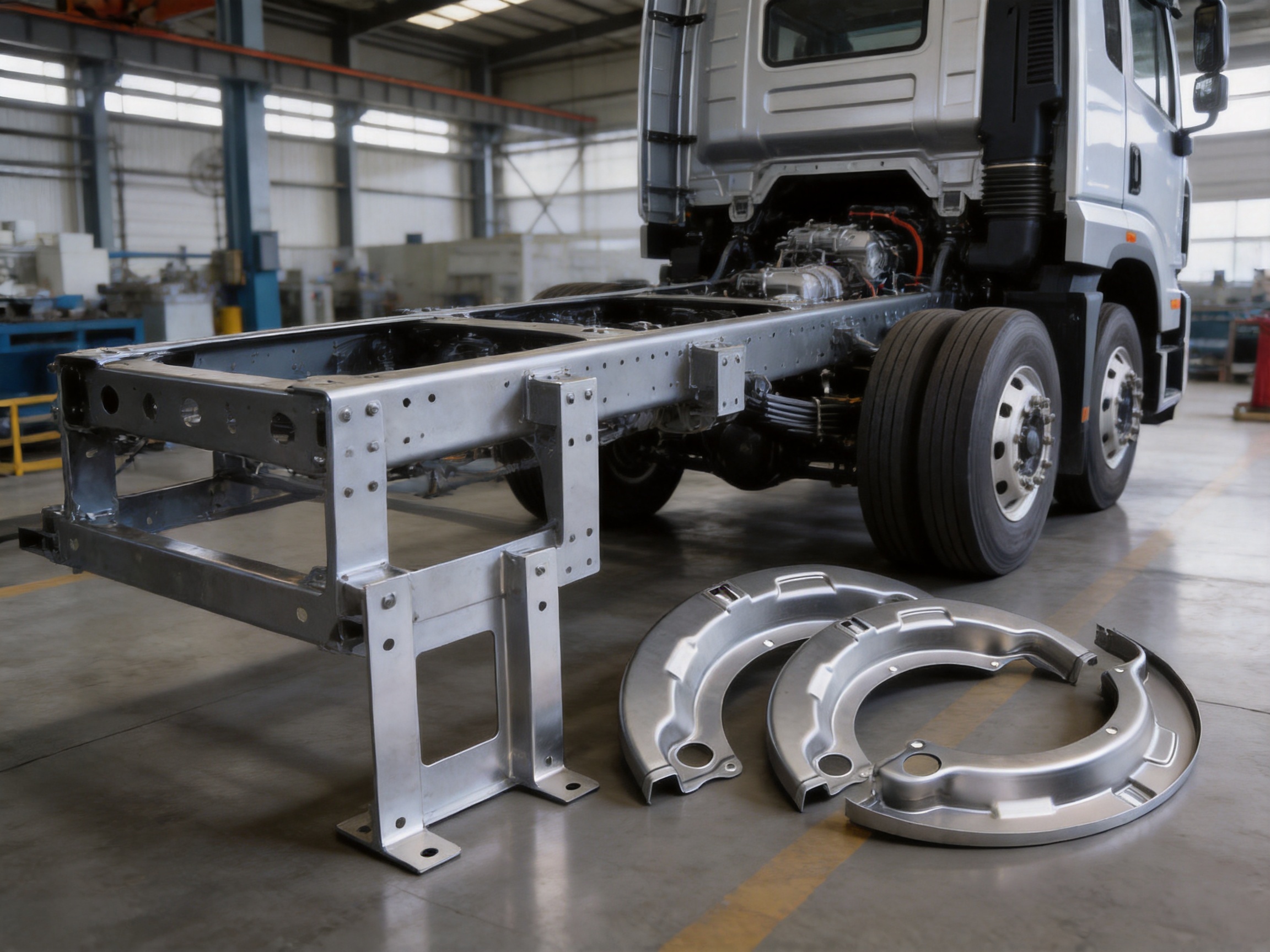
Heavy Truck Stamping Parts: Precision, Durability, and Integrated Manufacturing for Commercial Vehicles
2026-11-03
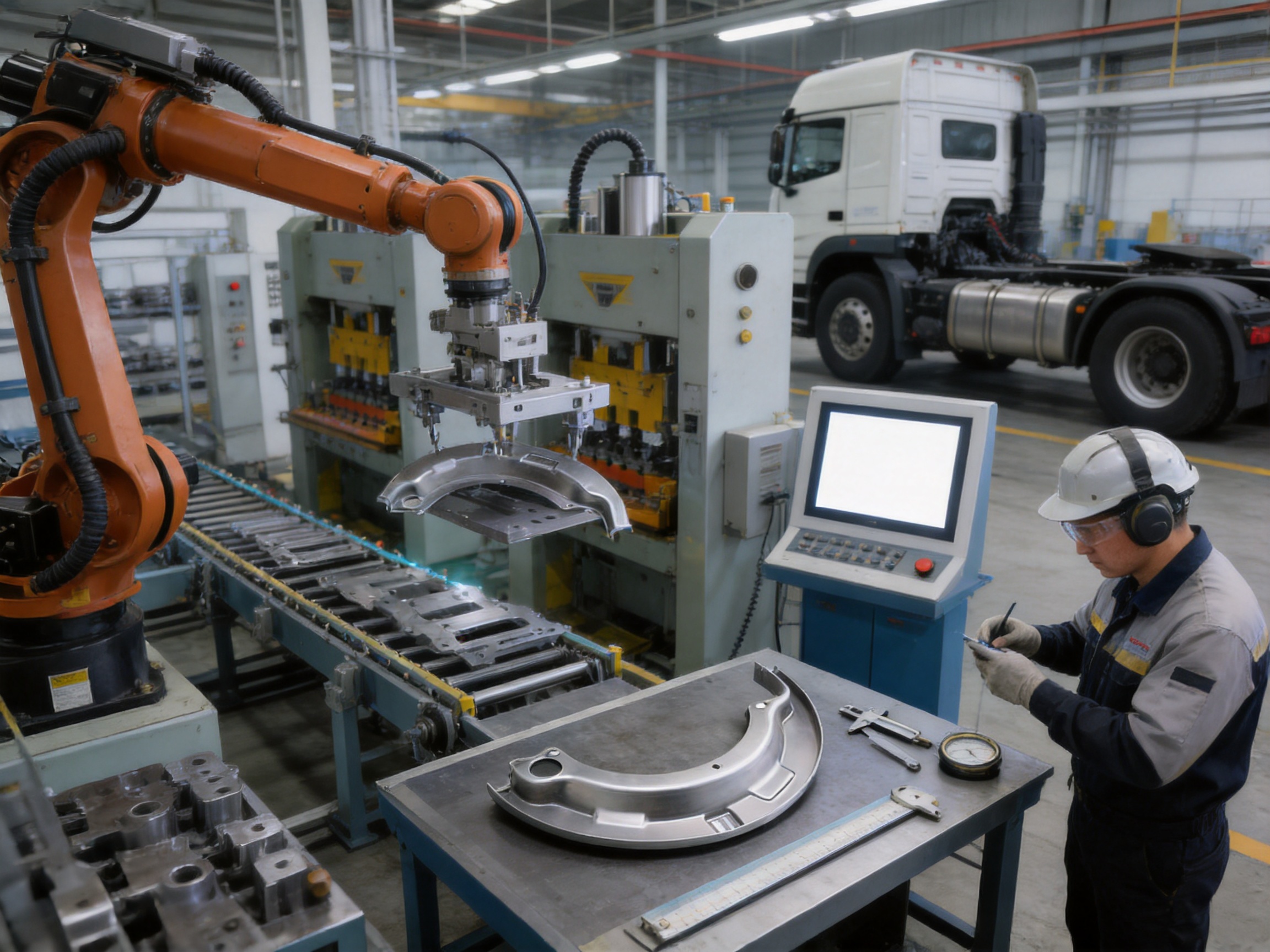
Heavy-duty trucks operate under demanding conditions that place exceptional stress on every structural and functional component. Long-distance transportation, construction work, mining support, logistics distribution, and other commercial applications expose truck systems to vibration, impact, fluctuating loads, road shock, moisture, dust, and temperature changes. In this environment, stamping parts are not merely basic metal components. They are essential elements that contribute to vehicle strength, assembly accuracy, operating safety, service life, and maintenance efficiency.
Heavy truck stamping parts are precision-manufactured components designed for the structural and mechanical systems of commercial heavy-duty vehicles. Produced from high-strength steel plates through advanced cold stamping technology, these parts combine material strength, dimensional consistency, efficient production, and reliable repeatability. Typical products include frame brackets, suspension connecting plates, engine mounting supports, and other formed components used in truck assemblies.
For truck manufacturers and aftermarket service providers, the value of a stamping part extends beyond its individual shape. A successful part must fit accurately with surrounding assemblies, maintain its geometry under repeated loads, withstand corrosion and vibration, and remain consistent across large production volumes. It must also be manufactured with controlled costs and predictable delivery schedules. The production of heavy truck stamping parts therefore requires coordinated expertise in product interpretation, die design, precision machining, forming, inspection, debugging, and production management.
Suzhou Shuangqisi Mold Equipment Co., Ltd. provides heavy truck stamping parts together with stamping die design, die manufacturing, hardware-part production, and stamping automation capabilities. Its integrated technical structure allows customers to obtain tooling and formed components from a coordinated manufacturing source. With experienced technical staff, imported wire cutting machines, CNC machining centers, multiple grinding machines, and punch presses ranging from 80 tons to 400 tons, the company is equipped to address a wide range of heavy-duty stamping requirements.
Content
- 1 Why Heavy Truck Stamping Parts Require Specialized Engineering
- 2 Product Scope and Typical Applications
- 3 Material Performance and Cold Stamping Technology
- 4 Integrated Die Design and Manufacturing
- 5 Production Equipment and Capacity
- 6 Quality Control for Heavy Truck Applications
- 7 Key Advantages Compared with Generic Stamping Suppliers
- 8 Stamping Automation and Turnkey Production Solutions
- 9 Manufacturing Workflow for Heavy Truck Stamping Parts
- 10 Efficiency, Cost Control, and Long-Term Value
- 11 Applications in Long-Haul Transportation and Construction
- 12 Customer Collaboration and Technical Support
- 13 How to Select a Heavy Truck Stamping Parts Supplier
- 14 Frequently Asked Questions
- 14.1 What are heavy truck stamping parts?
- 14.2 What materials are used for these parts?
- 14.3 Why is high-strength steel suitable for heavy truck components?
- 14.4 What components can be manufactured?
- 14.5 How does stamping improve production efficiency?
- 14.6 How is product quality controlled?
- 14.7 Can the supplier manufacture the stamping dies?
- 14.8 What press capacities are available?
- 14.9 Can customized parts be produced from customer drawings?
- 14.10 Can stamping automation be included in the project?
- 14.11 Which industries can use these products?
- 14.12 How can customers improve the success of a stamping project?
- 15 Conclusion
- 16 References
- 17 Product: Heavy truck stamping parts
Why Heavy Truck Stamping Parts Require Specialized Engineering
Heavy commercial vehicles are exposed to considerably higher loads than passenger cars. Their frames support engines, transmissions, cabins, cargo, suspension systems, fuel systems, and auxiliary equipment. During operation, these loads are transferred through brackets, supports, plates, cross-member connections, and mounting structures. A component that appears simple in shape may experience complex combinations of tension, compression, bending, shear, and fatigue loading.
In addition to static weight, trucks encounter dynamic forces. Sudden braking, uneven roads, steep gradients, turning maneuvers, loading changes, and trailer movement can produce repeated stress cycles. In construction and off-road applications, the effects become even more severe. Stamping parts used in these environments must retain their form and connection accuracy over a long operating period.
The production process must also account for the behavior of high-strength steel during forming. High-strength materials provide excellent load-bearing capability, but they can be more demanding to stamp than ordinary low-carbon steel. Improper die clearance, insufficient forming control, inaccurate punch alignment, or unsuitable process sequencing may result in cracking, springback, deformation, burrs, or dimensional deviation.
For these reasons, heavy truck stamping parts require more than a press and a sheet of metal. They require a coordinated process that begins with design analysis and continues through tooling development, controlled forming, inspection, and production feedback. The quality of the die has a direct effect on the quality of the part. The stability of the press operation influences repeatability. The quality-control system determines whether potential defects are detected before they affect vehicle assembly.
Product Scope and Typical Applications
Frame Brackets
Frame brackets connect structural members and support the correct positioning of chassis-related assemblies. Depending on their design, they may be used to connect cross members, support auxiliary systems, reinforce frame areas, or provide mounting points for related components. These parts must have accurate hole positions, consistent forming angles, and sufficient strength to withstand vibration and longitudinal or lateral loads.
A frame bracket with inconsistent dimensions can create difficulties during assembly. Misaligned holes may require forced fitting, additional rework, or adjustment at the vehicle production line. Even a small deviation in a critical mounting area can influence the alignment of connected structures. Precision stamping helps maintain reliable interchangeability and reduces the need for manual correction.
Suspension Connecting Plates
Suspension connecting plates are used in assemblies that transfer loads between the suspension system and the vehicle frame or related structures. They may be subjected to repeated impact, vibration, and fatigue loading as the truck moves over different road surfaces. The geometry of these plates, including bends, holes, flanges, and contact surfaces, must remain consistent to support correct suspension installation.
For suspension-related components, flatness and hole-location accuracy are particularly important. Uneven surfaces can affect contact with mating parts, while dimensional inconsistency can influence the position of bolts, bushings, or other connection elements. Proper material selection, die design, and forming control allow the finished part to combine structural reliability with efficient assembly.
Engine Mounting Supports
Engine mounting supports help secure the powertrain and transfer engine-related loads into the vehicle structure. They must manage the weight of the engine, vibration from operation, torque reaction, and loads generated during acceleration or deceleration. The support must be strong enough for heavy-duty service while maintaining the dimensional accuracy required for engine installation.
These components often include multiple bends, reinforced areas, and precisely positioned mounting holes. The manufacturing process must control local deformation and prevent cracks at corners or formed transitions. Consistent production is important because engine mounting supports are typically installed in a system where several components must work together within a limited dimensional range.
Other Heavy-Duty Stamped Components
The same manufacturing capabilities can be applied to many additional commercial vehicle components. These may include reinforcement plates, support members, chassis connection elements, brackets for auxiliary equipment, structural covers, battery supports, cab-related mounting pieces, and customized hardware parts. The specific design depends on the truck platform, operating environment, load requirements, and customer drawings.
Because heavy truck manufacturers and aftermarket customers often require different specifications, flexible tooling and production capabilities are valuable. A supplier that can support both die development and component manufacturing can respond more efficiently to design changes, product variations, and customized requirements.
Heavy truck stamping parts
Material Performance and Cold Stamping Technology
Heavy truck stamping parts are manufactured from high-strength steel plates selected to meet the intended application. Steel provides a favorable combination of tensile strength, durability, machinability, availability, and cost efficiency. For structural components, material selection must reflect the expected load conditions, forming requirements, corrosion environment, and joining method.
Cold stamping forms the material at room temperature through controlled pressure applied by a punch and die. This method is widely used for producing sheet-metal components with repeatable shapes and high production efficiency. Compared with labor-intensive cutting and manual fabrication, stamping can deliver more consistent geometry and improved productivity, especially when the same part must be produced in substantial quantities.
Advanced cold stamping technology offers several practical advantages for heavy truck components. It supports controlled bends, repeatable holes, uniform edges, and consistent part dimensions. It can also produce shapes that would be time-consuming and less consistent if manufactured through multiple manual operations. When properly engineered, the process reduces material waste, shortens cycle times, and improves the repeatability of assembly-critical features.
However, the advantages of cold stamping depend on the quality of process development. High-strength steel must be formed within an appropriate process window. The die must provide suitable clearance, guiding, support, and forming radii. The blank shape and operation sequence must be selected to reduce distortion and avoid excessive stress concentration. Process parameters must then be verified through trial production and inspection.
Dimensional Accuracy
Dimensional accuracy is essential for components that connect to frames, suspension assemblies, engines, or other vehicle systems. Stamped parts must conform to the customer’s drawings and agreed tolerances. Accurate outer profiles help ensure that the part occupies the intended space, while correctly positioned holes support bolt installation and connection alignment.
Precision tooling and stable press operation are the foundation of dimensional control. CNC machining centers can be used to produce accurate die components, while wire cutting equipment supports the creation of precise profiles and complex internal features. Grinding operations help achieve suitable die surfaces and close-fitting working elements. Together, these capabilities contribute to the consistency of the final stamped part.
Uniform Thickness and Smooth Edges
Sheet-metal parts should maintain their intended thickness as much as possible during forming. Excessive thinning can reduce local strength, while uncontrolled deformation can affect fit and appearance. Proper forming design distributes the material flow and limits severe deformation in high-stress areas.
Smooth edges are also important. Sharp burrs can complicate handling, interfere with assembly, and create safety concerns for production personnel. Controlled cutting and subsequent inspection help ensure that edge conditions meet the expected requirements. For parts used in high-load assemblies, edge quality also supports reliable contact and reduces the risk of localized damage.
Resistance to Vibration and Impact
Heavy truck components must withstand repeated vibration and impact. The part design, steel grade, formed geometry, and connection method all influence performance. Reinforcing flanges, carefully designed bends, and appropriate structural transitions can improve stiffness without adding unnecessary material.
Quality stamping also helps maintain the designed load path. If a part is distorted or contains inconsistent bends, the actual stress distribution may differ from the engineering intention. Repeatable production ensures that each component performs more consistently when installed in the vehicle assembly.
Integrated Die Design and Manufacturing
The stamping die is the central production tool for forming heavy truck stamping parts. Its design controls the shape, hole arrangement, bend accuracy, cutting condition, and production repeatability of the component. A die that is poorly designed may produce defects even when the press and raw material are suitable. Conversely, a well-designed die can improve productivity, reduce maintenance demands, and help maintain stable part quality.
Suzhou Shuangqisi Mold Equipment Co., Ltd. integrates stamping die design and manufacturing with stamped-part production. This integration provides a practical advantage because the teams responsible for tooling and parts can communicate directly during development, trial production, and improvement. Design feedback from actual stamping can be returned to the tooling process without relying entirely on separate external organizations.
Design Review and Process Planning
Before die manufacturing begins, the part geometry and production requirements should be reviewed. Important considerations include material grade, thickness, blank shape, forming direction, bend radii, hole locations, trimming areas, draw or stretch behavior, and expected production volume.
Process planning determines how many operations are required and how the part will move through the stamping sequence. Some components can be completed through a simple progressive or compound operation, while larger or more complex structural parts may require multiple forming, trimming, bending, and piercing steps. The sequence must maintain part stability and prevent excessive stress or distortion.
Tooling design also considers access for inspection, replacement of wear components, maintenance, and safe operation. These issues influence the long-term cost of the die. A tool that is easy to maintain can reduce downtime and help keep production stable over its service life.
Precision Machining and Wire Cutting
The company is equipped with imported wire cutting machines and CNC machining centers. Wire cutting is suitable for producing precise profiles and intricate die components. CNC machining centers provide controlled processing for die bases, inserts, cavities, punches, and other tooling elements requiring accurate geometry.
Precision machining reduces the variation between die components and supports proper alignment during assembly. Accurate working surfaces help control the blank and guide the material through each forming stage. This is especially important for high-strength steel, where small tooling inaccuracies may contribute to uneven forming or accelerated wear.
Grinding and Surface Accuracy
Grinding is used to achieve the required surface condition and dimensional accuracy of selected tooling elements. The company has more than ten grinding machines of various sizes, allowing it to process different die components according to their dimensions and precision requirements.
Accurate grinding can improve contact between mating die elements, refine cutting edges, and support consistent forming. Smooth and properly finished tool surfaces can also help reduce friction and material marking. As a result, grinding contributes not only to the initial quality of the die but also to its long-term production stability.
Trial Stamping and Debugging
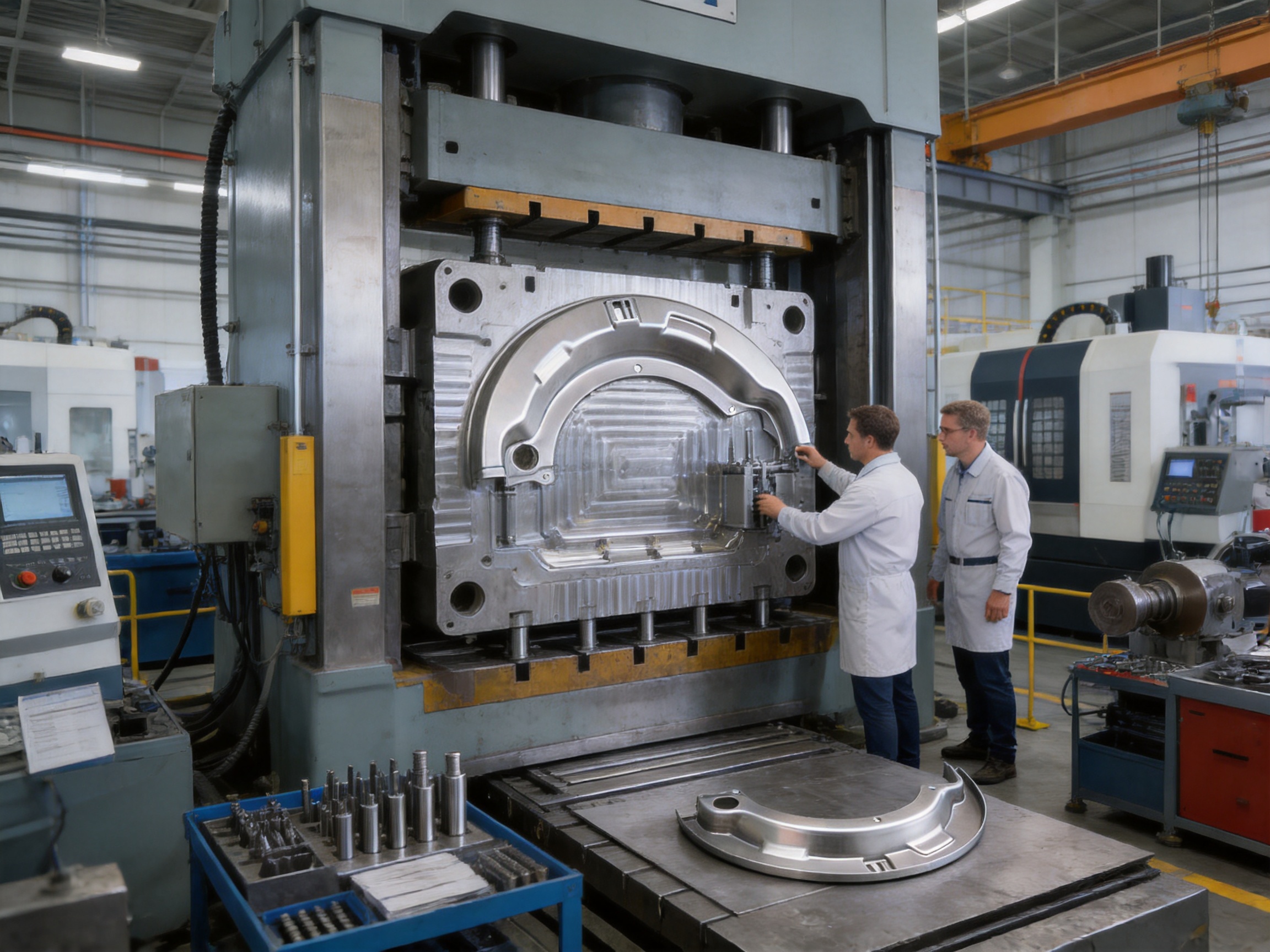
After tooling is manufactured, trial stamping is used to verify the die’s performance. Sample parts are inspected for profile accuracy, hole position, flatness, edge quality, forming consistency, and visible defects. If necessary, the die is adjusted through controlled debugging.
Experienced debugging personnel are important at this stage. They must distinguish between material-related issues, process-related issues, and tooling-related issues. Adjustments may involve alignment, clearance, forming pressure, guide components, insert geometry, or operation sequencing. Effective debugging reduces the time required to stabilize production and supports smoother customer approval.
Production Equipment and Capacity
The company operates 25 punch presses ranging from 80 tons to 400 tons. This range supports different component sizes, material thicknesses, and forming requirements. Smaller presses can be suitable for lighter brackets and plates, while higher-capacity equipment can handle larger or more heavily formed structural components.
Press selection is an important part of stamping process control. The press must provide sufficient forming force without operating continuously at an unsuitable load level. It must also accommodate the die dimensions, stroke, shut height, feeding arrangement, and production speed required for the part.
A diversified press fleet gives the manufacturer greater flexibility when arranging production. It allows components to be matched with equipment appropriate to their forming demands instead of forcing all products onto a limited type of machine. This can improve production efficiency and help protect tooling from unnecessary overload.
The combination of punch presses, CNC machining centers, wire cutting equipment, and grinding machines supports a connected manufacturing system. Tooling can be developed and adjusted within the same broader organization that produces the stamped components. This arrangement helps reduce communication gaps and supports more direct problem-solving when product or die improvements are needed.
Quality Control for Heavy Truck Applications
Quality control for heavy truck stamping parts must address both visible characteristics and functional requirements. Since these components may be installed in load-bearing or vibration-sensitive areas, inspection cannot be limited to appearance. It must also verify dimensional accuracy, flatness, hardness-related requirements where applicable, edge condition, and corrosion performance.
Dimensional Inspection
Dimensional inspection verifies the critical features identified in the customer drawings or quality documentation. These may include overall length and width, bend angles, hole diameter, hole-to-hole distance, flange height, profile shape, and mounting-surface position.
Critical dimensions should be monitored during trial production and regular production. Consistent inspection helps identify tool wear, press alignment issues, material variation, or process drift before they result in a large quantity of nonconforming parts. Inspection records can also support traceability and continuous improvement.
Flatness and Forming Consistency
Flatness affects how a part contacts its mating assembly. Excessive warpage can create gaps, uneven fastening, or stress concentration. Forming consistency is equally important for brackets and supports with multiple bends, since variation in one area can shift the position of another feature.
Controlling flatness begins with die design and material flow management. It also depends on stable blank positioning, suitable forming sequence, controlled unloading, and appropriate storage of finished parts. Inspection confirms whether the actual part remains within the specified condition.
Hardness and Material Condition
Material hardness and condition influence the strength and forming behavior of steel. Quality inspection can help verify that the selected material is consistent with the required specification. For parts intended to carry heavy loads, material verification provides an additional level of assurance that the component is appropriate for its application.
Corrosion Performance
Truck components may encounter rain, road salt, mud, humidity, industrial dust, and other corrosive substances. Corrosion resistance is therefore an important consideration, particularly for parts installed near the chassis, wheels, suspension, or exposed underbody areas.
Corrosion performance depends on steel selection, surface treatment, storage, packaging, and the customer’s downstream coating or painting process. Quality control can verify that parts are delivered in a condition suitable for the intended protection system. Proper handling also helps prevent damage or contamination before assembly.
Visual and Edge Inspection
Visual checks can identify cracks, wrinkles, scratches, dents, excessive burrs, deformation, and other surface abnormalities. While visual inspection does not replace dimensional or material testing, it is an essential first stage of quality control.
Edges should be checked for safe handling and appropriate assembly condition. Smooth, controlled edges reduce the risk of interference and help protect operators during transportation and installation. Consistent surface quality also contributes to the professional appearance of the finished vehicle assembly.
Key Advantages Compared with Generic Stamping Suppliers
Heavy truck manufacturers and aftermarket service providers often compare suppliers based on price alone. However, the lowest initial quotation may not represent the lowest total cost. Tooling quality, dimensional stability, delivery reliability, adjustment capability, and after-sales technical support can have a significant effect on the actual cost of a stamped component.
| Evaluation Area | Integrated Heavy Truck Stamping Solution | Potential Limitation of a Generic Supplier |
|---|---|---|
| Product specialization | Designed for load-bearing commercial vehicle applications and demanding operating environments | May focus mainly on simple sheet-metal parts with less attention to truck-specific loading |
| Tooling coordination | Die design, die manufacturing, debugging, and part production can be coordinated within one organization | Separate tooling and production suppliers may create communication delays |
| Material capability | Process planning considers high-strength steel behavior, forming, springback, and durability | Standard processes may not be optimized for demanding structural materials |
| Equipment range | Twenty-five punch presses from 80 tons to 400 tons support varied component requirements | Limited press capacity may restrict product size or forming complexity |
| Tooling precision | Wire cutting, CNC machining, and multiple grinding machines support accurate die production | Outsourced or less controlled tooling may increase dimensional variation |
| Quality focus | Inspection covers hardness, flatness, dimensions, edge quality, and corrosion-related requirements | Basic suppliers may emphasize appearance without fully addressing functional performance |
| Customer support | Technical staff and experienced debugging personnel can support development and production improvement | Limited engineering support may make changes slower and more costly |
| Automation integration | Stamping dies can be combined with stamping automation equipment and turnkey solutions | Separate automation sourcing may increase coordination and integration work |
The first advantage is engineering continuity. When the same organization understands the customer drawing, develops the die, performs the trial, and produces the part, technical information can move more efficiently through the process. This can reduce misunderstandings related to tolerances, forming direction, or production expectations.
The second advantage is equipment flexibility. A supplier with presses from 80 tons to 400 tons can evaluate the part and select equipment according to its actual forming needs. This is more practical than using one press class for all components. Suitable equipment selection supports productivity, tooling life, and stable forming force.
The third advantage is the combination of precision machining and stamping production. A supplier that only performs stamping may need to outsource die repairs or modifications. Integrated machining resources can help shorten the response time when a die requires correction, maintenance, or design improvement.
The fourth advantage is support for customized production. Heavy truck platforms differ in frame dimensions, mounting locations, load ratings, and assembly methods. A supplier with mold-making experience can adapt tooling and processes to customer-specific requirements instead of relying only on standard catalog products.
The fifth advantage is the opportunity to develop automation together with tooling. Stamping automation can improve material handling, production consistency, operator safety, and cycle efficiency. When automation is considered during die design, the overall production line can be planned more effectively.
Stamping Automation and Turnkey Production Solutions
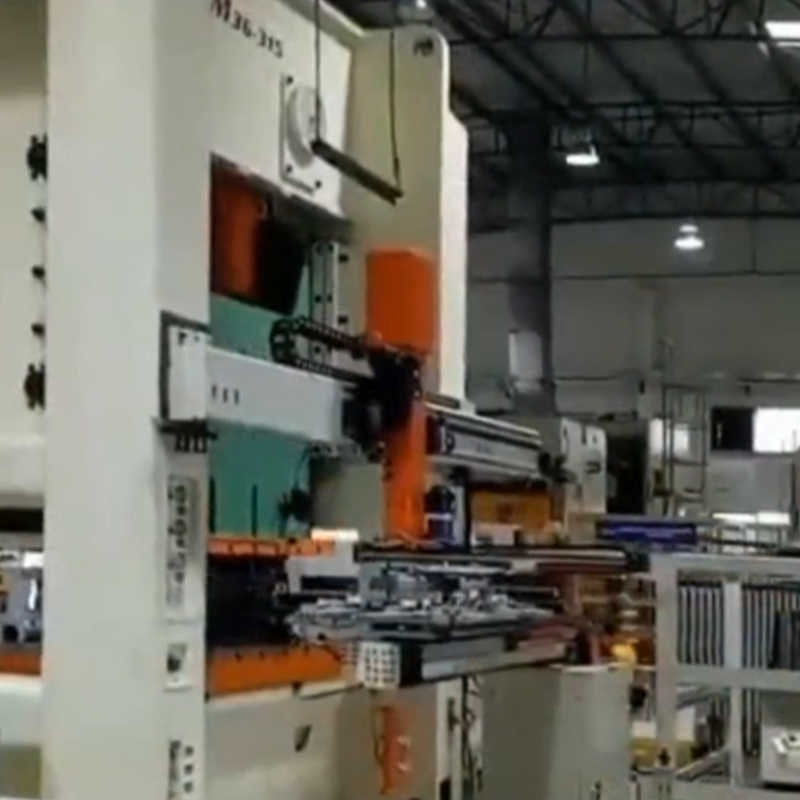
Stamping automation equipment can support the movement of blanks or semi-finished parts between operations. Depending on production requirements, automation may include feeding, transferring, positioning, unloading, stacking, and other process functions. Automated handling can reduce manual intervention and improve repeatability in higher-volume production.
Automation is particularly valuable when parts are heavy, large, sharp-edged, or produced at a high cycle rate. Reducing manual handling can improve workplace safety and help maintain consistent positioning. It can also make production data and cycle-time management more predictable.
In 2016, Suzhou Shuangqisi Mold Equipment Co., Ltd. invested in and established Suzhou Keshuang Intelligent Technology Co., Ltd., which focuses mainly on stamping automation equipment. This development expanded the company’s ability to provide solutions beyond individual dies or stamped parts.
For customers, the practical value of an integrated solution is that the die, press process, and automation equipment can be considered together. Feed direction, part orientation, transfer clearance, gripping points, and unloading requirements may all influence die design. Early coordination helps reduce the risk of building a die that is difficult to automate later.
The company can also provide turnkey solutions for stamping molds and stamping automation. Where required, it can invest in related production equipment according to customer needs. This approach may be suitable for customers seeking a complete production setup rather than isolated component supply.
Manufacturing Workflow for Heavy Truck Stamping Parts
Step One: Customer Requirement Review
Production begins with a review of the part drawing, three-dimensional data where available, material specification, surface requirements, tolerances, expected output, and application conditions. The supplier and customer should confirm the critical dimensions and inspection standards before tooling starts.
Step Two: Process and Die Concept Development
Engineers evaluate the forming direction, blank development, number of operations, die structure, press capacity, and expected material behavior. At this stage, potential risks such as cracking, springback, wrinkling, interference, and excessive trimming are considered.
Step Three: Precision Tooling Manufacture
Approved die concepts are manufactured using CNC machining, wire cutting, grinding, fitting, and assembly. Working surfaces and alignment elements are processed according to the required dimensional standards. The goal is to create a die that forms the part accurately and can be maintained during production.
Step Four: Trial Production
The die is installed on an appropriate press, and trial parts are produced. Samples are examined for profile, dimensions, flatness, holes, edges, and surface condition. The results are compared with customer requirements and engineering expectations.
Step Five: Debugging and Improvement
If deviations are found, experienced personnel adjust the die or process. Corrective action may include modifying forming surfaces, improving material positioning, changing clearance, refining trimming areas, or optimizing the operation sequence. Repeated trial and inspection continue until the process reaches a stable condition.
Step Six: Production and Inspection
Once the process is approved, production is organized using the appropriate punch press and inspection plan. Operators monitor the stamping condition, while quality personnel verify critical product characteristics. Consistent records support process control and customer communication.
Step Seven: Packaging and Delivery
Finished parts should be protected from deformation, scratching, moisture, and contamination during storage and transportation. Packaging must reflect the shape, weight, edge condition, and corrosion sensitivity of the component. Proper packaging helps ensure that parts arrive ready for assembly.
Efficiency, Cost Control, and Long-Term Value
Stamping is recognized for its ability to produce repeated sheet-metal components efficiently. Once the die has been developed and stabilized, the production cycle can be faster and more consistent than manual fabrication. This makes stamping suitable for commercial vehicle programs that require dependable quantities over an extended period.
Cost control begins with appropriate product and process design. A well-planned blank layout can reduce material waste. A suitable operation sequence can limit unnecessary handling. Proper press selection can reduce energy and tooling stress. Accurate die manufacturing can reduce rework and help prevent repeated trial adjustments.
Long-term value also depends on tool maintenance. Dies should be inspected and serviced at suitable intervals. Cutting edges, guiding elements, forming surfaces, and wear components may require attention depending on production volume and material characteristics. Preventive maintenance can help reduce unexpected downtime and protect dimensional stability.
For customers, the cost of a stamped part includes more than its purchase price. Assembly labor, rejection, line stoppage, inventory, transportation, corrective action, and field service may all influence the total cost. Reliable parts that fit correctly and remain stable in service can reduce these indirect expenses.
The company’s combination of mold manufacturing, stamping production, and automation capabilities supports a more complete cost-control strategy. Customers can work with one technical partner for multiple stages of the project. This may reduce duplicated communication, simplify responsibility, and improve the coordination of tooling and production investment.
Applications in Long-Haul Transportation and Construction
Long-haul trucks operate for extended periods and may accumulate substantial mileage. Their components must endure continuous vibration, repeated loading, changing weather, and variations in road quality. Heavy truck stamping parts used in frame and mounting systems help maintain the mechanical integrity of these vehicles during extended service.
Construction trucks face additional challenges. They may travel on uneven or unpaved surfaces, carry heavy payloads, and operate in dusty or wet environments. Their components can experience strong impact and frequent load changes. Stamped brackets, support plates, and mounting structures must therefore provide dependable resistance to deformation and fatigue-related damage.
Aftermarket service providers also require replacement components with reliable fit and performance. A replacement part that does not match the original assembly can create installation delays or additional adjustment. Precision-manufactured stamping parts support more efficient service operations and help reduce vehicle downtime.
For truck manufacturers, repeatability is especially important because parts must be integrated into standardized production systems. Stable dimensions allow assembly equipment and operators to work with fewer interruptions. For aftermarket customers, consistent quality supports customer confidence and reduces claims associated with poor fit or premature failure.
Customer Collaboration and Technical Support
Successful heavy truck stamping projects depend on clear communication between the customer and manufacturer. Technical information should cover the part drawing, material requirements, critical tolerances, surface treatment, inspection method, annual quantity, packaging expectations, and delivery schedule.
During the early design stage, customers benefit from discussing manufacturability rather than waiting until after tooling is complete. Small changes to bend radii, hole placement, flange dimensions, or material thickness may improve forming stability or reduce tooling complexity. Early technical review can therefore improve both performance and cost.
The company has 60 technical staff and more than 15 years of experience in the mold industry. This technical foundation supports design communication, process development, tooling manufacture, debugging, and production assistance. Experienced personnel can help identify practical solutions when a customer requires a custom part or a production line adjustment.
Customer support is also important after initial delivery. Tooling may require maintenance, production conditions may change, or the customer may introduce a revised vehicle platform. A supplier with integrated capabilities can provide more direct assistance with die modification, part improvement, or automation adjustment.
How to Select a Heavy Truck Stamping Parts Supplier
Customers should evaluate a supplier according to the complete production requirement rather than one isolated capability. The following factors are especially important:
Experience with structural and load-bearing components.
Ability to work with high-strength steel and other specified materials.
Internal or closely coordinated die design and manufacturing resources.
Suitable press capacity for the part’s dimensions and forming force.
Precision machining, wire cutting, and grinding capabilities.
Trial stamping and debugging experience.
Inspection procedures for dimensions, flatness, hardness, edges, and corrosion-related requirements.
Ability to support customized designs and changes.
Experience with stamping automation and equipment integration.
Clear communication regarding samples, approvals, production, packaging, and delivery.
A supplier should also be able to explain how it controls quality at each stage. Customers may request information about material verification, die inspection, sample approval, production inspection, nonconforming-product handling, and maintenance procedures. Transparent communication helps establish confidence before mass production begins.
Frequently Asked Questions
What are heavy truck stamping parts?
Heavy truck stamping parts are sheet-metal components formed through stamping processes for use in commercial heavy-duty vehicles. Common examples include frame brackets, suspension connecting plates, engine mounting supports, reinforcement plates, and customized structural hardware.
What materials are used for these parts?
These parts are commonly produced from high-strength steel plates selected according to the application, load requirement, forming process, corrosion environment, and customer specification. The exact material grade and thickness should be confirmed through the technical drawing or project documentation.
Why is high-strength steel suitable for heavy truck components?
High-strength steel provides a favorable balance of load-bearing capability, durability, and material efficiency. It can support demanding structural applications while allowing engineers to control component weight. Because it may be more difficult to form than ordinary steel, suitable die design and process control are essential.
What components can be manufactured?
The product range includes frame brackets, suspension connecting plates, engine mounting supports, and other customized truck stamping components. The exact product scope depends on the customer’s drawings, material requirements, press capacity, and expected production volume.
How does stamping improve production efficiency?
Once the die and process have been developed, stamping can produce repeated components with stable geometry and efficient cycle times. It can reduce manual fabrication, improve repeatability, and support larger production quantities. Automation can further improve material handling and production consistency.
How is product quality controlled?
Quality control may include inspection of dimensions, hole positions, flatness, hardness-related requirements, edge quality, surface condition, and corrosion performance. Trial parts are evaluated during die debugging, and production parts are checked according to the agreed inspection plan.
Can the supplier manufacture the stamping dies?
Yes. The company integrates stamping die design and manufacturing with hardware-part production. Its equipment includes imported wire cutting machines, CNC machining centers, and more than ten grinding machines of various sizes.
What press capacities are available?
The company operates 25 punch presses ranging from 80 tons to 400 tons. This range supports different component sizes, material thicknesses, and forming requirements.
Can customized parts be produced from customer drawings?
Customized production is supported. Customers can provide drawings, samples, or technical specifications for evaluation. The manufacturing team can then review the forming process, tooling structure, material requirements, inspection standards, and production method.
Can stamping automation be included in the project?
Yes. The company has an associated automation capability focused on stamping automation equipment. It can provide turnkey solutions involving stamping molds and automation, and it can evaluate related production equipment according to customer needs.
Which industries can use these products?
The primary applications are heavy trucks, commercial vehicles, transportation equipment, and construction vehicles. Related stamping and tooling capabilities may also support compressors, servo drives, new energy vehicles, and other industrial products.
How can customers improve the success of a stamping project?
Customers should provide complete drawings, material information, critical tolerances, annual demand, surface requirements, packaging expectations, and assembly details. Early communication about manufacturability and automation can help reduce tooling changes and improve production stability.
Conclusion
Heavy truck stamping parts play an important role in the strength, reliability, and assembly performance of commercial vehicles. Frame brackets, suspension connecting plates, engine mounting supports, and related components must withstand high loads, vibration, impact, environmental exposure, and long service periods. Their performance depends on the quality of the steel, the accuracy of the die, the stability of the press process, and the effectiveness of inspection and production control.
Advanced cold stamping technology provides a practical method for producing these components with consistent dimensions, efficient production, uniform thickness, and controlled edges. When combined with high-strength steel, precision tooling, appropriate press capacity, and experienced debugging, it supports the rigorous needs of heavy-duty transportation and construction applications.
Suzhou Shuangqisi Mold Equipment Co., Ltd. offers an integrated approach that combines stamping die design, die manufacturing, stamped-part production, quality inspection, and stamping automation. Its technical team, machining resources, grinding equipment, wire cutting machines, CNC centers, and 80-ton to 400-ton punch presses provide a foundation for customized commercial vehicle projects.
The company’s principal advantages include coordinated tooling and production, flexible equipment selection, support for high-strength steel, experienced debugging, strict inspection, and the ability to develop turnkey stamping automation solutions. These strengths can help truck manufacturers and aftermarket service providers reduce production risk, improve assembly compatibility, control long-term costs, and obtain dependable components for demanding vehicle applications.
For organizations seeking a reliable source of heavy truck stamping parts, the most important consideration is not only whether a supplier can form sheet metal. It is whether the supplier can understand the application, engineer the die, control the material, stabilize the process, inspect the finished part, and support the customer throughout the product life cycle. An integrated manufacturing partner provides that broader value.
References
1. Company-provided technical information on heavy truck stamping parts, product applications, equipment, and manufacturing capabilities.
2. Company-provided profile of Suzhou Shuangqisi Mold Equipment Co., Ltd., including technical staffing, production equipment, customer industries, and mold-making experience.
3. General principles of sheet-metal stamping, cold forming, die design, press selection, and production process control.
4. General engineering practices for commercial vehicle brackets, suspension connection components, engine mounting supports, and structural hardware.
5. General quality-control practices for stamped steel components, including dimensional inspection, flatness evaluation, edge inspection, material verification, and corrosion-performance considerations.
Product: Heavy truck stamping parts
Previous Post
No previous article
Next Post
Progressive Molds for Automotive Parts: Precision, Productivity, and Integrated Manufacturing
Our Products.
Start Your Business with an OEM Manufacturer Right Here!

Provide global customers with complete turn-key solutions
through
innovation!
QUICK LINKS
CONTACT INFO.
-
 +86-139 1308 8972
-

-
 No. 118 Yexin Road, Wujiang Economic Development Zone, Suzhou, China
Copyright © Suzhou Shuangqisi Mold Equipment Co., Ltd. All Rights Reserved. Custom Stamping Die Metal Stamping Die Manufacturers
