 English
 Español
 Deutsch
-
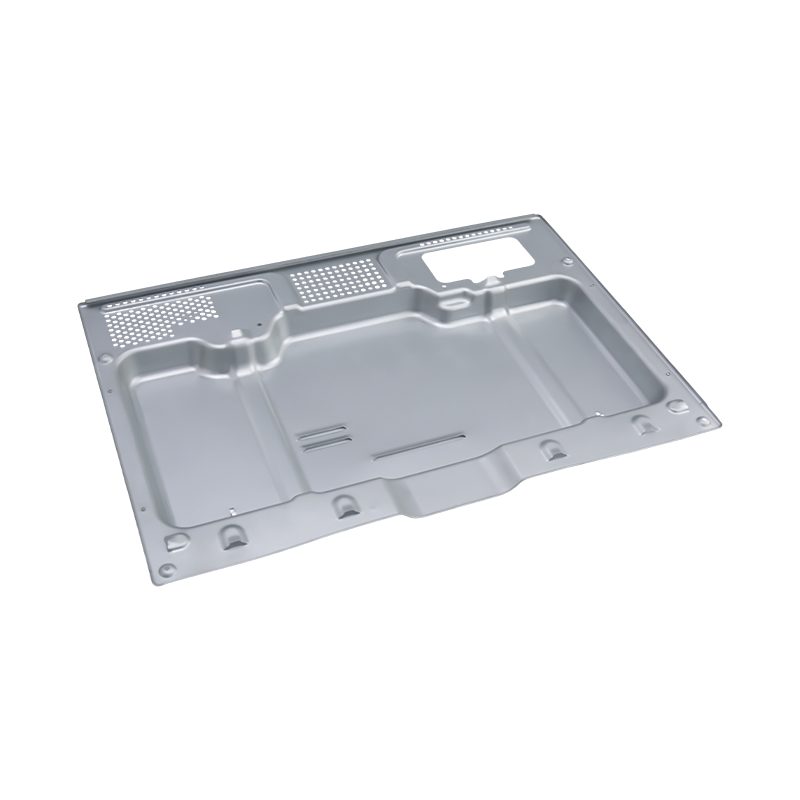
High-end oven stamping parts
Our High-end oven stamping parts are precision-man...
-
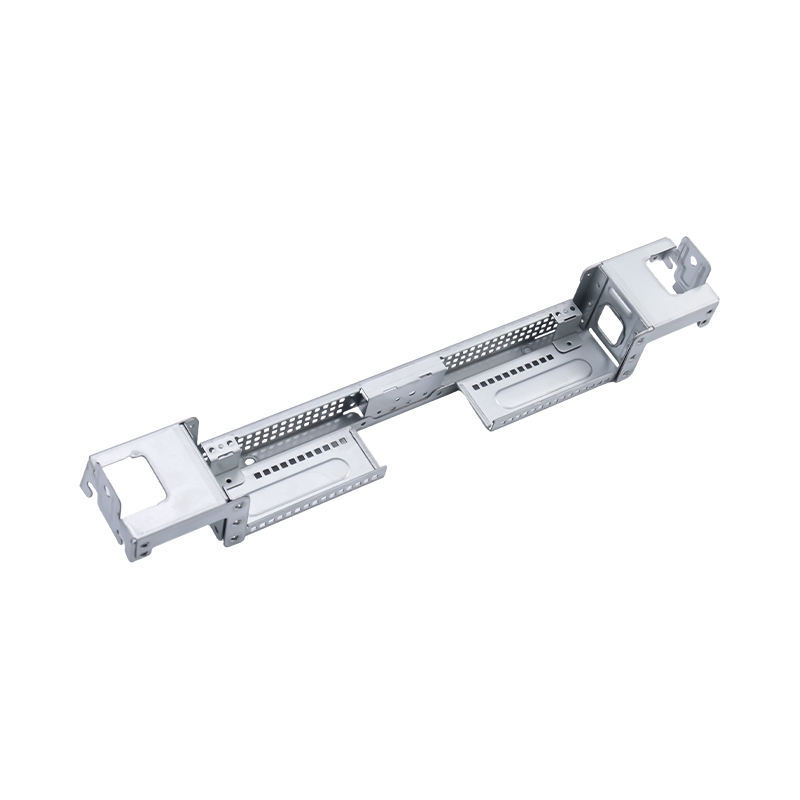
High-end large computer stamping parts
Our High-end large computer stamping parts are pre...
-
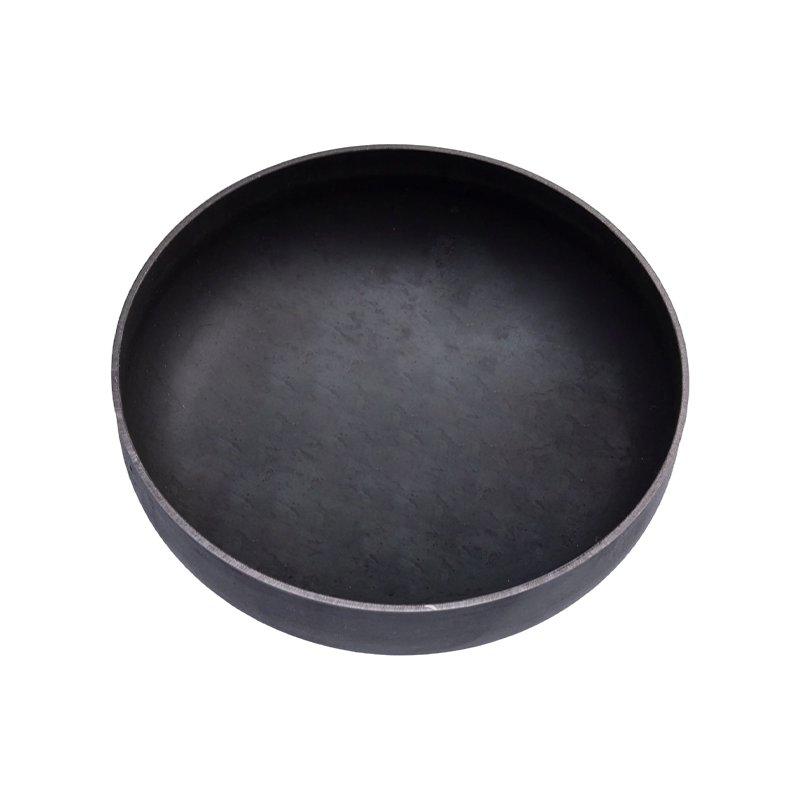
Gas tank end stamping parts
Gas tank end stamping parts are core structural co...
-
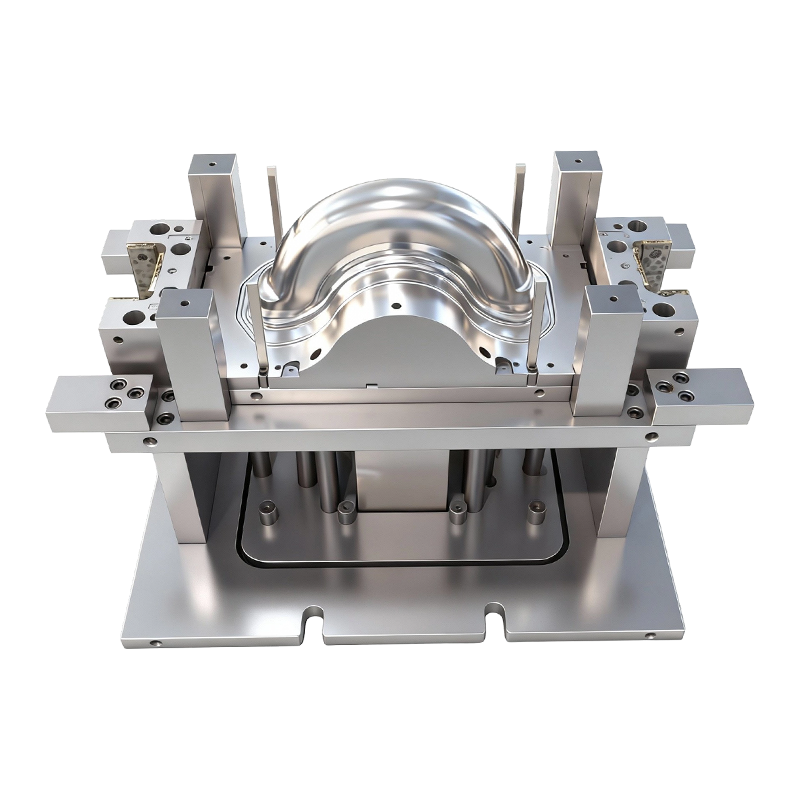
Deep drawing mold for front and rear wheels of two-wheeled electric vehicles
This Deep drawing mold for front and rear wheels o...
-
Progressive molds for automotive parts
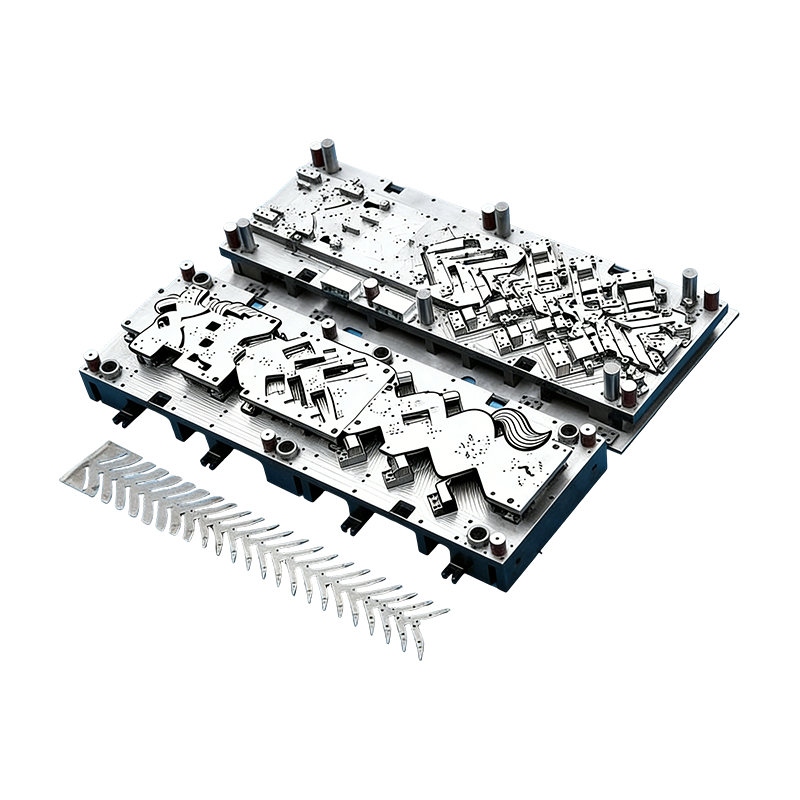
This Continuous mold for automotive motor housing ...
- E-mail us: [email protected]
- Call us: +86-139 1308 8972

Liu Yanan – After-Sales Service Engineer
Home / Author / Liu Yanan – After-Sales Service Engineer / High-Precision Gas Tank End Stamping Parts for Durable Fuel Tank Assemblies
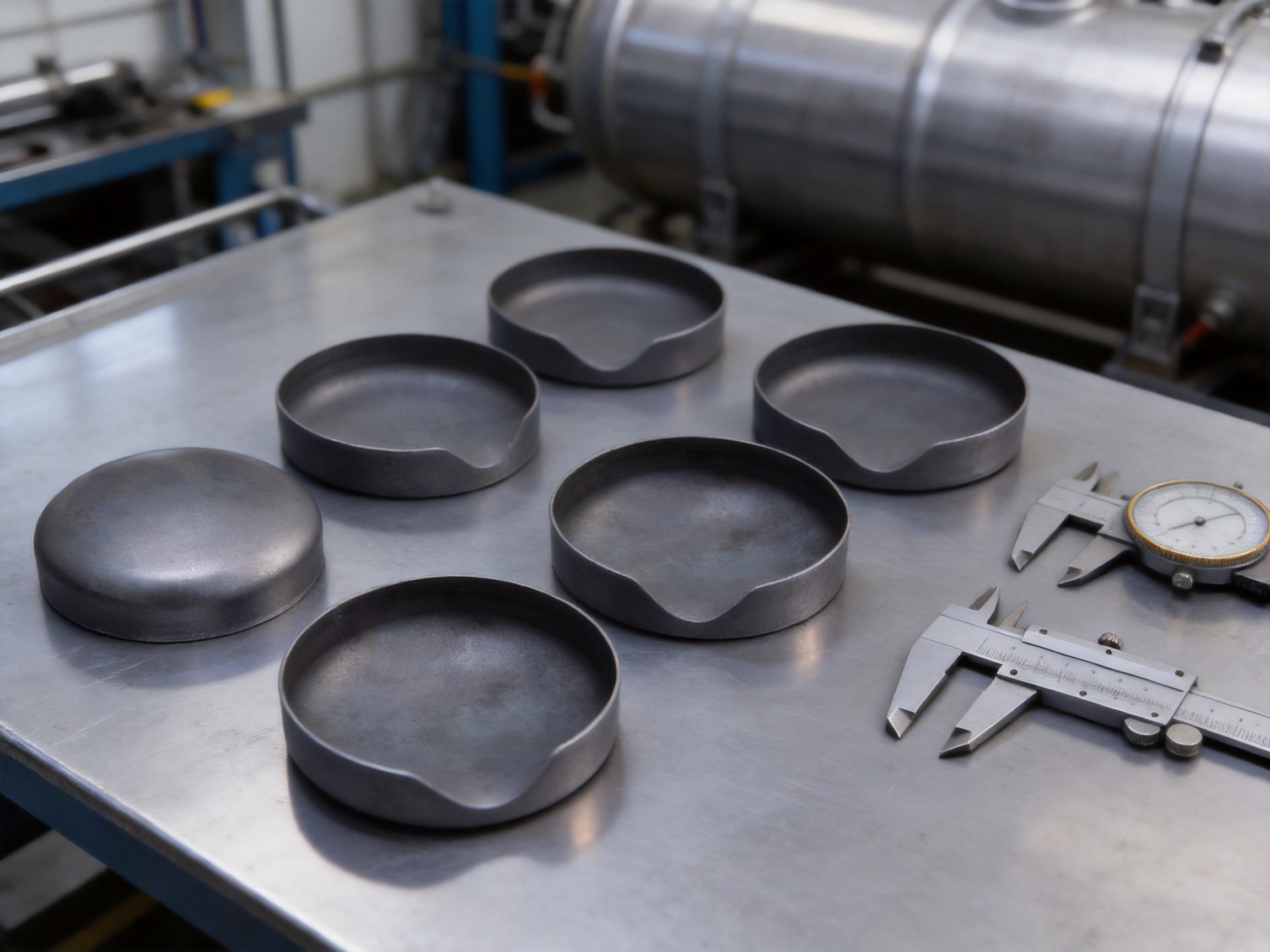
High-Precision Gas Tank End Stamping Parts for Durable Fuel Tank Assemblies
2026-06-26
Gas tank end stamping parts are critical structural components used to close and reinforce the two ends of automotive fuel tank assemblies. Although they may appear simple in shape, their performance directly affects fuel sealing, tank strength, dimensional stability, corrosion resistance, and long-term vehicle safety. In modern automotive manufacturing, fuel tank components must withstand vibration, internal pressure variation, temperature fluctuation, humidity, road contaminants, and long service cycles. For this reason, high-quality gas tank end stamping parts require more than basic sheet metal forming. They demand accurate die design, stable material control, precision stamping, strict inspection, and consistent manufacturing management.
The product discussed here is designed for automotive fuel tank applications, including passenger cars, commercial vehicles, and related fuel storage systems. It is manufactured from cold-rolled steel or aluminum alloy materials through high-precision stamping processes. The component is formed to match the cylindrical body of a tank and to ensure reliable assembly with the tank shell, valves, fittings, brackets, and related accessories. Its uniform wall thickness, smooth surface, accurate profile, and clean forming quality help prevent fuel leakage and improve the structural integrity of the complete fuel tank.
For manufacturers of fuel tank assemblies, maintenance teams, and automotive component suppliers, the value of a gas tank end stamping part lies in repeatable quality. A single part with poor dimensional control can create welding gaps, sealing defects, assembly stress, or fatigue risks. A part with surface cracks or uneven thinning can lead to premature failure. A part with insufficient corrosion resistance may shorten the life of the entire fuel tank. Therefore, selecting a supplier with advanced stamping die capability, precision equipment, experienced operators, and integrated production resources is essential.
Suzhou Shuangqisi Mold Equipment Co., Ltd. is a professional manufacturer of stamping dies and hardware parts integrating design, manufacturing, and service. Located in Suzhou, China, the company has developed strong capabilities in stamping die design, metal stamping production, and stamping automation. With 15 years of mold industry experience, 60 technical staff, advanced processing equipment, and a practical understanding of automotive and new energy vehicle component manufacturing, the company is positioned to provide gas tank end stamping parts with dependable quality, competitive cost, and stable delivery performance.
Gas tank end stamping parts
Content
- 1 Product Overview: What Gas Tank End Stamping Parts Do
- 2 Why Precision Matters in Fuel Tank End Components
- 3 Key Product Advantages
- 4 Comparison with Ordinary or Low-Precision Alternatives
- 5 Material Options: Cold-Rolled Steel and Aluminum Alloy
- 6 Manufacturing Process for Gas Tank End Stamping Parts
- 7 Company Manufacturing Strengths Behind the Product
- 8 Design Considerations for Superior Gas Tank End Stamping Parts
- 9 Quality Control for OEM-Level Reliability
- 10 Applications in Passenger Cars and Commercial Vehicles
- 11 Performance Under Harsh Working Conditions
- 12 How Precision Stamping Improves Customer Production Efficiency
- 13 Customization and Engineering Support
- 14 Turnkey Solutions for Stamping Molds and Automation
- 15 Competitive Advantages for Global Buyers
- 16 Inspection Priorities for Fuel Tank End Stamping Parts
- 17 Practical Benefits for Auto Parts Manufacturers
- 18 Practical Benefits for Maintenance and Replacement Markets
- 19 Frequently Asked Questions
- 19.1 What are gas tank end stamping parts?
- 19.2 What materials are commonly used for these parts?
- 19.3 Why is dimensional accuracy important?
- 19.4 How do these parts help prevent fuel leakage?
- 19.5 What defects should be avoided in gas tank end stamping parts?
- 19.6 Can the parts be customized for different vehicle models?
- 19.7 What makes precision stamping better than ordinary stamping?
- 19.8 How does the manufacturer’s die-making capability benefit customers?
- 19.9 Are these parts suitable for commercial vehicles?
- 19.10 What quality checks are usually performed?
- 20 Why Choose a Technically Capable Stamping Partner
- 21 Conclusion
- 22 References
- 23 Product: Gas tank end stamping parts
Product Overview: What Gas Tank End Stamping Parts Do
Gas tank end stamping parts function as the closure panels or end caps of a fuel tank structure. In many tank designs, the main body is cylindrical or semi-cylindrical, while the end sections must be shaped precisely to seal both sides. These end parts must match the curvature and dimensions of the tank body to support welding, crimping, fastening, or other joining methods. Their geometry influences tank tightness, pressure resistance, and assembly efficiency.
In automotive applications, a fuel tank is not simply a container. It is an engineered safety system. It must store fuel securely, maintain shape under internal and external loading, prevent leakage during vehicle operation, and meet strict safety and environmental expectations. Gas tank end stamping parts contribute to this performance by providing a stable and accurately formed boundary at the ends of the tank. When produced with high precision, they help the complete tank maintain reliable volume, sealing consistency, and mechanical strength.
The product is suitable for use in fuel tank assemblies that require stamped metal end structures. It may be applied in passenger vehicles, commercial vehicles, industrial transport equipment, and related automotive supply chains. Depending on design requirements, the parts can be manufactured from cold-rolled steel or aluminum alloy. Cold-rolled steel provides excellent strength, stable formability, and cost efficiency. Aluminum alloy offers lower weight, corrosion resistance, and advantages for applications where vehicle lightweighting is important.
The manufacturing objective is to produce parts with uniform thickness, smooth surfaces, accurate dimensions, and no visible cracking, wrinkling, excessive thinning, or deformation. These qualities are especially important because the part often experiences forming strain during production and stress during tank assembly. If the stamping process is unstable, defects may be hidden until welding, leak testing, or vehicle operation. A well-designed forming process reduces these risks from the beginning.
Why Precision Matters in Fuel Tank End Components
Fuel tank end components operate in demanding conditions. A vehicle constantly experiences vibration from the engine, road surface, acceleration, braking, and turning. The fuel inside the tank moves and creates dynamic forces. Temperature changes cause fuel expansion and contraction, while the surrounding environment exposes the tank to moisture, dust, salt spray, and chemicals. Under these conditions, the quality of each stamped end part becomes an important factor in system durability.
Dimensional precision is one of the most important requirements. The stamped part must align with the tank body without forcing or excessive correction. Poor alignment can create uneven welding lines, local stress concentration, and reduced sealing reliability. When parts are produced with stable dimensions, they support faster assembly, reduce rework, and improve the pass rate of leak testing. This is a direct advantage for automotive component manufacturers seeking efficient production.
Surface quality is another essential factor. The surface should be smooth and free of cracks, scratches, deep tool marks, or forming defects. In fuel tank applications, surface defects are not merely cosmetic. Cracks can grow under vibration, scratches can become corrosion starting points, and uneven surfaces can affect joining or coating performance. High-quality stamping and die polishing help create surfaces that support reliable coating, welding, and long-term resistance to harsh environments.
Material thickness control also matters. Excessive thinning in formed zones can reduce pressure resistance and fatigue life. Uneven thickness may also compromise welding and structural behavior. Through proper blank design, die radius control, forming simulation, and process optimization, thickness distribution can be managed more effectively. This allows the component to retain strength while meeting the required shape.
Key Product Advantages
The gas tank end stamping parts described here offer several advantages for automotive production and maintenance applications. These advantages are based on the product’s forming quality, material selection, dimensional control, surface condition, and compatibility with different tank systems.
Reliable Sealing Support
The primary role of the part is to support effective sealing of the fuel tank ends. A precisely formed end component allows the tank body to be joined more consistently. By matching the cylindrical body accurately, it reduces gaps and misalignment during assembly. This supports improved welding or joining quality and helps prevent fuel leakage. In fuel tank manufacturing, even a minor leak risk can cause product rejection, safety concerns, and high cost. Reliable end stamping parts reduce this risk.
Strong Structural Stability
The component provides structural closure and reinforcement for the tank. Its formed shape helps distribute stress and resist deformation caused by internal pressure, external impact, and fuel movement. A well-stamped end part contributes to the overall rigidity of the tank assembly. Compared with lower-grade parts that may have uneven forming or local weakness, precision stamping parts offer better consistency and stronger mechanical performance.
Uniform Thickness and Smooth Surface
Uniform thickness improves the mechanical reliability of the component. Smooth surfaces improve appearance, coating quality, and corrosion resistance. The product is manufactured to avoid cracks, deformation, and visible defects. This reduces the risk of failure during assembly or service. For customers, this means fewer rejected parts, less production interruption, and a more stable final fuel tank product.
Compatibility with Multiple Vehicle Applications
The parts are compatible with most passenger car and commercial vehicle fuel tank models, subject to design customization and dimensional requirements. This broad compatibility is valuable for automotive parts manufacturers that serve multiple platforms. A supplier with strong die design and manufacturing capability can adapt the part geometry according to OEM drawings, functional requirements, and assembly conditions.
Corrosion Resistance and Long Service Life
Fuel tank components must resist humidity, road salt, fuel vapor, temperature changes, and environmental exposure. Proper material selection and controlled surface quality help improve corrosion resistance. When used with suitable coating or post-treatment processes, these stamped end parts can support long fuel tank service life. This is especially important for vehicles operating in regions with high humidity, coastal conditions, or winter road salt use.
Cost-Effective Production
High-quality stamping is efficient for volume production. Once the die and process are optimized, stamping can produce large quantities of parts with stable quality and lower unit cost. Compared with machining or less controlled forming methods, stamping is highly suitable for automotive components that require repeatability. The company’s integrated mold-making and stamping automation capabilities further support cost control.
Comparison with Ordinary or Low-Precision Alternatives
Not all gas tank end stamping parts provide the same level of reliability. In a competitive market, some low-cost suppliers may focus only on basic shape production and neglect die accuracy, surface control, material consistency, or inspection discipline. Such parts may appear acceptable at first glance but create problems during assembly or service. The difference between precision stamping and ordinary stamping becomes clear when evaluating long-term performance.
| Evaluation Item | High-Precision Gas Tank End Stamping Parts | Ordinary Low-Precision Alternatives |
|---|---|---|
| Dimensional Accuracy | Controlled through precision die design, strict machining, and repeated inspection | May vary between batches, causing assembly gaps or correction work |
| Surface Quality | Smooth surface with reduced risk of cracks, wrinkles, and forming marks | May show scratches, tool marks, wrinkles, or hidden cracks |
| Thickness Uniformity | Optimized forming process helps reduce excessive thinning | Unstable forming may create weak zones |
| Assembly Performance | Good matching with tank body, valves, and accessories | Misalignment can affect welding and sealing |
| Durability | Designed for vibration, pressure change, humidity, and temperature variation | May fail earlier under harsh operating conditions |
| Production Stability | Supported by advanced equipment, experienced staff, and quality control | Often depends on manual adjustment and inconsistent processes |
| Total Cost | Lower total cost through reduced rework, fewer defects, and stable assembly | Lower initial price may be offset by scrap, rework, and warranty risk |
The table shows that the competitive advantage is not only in the part itself but also in the manufacturing system behind it. Precision components are the result of accurate dies, reliable presses, appropriate material handling, and effective inspection. For fuel tank manufacturers, purchasing decisions should consider total cost rather than unit price alone. A cheaper part that causes welding rework, leak test failure, or field reliability problems can become more expensive than a well-made component.
Material Options: Cold-Rolled Steel and Aluminum Alloy
Material selection influences forming behavior, strength, corrosion resistance, weight, and cost. Gas tank end stamping parts can be produced using cold-rolled steel or aluminum alloy materials according to customer requirements and tank design.
Cold-Rolled Steel
Cold-rolled steel is widely used in automotive stamping because of its stable mechanical properties, good surface finish, formability, and cost efficiency. It is suitable for parts requiring strength and dimensional stability. For fuel tank end components, cold-rolled steel provides a strong structural base and can be combined with coatings or surface treatments to enhance corrosion resistance. Its predictable forming behavior allows engineers to design reliable stamping processes and reduce production defects.
Aluminum Alloy
Aluminum alloy is valued for its lightweight characteristics and natural corrosion resistance. As automotive manufacturers pursue improved fuel economy and lower emissions, lightweight components become increasingly important. Aluminum tank end parts can help reduce vehicle weight while maintaining suitable performance. However, aluminum stamping requires careful control because the material may behave differently from steel during forming. Die surface condition, lubrication, radius design, and blank holder force must be managed properly to avoid cracks or galling.
Choosing the Right Material
The choice between cold-rolled steel and aluminum alloy depends on application requirements. If cost efficiency and high strength are priorities, cold-rolled steel may be preferred. If lightweighting and corrosion resistance are more important, aluminum alloy may offer advantages. A capable manufacturer can provide technical support during material selection, considering the customer’s drawing, assembly method, production volume, and performance requirements.
Manufacturing Process for Gas Tank End Stamping Parts
High-quality gas tank end stamping parts are produced through a sequence of engineering and manufacturing steps. Each step affects the final quality. The process is not limited to pressing sheet metal into shape. It begins with product analysis and die design and continues through machining, trial stamping, debugging, production stamping, inspection, and delivery.
1. Product Requirement Analysis
The process begins with understanding customer drawings, 3D models, material requirements, tolerance specifications, assembly conditions, and production volume. Engineers evaluate the part geometry, forming difficulty, expected springback, critical dimensions, sealing surfaces, and potential risk areas. For gas tank end components, special attention is given to the matching surface with the tank body and any areas that may affect welding or sealing.
2. Stamping Die Design
Die design is one of the strongest factors determining final product quality. A good die must guide the material flow properly, control thickness distribution, reduce wrinkling, and maintain dimensional accuracy. Engineers determine blank shape, forming steps, trimming position, locating features, and process sequence. Depending on the part design, the die may include drawing, forming, trimming, piercing, flanging, or restriking operations.
For fuel tank end parts, die design must account for curvature, depth, material flow, and edge accuracy. If the draw radius is too small, cracking may occur. If blank holder force is not suitable, wrinkling may occur. If springback is not anticipated, the part may fail dimensional checks. Experienced die designers understand these risks and build corrective strategies into the tooling.
3. Precision Die Manufacturing
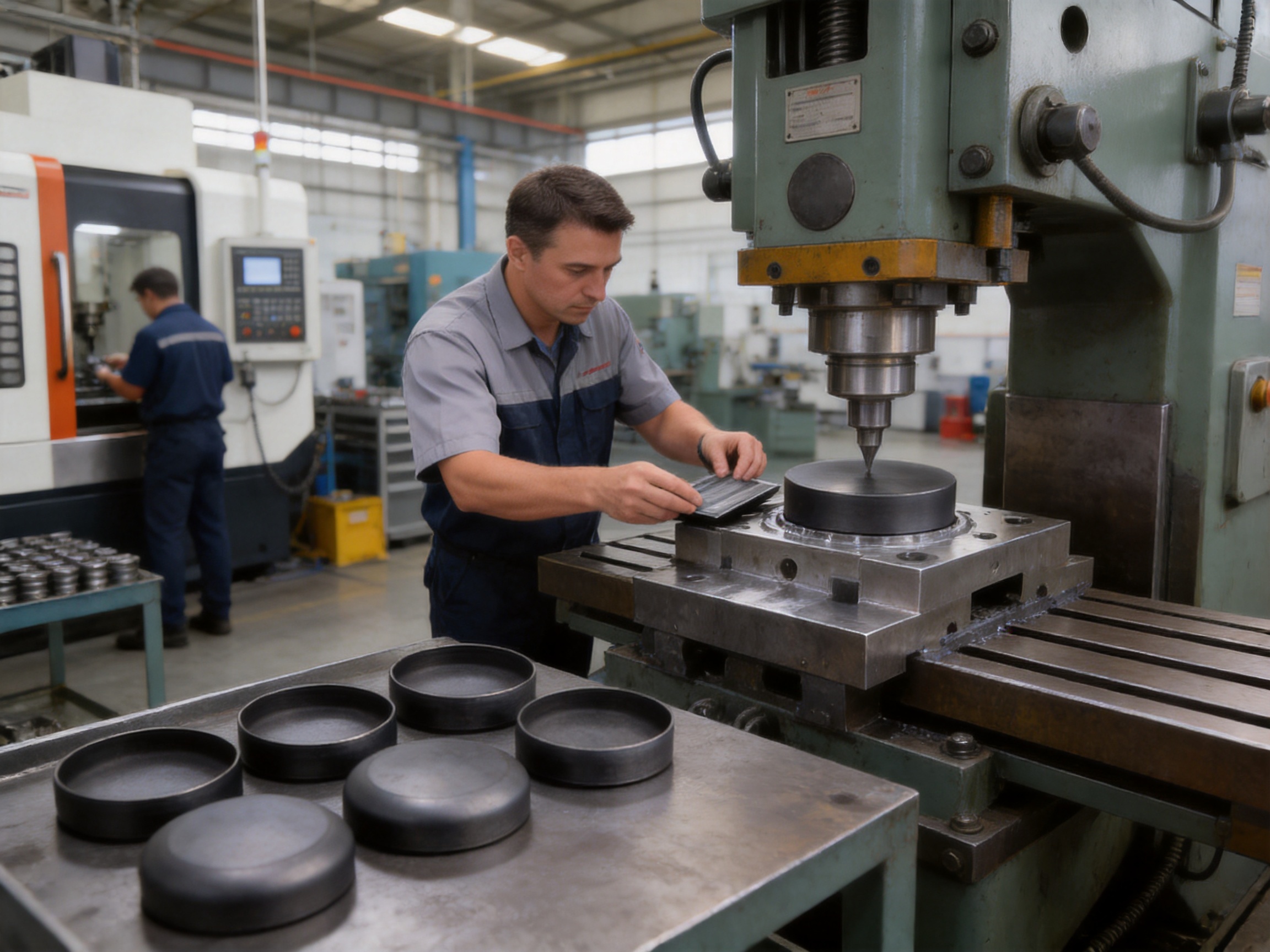
After design approval, the die components are manufactured using precision equipment. The company is equipped with imported wire cutting machines, CNC machining centers, more than 10 grinding machines of various sizes, and other advanced precision machine tools. These machines support accurate die inserts, forming surfaces, trimming edges, guide components, and assembly interfaces. Precision die machining is essential because even small tooling errors can create large part deviations in stamping production.
Grinding and finishing also matter. Smooth die surfaces reduce friction, improve material flow, and help prevent scratches on the stamped part. Accurate cutting edges ensure clean trimming and reduce burr formation. Proper die assembly ensures repeatability during production.
4. Trial Stamping and Debugging
Before mass production, the die is tested through trial stamping. Trial parts are inspected for shape, dimensions, surface defects, thickness distribution, and assembly fit. Experienced debugging personnel adjust die clearances, forming radii, blank holder force, lubrication, and other process parameters. This stage is where theoretical design is converted into stable production reality.
The company’s experienced operators and debugging personnel are important assets during this stage. Many forming problems cannot be solved by equipment alone. They require practical knowledge of material behavior, press operation, die adjustment, and defect diagnosis. For example, if a part shows slight wrinkling near the edge, the solution may involve adjusting blank holder pressure or modifying material flow. If the part shows springback, restriking or die compensation may be needed.
5. Production Stamping
Once the process is stable, production stamping begins. The company has 25 punch presses ranging from 80T to 400T, allowing it to support different part sizes, thicknesses, and production requirements. The appropriate press tonnage is selected according to forming load, die size, material type, and process complexity. Stable press performance helps maintain part consistency batch after batch.
During production, operators monitor material feeding, lubrication, part removal, die condition, and surface quality. Regular checks help prevent defects from continuing through the batch. When automation is applied, feeding and handling can become more consistent, improving productivity and reducing manual variation.
6. Dimensional Inspection
Finished parts undergo strict dimension checks to meet OEM standards and customer specifications. Critical dimensions may include outer contour, curvature, height, flange size, hole position, edge condition, and fitting surfaces. Inspection may use gauges, measuring tools, fixtures, and other quality control methods. Consistent inspection ensures that parts can be assembled smoothly with tank bodies, valves, and other accessories.
7. Surface and Visual Inspection
Surface inspection checks for cracks, scratches, deformation, excessive thinning, wrinkles, burrs, and contamination. Because fuel tank components are safety-related, visual quality is connected to functional reliability. Parts with cracks or severe deformation must not enter assembly. Smooth and clean surfaces support coating and joining performance.
8. Packaging and Delivery
After inspection, parts are packaged to avoid damage during transportation. Proper packaging prevents scratches, deformation, and moisture exposure. For customers running continuous assembly lines, stable delivery and protective packaging help maintain production efficiency.
Company Manufacturing Strengths Behind the Product
The quality of gas tank end stamping parts depends heavily on the manufacturer’s technical foundation. Suzhou Shuangqisi Mold Equipment Co., Ltd. offers several strengths that support reliable product performance.
Integrated Stamping Die and Stamping Production Capability
The company is not only a stamping parts producer but also a professional stamping die manufacturer. This integration is a major advantage. When the same technical team understands both die design and production stamping, communication is faster, problem-solving is more efficient, and process optimization is more direct. If a production issue appears, engineers can trace it back to die structure, material flow, press conditions, or inspection requirements without relying on multiple separate suppliers.
For customers, integrated capability reduces project risk. A supplier that can design the die, manufacture the die, debug the die, and produce the parts can provide more complete responsibility for final quality. This is especially valuable for fuel tank components, where the forming shape and sealing fit are highly important.
Advanced Precision Equipment
The company operates imported wire cutting machines, CNC machining centers, multiple grinding machines, and other precision machine tools. These resources allow accurate tooling manufacture and stable processing of complex die components. Precision equipment helps create dies with accurate geometry, consistent clearances, and smooth forming surfaces. This directly improves stamping quality.
In addition, the company has 25 punch presses from 80T to 400T. This press range supports flexible production for different stamping parts. Small and medium parts can be produced efficiently on lower-tonnage presses, while larger or deeper formed parts can be handled with higher-tonnage equipment. This flexibility helps customers with different automotive component needs.
Experienced Technical Team
The company has 60 technical staff and senior operators with practical experience in die making, stamping, and debugging. Human expertise remains essential in metal forming. Experienced staff can identify early signs of forming instability, understand how materials behave under different conditions, and make precise adjustments to tooling and press parameters. This knowledge improves first-pass success and reduces development time.
15 Years of Mold Industry Experience
With 15 years of experience in the mold industry, the company has accumulated knowledge across different product types and customer requirements. This experience supports better risk prediction, more accurate die design, and smoother project execution. In automotive applications, where tolerances and delivery expectations are strict, experience is a practical advantage.
Stamping Automation Capability
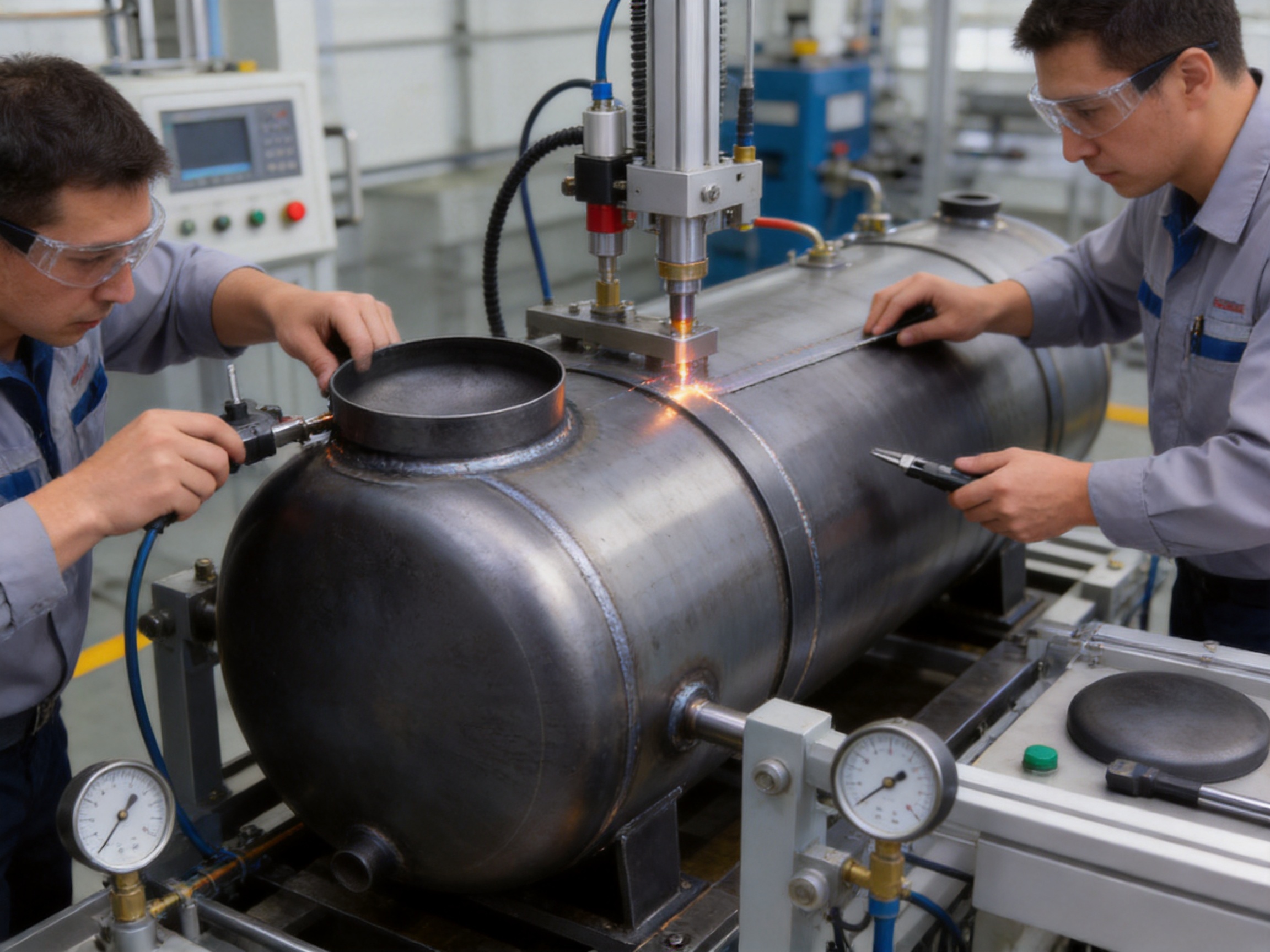
In 2016, the company invested in and established Suzhou Keshuang Intelligent Technology Co., Ltd., mainly producing stamping automation equipment. This provides an additional strength: the ability to offer turnkey solutions for stamping molds and stamping automation. Automation can improve feeding consistency, reduce labor intensity, increase production speed, and improve safety. For customers requiring large-volume gas tank end stamping parts, automation can help reduce unit cost and improve production stability.
Customer-Oriented Investment and Cost Control
The company can invest in related production equipment according to customer needs to deliver cost-effective products and services. This flexible approach is beneficial for customers with long-term projects or special production requirements. Instead of forcing customers to adapt to fixed equipment conditions, the company can evaluate project needs and arrange suitable production resources. Combined with strict cost and quality control, this supports competitive pricing without sacrificing reliability.
Design Considerations for Superior Gas Tank End Stamping Parts
Producing a high-quality gas tank end component requires attention to several design factors. These factors affect forming feasibility, assembly performance, and long-term durability.
Contour Accuracy
The outer contour must match the tank body. If the contour is too large, too small, or uneven, assembly becomes difficult. Poor contour control may lead to gaps during welding or pressure points during fitting. Precision dies and inspection fixtures help maintain contour accuracy.
Flange Quality
Many tank end parts include flanges or edge features for joining. A flange must be flat, consistent, and free of cracks. Uneven flanges can cause sealing defects. The stamping process must control material flow into the flange area and avoid excessive edge thinning.
Draw Depth and Radius
The formed depth and corner radius influence material strain. If the draw is too deep without proper process design, cracking or thinning can occur. If the radius is too sharp, stress concentration increases. Proper die radius design improves formability and service strength.
Springback Control
After stamping, metal tends to spring back slightly. Springback can affect dimensional accuracy and assembly fit. Engineers must predict and compensate for springback through die design, restriking operations, or process adjustment. This is especially important for parts with curved surfaces.
Joining Surface Stability
The areas that contact the tank body or accessories must remain stable and clean. Joining surfaces should have controlled dimensions and minimal distortion. This supports welding, sealing, and assembly reliability.
Quality Control for OEM-Level Reliability
Automotive customers expect consistent quality, not occasional success. For gas tank end stamping parts, quality control should cover material, tooling, production, inspection, and packaging. The company applies strict dimension checks to meet OEM standards and ensure seamless assembly with tank bodies, valves, and accessories.
Material control begins with verifying that the selected steel or aluminum alloy meets required specifications. Material thickness, surface condition, and mechanical properties influence forming results. During die manufacturing, tooling accuracy is controlled through precision machining and assembly inspection. During production, operators monitor part appearance and process stability. Finished parts are checked for dimensions and surface quality.
Quality control also includes defect prevention. Instead of merely sorting out bad parts after production, a capable manufacturer identifies process risks and eliminates them early. For example, if a certain area is likely to crack, engineers may adjust the forming radius, lubrication, or blank shape. If a dimension is sensitive to springback, the die may be compensated before mass production. This preventive approach is more efficient than relying on final inspection alone.
Applications in Passenger Cars and Commercial Vehicles
Gas tank end stamping parts are suitable for a broad range of automotive fuel tank systems. In passenger cars, the parts must support compact design, stable sealing, and long-term corrosion resistance. Passenger vehicles often require high production volume and consistent quality because assembly lines operate at high speed. Precision stamped components help reduce assembly variation and support efficient manufacturing.
In commercial vehicles, fuel tank components may face more severe operating conditions. Trucks, buses, and work vehicles often travel longer distances, carry heavier loads, and operate in more varied environments. Their fuel tanks may experience stronger vibration, greater temperature changes, and more exposure to road debris or moisture. Gas tank end stamping parts for these applications must provide strength and durability. High-quality material, stable thickness, and accurate forming are especially important.
The parts may also be relevant to maintenance and replacement markets where reliable fit is necessary. Maintenance teams prefer components that install smoothly and perform dependably. Poorly formed replacement parts can create additional repair time and safety risks. Precision stamping parts reduce these concerns.
Performance Under Harsh Working Conditions
Fuel tank end parts are exposed to conditions that test both material and manufacturing quality. Understanding these conditions helps explain why precision stamping is necessary.
Vibration Resistance
Vehicles vibrate continuously during operation. Even small vibrations can create fatigue over time. A gas tank end part with cracks, severe thinning, or sharp stress concentration may fail earlier. Uniform forming and smooth transitions help improve vibration resistance.
Temperature Variation
Fuel tanks experience temperature changes from weather, engine heat, and fuel expansion. Temperature variation can cause material expansion and contraction. A stable stamped part helps the tank maintain shape and sealing performance under these changes.
Humidity and Corrosion Exposure
Moisture, road salt, and chemicals can attack metal surfaces. Smooth surfaces and proper material selection improve corrosion resistance. If the part has scratches or defects, corrosion may begin more easily. Precision manufacturing reduces such risks.
Internal Pressure Changes
Fuel expansion and vapor pressure can create internal pressure variation. The tank end component must resist deformation and maintain sealing integrity. Proper thickness and shape stability are important for this function.
How Precision Stamping Improves Customer Production Efficiency
High-quality gas tank end stamping parts provide benefits beyond product durability. They also improve the customer’s manufacturing efficiency. In automotive production, assembly line interruptions, rework, and scrap can be costly. A component that fits correctly and performs consistently helps stabilize the entire production process.
Accurate parts reduce the need for manual correction. When dimensions are consistent, operators can assemble parts quickly. Welding fixtures can hold parts reliably, and automated systems can operate with fewer adjustments. This reduces cycle time and improves throughput.
Stable quality also improves leak test pass rates. Fuel tank assemblies often undergo pressure or leak testing. If end components are inconsistent, leak failures may increase. Each failed tank requires inspection, repair, retesting, or scrapping. Precision stamping helps minimize these losses.
Reliable suppliers also reduce inventory pressure. When delivery quality is stable, customers can plan production with confidence. They do not need to overstock parts to compensate for possible defects. This supports lean manufacturing and better cash flow.
Customization and Engineering Support
Automotive fuel tank designs vary by vehicle model, capacity, installation space, material requirement, and assembly method. Therefore, gas tank end stamping parts often require customization. A capable supplier must understand customer drawings and translate design requirements into practical stamping solutions.
Suzhou Shuangqisi Mold Equipment Co., Ltd. can provide customized stamping die design and manufacturing, as well as stamping parts production. The company’s technical team can evaluate part feasibility, recommend process improvements, and develop tooling suitable for stable production. If a customer requires high-volume manufacturing, stamping automation can also be considered as part of a turnkey solution.
Customization may involve changes in part size, curvature, flange design, hole location, material type, thickness, surface requirement, and tolerance level. Engineering support helps ensure that the final part is not only manufacturable but also suitable for reliable assembly. Early technical communication can reduce later modification costs and shorten project development time.
Turnkey Solutions for Stamping Molds and Automation
One of the company’s notable strengths is the ability to provide turnkey solutions for stamping molds and stamping automation. This means customers can obtain more than individual parts. They can receive a complete production solution that includes die design, die manufacturing, stamping process development, equipment planning, automation support, and production service.
Turnkey capability is particularly useful for customers launching new fuel tank projects. Instead of coordinating separate suppliers for die manufacturing, stamping production, and automation equipment, customers can work with one integrated partner. This simplifies communication and improves accountability. When tooling and automation are designed together, production flow can be optimized from the start.
Automation may include material feeding, part transfer, press line integration, and handling systems. These systems can reduce manual labor, improve safety, and stabilize production rhythm. For large-volume automotive parts, automation is a key factor in cost control and quality consistency.
Competitive Advantages for Global Buyers
Global buyers of automotive stamping parts often look for a balance of quality, price, technical support, delivery capability, and supplier reliability. Gas tank end stamping parts from a manufacturer with integrated die and production capability offer several competitive advantages.
First, advanced die design improves product consistency. A well-designed die reduces defects and increases production stability. Second, precision equipment supports accurate tooling and repeatable parts. Third, experienced personnel improve troubleshooting and process optimization. Fourth, a broad press range supports flexible production. Fifth, stamping automation capability supports high-volume efficiency. Sixth, strict cost and quality control helps customers obtain competitive value.
Compared with suppliers that only provide basic stamping services, an integrated manufacturer can better control the entire value chain. Compared with suppliers that outsource tooling, an in-house die capability reduces communication delays and improves technical accountability. Compared with suppliers that lack automation resources, a company with automation capability can support future production upgrades.
Inspection Priorities for Fuel Tank End Stamping Parts
When evaluating gas tank end stamping parts, customers should pay attention to several inspection priorities. These priorities help determine whether the parts are suitable for automotive fuel tank assembly.
Dimensional Fit
The part must fit the tank body accurately. Critical dimensions should be checked using approved gauges or measuring methods. Fit testing with actual tank components is often useful during development.
Surface Defects
Inspect for cracks, wrinkles, scratches, dents, and severe tool marks. Surface defects can affect sealing, coating, and fatigue life.
Edge Quality
Edges should be clean and free of excessive burrs. Poor edge quality can affect assembly safety and welding quality.
Thickness Distribution
Formed areas should not show excessive thinning. Thickness checks help confirm that the forming process is stable.
Material Consistency
The material should match specification requirements. Inconsistent material properties can cause forming defects and performance variation.
Practical Benefits for Auto Parts Manufacturers
For auto parts manufacturers, using precision gas tank end stamping parts provides practical operational benefits. These include improved assembly efficiency, reduced rework, better sealing reliability, and stronger customer confidence. Because fuel tank assemblies are safety-related, consistent component quality is essential for meeting automotive supply chain expectations.
Manufacturers also benefit from supplier engineering support. When a part design is difficult to form, early collaboration can identify solutions before mass production. A supplier with die design experience can suggest adjustments to radius, flange design, material, or process sequence. These improvements can reduce tooling modification costs and improve production yield.
Cost efficiency is another benefit. While high-precision parts may require more careful tooling and process control, they often reduce total cost by lowering scrap, rework, downtime, and warranty risk. In competitive automotive manufacturing, total cost control is more important than the lowest initial component price.
Practical Benefits for Maintenance and Replacement Markets
Maintenance teams and replacement part suppliers also need reliable components. When repairing or replacing fuel tank parts, fit and sealing performance are critical. A poorly formed end component can make installation difficult and may create leakage risk. Precision stamped parts support easier fitting and more dependable repair outcomes.
Durability is especially important in maintenance applications because replacement work should restore system reliability. Parts with good corrosion resistance, mechanical strength, and dimensional accuracy help extend the useful life of the repaired fuel tank.
Frequently Asked Questions
What are gas tank end stamping parts?
Gas tank end stamping parts are stamped metal components used to seal and reinforce the two ends of automotive fuel tank assemblies. They are formed to match the tank body and support reliable sealing, structural stability, and assembly performance.
What materials are commonly used for these parts?
Common materials include cold-rolled steel and aluminum alloy. Cold-rolled steel offers strength, stable formability, and cost efficiency. Aluminum alloy provides lightweight performance and corrosion resistance.
Why is dimensional accuracy important?
Dimensional accuracy ensures that the end part fits the tank body properly. Accurate fit reduces welding gaps, assembly stress, leakage risk, and rework during production.
How do these parts help prevent fuel leakage?
They provide a precise and stable closure structure for the tank ends. Smooth surfaces, accurate contours, and consistent flanges support reliable joining and sealing with the tank body.
What defects should be avoided in gas tank end stamping parts?
Important defects to avoid include cracks, wrinkles, excessive thinning, deformation, scratches, burrs, and poor edge quality. These defects may affect assembly, sealing, corrosion resistance, and service life.
Can the parts be customized for different vehicle models?
Yes. The parts can be customized according to customer drawings, tank size, material requirements, flange design, hole positions, and tolerance specifications.
What makes precision stamping better than ordinary stamping?
Precision stamping uses accurate die design, controlled forming processes, advanced equipment, and strict inspection. It produces parts with better dimensional consistency, smoother surfaces, fewer defects, and improved assembly performance.
How does the manufacturer’s die-making capability benefit customers?
In-house die-making capability improves technical control, shortens communication time, and allows faster problem-solving. It also helps ensure that tooling is optimized for the final stamped part requirements.
Are these parts suitable for commercial vehicles?
Yes. With proper material and design, gas tank end stamping parts are suitable for commercial vehicles that require strength, vibration resistance, and durability under demanding operating conditions.
What quality checks are usually performed?
Quality checks may include dimensional inspection, surface inspection, edge quality evaluation, thickness verification, material confirmation, and assembly fit assessment.
Why Choose a Technically Capable Stamping Partner
Choosing a supplier for gas tank end stamping parts is a strategic decision. Fuel tank components influence safety, assembly efficiency, and long-term product reputation. A technically capable stamping partner provides value through engineering knowledge, manufacturing stability, and quality discipline.
Suzhou Shuangqisi Mold Equipment Co., Ltd. combines stamping die design, die manufacturing, stamping production, and automation capability. The company’s equipment base includes imported wire cutting machines, CNC machining centers, grinding machines, and 80T to 400T punch presses. Its technical team and experienced debugging personnel support practical problem-solving and stable production. Its focus on cost and quality control helps customers obtain durable components at competitive prices.
The company has served customers in fields such as servo drives, compressors, and new energy vehicles, demonstrating experience with demanding industrial and automotive components. This background supports the production of reliable gas tank end stamping parts that meet the expectations of modern vehicle supply chains.
Conclusion
Gas tank end stamping parts are essential components for automotive fuel tank assemblies. Their quality affects sealing reliability, structural stability, corrosion resistance, assembly efficiency, and service life. Precision stamping is necessary because these parts must maintain accurate shape, smooth surfaces, uniform thickness, and defect-free performance under vibration, temperature change, humidity, and internal pressure variation.
Compared with ordinary low-precision alternatives, high-quality gas tank end stamping parts offer better fit, fewer defects, stronger durability, and lower total production cost. They support passenger cars, commercial vehicles, auto parts manufacturers, and maintenance applications. With suitable materials such as cold-rolled steel or aluminum alloy, they can meet different strength, cost, and lightweighting requirements.
The manufacturing strength behind the product is equally important. A supplier with integrated die design, precision tooling, advanced presses, experienced staff, strict inspection, and automation capability can deliver more consistent value. Suzhou Shuangqisi Mold Equipment Co., Ltd. provides these capabilities through its professional mold and stamping foundation, technical team, advanced equipment, and turnkey automation resources.
For customers seeking reliable, durable, and cost-effective fuel tank end components, precision gas tank end stamping parts manufactured by an experienced stamping die and parts specialist provide a strong solution. They help improve tank assembly quality, reduce production risk, and extend the service life of automotive fuel systems.
References
1. Lange, K. Handbook of Metal Forming. Society of Manufacturing Engineers.
2. Altan, T., and Tekkaya, A. E. Sheet Metal Forming: Processes and Applications. ASM International.
3. Kalpakjian, S., and Schmid, S. R. Manufacturing Engineering and Technology. Pearson.
4. ASM International. ASM Handbook, Volume 14B: Metalworking: Sheet Forming. ASM International.
5. Davies, G. Materials for Automobile Bodies. Butterworth-Heinemann.
6. Society of Automotive Engineers. Automotive Fuel System Design and Safety Engineering Standards Collection.
Product: Gas tank end stamping parts
Previous Post
Precision Small Stamped Parts for Laptops and Mobile Phones
Next Post
Small Automotive Progressive Die Stamping Parts for Precision Vehicle Mechanisms
Our Products.
Start Your Business with an OEM Manufacturer Right Here!

Provide global customers with complete turn-key solutions
through
innovation!
QUICK LINKS
CONTACT INFO.
-
 +86-139 1308 8972
 -

-
 No. 118 Yexin Road, Wujiang Economic Development Zone, Suzhou, China
Copyright © Suzhou Shuangqisi Mold Equipment Co., Ltd. All Rights Reserved. Custom Stamping Die Metal Stamping Die Manufacturers
