 English
 Español
 Deutsch

-
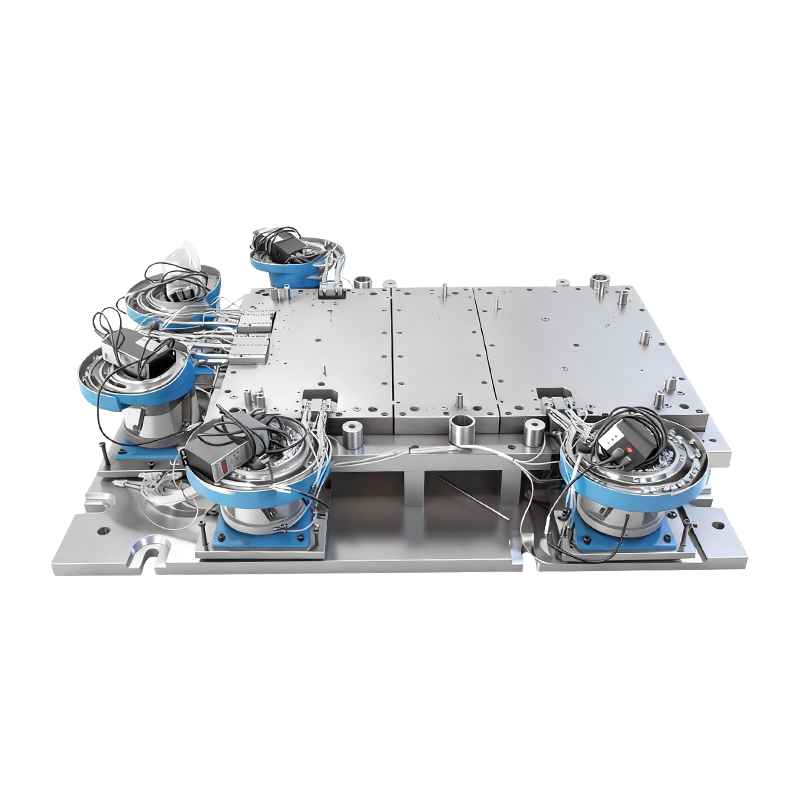
Automatic riveting mold for large computer machine base
This Automatic Riveting Mold for Large Computer Ma...
-
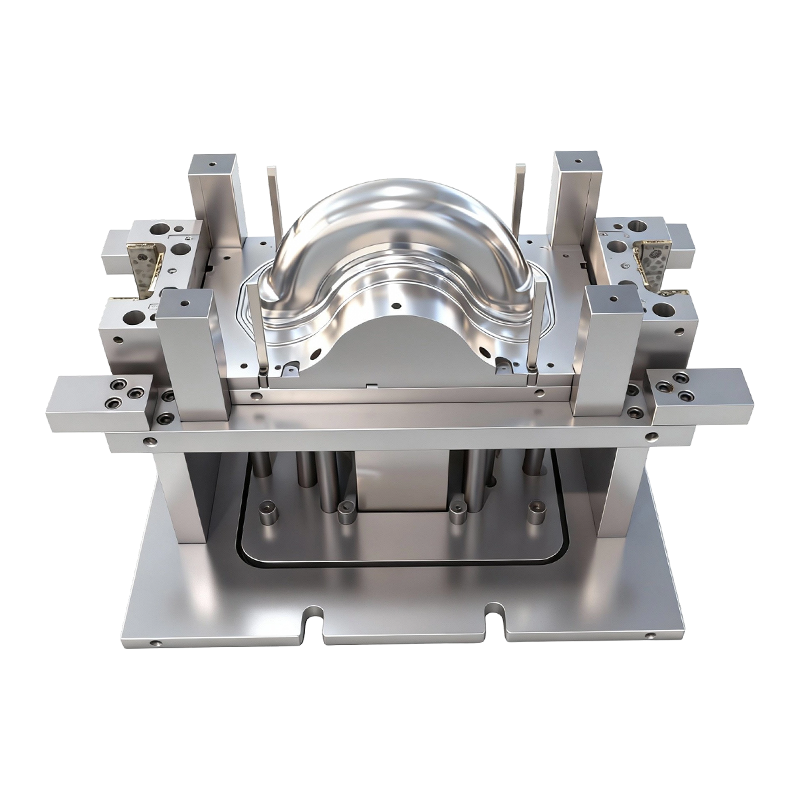
Deep drawing mold for front and rear wheels of two-wheeled electric vehicles
This Deep drawing mold for front and rear wheels o...
-
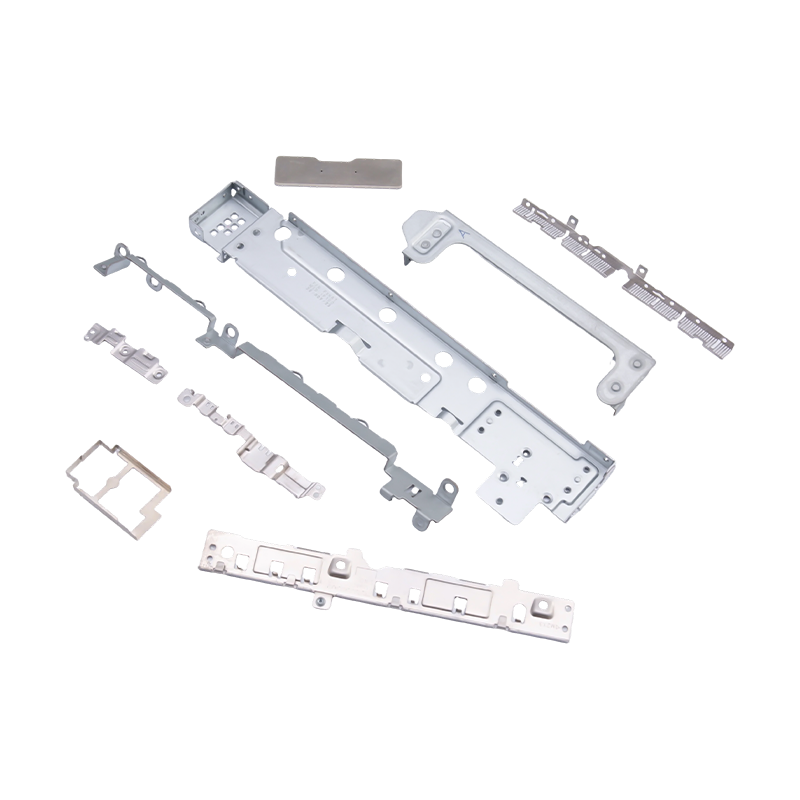
Small stamped parts for laptops and mobile phones
As essential internal components for modern portab...
-
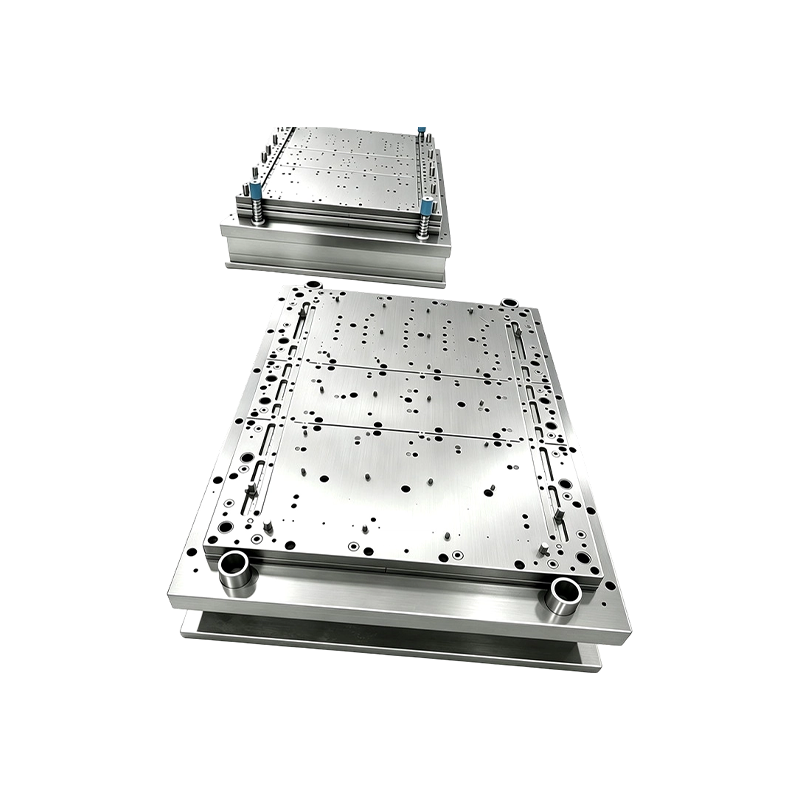
Progressive Stamping Die for Connector & Terminal Parts High Speed Progressive Stamping Die Precision Metal Hardware Stamping Tool mold for Connector Terminal Parts Automotive Components
Progressive Stamping Die for Connector & Termi...
-
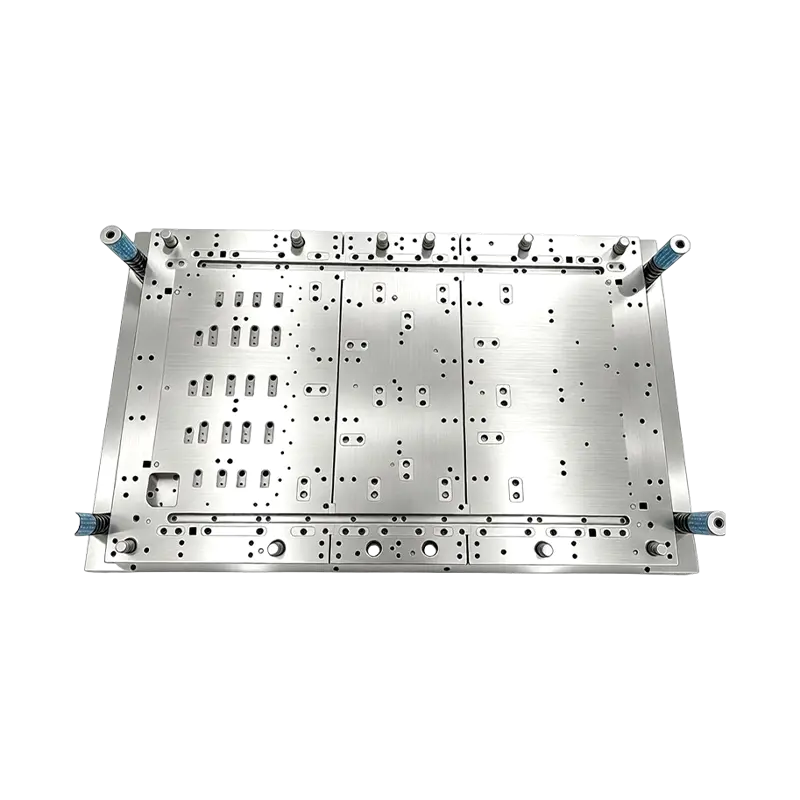
Multi-Station Progressive Stamping Die with Carbide Inserts Custom Multi Station Progressive Stamping Die Carbide Insert Metal Stamping Mold Tool for Equipment Appliances Device Hardware
High Speed Metal Stamping Tool for Precise Equipme...
-
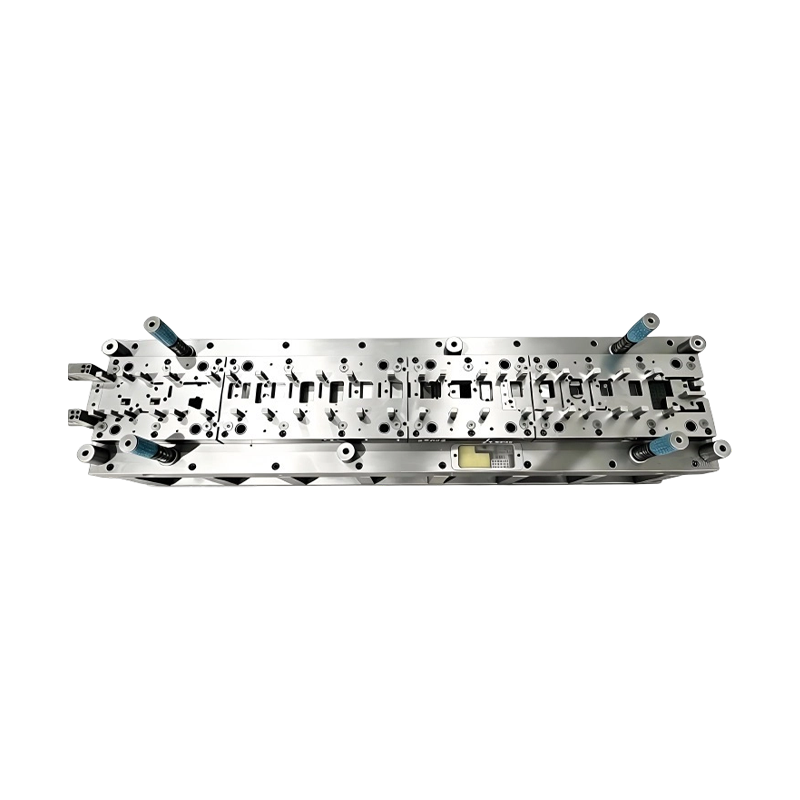
Long-Stroke Multi-Stage Progressive Die Automatic Strip Feed Progressive Die Long Travel Follow on Stamping Tool for Sheet Metal Hardware Press Moulding
Long-Stroke Multi-Stage Progressive DieOur custom ...
- E-mail us: [email protected]
- Call us: +86-139 1308 8972

Liu Yanan – After-Sales Service Engineer
Home / Author / Liu Yanan – After-Sales Service Engineer / Automatic Riveting Mold for Large Computer Machine Bases: Integrated Precision, Automation, and Reliable Production
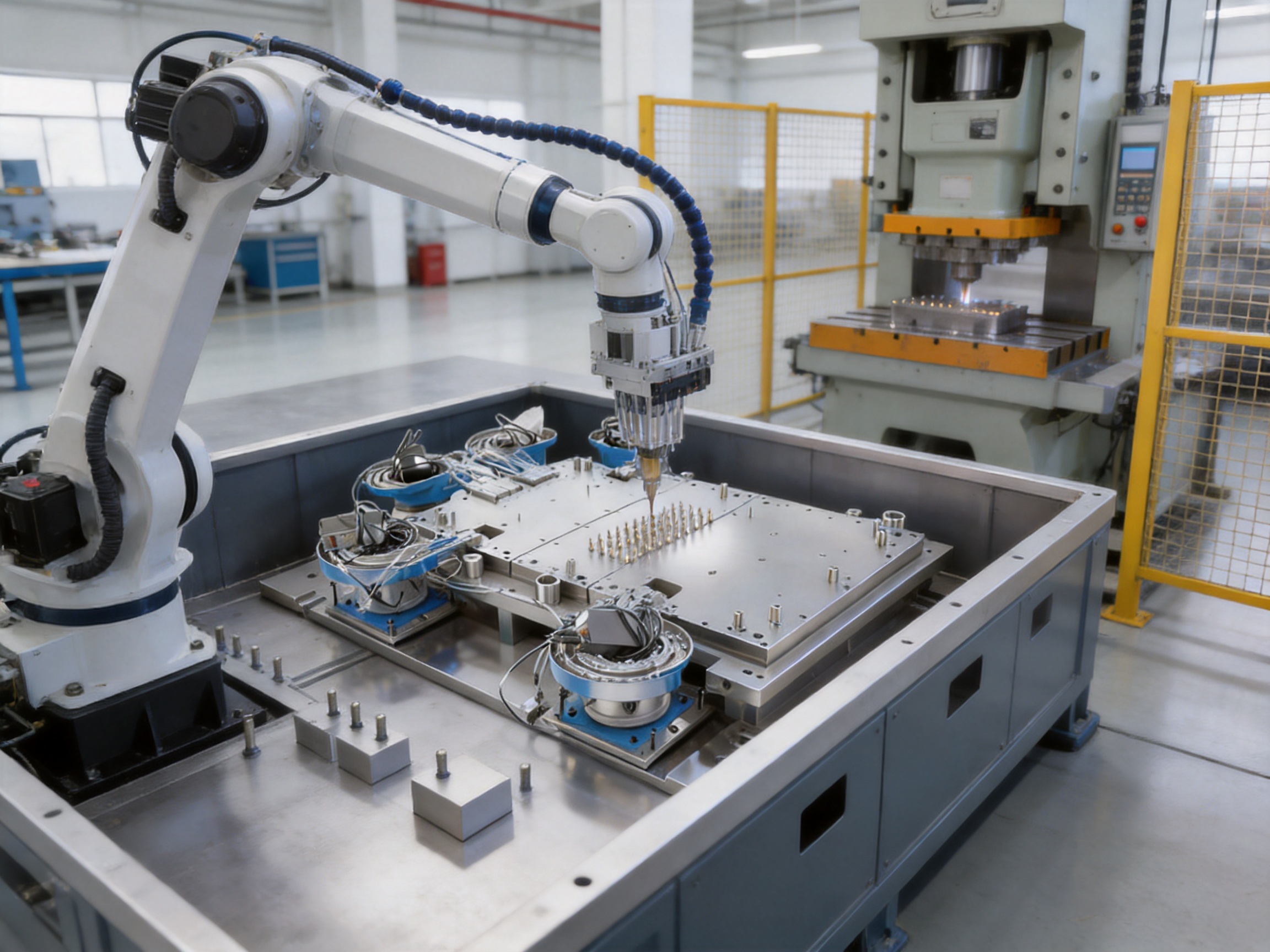
Automatic Riveting Mold for Large Computer Machine Bases: Integrated Precision, Automation, and Reliable Production
2026-10-30
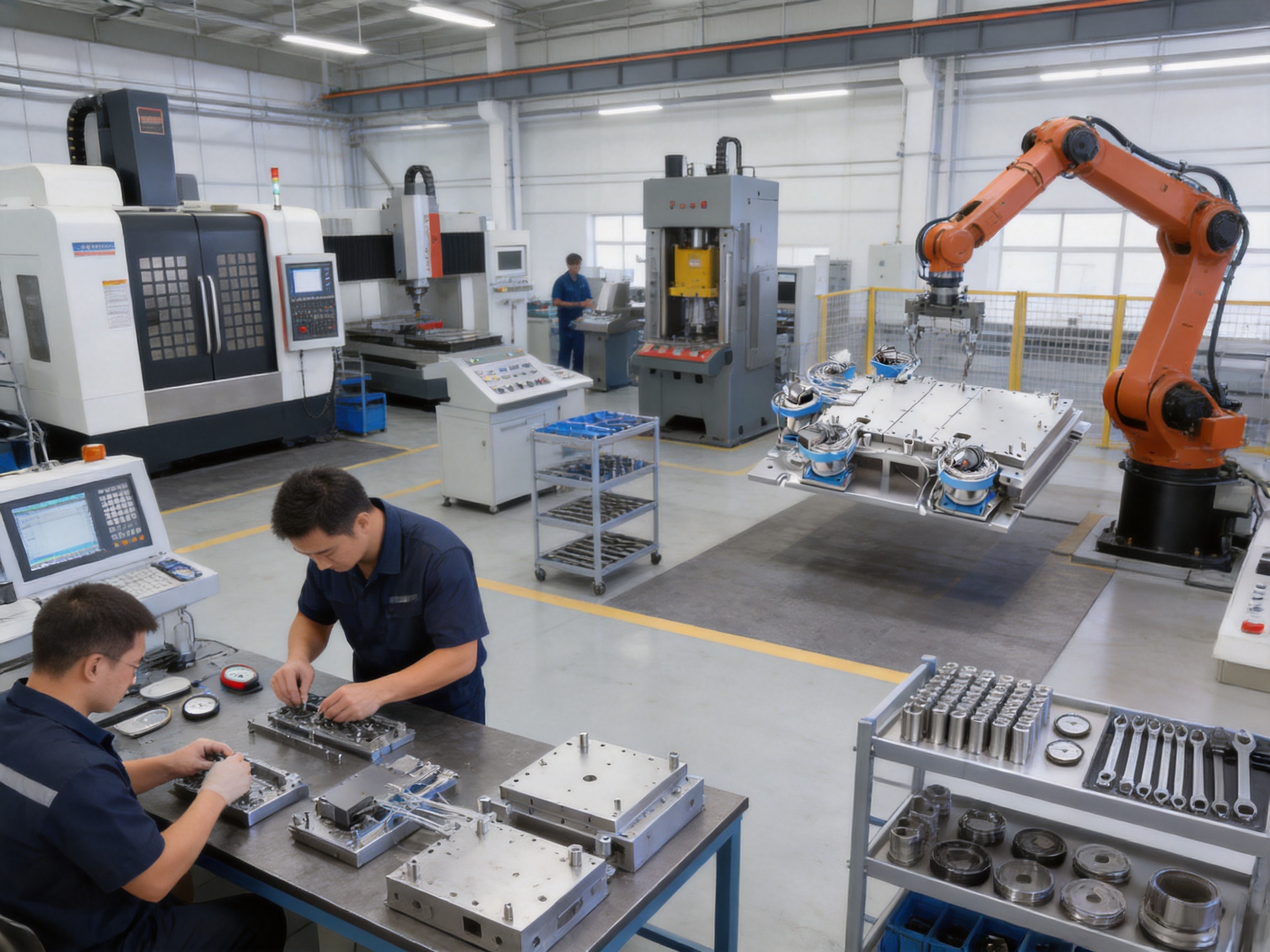
Large computer machine bases require stable joining, repeatable positioning, and efficient material handling throughout the production process. As the size and structural complexity of a machine base increase, conventional manual riveting becomes more difficult to control. Operators must repeatedly position rivets, align large workpieces, maintain consistent pressure, and move completed parts between workstations. These activities can increase labor intensity, create variation between products, and limit the production line’s overall efficiency.
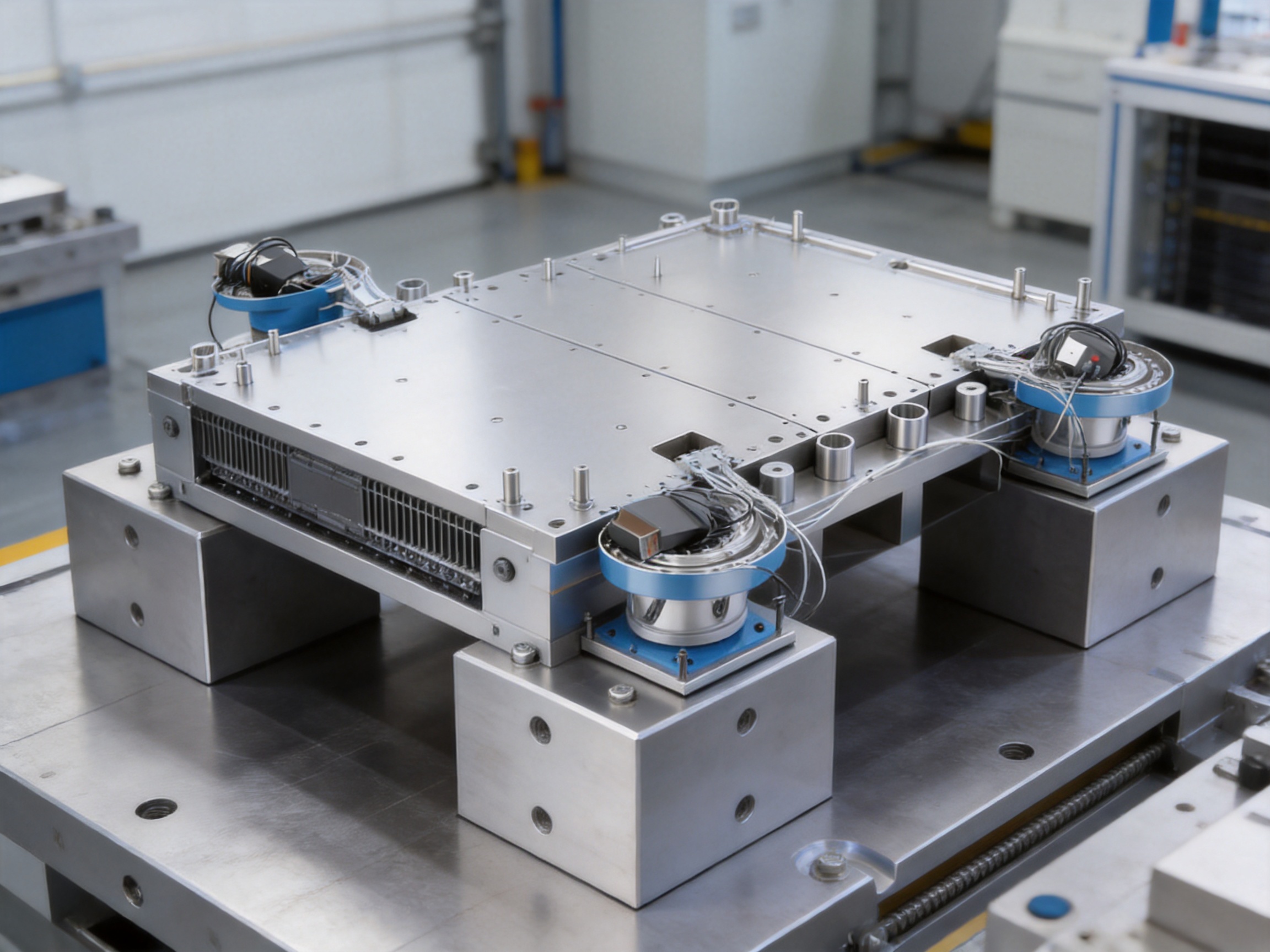
The Automatic Riveting Mold for Large Computer Machine Base is designed to address these challenges through the coordinated use of a dedicated riveting mold, a stamping machine, and a robotic arm. The system supports automated rivet feeding, accurate placement, stable riveting, and immediate transfer of completed workpieces to the next production stage. By connecting the mold with robotic handling, the solution transforms a labor-dependent operation into a more structured and repeatable manufacturing process.
This product is categorized as an electronic stamping die and is intended for applications involving large computer machine bases and similar large-format sheet metal components. Its sturdy construction is adapted to the dimensions and riveting loads associated with these workpieces. Rather than functioning as an isolated tool, it serves as part of a broader production solution that combines tooling expertise, stamping capability, automation integration, and process support.
Automatic riveting mold for large computer machine base
Content
- 1 1. The Manufacturing Challenge Behind Large Computer Machine Bases
- 2 2. Product Overview and Operating Concept
- 3 3. Main Advantages Over Conventional Riveting Methods
- 4 4. Mold Design Considerations for Large Workpieces
- 5 5. Automated Rivet Feeding and Robotic Coordination
- 6 6. Manufacturing Process and Technical Capabilities
- 7 7. Why Integrated Mold and Automation Capability Matters
- 8 8. Competitive Advantages of the Product and Supplier
- 9 9. Quality Control and Production Reliability
- 10 10. Maintenance and Service Considerations
- 11 11. Application Value for Manufacturing Enterprises
- 12 12. Recommended Project Development Workflow
- 13 13. The Company’s Manufacturing Foundation
- 14 14. Practical Selection Questions for Buyers
- 15 15. Q&A: Automatic Riveting Mold for Large Computer Machine Bases
- 15.1 Q1: What is the main purpose of this automatic riveting mold?
- 15.2 Q2: How does it improve on manual riveting?
- 15.3 Q3: Is the mold suitable for every computer machine base?
- 15.4 Q4: What information should a customer provide?
- 15.5 Q5: Can the robotic arm transfer the completed machine base?
- 15.6 Q6: What role does the stamping machine play?
- 15.7 Q7: Does automation eliminate the need for operators?
- 15.8 Q8: What makes an integrated supplier valuable?
- 15.9 Q9: How can riveting quality be maintained?
- 15.10 Q10: What maintenance is required?
- 15.11 Q11: Can the solution be connected to an existing production line?
- 15.12 Q12: What is the company’s broader capability?
- 16 16. Conclusion
- 17 References
- 18 Product: Automatic riveting mold for large computer machine base
1. The Manufacturing Challenge Behind Large Computer Machine Bases
A large computer machine base is more than a flat sheet metal panel. It may include multiple bends, mounting features, reinforcement zones, openings, support points, and locations requiring riveted fasteners. The component must maintain dimensional stability because later assembly operations often depend on the correct relationship between holes, brackets, covers, electronic modules, and structural supports.
When riveting is completed manually, the operator generally performs several tasks in sequence. The workpiece must be placed on a support surface, the rivet must be selected and positioned, the part must be aligned with the tooling, and the riveting operation must be carried out with appropriate force. Afterward, the operator must inspect the joint and move the product to another station. Repeating these actions for a large and heavy machine base can consume significant time and create ergonomic pressure.
Manual handling also introduces several sources of process variation. Rivets may be placed slightly off-center, workpieces may not be fully seated, and the operator may apply inconsistent positioning pressure. Even when each individual deviation is small, repeated variation can affect assembly fit, joint appearance, and downstream production. A process that depends heavily on personal experience may also be more difficult to standardize when production volumes increase or when multiple shifts are involved.
The automatic riveting mold is intended to reduce these weaknesses by establishing fixed positioning references and coordinating the riveting operation with robotic movement. The mold provides a controlled working location for the machine base, while the robot handles the transfer and positioning tasks according to the production program. The result is a more organized process with fewer unnecessary manual interventions.
2. Product Overview and Operating Concept
The Automatic Riveting Mold for Large Computer Machine Base combines a purpose-built mold structure with robotic automation. The mold is designed around the geometry of the target workpiece and the locations of the required rivets. It provides the support, locating, and working clearances needed for stable riveting under the stamping machine’s operating conditions.
During operation, the robotic arm delivers rivets to the designated positions or works in coordination with a rivet-feeding arrangement. The machine base is positioned in the mold, where locating elements help establish a repeatable relationship between the workpiece and the riveting points. The stamping machine then applies the required riveting action. Once the operation is completed, the robotic arm transfers the processed component to the next workstation.
This operating concept creates a continuous connection between loading, positioning, riveting, unloading, and transfer. Instead of treating each task as an independent manual activity, the system organizes them into a coordinated production sequence. The exact motion path, feeding method, cycle timing, and safety configuration can be adapted to the customer’s production line and workpiece requirements.
| Process Element | Function | Production Value |
|---|---|---|
| Dedicated riveting mold | Supports and locates the large machine base | Improves repeatable positioning and joint consistency |
| Rivet feeding arrangement | Supplies rivets to the required working locations | Reduces manual picking and placement |
| Robotic arm | Transfers rivets and/or workpieces between process points | Reduces handling labor and improves process continuity |
| Stamping machine | Performs the controlled riveting operation | Provides stable and uniform joining force |
| Downstream transfer | Moves completed components to the next workstation | Supports line integration and shorter idle periods |
The value of the system is therefore not limited to the mold body itself. Its performance depends on how accurately the mold, machine, robot, fasteners, and workpiece are coordinated. A supplier with experience in both stamping die production and automation can address these relationships more effectively than a supplier that provides only a conventional tool.
3. Main Advantages Over Conventional Riveting Methods
3.1 Improved Positioning Repeatability
A dedicated mold establishes defined locating references for the machine base. When the workpiece is placed correctly, the riveting locations can be maintained in a consistent relationship with the stamping mechanism. This is a major advantage over a loosely guided manual process, in which alignment depends mainly on operator judgment.
Repeatable positioning can help control the appearance and functional quality of riveted joints. It can also reduce the risk of hole misalignment, uneven seating, and interference with surrounding features. For large bases with several riveting points, the cumulative benefit of controlled positioning becomes especially important.
3.2 Reduced Manual Rivet Handling
The integration of robotic rivet feeding reduces the need for operators to repeatedly pick up, orient, and place individual rivets. This can simplify the working environment and make the process less dependent on repetitive hand movements. It also helps establish a more consistent relationship between the rivet supply and the mold’s designated riveting positions.
Reducing manual feeding does not mean eliminating the need for process supervision. Operators and technicians remain important for loading materials, monitoring equipment status, performing inspections, and responding to abnormalities. The difference is that their role shifts from continuous repetitive handling toward higher-value control and production management.
3.3 Stable and Uniform Riveting
The stamping machine supplies the controlled action needed to form or secure the riveted connection. When the workpiece is properly supported and the machine cycle is correctly adjusted, the riveting process can be more uniform than a manually guided operation. Consistency is particularly valuable for large computer machine bases because their riveted joints may support brackets, covers, structural members, or other components.
Uniform riveting also supports easier inspection. A standardized process makes it more practical to define acceptance criteria for joint appearance, seating, deformation, and location. The final inspection method remains dependent on the customer’s product specifications, but the mold creates a stronger foundation for repeatable quality control.
3.4 Lower Labor Intensity
Large machine bases can be physically demanding to handle. The component may be wide, heavy, or difficult to orient manually. By using a robotic arm for transfer and positioning, the system can reduce the amount of lifting, reaching, and repeated movement required from operators.
Lower labor intensity can improve workplace ergonomics and help manufacturing companies allocate personnel more efficiently. It may also support more stable production during long shifts because the process is less affected by physical fatigue. As with any automated equipment, the final ergonomic result depends on the complete line layout and the way operators interact with the system.
3.5 More Efficient Workstation Transfer
After riveting, the robotic arm immediately transfers the processed machine base component to the next workstation. This reduces waiting time between operations and supports a more continuous production flow. In a manual process, completed parts may remain at the riveting station until an operator is available to move them. Automated transfer helps reduce this type of interruption.
The transfer function can be especially beneficial when the riveting operation is part of a larger assembly line. Consistent handoff between stations makes it easier to balance cycle times, define buffer areas, and coordinate material movement. It also provides a clearer basis for future production monitoring and line optimization.
3.6 Reduced Human-Induced Defects
Automation cannot eliminate every possible defect, but it can reduce errors associated with repetitive manual positioning and transfer. Fixed tooling references, programmed robotic movements, and controlled machine cycles help limit variation caused by inconsistent handling.
Potential benefits include fewer misplaced rivets, fewer incomplete loading actions, and fewer transfer-related handling errors. The actual improvement depends on correct equipment setup, maintenance, programming, and inspection. A robust process must still include appropriate safeguards, sample checks, and corrective procedures.
4. Mold Design Considerations for Large Workpieces
A mold for a large computer machine base must be designed around the actual geometry and structural behavior of the workpiece. The size of the component affects support requirements, accessibility, locating strategy, and robot motion. The riveting force also influences the rigidity needed in the mold body and its supporting elements.
4.1 Workpiece Support
Large sheet metal components may flex if they are not adequately supported. Deflection during riveting can affect joint formation and the final position of the component. A suitable mold therefore needs support surfaces or support points that hold the workpiece securely while leaving sufficient access for the riveting tool and rivet path.
Support must be balanced carefully. Excessive restriction may make loading difficult or create unwanted contact with sensitive surfaces. Insufficient support may allow movement or vibration. The design process should consider the workpiece’s thickness, formed features, local reinforcement, surface protection requirements, and the direction of the riveting force.
4.2 Locating Strategy
Locating elements determine how the machine base is positioned in relation to the mold and riveting mechanism. A practical strategy generally uses a combination of primary, secondary, and tertiary references to control the required degrees of freedom without making loading unnecessarily difficult.
The locating approach should also account for part tolerances. A large stamped component may have normal dimensional variation resulting from material behavior, forming conditions, and previous operations. The mold must provide enough guidance to establish consistent riveting locations while allowing the part to be loaded without excessive force or interference.
4.3 Rivet Accessibility
Every riveting point must be accessible to the relevant tooling and compatible with the robot’s movement range. If the machine base contains deep sections, raised walls, or obstructing brackets, the mold design may need special clearances or staged positioning arrangements.
Accessibility is also important for maintenance and inspection. Technicians should be able to reach wear components, clean debris, verify locating elements, and replace consumable or adjustable parts. A design that performs well during initial production but is difficult to service may create avoidable downtime later.
4.4 Structural Rigidity
The mold must resist deformation under the operating load. Rigidity supports stable riveting and protects the relationship between the workpiece, locating points, and machine tooling. The required construction depends on the size of the base, the number and distribution of riveting points, the stamping machine capacity, and the sequence of operations.
For this product category, a sturdy structure is particularly important because the workpiece is large and may create uneven loading across the mold. The mold should be developed with attention to load paths, support spacing, fastener selection, and the service conditions expected during repeated production.
4.5 Protection of Finished Surfaces
Computer machine bases may have visible or functionally important surfaces that must be protected from scratches, dents, or unwanted contact marks. Contact surfaces in the mold can therefore require suitable geometry, surface treatment, replaceable protection elements, or controlled clearances.
Surface protection is not merely cosmetic. Damage near mounting surfaces, cable routing areas, or assembly interfaces can affect later operations. The mold design should identify sensitive areas in advance and ensure that robotic gripping, positioning, and riveting do not create unnecessary contact risks.
5. Automated Rivet Feeding and Robotic Coordination
The robotic arm is a central part of the product’s value. It connects the mold with the material-handling sequence and helps maintain a repeatable process rhythm. The robot may be configured to deliver rivets, move the workpiece, remove the completed component, or perform a combination of these tasks depending on the production line.
5.1 Programmed Motion
Programmed motion allows the robot to approach designated points according to a defined path. This can reduce the variation associated with manual movement and create a repeatable relationship between the rivet, the workpiece, and the mold. The motion program must account for approach direction, clearance, gripping conditions, acceleration, deceleration, and safe withdrawal after the operation.
For large machine bases, the robot’s movement should also consider the component’s dimensions and center of gravity. A suitable gripping arrangement helps prevent swinging, twisting, or unintended contact during transfer. The automation design must be developed around the actual workpiece rather than relying only on nominal dimensions.
5.2 Feeding Reliability
Rivet feeding reliability affects the entire cycle. If rivets are not presented correctly, the machine may need to stop, and the operator may need to intervene. The feeding arrangement should therefore be matched to the rivet type, dimensions, orientation requirements, and supply volume.
Useful process features may include detection of rivet presence, confirmation of the correct feeding position, and fault notification when a rivet is missing or incorrectly oriented. The precise configuration depends on the customer’s fasteners and control requirements. These functions can help prevent an empty cycle or an improperly completed joint from moving unnoticed to the next station.
5.3 Workpiece Transfer
Automated transfer requires coordination between the mold, robot, stamping machine, and surrounding workstations. The robot should only enter the mold area when the machine is in a safe state, and the workpiece should only be released when the receiving location is ready. Interlocking signals and clear process logic are important for preventing collisions and reducing unexpected stops.
The transfer sequence can be arranged around loading, riveting, inspection, unloading, and downstream delivery. Depending on the line design, the robot may also work with temporary buffers or orientation changes. These possibilities make the system adaptable to different factory layouts and production requirements.
5.4 Human-Machine Interaction
Even in a highly automated line, people remain responsible for setup, supervision, quality confirmation, material replenishment, and maintenance. The equipment should therefore provide a clear and practical interface for operators and technicians.
Important considerations include accessible controls, understandable status indications, protected operating zones, emergency stop functions, and procedures for clearing faults. A well-designed system allows personnel to identify the reason for a stop and restore operation safely without unnecessary trial and error.
6. Manufacturing Process and Technical Capabilities
The performance of an automatic riveting mold depends heavily on how it is designed, machined, assembled, tested, and adjusted. Suzhou Shuangqisi Mold Equipment Co., Ltd. is a professional manufacturer integrating stamping die design, manufacturing, hardware parts production, and service. This integrated background supports the development of tooling that must work with both a stamping machine and an automation system.
The company has approximately 60 technical staff and maintains equipment for precision mold production and stamping operations. Its listed resources include imported wire cutting machines, CNC machining centers, more than 10 grinding machines of different sizes, and 25 punch presses ranging from 80 tons to 400 tons. These resources provide a foundation for handling different tooling sizes, machining requirements, and trial-production conditions.
6.1 Engineering and Design Development
Design begins with understanding the customer’s workpiece, rivet locations, production volume, machine conditions, and automation objectives. The engineering team can evaluate the base geometry, identify locating references, plan the support structure, and consider the movements required by the robotic arm.
A successful design must connect product geometry with manufacturing reality. It is not enough to define a theoretically accurate riveting point. The tooling must also be machinable, serviceable, compatible with the available press, and practical for loading and unloading. This is where experience in stamping dies and production equipment can provide an advantage over a design process focused on only one part of the system.
6.2 CNC Machining
CNC machining centers are used to produce accurately defined mold components and structural features. Machining supports the creation of locating surfaces, mounting interfaces, pockets, clearances, and other details requiring controlled geometry.
For a large machine base mold, machining accuracy must be considered together with assembly accuracy. Individual components may be manufactured correctly, but the complete mold still requires careful fitting and verification. The company’s tooling process can combine machining with grinding, wire cutting, assembly, and debugging to establish the final working relationship among the parts.
6.3 Wire Cutting
Wire cutting is useful for producing precise profiles, narrow slots, and complex details that may be difficult to achieve through conventional machining alone. In mold manufacturing, it can support the production of inserts, locating elements, and other components requiring accurate contours.
The use of imported wire cutting equipment indicates a focus on controlled tooling production. The specific achievable accuracy depends on material, geometry, machine condition, programming, and inspection practices. Nevertheless, access to this capability broadens the manufacturer’s ability to produce specialized mold components for customized applications.
6.4 Grinding and Surface Finishing
Grinding machines support the finishing of reference surfaces and close-tolerance components. Flatness, parallelism, surface condition, and fit can influence how a mold performs during repeated production. Grinding is especially valuable when components must be assembled with controlled contact relationships.
Surface finishing also contributes to service life. Properly finished sliding, locating, or contact areas may be less prone to premature wear than rough or poorly matched surfaces. Replaceable wear elements and maintenance-friendly construction can further improve long-term usability, depending on the final design.
6.5 Assembly and Debugging
After machining, the mold must be assembled and adjusted. Debugging is the stage at which theoretical design decisions are checked against actual workpiece behavior and machine conditions. The team may verify loading, locating, riveting access, robot clearance, transfer motion, and the appearance of completed joints.
Experienced operators and debugging personnel are important at this stage. They can identify practical issues such as difficult loading angles, unexpected interference, excessive adjustment time, or insufficient support. Correcting these matters before delivery can reduce commissioning problems at the customer’s facility.
6.6 Trial Production and Process Validation
Trial production provides an opportunity to confirm that the mold and automation sequence work together as intended. The process may be evaluated using representative workpieces and rivets, with attention to positioning, joint quality, cycle movement, and transfer stability.
Validation criteria should be agreed with the customer. They may include dimensional checks, visual inspection, joint strength requirements, loading repeatability, machine compatibility, and automatic cycle performance. Since the supplied product is tailored for a specific large computer machine base, final validation should be based on the customer’s drawings and production specifications.
7. Why Integrated Mold and Automation Capability Matters
Many production problems occur at the interfaces between separate suppliers. A mold may fit the workpiece but leave insufficient robot clearance. A robot may reach the intended location but handle the component in an unstable manner. A stamping machine may have adequate capacity but require a different mounting arrangement. When these elements are developed independently, integration time and troubleshooting effort can increase.
An integrated supplier can evaluate the mold and automation as connected parts of one manufacturing process. Suzhou Shuangqisi Mold Equipment Co., Ltd. has experience in both stamping molds and stamping automation equipment through its related business activities. In 2016, it invested in and established Suzhou Keshuang Intelligent Technology Co., Ltd., which mainly produces stamping automation equipment.
This background supports the company’s ability to offer turnkey solutions for stamping molds and stamping automation. For customers, a turnkey approach can simplify communication, reduce the number of technical interfaces, and make responsibility for process coordination clearer. It may also enable the supplier to invest in related production equipment according to customer needs when a broader project requires it.
The integrated model does not remove the need for detailed customer cooperation. Product drawings, material information, rivet specifications, press details, line layout, cycle targets, and quality requirements still need to be reviewed carefully. However, the supplier can use its combined experience to identify interactions that might be missed when tooling and automation are treated as unrelated purchases.
8. Competitive Advantages of the Product and Supplier
8.1 Compared with Manual Riveting Fixtures
Compared with a basic manual fixture, the automatic riveting mold offers a higher level of process coordination. It supports robotic feeding and transfer rather than relying entirely on operator positioning. This can provide better consistency for applications with repeated large workpieces and multiple riveting points.
The advantage is most apparent when production volume, quality requirements, or ergonomic concerns make manual operation less attractive. A manual fixture may still be suitable for low-volume or highly variable production, but an automated mold is better aligned with standardized, repeatable production sequences.
8.2 Compared with General-Purpose Tooling
General-purpose tooling can be flexible, but it may not provide the precise support and access needed for a large computer machine base. The featured mold is tailored to the target workpiece and its riveting requirements. This allows the support structure, locating points, and robot approach paths to be considered together.
Customization can improve practical performance, particularly when the machine base includes nonuniform surfaces, deep sections, or specific assembly interfaces. It may also reduce the need for operators to make repeated adjustments during production.
8.3 Compared with Tooling-Only Suppliers
A supplier focused only on mold construction may not be equipped to address robot motion, transfer timing, and automatic feeding. The company’s combined mold and automation capabilities provide a broader technical perspective. This is useful when the customer wants a complete production solution rather than a standalone metal tool.
The ability to support tooling, stamping, automation, and service through related resources can also help reduce project fragmentation. Customers can discuss the workpiece, process, and equipment requirements within a connected technical framework.
8.4 Compared with Low-Cost, Low-Control Solutions
A low initial purchase price does not always represent the lowest total production cost. If a tool requires frequent manual correction, produces inconsistent joints, or causes long commissioning delays, its actual cost may increase over time. A more carefully engineered automatic riveting solution can create value through labor reduction, process stability, lower defect exposure, and improved line utilization.
Cost control remains important. The company describes its strengths as including reliable technical expertise, strict cost and quality control, and the ability to provide cost-effective products and services. The appropriate solution should balance automation level, expected production volume, maintenance needs, and return on investment rather than focusing only on the initial equipment price.
9. Quality Control and Production Reliability
Quality control for an automatic riveting mold should cover both the physical tooling and the complete operating process. Important checks may include mold dimensions, locating accuracy, support condition, riveting alignment, robot positioning, machine synchronization, and finished joint quality.
9.1 Incoming Material and Component Control
Tooling materials and purchased components should be checked against the design requirements before machining or assembly. Material condition, hardness, dimensions, and surface quality can affect durability and performance. Controls at this stage help prevent defects from being carried into later operations.
9.2 Machining Inspection
Machined mold components should be inspected for critical dimensions and reference relationships. Depending on the part, inspection may involve dimensional measurement, flatness checks, profile verification, and fit testing. The inspection plan should focus on features that affect workpiece location, riveting access, and assembly alignment.
9.3 Assembly Verification
During assembly, the relationship among locating elements, supports, inserts, mounting plates, and working clearances should be verified. The complete assembly must function as a system. A component that meets its individual drawing requirements may still need adjustment when installed with mating parts.
9.4 Functional Testing
Functional testing should confirm that the workpiece can be loaded and unloaded smoothly, that the robot can reach its programmed positions, and that the stamping machine can complete the riveting action without interference. Repeated cycling can help identify issues that may not appear during a single manual check.
9.5 Customer-Specific Acceptance
Final acceptance should reflect the customer’s product and production requirements. These may include joint appearance, dimensional accuracy, cycle time, equipment safety, transfer reliability, and ease of operation. Clear acceptance criteria help both supplier and customer establish a common understanding of successful delivery.
10. Maintenance and Service Considerations
Automatic tooling requires regular maintenance to preserve its performance. The maintenance program should include cleaning, lubrication where applicable, inspection of locating elements, checking of fasteners, monitoring of wear surfaces, and verification of robot gripping components.
Riveting can generate metal particles, debris, and repeated mechanical loads. If debris accumulates around locating points or working surfaces, the workpiece may not seat correctly. Routine cleaning is therefore important for maintaining positioning accuracy.
Wear components should be inspected at defined intervals. If a locating pin, support, guide, or contact surface becomes worn, the relationship between the mold and workpiece may change. Replaceable components can make restoration easier and reduce the time required for corrective maintenance.
The robotic arm and feeding system also require attention. Grippers, sensors, fastener pathways, and signal connections should be checked according to the equipment manufacturer’s recommendations. The mold and automation must be maintained together because a problem in one subsystem can affect the performance of the complete line.
Serviceability should be considered during design. Easy access to adjustment points, clear identification of components, and practical replacement procedures can reduce downtime. Supplier support during installation, debugging, and process adjustment can further improve the transition from delivery to stable production.
11. Application Value for Manufacturing Enterprises
The automatic riveting mold is suitable for manufacturing enterprises seeking to improve the production of large computer machine bases and related sheet metal assemblies. It can be considered when the current process experiences high labor demand, inconsistent rivet positioning, long transfer times, or difficulty maintaining stable quality across shifts.
The solution may also be useful for companies expanding production capacity. Instead of adding labor in direct proportion to output, automation allows the manufacturer to increase the degree of process control. The actual capacity improvement will depend on cycle time, material supply, robot speed, machine availability, and downstream conditions, but the system provides a foundation for more scalable production.
For companies supplying computer equipment, electronic enclosures, industrial computing systems, and similar products, a consistent structural joining process can support stable assembly quality. The mold concept may also be adapted to other large sheet metal products that use repeated riveted connections and require robotic handling.
Before selecting the equipment, the customer should review the workpiece drawing, annual volume, target cycle time, material type, thickness, rivet specifications, available stamping machine, factory layout, safety requirements, and inspection method. A detailed technical review ensures that the final mold and automation arrangement matches the actual production environment.
12. Recommended Project Development Workflow
12.1 Requirement Review
The project should begin with a review of the machine base drawing and production objectives. The customer and supplier should identify all riveting points, workpiece tolerances, surface protection requirements, material characteristics, and downstream assembly needs.
12.2 Process Feasibility Analysis
The engineering team should evaluate whether each riveting point can be reached efficiently and whether the workpiece can be loaded, supported, and transferred without interference. This stage may identify the need for special supports, additional locating references, changed robot orientations, or a multi-step sequence.
12.3 Mold and Automation Design
The mold design and robot concept should be developed together. Mounting points, working heights, robot reach, press stroke, safety zones, and line interfaces should be reviewed before detailed manufacturing begins.
12.4 Manufacturing and Assembly
After design approval, components can be produced using CNC machining, wire cutting, grinding, and other appropriate processes. The tooling is then assembled and prepared for debugging with the automation equipment.
12.5 Trial Operation
Trial operation should use representative materials and rivets whenever possible. The team can verify the loading sequence, automatic feeding, riveting quality, robot transfer, fault responses, and operator interaction.
12.6 Delivery and Production Support
Following acceptance, the equipment can be delivered with operating guidance, maintenance recommendations, and relevant technical documentation. Initial production support can help the customer stabilize settings and establish routine inspection procedures.
13. The Company’s Manufacturing Foundation
Suzhou Shuangqisi Mold Equipment Co., Ltd. is located in Suzhou, China, and specializes in stamping dies, hardware parts, stamping automation equipment, and related technical services. The company combines design, manufacturing, and service within its business structure, allowing it to support customers from tooling development through production implementation.
Its stated technical team includes approximately 60 staff members. The company operates imported wire cutting machines, CNC machining centers, more than 10 grinding machines of various sizes, and 25 punch presses with capacities from 80 tons to 400 tons. This equipment range supports both precision tooling work and stamping-related production trials.
The company reports experience serving customers including Anter Group, Ousheng Electric, Dongbei Group, and Huichuan Technology. Its products and molds are mainly associated with servo drives, compressors, new energy vehicles, and other industrial applications. These sectors generally require dependable tooling, stable production, and attention to dimensional consistency.
With 15 years of experience in the mold industry and a technical team that includes senior operators and debugging personnel, the company is positioned to handle customized mold and automation requirements. Its investment in Suzhou Keshuang Intelligent Technology Co., Ltd. further expanded its involvement in stamping automation equipment.
The company’s stated approach emphasizes customer value, cost and quality control, technical reliability, and high-quality development. For the automatic riveting mold discussed in this article, these capabilities are relevant because the product requires more than machining a metal fixture. It requires process understanding, structural design, robotic coordination, testing, and ongoing production support.
14. Practical Selection Questions for Buyers
Buyers should ask whether the supplier can provide a complete technical solution for the machine base rather than a mold alone. The supplier should be able to discuss workpiece support, riveting access, robot motion, machine compatibility, transfer timing, maintenance, and acceptance criteria.
It is also important to confirm what information is required before design begins. Typically, the supplier may need product drawings, three-dimensional data, material specifications, rivet samples, press information, target output, factory layout, and details about upstream and downstream equipment.
Another important question concerns future changes. If the customer expects revisions to the machine base or additional rivet locations, the mold should be designed with an appropriate level of adjustability or planned modification access. Not every tool can accommodate major product changes, so expectations should be agreed before manufacturing.
Buyers should also review how spare parts, wear components, training, and technical support will be handled. A reliable production tool is supported not only by its initial design but also by the supplier’s ability to help maintain it during its service life.
15. Q&A: Automatic Riveting Mold for Large Computer Machine Bases
Q1: What is the main purpose of this automatic riveting mold?
The main purpose is to support automated riveting of large computer machine bases. It works with a stamping machine and robotic arm to position rivets, stabilize the workpiece, complete the riveting operation, and transfer the finished component to the next workstation.
Q2: How does it improve on manual riveting?
It reduces dependence on manual rivet placement, workpiece positioning, and transfer. Fixed mold references and programmed robotic movement can improve repeatability, reduce labor intensity, and help lower the risk of errors caused by repetitive manual handling.
Q3: Is the mold suitable for every computer machine base?
No. It is designed for a specific large computer machine base or a defined family of related workpieces. The final design should be based on the customer’s drawings, dimensions, riveting points, material, and production requirements. Customization is normally required when product geometry changes significantly.
Q4: What information should a customer provide?
Useful information includes product drawings or three-dimensional data, sheet material and thickness, rivet specifications, riveting locations, target production volume, available stamping machine details, robot information, factory layout, surface protection requirements, and quality standards.
Q5: Can the robotic arm transfer the completed machine base?
Yes. The described solution integrates with a robotic arm that transfers processed machine base components to the next workstation. The gripping method, robot capacity, movement path, and transfer sequence must be designed around the actual workpiece size, weight, center of gravity, and line layout.
Q6: What role does the stamping machine play?
The stamping machine performs the stable and uniform riveting action. The mold supports and locates the workpiece while the machine applies the required operating force. Machine capacity, stroke, working height, and control interface should be checked during project planning.
Q7: Does automation eliminate the need for operators?
Automation reduces repetitive manual work but does not eliminate the need for personnel. Operators and technicians are still required for material replenishment, setup, inspection, maintenance, fault response, and production supervision.
Q8: What makes an integrated supplier valuable?
An integrated supplier can consider the mold, stamping process, robot movement, rivet feeding, and workstation transfer together. This may reduce interface problems between separate suppliers and simplify technical communication during design, commissioning, and service.
Q9: How can riveting quality be maintained?
Quality depends on accurate locating, suitable support, correct rivet feeding, stable machine settings, proper robot positioning, and regular inspection. Trial production and customer-specific acceptance checks should be used to confirm that the completed joints meet the required standards.
Q10: What maintenance is required?
Routine maintenance may include cleaning debris, checking locating and support components, inspecting wear surfaces, tightening fasteners, maintaining the robot gripper, checking rivet-feeding paths, and verifying sensors and signal connections. The exact schedule should be based on production frequency and equipment conditions.
Q11: Can the solution be connected to an existing production line?
It may be possible to integrate the mold and robot with an existing line, provided that the machine capacity, installation space, control signals, safety functions, and workstation timing are compatible. A technical assessment should be completed before final design approval.
Q12: What is the company’s broader capability?
The company provides stamping die design and manufacturing, hardware parts, stamping automation equipment, debugging, and related service. Its equipment includes CNC machining centers, imported wire cutting machines, grinding machines, and punch presses from 80 tons to 400 tons. It also has experience in integrated mold and automation solutions.
16. Conclusion
The Automatic Riveting Mold for Large Computer Machine Base is a practical solution for manufacturers seeking to improve the consistency, efficiency, and ergonomics of large sheet metal joining operations. By integrating a dedicated mold with robotic rivet feeding, automated workpiece handling, and a stamping machine, it creates a more controlled alternative to repetitive manual riveting.
Its primary advantages include repeatable positioning, stable riveting, reduced labor intensity, lower exposure to human-induced defects, and faster transfer to the next workstation. The sturdy mold structure is designed to accommodate the size and riveting stress associated with large computer machine bases, while the automation arrangement supports a more continuous production flow.
The product’s value is strengthened by the manufacturer’s broader capabilities in stamping die design, precision machining, wire cutting, grinding, stamping, automation, assembly, and debugging. With technical personnel, a range of manufacturing equipment, experience in industrial applications, and related automation resources, the company can support customers seeking a coordinated mold and production solution.
For the best result, each project should be developed from the customer’s actual workpiece data and manufacturing objectives. When the mold, stamping machine, robot, feeding system, inspection process, and maintenance plan are designed as one connected system, manufacturers can establish a more reliable foundation for high-quality production of large computer machine bases and related electronic sheet metal assemblies.
References
1. Suzhou Shuangqisi Mold Equipment Co., Ltd. Company Information and Product Materials. Internal corporate technical description.
2. Suzhou Shuangqisi Mold Equipment Co., Ltd. Automatic Riveting Mold for Large Computer Machine Base. Product description and application information.
3. General principles of metal stamping die design, workpiece locating, support, and precision tooling manufacture.
4. General industrial guidance on robotic material handling, automated riveting, machine guarding, and production-line integration.
5. General manufacturing practices for CNC machining, wire electrical discharge machining, grinding, mold assembly, and tooling validation.
6. General quality-control principles for sheet metal assemblies, riveted joints, dimensional inspection, and process repeatability.
Product: Automatic riveting mold for large computer machine base
Previous Post
No previous article
Next Post
Heavy Truck Stamping Parts: Precision, Strength, and Reliable Manufacturing for Commercial Vehicles
Our Products.
Start Your Business with an OEM Manufacturer Right Here!

Provide global customers with complete turn-key solutions
through
innovation!
QUICK LINKS
CONTACT INFO.
-
 +86-139 1308 8972
-

-
 No. 118 Yexin Road, Wujiang Economic Development Zone, Suzhou, China
Copyright © Suzhou Shuangqisi Mold Equipment Co., Ltd. All Rights Reserved. Custom Stamping Die Metal Stamping Die Manufacturers
