 English
 Español
 Deutsch
-
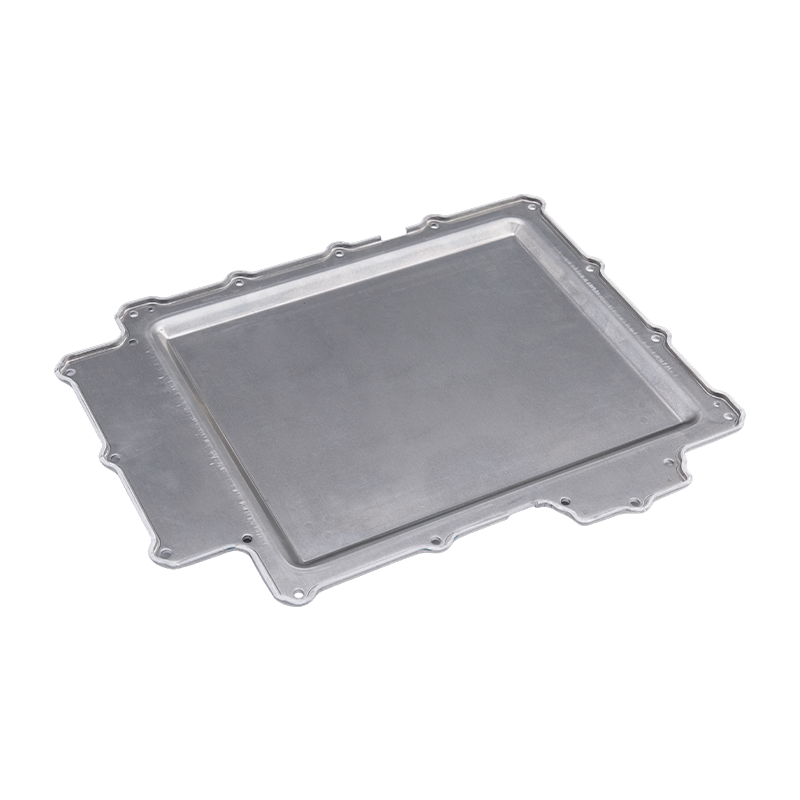
Battery cover stamping parts
Our Battery cover stamping parts are precision-man...
-
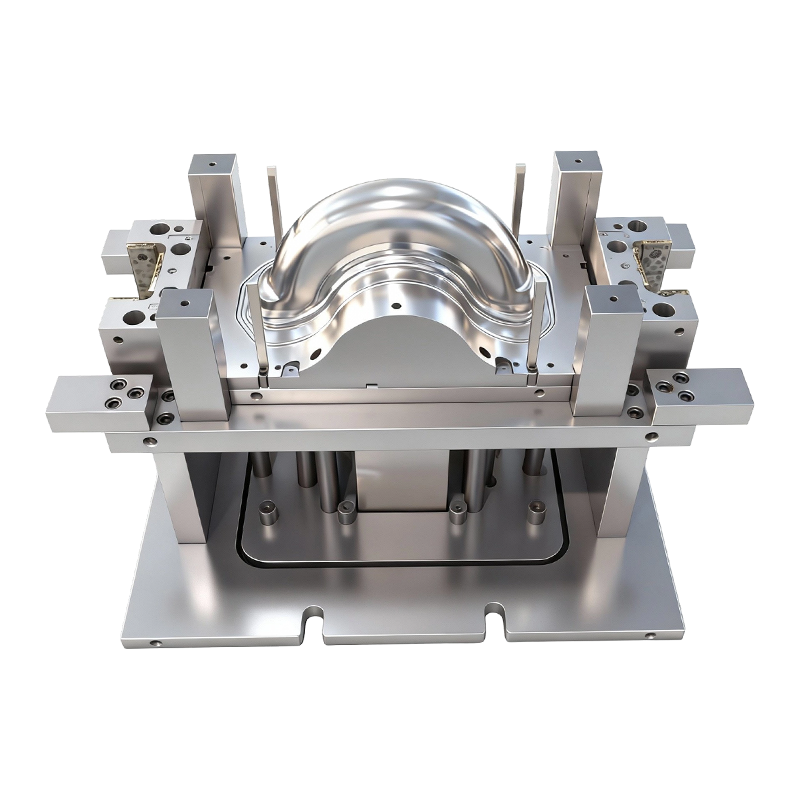
Deep drawing mold for front and rear wheels of two-wheeled electric vehicles
This Deep drawing mold for front and rear wheels o...
-
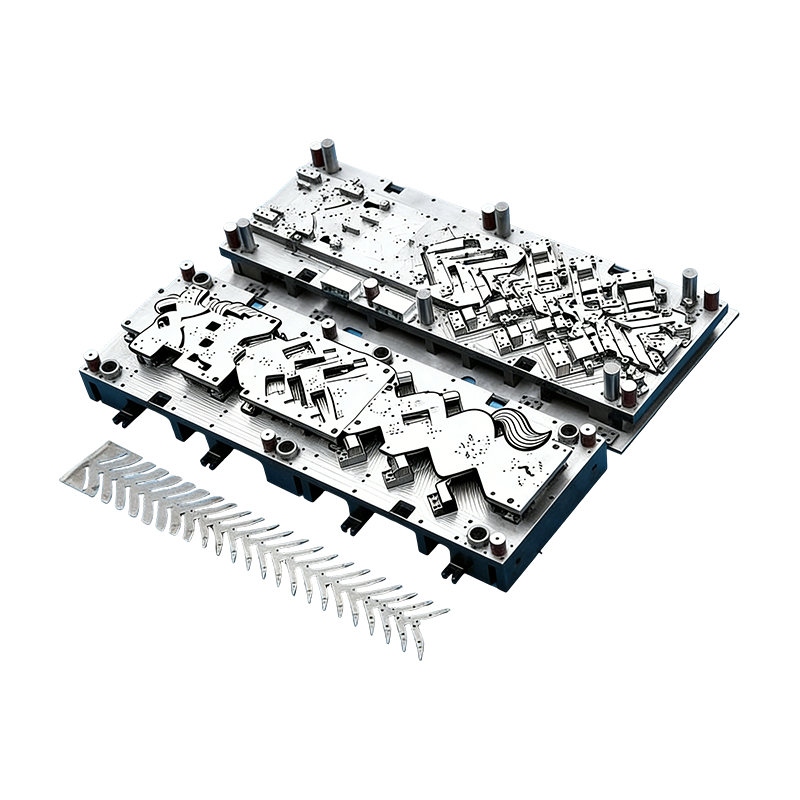
Progressive molds for automotive parts
This Continuous mold for automotive motor housing ...
-
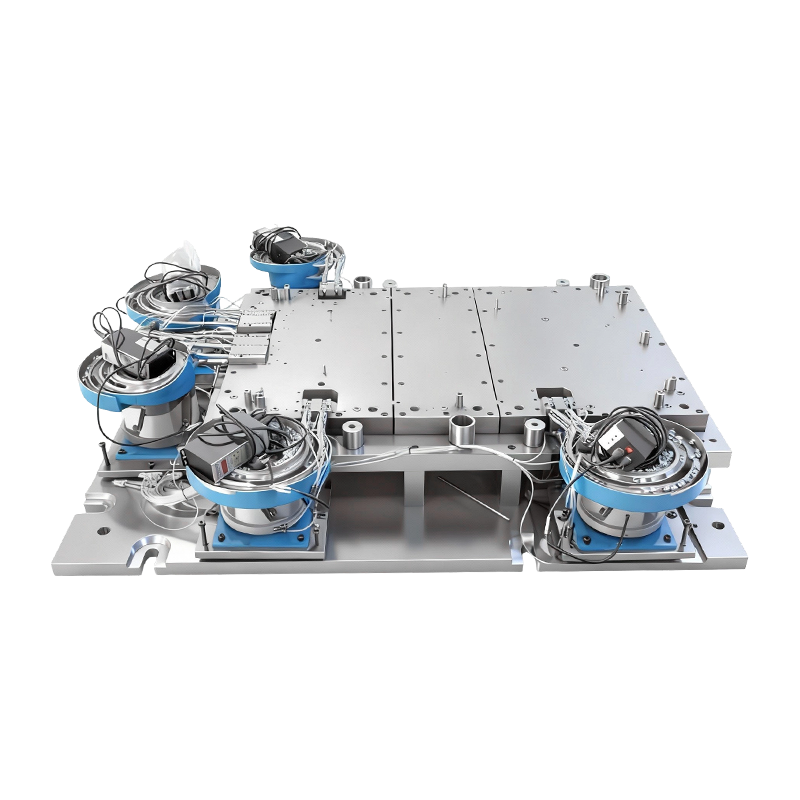
Automatic riveting mold for large computer machine base
This Automatic Riveting Mold for Large Computer Ma...
-
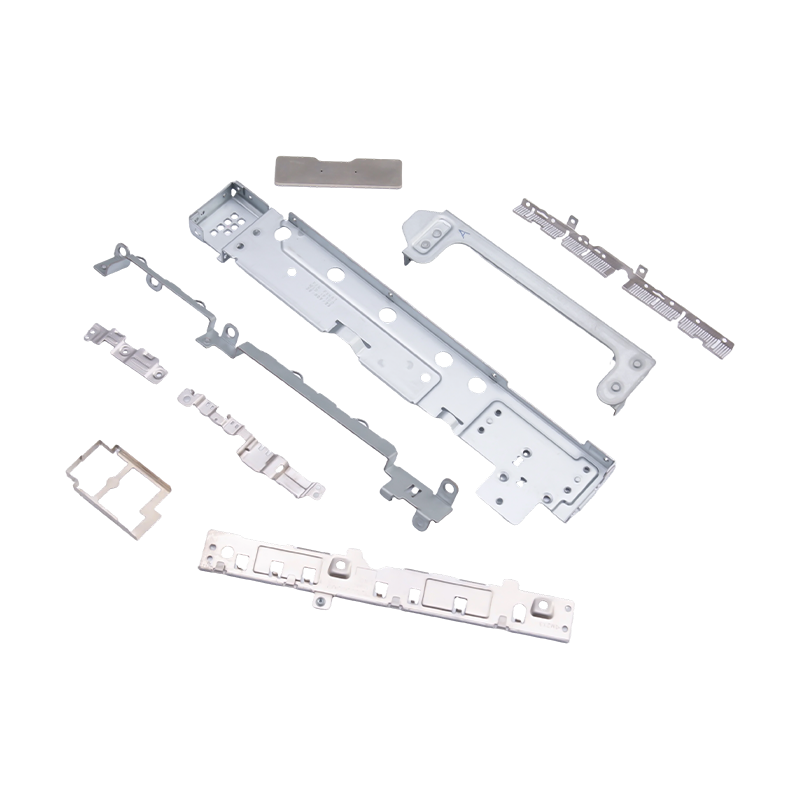
Small stamped parts for laptops and mobile phones
As essential internal components for modern portab...
- E-mail us: [email protected]
- Call us: +86-139 1308 8972

Chen Siyi – Overseas Sales Manager
Home / Author / Chen Siyi – Overseas Sales Manager / Battery Cover Stamping Parts: Precision Protection for Next-Generation Battery Systems
Battery Cover Stamping Parts: Precision Protection for Next-Generation Battery Systems
2026-09-08
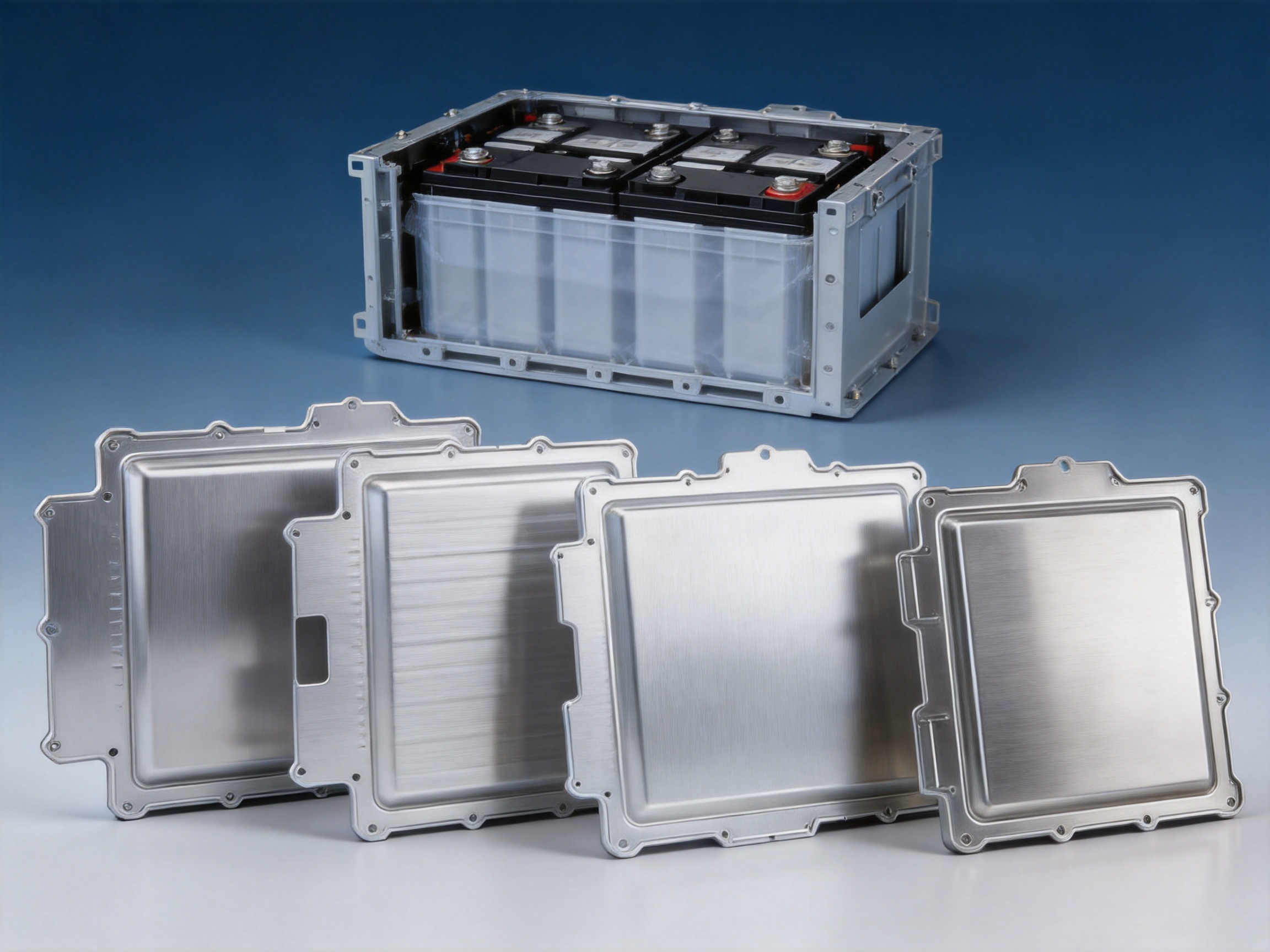
Battery cover stamping parts are essential structural components in automotive batteries, industrial power systems, energy storage units, and other rechargeable battery assemblies. Although a battery cover may appear to be a simple sheet-metal component, its performance has a direct influence on enclosure strength, environmental protection, assembly accuracy, service life, and overall system safety. A well-designed battery cover must fit precisely with the battery housing, maintain its shape during production and use, accommodate fastening and connection features, and help protect internal battery cells from dust, moisture, vibration, and accidental external impact.
Modern battery manufacturers increasingly require stamped covers that combine dimensional accuracy, stable mechanical performance, corrosion resistance, efficient mass production, and flexible customization. These requirements are especially important in automotive and new energy applications, where battery assemblies operate under vibration, temperature fluctuations, humidity, road contaminants, and demanding production schedules. Battery cover stamping parts manufactured through controlled forming processes provide an efficient solution for producing consistent, high-strength, and cost-effective enclosure components.
Manufactured from cold-rolled steel, aluminum alloy, stainless steel, or other application-specific sheet materials, these parts can be configured with holes, flanges, ribs, stepped areas, reinforcing features, and bending structures. Their geometry can be adapted to different battery models and installation environments. When supported by professional die design, precision machining, reliable stamping equipment, and strict quality control, battery cover stamping parts offer significant advantages over loosely controlled fabricated or manually formed alternatives.
Content
- 1 What Are Battery Cover Stamping Parts?
- 2 Why Battery Cover Precision Matters
- 3 Material Options for Battery Cover Stamping Parts
- 4 Key Structural Features and Customization Options
- 5 Manufacturing Process for Precision Battery Covers
- 5.1 1. Technical Review and Product Planning
- 5.2 2. Process Simulation and Die Concept Development
- 5.3 3. Precision Die Design
- 5.4 4. CNC Machining and Wire Cutting
- 5.5 5. Grinding and Surface Finishing
- 5.6 6. Die Assembly and Trial Stamping
- 5.7 7. Production Stamping
- 5.8 8. Inspection and Final Processing
- 6 Manufacturing Capabilities and Equipment Strengths
- 7 Integrated Stamping Die and Automation Solutions
- 8 Advantages Compared with Alternative Manufacturing Methods
- 9 Quality Control for Battery Cover Stamping Parts
- 10 Comparison of Common Battery Cover Production Approaches
- 11 Application Areas
- 12 Surface Quality, Corrosion Resistance, and Durability
- 13 Design Recommendations for Better Stamping Results
- 14 Cost Efficiency and Production Value
- 15 Why Choose an Experienced Stamping Partner?
- 16 Packaging, Handling, and Delivery Considerations
- 17 Frequently Asked Questions
- 17.1 What materials can be used for battery cover stamping parts?
- 17.2 Can the covers be customized for different battery models?
- 17.3 Are the parts suitable for mass production?
- 17.4 How are burrs and deformation controlled?
- 17.5 Can holes and flanges be formed in the same part?
- 17.6 What are the advantages of using aluminum for a battery cover?
- 17.7 Can the supplier provide the stamping die as well as the stamped parts?
- 17.8 Is stamping automation available?
- 17.9 What quality checks are normally performed?
- 17.10 How should customers begin a battery cover project?
- 18 Conclusion
- 19 References
- 20 Product: Battery cover stamping parts
What Are Battery Cover Stamping Parts?
Battery cover stamping parts are formed metal components used as covers, upper panels, protective plates, or enclosure elements in battery systems. They are produced by placing sheet metal into a stamping die and applying controlled pressure through a punch or press mechanism. Depending on the design, the manufacturing sequence may include blanking, piercing, bending, drawing, flanging, embossing, trimming, forming, and calibration.
The final part may serve several functions at the same time. It can close a battery enclosure, provide mechanical protection, support mounting points, separate internal components, guide cables or terminals, and contribute to the structural rigidity of the complete battery pack. In some applications, the cover also works with sealing elements to help prevent the entry of water, dust, oil, and other contaminants.
Because battery systems vary widely in size and configuration, battery covers are not limited to one standard shape. Some are flat or mildly curved panels, while others contain deep drawn sections, multiple bends, stiffening ribs, stepped surfaces, or integrated fastening areas. The appropriate geometry depends on the battery enclosure, available installation space, required strength, material selection, and production volume.
In automotive applications, a battery cover may be used in a conventional vehicle battery, an auxiliary battery, a hybrid vehicle battery module, or a component of a larger electric vehicle battery system. In industrial applications, covers can be used for backup power units, control batteries, communication power supplies, and equipment enclosures. Energy storage systems may require larger covers with additional reinforcement and carefully positioned connection or ventilation features.
Why Battery Cover Precision Matters
A battery cover must match the associated enclosure within clearly defined dimensional limits. If the cover is too large, too small, distorted, or incorrectly positioned, it may cause assembly interference, uneven sealing pressure, loose fasteners, or unwanted movement during operation. These issues can increase production rework and may reduce the protective performance of the completed battery system.
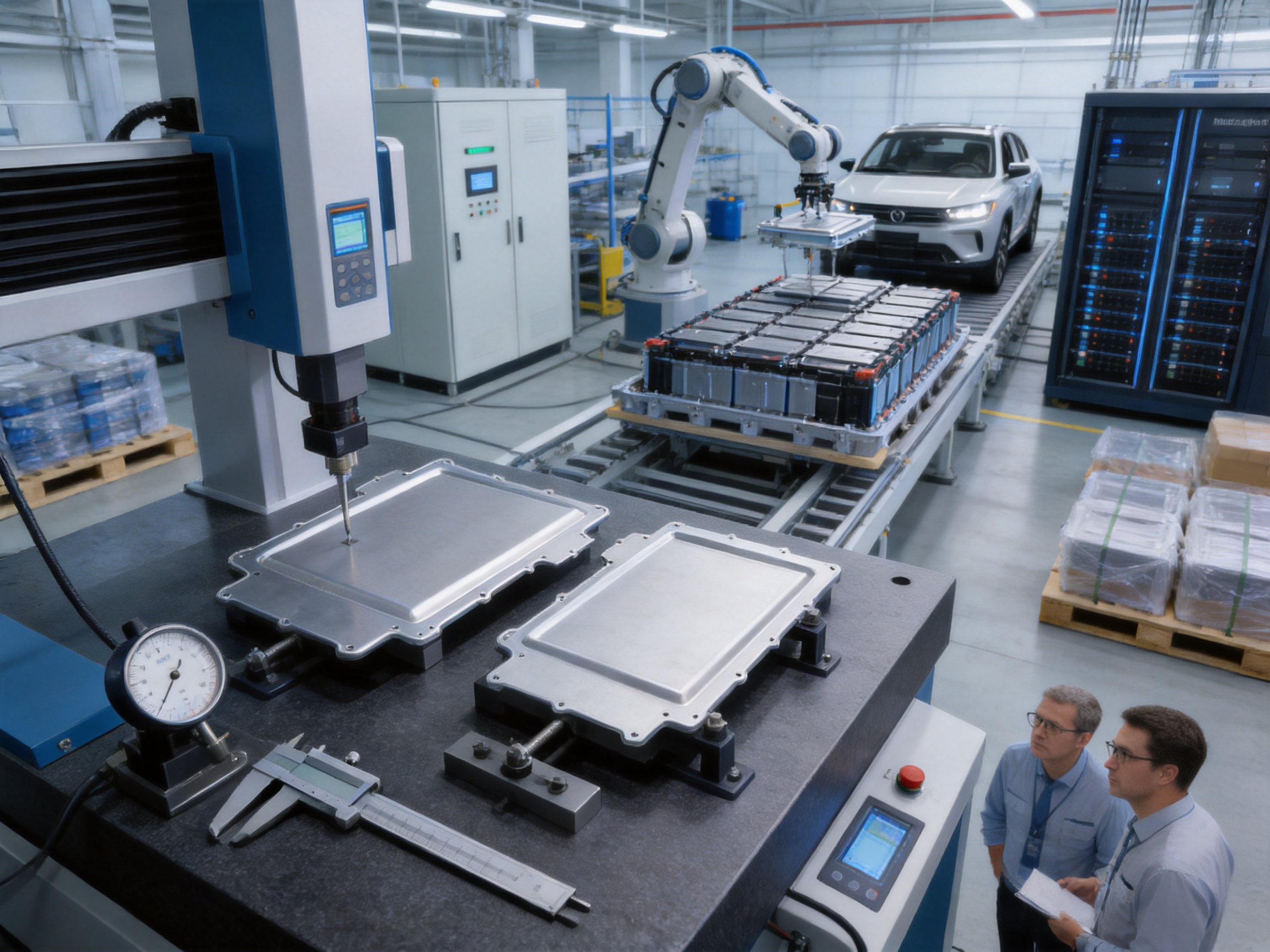
Dimensional accuracy is also important because battery manufacturers often use automated assembly lines. Automated systems rely on repeatable part geometry for feeding, positioning, fastening, inspection, and final testing. A stamped cover with stable dimensions allows robotic equipment and fixtures to operate consistently. By contrast, uncontrolled variation in a manually formed or poorly designed component can create interruptions, inconsistent fit, and higher labor costs.
Surface condition is another important consideration. Sharp burrs, cracks, dents, wrinkles, and forming marks may interfere with assembly or damage nearby components. Burrs can also present a handling hazard and may compromise insulation or sealing materials. Proper die clearance, tool maintenance, press control, deburring procedures, and inspection standards help ensure that battery cover stamping parts have clean edges and a smooth, usable surface.
Flatness and resistance to deformation are particularly important for covers that must maintain a sealed or semi-sealed interface. Excessive warpage can create gaps around the perimeter or produce nonuniform contact with gaskets. A precision stamping process controls material flow and forming pressure so that the finished cover retains its intended shape after release from the die.
Material Options for Battery Cover Stamping Parts
Cold-Rolled Steel
Cold-rolled steel is widely used when the battery cover requires good dimensional stability, strength, surface quality, and cost efficiency. Its relatively uniform thickness supports predictable stamping behavior and helps manufacturers achieve consistent forming results. Cold-rolled steel can be selected in different grades according to the required tensile strength, elongation, corrosion protection, and forming depth.
Steel covers are suitable for applications where rigidity and impact resistance are more important than minimum weight. They may also be treated with plating, painting, powder coating, or other surface protection methods to improve corrosion resistance. In automotive and industrial environments, the appropriate coating can help the cover withstand humidity, salt, chemical exposure, and long-term handling.
Aluminum Alloy
Aluminum alloy is an attractive option for applications where weight reduction is a primary objective. A lighter battery cover can contribute to easier handling, reduced vehicle mass, and improved transportation efficiency. Aluminum alloys also offer natural corrosion resistance and good thermal conductivity, although the specific performance depends on the alloy grade, temper, thickness, and surface treatment.
Aluminum stamping requires careful control because its forming behavior differs from that of steel. Tool radii, lubrication, blank-holder pressure, forming speed, and material direction all influence the risk of cracking, wrinkling, or surface marking. A die manufacturer with experience in aluminum forming can adjust the tool design and process parameters to achieve a reliable result.
Stainless Steel
Stainless steel may be selected for battery covers used in environments requiring high corrosion resistance, clean surfaces, or enhanced durability. It is appropriate for certain industrial equipment, specialized energy systems, and applications exposed to moisture or aggressive atmospheric conditions. Stainless steel is generally more demanding to form than mild steel because of its higher strength and work-hardening characteristics.
Successful stainless steel stamping requires suitable die materials, appropriate clearances, controlled forming conditions, and effective lubrication. When properly processed, stainless steel covers can provide a long service life with limited surface deterioration.
Material Selection Considerations
Material selection should be based on more than initial purchase cost. Engineers should consider the cover’s required stiffness, weight, corrosion environment, joining method, forming depth, coating requirements, thermal conditions, and expected production volume. The interaction between material properties and die geometry must also be evaluated during the design stage.
A professional manufacturer can assist with material recommendations by reviewing the battery enclosure, installation conditions, target output, and performance requirements. The objective is to select a material that provides the required function without unnecessary thickness, processing complexity, or cost.
Battery cover stamping parts
Key Structural Features and Customization Options
Battery cover stamping parts can be designed with a broad range of structural features. These features are normally integrated into the stamping die so that they can be formed consistently during production rather than added through multiple secondary operations.
Perimeter Flanges
Perimeter flanges help connect the cover to the battery casing. They may be used for welding, riveting, bolting, crimping, adhesive bonding, or gasket compression. The flange width, angle, corner radius, and flatness must be controlled according to the joining method. A properly designed flange can improve assembly efficiency and strengthen the enclosure connection.
Mounting and Fastening Holes
Precision-pierced holes can be used for bolts, screws, rivets, clips, locating pins, electrical terminals, sensors, and other components. Hole diameter, roundness, position, and edge quality are important because inaccurate holes can cause installation difficulties or uneven loading. Piercing features can be incorporated into progressive, transfer, or compound dies according to the part design and production volume.
Reinforcing Ribs and Embossed Features
Reinforcing ribs and embossed sections increase stiffness without requiring a significant increase in material thickness. These features can reduce panel vibration, limit deflection, and help the cover withstand external pressure. Their design must account for material flow and the risk of local thinning, cracking, or excessive springback.
Bends and Stepped Sections
Bends and stepped structures allow the cover to follow the shape of the battery casing or create clearance for internal components. Accurate bend angles and controlled corner radii are essential for maintaining assembly compatibility. Multi-stage forming may be required when a part includes several closely spaced bends or complex three-dimensional geometry.
Special Openings and Functional Cutouts
Battery covers may require openings for wiring, ventilation, inspection, pressure management, terminals, sensors, or service access. These openings can be positioned and shaped according to the battery manufacturer’s engineering requirements. The surrounding area may need reinforcement to maintain strength and minimize deformation.
Manufacturing Process for Precision Battery Covers
1. Technical Review and Product Planning
Production begins with a detailed review of the part drawing, three-dimensional model, material requirements, tolerances, surface expectations, annual volume, and assembly conditions. Engineers examine the cover’s functional surfaces, locating features, joining areas, and potential forming challenges.
At this stage, the manufacturer evaluates whether the design is suitable for stamping and determines the most efficient process route. Design-for-manufacturing considerations may include material utilization, blank shape, forming sequence, die structure, press capacity, lubrication, inspection points, and secondary operations.
2. Process Simulation and Die Concept Development
A stamping die must control the movement of sheet metal from the initial blank to the final shape. The die concept may use a single-operation die for a simple component or a progressive, transfer, compound, or multi-step die for a more complex part. The selection depends on geometry, output requirements, material, press type, and the desired balance between tooling investment and unit cost.
Engineers consider the direction of forming, punch and die clearances, draw beads, blank holders, pilots, ejectors, lifters, guide components, and scrap removal. Where appropriate, forming simulation can help identify areas susceptible to cracking, wrinkling, thinning, or springback before the die is manufactured.
3. Precision Die Design
The die is the foundation of part consistency. It must be designed to withstand repeated production loads while maintaining accurate relationships between all working elements. Critical die components require precise alignment, suitable hardness, wear resistance, and reliable replacement or maintenance access.
Die design also influences operator safety and production efficiency. Properly designed guides, sensors, feed systems, and material-handling features help reduce misfeeds and protect the tooling. For high-volume production, the die should support rapid setup, stable cycle times, convenient maintenance, and predictable service intervals.
4. CNC Machining and Wire Cutting
After the design is approved, die components are manufactured using precision machining equipment. CNC machining centers produce cavities, bases, inserts, holders, and other components with controlled geometry. Wire cutting machines are used for accurate profiles, narrow slots, precision openings, and hard material sections that require fine cutting control.
The use of imported wire cutting equipment and CNC machining centers supports the production of intricate tool components and helps maintain repeatability between design intent and finished die geometry. Machining quality is especially important for battery covers with tight hole positions, complex flanges, or multiple forming stations.
5. Grinding and Surface Finishing
Grinding operations refine die surfaces and establish accurate dimensions, flatness, and finish. More than ten grinding machines of different sizes support the processing of various tool components. Proper grinding reduces friction, improves material flow, and helps extend the working life of forming surfaces.
Working surfaces may require polishing, coating, heat treatment, or other preparation depending on the material and forming conditions. Smooth and correctly finished die surfaces reduce the risk of scratches, galling, and inconsistent release.
6. Die Assembly and Trial Stamping
Once individual components are complete, the die is assembled and carefully aligned. Trial stamping is then conducted to evaluate the initial parts. Engineers inspect dimensions, surface quality, bend angles, hole locations, flatness, and forming behavior.
Adjustments may include modifying clearances, polishing local surfaces, changing draw conditions, refining guide elements, correcting springback, or optimizing the sequence of operations. Several rounds of trial production may be necessary for complex covers. The purpose is to stabilize the process before the die enters regular production.
7. Production Stamping
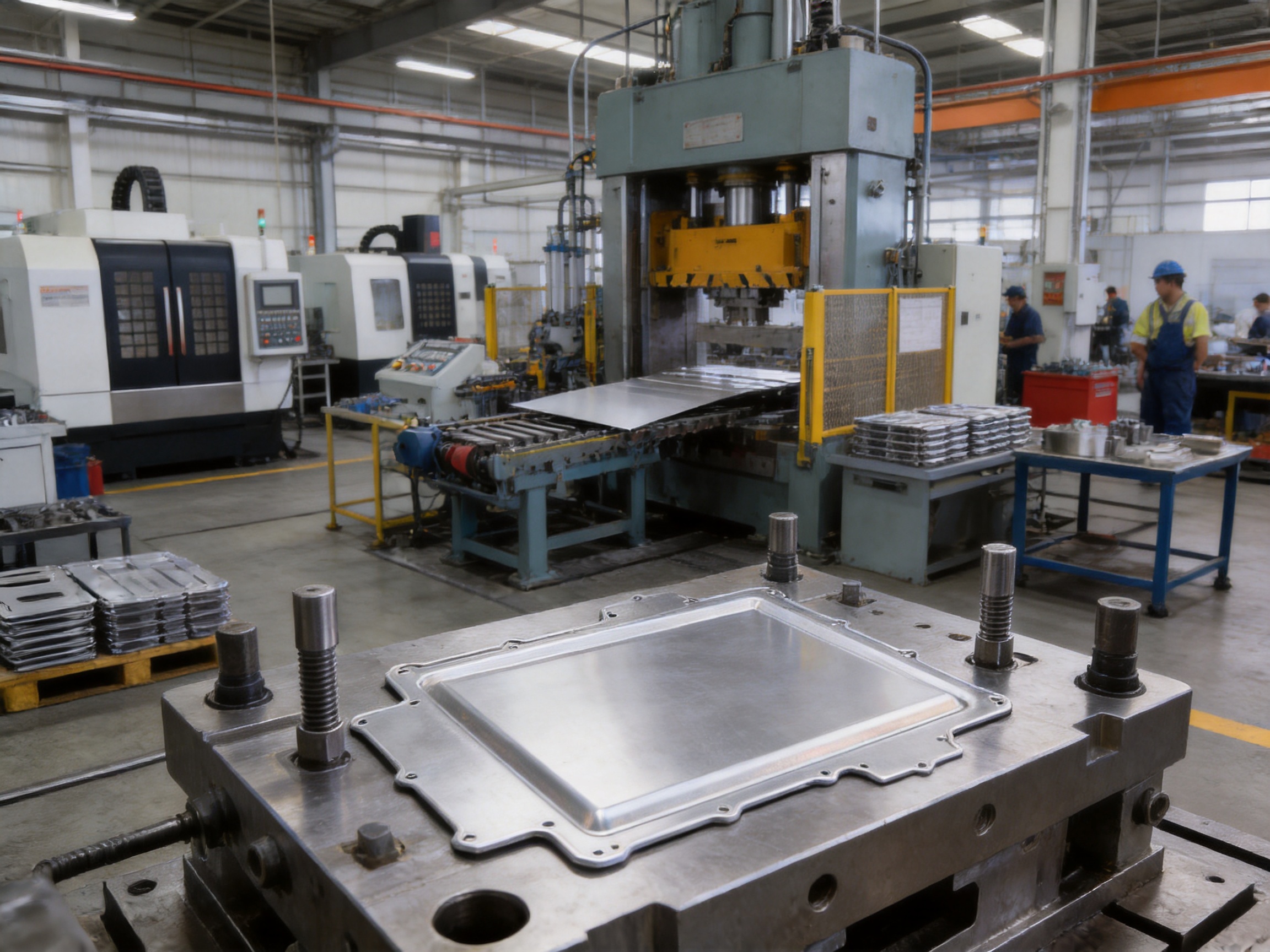
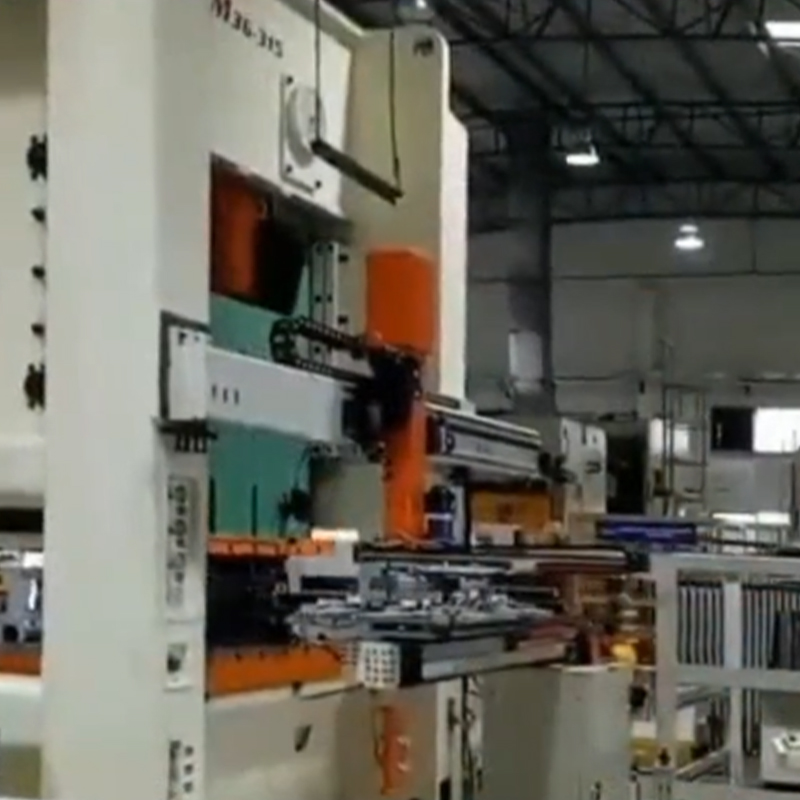
Production stamping is carried out on suitable punch presses selected according to part size, material, forming force, die structure, and required output. The company operates 25 punch presses ranging from 80 tons to 400 tons, allowing different battery cover designs to be matched with appropriate press capacity.
Using the right press reduces unnecessary loading on the die and helps maintain stable forming conditions. Production personnel monitor feed accuracy, press operation, lubrication, material condition, tool wear, and part quality. Process control is particularly important for covers with deep forming, high-strength materials, or multiple integrated features.
8. Inspection and Final Processing
Finished parts are inspected according to the approved drawing and quality requirements. Inspection may include dimensional measurement, gauge checking, visual examination, burr evaluation, flatness testing, hole-position verification, and functional fit testing. Depending on the customer’s requirements, additional tests may evaluate coating adhesion, corrosion resistance, hardness, or mechanical performance.
Secondary operations such as deburring, cleaning, surface treatment, coating, labeling, or packaging can be arranged as part of the supply program. Integrating these activities helps reduce logistics complexity and provides the customer with parts that are ready for assembly.
Manufacturing Capabilities and Equipment Strengths
The manufacturer behind these battery cover stamping parts integrates die design, tooling production, hardware-part stamping, and automation equipment development. This integrated structure creates a direct connection between product requirements, die construction, production trials, and manufacturing improvement.
A technical team of approximately 60 employees supports engineering, machining, stamping, quality control, production management, and service activities. Experienced die makers, senior machine operators, and debugging personnel contribute practical knowledge that is essential when a part requires multiple forming stages or close coordination between tooling and press equipment.
The manufacturing facility includes imported wire cutting machines, CNC machining centers, more than ten grinding machines of different sizes, and 25 punch presses from 80 tons to 400 tons. This equipment range allows the company to support both tooling production and stamped-part manufacturing. It also provides flexibility when customers require different materials, component dimensions, production volumes, or die configurations.
Equipment alone does not guarantee quality. The value of the manufacturing system comes from the interaction between equipment, process knowledge, engineering review, operator experience, and quality management. An accurately machined die must be correctly assembled, tested, installed, maintained, and operated. The company’s senior operators and experienced debugging personnel help translate tooling design into stable production performance.
Integrated Stamping Die and Automation Solutions
One of the manufacturer’s distinguishing strengths is the ability to support both stamping molds and stamping automation equipment. In 2016, it invested in and established a related intelligent technology company focused mainly on stamping automation equipment. This development expanded the company’s ability to provide more than an individual die or stamped component.
Automation may include feeding systems, transfer mechanisms, part positioning equipment, detection devices, stacking solutions, and production-line integration. For high-volume battery cover production, automation can reduce manual handling, improve cycle consistency, increase operator safety, and support continuous quality monitoring.
A customer requiring a complete production solution can therefore discuss the part, die, press arrangement, material flow, and automation concept with an integrated technical team. This reduces the risk of incompatibility between a die supplied by one source and an automation system supplied by another. It also makes it easier to identify process improvements that affect the entire production line rather than only one tool.
The company can provide turnkey solutions for stamping dies and stamping automation. Where appropriate, it can also invest in or arrange related production equipment according to customer needs. This approach is useful for manufacturers that are developing a new battery product, expanding capacity, or seeking to reduce the initial complexity of establishing a stamping line.
Advantages Compared with Alternative Manufacturing Methods
Consistency Compared with Manual Fabrication
Manual cutting, bending, and welding can be practical for prototypes or very small quantities, but these methods generally produce greater variation in dimensions, surface condition, and assembly fit. Battery cover stamping uses a dedicated die to repeat the same geometry across large quantities. This consistency is valuable for automated assembly and long-term supply programs.
Lower Unit Cost in Mass Production
Stamping requires an initial investment in die development, but the cost per part can become highly competitive as production volume increases. A single press cycle can perform several operations, reducing labor content and shortening production time. Material utilization can also be optimized through blank layout and process planning.
Improved Structural Integrity
Stamped parts are formed from continuous sheet material, which can preserve strength across the component more effectively than assemblies made from several individually cut and welded pieces. Integrated flanges, ribs, and bends reduce the number of joints and may improve rigidity and dimensional stability.
Better Compatibility with Automated Lines
Repeatable stamped parts are easier to feed, orient, locate, and fasten using automated equipment. Consistent hole locations and flange geometry help reduce assembly interruptions. When stamping dies and automation are developed together, the production line can be optimized around the actual part shape and handling requirements.
Flexible Material and Feature Selection
Stamping can support steel, aluminum alloy, stainless steel, and other sheet materials. It can also incorporate multiple features in one part, including holes, bends, flanges, ribs, and embossed areas. This gives product engineers more freedom to design covers that meet specific battery enclosure requirements.
Reliable Supply for Growing Programs
Battery and energy storage manufacturers often need a supplier capable of supporting both initial development and subsequent mass production. A company with internal die-making, machining, stamping, and automation capabilities can respond more directly to design changes and production expansion. This reduces dependence on multiple external suppliers and can improve communication throughout the product life cycle.
Quality Control for Battery Cover Stamping Parts
Quality control should begin before the first piece is stamped. During technical review, engineers confirm the material specification, drawing revision, tolerance requirements, inspection method, and intended application. Clear communication at this stage helps prevent misunderstandings about critical dimensions and functional surfaces.
During die production, components are checked for dimensional accuracy, surface finish, hardness where applicable, and assembly compatibility. Die alignment is verified during assembly and trial production. Any forming defects identified in the first samples should be analyzed and corrected before mass production begins.
During stamping, operators monitor the condition of the material and the behavior of the die. Coil or sheet thickness, surface defects, lubrication, feed position, press stroke, and production speed can all influence part quality. Preventive maintenance is important because worn punches, damaged cutting edges, or misaligned guides can gradually increase burrs and dimensional variation.
Final inspection may include first-piece approval, patrol inspection, sampling plans, and outgoing inspection. Critical characteristics such as hole position, flange height, overall length, width, flatness, and bend angle should be measured using suitable gauges or coordinate measurement equipment. Visual inspection remains important for identifying scratches, dents, cracks, wrinkles, and other surface problems.
Traceability can further improve quality management. Recording material batches, die identification, press information, production dates, inspection results, and corrective actions helps manufacturers investigate issues and maintain consistent supply. Documentation is particularly valuable for automotive and energy-related customers with formal supplier qualification requirements.
Comparison of Common Battery Cover Production Approaches
| Production approach | Dimensional consistency | Mass-production efficiency | Structural integration | Typical application |
|---|---|---|---|---|
| Precision stamping | High when the die and process are controlled | High | Excellent for integrated holes, flanges, ribs, and bends | Automotive, industrial, and energy storage battery covers |
| Manual cutting and bending | Dependent on operator skill | Low to moderate | Limited and may require additional joining | Prototype work and very small quantities |
| Laser cutting with separate forming | Good for profiles, but dependent on later forming | Moderate | May require multiple operations | Prototype and flexible low-volume production |
| Fabricated welded assembly | Potentially variable due to weld distortion | Moderate to low | Can create complex structures but with more joints | Special large or low-volume enclosures |
| Die casting | High for suitable shapes | High after tooling investment | Good for thick three-dimensional parts | Applications requiring cast geometry rather than sheet-metal covers |
The comparison demonstrates why precision stamping is often preferred for battery cover programs requiring large quantities, stable geometry, and integrated sheet-metal features. Alternative methods remain useful in selected situations, but the best process depends on volume, material, shape, tolerance, strength, and investment considerations.
Application Areas
Automotive Batteries
Automotive battery covers must withstand vibration, temperature changes, handling, and exposure to road contaminants. They may require accurately positioned mounting holes, terminal clearances, reinforcement features, and corrosion-resistant surfaces. Consistent production is essential because automotive assembly lines operate with strict takt times and quality expectations.
New Energy Vehicles
New energy vehicle battery systems contain complex modules and supporting structures. Stamped covers may be used in auxiliary battery assemblies, module enclosures, protective plates, electrical component housings, and related battery-pack structures. Material selection may emphasize weight reduction, stiffness, electromagnetic considerations, or corrosion performance.
Industrial Power Systems
Industrial batteries used in automation, telecommunications, backup power, and control systems require protective enclosures that can maintain performance in demanding environments. Covers may include access openings, mounting points, cable passages, or reinforcement areas for equipment installation.
Energy Storage Systems
Stationary and mobile energy storage systems often include many battery modules assembled into larger cabinets or containers. Battery cover stamping parts can support modular construction and help protect internal units from dust, moisture, and mechanical damage. Their repeatable dimensions are helpful when multiple covers must be installed across a large system.
Compressors, Servo Drives, and Related Hardware
The manufacturer’s experience also includes molds and products for servo drives, compressors, and new energy vehicle customers. This broader industrial background supports an understanding of precision sheet-metal requirements, electrical equipment housings, and production conditions where reliable dimensions and stable supply are important.
Surface Quality, Corrosion Resistance, and Durability
A battery cover must remain functional throughout its expected service life. Surface quality affects not only appearance but also corrosion behavior, handling safety, coating performance, and contact with seals or insulation. The stamping process should minimize scratches, tears, sharp edges, and other defects that could become starting points for corrosion or assembly problems.
Cold-rolled steel may receive a protective coating or finish selected for the operating environment. Aluminum alloy naturally forms an oxide layer, but additional treatments may be used to improve appearance, wear resistance, or compatibility with other materials. Stainless steel provides inherent corrosion resistance, although contamination and unsuitable processing conditions should still be controlled.
Corrosion resistance is influenced by material, surface treatment, edge condition, storage, packaging, and the environment in which the battery operates. If a cover is installed in an area exposed to water, salt, chemicals, or condensation, the engineering team should define a suitable protection system before production begins.
Durability also depends on correct design. Excessively sharp corners, insufficient bend radii, thin unsupported panels, and poorly positioned holes can reduce service performance. A careful design review can balance strength, weight, formability, and cost while avoiding unnecessary stress concentrations.
Design Recommendations for Better Stamping Results
Battery cover designs should include consistent material thickness whenever possible. Sudden changes in thickness or highly concentrated forming areas can complicate material flow and increase the risk of defects. If different thicknesses are necessary, the transition should be reviewed carefully with the die manufacturer.
Corner radii should be selected according to the material and forming depth. Very small radii may cause cracking or accelerated tool wear, while larger controlled radii generally support smoother material flow. The correct value depends on the alloy, thickness, grain direction, and forming operation.
Holes should be positioned with adequate distance from edges, bends, and other openings. If a hole is too close to a forming area, it may distort during bending or drawing. Edge distance should also be sufficient to maintain strength around fasteners.
Reinforcing ribs should be distributed in a way that improves stiffness without creating unnecessary complexity. Their depth, length, orientation, and termination points should be evaluated for formability and appearance. Ribs that end abruptly may create local stress or visible distortion.
Designers should identify critical-to-function dimensions rather than applying unnecessarily tight tolerances to every feature. Concentrating precision requirements on important assembly surfaces, hole patterns, and sealing areas can control tooling cost while preserving product performance.
Early cooperation between the battery manufacturer and the stamping supplier is strongly recommended. Reviewing the part before the tooling is finalized can identify opportunities to simplify the die, improve material utilization, reduce secondary operations, and increase production stability.
Cost Efficiency and Production Value
The economic benefit of battery cover stamping comes from the combination of repeatability, automation potential, fast cycle times, and reduced assembly work. Once the die has been developed and validated, each additional part can be produced efficiently, making the method suitable for medium- and high-volume requirements.
Material utilization is an important part of total cost. Engineers can evaluate blank layouts and nesting arrangements to reduce scrap. The best layout depends on part shape, grain direction, carrier design, cutting clearance, and process stability. A small improvement in material utilization can produce meaningful savings over a large production program.
Tool life also affects cost. A die designed with wear-resistant materials, replaceable inserts, accessible maintenance areas, and suitable clearances can operate for longer periods with fewer interruptions. Preventive maintenance helps protect both tool life and part quality.
Integrated manufacturing can reduce indirect costs as well. When one supplier manages die design, die machining, trial stamping, production, and automation, communication is more direct. Engineering changes can be evaluated more quickly, and responsibility for process performance is easier to define.
The manufacturer’s ability to provide cost-effective products and services is supported by its internal equipment, experienced technical team, and combined capabilities in molds, stamped parts, and automation. This structure is particularly valuable for customers that want a complete solution rather than a standalone component.
Why Choose an Experienced Stamping Partner?
Battery technology is developing rapidly, and enclosure designs may change as manufacturers improve energy density, safety, packaging, and production methods. An experienced stamping partner should be able to respond to changing drawings, new materials, revised tolerances, and increased production volumes.
Fifteen years of experience in the mold industry provides a practical foundation for understanding die construction, stamping behavior, maintenance, and production debugging. Experience with customers in industrial equipment, compressors, servo drives, and new energy vehicles further broadens the company’s knowledge of precision manufacturing requirements.
The company’s customer base includes Anter Group, Ousheng Electric, Dongbei Group, and Huichuan Technology. These relationships reflect experience serving manufacturers that require molds and stamped products for demanding industrial and new energy applications.
A capable partner should also be willing to support the product after delivery. Technical service may include die adjustment, production troubleshooting, maintenance guidance, process improvement, spare-part support, and assistance with capacity expansion. Long-term service reduces the risk that a customer will be left without practical support after the initial tooling project is completed.
Packaging, Handling, and Delivery Considerations
Battery cover stamping parts should be packaged to prevent scratches, deformation, contamination, and moisture exposure during transportation and storage. The packaging method depends on part size, surface treatment, stacking strength, and customer assembly requirements. Protective separators, plastic film, cartons, pallets, or customized racks may be used.
Parts with delicate flanges or exposed coated surfaces should not be stacked in a way that places excessive pressure on critical areas. If covers are shipped in nested stacks, the nesting design must prevent sliding and edge contact. Packaging should also allow efficient loading, unloading, counting, and inspection.
Storage conditions matter, especially for untreated steel components. Clean, dry, and well-ventilated storage can reduce the risk of oxidation and surface contamination. When a part will not be assembled immediately, the customer and supplier should agree on suitable protective measures and storage duration.
Frequently Asked Questions
What materials can be used for battery cover stamping parts?
Common materials include cold-rolled steel, aluminum alloy, and stainless steel. The best selection depends on required strength, weight, corrosion resistance, forming depth, surface treatment, operating environment, and cost target. Material grade and thickness should be confirmed during the engineering review.
Can the covers be customized for different battery models?
Yes. Battery cover stamping parts can be customized with different lengths, widths, thicknesses, hole patterns, flanges, bends, ribs, stepped areas, and openings. Customized tooling is developed according to the customer’s drawings, three-dimensional data, assembly requirements, and production volume.
Are the parts suitable for mass production?
Yes. Precision stamping is especially suitable for medium- and high-volume production because the die repeats the same geometry at a stable cycle rate. The manufacturer operates punch presses from 80 tons to 400 tons and can match press capacity to the part and tooling requirements.
How are burrs and deformation controlled?
Burrs and deformation are controlled through suitable die clearances, sharp and properly maintained cutting edges, accurate tool alignment, controlled forming conditions, appropriate material selection, and inspection. Deburring or additional finishing can be included when required by the application.
Can holes and flanges be formed in the same part?
Yes. Holes, flanges, bends, ribs, and other features can often be integrated into a progressive, compound, transfer, or multi-operation die. The best arrangement depends on the geometry, tolerance requirements, material, and target production quantity.
What are the advantages of using aluminum for a battery cover?
Aluminum can reduce component weight and offers good natural corrosion resistance. It may be suitable for automotive and energy applications where lightweight construction is important. However, aluminum requires careful control of die geometry, lubrication, forming pressure, and springback.
Can the supplier provide the stamping die as well as the stamped parts?
Yes. The company integrates stamping die design and manufacturing with stamped-part production. This allows the tooling and the final component to be developed together, which can improve communication, trial efficiency, and production consistency.
Is stamping automation available?
Yes. The company has related capabilities in stamping automation equipment and can provide turnkey solutions that include stamping molds and automation. Automation may include feeding, transfer, positioning, detection, stacking, and production-line integration.
What quality checks are normally performed?
Typical checks include material verification, dimensional inspection, hole-position measurement, flange and bend-angle inspection, flatness testing, visual examination, burr evaluation, and functional fit testing. Additional coating or corrosion tests can be arranged according to the application.
How should customers begin a battery cover project?
Customers should provide the part drawing or three-dimensional model, material and thickness requirements, expected annual volume, tolerance information, surface treatment requirements, assembly conditions, and target delivery schedule. The supplier can then review manufacturability, recommend a die concept, estimate tooling and part costs, and propose a production plan.
Conclusion
Battery cover stamping parts provide a practical and reliable way to protect battery assemblies while supporting efficient industrial production. Their value extends beyond the metal panel itself. A successful component depends on appropriate material selection, sound structural design, precision die manufacturing, stable press operation, careful inspection, effective surface protection, and dependable delivery.
Compared with manual fabrication and multi-piece welded construction, precision stamping offers improved repeatability, lower unit cost at production volume, better compatibility with automation, and the ability to integrate holes, flanges, bends, ribs, and other functional features. These advantages make stamped covers suitable for automotive batteries, new energy vehicles, industrial power systems, and energy storage equipment.
The manufacturer described in this article combines approximately 15 years of mold-industry experience with a technical team of about 60 employees, precision machining resources, imported wire cutting equipment, CNC machining centers, multiple grinding machines, and 25 punch presses ranging from 80 tons to 400 tons. Its integrated capabilities cover die design, die production, stamping, debugging, quality control, and stamping automation equipment.
By offering tooling, stamped components, and automation support through an integrated manufacturing structure, the company can help customers move from product concept to stable mass production. This approach supports better communication, improved process control, cost efficiency, and long-term supply reliability. For battery manufacturers seeking durable, accurately formed, and customizable enclosure components, precision battery cover stamping parts are a strong foundation for safe and efficient battery-system production.
References
1. Society of Manufacturing Engineers, Fundamentals of Sheet Metal Stamping and Forming.
2. American Society for Metals, Metals Handbook: Forming and Forging.
3. International Organization for Standardization, Quality Management Systems—Requirements.
4. Automotive Industry Action Group, Quality Planning and Production Part Approval Practices.
5. Engineering practices for progressive die design, press selection, material utilization, and sheet-metal quality control.
6. Technical information supplied for battery cover stamping parts, stamping dies, stamped components, and stamping automation equipment.
7. Company manufacturing information concerning die design, precision machining, stamping production, equipment capabilities, technical personnel, and integrated automation services.
Product: Battery cover stamping parts
Previous Post
No previous article
Next Post
New Energy Vehicle Copper Busbar Stamping Parts for High-Voltage Electrical Systems
Our Products.
Start Your Business with an OEM Manufacturer Right Here!

Provide global customers with complete turn-key solutions
through
innovation!
QUICK LINKS
CONTACT INFO.
-
 +86-139 1308 8972
 -

-
 No. 118 Yexin Road, Wujiang Economic Development Zone, Suzhou, China
Copyright © Suzhou Shuangqisi Mold Equipment Co., Ltd. All Rights Reserved. Custom Stamping Die Metal Stamping Die Manufacturers
