 English
 Español
 Deutsch
-
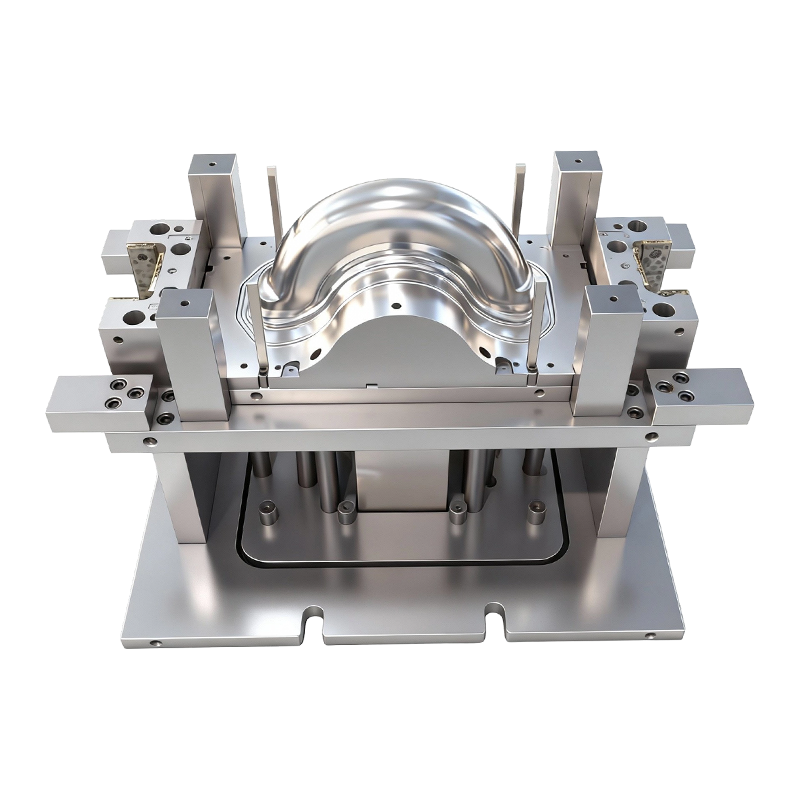
Deep drawing mold for front and rear wheels of two-wheeled electric vehicles
This Deep drawing mold for front and rear wheels o...
-
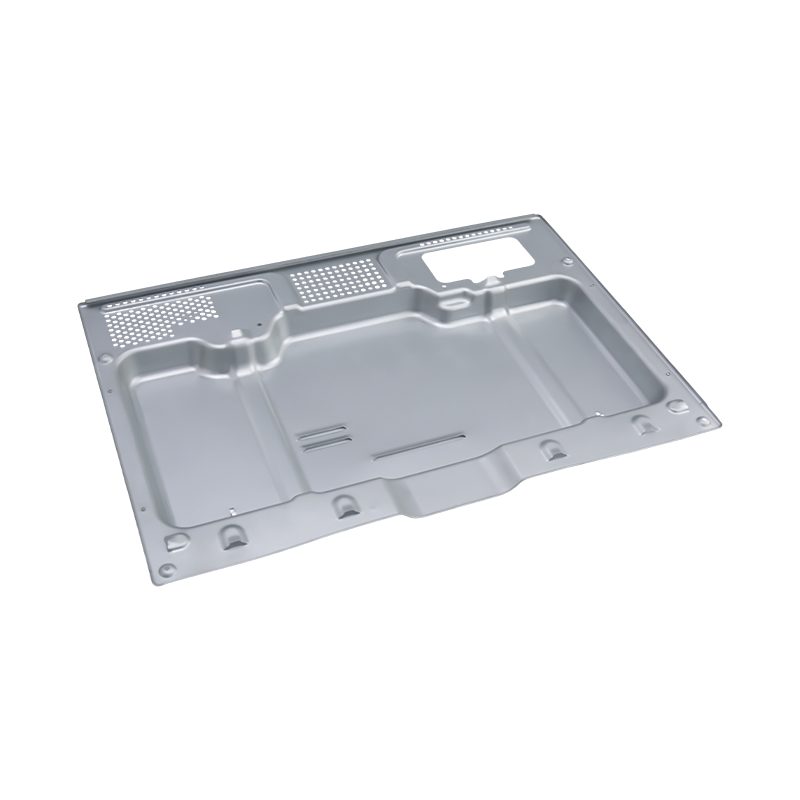
High-end oven stamping parts
Our High-end oven stamping parts are precision-man...
-
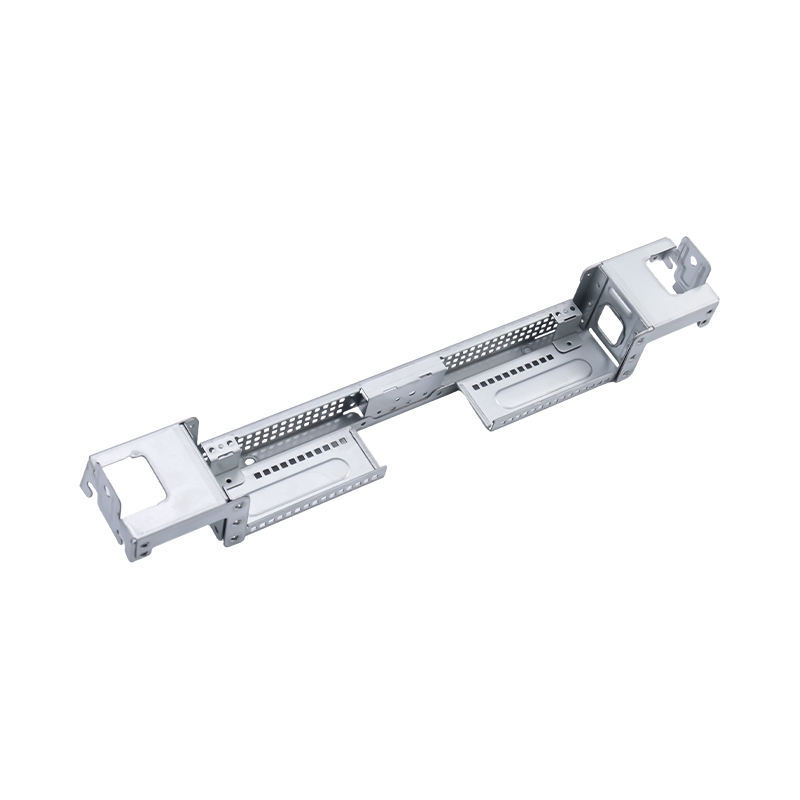
High-end large computer stamping parts
Our High-end large computer stamping parts are pre...
-
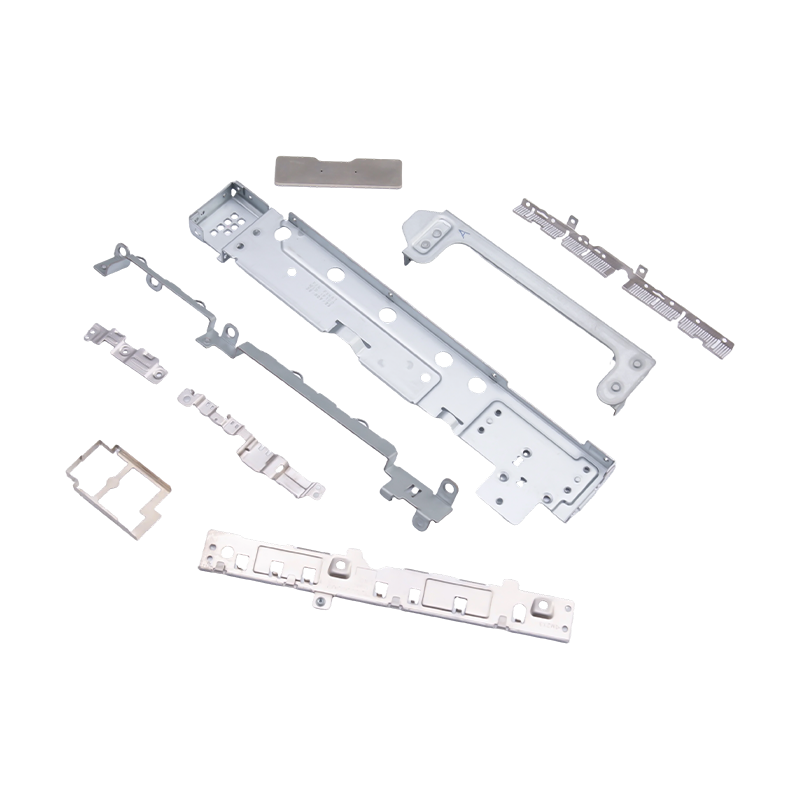
Small stamped parts for laptops and mobile phones
As essential internal components for modern portab...
-
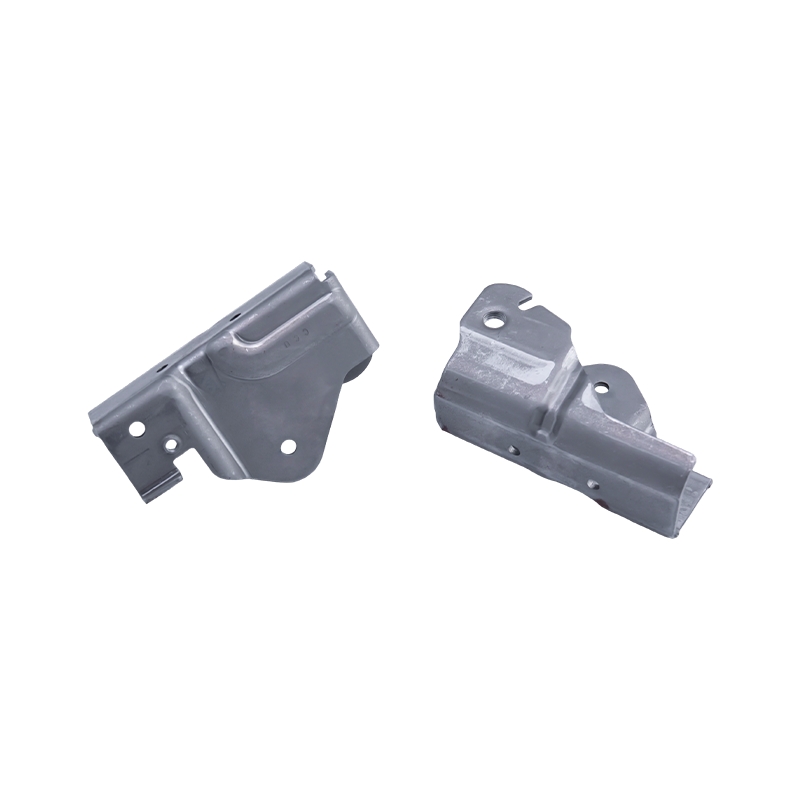
Car seat stamping parts
Car seat stamping parts are core metal components ...
-
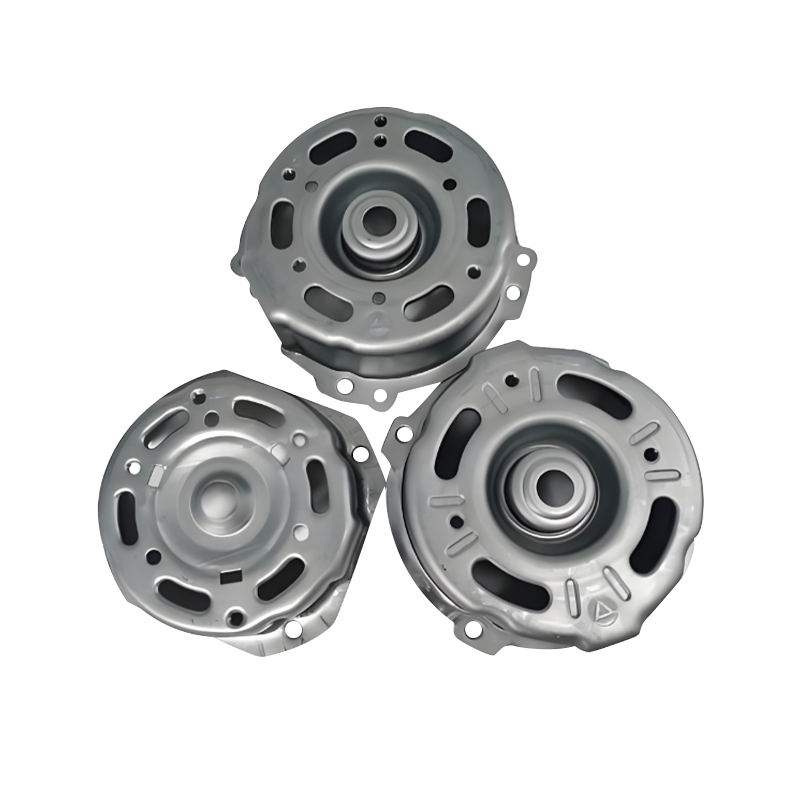
Automotive motor housing stamping parts
Automotive motor housing stamping parts are core c...
- E-mail us: [email protected]
- Call us: +86-139 1308 8972

Liu Yanan – After-Sales Service Engineer
Home / Author / Liu Yanan – After-Sales Service Engineer / High-Precision Car Seat Stamping Parts for Stronger, Safer, and More Reliable Automotive Seating
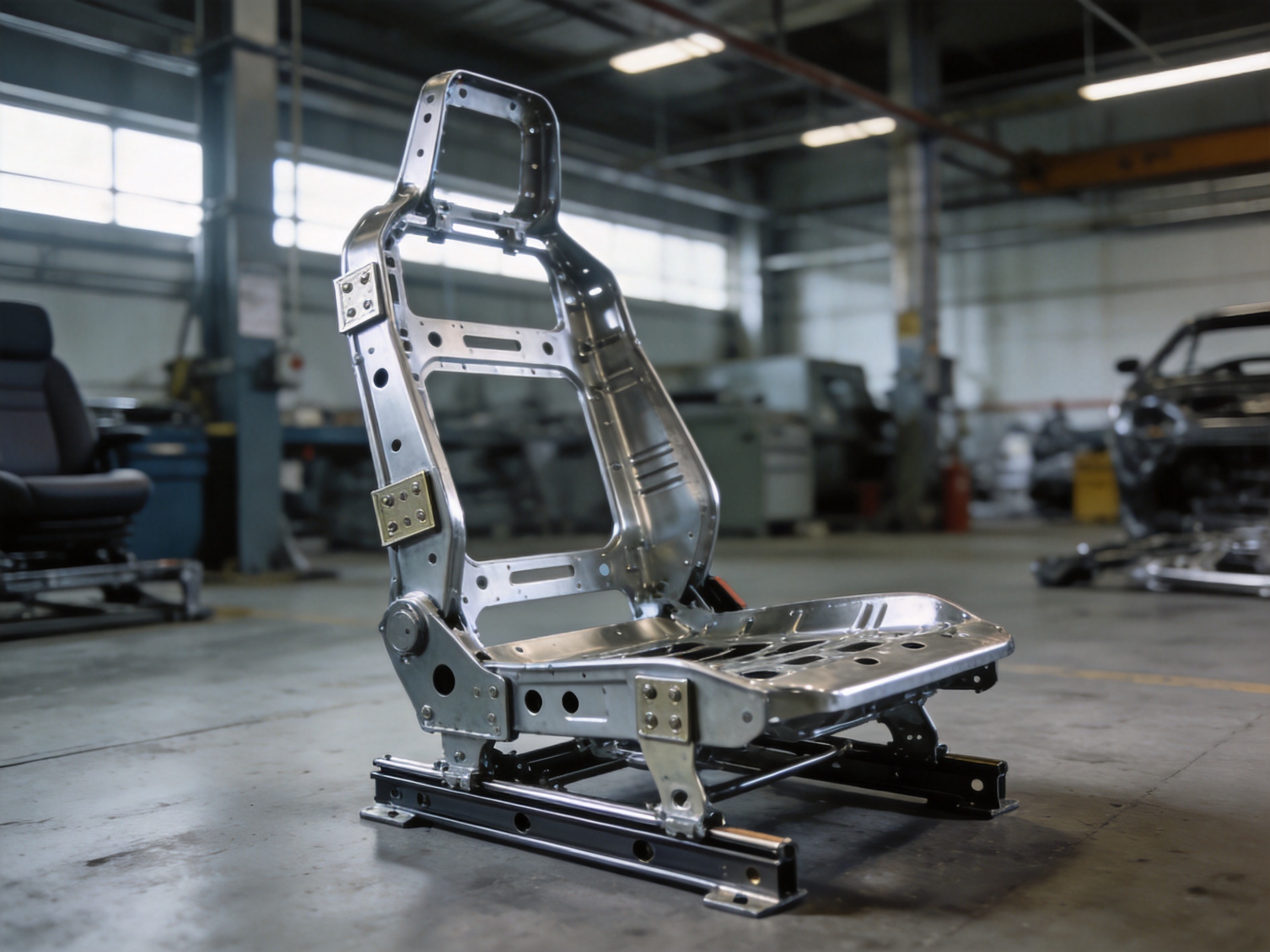
High-Precision Car Seat Stamping Parts for Stronger, Safer, and More Reliable Automotive Seating
2026-05-21
Car seat stamping parts are among the most important hidden components in modern vehicles. Although they are not always visible to drivers and passengers, they directly influence seat stability, load-bearing performance, vibration resistance, adjustment accuracy, and long-term safety. A well-designed car seat is not only a comfort system; it is also a structural safety system that must support occupants under daily driving conditions and during demanding situations such as emergency braking, road impact, collision forces, and repeated adjustment cycles. For this reason, car seat stamping parts must be manufactured with outstanding dimensional precision, controlled material performance, clean edges, consistent thickness, and reliable mechanical strength.
Car seat stamping parts are metal components produced by precision stamping processes from high-strength steel, aluminum alloy, or other automotive-grade sheet materials. They are widely used in driver seats, passenger seats, rear seats, seat frames, cushion supports, reclining structures, height adjustment systems, slide rails, brackets, connecting plates, reinforcement pieces, and mounting interfaces. These parts must work together with cushions, foams, plastic covers, fasteners, motors, springs, and electronic adjustment mechanisms. Even a small dimensional deviation may affect assembly efficiency, seat movement, locking stability, noise performance, or safety compliance.
Suzhou Shuangqisi Mold Equipment Co., Ltd. focuses on stamping dies, stamping parts, and stamping automation equipment. With long-term experience in die design, mold manufacturing, stamping production, and automation integration, the company provides car seat stamping parts that are engineered for high consistency and dependable performance. Located at No. 118 Yexin Road, Wujiang Economic Development Zone, Suzhou, China, the company combines advanced equipment, experienced technical staff, senior operators, quality control systems, and cost-efficient manufacturing management to serve customers in automotive and industrial sectors.
This article explains the functions, advantages, materials, manufacturing processes, quality control methods, competitive strengths, and application value of high-precision car seat stamping parts. It also highlights how integrated die-making and stamping automation capabilities help create stronger, safer, and more cost-effective automotive seating components for modern vehicle manufacturing and maintenance.
Content
- 1 The Role of Car Seat Stamping Parts in Automotive Safety and Comfort
- 2 Core Product Advantages
- 3 Competitive Advantages Over Common Alternatives
- 4 Materials Used for Car Seat Stamping Parts
- 5 Precision Stamping Process for Automotive Seat Components
- 6 Manufacturing Strengths of Suzhou Shuangqisi Mold Equipment Co., Ltd.
- 7 Quality Control for Car Seat Stamping Parts
- 8 Design Considerations for Better Seat Stamping Parts
- 9 Applications in Driver, Passenger, and Rear Seats
- 10 How Precision Stamping Supports Lightweight Automotive Design
- 11 Noise, Vibration, and Harshness Performance
- 12 Assembly Efficiency and Manufacturing Cost Benefits
- 13 Customization and Engineering Support
- 14 Why an Integrated Stamping Partner Matters
- 15 Packaging, Handling, and Delivery Considerations
- 16 Q&A: Common Questions About Car Seat Stamping Parts
- 16.1 What are car seat stamping parts?
- 16.2 Why are precision stamped parts important for automotive seats?
- 16.3 What materials are commonly used for car seat stamping parts?
- 16.4 How do stamped parts improve seat safety?
- 16.5 What advantages does precision stamping have over machining?
- 16.6 Can car seat stamping parts be customized?
- 16.7 How does die quality affect the final stamping part?
- 16.8 What production equipment is used to manufacture these parts?
- 16.9 Why is automation useful in stamping production?
- 16.10 What makes Suzhou Shuangqisi Mold Equipment Co., Ltd. a strong supplier?
- 17 Conclusion
- 18 Company Contact Information
- 19 References
The Role of Car Seat Stamping Parts in Automotive Safety and Comfort
Automotive seating systems are exposed to complex loads throughout the vehicle life cycle. During normal use, seats must carry the weight of passengers, resist vibration from road surfaces, maintain correct position after adjustment, and remain stable during acceleration, braking, and cornering. During extreme events, seat structures must help protect occupants by resisting deformation, maintaining anchoring points, and supporting restraint systems. Car seat stamping parts are essential because they form much of the metal skeleton and connecting architecture that allows the seat to perform these functions.
A typical automotive seat contains multiple stamped components. Some are used as side frames, cross members, cushion pan supports, backrest plates, recliner brackets, mounting lugs, slide rail supports, reinforcement plates, spring hooks, motor brackets, and adjustment system connectors. These parts may have holes, slots, ribs, flanges, embossments, bends, notches, and local reinforcements. Each feature serves a specific purpose, such as improving stiffness, reducing weight, guiding assembly, positioning a fastener, absorbing stress, or connecting to other mechanical systems.
Compared with machined parts or cast components, stamped parts offer a balance of high production efficiency, good repeatability, material utilization, lightweight potential, and cost control. Once the stamping die is properly designed and debugged, a large quantity of components can be produced quickly with stable geometry. This is especially valuable in automotive manufacturing, where thousands or millions of seats may require repeatable components with consistent quality.
Car seat stamping parts must also support modern seat design trends. Today’s vehicles increasingly require lightweight structures, compact assemblies, electric adjustment, heating and ventilation systems, safety sensors, memory functions, and modular platform compatibility. These demands increase the complexity of seat metal parts. Precision stamping allows engineers to create thin yet strong sheet-metal structures with ribs, formed edges, flanges, and local reinforcements that improve mechanical performance while helping reduce vehicle weight.
Core Product Advantages
The quality of car seat stamping parts is determined not only by material selection but also by die accuracy, process stability, press capability, operator experience, inspection discipline, and production management. The product described here is designed for automotive seat frameworks and manufactured through high-precision stamping processes. Its major advantages include accurate dimensions, uniform thickness, smooth edges, reliable strength, easy installation, broad compatibility, and strong resistance to deformation under static and dynamic loads.
High Dimensional Accuracy
Automotive seat structures require tight assembly tolerances. If the holes of a bracket are misaligned, assembly time increases and the final seat may produce abnormal noise or fail to lock correctly. If a support plate has inconsistent bending angles, it may create interference with cushions, rails, or adjustment mechanisms. High-dimensional accuracy is therefore essential. Precision stamping dies are developed to control the shape, hole position, bending angle, and overall flatness of each part. Accurate die design and well-managed debugging help ensure that stamped seat components fit tightly with cushions, brackets, fasteners, and mechanical adjustment systems.
Uniform Thickness and Stable Form
Uniform thickness is important for predictable strength and stable forming behavior. During seat operation, stamped metal parts distribute stress across frames and connecting points. If thinning, cracking, or uneven deformation occurs during forming, the component may become a weak point. Controlled stamping processes help maintain material thickness and stable geometry. Proper forming sequence, punch clearance, bending radius, lubrication, and press settings reduce the risk of defects and improve the final part’s service life.
Smooth Edges and Safer Assembly
Smooth edges are crucial in automotive seat manufacturing. Sharp burrs can cut operators, damage cables, wear fabric, scratch nearby parts, or create assembly difficulties. For seats equipped with electrical functions, rough edges may also damage wiring harnesses or sensor lines. The use of precision dies, suitable cutting clearance, grinding, deburring, and quality inspection helps provide clean edges and reduce burr-related risk. This advantage supports safer assembly, improved product appearance, and better reliability in service.
Strong Load-Bearing Capacity
Car seat stamping parts are designed to bear static and dynamic loads. Static loads include the occupant’s weight and constant pressure on the seat structure. Dynamic loads include vibration, road shock, repeated adjustment, sudden braking, lateral movement, and impact-related forces. The parts must resist deformation, fracture, loosening, and fatigue damage. High-strength steel or aluminum alloy can be selected according to application requirements, while stamped ribs, flanges, and reinforcement structures can improve stiffness without unnecessary material consumption.
Compatibility with Multiple Seat Types
The product is suitable for driver seats, passenger seats, and rear seats. It can be customized for different vehicle platforms, from conventional passenger cars to new energy vehicles. Seat structures vary depending on vehicle class, adjustment functions, comfort requirements, and safety regulations. Custom stamping die design enables different geometries, hole patterns, reinforcement structures, and connection interfaces to be produced according to customer drawings or engineering requirements. This flexibility makes the parts suitable for original equipment production, maintenance, and replacement component programs.
Reliable Performance Under Extreme Conditions
Automotive components may face high temperature, low temperature, humidity, vibration, corrosion, and mechanical shock. Car seat stamping parts must maintain function under these conditions. Strict quality inspections help ensure that parts do not deform or fracture easily under demanding use. Material verification, dimensional inspection, die maintenance, forming control, and process monitoring all contribute to stable product quality. When properly designed and produced, stamped seat components provide reliable hardware support for automotive seat manufacturing.
Competitive Advantages Over Common Alternatives
Car seat stamping parts compete with components made by casting, machining, welding from simple profiles, or low-precision stamping. Each method has advantages, but precision stamping offers a strong combination of efficiency, consistency, weight control, and cost performance for automotive seat applications. The key is that the stamping process must be supported by high-quality dies and experienced production management.
Compared with cast parts, stamped parts are often lighter and more suitable for high-volume production of thin-walled structural components. Casting may be useful for complex three-dimensional shapes, but it can involve longer cycle times, heavier sections, higher finishing requirements, and potential internal defects. Stamped sheet-metal parts can achieve excellent repeatability, clean outlines, accurate holes, and efficient material usage when the die is properly designed.
Compared with fully machined components, stamped parts are usually more economical for mass production. Machining removes material from a solid block or plate, which can increase material waste and processing time. Stamping forms and cuts sheet material in rapid press cycles. For automotive seat brackets, plates, and reinforcements, stamping can deliver high output with repeatable quality and lower per-part cost after die investment.
Compared with low-precision stamped parts, high-precision car seat stamping parts offer better assembly performance and lower long-term risk. Low-precision parts may have burrs, inconsistent hole positions, poor flatness, unstable bending angles, and inadequate dimensional repeatability. These problems can cause production delays, rework, abnormal noise, reduced comfort, and possible safety concerns. Precision parts reduce the need for manual correction and help improve the efficiency of downstream seat assembly lines.
Compared with separate suppliers that only provide stamping without die expertise, a manufacturer with integrated mold design, die manufacturing, stamping production, and automation capability can respond more effectively to quality and cost requirements. When die makers and production teams work together, design issues can be identified earlier, forming challenges can be solved faster, and process improvements can be implemented more directly. This integration is one of the most important strengths behind stable automotive stamping part supply.
Materials Used for Car Seat Stamping Parts
Material selection depends on strength requirements, weight targets, corrosion expectations, forming complexity, cost budget, and vehicle platform design. Common choices include high-strength steel, low-carbon steel, galvanized steel, and aluminum alloy. Each material must be matched with suitable die design and stamping parameters.
High-strength steel is widely used in seat structures because it provides excellent load-bearing capacity and deformation resistance. It is suitable for brackets, reinforcement plates, load-transfer parts, and components that require high stiffness. However, high-strength steel can be more difficult to form than ordinary steel, so the die design must control springback, cracking, and dimensional stability.
Low-carbon steel has good formability and is often used where moderate strength and complex forming are required. It is easier to bend, draw, and pierce, which can help reduce forming defects. For some seat components, low-carbon steel may provide a cost-effective solution when ultra-high strength is not necessary.
Galvanized steel offers improved corrosion resistance due to its protective zinc coating. In automotive interiors, corrosion exposure is generally lower than exterior environments, but moisture, condensation, and long vehicle life cycles still make corrosion resistance important. Galvanized materials may be used for seat frame parts, brackets, and supports where additional corrosion protection is desirable.
Aluminum alloy is valued for lightweight applications. Reducing seat weight helps improve vehicle efficiency, especially in new energy vehicles where range and energy consumption are major considerations. Aluminum stamping requires careful control of forming radius, lubrication, springback, and surface quality. When properly processed, aluminum seat stamping parts can provide a strong combination of weight reduction and structural performance.
| Material Type | Main Advantages | Typical Seat Applications | Processing Considerations |
|---|---|---|---|
| High-Strength Steel | Excellent strength, stiffness, and load resistance | Reinforcement plates, brackets, structural supports | Requires control of springback, cracking, and die wear |
| Low-Carbon Steel | Good formability and cost efficiency | General brackets, cushion supports, connecting plates | Suitable for complex forming with moderate strength needs |
| Galvanized Steel | Improved corrosion resistance and stable performance | Seat frames, mounting interfaces, support plates | Coating protection and surface handling must be managed |
| Aluminum Alloy | Lightweight, corrosion-resistant, suitable for energy-saving designs | Lightweight seat frames, brackets, special supports | Requires careful forming, lubrication, and springback control |
Precision Stamping Process for Automotive Seat Components
The manufacturing of car seat stamping parts begins long before the press starts production. A reliable stamping part is the result of engineering analysis, die design, material planning, machining accuracy, trial production, debugging, inspection, and continuous process control. Each step influences the final quality.
Product Requirement Review
The process usually starts with a review of customer drawings, samples, or functional requirements. Engineers evaluate the material grade, thickness, dimensional tolerances, hole positions, forming depth, bending angles, surface requirements, and assembly interfaces. For automotive seat parts, they also consider load direction, connection method, vibration conditions, fatigue risk, and compatibility with surrounding components. Early review helps identify possible forming difficulties, cost-saving opportunities, and tolerance optimization.
Stamping Die Design
Die design is central to part quality. Engineers determine the forming sequence, blank layout, cutting line, piercing stations, bending stations, forming stations, trimming process, and ejection method. Depending on product complexity and production volume, progressive dies, compound dies, transfer dies, or single-operation dies may be used. Progressive dies are often efficient for high-volume production because multiple operations are completed as the strip advances through the die. For larger or more complex seat parts, transfer or multi-stage forming may be selected.
Important die design considerations include punch and die clearance, forming radius, springback compensation, strip feeding accuracy, waste removal, guiding system, material positioning, pressure distribution, and part release. For high-strength steel, die wear resistance and forming stress must be carefully considered. For aluminum alloy, surface protection and galling prevention are important. A well-designed die reduces production instability and improves the life of the tooling.
Precision Mold Manufacturing
After design approval, die components are manufactured using precision equipment. Suzhou Shuangqisi Mold Equipment Co., Ltd. is equipped with imported wire cutting machines, CNC machining centers, more than 10 grinding machines of various sizes, and other advanced precision machine tools. These machines support accurate machining of punches, die inserts, plates, guide components, forming blocks, and cutting edges. Precision grinding and wire cutting help achieve the tight clearances required for clean cutting and stable forming.
The accuracy of die manufacturing directly affects the stamped part. If the cutting edge clearance is inconsistent, burrs may increase. If forming surfaces are inaccurate, part dimensions may drift. If guide systems are not precise, punch wear and misalignment may occur. Therefore, die manufacturing requires skilled operators, strict machining control, and careful assembly. Experienced mold makers understand how small adjustments can influence the final stamped product.
Die Assembly, Trial, and Debugging
Once the die is assembled, trial stamping is performed. Trial parts are inspected for dimensions, surface quality, burr height, cracks, wrinkles, hole position, bending angle, flatness, and material flow. Debugging personnel adjust clearances, forming pressure, shimming, springback compensation, feeding accuracy, lubrication, and press parameters. This stage is especially important for automotive seat components because they must assemble smoothly with other parts and maintain strength under load.
Experienced debugging personnel are a major advantage. They can quickly identify whether a defect comes from material behavior, die geometry, press setting, strip feeding, or part design. Efficient debugging shortens development time and improves the probability of stable mass production. It also helps reduce tooling modification costs and supports faster customer project schedules.
Stamping Production
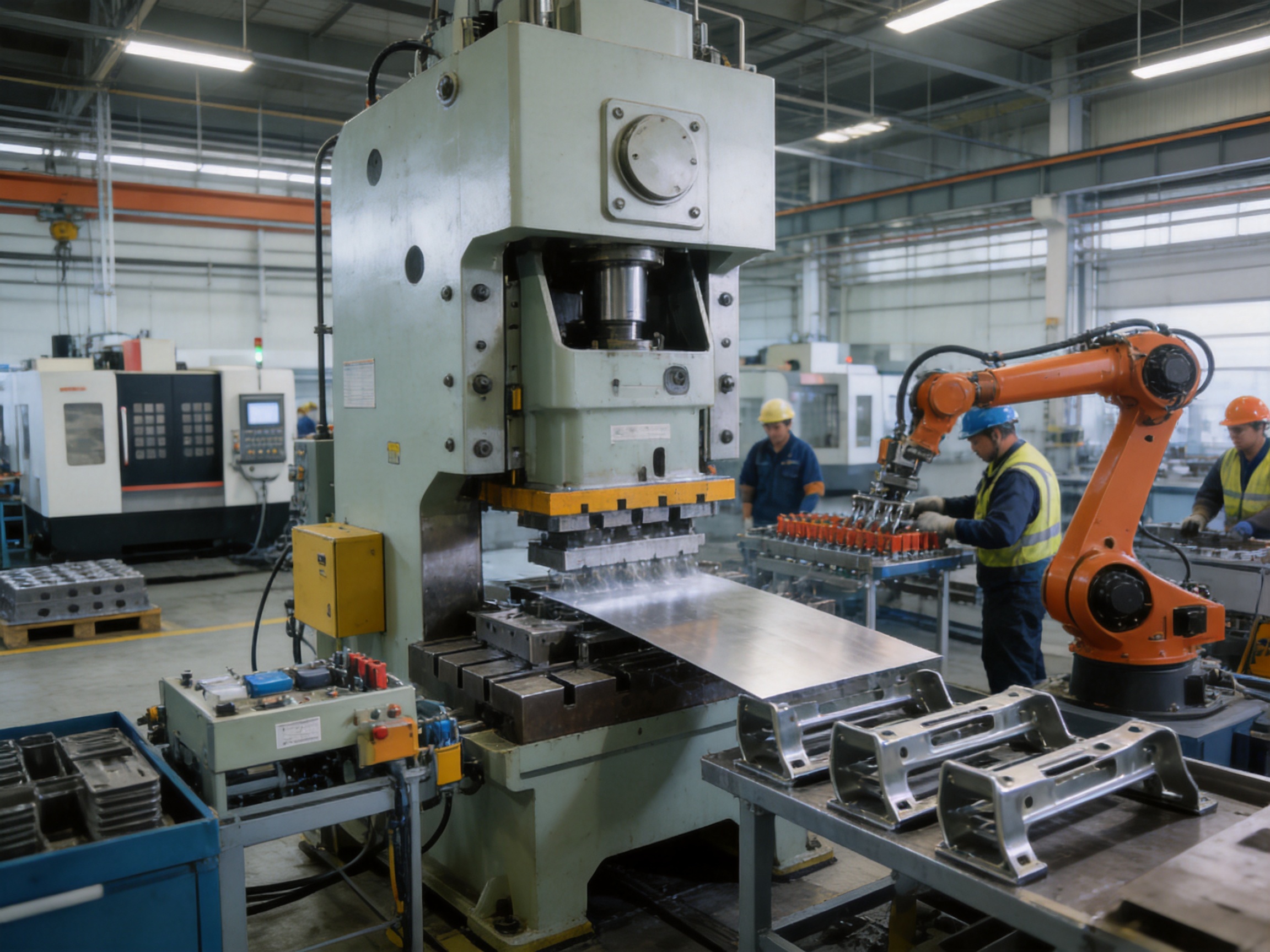
Mass production uses punch presses selected according to material thickness, part size, forming force, and production volume. The company has 25 punch presses ranging from 80T to 400T. This press range enables production of many types of automotive stamped parts, from smaller brackets to larger structural components. Appropriate press tonnage helps ensure stable forming, accurate cutting, and sufficient capacity for different customer programs.
During production, operators monitor feeding, lubrication, part discharge, scrap removal, press speed, and product appearance. Process documents define key parameters and inspection points. When production is stable, stamping can produce parts efficiently with consistent geometry. Automation equipment may also be integrated to improve feeding accuracy, reduce manual handling, increase safety, and support continuous production.
Secondary Processing and Surface Treatment
Some car seat stamping parts may require secondary operations such as tapping, welding, riveting, deburring, cleaning, heat treatment, surface coating, or assembly with other components. Surface treatment may include anti-rust oil, electrophoresis, zinc plating, powder coating, or other customer-specified processes. The final treatment depends on corrosion requirements, appearance expectations, and downstream assembly needs.
Deburring is particularly important for seat parts because edges may contact fabric, foam, wiring, or workers’ hands. Cleaning may be needed to remove oil, metal chips, and residues. If welding is required, dimensional stability before and after welding must be controlled. Integrated process planning helps ensure that secondary operations do not compromise the accuracy created during stamping.
Manufacturing Strengths of Suzhou Shuangqisi Mold Equipment Co., Ltd.
Suzhou Shuangqisi Mold Equipment Co., Ltd. is a professional manufacturer integrating design, manufacturing, and service for stamping dies and hardware parts. Its capabilities are especially valuable for automotive stamping projects because the company can support customers from initial die development to stamped part production and stamping automation. This integrated model helps reduce communication gaps, improve technical response, and control production costs.
Experienced Technical Team
The company has 60 technical staff. In precision stamping, human expertise is as important as equipment. Engineers must understand material behavior, die structure, process planning, automotive tolerances, and production efficiency. Operators must know how to set presses, detect abnormal conditions, maintain tooling, and prevent defects. Debugging personnel must have practical experience with springback, cracking, wrinkling, burrs, feeding errors, and assembly problems. A strong technical team allows the company to respond to diverse customer needs and provide practical solutions.
Advanced Equipment Base
The company’s equipment includes imported wire cutting machines, CNC machining centers, multiple grinding machines, and 25 punch presses from 80T to 400T. This combination supports both tooling and production. CNC machining centers allow accurate machining of die plates and complex surfaces. Wire cutting machines create precise contours and cutting edges. Grinding machines provide surface accuracy and dimensional control. Punch presses provide production capacity for different part sizes and material thicknesses.
Advanced equipment is not only about machine quantity; it is also about process capability. A manufacturer that can make accurate dies internally has better control over tooling quality, repair speed, and improvement cycles. If a part requires die adjustment during production, in-house tooling capability can shorten response time. This is an important advantage over suppliers that depend heavily on outside mold resources.
Fifteen Years of Mold Industry Experience
With 15 years of experience in the mold industry, the company has accumulated knowledge in stamping die structure, part forming, material utilization, cost control, and customer service. Automotive projects often require repeated optimization. Experience helps engineers predict potential issues and propose realistic solutions. It also supports stable quality because many stamping challenges are solved through practical knowledge built over years of production.
Integrated Mold and Automation Capabilities
In 2016, the company invested in and established Suzhou Keshuang Intelligent Technology Co., Ltd., which mainly produces stamping automation equipment. This background enables the group to provide turnkey solutions for stamping molds and stamping automation. For automotive seat stamping parts, automation can improve production repeatability, reduce labor intensity, enhance safety, and increase output. Automated feeding, transfer, inspection, and collection systems can be designed according to product characteristics and customer production needs.
Integrated automation capability is a meaningful competitive advantage. Many stamping defects are related to unstable feeding, manual handling, inconsistent positioning, or production rhythm. Automation helps reduce these risks. It also supports high-volume production where consistent output and process control are required. Customers seeking cost-effective and stable supply can benefit from a supplier that understands both dies and automated stamping production.
Strong Customer Base and Industry Experience
The company’s main clients include Anter Group, Ousheng Electric, Dongbei Group, and Huichuan Technology. It mainly supplies molds and products for servo drives, compressors, and new energy vehicles. This background demonstrates experience with industrial and automotive-related precision components. New energy vehicle applications often demand lightweight design, accurate assembly, and reliable structural parts, which are also relevant to car seat stamping parts.
Cost and Quality Control
Automotive manufacturers and seat suppliers require competitive pricing without sacrificing quality. The company emphasizes strict cost and quality control. Cost control can come from optimized die design, improved material utilization, efficient production layout, reduced rework, automation, and stable process parameters. Quality control comes from technical review, accurate tooling, controlled production, inspection, and continuous improvement. The combination of cost and quality discipline helps provide high-value stamping solutions.
Quality Control for Car Seat Stamping Parts
Quality control is essential because car seat stamping parts affect both assembly performance and occupant safety. A reliable inspection system must cover incoming material, die condition, production process, dimensional accuracy, surface quality, mechanical performance, and final packaging.
Incoming Material Verification
Before stamping, material certificates and specifications should be checked to confirm grade, thickness, coating, mechanical properties, and batch information. Material thickness variation can affect forming results and part strength. Incorrect material grade may cause cracking, excessive springback, or insufficient load-bearing performance. Proper incoming control reduces the risk of producing nonconforming parts.
First Article Inspection
At the beginning of production or after die maintenance, first article inspection confirms that the part meets drawing requirements. Inspectors check dimensions, hole positions, bending angles, flatness, burrs, surface defects, and key assembly features. If any deviation is found, production can be adjusted before large quantities are made. First article inspection is a basic but critical safeguard for stable automotive stamping production.
In-Process Inspection
During mass production, periodic inspection ensures that dimensions remain stable. Tool wear, material changes, press vibration, lubrication variation, or feeding errors can cause gradual drift. In-process inspection allows early detection and correction. Operators may use gauges, calipers, height gauges, templates, visual checks, and specialized fixtures. For critical seat parts, go/no-go gauges can quickly verify hole positions and functional dimensions.
Burr and Edge Control
Burr control is especially important for stamped seat components. Excessive burrs may interfere with assembly, damage surrounding materials, or create safety hazards. Proper cutting clearance, tool sharpening, die maintenance, and deburring processes help control burr height. Quality inspectors should monitor burrs regularly, especially during long production runs when cutting edges may wear.
Dimensional and Functional Testing
Car seat stamping parts are often inspected not only as individual components but also for functional fit. This may involve checking assembly with mating parts, verifying hole alignment, confirming bracket position, and testing whether movement mechanisms can operate smoothly. Dimensional inspection may use coordinate measuring machines, fixtures, gauges, or optical measurement depending on part complexity and customer requirements.
Strength and Durability Considerations
Although stamping manufacturers may not conduct all full-seat safety tests, parts must be produced according to specifications that support final system performance. For critical components, customers may require tensile testing of material, hardness testing, salt spray testing, fatigue evaluation, or load testing. Stable production and traceability help ensure that each batch remains consistent with approved samples.
Design Considerations for Better Seat Stamping Parts
Excellent stamping parts depend on both customer design and manufacturing expertise. Early collaboration between product designers and stamping engineers can improve manufacturability, reduce cost, and enhance reliability. The following design considerations are important for car seat stamping parts.
Proper Bend Radius
A bend radius that is too small may cause cracking, especially in high-strength steel or aluminum alloy. A radius that is too large may affect assembly space or stiffness. Selecting a proper bend radius based on material thickness and grade helps improve forming quality and durability.
Hole-to-Edge Distance
Holes placed too close to edges or bends may deform during forming or reduce local strength. Proper hole-to-edge distance improves piercing quality and prevents cracking. In seat brackets, hole accuracy is critical for fastener alignment, so the design should support stable punching and forming.
Ribs and Embossments
Ribs and embossments can increase stiffness without increasing material thickness. This is valuable for lightweight automotive seat design. However, rib depth and geometry must be compatible with material formability. Deep embossments may require multiple forming stages or special lubrication.
Springback Compensation
Springback occurs when formed metal partially returns toward its original shape after pressure is released. High-strength steel and aluminum alloy often show significant springback. Die design must compensate for this effect. Accurate springback prediction and trial adjustment are necessary for stable bending angles and assembly accuracy.
Material Utilization
Optimized blank layout reduces scrap and cost. For high-volume automotive parts, even a small improvement in material utilization can create significant savings. Die designers can adjust nesting, strip width, carrier design, and cutting sequence to improve efficiency while maintaining part quality.
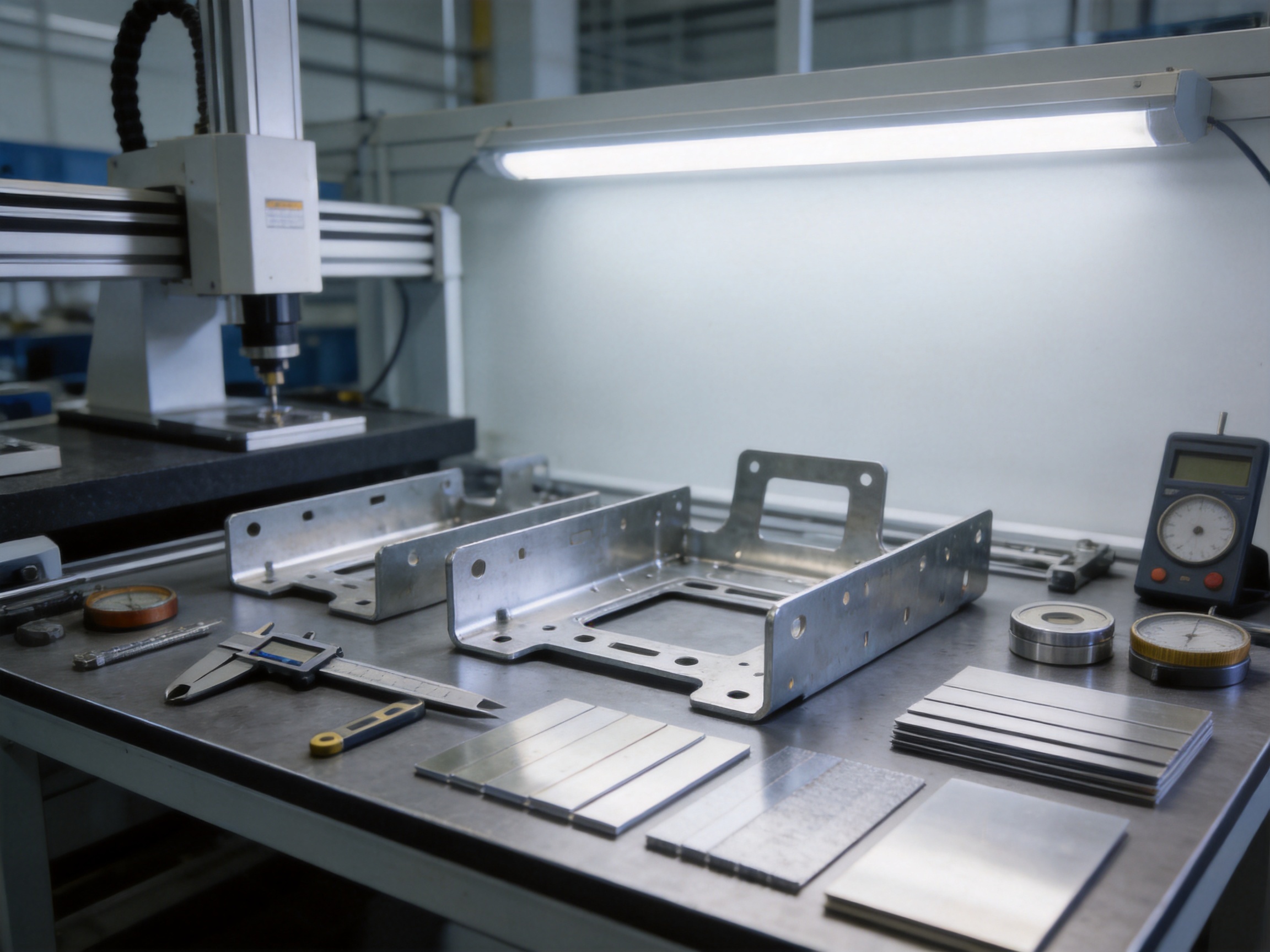
Applications in Driver, Passenger, and Rear Seats
Car seat stamping parts are used across multiple seating positions, each with different requirements. Driver seats often have the most complex adjustment functions, including fore-aft sliding, height adjustment, recline control, lumbar support, memory motors, and sometimes massage or ventilation systems. Stamped brackets and supports must provide accurate interfaces for these mechanisms while maintaining strength and minimizing noise.
Passenger seats may share many driver-seat components but can have different adjustment features depending on vehicle model. In some vehicles, passenger seats include electric adjustment and occupant detection sensors. Stamping parts must support both mechanical and electronic functions. Clean edges and accurate holes are important because wiring and sensors may be routed near metal structures.
Rear seats often focus on foldability, locking mechanisms, anchoring points, and space efficiency. Stamped parts may include hinge brackets, latch supports, backrest reinforcements, cushion supports, and mounting plates. Rear seat components must withstand load during cargo use, folding cycles, and passenger occupancy. Precision stamping helps ensure that folding and locking functions operate smoothly.
In new energy vehicles, seat structures may be optimized for lightweight design, compact packaging, and enhanced comfort. Battery layout, cabin architecture, and electronic features can influence seat design. Stamped parts made from high-strength steel or aluminum alloy can help meet the combined need for strength, weight reduction, and production efficiency.
How Precision Stamping Supports Lightweight Automotive Design
Lightweight design is a central trend in automotive engineering. Reducing vehicle weight helps improve fuel economy, extend electric vehicle range, reduce emissions, and enhance handling. Seats represent a significant part of interior system weight, so seat manufacturers continuously look for ways to reduce mass without compromising safety or comfort. Precision stamping supports lightweight design in several ways.
First, stamped parts can use thinner high-strength materials. Instead of increasing thickness to gain strength, engineers can select stronger sheet material and form it into shapes that resist bending and deformation. Ribs, flanges, curled edges, and embossments increase stiffness and improve load paths. This approach provides high strength-to-weight performance.
Second, stamping enables efficient integration of functions. A well-designed stamped component may include mounting holes, positioning tabs, reinforcement features, cable routing features, and assembly guides in one part. Function integration can reduce the number of separate components, fasteners, welds, and assembly steps. Fewer parts often mean lower weight and improved manufacturing efficiency.
Third, aluminum alloy stamping can be used for selected seat components when weight reduction is especially important. Although aluminum requires careful forming control, it offers attractive mass savings. Precision die design and experienced process adjustment make aluminum stamping more practical for seat applications.
Fourth, stamping supports repeatable production of optimized geometries. Lightweight components must be consistent; otherwise, local weak points may appear. Stable stamping processes ensure that each part meets the same dimensional and structural requirements, supporting predictable seat performance.
Noise, Vibration, and Harshness Performance
Seat quality is often judged by comfort, silence, and stability. Noise, vibration, and harshness, commonly called NVH, are important in automotive interiors. Poorly made seat stamping parts can contribute to rattles, squeaks, looseness, and vibration transfer. Accurate and clean stamped components help reduce these issues.
Dimensional accuracy ensures tight fit between brackets, rails, hinges, and adjustment mechanisms. If holes are misaligned or surfaces are uneven, fasteners may not clamp correctly, and small gaps may create noise during driving. Stable bending angles and flatness help maintain proper contact surfaces. Smooth edges reduce friction against adjacent components. Consistent material thickness and formed reinforcements improve vibration resistance.
In electric vehicles, interior noise is more noticeable because the powertrain is quieter than in traditional vehicles. This makes seat NVH performance even more important. High-quality stamping parts contribute to a more refined cabin experience by supporting stable assembly and reducing unnecessary movement in the seat frame.
Assembly Efficiency and Manufacturing Cost Benefits
Automotive seat assembly lines require speed, consistency, and low defect rates. Precision car seat stamping parts improve assembly efficiency because they fit correctly without excessive adjustment. Accurate hole positions allow fastener installation to proceed smoothly. Clean edges reduce the need for manual deburring or protective handling. Stable part geometry helps robotic or fixture-based assembly systems operate reliably.
When parts are inconsistent, assembly workers may need to force-fit components, enlarge holes, rework surfaces, or reject parts. These issues increase labor cost, delay production, and create quality risks. High-precision stamping reduces these hidden costs. The value of a quality part is not only in its purchase price but also in its ability to keep downstream operations stable.
Cost benefits also come from efficient material use, high press productivity, reduced scrap, long die life, and optimized automation. A supplier with die design and stamping production expertise can improve strip layout, choose suitable press tonnage, minimize secondary processes, and control tool maintenance. These improvements help provide competitive pricing while maintaining automotive quality standards.
Customization and Engineering Support
Car seat stamping parts are rarely one-size-fits-all products. Different vehicle platforms, seat suppliers, trim levels, and regulatory markets require different designs. Customization may involve material grade, thickness, part geometry, hole patterns, reinforcement features, surface treatment, tolerance requirements, and packaging method. Engineering support is therefore essential.
Suzhou Shuangqisi Mold Equipment Co., Ltd. can provide custom stamping die design and manufacturing. Customers may submit drawings, samples, or functional requirements. The technical team can evaluate manufacturability, propose process solutions, develop dies, conduct trials, and support production. For customers seeking complete stamping solutions, the company can also integrate automation equipment and related production resources.
This ability to provide turnkey solutions is valuable for customers who want shorter development cycles and reliable production launch. Instead of coordinating separate die makers, stamping factories, and automation suppliers, customers can work with a manufacturing partner that understands the full process chain. This improves communication efficiency and helps solve technical issues more directly.
Why an Integrated Stamping Partner Matters
In automotive manufacturing, supply reliability is just as important as technical capability. A car seat stamping part may be small, but if it is delayed or inconsistent, the entire seat assembly schedule can be affected. An integrated stamping partner provides several advantages.
First, integrated die-making and stamping reduce project risk. The same technical system that designs and manufactures the die can also observe production performance and make improvements. Feedback loops are shorter. Problems such as burr growth, unstable feeding, springback, or assembly deviation can be addressed quickly.
Second, integrated automation improves production stability. Automation can standardize feeding and handling, reduce human error, and support consistent cycle times. For high-volume automotive parts, this stability is a major benefit.
Third, an experienced partner can support cost optimization from the beginning. Material selection, part layout, die structure, press selection, and secondary process planning all influence cost. Early engineering input can reduce unnecessary complexity while preserving function.
Fourth, quality control can be built into the production system rather than added only at the end. Inspection fixtures, process parameters, maintenance schedules, and operator standards can be designed around the part’s critical features. This approach improves consistency and reduces defects.
Packaging, Handling, and Delivery Considerations
Car seat stamping parts must be handled carefully after production to prevent deformation, scratches, rust, or mixing. Packaging should be designed according to part shape, surface treatment, quantity, and transportation conditions. Thin stamped parts may require separators, trays, or custom containers to prevent bending. Parts with finished surfaces may need protective film or controlled stacking. Anti-rust measures may be needed for steel components.
Proper labeling and batch traceability are also important. Automotive customers often require batch numbers, material traceability, inspection records, and controlled delivery documentation. Organized packaging helps assembly workers identify parts quickly and reduces the risk of using incorrect components. Reliable delivery supports customer production schedules and reduces inventory pressure.
For export or long-distance transportation, moisture protection and strong outer packaging may be required. If parts are shipped to seat assembly plants, packaging should also support efficient unloading and line-side use. Good packaging is part of product quality because damaged or mixed parts can create the same problems as manufacturing defects.
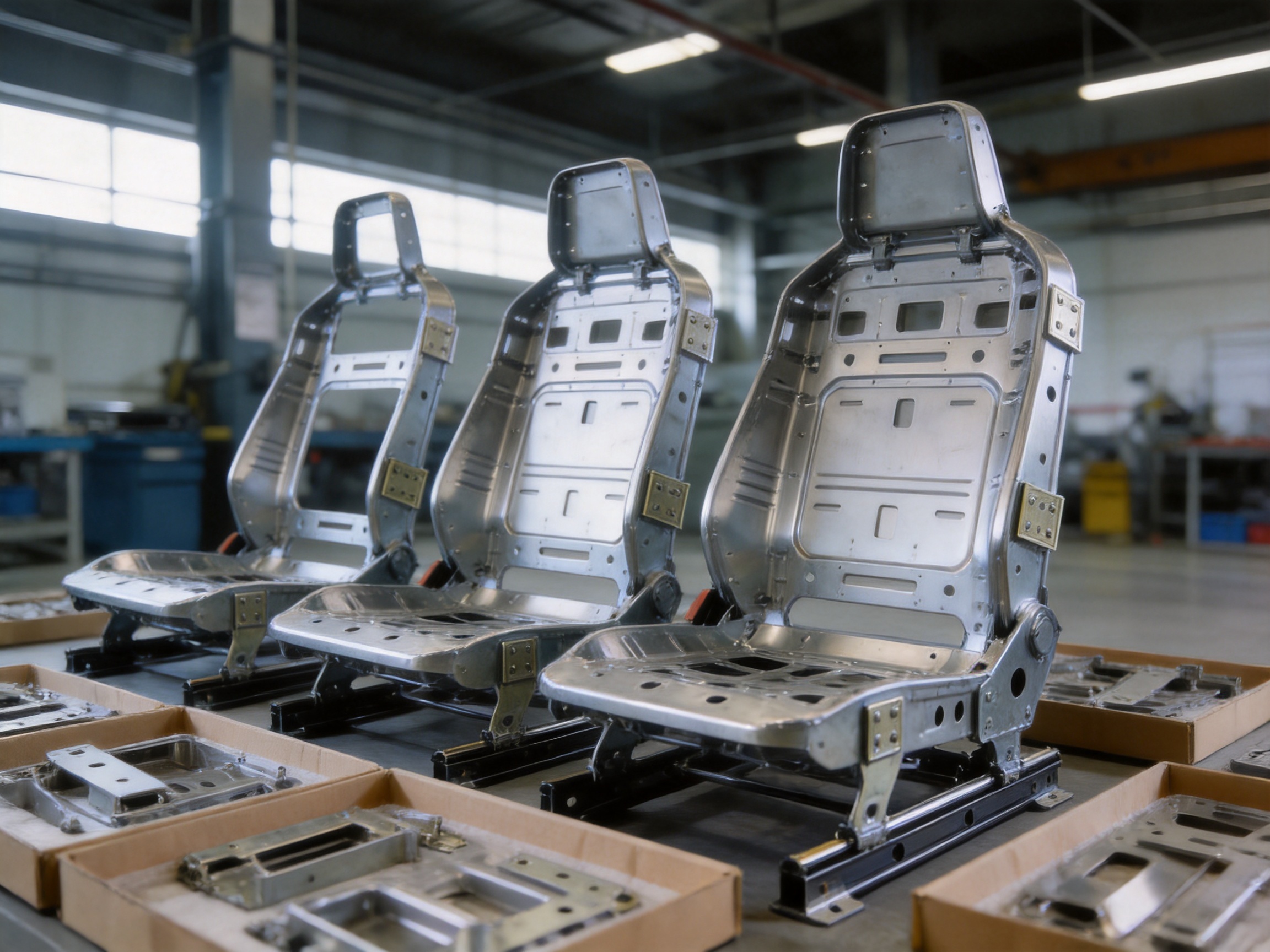
Q&A: Common Questions About Car Seat Stamping Parts
What are car seat stamping parts?
Car seat stamping parts are metal components produced by stamping processes and used in automotive seat structures. They can include brackets, supports, reinforcement plates, connecting pieces, side frame components, cushion supports, backrest parts, and adjustment mechanism interfaces. They help provide strength, stability, assembly accuracy, and load-bearing capacity for the seat system.
Why are precision stamped parts important for automotive seats?
Precision stamped parts are important because seat structures must fit accurately and perform reliably under static and dynamic loads. Accurate holes, clean edges, stable bending angles, and consistent thickness help ensure smooth assembly, reduced noise, reliable adjustment, and stronger safety performance. Poorly made parts can cause misalignment, rattling, rework, or structural weakness.
What materials are commonly used for car seat stamping parts?
Common materials include high-strength steel, low-carbon steel, galvanized steel, and aluminum alloy. High-strength steel is often used for structural strength. Low-carbon steel provides good formability and cost efficiency. Galvanized steel improves corrosion resistance. Aluminum alloy supports lightweight vehicle design.
How do stamped parts improve seat safety?
Stamped parts improve seat safety by forming the structural framework and connection points that support occupants and resist mechanical loads. Properly designed and manufactured parts help maintain seat stability during driving, braking, vibration, and impact conditions. Reinforcements, flanges, ribs, and accurate fastener interfaces help distribute stress and reduce deformation risk.
What advantages does precision stamping have over machining?
Precision stamping is generally more efficient and cost-effective for high-volume sheet-metal parts. It produces consistent components quickly after the die is developed. Machining may be suitable for certain low-volume or thick components, but it often requires more processing time and creates more material waste. For automotive seat brackets and supports, stamping is usually the better mass-production method.
Can car seat stamping parts be customized?
Yes. Car seat stamping parts can be customized according to drawings, samples, material requirements, thickness, tolerance needs, surface treatment, and assembly conditions. Custom die design allows different shapes, hole patterns, bends, ribs, and reinforcements to be manufactured for specific vehicle platforms or seat systems.
How does die quality affect the final stamping part?
Die quality directly affects part accuracy, burr size, edge quality, bending angle, forming stability, and production efficiency. A precise and durable die helps produce consistent parts over long production runs. Poor die quality may cause dimensional variation, excessive burrs, cracking, tool wear, and unstable production.
What production equipment is used to manufacture these parts?
Production may involve CNC machining centers, wire cutting machines, grinding machines, die assembly equipment, and punch presses. Suzhou Shuangqisi Mold Equipment Co., Ltd. uses imported wire cutting machines, CNC machining centers, more than 10 grinding machines, and 25 punch presses ranging from 80T to 400T to support precision die manufacturing and stamping production.
Why is automation useful in stamping production?
Automation improves feeding accuracy, production consistency, safety, and output efficiency. It reduces manual handling and helps maintain stable cycle times. For automotive stamping parts, automation can reduce defects caused by inconsistent positioning and support large-scale production with better repeatability.
What makes Suzhou Shuangqisi Mold Equipment Co., Ltd. a strong supplier?
The company combines 15 years of mold industry experience, 60 technical staff, advanced precision machining equipment, a wide press range, experienced operators, strict cost and quality control, and integrated stamping automation capability. It can provide stamping dies, stamping parts, and automation solutions, making it suitable for customers seeking reliable and cost-effective automotive stamping support.
Conclusion
Car seat stamping parts are essential components that support the strength, safety, comfort, and durability of automotive seating systems. They must meet demanding requirements for dimensional accuracy, material performance, edge quality, load-bearing capacity, vibration resistance, and assembly compatibility. High-precision stamping provides an efficient and reliable way to manufacture these parts for driver seats, passenger seats, rear seats, and modern vehicle platforms.
Compared with many alternative manufacturing methods, precision stamping offers strong advantages in production efficiency, repeatability, weight control, cost performance, and design flexibility. When supported by high-quality die design, advanced machining, skilled debugging, stable stamping production, and strict inspection, stamped seat parts can deliver excellent value to automotive manufacturers and seat system suppliers.
Suzhou Shuangqisi Mold Equipment Co., Ltd. brings together stamping die design, mold manufacturing, hardware stamping, and stamping automation capabilities. With advanced equipment, experienced technical staff, 25 punch presses from 80T to 400T, and long-term industry experience, the company is well positioned to provide reliable car seat stamping parts and related turnkey solutions. Its commitment to cost control, quality management, and customer value makes it a capable manufacturing partner for automotive seat components, new energy vehicle parts, and precision stamped hardware.
For automotive seating applications, the right stamping part is not simply a piece of metal. It is a carefully engineered structural component that supports comfort, safety, assembly efficiency, and long-term reliability. By choosing precision-manufactured car seat stamping parts from a supplier with strong die-making and automation capabilities, customers can improve product quality, reduce production risks, and support the development of safer and more competitive vehicles.
Company Contact Information
Company: Suzhou Shuangqisi Mold Equipment Co., Ltd.
Phone: +86-139 1308 8972
Email: [email protected]
Address: No. 118 Yexin Road, Wujiang Economic Development Zone, Suzhou, China
References
Altan, T., and Tekkaya, A. E. Sheet Metal Forming: Processes and Applications. ASM International.
Boljanovic, V. Sheet Metal Forming Processes and Die Design. Industrial Press.
Davies, G. Materials for Automobile Bodies. Butterworth-Heinemann.
International Organization for Standardization. ISO 9001 Quality Management Systems: Requirements.
Society of Automotive Engineers. Automotive Sheet Steel Design and Manufacturing Guidelines.
Kalpakjian, S., and Schmid, S. Manufacturing Engineering and Technology. Pearson.
Previous Post
Precision Battery Cover Stamping Parts for Safer and More Reliable Battery Enclosures
Next Post
No next article
Our Products.
Start Your Business with an OEM Manufacturer Right Here!

Provide global customers with complete turn-key solutions
through
innovation!
QUICK LINKS
CONTACT INFO.
-
 +86-139 1308 8972
 -

-
 No. 118 Yexin Road, Wujiang Economic Development Zone, Suzhou, China
Copyright © Suzhou Shuangqisi Mold Equipment Co., Ltd. All Rights Reserved. Custom Stamping Die Metal Stamping Die Manufacturers
